• 亿邦公众号
    • APP下载

亿邦智库第八次发布《产业互联网发展报告》:模态进化

作者:亿邦智库 文章来源:亿邦动力

2026-11-20 19:55

作者:亿邦智库 文章来源:亿邦动力

2026-11-20 19:55

邦小白快读
EN
全文速览

总1

文章核心是AI与出海共同驱动产业互联网模态进化,产业智能体与全球化数智供应链成为两条主线。

1.2026开启产业智能体元年,智能体从认知辅助升级为可理解业务上下文并精准执行的数字员工。

2.2025年中国企业级AI智能体市场规模212亿元,2029年有望突破3320亿元,复合增长率107%;Token价格每下降50%触发约1.42倍需求弹性。

总2

企业实践给出可学信号。

1.近九成样本企业增长,但净利率低于10%的占三分之二;64.2%申报产业AI奖、30.1%申报产业出海奖,AI本地化部署率90.6%、数据治理体系建成率78.4%。

2.案例覆盖国联股份、嘉立创、淘宝企业购、震坤行、鑫方盛、齐心集团、云中鹤、森博科技等,方向包括四层纵深、一站式硬件创新、AI翻译层、智能体矩阵和数字员工。

3.出海投入重心为海外仓34.5%、产品研发26.8%、跨境供应26.7%、自主品牌26.4%;智能体落地深度或将决定企业差距,平台从广告位收费转向按结果收费。

总1

品牌商应关注AI与出海如何重塑品牌营销、渠道和产品研发。

1.出海投入重心包含产品研发26.8%、自主品牌26.4%、海外仓34.5%、跨境供应26.7%,品牌出海要把研发、品牌、交付和供应链都当资产运营。

2.泛鼎国际以运、仓、配、销一体化拉通跨境供应链,属地化分销做深渠道触达,数字中台拉通服务全链路,从物流服务商进化为品牌出海生态合伙人。

3.好现GEO智能体升级为AI渠道经营系统,帮企业看清并构建AI对品牌的认知。

总2

营销与用户洞察出现新工具。

1.淘宝企业购卖家侧商家经营中心以AI生成体检报告,帮助缺乏企客能力的消费电商商家识别客群、优化素材、跟进转化。

2.淘宝小源把口语化、非标采购需求转译为可比较供给方案,61项物料约10分钟生成567条商品推荐,消费电商存量供给可被企业需求直接调用。

3.平台可能按办成的事而非广告位收费,按Token计费、RaaS、订阅制、交易佣金等路径渐清晰,品牌需重估营销投入与结果的关系。

总1

卖家要抓住AI与出海带来的增长市场和模式变化。

1.AI与出海已成共同动作:64.2%企业申报产业AI奖、30.1%申报产业出海奖。

2.出海机会在海外仓34.5%、研发26.8%、跨境供应26.7%、自主品牌26.4%,从完成交易转向构建能力。

3.商业模式有Token计费、RaaS、订阅制、交易佣金,平台可能按办成的事收费。

总2

风险与可学习点明确。

1.近九成企业增长,但净利率低于10%的占三分之二;高盈利企业向提及智能体的一组集中,43.1%对25.6%。

2.可学点是用智能体接管需求入口、寻源选型、询价议价、下单订购、支付结算、售后等环节。

3.合作上可关注国联股份B2F反向供应链归集海外订单、组织国内产业带协同生产与联合履约,并打通关税收汇物流海外仓;数字云工厂先实施后付费,反哺中小企业用得起AI。

总1

工厂应关注产品设计、生产组织和数字化推进。

1.嘉立创沿硬件创新链路提供EDA设计、PCB智造、元器件供应到PCBA组装的一站式服务,以长尾订单聚合、免费EDA锁定工程师社区、设计数据直连产线,走完一个概念进、一个产品出的0到100全过程。

2.国联股份数字云工厂先实施后付费,让平台投入与客户改善直接挂钩,从完成一笔交易转向持续改善一条链。

总2

商业机会与电商启示落在智能体和产业协同。

1.鑫方盛以方盛AI加全栈架构激活存量资产,商品端AI标准化治理、采购端智能询报价、履约端AI调度仓网、组织端AI原生平台破除信息孤岛,自研200余个行业Agent、月词元调用量达千亿级,组织效能提升10%以上。

2.齐心集团商品上架效率提升80%、货单识别准确率达98%,AI输出可核验、可拦截、可放行后进化为可信交付。

3.出海可关注B2F反向供应链组织国内产业带协同生产、联合履约,以及海外仓、跨境供应等能力建设。

总1

服务商趋势是服务边界向交易端延伸,能力由智能体重构。

1.服务商从后端指令执行者走向前端,进化为掌握需求侧信息、提供智能调度能力的关键节点。

2.泛鼎国际以运、仓、配、销一体化拉通跨境供应链,属地化分销做深渠道触达,数字中台拉通服务全链路,从物流服务商进化为品牌出海生态合伙人。

3.森博科技以业务实证型研发体系BER沉淀好灵、好创、好麦等智能体矩阵,嵌入多个世界500强企业业务链。

总2

客户痛点与解决方案清晰。

1.央国企、政府、金融机构采购转向预算绩效、合规管控,云中鹤搭建覆盖营销、投标、商品、定制、运营、供应、客服七大环节的智能体矩阵,实现预算可追溯、采购可核验、全链路留痕可审计。

2.震坤行成立玲珑智能,依托7000万+工业用品商品、PB级工业数据与十亿级属性参数,构建数据、模型、智能体、咨询四层能力体系。

3.鑫方盛对外输出数字化服务,从卖商品迈向交付服务;新技术方向包括垂直大模型、Token计费、RaaS、具身智能装备等。

总1

平台价值创造方式正被智能体改写。

1.B2B平台完成流程在线化后,AI智能体补上交易决策与执行,寻源、询价、下单、支付、售后等环节有望被逐段接管,平台具备类似自动驾驶能力。

2.平台替买家做决定和执行,用智能体而非人力供给服务,按办成的事而非广告位收费,平台对最终结果负责。

3.2026年主流平台集中发布或迭代智能体,价值落点普遍收在成交与履约。

总2

运营、招商与风向规避有具体做法。

1.淘宝企业购以AI为翻译层降低交易两侧门槛,淘宝小源把口语化、非标采购需求转译为可比较供给方案,61项物料约10分钟生成567条商品推荐;商家经营中心用AI体检报告帮助识别客群、优化素材、跟进转化。

2.出海平台形态包括全链条控制力换深度、数据密度换广度、产能组织力换成本与响应速度;国联股份以B2F反向供应链归集海外订单、组织国内产业带协同生产与联合履约。

3.风险上,近九成企业增长但净利率低于10%的占三分之二,商业化交付能力成为核心估值标准。

总1

报告提出产业互联网新动向与理论框架。

1.模态进化的模指垂直大模型能力供给及商业模式,态指数智供应链、产业数智科技等新形态及产业链、平台与智能体的新生态关系,产业智能体与全球化数智供应链是两条主线。

2.产业智能体嵌入产业链供应链各环节,以大模型为认知推理引擎,以运行数据、专业知识与机理约束为底座,贯通软件、生态网络、专家与智能装备,具有感知、记忆、决策、交互、执行及交易能力。

总2

新问题与商业启示值得研究。

1.2025年中国企业级AI智能体市场规模212亿元,2029年有望突破3320亿元,复合增长率107%;Token价格每下降50%触发约1.42倍需求弹性。

2.近九成样本企业增长但净利率低于10%的占三分之二,AI本地化部署率90.6%、数据治理体系建成率78.4%,高盈利企业向提及智能体的一组集中,43.1%对25.6%。

3.商业模式有Token计费、RaaS、订阅制、交易佣金;平台从广告位收费转向按结果收费;出海从交易转向构建能力;政策启示可关注预算绩效、合规管控、可核验与可审计需求。

声明:快读内容全程由AI生成,请注意甄别信息。如您发现问题,请发送邮件至 run@ebrun.com 。

我是 品牌商 卖家 工厂 服务商 平台商 研究者 帮我再读一遍。

Quick Summary

Summary 1

The core of the article is that AI and going global jointly drive the evolution of industrial internet modalities, with industrial agents and global digital-intelligent supply chains as two main lines.

1. 2026 marks the first year of industrial agents, as agents upgrade from cognitive assistance to digital workers capable of understanding business context and executing precisely.

2. In 2025, China's enterprise AI agent market reached RMB 21.2 billion and is expected to exceed RMB 332 billion by 2029, a CAGR of 107%; each 50% decline in token prices triggers roughly 1.42x demand elasticity.

Summary 2

Corporate practices offer learnable signals.

1. Nearly 90% of sample enterprises grew, but two-thirds had net margins below 10%; 64.2% applied for industrial AI awards and 30.1% for industrial going-global awards; the localized AI deployment rate was 90.6%, and 78.4% had built data governance systems.

2. Cases cover Guolian, Jialichuang, Taobao Enterprise Procurement, ZKH, Xinfangsheng, Comix Group, Yunzhonghe, Senbo Technology and others, spanning directions such as four-layer depth, one-stop hardware innovation, an AI translation layer, agent matrices, and digital workers.

3. The focus of going-global investment is overseas warehouses at 34.5%, product R&D at 26.8%, cross-border supply at 26.7%, and own brands at 26.4%; the depth of agent implementation may determine enterprise differentiation, and platforms are shifting from charging for ad slots to charging for outcomes.

Summary 1

Brands should focus on how AI and going global are reshaping brand marketing, channels, and product R&D.

1. The focus of going-global investment includes product R&D at 26.8%, own brands at 26.4%, overseas warehouses at 34.5%, and cross-border supply at 26.7%; brand globalization requires operating R&D, brand, delivery, and supply chain as assets.

2. Fanding International integrates cross-border supply chains through transportation, warehousing, distribution, and sales, deepens channel reach via localized distribution, and connects the full service chain through a digital middle office, evolving from a logistics service provider into an ecosystem partner for brand globalization.

3. The Haoxian GEO agent has upgraded into an AI channel operations system, helping enterprises clearly understand and build AI's perception of their brands.

Summary 2

New tools are emerging for marketing and customer insight.

1. On the seller side of Taobao Enterprise Procurement, the merchant operations center uses AI-generated health check reports to help consumer e-commerce merchants lacking enterprise-client capabilities identify customer segments, optimize creatives, and follow up on conversion.

2. Taobao Xiaoyuan translates colloquial, non-standard procurement needs into comparable supply solutions; for 61 items, it generates 567 product recommendations in about 10 minutes, allowing existing consumer e-commerce supply to be directly accessed by enterprise demand.

3. Platforms may charge for completed outcomes rather than ad slots, with paths such as token-based billing, RaaS, subscriptions, and transaction commissions becoming clearer; brands need to reassess the relationship between marketing investment and results.

Summary 1

Sellers should capture the growth markets and model changes brought by AI and going global.

1. AI and going global have become common actions: 64.2% of enterprises applied for industrial AI awards and 30.1% for industrial going-global awards.

2. Going-global opportunities lie in overseas warehouses at 34.5%, R&D at 26.8%, cross-border supply at 26.7%, and own brands at 26.4%, shifting from completing transactions to building capabilities.

3. Business models include token-based billing, RaaS, subscriptions, and transaction commissions; platforms may charge for completed outcomes.

Summary 2

Risks and learnable points are clear.

1. Nearly 90% of enterprises grew, but two-thirds had net margins below 10%; highly profitable enterprises were concentrated in the group that mentioned agents, at 43.1% versus 25.6%.

2. The lesson is to use agents to take over demand entry, sourcing and selection, price inquiry and negotiation, ordering, payment and settlement, after-sales, and other links.

3. For partnerships, sellers can look at Guolian's B2F reverse supply chain, which aggregates overseas orders, organizes domestic industrial belts for collaborative production and joint fulfillment, and connects customs, tax, foreign exchange settlement, logistics, and overseas warehouses; digital cloud factories implement first and charge later, helping SMEs afford AI.

Summary 1

Factories should focus on product design, production organization, and digital advancement.

1. Jialichuang provides one-stop services along the hardware innovation chain, from EDA design, PCB manufacturing, and component supply to PCBA assembly; it aggregates long-tail orders, uses free EDA to lock in the engineer community, and connects design data directly to production lines, completing the full 0-to-100 process from concept input to product output.

2. Guolian's digital cloud factories implement first and charge later, directly linking platform investment to customer improvements and shifting from completing a single transaction to continuously improving an entire chain.

Summary 2

Business opportunities and e-commerce implications center on agents and industrial collaboration.

1. Xinfangsheng uses Fangsheng AI and a full-stack architecture to activate existing assets: AI standardized governance on the product side, intelligent inquiry and quotation on the procurement side, AI warehouse-network scheduling on the fulfillment side, and an AI-native platform on the organizational side to break down information silos; it has developed more than 200 industry agents in-house, with monthly token calls reaching hundreds of billions, and improved organizational efficiency by more than 10%.

2. Comix Group raised product listing efficiency by 80% and achieved 98% order recognition accuracy; after AI outputs became verifiable, interceptable, and releasable, it evolved into trusted delivery.

3. For going global, factories can look at B2F reverse supply chains that organize domestic industrial belts for collaborative production and joint fulfillment, as well as capability building in overseas warehouses and cross-border supply.

Summary 1

The trend for service providers is that service boundaries extend toward transactions, and capabilities are reconstructed by agents.

1. Service providers are moving from back-end instruction executors to the front end, evolving into key nodes that grasp demand-side information and provide intelligent scheduling capabilities.

2. Fanding International integrates cross-border supply chains through transportation, warehousing, distribution, and sales, deepens channel reach via localized distribution, and connects the full service chain through a digital middle office, evolving from a logistics service provider into an ecosystem partner for brand globalization.

3. Senbo Technology uses its business-evidence-based R&D system BER to build an agent matrix including Haoling, Haochuang, Haomai and others, embedded in the business chains of multiple Fortune 500 companies.

Summary 2

Customer pain points and solutions are clear.

1. Procurement by SOEs, government, and financial institutions is shifting toward budget performance and compliance control; Yunzhonghe has built an agent matrix covering seven major links—marketing, bidding, merchandise, customization, operations, supply, and customer service—to achieve traceable budgets, verifiable procurement, and auditable full-chain records.

2. ZKH Group established Linglong Intelligence, building a four-layer capability system spanning data, models, agents, and consulting based on more than 70 million industrial products, PB-level industrial data, and billions of attribute parameters.

3. Xinfangsheng provides digital services externally, moving from selling goods to delivering services; new technology directions include vertical large models, token-based billing, RaaS, and embodied intelligent equipment.

Summary 1

How platforms create value is being rewritten by agents.

1. After B2B platforms complete process onlineization, AI agents fill in transaction decision-making and execution; sourcing, price inquiry, ordering, payment, after-sales, and other links may be taken over segment by segment, giving platforms capabilities similar to autonomous driving.

2. Platforms make decisions and execute on behalf of buyers, supply services through agents rather than human labor, charge for completed outcomes rather than ad slots, and are accountable for final results.

3. In 2026, mainstream platforms will launch or iterate agents in a concentrated wave, with value generally landing on closing transactions and fulfillment.

Summary 2

There are concrete practices for operations, merchant recruitment, and risk avoidance.

1. Taobao Enterprise Procurement uses AI as a translation layer to lower barriers on both sides of transactions; Taobao Xiaoyuan translates colloquial, non-standard procurement needs into comparable supply solutions, generating 567 product recommendations for 61 items in about 10 minutes; the merchant operations center uses AI health check reports to help identify customer segments, optimize creatives, and follow up on conversion.

2. Going-global platform models include trading full-chain control for depth, data density for breadth, and production capacity organization for cost and response speed; Guolian uses a B2F reverse supply chain to aggregate overseas orders and organize domestic industrial belts for collaborative production and joint fulfillment.

3. On risks, nearly 90% of enterprises grew but two-thirds had net margins below 10%; commercialization and delivery capability have become core valuation criteria.

Summary 1

The report proposes new trends and a theoretical framework for the industrial internet.

1. In modality evolution, the 'model' dimension refers to vertical large-model capability supply and business models, while the 'form' dimension refers to new forms such as digital-intelligent supply chains and industrial digital-intelligent technology, as well as new ecosystem relationships among industrial chains, platforms, and agents; industrial agents and global digital-intelligent supply chains are the two main lines.

2. Industrial agents are embedded in all links of industrial and supply chains, with large models as cognitive reasoning engines and operating data, domain knowledge, and mechanistic constraints as the foundation; they connect software, ecosystem networks, experts, and intelligent equipment, and possess perception, memory, decision-making, interaction, execution, and transaction capabilities.

Summary 2

New issues and business implications warrant research.

1. In 2025, China's enterprise AI agent market reached RMB 21.2 billion and is expected to exceed RMB 332 billion by 2029, a CAGR of 107%; each 50% decline in token prices triggers roughly 1.42x demand elasticity.

2. Nearly 90% of sample enterprises grew, but two-thirds had net margins below 10%; the localized AI deployment rate was 90.6%, and 78.4% had built data governance systems; highly profitable enterprises were concentrated in the group that mentioned agents, at 43.1% versus 25.6%.

3. Business models include token-based billing, RaaS, subscriptions, and transaction commissions; platforms are shifting from charging for ad slots to charging for outcomes; going global is shifting from transactions to capability building; policy implications may focus on budget performance, compliance control, and verifiability and auditability requirements.

Disclaimer: The "Quick Summary" content is entirely generated by AI. Please exercise discretion when interpreting the information. For issues or corrections, please email run@ebrun.com .

I am a Brand Seller Factory Service Provider Marketplace Seller Researcher Read it again.

文丨亿邦智库

2026年,这是亿邦智库体系化输出产业互联网年度研究的第八年。

这份以“模态进化”为主题的年度报告,源于亿邦智库的最新研判:AI与出海共同驱动的产业互联网模态进化,落在能力供给、商业模式、产业形态与生态关系的变化上。“模”,指以垂直大模型为代表的能力供给及其随之形成的商业模式;“态”,指以数智供应链、产业数智科技为代表的产业新形态,以及产业链供应链、平台与智能体之间形成的新生态关系。产业智能体与全球化数智供应链,成为本轮进化的两条主线。

以下为报告节选,报告全文可点击链接下载

01

2026开启产业智能体元年

报告所称“产业智能体”,是嵌入产业链、供应链各环节,以大模型为认知推理引擎,以运行数据、专业知识与机理约束为底座,贯通软件系统、生态网络、行业专家、数控及具身智能装备,具有自主感知、记忆、决策、交互、执行及交易能力的智能产品和服务。亿邦智库认为,其竞争力建设方向已经清晰:数据具备产业深度、严谨和时效性;生态涵盖行业可信技能网络与业界专家数字分身;智控贯通各类软件系统与具身智能装备;营收以Token消耗计费为基础支撑。

2026年,产业在技术成熟度、部署成本与商业变现路径上实现系统性突破——智能体从认知辅助升级为可理解业务上下文并精准执行的数字员工;Token价格每下降50%会触发约1.42倍的需求弹性; 按Token计费、按效果付费(RaaS)、订阅制、交易佣金等商业变现路径逐渐清晰,智能体呈现出明确商业模式想象空间。
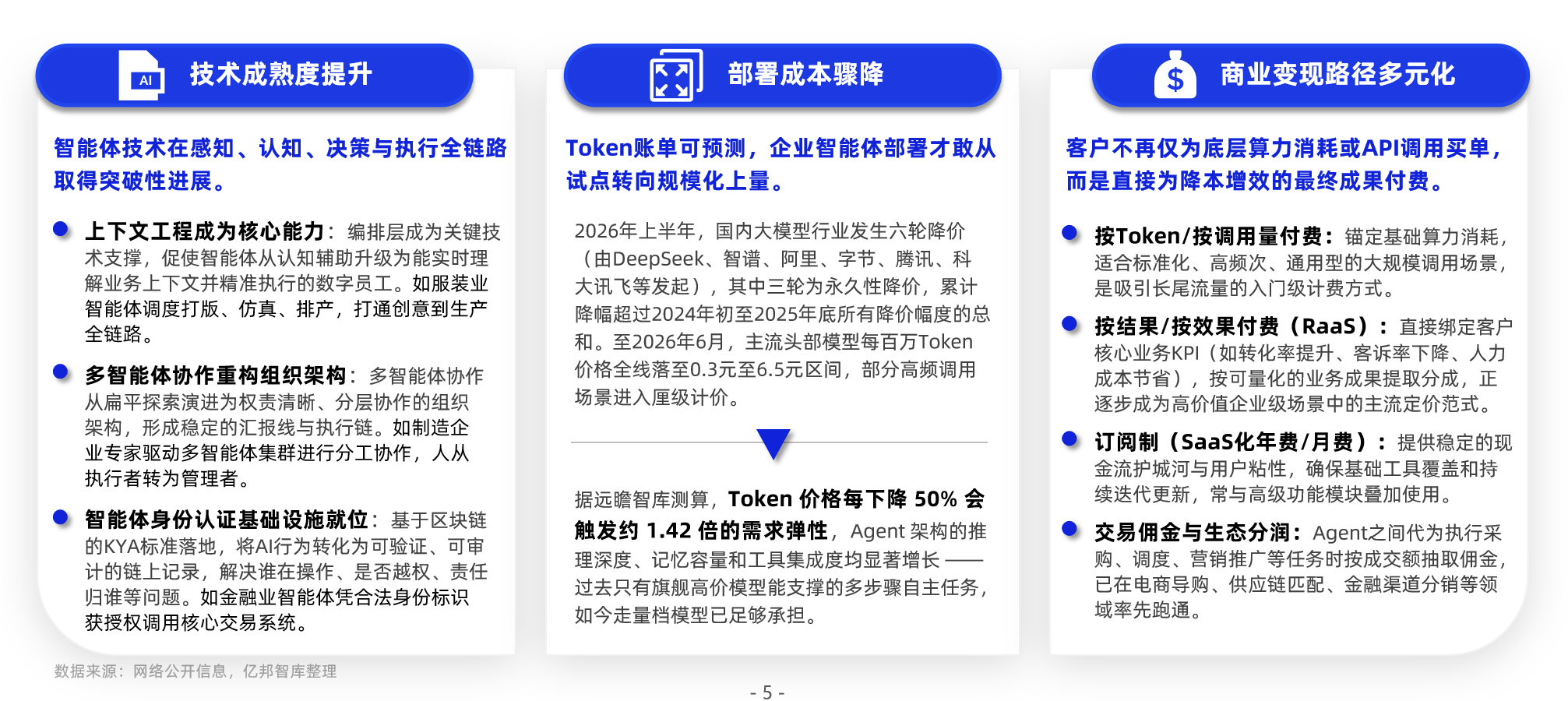
产业智能体元年由行业集体行为定义。2026年,主流产业平台集中发布或迭代智能体产品:入口级智能体承接尚未结构化的意图,流程内智能体执行预设流程中的一段或多段。这些产品呈现共性:价值落点普遍收在成交与履约;能力来源依托自有数据与行业知识;角色从工具升级为执行主体。
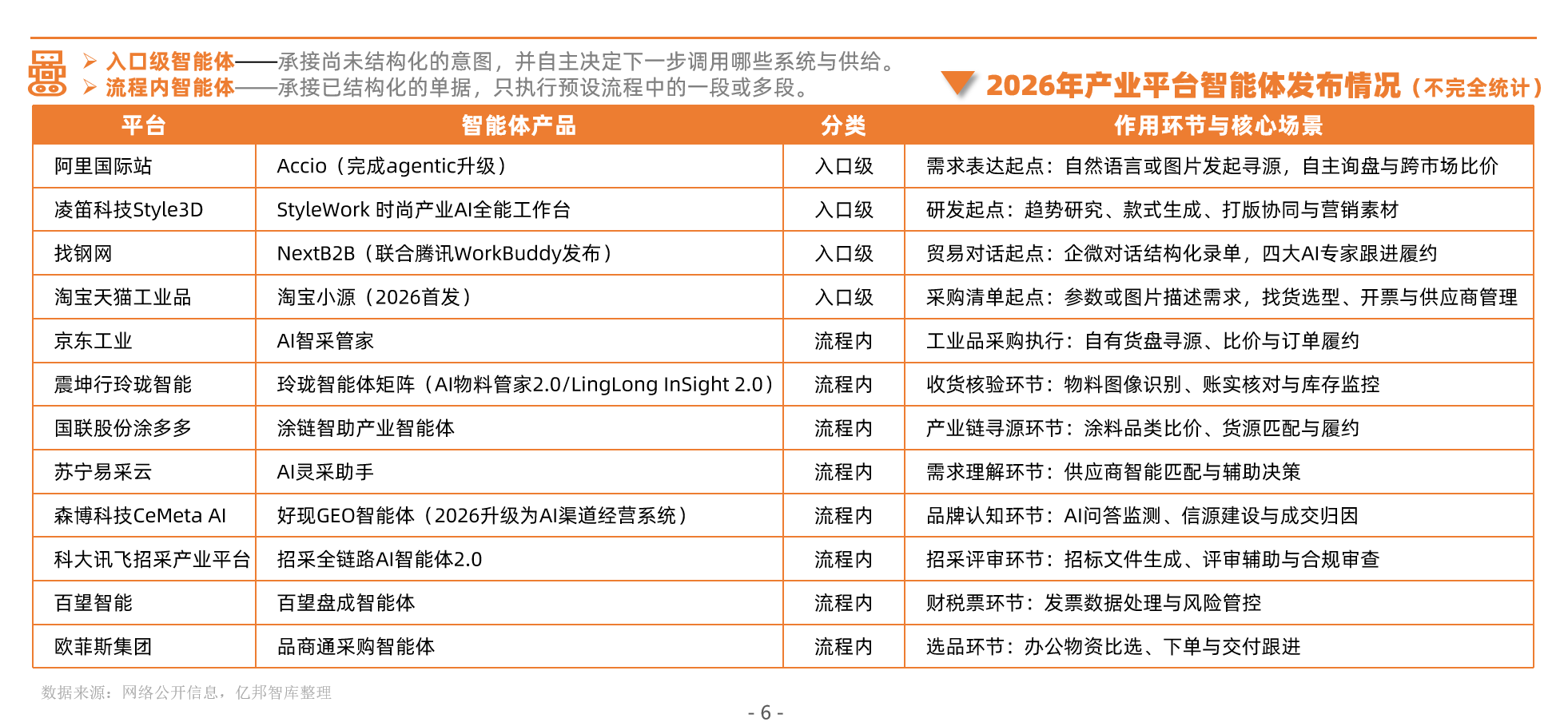
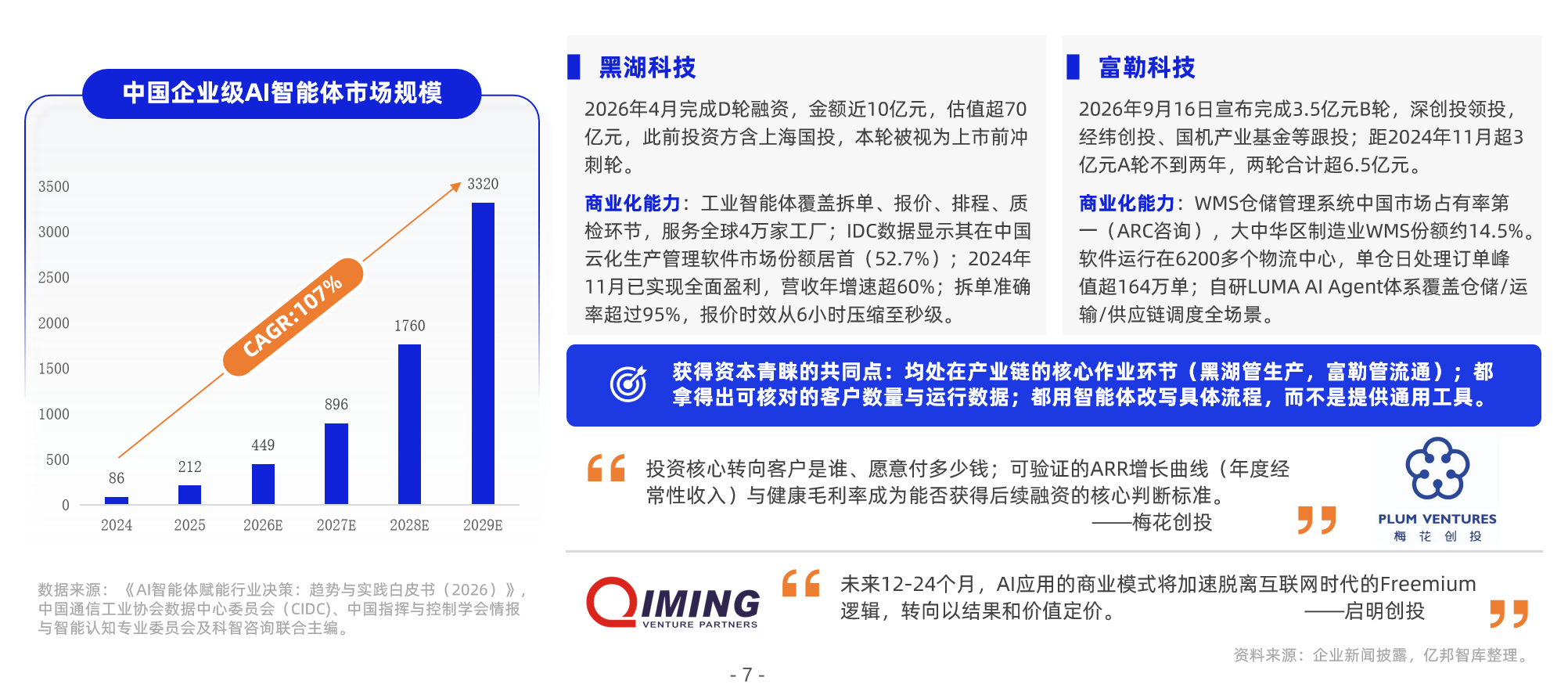
市场与资本同步验证:2025年中国企业级AI智能体市场规模212亿元,2029年有望突破3320亿元,复合增长率107%,居AI细分赛道之首。资本追逐高景气赛道,但筛选标准已然改变,商业化落地交付能力成为核心估值标准。
02

先锋调研:AI与出海是企业共同动作

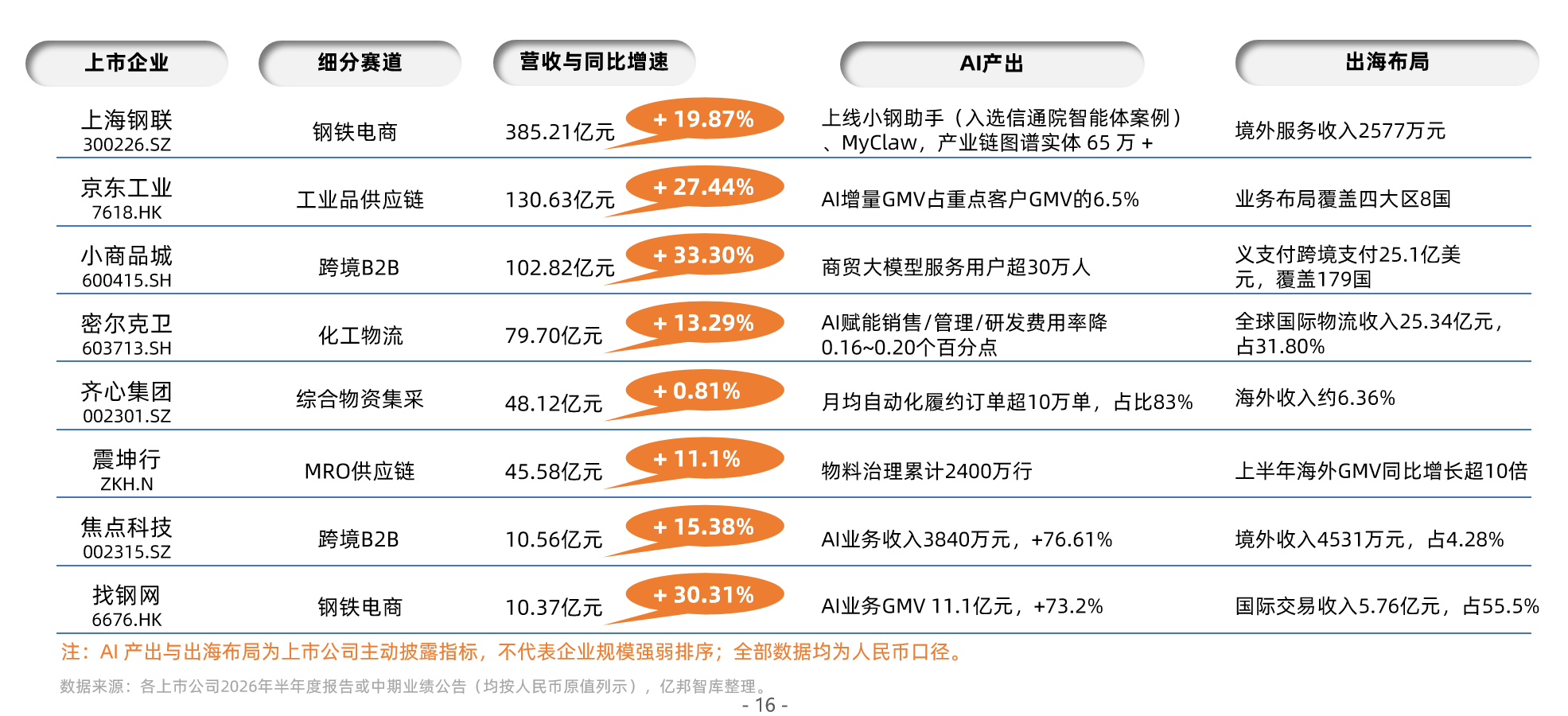
2026年上半年,亿邦智库梳理产业互联网上市公司财报发现,上海钢联、京东工业、小商品城、密尔克卫、齐心集团、震坤行、焦点科技、找钢网八家头部公司营收实现同比增长,赛道横跨钢铁电商、工业品供应链、跨境B2B、MRO等领域,上市地遍布沪深港纽。财报上高度重合的动作是:AI进了业务环节,出海打开增量。
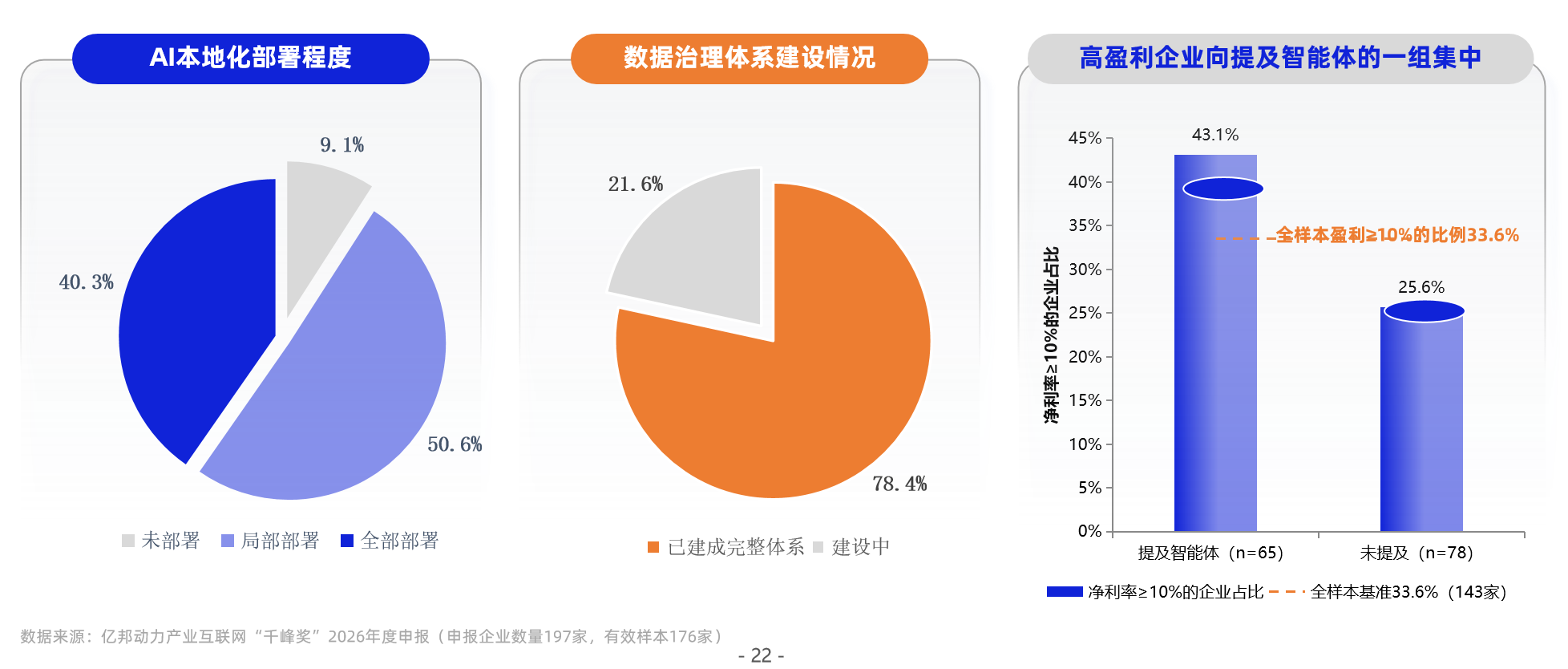
来自亿邦动力产业互联网“千峰奖”的申报数据则勾勒出一批先行者的生存基本面:增长是普遍现象,但盈利是稀缺能力——近九成企业保持增长,但净利率低于10%的占三分之二。战略取向上,64.2%的企业申报产业AI奖、30.1%申报产业出海奖,较上年度分别上升12.5个和4.7个百分点,说明AI与出海不再是差异化选择,而是这批企业共同在做的事。值得注意的是,在这批样本中,AI本地化部署率达90.6%、数据治理体系建成率78.4%,但高盈利企业明显向自述提及智能体的一组集中(43.1%对25.6%),由此推断,未来企业间的差距,或将由智能体的落地深度决定。
03

产业AI实践:智能体接管流程,平台走向结果导向

产业互联网上半场,B2B平台完成了流程在线化;2026年,AI智能体补上了交易决策与执行这一段。需求入口、寻源选型、询价议价、下单订购、支付结算、售后服务等环节有望被智能体逐段接管,B2B平台第一次具备了类似“自动驾驶”的能力,实现从“人找系统”到“系统帮人思考”的质变,人的角色收敛到两端:为判断负责,为后果兜底。
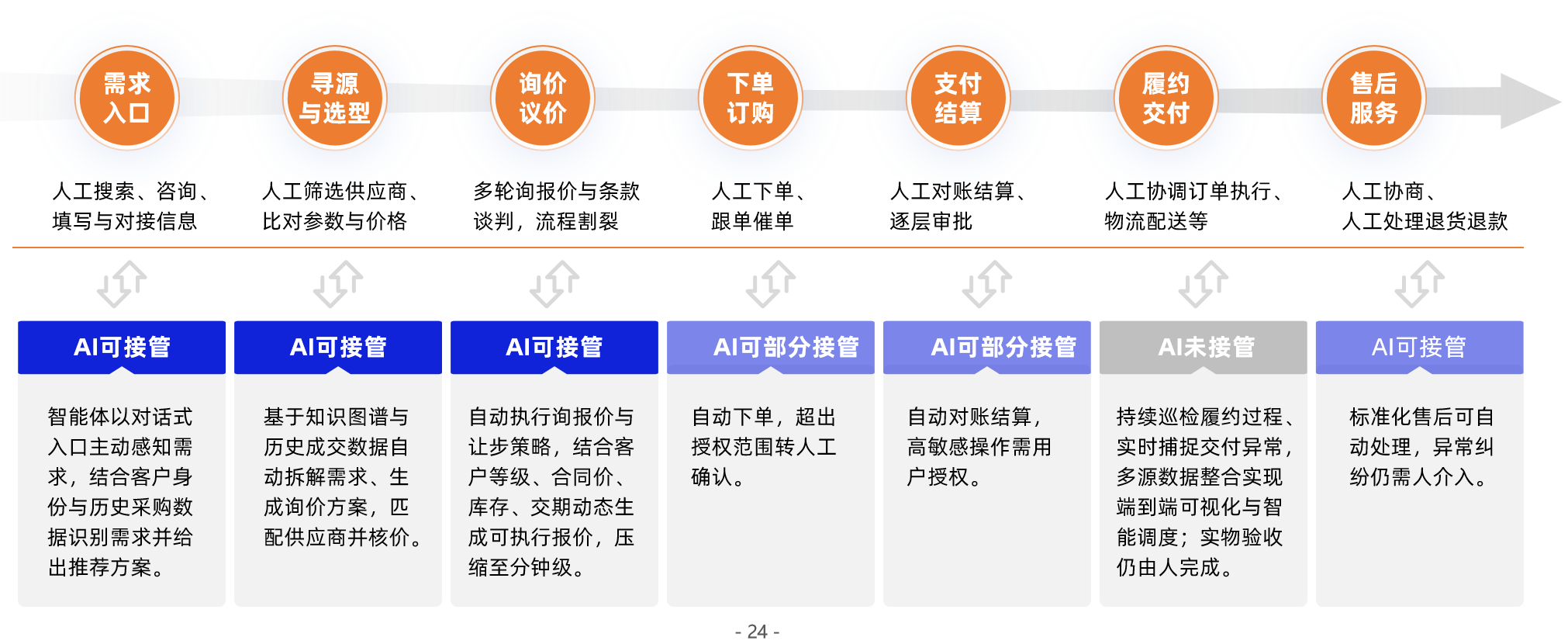
业务流程被接管之后,平台的价值创造方式随之改写:替买家做决定,替买家执行,用智能体而非人力供给服务,按办成的事而非广告位收费。这是一个关乎本质的信号:当平台开始对最终结果负责,深度价值链才真正迎来高维质变。
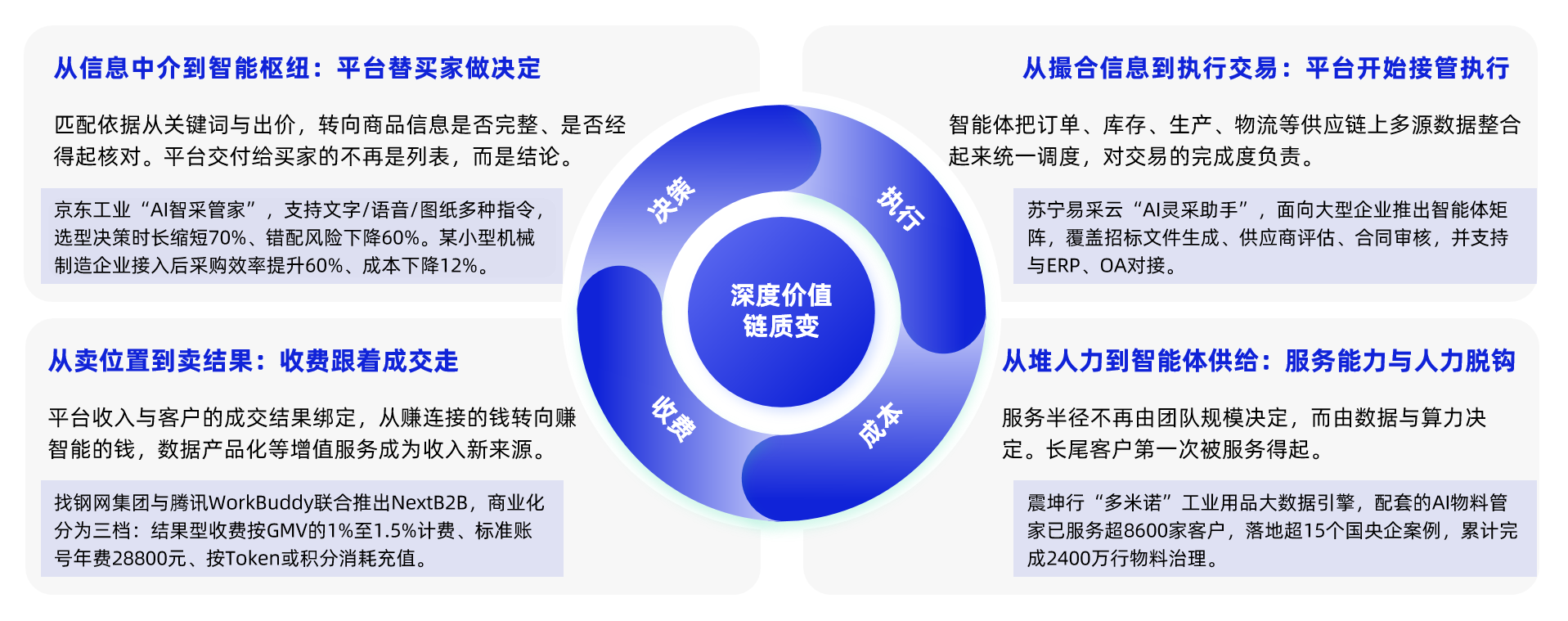
垂直产业平台已成为AI技术落地供应链的最优着陆点,头部实践各具代表性:

国联股份:将大模型与产业链数据结合,沿“算力—Token—智能体—产业应用”四层纵深布局,先有客户、再造算力,成本摊薄反哺中小企业用得起AI。数字云工厂“先实施后付费”,让平台投入与客户改善直接挂钩,角色从“完成一笔交易”转向“持续改善一条链”。

嘉立创:从PCB打样起步,沿硬件创新链路打造从EDA设计、PCB智造、元器件供应到PCBA组装的一站式服务,以“PCB+PCBA+元器件”聚合长尾订单、以免费EDA软件锁定工程师社区、以设计数据直连产线。硬件团队得以走完“一个概念进、一个产品出”的0-100全过程,供应链从后端支持变为迭代引擎。

淘宝企业购:以AI为翻译层降低交易两侧门槛。买家侧“淘宝小源”将口语化、非标采购需求转译为可比较的供给方案,61项物料约10分钟生成567条商品推荐;卖家侧商家经营中心以AI生成“体检报告”,帮助缺乏企客能力的消费电商商家识别客群、优化素材、跟进转化。消费电商积淀的海量存量供给,首次可被企业需求直接调用。

震坤行:成立AI公司玲珑智能,依托7000万+工业用品商品、PB级工业数据与十亿级属性参数,构建“数据、模型、智能体、咨询”四层能力体系:物料管家治理主数据、慧搜贯通寻源、InSight连接单据与实物,三者在企业系统与现场流程中形成闭环验证。

鑫方盛:以供应链为底盘,以“方盛AI+”全栈技术架构激活存量资产:商品端AI标准化治理、采购端智能询报价、履约端AI调度仓网、组织端AI原生平台破除信息孤岛。自研200余个行业Agent、月词元调用量达千亿级,整体组织效能提升10%以上,并对外输出数字化服务,从“卖商品”迈向“交付服务”。

齐心集团:将多年沉淀的采购合规规则与行业经验转化为齐心智磐大模型能力,累计落地超100个应用场景,覆盖智能提报、智眼验收、智能结算全链路。商品上架效率提升80%、货单识别准确率达98%——当各环节AI输出都可核验、可拦截、可放行,AI便从提效工具进化为可信交付,客户获得的不再是更快的流程,而是可据以付款与审计的确定性。

云中鹤:针对央国企、政府、金融机构采购从“保障供给”转向预算绩效、合规管控的新需求,将AI系统性嵌入采购、福利、营销全流程,搭建覆盖营销、投标、商品、定制、运营、供应、客服七大环节的智能体矩阵,沿智采、福采、云采三条业务线落地,实现营销预算可追溯、采购全流程可核验、全链路留痕可审计。

得力集实:以“全品类商品池+数字化平台+供应链履约服务”贯通企业福利全链路,围绕员工福利、营销积分、智慧食堂、餐卡结余四类高频场景提供模块化方案:前端API直连搭建专属商城,中端沉淀数据优化选品,后端依托自有商品池与全国仓配完成履约,实现从需求识别到数据复盘的“精、准、合、规”。

森博科技:作为AI原生的科技服务企业,其方法论是“业务实证型研发体系BER”——先在真实商业中形成并验证方法,再经方法论确立工程师(MEE)转化为可进入AI研发的业务方法,最终沉淀为“好灵、好创、好麦”等智能体产品矩阵,嵌入多个世界500强企业业务链。好现GEO智能体升级为AI渠道经营系统,帮企业看清并构建AI对品牌的认知。

04

产业出海:产供链在全球化土壤里再生长

新一轮全球化把安全与韧性作为前置条件,产能沿区域协同的方向重新编排。中国的角色从承接全球订单的世界工厂,转换为主动部署产能、输出能力、嵌入区域网络的供应链组织者。
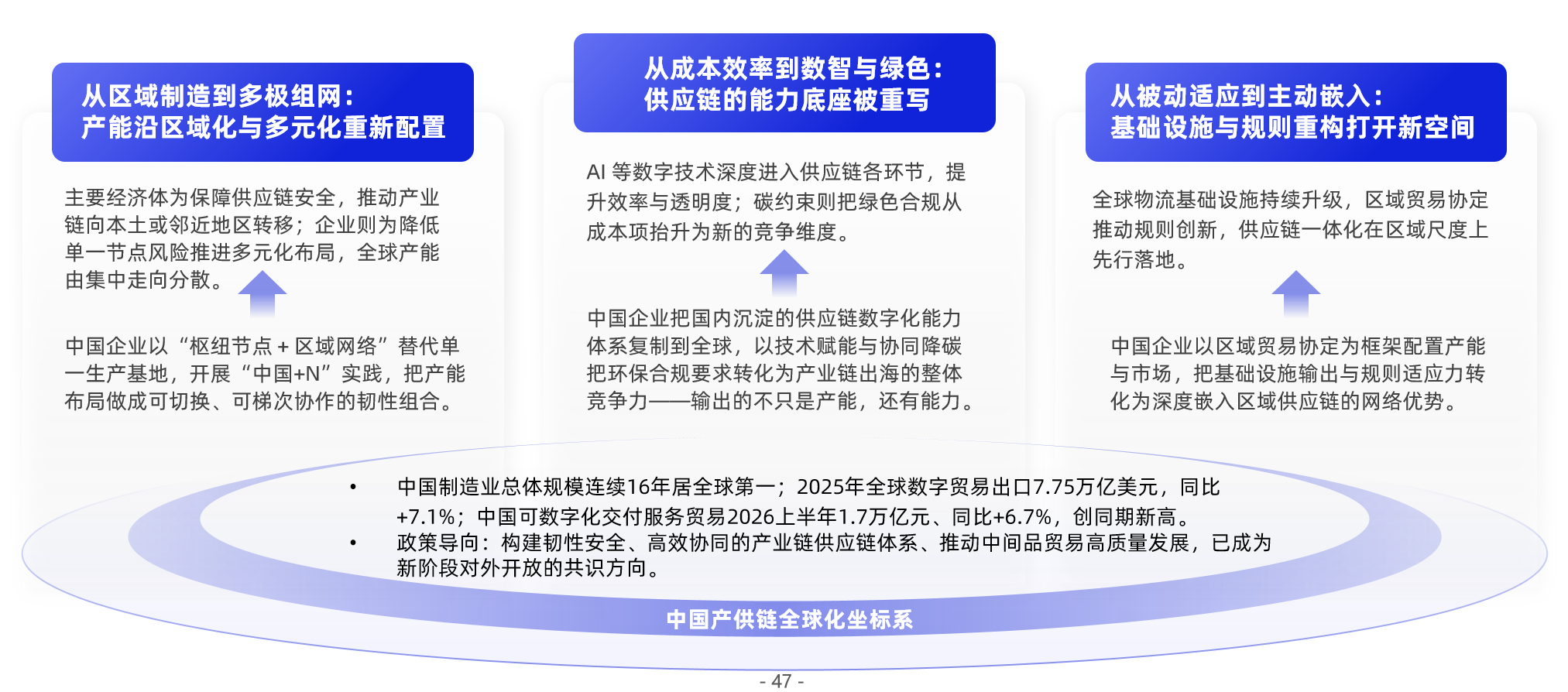
调研显示,企业全球化投入重心指向海外仓(34.5%)、产品研发(26.8%)、跨境供应(26.7%)与自主品牌(26.4%)。说明出海的命题已从完成交易变为构建能力:海外仓稳交付、研发强产品、供应链控成本、品牌创价值,四个端口都是需要持续运营的资产,能力与资源的组织方式成为产业出海的分水岭。
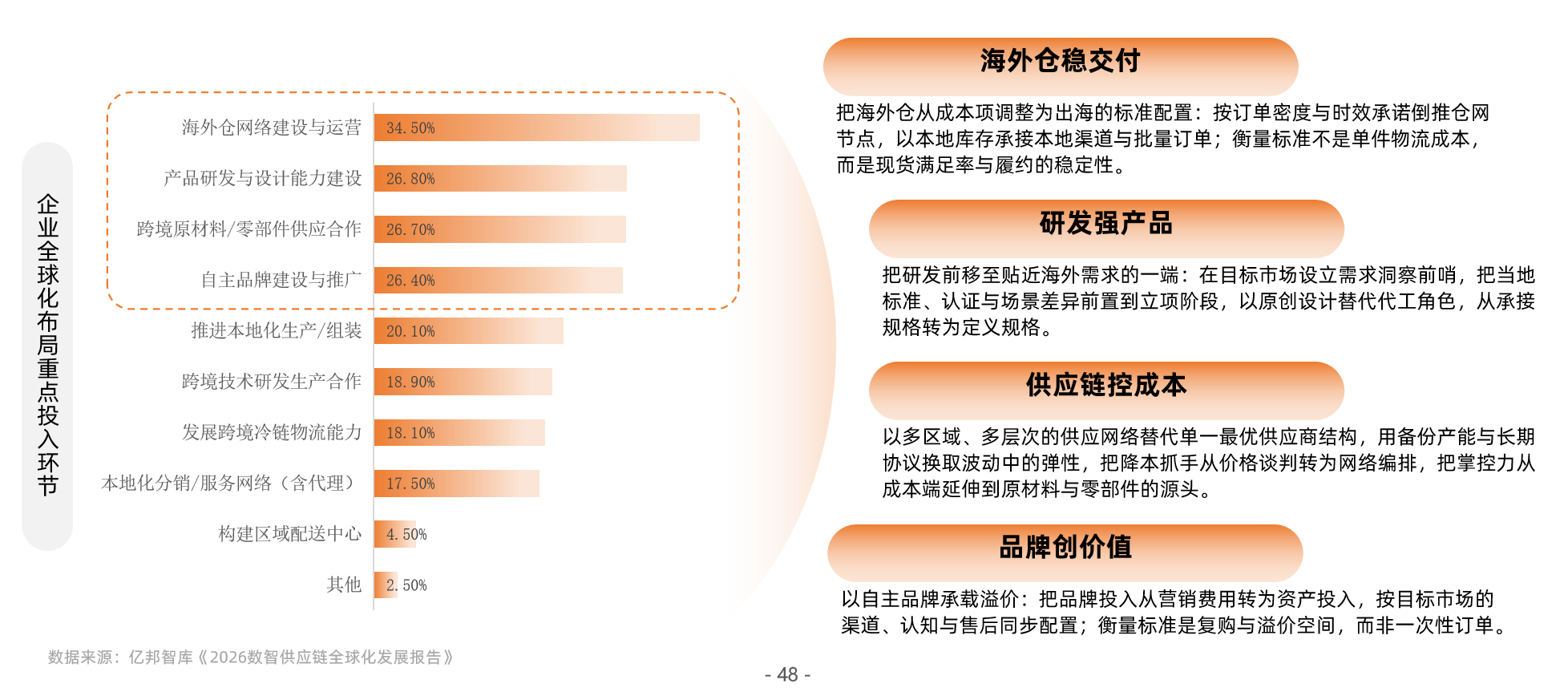
平台与服务商的出海形态也在同步进化。对平台而言,带着产业链纵深出海的平台以全链条控制力换取深度,握着全球流量与交易入口的平台以数据密度换取市场广度,长在产业集群里的平台以产能组织力换取成本与响应速度。以国联股份为例,它不复制国内贸易模式做单品跨境销售,而是以B2F反向供应链归集海外中小采购商分散订单,反向组织国内产业带协同生产、联合履约,并一体化打通关、税、汇、物流、海外仓。

对服务商而言,服务边界由物流交付向交易端延伸,服务能力由智能体重构,服务商从后端指令执行者走向前端,进化为掌握需求侧信息、提供智能调度能力的关键节点。以泛鼎国际为例,其以“运、仓、配、销”一体化拉通跨境供应链全链路,其中,属地化分销将渠道触达做深做实,数字中台拉通服务全链路,两者共同构筑出海服务壁垒,使泛鼎国际从物流服务商进化为品牌出海的生态合伙人。
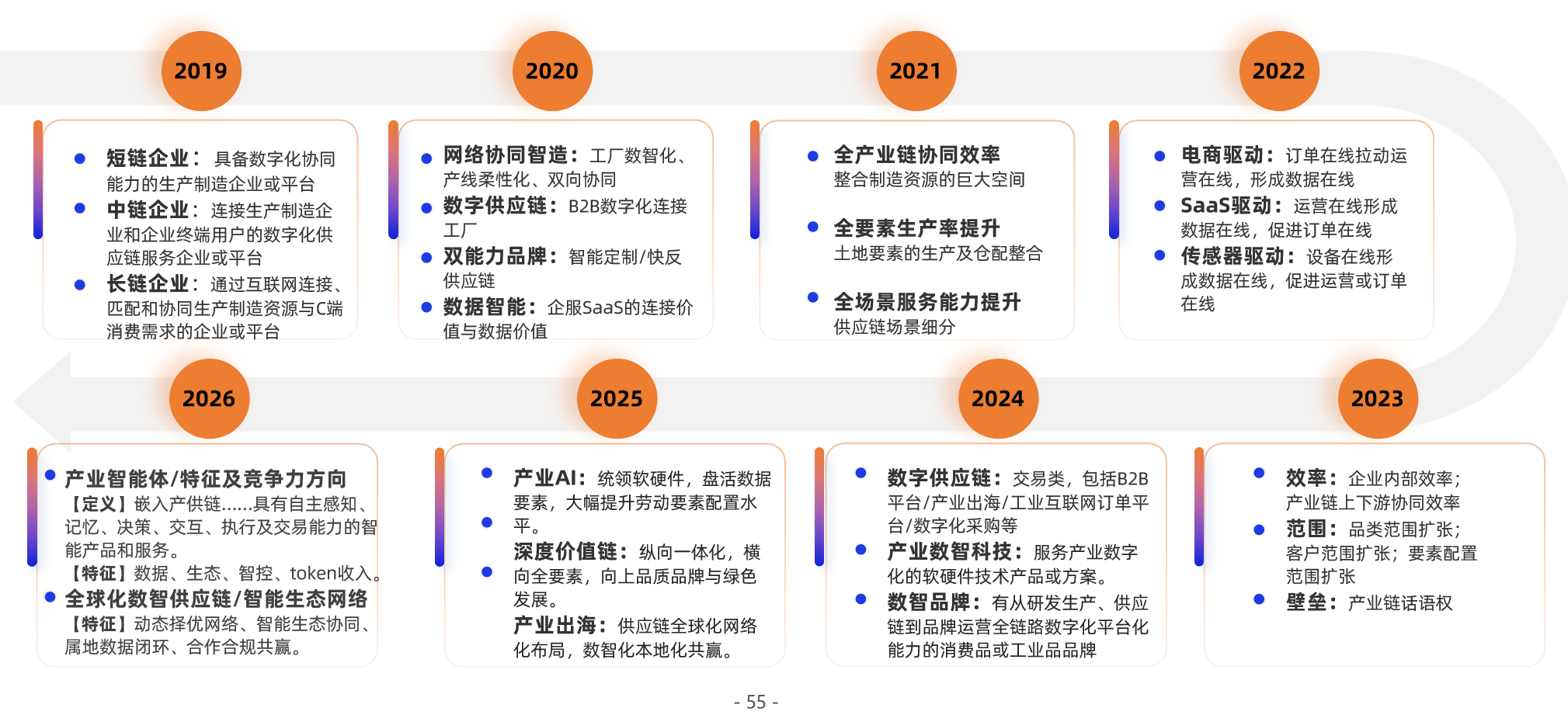
从2019年提出短链、中链、长链企业界定,到2026年正式定义产业智能体与全球化数智供应链,亿邦智库连续八年的研究年轮线,既是方法的传承,更是命题的创新——每一年的框架迭代,都来自一线产业实践中长出的希望。

报告全文及更多精彩内容,点击链接查看下载。

本文首发于 亿邦动力 官方网站

【版权提示】亿邦动力倡导尊重与保护知识产权。未经许可,任何人不得复制、转载、或以其他方式使用本网站的内容。如发现本站文章存在版权问题,烦请提供版权疑问、身份证明、版权证明、联系方式等发邮件至run@ebrun.com,我们将及时沟通与处理。

已点赞

+1

{{ praise_text }}

好文章,值得被更多人看到

FAQ回顾

产业智能体是什么?

产业智能体是嵌入产业链供应链各环节,以大模型为认知推理引擎,以运行数据、专业知识和机理约束为底座,贯通软件系统、生态网络、行业专家、数控及具身智能装备,具备自主感知、记忆、决策、交互、执行及交易能力的智能产品和服务;2026年从认知辅助升级为可精准执行的数字员工。

2026年产业互联网有哪些新趋势?

2026年产业互联网由AI与出海共同驱动“模态进化”,两条主线是产业智能体与全球化数智供应链。主流平台集中发布或迭代智能体,入口级承接未结构化意图,流程内执行预设流程;企业全球化投入重心包括海外仓34.5%、产品研发26.8%、跨境供应26.7%和自主品牌26.4%。

产业智能体市场规模有多大?

2025年中国企业级AI智能体市场规模212亿元,2029年有望突破3320亿元,复合增长率107%,居AI细分赛道之首。Token价格每下降50%会触发约1.42倍需求弹性;按Token计费、按效果付费、订阅制、交易佣金等变现路径逐渐清晰。

B2B平台如何用AI智能体改造交易流程?

B2B平台的需求入口、寻源选型、询价议价、下单订购、支付结算、售后服务等环节可由智能体逐段接管,实现从“人找系统”到“系统帮人思考”,人的角色收敛到为判断负责、为后果兜底。平台转而替买家做决定和执行,用智能体而非人力供给服务,按办成的事而非广告位收费。

产业互联网企业出海重点布局什么?

企业全球化投入重心指向海外仓34.5%、产品研发26.8%、跨境供应26.7%与自主品牌26.4%。出海从完成交易转向构建能力:海外仓稳交付、研发强产品、供应链控成本、品牌创价值;平台与服务商同步进化,如国联股份用B2F反向供应链组织产业带,泛鼎国际以“运仓配销”一体化拉通跨境供应链。

广告

下一篇

征集报名《品牌数字化服务商资源手册》

《品牌数字化服务商资源手册》展示数字化服务商风采,亿邦全年零售大会通发,触达更多资源,马上加入!

马上入驻

从“土”品类到全球化新品牌:水杯、工具与手电的出海破局之道

近年来,全球消费市场正在发生剧烈分化。安永2025年全球消费者调查显示,81%的消费者将价格敏感度列为购买决策的重要考量因素,但仍有33%的消费者愿意为产品价值的提升支付更高价格。

独家 跨境电商 亚马逊 平台

2026-11-20 19:53:42