• 亿邦公众号
    • APP下载

千峰访谈易梯陈康:从“人找货、人找人”回到“需求直达”

作者:亿邦动力 文章来源:亿邦动力

2026-11-17 15:10

作者:亿邦动力 文章来源:亿邦动力

2026-11-17 15:10

邦小白快读

EN
全文速览

对普通读者,文章最值得关注的是AI如何把电梯后市场的非标经验变成可操作工具,让需求直达供给。

1.需求侧智能选品:客户用自然语言描述故障,Agent直接给出可选型号与报价;选品耗时从1小时缩短到5分钟,匹配准确率从37%提升到91%,采购成本下降、复购率提升。

2.供需匹配与定价:以需求大厅聚合分散订单,反向匹配上游供应商,并用数据辅助定价与备货。

3.流程提效:内部OA的产品库、客户库、报价环节引入AI辅助录入与检索,降低新人上手门槛;统一用户库按手机号加公司名打通保险、配件、新梯、易梯四端用户。

4.落地提醒:行业数据高度非标,同一配件在不同厂商和地区叫法不一,需先用产品库做统一品类与型号映射层。

对品牌商,文章的价值在于电梯后市场品牌厂商如何借AI与平台提升产品匹配、渠道协同和定价效率。

1.产品与价格数据:易梯产品数据包含自有产品库、适配关系、价格带;配件SKU庞杂、型号强依赖现场参数且迭代快,品牌厂商可借产品库统一品类与型号映射层对齐行业语言。

2.渠道与供需协同:平台向上与品牌厂商打通产品与库存信息,向下与服务商、物业打通需求与服务数据;需求大厅聚合分散订单并反向匹配上游供应商,数据辅助定价与备货。

3.用户行为观察:统一用户库按手机号加公司名归集四端客户,形成完整需求轨迹,同一客户多重需求可被一次识别。

4.竞争启示:客户痛点是买不准、买不对、买贵了;AI选品使准确率从37%升至91%,采购成本下降、复购率提升。护城河在数据纵深、信任资产与履约能力,算法会趋同,数据和信任不易复制。

对卖家,文章提供了电梯后市场平台化增长机会、可学习模式与风险提示。

1.机会与市场:易梯聚焦电梯后市场配件、保险、新梯三条业务线,用数据和AI匹配分散需求与供给;中小维保公司和物业存在买不准、买不对、买贵了、一个配件问三五家供应商的痛点,AI选品可降低采购成本并提升复购。

2.可学习模式:需求大厅聚合分散订单,反向匹配上游供应商,数据辅助定价与备货;客户用自然语言描述故障,Agent给出型号与报价,选品耗时从1小时缩短到5分钟,准确率从37%提升到91%。

3.合作方式:向上与品牌厂商打通产品与库存信息,向下与服务商、物业打通需求与服务数据;统一用户库按手机号加公司名打通四端用户。

4.风险提示:电梯后市场数据高度非标、依赖行业Know-how,公开数据无法替代;同一配件在不同厂商和地区叫法不一,数据标准化是核心挑战,需先做品类与型号映射。

对工厂,文章核心启示是产品数据、非标配件匹配与数字化流程如何反哺生产和商业机会。

1.产品与设计需求:电梯配件SKU庞杂、型号强依赖现场参数、迭代快且真假混杂;工厂需要把产品库、适配关系、价格带沉淀为结构化数据,并用统一品类与型号映射层解决同一配件不同厂商、不同地区叫法不一的问题。

2.商业机会:平台以需求大厅聚合分散订单,反向匹配上游供应商,数据辅助定价与备货;工厂可向上与平台打通产品与库存信息,向下连接服务商、物业需求与服务数据。

3.数字化启示:把老法师选品经验结构化为知识库,用大模型做需求理解与型号匹配;内部OA的产品库、客户库、报价环节引入AI辅助录入与检索,降低新人上手门槛。

4.价值验证:选品耗时从1小时缩短到5分钟,匹配准确率从37%提升到91%,采购成本下降、复购率提升。

对服务商,文章重点是电梯后市场非标服务痛点、AI解决方案与行业趋势。

1.客户痛点:电梯后市场高度非标,配件型号多、迭代快、真假混杂,中小维保公司和物业买不准、买不对、买贵了,一个配件可能要问三五家供应商;过去依赖老法师经验。

2.解决方案:把资深选品人员判断逻辑结构化沉淀,结合产品库训练匹配能力,在需求大厅做成说人话就能找到对件的入口;客户用自然语言描述故障,Agent给出可选型号与报价;需求大厅聚合订单并反向匹配供应商,数据辅助定价备货。

3.效果数据:选品耗时从1小时缩短到5分钟,匹配准确率从37%提升到91%,采购成本下降、复购率提升,Token消耗和算力成本可控。

4.趋势判断:产业智能体把B2B从人找货、人找人变成需求直达;垂类大模型是胜负手,护城河在数据纵深、信任资产与履约能力。

对平台商,文章给出电梯后市场产业互联网平台的需求、做法与运营风控启示。

1.平台需求:电梯后市场高度非标,传统依赖老法师经验,供需分散且信息转述、人工比价造成效率损耗,平台需要把需求直接对上供给。

2.最新做法:易梯定位产业互联网平台,围绕配件、保险、新梯三条线;以需求大厅聚合分散订单、反向匹配上游供应商,数据辅助定价与备货;统一用户库按手机号加公司名打通四端用户;产品库做统一品类与型号映射层,先对齐语言再谈数据流动。

3.运营与协同:内部OA产品库、客户库、报价引入AI辅助录入与检索,降低新人门槛;向上与品牌厂商打通产品与库存信息,向下与服务商、物业打通需求与服务数据。

4.风向规避:数据标准化是核心挑战,同一配件叫法不一;护城河在数据纵深、信任资产与履约能力,算法会趋同,数据和信任难复制。

对研究者,文章呈现产业智能体改写B2B、垂类模型与数据要素的新动向。

1.产业新动向:易梯以产业互联网平台进入电梯后市场,做配件、保险、新梯三条线,用数据和AI把分散需求与供给匹配;产业智能体把B2B从人找货、人找人重新变成需求直达,压缩信息转述与人工比价损耗。

2.技术与商业模式:垂类大模型有长远必要,通用模型懂语言但不懂电梯后市场具体替换型号;需用垂类数据加行业知识结构喂养。护城河三层:数据纵深是可闭环交易数据,信任资产是客户愿交真实需求,履约能力是线上匹配后线下真交付;算法会趋同,数据和信任不会。

3.新问题:行业数据高度非标、知识碎片化,同一配件不同厂商和地区叫法不一,数据标准化需产品库统一映射;路径以自有产业数据深耕为主,同时推进跨主体协同。

4.案例启示:老法师经验AI化使选品耗时从1小时到5分钟、准确率从37%到91%,采购成本下降、复购率提升。

声明:快读内容全程由AI生成,请注意甄别信息。如您发现问题,请发送邮件至 run@ebrun.com 。

我是 品牌商 卖家 工厂 服务商 平台商 研究者 帮我再读一遍。

Quick Summary

For general readers, the most notable point is how AI turns non-standardized experience in the elevator aftermarket into actionable tools, connecting demand directly to supply.

1. Intelligent product selection on the demand side: customers describe faults in natural language, and an Agent returns available models and quotes; selection time drops from 1 hour to 5 minutes, matching accuracy rises from 37% to 91%, procurement costs fall, and repurchase rates increase.

2. Supply-demand matching and pricing: a demand hall aggregates fragmented orders, matches them back to upstream suppliers, and uses data to support pricing and stocking.

3. Process efficiency: AI-assisted entry and retrieval are introduced into the internal OA product library, customer library, and quoting workflows, lowering the onboarding barrier for new staff; a unified user database links users across insurance, parts, new elevators, and Yiti by phone number plus company name.

4. Implementation caveat: industry data is highly non-standardized; the same part has different names across manufacturers and regions, so a product library must first establish a unified category and model mapping layer.

For brand manufacturers, the value lies in how brands in the elevator aftermarket can use AI and platforms to improve product matching, channel coordination, and pricing efficiency.

1. Product and price data: Yiti's product data includes its own product library, fit relationships, and price bands; parts SKUs are numerous, models depend heavily on on-site parameters, and iterations are fast. Brand manufacturers can use the product library to build a unified category and model mapping layer and align with industry language.

2. Channel and supply-demand coordination: the platform connects upward with brand manufacturers on product and inventory information and downward with service providers and property managers on demand and service data; the demand hall aggregates fragmented orders and matches them back to upstream suppliers, with data supporting pricing and stocking.

3. User behavior observation: a unified user database groups customers across four segments by phone number plus company name, forming a complete demand trail and allowing multiple needs from the same customer to be identified at once.

4. Competitive implications: customer pain points are buying the wrong fit, buying the wrong item, and overpaying; AI selection raises accuracy from 37% to 91%, lowers procurement costs, and improves repurchase rates. The moat lies in data depth, trust assets, and fulfillment capability; algorithms will converge, but data and trust are hard to replicate.

For sellers, the article offers platform-based growth opportunities, learnable models, and risk reminders in the elevator aftermarket.

1. Opportunity and market: Yiti focuses on three business lines in the elevator aftermarket—parts, insurance, and new elevators—using data and AI to match fragmented demand and supply. Small and midsize maintenance companies and property managers suffer from inaccurate buying, wrong buying, overpaying, and having to ask three to five suppliers about one part; AI selection can lower procurement costs and increase repurchases.

2. Learnable model: the demand hall aggregates fragmented orders, matches them back to upstream suppliers, and uses data to support pricing and stocking; customers describe faults in natural language, and an Agent returns models and quotes; selection time drops from 1 hour to 5 minutes, and accuracy rises from 37% to 91%.

3. Cooperation approach: connect upward with brand manufacturers on product and inventory information and downward with service providers and property managers on demand and service data; a unified user database links four user segments by phone number plus company name.

4. Risk reminder: elevator aftermarket data is highly non-standardized and depends on industry know-how; public data cannot replace it. The same part has different names across manufacturers and regions, so data standardization is the core challenge, and category and model mapping must come first.

For factories, the core takeaway is how product data, non-standard parts matching, and digital workflows can feed back into production and commercial opportunities.

1. Product and design needs: elevator parts SKUs are numerous, models depend heavily on on-site parameters, iterations are fast, and genuine and counterfeit products are mixed; factories need to turn product libraries, fit relationships, and price bands into structured data and use a unified category and model mapping layer to solve inconsistent naming for the same part across manufacturers and regions.

2. Commercial opportunity: the platform uses a demand hall to aggregate fragmented orders, match them back to upstream suppliers, and support pricing and stocking with data; factories can connect upward with the platform on product and inventory information and downward with service providers and property managers on demand and service data.

3. Digitalization insight: structure veteran selection experience into a knowledge base, use large models for demand understanding and model matching, and introduce AI-assisted entry and retrieval into the internal OA product library, customer library, and quoting workflows to lower onboarding barriers for new staff.

4. Value validation: selection time drops from 1 hour to 5 minutes, matching accuracy rises from 37% to 91%, procurement costs fall, and repurchase rates increase.

For service providers, the article focuses on non-standard service pain points in the elevator aftermarket, AI solutions, and industry trends.

1. Customer pain points: the elevator aftermarket is highly non-standardized, with many part models, fast iteration, and mixed genuine and counterfeit products. Small and midsize maintenance companies and property managers buy the wrong fit, buy the wrong item, overpay, and may have to ask three to five suppliers about one part; in the past they relied on veteran expertise.

2. Solution: structure and preserve experienced selection staff's judgment logic, combine it with the product library to train matching capability, and build an entry point in the demand hall where customers can find the right part by speaking naturally; customers describe faults in natural language, and an Agent returns available models and quotes; the demand hall aggregates orders, matches them back to suppliers, and uses data to support pricing and stocking.

3. Performance data: selection time drops from 1 hour to 5 minutes, matching accuracy rises from 37% to 91%, procurement costs fall, and repurchase rates increase; token consumption and compute costs remain controllable.

4. Trend judgment: industrial agents change B2B from people finding goods and people finding people to demand directly reaching supply; vertical large models are the deciding factor, and the moat lies in data depth, trust assets, and fulfillment capability.

For platform operators, the article offers lessons on demand, practices, and operational risk control for an industrial internet platform in the elevator aftermarket.

1. Platform demand: the elevator aftermarket is highly non-standardized and traditionally relies on veteran expertise; supply and demand are fragmented, and information relay and manual price comparison cause efficiency losses, so the platform needs to connect demand directly to supply.

2. Latest approach: Yiti positions itself as an industrial internet platform around three lines—parts, insurance, and new elevators. It uses a demand hall to aggregate fragmented orders and match them back to upstream suppliers, with data supporting pricing and stocking; a unified user database links four user segments by phone number plus company name; the product library builds a unified category and model mapping layer, aligning language before discussing data flows.

3. Operations and coordination: AI-assisted entry and retrieval are introduced into the internal OA product library, customer library, and quoting, lowering the barrier for new staff; connect upward with brand manufacturers on product and inventory information and downward with service providers and property managers on demand and service data.

4. Risk avoidance: data standardization is the core challenge because the same part has different names; the moat lies in data depth, trust assets, and fulfillment capability. Algorithms will converge, but data and trust are hard to replicate.

For researchers, the article presents new developments in how industrial agents are rewriting B2B, vertical models, and data as a production factor.

1. New industry development: Yiti enters the elevator aftermarket as an industrial internet platform, operating three lines—parts, insurance, and new elevators—and using data and AI to match fragmented demand and supply. Industrial agents turn B2B from people finding goods and people finding people back into demand reaching supply directly, reducing losses from information relay and manual price comparison.

2. Technology and business model: vertical large models are necessary in the long run; general models understand language but not the specific replacement models in the elevator aftermarket. They need to be fed with vertical data and structured industry knowledge. The moat has three layers: data depth means closed-loop transaction data; trust assets mean customers are willing to submit real demand; fulfillment capability means real offline delivery after online matching. Algorithms will converge; data and trust will not.

3. New questions: industry data is highly non-standardized and knowledge is fragmented; the same part has different names across manufacturers and regions, so data standardization requires a unified product-library mapping. The path is mainly deep cultivation of proprietary industry data while advancing cross-party coordination.

4. Case takeaway: turning veteran experience into AI shortens selection time from 1 hour to 5 minutes, raises accuracy from 37% to 91%, lowers procurement costs, and improves repurchase rates.

Disclaimer: The "Quick Summary" content is entirely generated by AI. Please exercise discretion when interpreting the information. For issues or corrections, please email run@ebrun.com .

I am a Brand Seller Factory Service Provider Marketplace Seller Researcher Read it again.

【亿邦原创】近日,在2026千峰奖访谈期间,亿邦动力、亿邦智库与易梯创始人陈康,围绕「AI与出海带来的模态进化」深度交流。
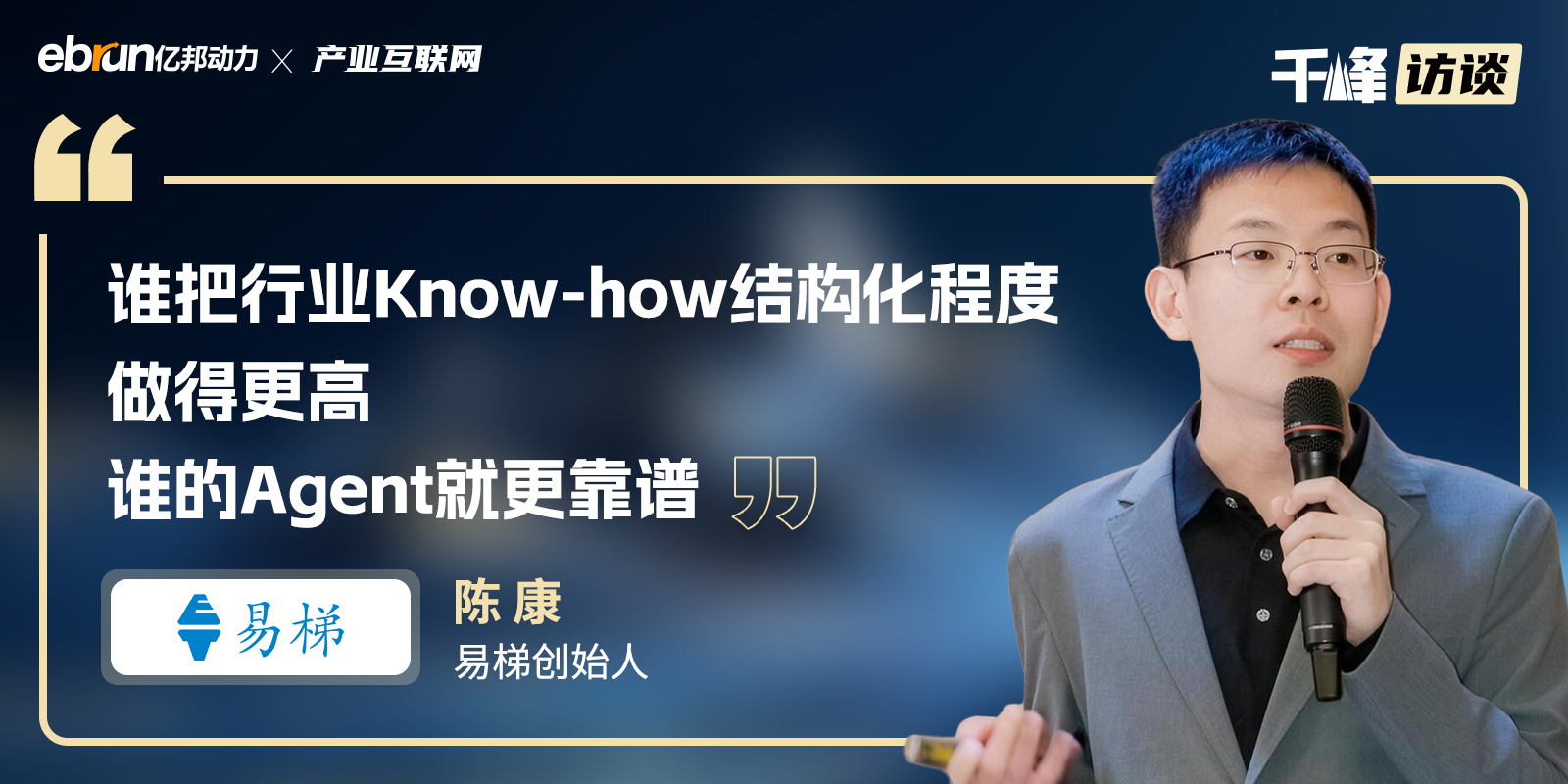
亿邦: 本届千峰奖以「AI与出海带来的模态进化」为核心主题。结合电梯行业,您如何理解这一轮由AI和全球化共同驱动的产业模态进化?易梯的定位和业务模式是什么?

陈康: 易梯聚焦电梯后市场,做配件、保险、新梯三条业务线。这一轮变化,我们感受最深的是:电梯后市场高度非标,过去靠“老法师”的经验,现在AI可以把经验结构化、把需求直接对上供给。易梯的定位是电梯后市场的产业互联网平台,业务模式围绕配件、保险、新梯三条线展开,核心是用数据和AI把分散的需求和供给匹配起来。

亿邦: 目前AI落地在哪些核心业务环节?

陈康: 集中在三个地方。一是需求侧智能选品。电梯配件SKU庞杂、型号强依赖现场参数,过去高度依赖“老法师”人工判断。我们把多年选品经验沉淀为知识库,用大模型做需求理解与型号匹配——客户用自然语言描述故障,Agent直接给出可选型号与报价。二是供需匹配与定价。以“需求大厅”聚合分散订单,反向匹配上游供应商,用数据辅助定价与备货。三是流程智能提效。内部OA的产品库、客户库、报价环节引入AI辅助录入与检索,显著降低新人上手门槛。外部AI解决“需求—供给”两端匹配效率;内部我们正以统一用户库(手机号+公司名)打通保险、配件、新梯、易梯四端用户,让同一客户的多重需求被一次识别。

亿邦: 能否分享一个最具代表性的“AI+价值链”案例?

陈康: 最典型的是电梯配件“老法师经验AI化”项目。行业共性痛点是:电梯配件型号多、迭代快、真假混杂,中小维保公司和物业普遍“买不准、买不对、买贵了”,一个配件可能要问三五家供应商。做法是把资深选品人员的判断逻辑(什么故障对应什么件、什么件可替代、什么价合理)结构化沉淀,结合产品库数据训练匹配能力,在需求大厅做成“说人话就能找到对件”的入口。可量化价值:选品耗时从1小时缩短至5分钟;匹配准确率由37%提升至91%;采购成本下降,复购率提升。Token消耗和算力成本目前处于可控范围。

亿邦: 数据竞争力方面,易梯的数据分几层?更侧重自有数据还是跨主体协同?

陈康: 数据是易梯从“贸易型”走向“平台型”的关键,分三层:产品数据(自有产品库、适配关系、价格带)、客户数据(统一用户库按“手机号+公司名”归集四端客户,形成完整需求轨迹)、交易数据(需求大厅沉淀的询价、成交、履约数据)。路径上以自有产业数据深耕为主——电梯后市场数据高度非标、极度依赖行业Know-how,公开数据无法替代;同时推进跨主体协同:向上与品牌厂商打通产品与库存信息,向下与服务商、物业打通需求与服务数据。核心挑战是数据标准化:同一个配件在不同厂商、不同地区叫法不一。我们的应对是用产品库做统一的品类与型号映射层——先把“语言”对齐,再谈数据流动。

亿邦: 您怎么看产业智能体改写B2B?垂类大模型是否有长远发展必要?AI护城河在何处?

陈康: 产业智能体会把B2B从“人找货、人找人”重新变成“需求直达”。传统B2B的效率损耗大量发生在信息转述与人工比价上,智能体正是把这个环节压缩掉。垂类大模型有长远必要,而且是胜负手。通用模型懂语言,不懂“这台梯的层门锁用哪个型号能替换”。电梯后市场知识高度碎片化、非标,必须靠垂类数据+行业知识结构来喂——谁把行业Know-how结构化程度做得更高,谁的Agent就更靠谱。AI护城河我看三层:数据纵深(不是数据量,是可闭环的交易数据)、信任资产(客户愿不愿把真实需求交给你的平台,比算法难复制得多)、履约能力(线上匹配完,线下能不能真交付)。算法会趋同,数据和信任不会。

作为TO B领域年度风向标,“2026第八届亿邦产业互联网年会暨首届产业智能体大会”将于2026年11月20日在北京召开。主题定为“AI与出海带来的模态进化”,聚焦产业智能体落地、AI供应链价值重构、数据要素与TOKEN经济、产业出海新生态等前沿议题深度思辨。大会将集结学界权威、央国企标杆、产业龙头、投资机构、服务生态伙伴,汇聚产业核心力量、拆解产业数智化转型路径、分享前沿实战经验。同期还将发布年度产业互联网报告及标杆案例,举办决策人闭门会、“千峰奖”颁奖盛典。

本文首发于 亿邦动力 官方网站

【版权提示】亿邦动力倡导尊重与保护知识产权。未经许可,任何人不得复制、转载、或以其他方式使用本网站的内容。如发现本站文章存在版权问题,烦请提供版权疑问、身份证明、版权证明、联系方式等发邮件至run@ebrun.com,我们将及时沟通与处理。

已点赞

+1

{{ praise_text }}

好文章,值得被更多人看到

FAQ回顾

易梯是什么平台?主要业务有哪些?

易梯是聚焦电梯后市场的产业互联网平台,业务包括配件、保险、新梯三条线,核心是用数据和AI把分散的需求与供给匹配起来,并以统一用户库打通四端客户需求。

电梯后市场配件采购为什么难?

电梯配件型号多、迭代快、真假混杂,中小维保公司和物业常面临买不准、买不对、买贵了的问题,一个配件可能要问三五家供应商,过去选品高度依赖“老法师”人工判断。

AI如何提升电梯配件选品与匹配效率?

易梯把资深选品人员的判断逻辑结构化,结合产品库数据训练匹配能力,客户用自然语言描述故障,Agent即可给出可选型号与报价;选品耗时从1小时缩短至5分钟,匹配准确率从37%提升至91%。

电梯后市场为什么需要垂类大模型?

通用模型懂语言,但不懂“这台梯的层门锁用哪个型号能替换”。电梯后市场知识高度碎片化、非标,需要垂类数据和行业知识结构来训练,行业Know-how结构化程度越高,Agent越靠谱。

产业智能体如何改变B2B供需匹配?

产业智能体把B2B从“人找货、人找人”重新变成“需求直达”,压缩传统B2B中信息转述与人工比价的效率损耗,让分散需求和供给更直接地匹配,提升交易与履约效率。

广告

下一篇

征集报名《品牌数字化服务商资源手册》

《品牌数字化服务商资源手册》展示数字化服务商风采,亿邦全年零售大会通发,触达更多资源,马上加入!

马上入驻

千峰访谈普渡机器人张涛:让智能能力从单一产品向更多应用场景延伸

本届千峰奖访谈中,张涛围绕AI与出海带来的模态进化,分享了普渡机器人在商用服务机器人方向的实践与判断。

具身智能 B2B

2026-11-17 15:05:55