• 亿邦公众号
    • APP下载

星源智×中力|四大场景展现真实生产力 具身智能再拓作业边界

作者:龚作仁 文章来源:Laborer

2026-11-17 14:56

作者:龚作仁 文章来源:Laborer

2026-11-17 14:56

邦小白快读

EN
全文速览

总:文章用四大场景展示具身智能在工业物流中的真实落地。

1.全向无人装卸转运:机器人支持直行、横移、斜行和原地回转,可减少狭窄空间反复挪车,并打通货车自主装卸、货物交接、厂内自主转运的连续流程。

2.四足机器狗末端配送:机械臂自动装货、机器狗自主配送与货架落箱交接相衔接,系统识别通道、人员、障碍物和目标区域,实时调整路线,完成进入、落箱、撤出。

3.双车协同具身装卸:1分钟内完成协同装卸,雷视融合识别车厢边界、托盘和货物位置,货车边界标定误差由约0.77米降至约0.10米,端侧视觉实现1至2厘米级入叉偏差实时修正。

4.擎天柱高位作业:面向十米级高位场景,自主识别目标、规划整机移动与作业机构协同动作,实时视觉闭环校准,可拓展至设备检修、高空巡检,规避人员高空作业风险。

总:联合活动与场景化展示强化了品牌技术形象和产品研发叙事。

1.品牌营销:中力第十一届双11活动期间,星源智与中力联合打造四大场景集中亮相,展示合作一周年成果,形成联合发布、场景展示和真实作业验证的品牌传播素材。

2.产品研发:双方围绕真实作业需求,推进具身大脑与机器人装备结合,全向装卸机器人、四足机器狗、双车协同装卸和擎天柱等产品能力持续演进。

3.品牌价值表达:中力董事长何金辉提出,工业搬运智能化转型要从真实物流场景出发,让机器人完成装卸、转运、仓储等作业闭环,并用机器人实时产生正确数据,通过AI优化提高效率、降低成本。

4.技术品牌资产:可关注具身大脑、RoboBrain Pro、雷视融合、端侧视觉闭环等关键词,以及从单点场景方案走向能力持续泛化与迭代升级的品牌故事。

总:工业物流自动化和末端配送场景带来可关注的市场机会与落地启示。

1.增长市场:具身智能应用从单个设备执行向多环节连续协同拓展,覆盖装卸、转运、末端配送和高位作业,显示物流自动化需求正在向复杂现场延伸。

2.可学习点:围绕真实作业需求推进,通过设备间任务与状态同步实现货车自主装卸、货物交接、厂内自主转运连接;双车协同做到1分钟节拍,边界标定误差由约0.77米降至约0.10米,入叉偏差实现1至2厘米级实时修正。

3.合作方式:星源智提供具身大脑、协同调度、环境感知、路径规划与落箱处理等上层能力,中力提供全向装卸机器人、四足机器狗、无人叉车和擎天柱等装备,技术方与装备方联合打造场景。

4.机会与风险提示:末端配送需应对临时障碍和动态人员,装卸需应对货车停靠偏差、托盘位置变化,复杂现场的稳定适配是落地关键。

总:文章对产品设计、生产作业和数字化推进给出了具体启示。

1.产品设计需求:全向装卸机器人需支持直行、横移、斜行和原地回转;末端配送需衔接机械臂自动装货、四足机器狗自主配送与货架落箱交接;双车协同需雷视融合和端侧视觉;擎天柱面向十米级高位作业。

2.生产作业启示:系统结合任务统一规划底盘移动和货叉动作,设备间同步任务与状态,把货车自主装卸、货物交接、厂内自主转运连接起来,推动物流自动化从单设备执行走向多环节连续协同。

3.数字化启示:用机器人实时产生数据、正确产生数据,并通过AI优化提高生产效率、降低成本;在真实工况中沉淀模型与端侧闭环能力,推动从适配单一任务走向自主迁移、举一反三。

4.商业机会:擎天柱可承接高位货架拣选,并可拓展至设备检修、高空巡检,降低人工登高作业安全风险。

总:行业趋势、客户痛点与解决方案在四大场景中对应清晰。

1.行业趋势:具身智能在工业物流从单点场景方案走向能力持续泛化与迭代升级,应用边界从装卸延伸至末端配送和高位作业。

2.客户痛点:狭窄空间反复掉头、转向和挪车影响效率;最后一公里配送既要自主到达又要完成货物交接;货车停靠有偏差、托盘位置有变化时难以准确装卸;高位作业存在人员安全风险。

3.解决方案:全向底盘运动学模型结合货物位置与周围空间规划移动路线和货叉动作;环境感知、定位导航、路径规划与避障支持机器狗自主配送和落箱撤出;雷视融合识别车厢边界、托盘和货物,端侧视觉实时修正入叉偏差;实时视觉闭环校准提升高位定位精度与稳定性。

4.技术抓手:具身大脑、协同调度、任务与状态同步、端侧闭环是服务商可重点关注的能力组合。

总:平台可关注物流履约自动化、多环节协同和真实场景验证价值。

1.需求与问题:工业搬运需要让机器人完成装卸、转运、仓储等作业闭环;末端配送需要解决最后一段路的自主到达和货物交接;高位作业需要规避人员高空安全风险。

2.最新做法参考:星源智与中力在双11活动期间集中展示四大场景,用真实作业验证具身大脑与装备结合;通过设备间任务与状态同步,把货车自主装卸、货物交接、厂内自主转运连接起来。

3.运营管理启示:双车协同根据两台无人叉车的位置、作业状态和任务进度动态分配任务,1分钟内完成协同装卸;雷视融合和端侧视觉处理停靠偏差、托盘变化,边界标定误差降至约0.10米,入叉偏差实现1至2厘米级修正。

4.风向规避:临时障碍、动态人员、货车停靠偏差和托盘位置变化是复杂现场落地难点,需用实时感知、任务调度和闭环校准降低作业不确定性。

总:文章呈现了具身智能在工业物流的产业新动向与待解问题。

1.新动向:星源智与中力从首次联合发布具身装卸技术,到四大场景集中落地,覆盖全向无人装卸转运、四足机器狗末端配送、双车协同具身装卸和擎天柱十米高位作业,显示合作从单点方案走向多场景验证。

2.技术进展:具身大脑在协同调度、环境感知、自主规划与精准操作中应用;雷视融合、端侧视觉、实时视觉闭环校准等能力支撑双车1分钟节拍,货车边界标定误差由约0.77米降至约0.10米,入叉偏差实现1至2厘米级实时修正。

3.商业模式:技术方提供具身大脑与上层应用能力,装备方提供本体,联合打造真实作业场景,并在落地中沉淀模型与端侧闭环能力。

4.新问题与启示:从适配单一任务走向自主迁移、举一反三,仍需在复杂现场持续进化;何金辉强调用机器人实时产生正确数据并通过AI优化效率成本,指向数据闭环和物理AGI探索。

声明:快读内容全程由AI生成,请注意甄别信息。如您发现问题,请发送邮件至 run@ebrun.com 。

我是 品牌商 卖家 工厂 服务商 平台商 研究者 帮我再读一遍。

Quick Summary

Overview: The article uses four scenarios to show how embodied intelligence is actually deployed in industrial logistics.

1. Omnidirectional unmanned loading, unloading, and transfer: the robot supports forward movement, lateral movement, diagonal movement, and in-place rotation; it reduces repeated vehicle repositioning in narrow spaces and connects autonomous truck loading/unloading, cargo handover, and autonomous in-plant transfer into a continuous workflow.

2. Last-mile delivery by quadruped robot: the system links robotic-arm automatic loading, autonomous delivery by the quadruped robot, and shelf drop-off handover; it identifies aisles, personnel, obstacles, and target areas, adjusts routes in real time, and completes entry, drop-off, and exit.

3. Dual-vehicle collaborative embodied loading/unloading: it completes collaborative loading/unloading within one minute; radar-vision fusion identifies truck boundaries, pallets, and cargo positions; truck boundary calibration error is reduced from about 0.77 meters to about 0.10 meters; on-device vision enables real-time correction of fork-entry deviation at the 1-2 cm level.

4. Qingtianzhu high-altitude operations: for 10-meter-level high-altitude scenarios, it autonomously identifies targets, plans coordinated actions of whole-machine movement and operating mechanisms, and calibrates through a real-time visual closed loop; it can be extended to equipment maintenance and high-altitude inspection, avoiding the risk of personnel working at height.

Overview: The joint campaign and scenario-based demonstrations strengthened the brand's technology image and product R&D narrative.

1. Brand marketing: during Zhongli's 11th Double 11 event, Xingyuanzhi and Zhongli jointly presented four scenarios, showcasing the first-anniversary results of their cooperation and creating brand communication assets through joint launch, scenario demonstration, and real-operation validation.

2. Product R&D: the two parties advanced the combination of the embodied brain and robotic equipment around real operational needs; product capabilities such as omnidirectional loading/unloading robots, quadruped robots, dual-vehicle collaborative loading/unloading, and Qingtianzhu continued to evolve.

3. Brand value expression: He Jinhui, chairman of Zhongli, proposed that the intelligent transformation of industrial handling should start from real logistics scenarios, enable robots to complete closed-loop operations such as loading/unloading, transfer, and warehousing, and use robots to generate correct data in real time, improving efficiency and reducing costs through AI optimization.

4. Technology brand assets: keywords such as embodied brain, RoboBrain Pro, radar-vision fusion, and on-device visual closed loop are worth attention, as is the brand story of moving from single-point scenario solutions to continuous capability generalization and iterative upgrading.

Overview: Industrial logistics automation and last-mile delivery scenarios offer market opportunities and implementation lessons worth watching.

1. Growth market: embodied intelligence applications are expanding from single-device execution to continuous multi-stage collaboration, covering loading/unloading, transfer, last-mile delivery, and high-altitude operations, indicating that logistics automation demand is extending to complex sites.

2. Lessons to learn: advance around real operational needs; synchronize tasks and status across devices to connect autonomous truck loading/unloading, cargo handover, and autonomous in-plant transfer; dual-vehicle collaboration achieves a one-minute cycle; boundary calibration error drops from about 0.77 meters to about 0.10 meters; fork-entry deviation is corrected in real time at the 1-2 cm level.

3. Cooperation model: Xingyuanzhi provides upper-layer capabilities such as the embodied brain, collaborative scheduling, environmental perception, path planning, and drop-off handling; Zhongli provides equipment such as omnidirectional loading/unloading robots, quadruped robots, unmanned forklifts, and Qingtianzhu; technology providers and equipment providers jointly build scenarios.

4. Opportunities and risks: last-mile delivery must handle temporary obstacles and dynamic personnel; loading/unloading must handle truck parking deviations and pallet position changes; stable adaptation in complex sites is key to deployment.

Overview: The article offers specific implications for product design, production operations, and digitalization.

1. Product design requirements: omnidirectional loading/unloading robots need to support forward movement, lateral movement, diagonal movement, and in-place rotation; last-mile delivery needs to link robotic-arm automatic loading, autonomous delivery by quadruped robots, and shelf drop-off handover; dual-vehicle collaboration needs radar-vision fusion and on-device vision; Qingtianzhu targets 10-meter-level high-altitude operations.

2. Production operation implications: the system combines tasks to plan chassis movement and fork actions in a unified way, synchronizes tasks and status across devices, and connects autonomous truck loading/unloading, cargo handover, and autonomous in-plant transfer, driving logistics automation from single-device execution to continuous multi-stage collaboration.

3. Digitalization implications: use robots to generate data in real time and generate correct data, and improve production efficiency and reduce costs through AI optimization; accumulate models and on-device closed-loop capabilities in real operating conditions, and move from adapting to a single task toward autonomous transfer and generalization.

4. Business opportunities: Qingtianzhu can handle high-bay rack picking and can be extended to equipment maintenance and high-altitude inspection, reducing safety risks from manual work at height.

Overview: Industry trends, customer pain points, and solutions map clearly onto the four scenarios.

1. Industry trends: embodied intelligence in industrial logistics is moving from single-point scenario solutions to continuous capability generalization and iterative upgrading, with application boundaries extending from loading/unloading to last-mile delivery and high-altitude operations.

2. Customer pain points: repeated U-turns, steering, and repositioning in narrow spaces hurt efficiency; last-mile delivery requires both autonomous arrival and cargo handover; accurate loading/unloading is difficult when trucks park with deviations and pallet positions change; high-altitude operations carry personnel safety risks.

3. Solutions: an omnidirectional chassis kinematics model combines cargo position and surrounding space to plan movement routes and fork actions; environmental perception, positioning and navigation, path planning, and obstacle avoidance support autonomous delivery and drop-off/exit by the quadruped robot; radar-vision fusion identifies truck boundaries, pallets, and cargo, while on-device vision corrects fork-entry deviation in real time; real-time visual closed-loop calibration improves high-altitude positioning accuracy and stability.

4. Technology focus: the embodied brain, collaborative scheduling, task and status synchronization, and on-device closed loop are capability combinations that service providers can prioritize.

Overview: Platforms can focus on the value of automated logistics fulfillment, multi-stage collaboration, and real-scenario validation.

1. Needs and problems: industrial handling requires robots to complete closed-loop operations such as loading/unloading, transfer, and warehousing; last-mile delivery needs to solve autonomous arrival and cargo handover on the final leg; high-altitude operations need to avoid personnel safety risks from working at height.

2. Latest practice reference: Xingyuanzhi and Zhongli showcased four scenarios during the Double 11 event, using real operations to validate the combination of the embodied brain and equipment; by synchronizing tasks and status across devices, they connect autonomous truck loading/unloading, cargo handover, and autonomous in-plant transfer.

3. Operations management implications: dual-vehicle collaboration dynamically assigns tasks based on the positions, operating status, and task progress of two unmanned forklifts, completing collaborative loading/unloading within one minute; radar-vision fusion and on-device vision handle parking deviations and pallet changes, reducing boundary calibration error to about 0.10 meters and enabling 1-2 cm-level correction of fork-entry deviation.

4. Risk avoidance: temporary obstacles, dynamic personnel, truck parking deviations, and pallet position changes are difficulties in complex-site deployment; real-time perception, task scheduling, and closed-loop calibration are needed to reduce operational uncertainty.

Overview: The article presents new industry developments and open questions for embodied intelligence in industrial logistics.

1. New developments: Xingyuanzhi and Zhongli moved from their first joint launch of embodied loading/unloading technology to the concentrated deployment of four scenarios, covering omnidirectional unmanned loading/unloading and transfer, last-mile delivery by quadruped robots, dual-vehicle collaborative embodied loading/unloading, and Qingtianzhu 10-meter high-altitude operations, showing that the cooperation has moved from a single-point solution to multi-scenario validation.

2. Technical progress: the embodied brain is applied in collaborative scheduling, environmental perception, autonomous planning, and precise operation; capabilities such as radar-vision fusion, on-device vision, and real-time visual closed-loop calibration support the one-minute dual-vehicle cycle; truck boundary calibration error drops from about 0.77 meters to about 0.10 meters; fork-entry deviation achieves 1-2 cm-level real-time correction.

3. Business model: the technology party provides the embodied brain and upper-layer application capabilities, the equipment party provides the hardware, and they jointly build real operating scenarios while accumulating models and on-device closed-loop capabilities during deployment.

4. New questions and implications: moving from adapting to a single task toward autonomous transfer and generalization still requires continuous evolution in complex sites; He Jinhui emphasizes using robots to generate correct data in real time and optimizing efficiency and cost through AI, pointing toward data closed loops and the exploration of physical AGI.

Disclaimer: The "Quick Summary" content is entirely generated by AI. Please exercise discretion when interpreting the information. For issues or corrections, please email run@ebrun.com .

I am a Brand Seller Factory Service Provider Marketplace Seller Researcher Read it again.

11月7-13日,浙江中力机械股份有限公司(简称“中力股份”,股票代码:603194)第十一届双11活动期间,星源智与中力联合打造的四大场景集中亮相,展示双方合作一周年的最新成果。

去年双十一,星源智与中力首次联合发布具身装卸技术。一年来,双方围绕真实作业需求,持续推进具身大脑与机器人装备的结合。本次亮相的四大场景:全向无人装卸转运、四足机器狗末端配送、双车协同具身装卸与“擎天柱”高位作业呈现了中力在具身本体能力的不断演进以及星源智具身大脑在协同调度、环境感知、自主规划与精准操作方面的应用进展

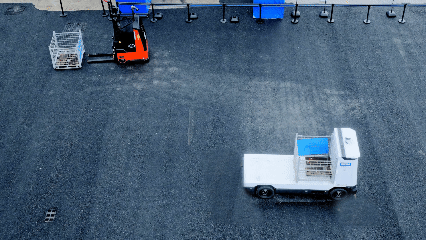
全向无人装卸转运,打通装卸与转运的连续作业流程

面对飞翼货车侧面装卸,车辆既要接近货物、找准入叉位置,也要在有限空间内完成车身调整。反复掉头、转向和挪车,都会影响作业效率。

中力此次发布的全向无人装卸转运场景,让机器人以更灵活的移动方式完成对位——

中力全向装卸机器人支持直行、横移、斜行和原地回转,可通过横移调整位置、斜行接近取货点,减少狭窄空间内的反复挪车。

星源智基于全向底盘运动学模型,结合货物位置与周围空间,规划车辆移动路线和货叉动作,协调完成接近、对位与装卸。

底盘如何移动、货叉何时动作,由系统结合任务统一规划。

作业也从装卸延伸到了后续转运。通过设备间的任务与状态同步,全向装卸车完成货车自主装卸及货物交接,无人物流车接续承担厂内自主转运,将“货车自主装卸 → 货物交接 → 厂内自主转运”连接起来。推动物流自动化从单个设备执行,向多个环节连续协同拓展。
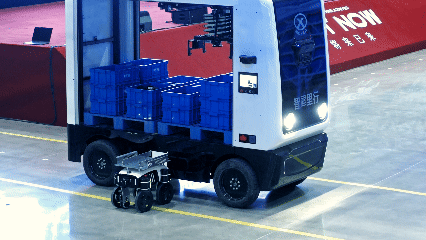
四足机器狗末端配送,让自主配送走向最后一段路

围绕“最后一公里”的快递配送需求,双方将机械臂自动装货、四足机器狗自主配送与货架落箱交接相衔接,探索末端配送的自动化与无人化。

这一场景的关键,在于让机器狗既能自主到达,也能完成货物交接。

星源智提供环境感知、定位导航、路径规划与避障,以及落箱与撤出处理等上层应用能力。系统结合环境信息、机器人自身定位与地图,识别通道、人员、障碍物及目标交接区域,规划配送路径;面对临时障碍与动态人员,实时调整导航路线。

到达指定货架后,系统根据目标区域与机器人之间的相对位姿,引导机器狗自主靠近、对位,完成“进入—落箱—撤出”,使货箱与机器狗分离,衔接后续取件环节。

从装载、配送到落箱交接,新的合作场景将具身智能的应用进一步延伸至末端物流。
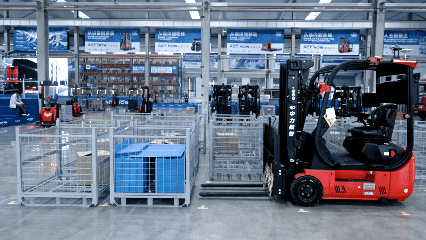
双车协同,跑出「1分钟」节拍

双车协同具身装卸,展示了星源智与中力在无人装卸领域持续推进的合作成果。

基于RoboBrain Pro具身智能系统,星源智根据两台无人叉车的位置、作业状态和任务进度动态分配任务,协调取货、行驶与装卸节奏,在1分钟之内完成协同装卸作业。

实现这一作业节拍,需要解决车辆之间如何配合,也需要解决货车停靠有偏差、托盘位置有变化时如何准确装卸。

系统通过雷视融合感知识别车厢边界、车厢平面,以及托盘和货物位置,根据现场情况调整作业。

货车边界标定误差由约0.77米降至约0.10米,为车辆接近货物和装卸对位提供更准确的定位依据。

接近托盘后,端侧视觉进一步识别货叉与托盘孔位之间的偏差,并根据实时反馈修正货叉姿态和运动轨迹,实现1—2厘米级入叉偏差的实时修正。

任务调度、空间感知与末端执行相互配合,让双车协同落实到每一次取货、转运与装卸动作中。
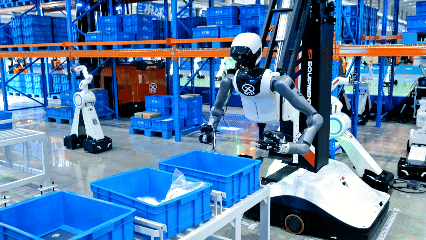
十米高位作业,具身大脑赋能擎天柱高精度高空操作

“擎天柱” 机器人专为十米级高位作业场景打造,可胜任高位货架拣选等核心任务。

搭载星源智RoboBrain Pro具身大脑技术架构,擎天柱根据作业指令自主识别目标、规划整机移动与作业机构协同动作,并稳定执行操作。在靠近目标与作业全过程中,系统依托实时视觉反馈持续闭环校准,动态修正末端执行器与目标的位置偏差,显著提升高位工况下的定位精度与作业稳定性。

在适配场景中,擎天柱可承接大量原本依赖人工登高完成的工作,并可进一步拓展至设备检修、高空巡检等场景,有效规避人员高空作业安全风险。
在本次双十一现场,中力董事长何金辉表示:“工业搬运的智能化转型,要从真实的物流场景出发,让机器人完成装卸、转运、仓储等作业闭环;更重要的事情,我们用机器人实时产生数据、正确产生数据,而这些数据能够通过AI去优化,大大提高生产效率,大大降低成本。”

从首次联合发布具身装卸技术,到多场景集中落地验证,星源智与中力的合作,已经从单点场景方案走向具身智能能力的持续泛化与迭代升级。

作为以实现物理AGI为目标的具身智能企业,星源智将持续携手中力,扎根产业真实工况,在落地中沉淀模型与端侧闭环能力,推动机器人智能从 “适配单一任务” 走向自主迁移、举一反三,让具身智能真正在工业物流的复杂现场持续进化。

注:文/龚作仁,文章来源:Laborer,本文为作者独立观点,不代表亿邦动力立场。

【版权提示】亿邦动力倡导尊重与保护知识产权。未经许可,任何人不得复制、转载、或以其他方式使用本网站的内容。如发现本站文章存在版权问题,烦请提供版权疑问、身份证明、版权证明、联系方式等发邮件至run@ebrun.com,我们将及时沟通与处理。

已点赞

+1

{{ praise_text }}

好文章,值得被更多人看到

FAQ回顾

具身智能在工业物流中有哪些落地场景?

星源智与中力联合展示四大场景:全向无人装卸转运、四足机器狗末端配送、双车协同具身装卸和“擎天柱”十米级高位作业,覆盖货车装卸、厂内转运、末端配送与高位货架拣选等工业物流环节。

双车协同无人装卸如何实现1分钟作业节拍?

基于RoboBrain Pro具身智能系统,系统按两台无人叉车的位置、状态和任务进度动态分配任务,协调取货、行驶与装卸节奏;雷视融合感知车厢边界、平面及托盘货物位置,将货车边界标定误差由约0.77米降至约0.10米,端侧视觉实时修正1—2厘米入叉偏差,从而在1分钟内完成协同装卸。

全向无人装卸机器人适合什么作业场景?

适合飞翼货车侧面装卸等狭窄空间作业。全向装卸机器人支持直行、横移、斜行和原地回转,可横移调整位置、斜行接近取货点,减少反复挪车;并与无人物流车同步任务与状态,衔接货车自主装卸、货物交接和厂内自主转运。

具身智能如何解决末端配送最后一公里?

通过机械臂自动装货、四足机器狗自主配送和货架落箱交接相衔接实现。星源智提供环境感知、定位导航、路径规划与避障及落箱撤出能力,系统识别通道、人员、障碍物和目标交接区,规划并动态调整路线,到达货架后引导机器狗自主靠近对位,完成进入—落箱—撤出并衔接取件。

擎天柱机器人能用于哪些高位作业场景?

“擎天柱”专为十米级高位作业打造,可胜任高位货架拣选。搭载星源智RoboBrain Pro具身大脑,能自主识别目标、规划整机移动与作业机构协同动作,并依托实时视觉反馈闭环校准末端位置偏差;还可拓展至设备检修、高空巡检,降低人员高空作业安全风险。

广告

下一篇

跨境电商资源对接

《全球跨境电商服务商资源手册》第二期手册现已发布,触达更多资源,了解跨境服务商信息,欢迎点击链接下载。

了解详情

百亿采购如何实现业数智协同:中铁工业杨皓岚将出席2026第八届亿邦产业互联网年会

北京中铁工业有限公司总经理杨皓岚将出席2026第八届亿邦产业互联网年会,并将深度拆解制度创新与科技变革下,“业数智”协同如何引发百亿平台化采购。