• 亿邦公众号
    • APP下载

进博会 三星亮出产业前沿创新引擎

作者:龚作仁 文章来源:Laborer

2026-11-06 16:20

作者:龚作仁 文章来源:Laborer

2026-11-06 16:20

邦小白快读

EN
全文速览

总1:这届进博会三星把展台做成芯片,重点看底层技术如何支撑AI终端。

1.多项中国首展集中在存储、传感器和芯片:LPDDR5X-PIM、2亿像素ISOCELL HPC、PMIC、SPD、PM9E1、UFS 5.0。

2.UFS 5.0带宽10.8GB/s,顺序读写较UFS 4.1提高约两倍以上,随机读取提高五倍;ISOCELL HPC支持单帧16位HDR和最高180帧/秒4K视频。

总2:与日常体验相关的产品也有明确参数和场景。

1.W27展开厚度4.1毫米、重量215克,配2亿像素主摄和5000万像素超广角,AI进入办公、出行、社交。

2.手机端侧大模型智能服务已完成备案,本土化AI用于最新手机;R20超声内置十余种AI工具,Q10适合急诊、门诊和移动诊疗。

总1:三星借进博会强化硬核创新品牌形象,把终端产品背后的技术底座可视化。

1.展台首次做成芯片,灯光沿芯片结构亮起,让AI底层技术可观可感,传播上从秀产品转向秀技术底座。

2.连续九年参展形成稳定品牌窗口,折叠屏从首秀迭代至第八代,W27以4.1毫米厚度、215克重量和2亿像素影像延续高端产品叙事。

总2:本土化研发布局和长期主义构成品牌信任与消费趋势判断。

1.今年三项首次落地:医疗器械产线、生物医药研发中心、先进生产技术研究所,R20在苏州本土制造量产,强调中国创新加全球协同。

2.三星称手机是AI走进日常生活的第一公里,AI向办公、出行、社交渗透;战略判断不追短期风口,常按五到十年周期决策,并以15家生产企业、14家研发中心、累计约590亿美元投资支撑品牌。

总1:文章虽少直接政策,但给出AI终端和汽车电子带来的需求机会。

1.AI手机、AI PC和轻薄终端带动LPDDR5X-PIM、PM9E1、UFS 5.0、图像传感器等核心器件升级,UFS 5.0带宽10.8GB/s、随机读取较UFS 4.1提高五倍,可作为选品和备货方向。

2.汽车电动化和功能复杂度提高使单车MLCC数量增加,并提高小型化、高耐压稳定性和容量要求,车规元器件是增量市场。

总2:本土供应链与产研落地提供合作和学习信号。

1.三星首次在苏州设医疗器械产线、生物医药研发中心和先进生产技术研究所,看重苏州供应链产业链配套,R20超声本土量产,说明本地配套能力可转化为合作机会。

2.可学习其五到十年周期判断和不追短期风口的思路;风险在于终端竞争转向复杂底层硬件,需要计算、存储、电源和热管理协同,单一器件机会需结合系统能力判断。

总1:三星在华产研升级释放制造和设计需求。

1.首次设立医疗器械产线,R20超声在苏州本土制造量产;V10、Q10中国首展,Q10把高分辨率成像和AI压缩到便携设备,面向急诊、门诊和移动诊疗。

2.首次设立生物医药研发中心和先进生产技术研究所,后者落户苏州,围绕无人化、智能化、AI化制造研发,形成中国创新加全球协同。

总2:产品设计方向与数字化制造启示明确。

1.折叠屏迭代关注厚度、重量、铰链、耐用性和软件适配,W27做到4.1毫米、215克;车规MLCC要求小型化、高耐压稳定性和容量提升。

2.三星在华有15家生产企业、14家研发中心,累计投资约590亿美元,尖端产业投资占比近90%;制造端可关注本地供应链配套、AI化产线和医疗设备量产带来的商业机会。

总1:AI终端升级暴露计算、存储、影像和电源热管理痛点,文章给出底层技术方案。

1.LPDDR5X-PIM把低功耗移动内存与存内计算结合,通过减少数据搬移提升AI计算效率与响应速度,面向设备AI和移动AI优化。

2.UFS 5.0最高带宽10.8GB/s,顺序读写较UFS 4.1提高约两倍以上、随机读取提高五倍;ISOCELL HPC以2亿像素和DeepPix支持单帧16位HDR、180帧/秒4K,缓解复杂光线采集难题。

总2:行业趋势指向跨业务底层能力组合和本土化服务机会。

1.PMIC、SPD、TS分别负责服务器内存供电稳压、参数配置和温度监控,PM9E1面向AI PC和轻薄终端,说明客户需要计算、存储、电源与热管理协同方案。

2.医疗超声R20内置十余种AI工具,用于实时检查引导、诊断辅助、自动测量和工作流优化;先进生产技术研究所聚焦无人化、智能化、AI化制造,服务商可关注AI医疗、智能制造和车规MLCC等场景。

总1:进博会作为展示与产业对接平台,三星案例显示平台需承载首展首发和技术底座叙事。

1.三星连续九年参展,今年首次把展台做成芯片,多项前沿技术中国首展,平台可把抽象底层技术转化为可展示、可传播的招商资源。

2.展品从折叠屏、手机延伸到半导体、存储、传感器、MLCC、QD-OLED、医疗超声和HARMAN车载音响,平台运营需要组织跨品类、跨业务展示并形成产业链对接。

总2:平台招商和风向把握可借鉴其本土化落地与长期合作。

1.三星今年首次设医疗器械产线、生物医药研发中心和先进生产技术研究所,R20在苏州本土量产,说明平台可推动展商从参展走向本地产线、研发中心落地。

2.三星判断产业趋势不追短期风口,常按五到十年周期决策,平台招商和运营也应关注长期产业能力而非短期热度;同时要识别终端竞争转向底层硬件协同这一风向。

总1:文章呈现AI时代终端竞争向底层硬件与本土产研体系转移的产业新动向。

1.三星展台首次做成芯片,集中展示LPDDR5X-PIM、ISOCELL HPC、PMIC、SPD、PM9E1、UFS 5.0、MLCC和QD-OLED,说明AI终端依赖计算、存储、感知、显示和电源热管理组合。

2.手机被定位为AI走进日常生活的第一公里,端侧大模型完成备案并用于最新手机,医疗超声R20内置十余种AI工具,AI向办公、出行、医疗等场景扩散。

总2:本土化产研和长期主义提供商业模式与政策启示。

1.三星今年三项首次落地苏州:医疗器械产线、生物医药研发中心、先进生产技术研究所,形成中国创新加全球协同;在华15家生产企业、14家研发中心、累计投资约590亿美元,尖端产业投资占比近90%。

2.其不追短期风口、按五到十年周期决策,从手机时代持续投半导体到向生物医药延伸,提示研究关注企业长期技术投资、供应链配套和AI端侧合规备案等制度议题。

声明:快读内容全程由AI生成,请注意甄别信息。如您发现问题,请发送邮件至 run@ebrun.com 。

我是 品牌商 卖家 工厂 服务商 平台商 研究者 帮我再读一遍。

Quick Summary

Summary 1: At this CIIE, Samsung turned its booth into a chip, focusing on how underlying technologies support AI devices.

1. Several China debuts were concentrated in memory, sensors and chips: LPDDR5X-PIM, 200MP ISOCELL HPC, PMIC, SPD, PM9E1 and UFS 5.0.

2. UFS 5.0 offers 10.8GB/s bandwidth, with sequential read/write more than twice as fast as UFS 4.1 and random read five times faster; ISOCELL HPC supports single-frame 16-bit HDR and up to 180 fps 4K video.

Summary 2: Products tied to daily experience also come with clear specs and use cases.

1. The W27 measures 4.1mm unfolded and weighs 215g, with a 200MP main camera and 50MP ultra-wide camera; AI is moving into office, travel and social scenarios.

2. On-device large-model intelligent services on phones have completed regulatory filing, with localized AI used in the latest phones; the R20 ultrasound includes more than ten AI tools, while the Q10 is suited to emergency, outpatient and mobile diagnosis and treatment.

Summary 1: Samsung uses CIIE to reinforce its hardcore innovation brand image by visualizing the technology foundation behind its devices.

1. For the first time, the booth is designed as a chip, with lights illuminating along the chip structure to make AI underlying technology visible and tangible; communications shift from showing products to showing the technology foundation.

2. Nine consecutive years of participation have created a stable brand window; foldables have evolved from debut to the eighth generation, and the W27 continues the premium product narrative with 4.1mm thickness, 215g weight and 200MP imaging.

Summary 2: Local R&D layout and long-termism underpin brand trust and judgments about consumer trends.

1. This year marks three firsts: a medical device production line, a biopharma R&D center and an advanced production technology institute; the R20 is locally manufactured and mass-produced in Suzhou, emphasizing China innovation plus global collaboration.

2. Samsung says the phone is the first mile for AI to enter daily life, with AI penetrating office, travel and social scenarios; its strategic approach does not chase short-term trends and often makes decisions on five-to-ten-year cycles, supported by 15 manufacturing enterprises, 14 R&D centers and cumulative investment of about USD 59 billion.

Summary 1: Although the article contains few direct policy references, it identifies demand opportunities from AI devices and automotive electronics.

1. AI phones, AI PCs and thin-and-light devices are driving upgrades in LPDDR5X-PIM, PM9E1, UFS 5.0, image sensors and other core components; UFS 5.0 offers 10.8GB/s bandwidth and random read five times faster than UFS 4.1, offering direction for product selection and stocking.

2. Automotive electrification and greater functional complexity are increasing MLCC count per vehicle and raising requirements for miniaturization, high-voltage stability and capacity; automotive-grade components represent a growth market.

Summary 2: Local supply chains and industrial R&D implementation provide cooperation and learning signals.

1. Samsung is for the first time setting up a medical device production line, a biopharma R&D center and an advanced production technology institute in Suzhou; it values Suzhou's supply chain and industrial chain support, and the local mass production of the R20 ultrasound shows that local supporting capabilities can translate into cooperation opportunities.

2. Its five-to-ten-year cycle judgment and reluctance to chase short-term trends are worth studying; the risk is that device competition is shifting toward complex underlying hardware, requiring coordination across compute, storage, power and thermal management, so single-component opportunities need to be assessed together with system capabilities.

Summary 1: Samsung's upgrading of production and R&D in China releases manufacturing and design demand.

1. It has established a medical device production line for the first time, with the R20 ultrasound locally manufactured and mass-produced in Suzhou; the V10 and Q10 make their China debuts, and the Q10 compresses high-resolution imaging and AI into a portable device for emergency, outpatient and mobile care.

2. It has also established its first biopharma R&D center and advanced production technology institute, the latter located in Suzhou and focused on R&D for unmanned, intelligent and AI-enabled manufacturing, forming a model of China innovation plus global collaboration.

Summary 2: Product design direction and implications for digital manufacturing are clear.

1. Foldable iteration focuses on thickness, weight, hinge, durability and software adaptation, with the W27 achieving 4.1mm and 215g; automotive MLCCs require miniaturization, high-voltage stability and capacity increases.

2. Samsung has 15 manufacturing enterprises and 14 R&D centers in China, with cumulative investment of about USD 59 billion and frontier-industry investment accounting for nearly 90%; on the manufacturing side, attention should be paid to business opportunities from local supply chain support, AI-enabled production lines and medical device mass production.

Summary 1: AI device upgrades expose pain points in compute, storage, imaging, power and thermal management, and the article offers underlying technology solutions.

1. LPDDR5X-PIM combines low-power mobile memory with processing-in-memory, improving AI compute efficiency and responsiveness by reducing data movement, and is optimized for device AI and mobile AI.

2. UFS 5.0 offers maximum bandwidth of 10.8GB/s, with sequential read/write more than twice as fast as UFS 4.1 and random read five times faster; ISOCELL HPC uses 200MP and DeepPix to support single-frame 16-bit HDR and 180 fps 4K, easing the challenge of capturing images in complex lighting.

Summary 2: Industry trends point to cross-business combinations of underlying capabilities and localized service opportunities.

1. PMIC, SPD and TS respectively handle server memory power regulation, parameter configuration and temperature monitoring, while PM9E1 targets AI PCs and thin-and-light devices; this indicates that customers need coordinated solutions across compute, storage, power and thermal management.

2. The medical ultrasound R20 includes more than ten AI tools for real-time exam guidance, diagnostic assistance, automatic measurement and workflow optimization; the advanced production technology institute focuses on unmanned, intelligent and AI-enabled manufacturing, and service providers can watch scenarios such as AI healthcare, smart manufacturing and automotive MLCCs.

Summary 1: CIIE serves as a platform for display and industry matchmaking, and the Samsung case shows that platforms need to support debuts, first launches and technology-foundation narratives.

1. Samsung has exhibited for nine consecutive years; this year it has turned its booth into a chip for the first time, with multiple frontier technologies making their China debuts, showing that a platform can turn abstract underlying technology into displayable, communicable investment-attraction resources.

2. Exhibits extend from foldables and phones to semiconductors, storage, sensors, MLCCs, QD-OLED, medical ultrasound and HARMAN automotive audio; platform operations need to organize cross-category, cross-business displays and form industry chain matchmaking.

Summary 2: Platform investment attraction and trend spotting can learn from Samsung's local implementation and long-term cooperation.

1. Samsung this year for the first time established a medical device production line, a biopharma R&D center and an advanced production technology institute, with the R20 mass-produced locally in Suzhou; this shows that platforms can push exhibitors from participation toward local production lines and R&D centers.

2. Samsung judges industry trends without chasing short-term trends and often makes decisions on five-to-ten-year cycles; platform investment attraction and operations should also focus on long-term industrial capabilities rather than short-term heat, while identifying the trend of device competition shifting toward coordination of underlying hardware.

Summary 1: The article presents a new industrial shift in the AI era, with device competition moving toward underlying hardware and local production and R&D systems.

1. Samsung's booth is designed as a chip for the first time, showcasing LPDDR5X-PIM, ISOCELL HPC, PMIC, SPD, PM9E1, UFS 5.0, MLCCs and QD-OLED, indicating that AI devices depend on a combination of compute, storage, sensing, display, power and thermal management.

2. The phone is positioned as the first mile for AI to enter daily life, with an on-device large model having completed regulatory filing and being used in the latest phones; the medical ultrasound R20 includes more than ten AI tools, and AI is spreading into office, travel and healthcare scenarios.

Summary 2: Localized production and R&D and long-termism offer business model and policy implications.

1. Samsung's three firsts in Suzhou this year are a medical device production line, a biopharma R&D center and an advanced production technology institute, forming a model of China innovation plus global collaboration; in China it has 15 manufacturing enterprises, 14 R&D centers and cumulative investment of about USD 59 billion, with frontier-industry investment accounting for nearly 90%.

2. It does not chase short-term trends and makes decisions on five-to-ten-year cycles, from sustained semiconductor investment in the mobile era to expansion into biopharma; this suggests that research should focus on long-term corporate technology investment, supply chain support, AI on-device compliance filing and other institutional issues.

Disclaimer: The "Quick Summary" content is entirely generated by AI. Please exercise discretion when interpreting the information. For issues or corrections, please email run@ebrun.com .

I am a Brand Seller Factory Service Provider Marketplace Seller Researcher Read it again.

第九届进博会,连续九年参展的“全勤生”三星,第一次把展台做成了一颗“芯片”。当现场灯光沿芯片结构逐层亮起,支撑AI时代的底层技术,不再是纸上参数,而变得可观可感。

与这一设计相呼应,今年三星希望展示的,不只是终端产品,还有支撑终端运转的底层能力。
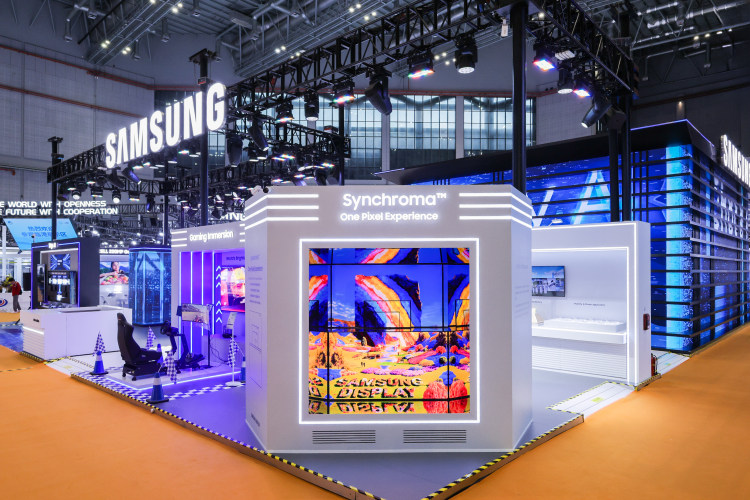
第九届进博会三星展台

一系列前沿底层技术走到台前:LPDDR5X-PIM内存、2亿像素图像传感器ISOCELL HPC以及MLCC多层陶瓷电容等核心零部件集中亮相,展示出一条从核心元器件、底层算力到终端应用的技术链条,其中多项前沿技术和产品更是迎来中国首展。

中国三星首席副总裁张代君在接受第一财经采访时说,今年三星展台面向未来的硬核创新成果明显增加。这是三星在华三十多年来与中国产业链共同发展后的一次升级迭代。

九年时间,从初代折叠屏国内首秀,到前沿半导体、全场景AI,对三星而言,进博会早已不只是展示窗口,它更像一个切面,展现了一家全球科技企业如何融入中国产业创新生态,把技术底座、本土产线和研发布局一步步落到中国市场。

一系列硬核技术在华首秀

连续九年参展,让进博会成为观察三星技术展示变化的一个窗口。

折叠屏是其中最直观的例子。第二届进博会上,三星将首款量产折叠屏手机带到展台;今年已经迭代至第八代。早期手机屏的关注点是“屏幕能否折起来”,此后竞争逐渐转向厚度、重量、铰链、耐用性以及软件适配。

到了今年,三星展示的W27手机展开厚度为4.1毫米、重量215克,搭载2亿像素主摄和5000万像素超广角摄像头,AI进一步进入办公、出行和社交等高频场景。
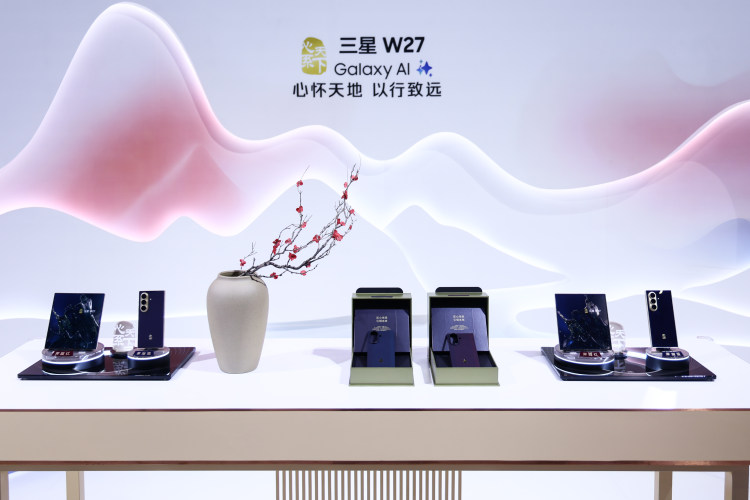
心系天下 三星W27旗舰手机

手机在三星的AI战略中仍然占据重要位置。张代君对第一财经表示,消费者接触AI的重要入口仍然是手机。今年7月,Galaxy AI通过手机端侧大模型智能服务备案,本土化AI能力随后被应用到最新手机产品中。他将手机形容为“AI走进老百姓日常生活的第一公里”,而不是AI落地的“最后一公里”。

与此同时,随着生成式AI进入终端,三星在进博会上的展品逐步延伸至AI以及支撑AI应用的芯片、存储、传感器等底层技术。

记者了解到,在今年进博会上,三星多项产品和技术为中国首展,包括了半导体和存储领域的PMIC内存电源管理芯片、SPD内存配置芯片、面向AI PC和轻薄终端的PM9E1固态硬盘、UFS 5.0和ISOCELL HPC。

其中,三星LPDDR5X-PIM将低功耗移动内存与存内计算(Processing-in-Memory)技术相结合,通过最大限度减少数据搬移来提升AI计算效率与响应速度,针对设备AI和移动AI环境深度优化,被视为面向人工智能行业的下一代存储器。UFS 5.0则让最高带宽达到10.8GB/s,顺序读写速度较UFS 4.1提高约两倍以上,随机读取速度提高五倍。
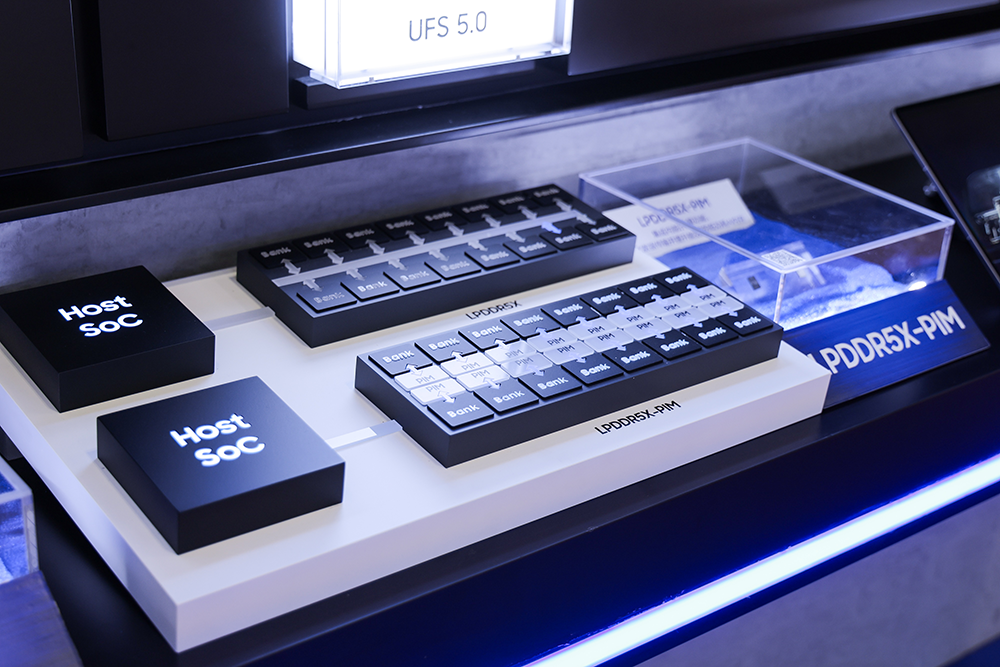
三星LPDDR5X-PIM内存

AI还需要“看见”现实世界。此次亮相的ISOCELL HPC拥有2亿像素,引入DeepPix技术,支持单帧16位HDR和最高180帧/秒的4K视频拍摄。随着计算摄影和AI越来越深地介入影像处理,图像传感器能够采集多少原始信息、在复杂光线环境下保留多少细节,都会影响后续算法能够发挥的空间。

从折叠屏形态创新,到把更多芯片、存储和传感器搬上展台,背后对应的是终端竞争逻辑的变化:AI最终呈现在用户面前的是应用和体验,但支撑运行的,是一整套越来越复杂的底层硬件。

本土化产研升级

今年三星在华布局的变化,在进博会上展示的一台R20超声设备上得到了最直观的体现。

这款超声设备今年首次在中国苏州实现本土化制造和量产,本届进博会上完成了中国首展。据介绍,R20内置十余种AI驱动工具,可用于实时检查引导、诊断辅助、自动测量和工作流优化。
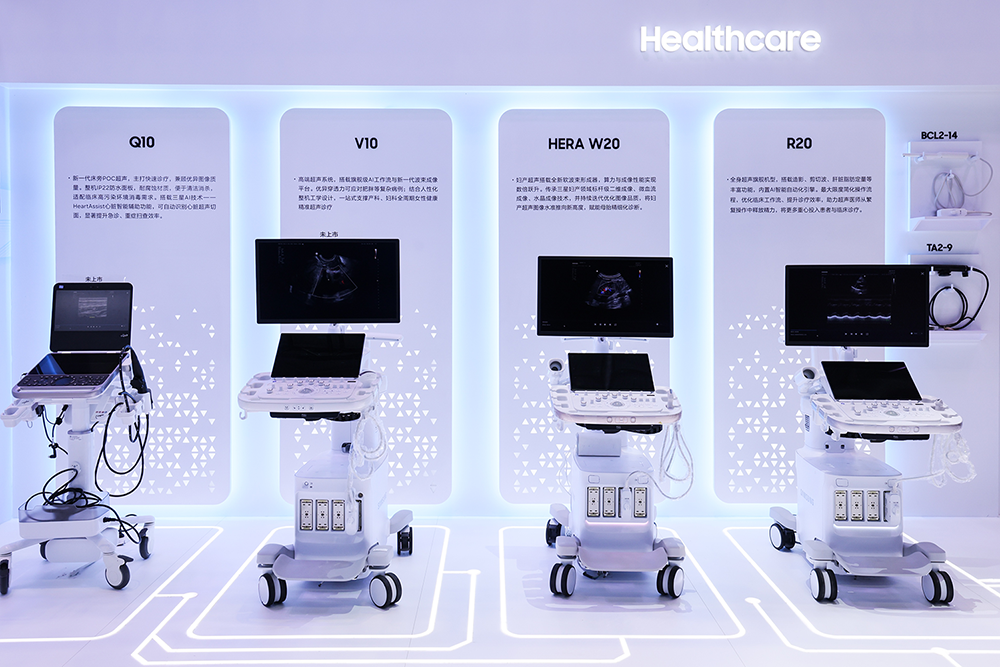
已实现本土量产的三星超声诊断设备R20

为什么三星首次在中国设立医疗器械产线?张代君在采访中给出的理由很具体:三星看重的是苏州供应链和产业链的配套能力。

AI也是三星继续投入高端超声的原因之一。张代君认为,高端超声可以借助AI进行自动识别和诊断辅助,这一领域仍存在技术和产品升级空间。

除R20外,V10和便携式Q10等超声设备也在本届进博会上完成中国首展,其中Q10面向现场即时诊断场景,将高分辨率成像和AI功能压缩到便携式设备中,适用于急诊、门诊和移动诊疗。

从2020年HERA W10首次亮相进博会,到今年R20本土量产后再度来到展台,三星高端医疗设备在进博会上的角色,也从展示新产品进一步延伸至本土生产。

在这背后,是三星今年在中国同步落地的三项“首次”。

第一项,是首次设立医疗器械产线;第二项,是首次设立生物医药研发中心。第三项,则是日前刚刚启用的先进生产技术研究所,落户苏州,重点围绕无人化、智能化、AI化制造进行研发,这也是三星首次在中国设立先进生产技术研发中心,形成“中国创新+全球协同”模式。
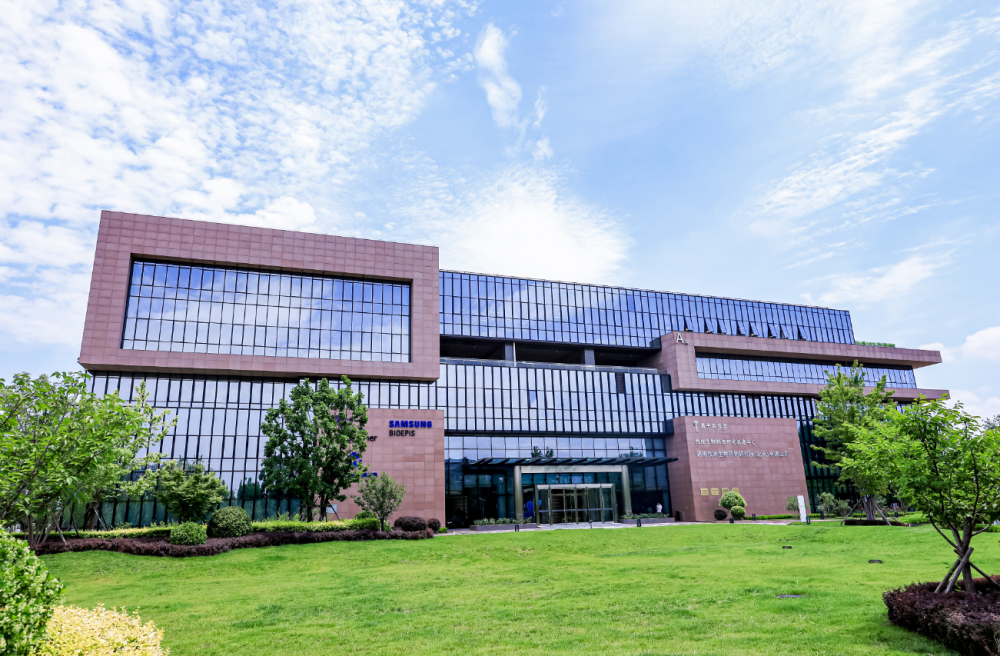
首次在中国设立生物医药研发中心

对于全球科技企业而言,当竞争深入到研发、制造工艺和供应链效率,市场的意义也不再只由产品销售规模决定,本地研发和制造体系本身也成为全球竞争力的一部分。

目前,三星在中国设有15家生产企业和14家研发中心,在华累计投资约590亿美元,其中尖端产业投资占比接近90%,主要集中在半导体、MLCC、多层陶瓷电容等尖端产业领域。

不做追风者,构建AI时代的“造风”能力

手机、汽车、医疗和显示是完全不同的市场,但它们越来越依赖相似的底层能力:更高效的计算和存储、更精细的感知、更先进的显示,以及数量庞大的电子元器件。

这也是三星今年将一批“中国首展”产品放在一起的意义。PMIC、SPD和TS分别承担服务器内存供电稳压、参数配置和温度监控;PM9E1采用PCIe Gen5 NVMe接口,面向AI PC、轻薄本等设备;UFS 5.0等产品则进一步对应移动端存储与端侧AI算力。它们单独看都是一个器件,但组合在一起,构成AI设备运行所需要的计算、存储、电源和热管理基础。

显示领域同样如此。此次展出的2026款77英寸QD-OLED面板峰值亮度达到4500尼特。这些技术本身并不一定直接与AI有关,却直接决定终端能够呈现怎样的视觉体验。

汽车进一步放大了核心元器件的重要性。此次三星电机展示了多款车规级多层陶瓷电容器。随着汽车电动化和功能复杂度提高,单车所需MLCC数量增加,对小型化、高耐压稳定性和容量的要求也随之提高。

HARMAN今年首次设置独立展区,覆盖便携音箱、车载后装音响等场景。把这些产品与显示、MLCC以及半导体业务放在一起看,三星的技术触角已经从手机进一步延伸到智能汽车和出行场景。
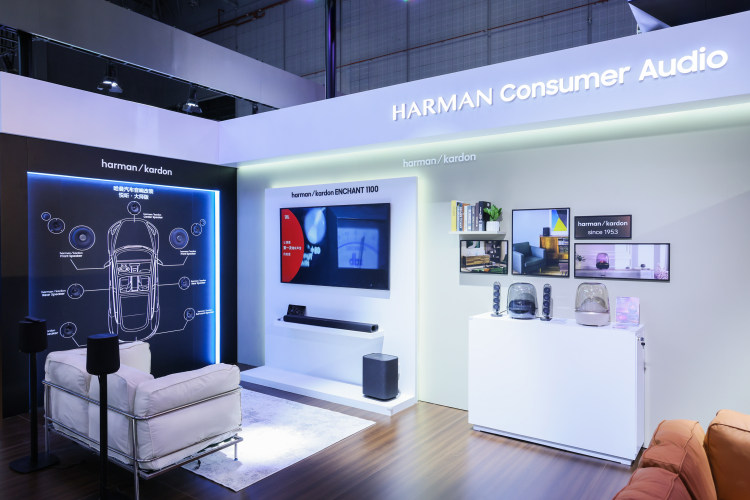
HARMAN独立展区

这种跨业务布局背后,是三星更长周期的产业判断。张代君对第一财经表示,三星在判断产业趋势时,“不去追逐短期的风口”,通常会站在五到十年甚至更长的周期作出战略决策。十多年前智能手机开始成为市场主角时,三星已经持续投入半导体;如今向生物医药等新领域延伸,在其看来是同一套长期投资思路的延续。

从“秀产品”到“秀技术底座”,三星进博会展示的不再只是又一轮新品,而是半导体、核心元器件、终端和专业设备能力如何在AI时代被重新组合,以及这些技术如何进一步在中国完成研发、生产和落地。

三星深耕中国、看好中国、与中国共生成长的初心没有变。如今,三星正在把技术发展的根系深深植入中国产业链的大潮中。

注:文/龚作仁,文章来源:Laborer,本文为作者独立观点,不代表亿邦动力立场。

【版权提示】亿邦动力倡导尊重与保护知识产权。未经许可,任何人不得复制、转载、或以其他方式使用本网站的内容。如发现本站文章存在版权问题,烦请提供版权疑问、身份证明、版权证明、联系方式等发邮件至run@ebrun.com,我们将及时沟通与处理。

已点赞

+1

{{ praise_text }}

好文章,值得被更多人看到

FAQ回顾

三星在进博会上展示了哪些面向AI的核心技术?

第九届进博会上,三星集中展示LPDDR5X-PIM内存、2亿像素ISOCELL HPC图像传感器、MLCC、PMIC、SPD、PM9E1固态硬盘和UFS 5.0等,形成从核心元器件、底层算力到终端应用的技术链条,其中多项为中国首展。

三星LPDDR5X-PIM内存主要用于什么场景?

LPDDR5X-PIM将低功耗移动内存与存内计算技术结合,通过减少数据搬移提升AI计算效率与响应速度,主要面向设备AI和移动AI环境深度优化,被视为面向人工智能行业的下一代存储器。

三星为什么在苏州布局医疗器械制造和研发?

三星看重苏州的供应链和产业链配套能力。R20超声设备已在苏州首次实现本土化制造和量产,并在本届进博会完成中国首展;三星今年还首次设立医疗器械产线、生物医药研发中心和先进生产技术研究所。

三星在中国市场的投资和研发布局情况如何?

三星在中国设有15家生产企业和14家研发中心,在华累计投资约590亿美元,其中尖端产业投资占比接近90%,主要集中在半导体、MLCC等领域;今年在苏州新增医疗器械产线、生物医药研发中心和先进生产技术研究所。

AI手机需要哪些底层硬件技术支撑?

AI手机需要更高效的计算和存储、更精细的感知、更先进的显示以及大量电子元器件。例如LPDDR5X-PIM提升端侧AI计算效率,UFS 5.0最高带宽达10.8GB/s,ISOCELL HPC以2亿像素采集原始信息,PMIC、SPD和TS承担供电、配置和温控。

广告

下一篇

跨境电商资源对接

《全球跨境电商服务商资源手册》第二期手册现已发布,触达更多资源,了解跨境服务商信息,欢迎点击链接下载。

了解详情

Meta出海体验中心扩展至广深:广州对接外贸制造 深圳聚焦“一人公司”

Meta联合省广集团及钛动科技分别在广州与深圳正式启动两座全新的出海体验中心。其中,Meta出海体验中心(广州)由省广集团运营,Meta 出海体验中心(深圳)由钛动科技运营。