• 亿邦公众号
    • APP下载

鑫方盛:全栈AI原生底座,重塑工业品供应链数智新格局

作者:亿邦智库 文章来源:亿邦动力

2026-08-17 10:22

作者:亿邦智库 文章来源:亿邦动力

2026-08-17 10:22

邦小白快读

EN
全文速览

本文核心内容是介绍工业品供应链服务商鑫方盛推出的全栈AI原生数智化转型方案,核心干货如下

1. 鑫方盛凭借自研的全栈AI重塑工业品供应链方案,入选《2026数智化采购发展报告》评选的“年度解决方案与技术服务提供商”,是国内少有的拥有完整自研AI底层能力的工业品综合供应链服务商。

2. 鑫方盛的核心技术体系是六层全栈AI架构搭配云数智慧平台、AI原生鑫协同平台,目前已经落地200+行业智能体、100+RPA自动化工具,月词元调用达数千亿规模,可以带动组织整体效能提升10%以上。

3. 该方案针对性解决了工业品行业长期存在的非标治理难、产业链数据孤岛、上下游协同低效三大痛点,覆盖采购、仓储、履约、结算全业务链条的智能化需求,最终实现降本提效、管控供应链风险的目标。

本文给工业品领域品牌商提供了数智化转型与业务升级的参考干货,具体内容如下

1. 当前工业品行业已经呈现出明显的数智化转型趋势,下游客户对供应链的效率、透明度、稳定性要求不断提升,行业长期存在的非标治理难、数据不通、协同低效三大痛点,正是品牌商升级突破的核心方向。

2. 鑫方盛全栈自研AI底层技术的路线给品牌商提供了可落地的转型参考,通过从底层算力到业务应用的分层闭环架构,可以构筑差异化技术壁垒,验证后可提升组织整体效能10%以上。

3. 品牌商可参考该AI+供应链模式,借助AI完成非标商品标准化改造、优化上下游协作流程、提升履约调度效率,推动企业决策从人工经验转向数据驱动,提升自身品牌竞争力。

对于工业品领域卖家,本文带来了数智化转型背景下的行业机会与可落地经营参考,具体如下

1. 当前工业品供应链正在全面向数智化升级,AI赋能全链路已经成为新的增长赛道,提前布局数智化升级的卖家能获得更大的竞争优势,行业升级带来了大量新的业务机会。

2. 行业当前的三大痛点:非标工业品规格杂乱难以统一、产业链数据孤岛、上下游协同低效,对卖家来说既是需要解决的经营问题,也是差异化竞争的机会点。

3. 卖家可以参考鑫方盛的方案,引入行业智能体、RPA自动化工具处理重复性的单据、对账工作,借助AI实现需求预测、库存优化、风险预警,达到降本提效的效果,也可以对接成熟的AI供应链平台,降低自身转型成本,拓展客户渠道。

对于工业品生产工厂,本文整理了产品需求、数字化转型与商业机会相关干货,具体如下

1. 当前下游工业客户对工业品采购的数智化要求不断提升,对非标工业品的标准化需求越来越高,工厂在产品生产和设计阶段,需要配合行业推进标准化改造,解决原有规格杂乱的问题,适配下游数智化采购的需求。

2. 工厂推进数字化和电商转型过程中,可参考鑫方盛全栈AI架构的思路,也可以直接对接成熟的AI供应链平台,降低自身的技术研发投入,快速完成数智化升级。

3. 数智化供应链升级给工厂带来了新的商业机会,依托AI平台工厂可以更精准的对接下游客户需求,借助平台的AI能力完成需求预测、供应商评级、风险管控,有效降低自身供应链风险,提升整体经营效率,拓展更多客户资源。

对于工业品供应链相关服务商,本文梳理了行业发展趋势、客户痛点与可参考解决方案,干货内容如下

1. 当前工业品供应链行业正在向全栈AI原生、深度数智化方向转型,全链路自研AI底层技术、落地行业垂直大模型与智能体应用,已经成为行业新的发展趋势,技术驱动升级成为行业主流方向。

2. 目前行业客户的核心痛点集中在三个方面:非标工业品难以标准化治理、产业链各环节存在数据孤岛、上下游协同效率低下,这些痛点正是服务商拓展业务的核心机会点。

3. 服务商可以参考鑫方盛的分层闭环技术架构方案,打造从底层算力支撑到顶层业务应用的全链路解决方案,落地行业智能体、RPA自动化工具覆盖多场景需求,帮助客户实现降本提效、管控供应链风险,打造差异化的服务竞争力。

对于工业品供应链与电商平台商,本文整理了行业需求、平台运营升级相关干货,具体如下

1. 当前平台客户对工业品供应链的智能化、协同化要求不断提升,平台只有解决非标商品标准化、全链路数据打通、上下游协同低效三大核心问题,才能满足客户需求,提升平台留存与竞争力。

2. 平台可参考鑫方盛的全栈AI架构方案,搭建从IaaS算力层、DaaS数据层到业务应用层的分层闭环技术体系,落地200+行业智能体和自动化RPA工具,覆盖资质审核、智能寻源、库存优化、风险预警等全场景客户需求。

3. 平台可以把全栈AI赋能供应链作为核心招商卖点,吸引制造、能源、工程类工业客户入驻,同时借助AI优化仓储调度、履约交付、对账结算全流程,提升平台运营效率,规避供应链协同风险,打造差异化平台优势。

对于产业研究者,本文提供了工业品供应链数智化领域的最新产业动向、商业模式与案例参考,干货如下

1. 当前工业品供应链数智化转型已经进入全栈AI原生的新阶段,出现了全链路自研AI底层技术的全新商业模式,不同于行业内多数依托外部AI能力做表层改造的模式,鑫方盛的全栈自研模式形成了明显的差异化技术壁垒,是值得深入研究的产业新动向。

2. 行业长期存在的非标治理难、数据孤岛、协同低效三大核心问题,全栈AI方案提供了经过落地验证的解决思路,已经验证该方案可带动组织整体效能提升10%以上,具备大规模推广的可行性。

3. 本文提供了一个非常完整的产业数字化转型典型案例,全栈AI原生底座重构供应链的模式,对研究工业品产业转型路径、数智化采购发展方向都有很高的参考价值,也为研究产业数字化商业模式提供了新的样本。

声明:快读内容全程由AI生成,请注意甄别信息。如您发现问题,请发送邮件至 run@ebrun.com 。

我是 品牌商 卖家 工厂 服务商 平台商 研究者 帮我再读一遍。

Quick Summary

This article outlines the full-stack AI-native digital transformation solution launched by XinFangsheng, a Chinese industrial supply chain service provider. Key takeaways are as follows:

1. Leveraging its self-developed full-stack AI technology to reshape industrial supply chain offerings, XinFangsheng was named "Annual Solution and Technology Service Provider" in the *2026 Digital Procurement Development Report*. It is one of the few integrated industrial supply chain service providers in China with complete in-house AI underlying capabilities.

2. The company’s core technology system consists of a six-layer full-stack AI architecture paired with a cloud-based data intelligence platform and an AI-native collaboration platform. To date, it has deployed more than 200 industry-specific AI agents and over 100 RPA automation tools, with monthly token calls reaching hundreds of billions. This technology stack has driven an overall organizational efficiency improvement of over 10%.

3. The solution specifically addresses three long-standing pain points in the industrial sector: difficulties in standardizing non-standard products, data silos across the industrial chain, and inefficient collaboration between upstream and downstream players. It covers intelligent needs across the full business workflow from procurement, warehousing, and fulfillment to settlement, ultimately achieving the goals of cost reduction, efficiency improvement, and supply chain risk control.

This article shares actionable insights on digital transformation and business upgrading for industrial goods brands, as outlined below:

1. The industrial sector is now clearly shifting toward digital transformation, as downstream customers increasingly demand higher efficiency, transparency, and stability from supply chains. The industry’s three long-standing pain points—difficulties standardizing non-standard products, disconnected data across systems, and low collaboration efficiency—represent the core areas where brands can break through and upgrade.

2. XinFangsheng’s full-stack in-house AI approach provides a proven, implementable transformation reference for brands. Its layered closed-loop architecture, from underlying computing power to business applications, can help brands build differentiated technical barriers, and has been verified to lift overall organizational efficiency by more than 10%.

3. Brands can draw on this "AI + supply chain" model to standardize non-standard product catalogs, optimize upstream and downstream collaboration processes, and improve fulfillment scheduling efficiency. This enables brands to shift from experience-driven to data-driven decision-making and strengthen brand competitiveness.

This article outlines industry opportunities and actionable operational guidance for industrial goods sellers amid the digital transformation trend, as follows:

1. Industrial supply chains are undergoing a full-scale shift to digital upgrading, and AI-powered end-to-end transformation has emerged as a new growth track. Sellers that adopt digital transformation early will gain a greater competitive edge, and the ongoing industry upgrade is creating a large number of new business opportunities.

2. Three core industry pain points—disorganized specifications that make non-standard industrial goods hard to unify, industry-wide data silos, and inefficient upstream-downstream collaboration—are both operational challenges to solve and opportunities for sellers to stand out from competitors.

3. Sellers can follow XinFangsheng’s example by adopting industry-specific AI agents and RPA automation tools to handle repetitive tasks such as document processing and reconciliation. AI can also be used for demand forecasting, inventory optimization, and risk warning to cut costs and boost efficiency. Alternatively, sellers can connect to mature AI-powered supply chain platforms to lower transformation costs and expand customer access.

This article summarizes key insights on product demand, digital transformation, and business opportunities for industrial manufacturing factories, outlined below:

1. Downstream industrial customers are increasingly demanding digitalized procurement of industrial goods, with growing demand for standardized non-standard product lines. Factories need to advance product standardization during the design and production stages to resolve long-standing specification disorganization and adapt to downstream digital procurement requirements.

2. When advancing digital and e-commerce transformation, factories can reference XinFangsheng’s full-stack AI architecture framework, or directly connect to mature AI-powered supply chain platforms to reduce in-house R&D investment and complete digital upgrading quickly.

3. The upgrading of digital supply chains brings new business opportunities for factories. By leveraging AI platforms, factories can match downstream customer demand more accurately, use the platform’s AI capabilities for demand forecasting, supplier rating, and risk control, effectively reduce their own supply chain risks, improve overall operational efficiency, and expand access to more customer resources.

This article sorts out industry development trends, customer pain points, and reference solutions for industrial supply chain service providers, as follows:

1. The industrial supply chain industry is currently transforming toward full-stack AI-native and in-depth digitalization. End-to-end in-house AI underlying technology, vertically deployed industry large models, and AI agent applications have become new industry trends, and technology-driven upgrading is now the mainstream direction of the sector.

2. The core pain points of industry clients currently center on three areas: difficulties standardizing non-standard industrial goods, data silos across all links of the industrial chain, and low collaboration efficiency between upstream and downstream players. These pain points are core growth opportunities for service providers looking to expand their business.

3. Service providers can reference XinFangsheng’s layered closed-loop technical architecture to build end-to-end solutions ranging from underlying computing power support to top-level business applications, deploy industry AI agents and RPA automation tools to cover multi-scenario needs, help clients achieve cost reduction, efficiency improvement and supply chain risk control, and build differentiated service competitiveness.

This article summarizes key insights on industry demand and platform operation upgrading for industrial supply chain and e-commerce marketplace operators, as follows:

1. Today, platform customers are increasingly demanding intelligent, collaborative industrial supply chains. Platforms can only meet customer demand and improve user retention and competitiveness by resolving three core issues: standardizing non-standard products, connecting data across the entire supply chain, and fixing inefficient upstream-downstream collaboration.

2. Platforms can reference XinFangsheng’s full-stack AI architecture solution to build a layered closed-loop technical system spanning IaaS computing layer, DaaS data layer and business application layer, and deploy more than 200 industry AI agents and RPA automation tools to cover full-scenario customer needs such as qualification review, intelligent sourcing, inventory optimization, and risk warning.

3. Platforms can position full-stack AI-powered supply chain as a core recruitment selling point to attract industrial customers from manufacturing, energy, engineering and other sectors, while using AI to optimize end-to-end processes including warehouse scheduling, fulfillment delivery, and reconciliation and settlement. This improves platform operating efficiency, mitigates supply chain collaboration risks, and builds a differentiated platform advantage.

This article provides the latest industry developments, business models, and case references for industry researchers focused on digitalization of industrial supply chains, outlined below:

1. The digital transformation of industrial supply chains has now entered a new stage of full-stack AI-native development, and a new business model built on end-to-end in-house AI underlying technology has emerged. Unlike most industry players that rely on external AI capabilities for surface-level transformation, XinFangsheng’s full-stack in-house model has built clear differentiated technical barriers, making it a new industry development worthy of in-depth research.

2. For the three long-standing core industry pain points of difficult non-standard product governance, data silos, and inefficient collaboration, the full-stack AI solution provides a field-validated solution. The approach has been proven to drive overall organizational efficiency improvement of more than 10%, demonstrating its feasibility for large-scale adoption.

3. This article presents a highly complete typical case of industrial digital transformation. The model of reconstructing supply chains on a full-stack AI-native foundation offers high reference value for research on industrial transformation paths and the development direction of digital procurement, and also provides a new sample for research on digital industrial business models.

Disclaimer: The "Quick Summary" content is entirely generated by AI. Please exercise discretion when interpreting the information. For issues or corrections, please email run@ebrun.com .

I am a Brand Seller Factory Service Provider Marketplace Seller Researcher Read it again.

【亿邦原创】2026年7月22日,亿邦智库联合中国物流与采购联合会公共采购分会在北京发布了《2026数智化采购发展报告》,鑫方盛以“全栈AI”重塑工业品供应链入选“年度解决方案与技术服务提供商”。

鑫方盛以自研“方盛AI+”六层全栈技术体系与云数智慧平台为核心抓手,搭配AI原生鑫协同平台,依托200+行业智能体、百套RPA自动化工具,打通采购、仓储、履约、结算全业务链条。自主掌握算力、数据、大模型、智能体全套底层技术,针对性解决工业品非标治理、产业链数据孤岛、上下游协同低效三大行业痛点,是具备完整自研AI底层能力的工业品综合供应链服务商。

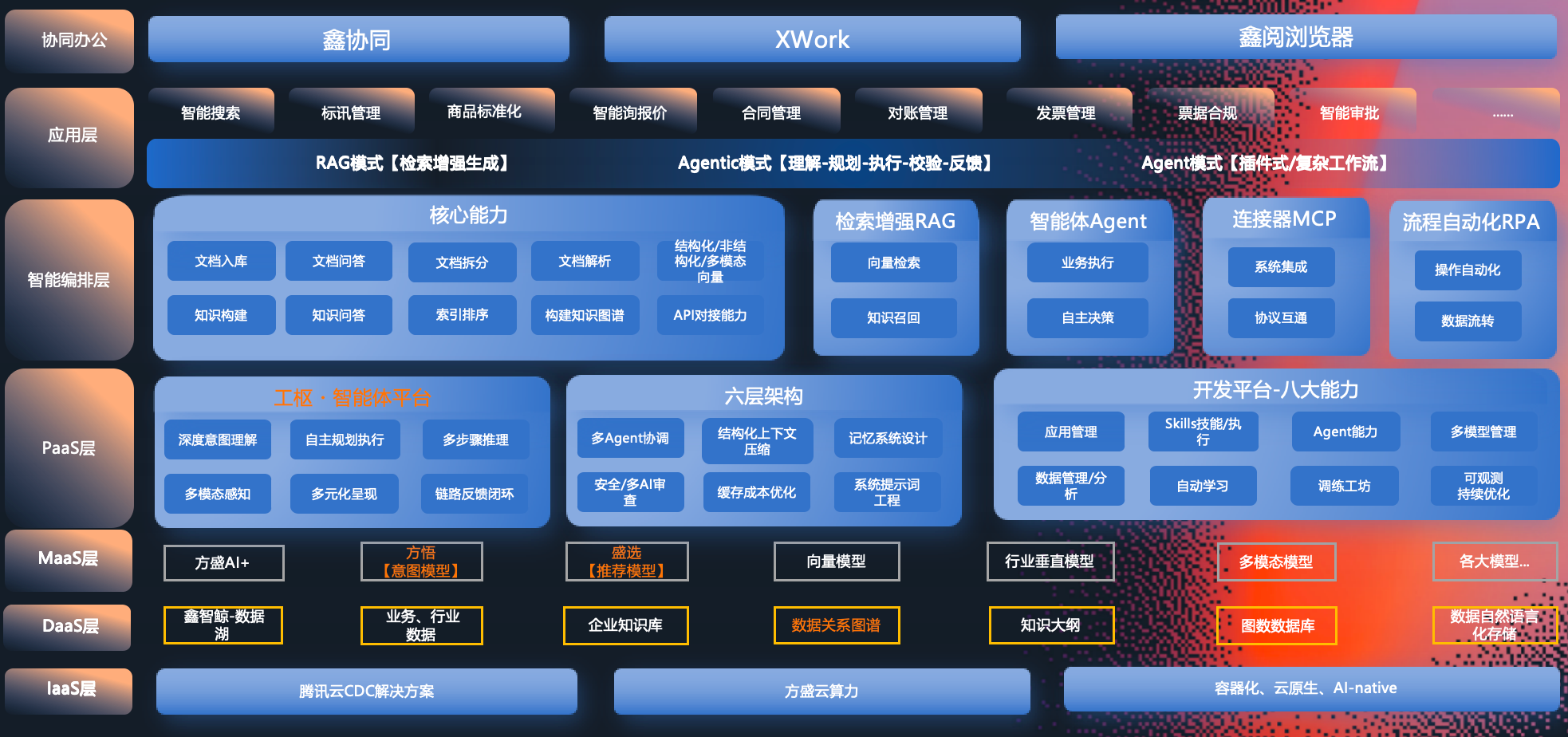
Part 01  六层全栈AI架构,构筑自主可控技术底层

鑫方盛搭建分层闭环AI技术体系,从算力支撑到业务应用逐层落地,形成差异化技术壁垒。

底层IaaS层依托CDC私有云、云原生容器提供弹性算力;DaaS层打造鑫智鲸数据湖,沉淀商品向量库、行业知识图谱;PaaS层依托工枢智能管理平台及ADP智能体开发平台实现智能体开发、编排、部署、自主执行的全链路托管;MaaS层布局方悟、盛选等行业垂直大模型;顶层落地鑫有灵析、智能询报价、鑫盾、鑫智源、鑫助手等十余项业务AI工具。

目前平台落地200+行业Agent、100+自动化RPA,月词元调用达数千亿规模,可带动组织整体效能提升10%以上,覆盖资质审核、智能寻源、库存优化、风险预警等全场景智能化需求。
Part 02  云数智慧平台,全链路重构工业品供应链

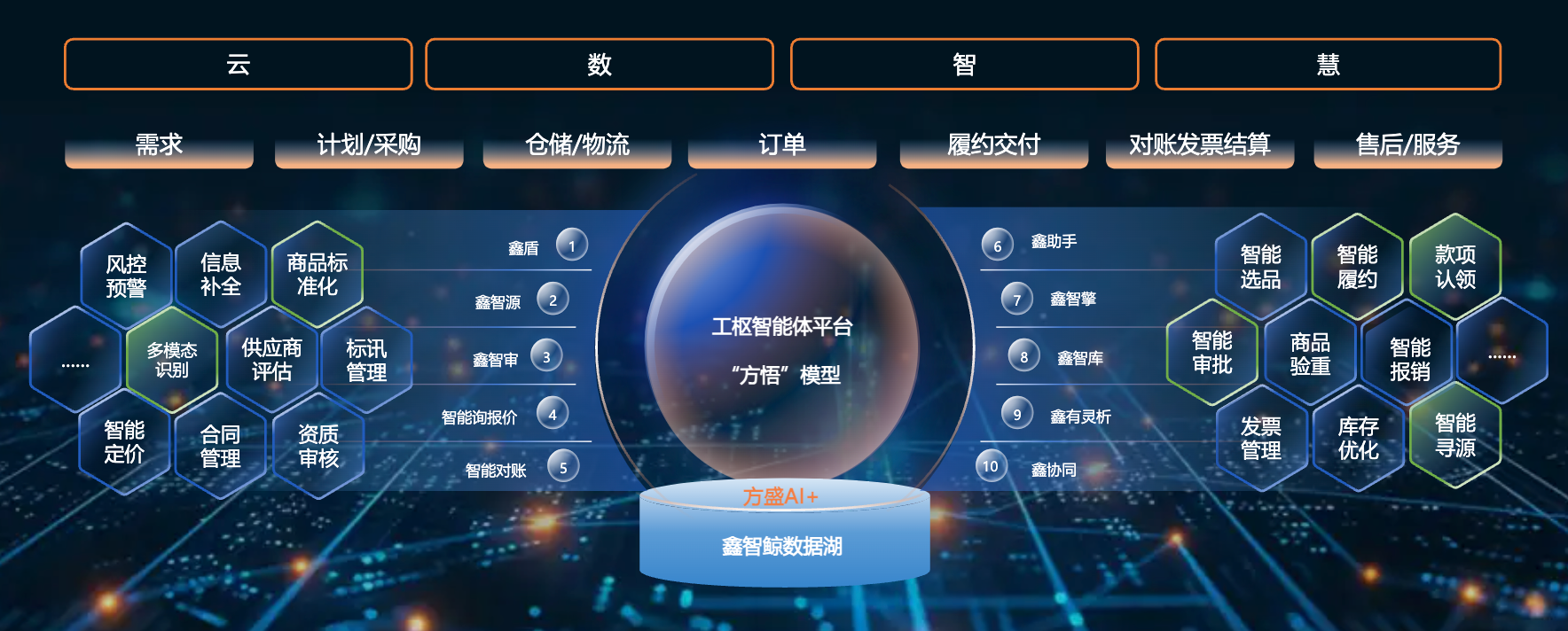
云数智慧平台的高效运转,离不开六层全栈AI架构的技术支撑与鑫协同平台的协同赋能。

依托底层AI底座搭建“云、数、智、慧”一体化平台,覆盖需求、采购、仓储、物流、对账结算完整业务闭环,分维度破解行业痛点。

商品端依靠AI完成非标工业品信息清洗、统一标准化,解决规格杂乱难题;合作端搭载智能合约、智能询报价、智能对账系统,简化上下游协作;履约端借助AI调度数字化仓网,优化多品类工业品交付效率。

整套体系推动供应链由人工经验决策,转向全域数据驱动、AI自主研判,打通产业链各环节数据壁垒。
Part 03  鑫协同三层AI平台,打通内外部双向协同链路

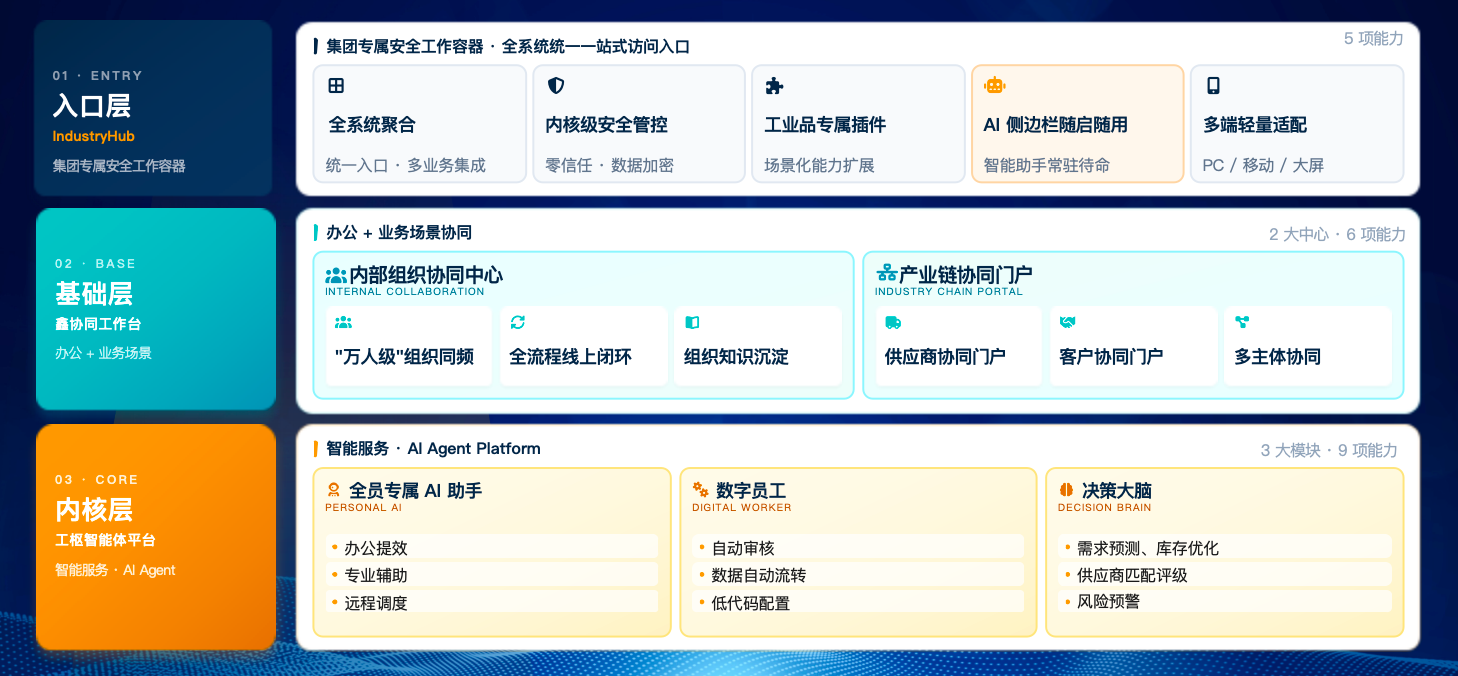
自研鑫协同AI原生协同平台采用三层分层架构,兼顾企业内部办公与产业链外部协同。

基座层鑫协同工作台支撑万人级组织线上办公,实现全流程线上闭环与企业知识沉淀;入口层IndustryHub为统一安全门户,聚合全业务系统,实现多端轻量化访问、集团数据隔离;内核层搭载工枢智能体引擎,同步输出数字员工与智能决策大脑。

数字员工自动处理单据、合同、票据等重复性工作;决策大脑完成需求预测、供应商评级、供应链风险预警,配套上下游协同门户,实现客户、供应商多方信息互通,打造工业品专属数智协同模式。
鑫方盛实现从云算力、数据湖、行业大模型到业务应用的全链路自研闭环。面向制造、能源、工程类工业客户,平台既能完成海量非标工业品标准化治理,又依靠AI智能体矩阵实现采购履约全流程自动化,同时打通企业内部运营与上下游产业协同通道,有效降本、提效、管控供应链风险。依托持续迭代的全栈AI原生技术,鑫方盛持续推动工业品供应链深度智能化转型。

亿邦智库持续关注央国企数字化采购领域的最新进展,如想了解更多与本文相关信息,请扫码关注作者微信或发送邮箱。联系邮箱:zhangjing@ebrun.com

《2026数智化采购发展报告》,点击下载。

【版权提示】亿邦动力倡导尊重与保护知识产权。未经许可,任何人不得复制、转载、或以其他方式使用本网站的内容。如发现本站文章存在版权问题,烦请提供版权疑问、身份证明、版权证明、联系方式等发邮件至run@ebrun.com,我们将及时沟通与处理。

已点赞

+1

{{ praise_text }}

好文章,值得被更多人看到

FAQ回顾

鑫方盛是一家什么类型的企业?

鑫方盛是具备完整自研AI底层能力的工业品综合供应链服务商,以自研六层全栈技术体系与云数智慧平台为核心抓手,搭配AI原生鑫协同平台,打通采购、仓储、履约、结算全业务链条,可针对性解决工业品供应链三大核心痛点。

全栈AI技术可解决工业品供应链的哪些痛点?

全栈AI技术可针对性解决工业品非标治理、产业链数据孤岛、上下游协同低效三大行业痛点,还能覆盖资质审核、智能寻源、库存优化、风险预警等全场景智能化需求,可带动组织整体效能提升10%以上。

鑫方盛的全栈AI架构有哪些核心能力?

鑫方盛搭建分层闭环AI技术体系,从算力支撑到业务应用逐层落地,目前已落地200+行业Agent、100+自动化RPA,月词元调用达数千亿规模,形成了自主可控的差异化技术壁垒。

工业企业供应链数智化转型有哪些可用方案?

鑫方盛推出的全栈AI原生解决方案可适配工业企业需求,面向制造、能源、工程类客户,既能完成海量非标工业品标准化治理,又能实现采购履约全流程自动化,帮助企业降本、提效、管控供应链风险。

广告

下一篇

征集报名《品牌数字化服务商资源手册》

《品牌数字化服务商资源手册》展示数字化服务商风采,亿邦全年零售大会通发,触达更多资源,马上加入!

马上入驻

DeepSeek开放Harness开发者预览 对标Claude Cowork

2026年8月14日DeepSeek开放对标Claude Cowork的智能体框架DeepSeek Harness开发者预览,其采用全插件式设计,以MIT许可证开源,目前处于快速迭代阶段。

AI 其它属性 大模型 DeepSeek

2026-08-17 10:22:12