• 亿邦公众号
    • APP下载

亿邦智库院长郑敏:产业互联网重点不在抢蛋糕,AI与出海是高共识增长路径

作者:亿邦动力 文章来源:亿邦动力

2026-11-22 11:51

作者:亿邦动力 文章来源:亿邦动力

2026-11-22 11:51

邦小白快读

EN
全文速览

总:今年是产业智能体元年,AI与出海是产业互联网已验证的高确定性增量路径,产业互联网要做大蛋糕而非抢蛋糕。

1.核心判断:AI真正增量点是释放研发潜能,通过研发创造新采购新消费;出海不是抢份额,而是用创新产品激活全球增量。

2.企业案例:国联股份布局AI全景与跨境电商、物流基建、数字中台;嘉立创从PCB到PCBA到成品,EDA数据直连工厂;齐心落地100个AI场景、主营覆盖75%、货单识别准确率98%;云中鹤开发智能体集群并部分开放客户;森博用BER和MEE做研发与AI电商,较好客户AI电商转化率2%-5%。

总2:数据与实操。

1.Accio work付费用户超10万,验证token付费;2/3千峰企业净利率低于10%,但净利率大于10%的企业中43%提及智能体。

2.出海要建动态择优、属地数据闭环、合规合作共赢机制。

总1:产品研发是品牌新增量的核心,产业互联网不是抢蛋糕而是做蛋糕,品牌应避免只盯存量价格竞争,靠研发和出海创造增量。

1.嘉立创从PCB到PCBA到成品全链条打通,EDA设计数据直连工厂机器,做到一个概念进、一个产品出,支撑客户研发创新。

2.森博科技用BER业务实证型研发体系和MEE方法论工程师,帮消费品和工业品企业洞察市场、做产品研发,并做AI电商;服务较好的客户AI电商转化率约2%-5%。

总2:渠道和用户运营要接住非标化、口语化需求,品牌渠道可前端专属商城、中间商品数据池、后端全国履约网络。

1.淘宝企业购的淘宝小源把口语化非标化采购需求转成供给方方案,承接询报价、订单跟进、发票催办。

2.云中鹤做S2B2C,从需求识别、方案生成、选品比价、履约服务到运营复盘开发智能体集群,部分开放客户;得力集实从实物商品向电影、本地生活扩展,品类可扩张。

总3:出海品牌要以创新产品和本地化共赢做增量。泛鼎选择高合规产品,海外网点与当地主体合资,部分对方持股超50%,并用数据资产结合AI云原生3D设计软件在美国做全屋定制品牌New Casa。

总1:增长市场在AI与出海,AI电商和token付费是新机会。

1.Accio work付费用户超10万,实质为token消耗付费;期待token收入在阿里国际站或B2B营收占比达10%并挑战更高。

2.森博服务客户AI电商转化率约2%-5%,电商订单中2%-5%来自大模型流量入口;云中鹤智能体集群从内部员工使用到部分开放给客户,入口级智能体是抢入口方向。

3.出海市场:国联在哈萨克斯坦、巴基斯坦建数字经济总部,巴基斯坦总理一个月左右见国联创始人四次;人民币汇率利率表现使中国企业有参与全球供应链组织机会。

总2:风险与应对。千峰企业增速分化、盈利承压,2/3以上净利率低于10%;批发和交易类营收利润增长最差,制造主导最好;只盯降本增效可能使存量变减量。

1.应对是AI和出海共同动作,提及智能体的企业净利率大于10%占比更高;出海要选高合规产品,建合规合作共赢机制,泛鼎海外网点与当地主体合资,部分对方持股超50%。

2.可学习商业模式:产业智能体四竞争力数据、生态、智控、token收入;全球化数智供应链四竞争力动态择优、智能生态协同、属地数据闭环、合规合作共赢。

总1:生产设计环节的数字化方向是数据直连设备和智能体接管流程。

1.嘉立创从PCB打样到PCBA到成品全链条打通,EDA设计数据直连工厂机器,实现一个概念进、一个产品出,支撑客户研发创新。

2.产业智能体智控方向要梯次打通软件、数控设备和具身智能交互;国联股份从算力到通用工厂、智能体平台和落地应用全景布局。

3.鑫方盛靠30年行业know-how和千万SKU数据积累,基于数据湖研发Agent;齐心落地100个AI应用场景,主营覆盖75%,货单识别准确率98%。

总2:数字化电商启示是AI可接询报价、订单跟进、发票催办和履约。

1.淘宝企业购的淘宝小源把口语化非标化采购需求转成供给方方案;云中鹤开发智能体集群覆盖需求识别、方案生成、选品比价、履约服务、运营复盘。

2.森博帮工业品企业洞察市场做产品研发,并基于AI和通用大模型做AI电商,较好客户AI电商转化率2%-5%。

总3:商业机会在研发增量和出海。

1.制造主导企业营收利润增长最好;AI要释放研发产能,自己降本增效省钱干研发,或帮上下游干研发。

2.国联布局跨境电商平台、物流基建、数字中台;泛鼎用数据资产结合AI云原生3D设计软件在美国做全屋定制品牌New Casa。

总1:行业趋势是产业智能体元年,AI逐步接管B2B全流程,企业级AI智能体市场被看好,某机构认为2029年前年复合增长率达107%。

1.产业智能体四大竞争力是数据、生态、智控、token收入;出海方向是全球化数智供应链和全球化智能生态网络,四大竞争力为动态择优、智能生态协同、属地数据闭环、合规合作共赢。

2.平台和龙头企业都在落地智能体,Accio work付费用户超10万,token付费模式验证;齐心100个场景、75%覆盖、98%货单识别率。

总2:客户痛点集中在盈利承压、研发失败率高和存量市场萎缩。

1.千峰企业2/3以上净利率低于10%,增速分化;批发交易类增长最差;只盯降本增效会使存量变减量。

2.森博指出企业智能体研发失败率高,需要BER业务实证型研发体系和MEE方法论工程师,先做业务实证再方法论AI化。

总3:解决方案是数据湖加Agent、智能体集群、入口级智能体和AI电商。

1.鑫方盛基于数据湖研发Agent;云中鹤开发智能体集群并部分开放客户;玲珑咨询趋向入口级产业智能体。

2.森博两套体系帮消费品和工业品企业洞察市场做研发、做AI电商,较好客户AI电商转化率2%-5%;出海服务要帮客户建合规合作共赢和属地数据闭环。

总1:平台最新做法是发布不同层级智能体,用智能体承接交易全流程。

1.阿里B2B两大平台独立产业智能体Accio work付费用户超10万,形成token消耗付费新盈利模式;期待token收入在阿里国际站或B2B营收占比达10%并挑战更高。

2.淘宝企业购推出淘宝小源,把口语化非标化采购需求转成供给方方案,承接询报价、订单跟进、发票催办。

3.平台智能体需要行业可信度技能网络和专家数字分身,入口级智能体是竞争关键。

总2:平台商业需求和收入要关注token经济与品类扩展。

1.智能体以token为特征收入;得力集实前端专属商城、中间商品数据池、后端全国履约网络,品类从实物商品向电影、本地生活扩展。

2.制造主导企业营收利润增长最好,科技服务其次,批发交易最差,平台招商和运营要往深度供应链走。

总3:风向规避上,出海B2B要格外注意合规合作共赢机制。

1.全球化数智供应链要动态择优、遇阻调优,智能生态协同,属地数据闭环。

2.泛鼎选择高合规产品,海外网点与当地主体合资,部分对方持股超50%,沉淀数据资产结合AI做海外全屋定制品牌New Casa。

总1:产业新动向是产业智能体元年和全球化智能生态网络。

1.产业智能体定义:嵌入产业链供应链各环节,以大模型为认知推理引擎,以运行数据、专业知识和机理约束为底座,贯通软件系统、生态网络、行业专家、数控及具身智能装备,具有自主感知、记忆、决策、交互、执行及交易能力。

2.产业智能体四大竞争力:数据、生态、智控、token收入;出海四大竞争力:动态择优网络、智能生态协同、属地数据闭环、合规合作共赢机制。

总2:新问题与数据。产业互联网增速分化、盈利承压,2/3以上千峰企业净利率低于10%;制造主导企业营收利润增长最好,科技服务其次,批发交易最差;净利率大于10%的企业中43%提及智能体,未提及企业占比25.6%。

1.只盯降本增效会导致存量市场萎缩甚至减量,AI真正增量点是释放研发潜能,通过研发创造新采购新消费;产业互联网是做蛋糕不是抢蛋糕。

2.企业智能体研发失败率高,森博提出BER业务实证型研发体系和MEE方法论工程师;AI电商转化率约2%-5%。

总3:商业模式与政策启示。token付费、入口级智能体、S2B2C智能体集群、AI电商、数据资产结合AI做品牌。

1.Accio work付费超10万;企业级AI智能体市场2029年前年复合增长率107%。

2.B2B出海要建合规、合作、共赢再平衡机制,选高合规产品,属地数据闭环;人民币汇率利率表现给中国企业参与全球供应链组织机会。

声明:快读内容全程由AI生成,请注意甄别信息。如您发现问题,请发送邮件至 run@ebrun.com 。

我是 品牌商 卖家 工厂 服务商 平台商 研究者 帮我再读一遍。

Quick Summary

Overall: This year marks the inaugural year of industrial AI agents. AI and global expansion are proven, high-certainty incremental paths for the industrial internet. The industrial internet should grow the pie rather than fight over it.

1. Core judgment: The real incremental value of AI lies in unlocking R&D potential and creating new procurement and consumption through R&D. Going global is not about grabbing share but about activating global incremental demand with innovative products.

2. Company cases: Guolian is building a full AI landscape plus cross-border e-commerce, logistics infrastructure, and a digital middle platform. JLC has integrated the full chain from PCB to PCBA to finished products, with EDA data connected directly to factories. Comix has deployed 100 AI scenarios, covering 75% of its main business, with 98% accuracy in order/document recognition. Yunzhonghe has developed an agent cluster and partially opened it to customers. Senbo uses BER and MEE for R&D and AI e-commerce; its better-performing clients achieve AI e-commerce conversion rates of 2%-5%.

Overall 2: Data and implementation.

1. Accio Work has more than 100,000 paying users, validating token-based payment. Two-thirds of Qianfeng enterprises have net margins below 10%, but among companies with net margins above 10%, 43% mention agents.

2. For global expansion, companies need mechanisms for dynamic selection, localized data closed loops, and compliant, cooperative, win-win partnerships.

Overall 1: Product R&D is central to brands' new growth. The industrial internet is about growing the pie, not fighting over it. Brands should avoid focusing solely on price competition in existing markets and instead create growth through R&D and global expansion.

1. JLC has integrated the full chain from PCB to PCBA to finished products, with EDA design data connected directly to factory machines, enabling one concept in, one product out and supporting customers' R&D innovation.

2. Senbo Technology uses its BER business-validated R&D system and MEE methodology engineers to help consumer and industrial goods companies understand markets, conduct product R&D, and run AI e-commerce; its better-performing clients achieve AI e-commerce conversion rates of about 2%-5%.

Overall 2: Channel and user operations must handle non-standard, colloquial demands. Brand channels can feature a dedicated front-end mall, a mid-end product data pool, and a back-end national fulfillment network.

1. Taobao Enterprise Procurement's Taobao Xiaoyuan converts colloquial, non-standard procurement demands into supplier solutions, handling inquiries and quotations, order follow-up, and invoice follow-up.

2. Yunzhonghe operates S2B2C and has developed an agent cluster covering demand identification, solution generation, product selection and price comparison, fulfillment services, and operational review, partially open to customers. Deli Jishi is expanding from physical goods to movies and local life services, showing category scalability.

Overall 3: Global brands should create growth through innovative products and localized win-win arrangements. Fanding selects highly compliant products, forms joint ventures between overseas outlets and local entities—sometimes with the local partner holding more than 50%—and uses data assets combined with AI cloud-native 3D design software to build the U.S. whole-home customization brand New Casa.

Overall 1: Growth markets lie in AI and global expansion; AI e-commerce and token-based payment are new opportunities.

1. Accio Work has more than 100,000 paying users, essentially paying for token consumption. It expects token revenue to reach 10% of Alibaba.com or B2B revenue and aims higher.

2. Senbo's clients achieve AI e-commerce conversion rates of about 2%-5%, with 2%-5% of e-commerce orders coming from large-model traffic gateways. Yunzhonghe's agent cluster has evolved from internal employee use to partial availability for customers; gateway-level agents are the direction for capturing entry points.

3. Global markets: Guolian has established digital economy headquarters in Kazakhstan and Pakistan; Pakistan's prime minister met Guolian's founder four times in about a month. RMB exchange rate and interest rate performance gives Chinese companies opportunities to participate in organizing global supply chains.

Overall 2: Risks and responses. Qianfeng enterprises show divergent growth and margin pressure, with more than two-thirds having net margins below 10%. Wholesale and trading companies have the weakest revenue and profit growth, while manufacturing-led companies perform best. Focusing only on cost reduction and efficiency gains may turn existing markets into shrinking markets.

1. The response is to pursue AI and global expansion together; companies that mention agents have a higher share of net margins above 10%. For global expansion, choose highly compliant products and build compliant, cooperative, win-win mechanisms. Fanding's overseas outlets form joint ventures with local entities, with the local partner sometimes holding more than 50%.

2. Learnable business models: the four competitiveness pillars of industrial agents are data, ecosystem, intelligent control, and token revenue; the four pillars of global digital-intelligent supply chains are dynamic selection, intelligent ecosystem collaboration, localized data closed loops, and compliant, cooperative, win-win arrangements.

Overall 1: The digitalization direction in production and design is direct data connections to equipment and agents taking over processes.

1. JLC has integrated the full chain from PCB prototyping to PCBA to finished products, with EDA design data connected directly to factory machines, achieving one concept in, one product out and supporting customers' R&D innovation.

2. In the intelligent-control direction, industrial agents need to progressively connect software, CNC equipment, and embodied-intelligence interaction. Guolian is building a full landscape from computing power to general factories, agent platforms, and implementation applications.

3. Xinfangsheng leverages 30 years of industry know-how and data accumulated across tens of millions of SKUs to develop agents based on a data lake. Comix has deployed 100 AI application scenarios, covering 75% of its main business, with 98% accuracy in order/document recognition.

Overall 2: The lesson for digital commerce is that AI can handle inquiries and quotations, order follow-up, invoice follow-up, and fulfillment.

1. Taobao Enterprise Procurement's Taobao Xiaoyuan converts colloquial, non-standard procurement demands into supplier solutions. Yunzhonghe has developed an agent cluster covering demand identification, solution generation, product selection and price comparison, fulfillment services, and operational review.

2. Senbo helps industrial goods companies understand markets and conduct product R&D, and runs AI e-commerce based on AI and general large models; its better-performing clients achieve AI e-commerce conversion rates of 2%-5%.

Overall 3: Business opportunities lie in R&D-driven growth and global expansion.

1. Manufacturing-led companies have the best revenue and profit growth. AI should unlock R&D capacity—companies can use cost savings to fund R&D themselves or help upstream and downstream partners conduct R&D.

2. Guolian is building cross-border e-commerce platforms, logistics infrastructure, and digital middle platforms. Fanding uses data assets combined with AI cloud-native 3D design software to build the U.S. whole-home customization brand New Casa.

Overall 1: The industry trend is the inaugural year of industrial agents, with AI gradually taking over the entire B2B workflow. The enterprise AI agent market is viewed favorably; one institution expects a compound annual growth rate of 107% through 2029.

1. The four competitiveness pillars of industrial agents are data, ecosystem, intelligent control, and token revenue. In global expansion, the direction is global digital-intelligent supply chains and global intelligent ecosystem networks, with four pillars: dynamic selection, intelligent ecosystem collaboration, localized data closed loops, and compliant, cooperative, win-win arrangements.

2. Platforms and leading companies are implementing agents. Accio Work has more than 100,000 paying users, validating the token payment model; Comix has 100 scenarios, 75% coverage, and 98% order/document recognition accuracy.

Overall 2: Customer pain points center on margin pressure, high R&D failure rates, and shrinking existing markets.

1. More than two-thirds of Qianfeng enterprises have net margins below 10%, with divergent growth; wholesale and trading companies have the weakest growth. Focusing only on cost reduction and efficiency gains will turn existing markets into shrinking markets.

2. Senbo notes that enterprise agent R&D has a high failure rate and requires its BER business-validated R&D system and MEE methodology engineers—first validating the business, then applying AI to the methodology.

Overall 3: Solutions are data lakes plus agents, agent clusters, gateway-level agents, and AI e-commerce.

1. Xinfangsheng develops agents based on a data lake; Yunzhonghe develops an agent cluster and partially opens it to customers; Linglong Consulting is moving toward gateway-level industrial agents.

2. Senbo's two systems help consumer and industrial goods companies understand markets, conduct R&D, and run AI e-commerce; its better-performing clients achieve AI e-commerce conversion rates of 2%-5%. Global expansion services should help clients build compliant, cooperative, win-win arrangements and localized data closed loops.

Overall 1: Platforms' latest approach is to release agents at different levels and use agents to handle the entire transaction workflow.

1. Alibaba's two major B2B platforms have launched independent industrial agent Accio Work, which has more than 100,000 paying users and creates a new profit model based on token consumption payment. It expects token revenue to reach 10% of Alibaba.com or B2B revenue and aims higher.

2. Taobao Enterprise Procurement launched Taobao Xiaoyuan, which converts colloquial, non-standard procurement demands into supplier solutions and handles inquiries and quotations, order follow-up, and invoice follow-up.

3. Platform agents need industry-credible skill networks and expert digital twins; gateway-level agents are the key to competition.

Overall 2: Platform business needs and revenue should focus on the token economy and category expansion.

1. Agents generate revenue characterized by tokens. Deli Jishi has a dedicated front-end mall, a mid-end product data pool, and a back-end national fulfillment network, expanding categories from physical goods to movies and local life services.

2. Manufacturing-led companies have the best revenue and profit growth, followed by technology services, with wholesale and trading worst. Platform merchant recruitment and operations should move toward deeper supply chains.

Overall 3: To guard against headwinds, B2B global expansion must pay special attention to compliant, cooperative, win-win mechanisms.

1. Global digital-intelligent supply chains require dynamic selection, optimization when encountering obstacles, intelligent ecosystem collaboration, and localized data closed loops.

2. Fanding selects highly compliant products, forms joint ventures between overseas outlets and local entities—sometimes with the local partner holding more than 50%—and accumulates data assets to combine with AI for the overseas whole-home customization brand New Casa.

Overall 1: New industry developments are the inaugural year of industrial agents and global intelligent ecosystem networks.

1. Definition of industrial agents: embedded in all links of industrial and supply chains, with large models as the cognitive reasoning engine and operating data, professional knowledge, and mechanism constraints as the foundation; they connect software systems, ecosystem networks, industry experts, CNC equipment, and embodied-intelligence equipment, and possess autonomous perception, memory, decision-making, interaction, execution, and transaction capabilities.

2. The four competitiveness pillars of industrial agents: data, ecosystem, intelligent control, and token revenue. The four pillars for global expansion: dynamic selection networks, intelligent ecosystem collaboration, localized data closed loops, and compliant, cooperative, win-win mechanisms.

Overall 2: New issues and data. Industrial internet growth is diverging and under margin pressure; more than two-thirds of Qianfeng enterprises have net margins below 10%. Manufacturing-led companies have the best revenue and profit growth, followed by technology services, with wholesale and trading worst. Among companies with net margins above 10%, 43% mention agents, while 25.6% do not.

1. Focusing only on cost reduction and efficiency gains will lead to shrinking or even contracting existing markets. The real incremental value of AI is unlocking R&D potential and creating new procurement and consumption through R&D. The industrial internet is about growing the pie, not fighting over it.

2. Enterprise agent R&D has a high failure rate. Senbo proposes its BER business-validated R&D system and MEE methodology engineers; AI e-commerce conversion rates are about 2%-5%.

Overall 3: Business models and policy implications. Token payment, gateway-level agents, S2B2C agent clusters, AI e-commerce, and data assets combined with AI to build brands.

1. Accio Work has more than 100,000 paying users; the enterprise AI agent market is expected to have a compound annual growth rate of 107% through 2029.

2. B2B global expansion requires compliant, cooperative, win-win rebalancing mechanisms, selection of highly compliant products, and localized data closed loops. RMB exchange rate and interest rate performance gives Chinese companies opportunities to participate in organizing global supply chains.

Disclaimer: The "Quick Summary" content is entirely generated by AI. Please exercise discretion when interpreting the information. For issues or corrections, please email run@ebrun.com .

I am a Brand Seller Factory Service Provider Marketplace Seller Researcher Read it again.

【亿邦原创】11月20日消息,在2026第八届亿邦产业互联网年会暨首届产业智能体大会上,亿邦动力董事长、亿邦智库院长郑敏重磅发布《模态进化-2026产业互联网发展报告》。他表示,今年是产业智能体元年。产业智能体不止是产业智能型技术平台,更是全球化的智能生态网络。

他表示,产业互联网从来不是抢蛋糕的角色,而是做蛋糕的角色。产业互联网的价值正在往深度供应链方向牵引,AI与出海是当前已验证的高确定性增长路径。

AI真正要打开的增量点是释放研发潜能,只有通过研发创造新采购新消费,才能把市场蛋糕做大;出海也不是去海外抢份额,而是要为全球用户提供更具创新性的产品,激活全球经济增量。
温馨提示:本文为速记初审稿,在不影响原意的基础上,由亿邦动力编辑整理。

以下为演讲实录:

每一年在这个时候,我们都特别想向各位领导、各位朋友汇报一下,亿邦动力和亿邦智库看到了什么。根据主题来看,今年在AI方面我们看到了什么?我们看到了产业智能体,所以我们也给产业智能体做了一个定义。更关键的是什么?是在产业智能体的方向上,我们初步梳理了四大竞争力建设方向,第一个是数据,产业智能体更强调数据的行业深度、严谨以及时效性。第二个是生态,产业智能体更需要有行业可信度的技能网络和业界专家数字分身。第三个是智控,产业智能体梯次打通软件、数控设备和具身智能交互。第四是以token为特征的收入。

另外在出海的模态进化方向上,我们看到了什么呢?我们看到了全球化的数智供应链。再往深说一层,我们看到了全球化智能生态网络。

那么在全球化的数智供应链里面,有四大竞争力建设方向:第一,是一个动态择优的网络,动态择优、遇阻调优;第二个特征是智能的生态协同;第三个特征及竞争力建设方向是属地数据闭环;第四是非常重要的一点,这个问题大家在跨境电商B2C里面已经碰到了类似的挑战,在B2B领域里面,我觉得大家要格外注意:在出海的过程中,在全球化的过程中,一定要找到能够再平衡的合规、合作和共赢的机制。

01 AI和出海是寻求增量的共同动作

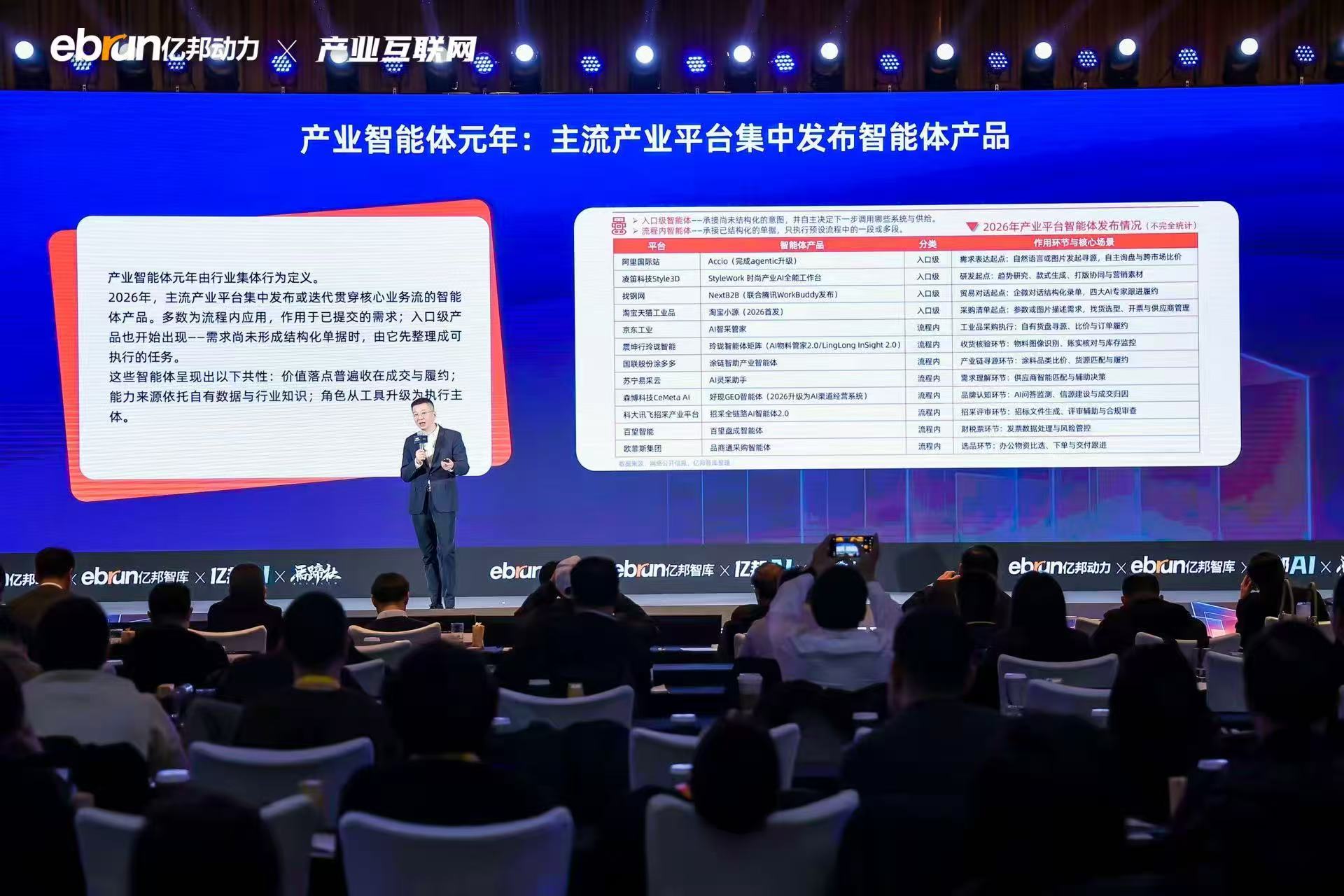
今年完全可以称之为产业智能体的元年。
今年我们看各大平台都在发布不同层级的智能体。昨天亿邦动力刚刚出了一篇文章,在那篇文章里我们看到,覆盖阿里B2B两大平台的独立产业智能体叫Accio work,Accio work的付费用户超过了10万。朋友们,这是实质上为token消耗付费的新盈利模式。我们很期待,这一部分来自token消耗的收入,尽快能在阿里国际站或者阿里B2B的营收里,占比达到10%,持续挑战更高。

那么企业级的智能体方向,各大研究机构也是比较看好的。我看到有一家机构认为,在2029年以前,企业级AI智能体市场的年复合增长率会达到107%,所以总体来讲大家都很看好这个市场。
每一年我们会组织产业互联网领域千峰奖的申报,今年申报的情况来看,一是申报企业多,第二是与AI相关的企业格外多。那么我们首先来看看今年产业互联网领域的冷暖,从这些千峰企业的情况来观察:首先从生存基本面上来看,今年和往年都不太一样,增速非常分化,而且盈利承压。来报千峰奖的公司都是比较优质的公司,但2/3以上的企业净利润率都是低于10%的。

第二个是什么?在产业互联网里面,如果按照业务类型来分,有制造主导的企业,有科技服务主导的企业,也有批发和交易型的企业。我们看这三种企业的表现非常有趣:制造业主导的企业,营收增长和利润增长表现是最好的,其次是科技服务类的,批发和交易类的营收和利润增长表现是最差的。我想咱们都是行家里手,一看这个结果可能心里就已经有一定的答案了。从某种程度来讲,这也在把产业互联网的价值往深度供应链的方向引导。

还有一点是什么?我们看这两个柱形图,在两个柱形图里能清晰看到:但凡提及到了智能体的公司,净利润率大于10%的占比更高。在净利润率大于10%的企业里面,有43%提及了智能体,没有提到的企业占比就很低,只有25.6%。

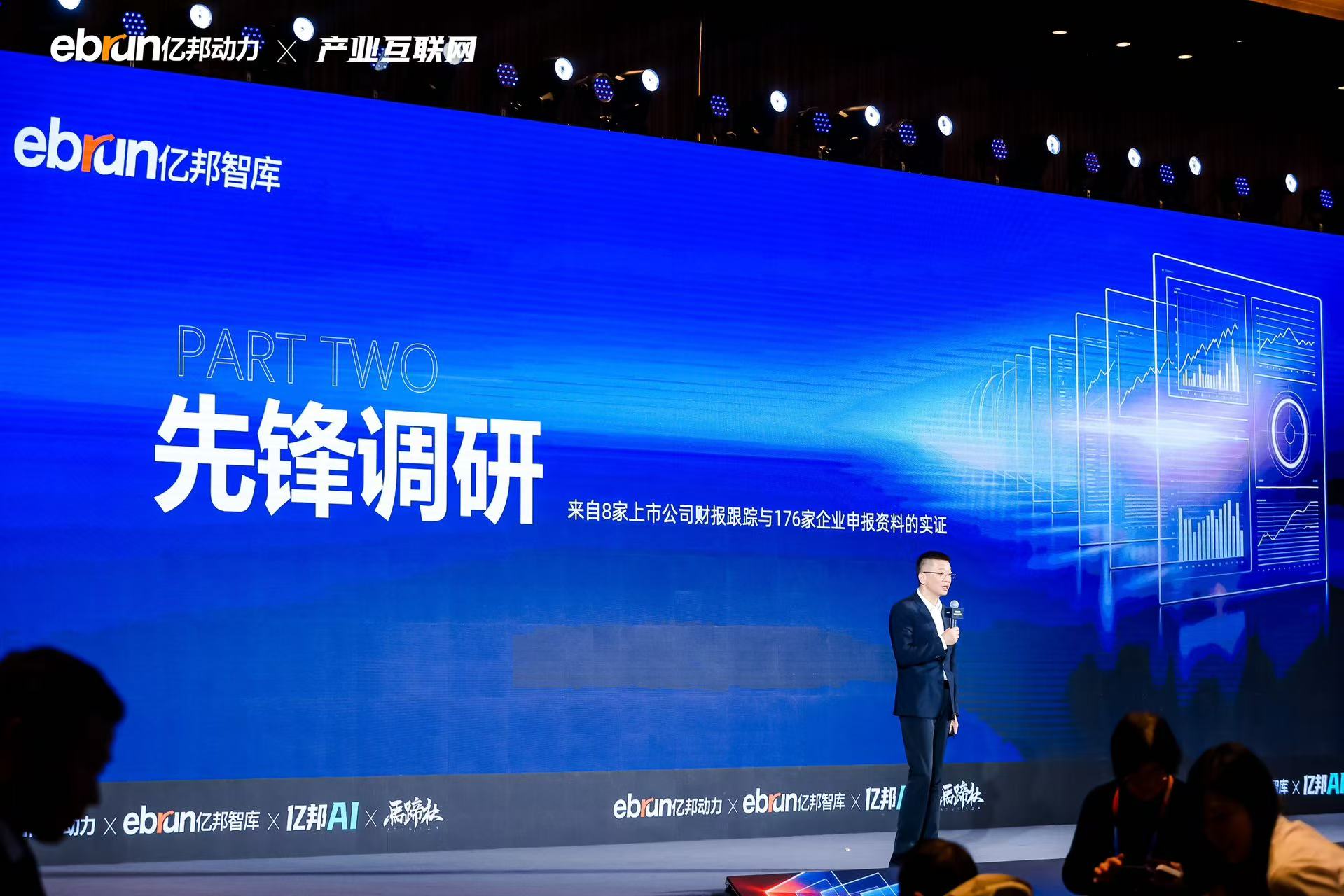
另外我们选了2026年上半年已经上市,且营收和利润都同比增长的几家产业互联网圈的公司,从这些上市公司里把营收和利润都有增长的公司挑出来一看,AI和出海都是他们共同的动作,是共识,全做了,而且有很多都有实际见效的数据表现和佐证。

02 AI逐步接管B2B全流程

好,那么我们再具体来看一下产业AI方面,以及圈里一些企业的看点。

AI肯定是在逐步接管B2B的全流程的。我们看一下国联股份,今天上午潘总也做了介绍,国联股份这几年在AI方面也没闲着。因为是上市公司,资金量也比较大,在产业互联网方向、在AI方向是全景布局,从算力到通用工厂,到智能体平台,还有落地应用。

我们看嘉立创,嘉立创实际上是以PCB也就是印刷电路板的打样起家的。但是我们看在产业互联网的逻辑之下,嘉立创为什么市值能有约1000亿?因为嘉立创从PCB到PCBA到成品,把整个链条都做通了,从EDA设计数据能够直连工厂的机器。所以他们有一个理念:但凡是电子产品的设计者,你只要有一个概念、有一个想法,可能接下来在AI的作用之下,一个产品就出来了,全流程都覆盖了。一个概念进,一个产品就出来了。这也是产业互联网深度价值链的表现,更是支撑客户企业产品研发创新能力的表现。

好,然后是淘宝企业购,淘宝企业购体量是很大的。在淘宝企业购里面,它也推出了一个“淘宝小源”AI智能体。在主要就是把口语化和非标化的采购需求,转化成供给方能够理解的方案,并且承接了询报价、订单跟进和发票催办等等工作。

我去年讲震坤行的时候,看到他们在AI方面有三层结构:自研的AI模型,再加上数据和它的智能体。今年玲珑智能独立成立一家企业之后,我们看到它加了一层,就是玲珑咨询。我的理解,玲珑咨询实际上就是一个入口级产业智能体的趋向。

从AI的视角去看鑫方盛的话,最珍贵的是它30年的行业know-how和千万SKU在数据方面的积累。开篇我就讲了产业智能体方向上的四大竞争力建设方向,第一是数据。本来按道理来讲,在通用大模型面前,任何企业的行业数据都是四面漏风的,根本挡不住通用大模型的海量收集能力。但是在产业互联网里面,从深度、严谨性和时效性这三个维度,行业的产业智能体系是有可能把壁垒建立起来的。所以实际上我看鑫方盛,它基于自己的数据湖,在此基础之上开始一系列Agent的研发。

AI价值创造路径方面,我们看央国企肯定是合规在牵引,行业龙头企业是效率在牵引的。

齐心,我印象中是咱们行业里在AI投入方面比较早的公司。齐心现在的AI大模型累计落地了100个应用场景,在它主营业务的覆盖率达到了75%。由于动手比较早,数据训练和迭代的次数也比较多,所以我们看2026年上半年的货单识别准确率达到了98%,这方面是我们行业值得学习的一个榜样。

云中鹤的动向。本来按道理讲,产业互联网是以B2B为主,但是云中鹤做了最长的一条链,就是S2B2C,帮助B要去服务C。服务B的人一般来讲都不太愿意服务C的,但是在这么长的一条链条里,我们看到云中鹤从需求识别、方案生成、选品比价、履约服务,还有运营复盘,各环节,开发了大量的智能体集群。

最关键是我前不久跟云中鹤董总交流的时候,董总跟我说,这些智能体起初是内部员工在用、运营人员在用,现在其实已经有一部分开放给客户用。我们非常期待这些开放给客户用的功能,逐步成为入口级的产业智能体,就像今天上午嘉立创修总说的,当下产业智能体根本的问题就是一个抢入口的问题。

那么得力集实的路径是比较清楚的:在前端建专属商城,在中间是商品的数据池,在后端是全国性的履约网络。但是把这套体系建立起来之后,我们看到它的可延展性是什么?从实物商品逐步往电影、往本地生活等等方向扩展。所以产业互联网好就好在这儿,把架构搭起来,把系统建起来,把能力建起来之后,品类是可以无限扩张的。

今天还有很重要的问题,咱们产业互联网的人练了这么久,下午开场的时候,兰格的刘陶然总也讲了,说我们老说降本增效,降本增效,本来就是在存量市场里,如果只是盯着降本增效必然会导致存量市场也会萎缩,可能会变成一个减量市场,我们干的活还有什么意义呢?

我们看到是什么?AI真正要打开的增量点,就和刘陶然总所说的一样,它实际上是要释放出研发的产能,是研发设计的力量。要不就是自己通过降本增效把省下的钱来干研发,要不就是自己形成降本增效的支撑能力,帮助上下游的企业干研发。

总之,只有干了研发之后,新的采购和消费才会出来,只有新的采购和消费出来之后,蛋糕才会做大。产业互联网从来就不是来抢蛋糕的,产业互联网是来做蛋糕的,包括在全球化的进程中也是一样。咱们出海到外面去不是抢蛋糕,是帮助全球的消费者、全球的终端用户和企业能够享受到更创新的产品,让人和企业更愿意消费,全球经济蛋糕就转起来了。

我今年看到一家公司叫森博科技。我跟森博科技的于董也做了一些深入交流,他跟我讲,企业智能体研发过程中的失败率是很高的,但是他们摸索出了一套方法,他称之为BER,BER就是业务实证型的研发体系。

于董还提了个概念叫MEE,是方法论工程师,首先是通过业务实际去做业务的实证研究,做了实证研究之后,再把这套方法论做AI化。由此他们搭建了两套体系:第一套体系是帮助消费品企业和工业品企业洞察市场,做产品研发;第二个是帮助这些企业基于AI、基于通用大模型做AI电商。我听说他给我举的例子里,他服务的比较好的客户,在AI电商的转化率大概能占到2%-5%,也就是那个客户的电商订单里面,有2%-5%实际上是通过大模型的流量入口转过来的。

03 出海机会属于中国人

在出海方向上,今天早上李稻葵老师也讲了,我们的钱便宜,出海机会就会更大。确实是这样,在全球范围内,我们看到美元汇率稳定、利率低的时候,美国的企业更有可能成为全球供应链的组织者,今天我们看看人民币在汇率和利率上的表现,中国企业也有参与全球供应链组织的机会。

国联股份在出海这方面的表现是非常好的,系统布局了跨境电商的平台、物流基建、数字中台。最关键的是,今年国联在哈萨克斯坦和巴基斯坦这两个国家都在建数字经济总部,就在今年,巴基斯坦的总理在一个月左右的时间内见了国联创始人四次。

同样的,泛鼎国际也是这样,泛鼎的刘总,我每次见他的时候都稳如泰山。其实很多国家的外贸政策都在不断调整,我们也能在微信朋友圈里看得到,规则的变化总是鸡飞狗跳的,但是刘总一直稳若泰山,是为什么?

第一是刘总选择了高合规的产品,这是一个;第二,还有很重要的点,刘总在本地化共赢方面做的非常好,海外很多网点他都是跟当地主体合资成立的,甚至有一部分网点对方持股比例超过了50%。当年海外汽车品牌进中国的时候,咱们不也是这样的吗?所以就是我开篇说的,全球化数智供应链的竞争力建设过程中,非常关键的一点,是企业要思考建立一个更加合规、合作和共赢的长效机制,这也是摆在我们出海企业面前的时代课题。

泛鼎在此基础上沉淀了数据,这些数据资产再和AI结合之后,今年泛鼎联合AI驱动的云原生3D设计软件,在美国做了一个全屋定制的品牌,叫New Casa。

亿邦智库对产业互联网的研究,年轮线已经八年了,我们还会持续研究下去。我们亿邦动力有一点点小小的信念,就是代言产业互联网的先进生产力。接下来我们还会更多地去发现产业智能体的商业模式创新机遇,去洞察全球化数智供应链的布局,去寻找产业智能体和全球化智能生态网络的创新模样。

我今天的解读到此结束,谢谢大家!

关于本次大会

2026第八届亿邦产业互联网年会暨首届产业智能体大会,主题是“AI与出海带来的模态进化”,聚焦产业智能体落地、AI供应链价值重构、数据要素与TOKEN经济、产业出海新生态等前沿议题深度思辨。大会集结学界权威、央国企标杆、产业龙头、投资机构、服务生态,汇聚产业核心力量、拆解产业数智化转型路径、分享前沿实战经验。

产业互联网是数智技术、全球化、产业链、供应链变革引发的产业新模态,亿邦动力产业互联网年会已成为我国产业互联网领域的标志性行业交流活动,参与本次大会的各界代表接近1500人。

概念定义:产业智能体是嵌入产业链、供应链各环节,以大模型为认知推理引擎,以运行数据、专业知识与机理约束为底座,贯通软件系统、生态网络、行业专家、数控及具身智能装备,具有自主感知、记忆、决策、交互、执行及交易能力的智能产品和服务。

本文首发于 亿邦动力 官方网站

【版权提示】亿邦动力倡导尊重与保护知识产权。未经许可,任何人不得复制、转载、或以其他方式使用本网站的内容。如发现本站文章存在版权问题,烦请提供版权疑问、身份证明、版权证明、联系方式等发邮件至run@ebrun.com,我们将及时沟通与处理。

已点赞

+1

{{ praise_text }}

好文章,值得被更多人看到

FAQ回顾

产业智能体是什么?

产业智能体是嵌入产业链、供应链各环节,以大模型为认知推理引擎,以运行数据、专业知识与机理约束为底座,贯通软件系统、生态网络、行业专家、数控及具身智能装备,具有自主感知、记忆、决策、交互、执行及交易能力的智能产品和服务。

产业智能体的竞争力建设方向有哪些?

主要包括四个方向:一是数据,强调行业深度、严谨性和时效性;二是生态,需要具有行业可信度的技能网络和业界专家数字分身;三是智控,梯次打通软件、数控设备和具身智能交互;四是以token为特征的收入模式。

AI与出海为什么被视为产业互联网的高确定性增长路径?

AI可释放研发潜能,通过研发创造新采购和新消费,把市场蛋糕做大;出海不是去海外抢份额,而是为全球用户提供更具创新性的产品,激活全球经济增量。2026年上半年营收和利润双增的产业互联网上市公司,共同动作都是AI和出海。

出海企业如何构建全球化数智供应链竞争力?

应建设动态择优、遇阻调优的网络,推动智能生态协同,形成属地数据闭环,并建立合规、合作、共赢的再平衡机制。实践中可选择高合规产品,与当地主体合资布局海外网点,部分网点可由对方持股超过50%,实现本地化共赢。

企业级AI智能体市场增长前景如何?

有研究机构认为,2029年前企业级AI智能体市场年复合增长率将达到107%。阿里B2B平台独立产业智能体Accio work付费用户已超过10万,形成以token消耗付费的新盈利模式,业内期待其收入在阿里国际站或阿里B2B营收中占比达到10%。

广告

下一篇

征集报名《品牌数字化服务商资源手册》

《品牌数字化服务商资源手册》展示数字化服务商风采,亿邦全年零售大会通发,触达更多资源,马上加入!

马上入驻

中铁工业有限公司总经理杨皓岚:采购行业正加速进入智能体阶段

采购行业发展已走过两个阶段:第一阶段是关系时代,第二阶段是自助阶段,当前正加速进入第三个阶段——智能体阶段。

产业互联网 铁建商城 B2B

2026-11-21 23:21:23