



• 亿邦公众号
    • APP下载

承诺后天送达 延迟送达每单赔3元?近期拼多多将掏钱替商家赔付

作者:亿邦动力 文章来源:亿邦动力

2025-11-10 11:45

作者:亿邦动力 文章来源:亿邦动力

2025-11-10 11:45

邦小白快读

EN
全文速览

文章介绍拼多多推出新物流服务政策,旨在提升电商配送速度和确定性,为消费者提供可靠保障,并附带商家激励措施。

1. 核心服务:商家开启“承诺送达”服务后,商品获得专属标识和流量加权,促进消费者下单转化;配送时限严格:当日16点前订单需次日达,16点后订单需隔日达。

2. 赔付机制:延迟送达时,平台从商家账户扣款赔付消费者(每单3元或实收金额1%,最高30元),增强消费者信任。

3. 激励政策:平台提供免赔激励,签约后7日内符合条件订单免赔;之后履约率大于95%时,平台补贴赔付金最高10000元/日,鼓励商家提升服务。

4. 风险与机遇:商家需优化仓储或快递成本以实现准时送达,但获得流量和平台支持机会。

拼多多政策助力品牌商通过服务提升消费者信任和营销效果,强化品牌定位。

1. 品牌营销:开通服务后商品专属标识吸引关注,流量加权直接提升曝光和转化率,助力品牌在新竞争环境下脱颖而出。

2. 品牌渠道建设:政策鼓励优化物流(如支持三级地址配置),品牌可借此建立高效分销渠道,满足即时消费趋势;服务确定性增强用户忠诚度。

3. 用户行为观察:消费者偏好准时送达,品牌研发可针对此需求提升产品包装或供应链,以配合平台服务标准,避免高成本风险。

4. 产品研发启示:结合平台趋势,品牌需权衡投资高成本快递与服务优势,确保设计适应履约速度。

政策详解为卖家提供流量激励和风险提示,助力把握增长机会和应对策略。

1. 政策解读:商家后台自由配置物流模板到三级地址,绑定商品开启服务,获取专属标识和流量加权,但须准时送达(规则:16点前订单次日达,16点后订单隔日达)。

2. 增长市场和机会:开通服务后流量加成促进转化;平台激励缓解赔付负担(签约后7日免赔体验期;履约率>95%可获最高10000元/日补贴),吸引提升服务能力商家。

3. 风险提示和应对:延迟送达需赔付消费者(每单3元或1%),可能推高运营成本;须优化仓储打包或快递选择,以维持高履约率(按订单数计算),否则无激励。

4. 合作方式:借助平台资源升级物流,例如学习高履约商家的仓储优化模式,抓住即时需求变化的机会。

5. 正面影响:服务提升后可获消费者好口碑;负面:成本增加需谨慎评估盈亏。

文章启示工厂配合商家优化生产效率和供应链管理,抓住电商数字化机会。

1. 产品生产需求:商家为满足准时送达服务,需工厂支持快速订单处理或高效库存管理,确保及时供应减少延迟风险。

2. 机会和启示:政策提供合作机遇,工厂可与高履约率商家协作,优化打包或仓储流程(如简化包装),降低物流周转时间。

3. 数字化推进:鼓励电商模式下数字化升级,如采用自动化系统提升打包效率,配合商家履约率95%标准,以共享平台激励带来的订单增长收益。

行业趋势和解决方案聚焦物流痛点,为服务商提供客户服务依据。

1. 行业发展趋势:电商竞争转向即时送达,平台推动履约提升(如拼多多政策),成为新常态,服务商需关注物流提速和数字化需求。

2. 新技术启示:政策鼓励优化流程(如仓储打包),服务商可开发高效系统解决商家痛点(高成本和无法准时),例如智能调度工具支持三级地址配置。

3. 客户痛点和方案:商家面临物流成本上升风险(赔付或高快递费);服务方案包括提供定制物流模板服务,帮助客户提升履约率95%以上,以享受平台激励。

政策展示平台如何吸引商家、管理风险和优化运营,满足商业需求。

1. 需求和问题:商业需要提升服务质量以竞争即时零售;平台推出承诺送达服务(专属标识、流量加权),但需规避商家履约率低或高赔付风险。

2. 最新做法:通过限时免赔激励招商(签约后7日体验期和履约>95%补贴机制),上限10000元/日控制成本;物流模板支持三级地址维度灵活配置,提升商家参与度。

3. 运营管理:后台订单页面提醒商家准时发货;风险规避设置履约率门槛,确保服务品质稳定。

4. 风向规避:监控赔付上限和履约率指标,预防服务质量下滑,同时通过流量加成吸引优质商家。

文章揭示电商产业新动向和政策启示,助力商业模式创新研究。

1. 产业新动向:即时零售竞争加剧,拼多多推出承诺送达服务(数据如履约率95%),代表电商平台转向履约确定性提升。

2. 新问题和启示:商家面临成本上升挑战;政策建议平台补贴模式(如最高10000元/日激励)可平衡商家负担,并为法规提供参考(如赔付标准规则)。

3. 商业模式:分析平台结合流量加权和履约标准的创新,代表企业做法(拼多多)可推广至其他平台;研究可探索如何优化仓储流程减少延迟订单问题。

声明:快读内容全程由AI生成,请注意甄别信息。如您发现问题,请发送邮件至 run@ebrun.com 。

我是 品牌商 卖家 工厂 服务商 平台商 研究者 帮我再读一遍。

Quick Summary

Pinduoduo has launched a new logistics service policy aimed at improving e-commerce delivery speed and reliability, providing consumers with greater assurance, while also offering incentives for merchants.

1. Core Service: Merchants who activate the "Guaranteed Delivery" service receive a special badge and increased traffic visibility for their products, boosting order conversion rates. Delivery deadlines are strict: orders placed before 4 PM must arrive the next day, while orders after 4 PM must arrive within two days.

2. Compensation Mechanism: For delayed deliveries, the platform deducts compensation from the merchant's account (¥3 per order or 1% of the order value, capped at ¥30) to reimburse consumers, enhancing consumer trust.

3. Incentive Policy: The platform offers a waiver incentive—orders meeting specific criteria within the first 7 days after signing up are exempt from penalties. If the fulfillment rate exceeds 95%, merchants can receive subsidies of up to ¥10,000 per day to encourage service improvements.

4. Risks and Opportunities: Merchants must optimize warehousing or shipping costs to ensure on-time delivery but gain access to increased traffic and platform support.

Pinduoduo's policy helps brands build consumer trust and enhance marketing effectiveness through improved service, strengthening brand positioning.

1. Brand Marketing: Activating the service grants products a special badge that attracts attention, while traffic weighting directly increases exposure and conversion rates, helping brands stand out in a competitive landscape.

2. Channel Building: The policy encourages logistics optimization (e.g., support for three-tier address configuration), enabling brands to establish efficient distribution channels that meet instant consumption trends; service reliability boosts user loyalty.

3. Consumer Behavior Insights: Consumers prefer timely delivery, prompting brands to refine packaging or supply chain processes to align with platform standards and avoid high-cost risks.

4. Product Development: Brands must balance investments in expedited shipping against service benefits, ensuring product designs accommodate faster fulfillment speeds in line with platform trends.

The policy details traffic incentives and risk alerts for sellers, helping them seize growth opportunities and develop response strategies.

1. Policy Overview: Sellers can freely configure logistics templates down to three-tier addresses in their backend, bind products to activate the service, and gain special badges and traffic weighting—but must meet strict delivery deadlines (orders before 4 PM arrive next day; orders after 4 PM arrive within two days).

2. Growth Opportunities: Traffic boosts after activation drive higher conversion rates; platform incentives ease compensation burdens (7-day penalty-free trial after sign-up; fulfillment rates >95% qualify for up to ¥10,000/day in subsidies), attracting sellers to upgrade service capabilities.

3. Risks and Mitigation: Delayed deliveries trigger consumer compensation (¥3 per order or 1% of order value), potentially raising operational costs; sellers must optimize warehousing, packaging, or courier selection to maintain high fulfillment rates (calculated by order count) to qualify for incentives.

4. Collaboration: Leverage platform resources to upgrade logistics, such as studying high-fulfillment sellers' warehousing models, to capitalize on shifting instant demand.

5. Impact: Improved service can generate positive consumer feedback; however, cost increases require careful profit-loss evaluation.

The article highlights how factories can support merchants in optimizing production efficiency and supply chain management to seize e-commerce digitalization opportunities.

1. Production Demands: To meet on-time delivery requirements, merchants need factory support for rapid order processing or efficient inventory management, ensuring timely supply and reducing delay risks.

2. Opportunities: The policy creates collaboration openings—factories can partner with high-fulfillment merchants to optimize packaging or warehousing (e.g., simplified packaging), shortening logistics cycle times.

3. Digital Advancement: Encourages digital upgrades in e-commerce models, such as adopting automated systems to boost packaging efficiency, helping merchants meet the 95% fulfillment rate standard and share in order growth from platform incentives.

Industry trends and solutions focus on logistics pain points, providing service providers with client service rationale.

1. Industry Trends: E-commerce competition is shifting toward instant delivery; platforms like Pinduoduo are pushing fulfillment improvements as the new norm, driving demand for faster logistics and digital solutions.

2. Technology Insights: The policy encourages process optimization (e.g., warehousing, packaging), prompting service providers to develop efficient systems addressing merchant pain points (high costs, missed deadlines), such as smart scheduling tools supporting three-tier address configuration.

3. Client Solutions: Merchants face rising logistics costs (compensation payouts, premium shipping); service providers can offer customized logistics template services to help clients achieve >95% fulfillment rates and access platform incentives.

The policy demonstrates how the platform attracts merchants, manages risks, and optimizes operations to meet commercial needs.

1. Needs and Challenges: To compete in instant retail, platforms must elevate service quality; Pinduoduo's Guaranteed Delivery service (special badge, traffic weighting) addresses this but requires mitigating low merchant fulfillment rates or excessive compensation risks.

2. Latest Approach: Time-limited penalty waivers attract merchants (7-day trial post-sign-up; subsidies for >95% fulfillment, capped at ¥10,000/day) to control costs; flexible three-tier address logistics templates boost participation.

3. Operations Management: Backend order pages remind merchants to ship on time; fulfillment rate thresholds mitigate risks and ensure service stability.

4. Risk Management: Monitor compensation caps and fulfillment metrics to prevent service degradation, while using traffic incentives to attract high-performing merchants.

The article reveals new e-commerce industry movements and policy implications, aiding business model innovation research.

1. Industry Shifts: Intensifying instant retail competition has led Pinduoduo to launch a Guaranteed Delivery service (e.g., 95% fulfillment rate benchmark), signaling a platform-wide pivot toward fulfillment reliability.

2. Implications: Merchants face rising cost pressures; the policy's subsidy model (e.g., up to ¥10,000/day incentives) offers a balance and provides regulatory reference (e.g., compensation rules).

3. Business Models: The integration of traffic weighting and fulfillment standards represents an innovative approach; Pinduoduo's model could be replicated across platforms, with research exploring warehousing optimizations to reduce order delays.

Disclaimer: The "Quick Summary" content is entirely generated by AI. Please exercise discretion when interpreting the information. For issues or corrections, please email run@ebrun.com .

I am a Brand Seller Factory Service Provider Marketplace Seller Researcher Read it again.

【亿邦原创】小时达、30分钟达、最快15分钟送达......

2025年的双11,当即时零售平台把大促送货时效从几日达变成小时达甚至分钟达以后,电商平台们也不得不开始在送达速度和服务上发力。

据亿邦动力了解,日前拼多多推出了承诺送达限时免赔激励政策。当商家开启承诺送达服务,但延迟送达后,针对满足特定条件的订单,平台将视情况向商家激励对应赔付金,以鼓励商家为消费者提供更快速、优质的服务。

此前,平台已经新增了商家版“承诺送达”配送服务,会根据商家历史商品履约情况,匹配承诺送达模板,推荐履约率准时高达95%的商品与配送区域,方便商家自由勾选配置。

商家也可自由选择配置承诺送达物流模板并操作绑定商品,同时物流模版支持到三级地址(省-市-区)的维度,方便商家更加灵活配置。

配置成功后,针对符合该物流模版的商品,即可享受买家端专属标识和流量加权,促进买家下单转化。
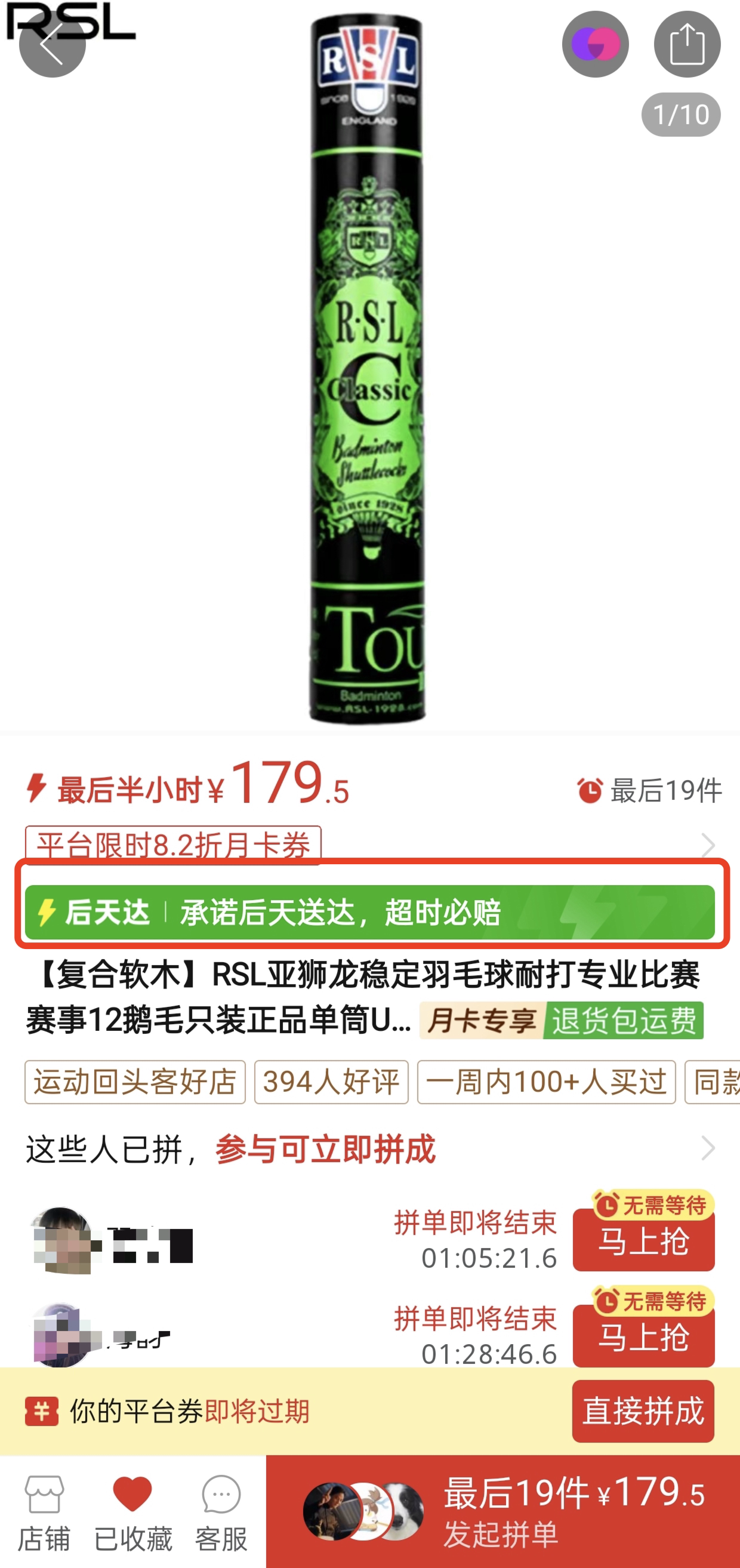
(搜索商品后,部分商品会提供“承诺送达服务”)

当商家开通该服务后,符合承诺送达服务的订单,对应订单在商家后台会展示“承诺送达”服务标识,提醒商家及时进行发货。

需要注意的是,当日16点前(不包含16点)成交的订单,商家需要在次日(T+1)24点前送达,当日16点后(包含16点)成交的订单,商家需要在隔日(T+2)24点前送达,具体以商家后台订单页面展示为准。

当商家开通上述服务,但商品订单未在承诺送达时间内送达至消费者订单收货地址后,相应订单将被认定为延迟送达订单。平台会从商家账户余额中扣除对应的消费者赔付金, 并以无门槛现金券形式发放给延迟送达订单所对应的消费者(50年有效期)。

其中,当延迟送达订单实收金额不超过300元时,需要按每单3元的标准赔付;当延迟送达订单实收金额超过300元时,每单按照实收金额的1%进行赔付,但最高不超过30元。

但现在,当商家成功开通承诺送达服务后,平台有限时免赔激励政策。其中,激励金额为店铺当日符合“可激励订单范围”的延迟送达赔付订单下消费者赔付金额的总和。单日激励金额上限为10000元,超过10000元,按10000元进行激励。

可激励订单包括以下两种类型:

1、签约前7日内(含签约当天)为“免赔激励体验期”,满足当日发货并揽收的订单。其中包括,订单成交时间在16:00之前,揽收时间在成交当日 23:59:59(含)前的订单;订单成交时间在16:00(含)之后,揽收时间在成交次日 23:59:59(含)前的订单。

2、签约7日后,当商家的承诺送达订单当日履约率大于95%,也将纳入可激励订单范围。(履约率为:承诺送达履约率 = 当日承诺送达且按时送达的订单数 ÷ 当日所有承诺送达订单数)

在电商集体“卷”向即时性的背景下,拼多多的“承诺送达”服务,配合专属标识,正是在告诉消费者:这里不仅能买到实惠,更能享受到确定性和高品质的服务。

开通服务的商品会获得买家端专属标识和流量加权,这对于渴求流量的商家或是利好。但为了实现准时送达,商家可能需要投入更高成本的快递服务,或优化自身的仓储打包流程,这都会直接推高运营成本。但同时,对于有能力、有意愿提升履约水准的商家而言,也是一次借助平台资源实现服务升级的机会。

亿邦持续追踪报道该情报,如想了解更多与本文相关信息,请扫码关注作者微信。

【版权提示】亿邦动力倡导尊重与保护知识产权。未经许可,任何人不得复制、转载、或以其他方式使用本网站的内容。如发现本站文章存在版权问题,烦请提供版权疑问、身份证明、版权证明、联系方式等发邮件至run@ebrun.com,我们将及时沟通与处理。

已点赞

+1

{{ praise_text }}

好文章,值得被更多人看到

FAQ回顾

拼多多承诺送达服务的赔付标准是什么?

订单实收金额≤300元时每单赔3元,>300元时按实收金额1%赔付(最高30元)。平台以无门槛现金券形式赔付给消费者,有效期50年。

拼多多平台对商家有哪些免赔激励政策?

签约前7日内为免赔激励体验期,平台承担赔付金;签约7日后若当日履约率>95%,平台继续激励。单日激励上限10000元。

商家如何配置拼多多的承诺送达服务?

商家可自由配置物流模板并绑定商品,支持省市区三级地址维度。开通后商品获专属标识和流量加权,需在T+1或T+2日内送达。

广告

下一篇

征集报名《品牌数字化服务商资源手册》

《品牌数字化服务商资源手册》展示数字化服务商风采,亿邦全年零售大会通发,触达更多资源,马上加入!

马上入驻

泰国封杀电商低价进口 1泰铢起征点“掀翻”小卖家饭碗

近日泰国海关宣布,从2026年1月1日开始,将对通过网络平台订购的进口商品统一征收关税,即便是进口价仅1 泰铢的最低限度商品,也将不再享受免税待遇。

泰国 海外 即时消费 新消费

2025-11-10 10:50:09










