• 亿邦公众号
    • APP下载

千峰访谈汇通达徐秀贤:从“连接”走向“升级重构”

作者:亿邦动力 文章来源:亿邦动力

2026-11-18 09:58

作者:亿邦动力 文章来源:亿邦动力

2026-11-18 09:58

邦小白快读

EN
全文速览

总1:文章核心是汇通达从连接走向升级重构,下沉市场零售全业态加速AI化。

1.关键数据:注册会员零售门店25.7万家,实体网络覆盖21个省份、2.5万多个乡镇;千橙云AI智能大模型通过国家网信办备案;千橙AI超级店长上线24个以上场景化智能体,覆盖8大经营环节;达比AI累计服务电商用户1.3万个,平均帮助商家提效30%以上。

2.实操干货:3C即时零售O2O店可同步城市上新,消费者通过App或小程序下单,本地1小时外卖或跑腿送上门;体育用品商一份素材即可生成适配虚拟模特与多场景主图,上架速度提升5至10倍,电商板块增长50%以上,做主图详情人员缩减一半。

总2:可重点学习AI落地方法。

1.先守三个坚持再推三项升级,底盘不变升级才有方向。

2.数据是AI落地分水岭,自有数据具真实交易、高频、带地域属性特点。

3.智慧供应链以数据驱动打通选品、定价、库存、履约。

总1:品牌商可关注下沉市场渠道触达与AI营销协同。

1.渠道建设:汇通达以乡镇夫妻店为基本盘,注册会员零售门店25.7万家,覆盖21个省份、2.5万多个乡镇,可帮助品牌厂商触达下沉零售终端和本地社群。

2.营销与用户运营:3C数码店改造后可同步城市上新,并打通App或小程序下单、本地1小时外卖或跑腿送达;直播、营销、报表、补货可用Agent辅助店老板,推动门店经营效率和利润同步提升。

总2:产品与数据协同值得关注。

1.达比AI在选品、内容、投放、客服等环节链路贯通,体育用品商接入后一份素材生成多场景主图,平均提效30%至50%,电商增长50%以上。

2.平台与品牌方做商品库存协同,智慧供应链打通选品、定价、库存、履约;真实高频带地域属性的数据可反哺模型,帮助品牌理解下沉消费与门店经营。

总1:卖家机会集中在下沉市场全业态AI化与平台合作。

1.增长市场:下沉市场数百万实体小店是可落地的AI应用场景,中小微零售客户和供应链上游尚未被成熟AI能力覆盖,平台入场窗口期就在当下。

2.最新模式与工具:汇通达从SaaS全面走向AI智能体,千橙AI超级店长覆盖商品、采购、营销、活动、创意、运营、销售、社群8大经营环节;LeapoAI集成百余项开箱即用技能;达比AI服务电商商家1.3万个,平均提效30%以上。

总2:可学习点与风险提示。

1.3C即时零售O2O店通过品牌厂商改造、一手货源、售后保障和本地社群运营补短板,并打通1小时送达场景。

2.体育用品商接入达比AI后,上架速度提升5至10倍,电商板块增长50%以上,做主图详情人员缩减一半,说明工具要落到经营结果。

3.卖家合作时可关注与品牌厂商、供应链伙伴、算力模型伙伴的协同,同时评估自身数据、供应链和运营能力是否匹配。

总1:工厂可关注AI对产品设计、电商上架和供应链协同的改造。

1.产品设计与内容生产:达比AI让江苏体育用品生产商用一份素材生成适配虚拟模特与多场景的主图,节省人工、模特与影棚开支,上架速度提升5至10倍,做主图详情的人员缩减一半。

2.商业机会:该工厂接入达比AI后电商板块增长50%以上;达比AI已服务数千家店铺,平均提效30%至50%,数据分析由数周缩短至半小时内出结果。工厂可借AI贯通选品、内容、投放、客服等环节。

总2:数字化与电商启示明确。

1.智慧供应链将逐步替代传统供应链,以数据驱动把选品、定价、库存、履约打通,改善效率与利润。

2.工厂可与平台做商品库存协同,并借助真实交易、高频、带地域属性的数据反哺模型。

3.平台能力复用将从低频、高价值、慢消类走向全品类,工厂可关注快消零售连锁等新赛道机会。

总1:服务商可关注下沉零售AI化趋势与客户痛点解决方案。

1.行业趋势与新技术:AI正迅速成为生产力工具,产业平台从连接走向升级重构;汇通达自研千橙云AI大模型并通过国家网信办备案,从SaaS全面走向AI智能体,同时夯实智慧供应链与算力服务。

2.客户痛点:县域乡镇3C店难拿一手货源,价格、售后无保障,本地社群运营基本为零;电商商家存在素材制作、上架、数据分析耗时和人力成本高的问题。

总2:解决方案已有落地样本。

1.千橙AI超级店长上线24个以上场景化智能体,覆盖商品、采购、营销、活动、创意、运营、销售、社群8大经营环节。

2.LeapoAI作为企业端一站式AI管理平台,集成百余项开箱即用技能,已进入商业化推广。

3.达比AI贯通选品、内容、投放、客服,平均提效30%至50%;数据由门店交易、仓配履约、AI场景数据和连锁门店经营数据反哺模型,形成闭环。

总1:平台商可关注汇通达的下沉平台打法与AI化运营。

1.定位与需求:以乡镇夫妻店为基本盘,注册会员零售门店25.7万家,覆盖21个省份、2.5万多个乡镇;中小微零售客户和供应链上游尚未被成熟AI覆盖,构成平台入场窗口。

2.最新做法:坚持使命初心、深耕下沉市场、赋能型平台三个不变,推进场景升级、应用升级、基建升级;服务对象从乡镇夫妻店扩至零售全业态,工具从SaaS走向AI智能体。

总2:运营管理与生态协同值得关注。

1.用千橙AI超级店长、LeapoAI、达比AI分别覆盖线下实体店、企业端和电商商家。

2.战略投资零食优选、桔子花开、可好便利等连锁,近5000家门店经营数据将接入AI模型与应用;与品牌方做商品库存协同,与算力模型伙伴做能力互补。

3.平台将更多参与实际运营和结果交付,壁垒在零售客户覆盖深度广度、数据沉淀和运营服务;通用大模型还需与垂直模型、行业数据深度融合。

总1:研究者可关注产业互联网向产业智能体演进及数据要素变化。

1.产业新动向:AI驱动产业平台从连接走向升级重构;汇通达提出三个机会,即下沉市场数百万实体小店是AI应用场景,AI将影响零售全业态并催生应用和算力市场,中小微零售客户和供应链上游尚未被成熟AI覆盖,窗口期在当下。

2.商业模式新问题:产业智能体是否替代平台成为价值链顶级分配者值得研究;平台将越来越多参与实际运营和结果交付。智慧供应链以数据驱动打通选品、定价、库存、履约,替代层层分销、链路长、信息割裂的传统供应链。

总2:政策法规与启示已有线索。

1.千橙云AI智能大模型通过国家网信办备案,体现AI产品合规化动向。

2.数据是AI能否落地的分水岭,自有数据具真实交易、高频、带地域属性,外部协同以自有数据为主、跨主体数据为辅。

3.能力延伸与复用将从下沉市场和传统三高行业走向快消零售连锁及全品类,推动城乡全域消费市场深度AI变革。

声明:快读内容全程由AI生成,请注意甄别信息。如您发现问题,请发送邮件至 run@ebrun.com 。

我是 品牌商 卖家 工厂 服务商 平台商 研究者 帮我再读一遍。

Quick Summary

Summary 1: The article's core theme is Huitongda's shift from connection to upgrade and restructuring, with AI adoption accelerating across all retail formats in lower-tier markets.

1. Key data: 257,000 registered member retail stores; a physical network covering 21 provinces and more than 25,000 townships; the Qiancheng Cloud AI large model has completed filing with the Cyberspace Administration of China; Qiancheng AI Super Shop Manager has launched more than 24 scenario-based agents covering 8 major operational areas; Dabi AI has served 13,000 e-commerce users cumulatively and helped merchants improve efficiency by an average of more than 30%.

2. Practical takeaways: 3C instant retail O2O stores can synchronize with city-level new product launches; consumers can order via app or mini-program and receive local delivery or errand service within one hour; sporting goods merchants can use a single asset to generate main images suited to virtual models and multiple scenarios, increasing listing speed by 5 to 10 times, growing their e-commerce segment by more than 50%, and halving the staff needed for main images and detail pages.

Summary 2: The key learning point is AI implementation methods.

1. First uphold three commitments, then advance three upgrades; the foundation must remain unchanged for upgrades to have direction.

2. Data is the dividing line for AI implementation; proprietary data is characterized by real transactions, high frequency, and geographic attributes.

3. The smart supply chain uses data to integrate product selection, pricing, inventory, and fulfillment.

Summary 1: Brands can focus on channel reach in lower-tier markets and AI-enabled marketing collaboration.

1. Channel building: Huitongda's base is township mom-and-pop stores, with 257,000 registered member retail stores covering 21 provinces and more than 25,000 townships, helping brands reach lower-tier retail terminals and local communities.

2. Marketing and user operations: After renovation, 3C digital stores can synchronize with city-level new product launches and enable ordering via app or mini-program plus local delivery or errand service within one hour; live streaming, marketing, reporting, and replenishment can be assisted by agents for store owners, driving simultaneous improvements in store operating efficiency and profit.

Summary 2: Product and data collaboration is worth watching.

1. Dabi AI connects product selection, content, advertising, and customer service; after sporting goods merchants adopt it, a single asset generates multi-scenario main images, improving efficiency by an average of 30% to 50% and growing e-commerce by more than 50%.

2. The platform collaborates with brands on product inventory, and the smart supply chain integrates product selection, pricing, inventory, and fulfillment; real, high-frequency, geographically attributed data can feed back into models and help brands understand lower-tier consumption and store operations.

Summary 1: Seller opportunities are concentrated in AI adoption across all formats in lower-tier markets and in platform cooperation.

1. Growth market: Millions of physical stores in lower-tier markets are deployable AI application scenarios; small and micro retail customers and upstream supply chain players are not yet covered by mature AI capabilities, so the platform's entry window is now.

2. Latest models and tools: Huitongda is moving fully from SaaS to AI agents; Qiancheng AI Super Shop Manager covers 8 major operational areas: products, procurement, marketing, campaigns, creative, operations, sales, and communities; LeapoAI integrates more than 100 out-of-the-box skills; Dabi AI serves 13,000 e-commerce merchants and improves efficiency by an average of more than 30%.

Summary 2: Key learnings and risk considerations.

1. 3C instant retail O2O stores address shortcomings through brand-manufacturer renovation, first-hand supply, after-sales support, and local community operations, while enabling one-hour delivery scenarios.

2. After sporting goods merchants adopt Dabi AI, listing speed increases by 5 to 10 times, the e-commerce segment grows by more than 50%, and staff handling main images and detail pages is halved, showing that tools must be tied to business results.

3. When cooperating, sellers should watch for synergy with brands, supply chain partners, and computing power/model partners, while assessing whether their own data, supply chain, and operational capabilities match.

Summary 1: Factories can focus on how AI transforms product design, e-commerce listing, and supply chain collaboration.

1. Product design and content production: Dabi AI enables a Jiangsu sporting goods manufacturer to use a single asset to generate main images suited to virtual models and multiple scenarios, saving labor, model, and studio costs; listing speed rises by 5 to 10 times, and staff handling main images and detail pages is halved.

2. Business opportunity: After this factory adopted Dabi AI, its e-commerce segment grew by more than 50%; Dabi AI has served thousands of stores, improving efficiency by an average of 30% to 50%, and shortening data analysis from weeks to results within half an hour. Factories can use AI to connect product selection, content, advertising, and customer service.

Summary 2: Digitalization and e-commerce implications are clear.

1. The smart supply chain will gradually replace the traditional supply chain, using data to integrate product selection, pricing, inventory, and fulfillment and improve efficiency and profit.

2. Factories can collaborate with platforms on product inventory and use real transaction, high-frequency, geographically attributed data to feed back into models.

3. Platform capability reuse will expand from low-frequency, high-value, slow-moving categories to all categories; factories can watch opportunities in new tracks such as fast-moving consumer goods retail chains.

Summary 1: Service providers can focus on the AI trend in lower-tier retail and solutions to customer pain points.

1. Industry trend and new technology: AI is rapidly becoming a productivity tool, and industrial platforms are moving from connection to upgrade and restructuring; Huitongda's self-developed Qiancheng Cloud AI model has completed filing with the Cyberspace Administration of China, and the company is moving fully from SaaS to AI agents while strengthening its smart supply chain and computing services.

2. Customer pain points: County and township 3C stores struggle to obtain first-hand supply, lack price and after-sales guarantees, and have almost no local community operations; e-commerce merchants face time-consuming and costly asset production, listing, and data analysis.

Summary 2: Solutions already have implementation cases.

1. Qiancheng AI Super Shop Manager has launched more than 24 scenario-based agents covering 8 major operational areas: products, procurement, marketing, campaigns, creative, operations, sales, and communities.

2. LeapoAI, as a one-stop enterprise AI management platform, integrates more than 100 out-of-the-box skills and has entered commercial promotion.

3. Dabi AI connects product selection, content, advertising, and customer service, improving efficiency by an average of 30% to 50%; data from store transactions, warehouse fulfillment, AI scenario data, and chain store operations feeds back into models to form a closed loop.

Summary 1: Marketplace sellers can focus on Huitongda's lower-tier platform approach and AI-enabled operations.

1. Positioning and demand: With township mom-and-pop stores as the base, there are 257,000 registered member retail stores covering 21 provinces and more than 25,000 townships; small and micro retail customers and upstream supply chain players are not yet covered by mature AI, creating a platform entry window.

2. Latest approach: Uphold three constants—mission and original aspiration, deep cultivation of lower-tier markets, and an enabling platform—while advancing scenario upgrades, application upgrades, and infrastructure upgrades; the service audience expands from township mom-and-pop stores to all retail formats, and tools move from SaaS to AI agents.

Summary 2: Operational management and ecosystem collaboration are worth watching.

1. Qiancheng AI Super Shop Manager, LeapoAI, and Dabi AI respectively cover offline physical stores, enterprise clients, and e-commerce merchants.

2. Strategic investments in chains such as Lingshi Youxuan, Juzi Huakai, and Kehao Convenience will bring operational data from nearly 5,000 stores into AI models and applications; the company collaborates with brands on product inventory and with computing power/model partners on complementary capabilities.

3. The platform will participate more in actual operations and result delivery; its moat lies in the depth and breadth of retail customer coverage, data accumulation, and operational services. General-purpose large models still need deep integration with vertical models and industry data.

Summary 1: Researchers can focus on the evolution of industrial internet into industrial agents and changes in data elements.

1. New industry developments: AI is driving industrial platforms from connection to upgrade and restructuring; Huitongda identifies three opportunities: millions of physical stores in lower-tier markets are AI application scenarios; AI will affect all retail formats and spawn application and computing power markets; small and micro retail customers and upstream supply chain players are not yet covered by mature AI, and the window is now.

2. New business model questions: Whether industrial agents will replace platforms as top value-chain allocators is worth studying; platforms will increasingly participate in actual operations and result delivery. The smart supply chain uses data to integrate product selection, pricing, inventory, and fulfillment, replacing traditional supply chains characterized by layered distribution, long links, and fragmented information.

Summary 2: Policy and regulatory implications already offer clues.

1. The Qiancheng Cloud AI intelligent large model has completed filing with the Cyberspace Administration of China, reflecting the trend toward AI product compliance.

2. Data is the dividing line for whether AI can be implemented; proprietary data is characterized by real transactions, high frequency, and geographic attributes, while external collaboration relies mainly on proprietary data and supplements it with cross-party data.

3. Capability extension and reuse will move from lower-tier markets and traditional high-frequency, high-value, high-margin industries to fast-moving consumer goods retail chains and all categories, driving deep AI transformation across urban and rural consumer markets.

Disclaimer: The "Quick Summary" content is entirely generated by AI. Please exercise discretion when interpreting the information. For issues or corrections, please email run@ebrun.com .

I am a Brand Seller Factory Service Provider Marketplace Seller Researcher Read it again.

【亿邦原创】徐秀贤,汇通达网络(09878.HK)党委书记、总裁。汇通达网络是一家服务下沉市场的产业互联网平台,以乡镇夫妻店为基本盘,向上连接供应链与品牌厂商,向下服务零售终端,截至2026年6月30日,公司注册会员零售门店25.7万家,实体零售网络覆盖21个省份、2.5万多个乡镇。2026年,汇通达在传统“产业互联网”基础上进行“AI化”升级,自研“千橙云AI智能大模型”已通过国家网信办备案,推出“千橙AI超级店长”“LeapoAI”“达比AI”等产品。本届千峰奖访谈中,徐秀贤围绕AI带来的模态进化,分享了汇通达在下沉市场零售全业态AI化方向的实践与判断。
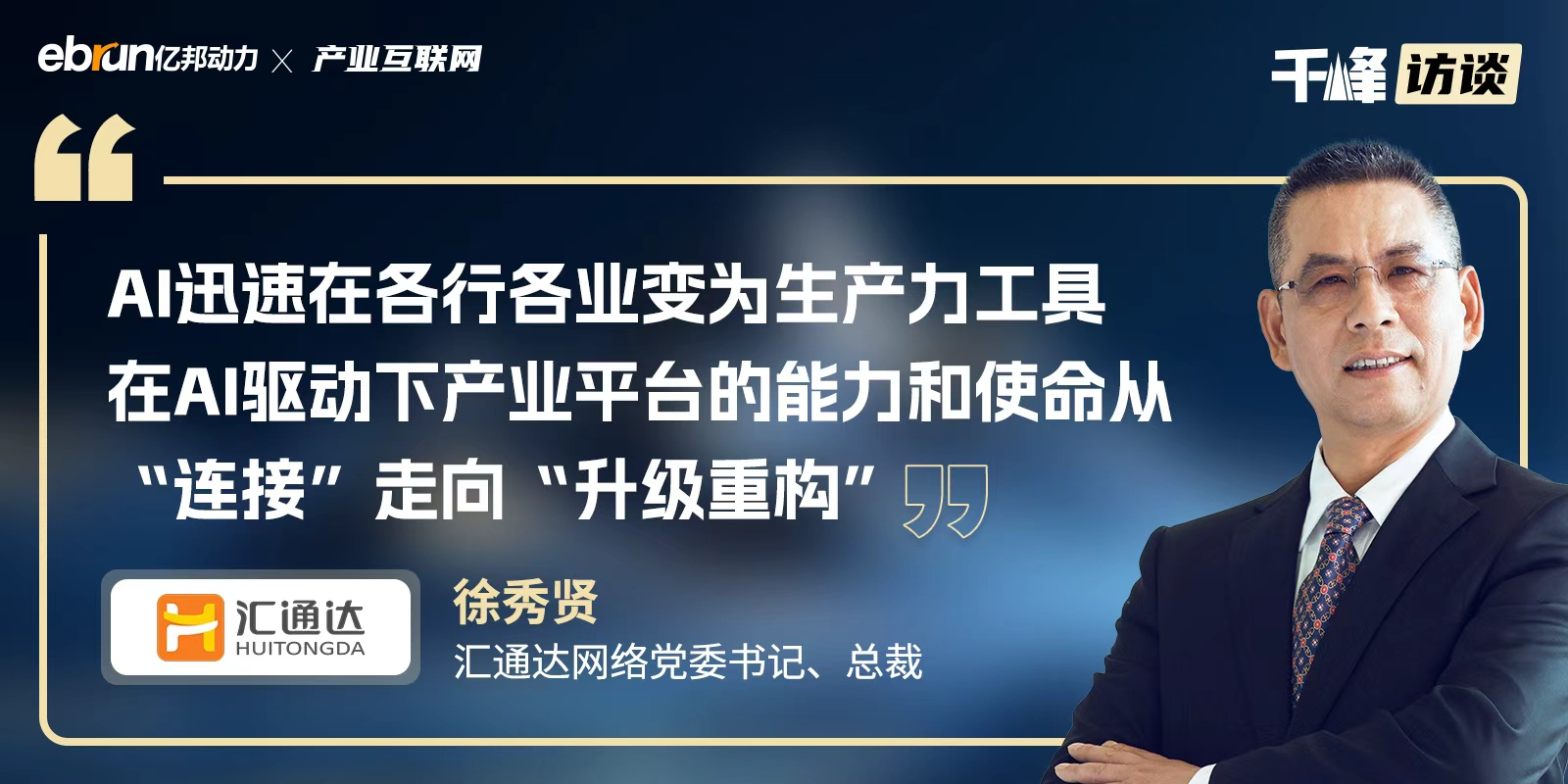
亿邦:本届千峰奖以「AI带来的模态进化」为核心主题。结合下沉市场与产业互联网,您怎么理解这一轮模态进化的本质?汇通达如何定位自己?

徐秀贤:这一轮变化的本质,是AI迅速在各行各业变为生产力工具,在AI驱动下产业平台的能力和使命从“连接”走向“升级重构”。结合国内体量和发展空间仍然广阔的下沉市场,汇通达看到三个机会:

一是场景在下沉市场,数百万实体小店是可落地的AI应用场景;

二是AI将深度影响国内的商业零售全业态,并且随之将催生海量的应用和算力市场;

三是平台入场的窗口期就在当下,大批中小微零售客户和供应链上游尚未被成熟的AI能力覆盖。

基于此,汇通达定位自身,先守住“三个坚持”不变,即坚持使命初心不变、坚持深耕下沉市场不变、坚持做赋能型平台的模式不变,进而推进“三项升级”:

首先是场景升级,从乡镇夫妻店扩至零售全业态;第二是应用升级,从SaaS全面走向AI智能体;最后是基建升级,持续夯实为上下游客户提供稳定、优质、高效的智慧供应链能力与算力服务。

亿邦:您提到“三个坚持”不变、“三项升级”推进。为什么先强调“不变”,再谈“升级”?这三项升级之间是什么关系?

徐秀贤:“三个坚持”是汇通达的底盘——坚持使命初心不变、坚持深耕下沉市场不变、坚持做赋能型平台的模式不变。底盘不变,升级才有方向。

三项升级是层层递进的:场景升级把服务对象从乡镇夫妻店扩至零售全业态;应用升级把工具从SaaS全面走向AI智能体;基建升级持续夯实智慧供应链能力与算力服务。场景决定应用落到哪里,应用决定我们需要构建哪些核心能力。

亿邦:具体到业务层面,汇通达的AI目前落到了哪些经营环节?

徐秀贤:汇通达AI产品和服务,覆盖线下实体店、线上网店和供应链合作伙伴,既实现对不同零售场景的覆盖,还将在大量数据的反哺下、不断打造更加智能高效的零售场景。

面向线下实体,汇通达自研的“千橙云AI智能大模型”已通过国家网信办备案,门店管理系统与App同步完成AI化升级,自主研发“千橙AI超级店长”,上线24个以上场景化智能体,覆盖商品、采购、营销、活动、创意、运营、销售、社群8大经营环节。

面向供应链合作伙伴,汇通达推出服务企业端的“LeapoAI”,作为一站式AI管理平台,集成百余项开箱即用技能,现已进入商业化推广阶段。

面向电商商家,汇通达战略投资国内头部电商BI+AI服务企业“认知边界”。今年,我们上线的“达比AI”累计服务电商用户达1.3万个,“达比AI”产品在选品、内容、投放、客服等环节实现链路贯通,平均帮助商家提效30%以上。

亿邦:能否分享两个最具代表性的落地案例?它们各自解决了什么行业共性痛点?

徐秀贤:一是门店端,以我们全国超1000家的消费电子即时零售O2O店为代表。这类3C数码店,开在县城乡镇里,以前很难拿到一手货源,价格、售后没什么保障,本地社群用户的运营基本为零。我们和品牌厂商一起对其进行改造升级,不仅可做到下沉市场门店同步城市“上新”,还打通了即时零售的新场景,实现消费者App/小程序下单、本地1小时外卖/跑腿小哥送上门。未来,包括直播、营销、报表、补货等,我们都将用大量的Agent来帮助店老板的日常经营,推动门店经营效率和利润同步提升。

二是电商端,达比AI。江苏一家体育用品生产商今年2月接入我们的“达比AI”平台:用一份素材即可生成适配虚拟模特与多场景的主图,节省人工、模特与影棚开支,上架速度提升5至10倍,电商板块增长50%以上,做主图详情的人员缩减一半。目前“达比AI”已服务数千家店铺,平均提效30%至50%,数据分析由数周缩短至半小时内出结果。

亿邦:数据要素在AI落地中扮演什么角色?汇通达的数据从哪来、又怎么协同?

徐秀贤:数据是AI能否落地的分水岭。我们的自有数据来源有三块:

一是多年积累的门店与交易数据、商品与仓配履约数据、AI应用产生的场景数据;特点是真实交易、高频、带地域属性,通用大模型无法获取。

二是最新增量:战略投资“零食优选”“桔子花开”“可好便利”等多家零食便利连锁后,近5000家门店经营数据将接入AI模型与应用,选品、定价、库存、履约数据反哺模型迭代,模型再经门店端智能体回到经营现场,形成闭环。

三是与外部合作方的协同:以自有数据为主、跨主体数据为辅,与品牌方做商品库存协同,与算力、模型伙伴做能力互补。

亿邦:有观点认为,产业智能体会替代平台、成为价值链的顶级分配者。您怎么看?汇通达的壁垒又在哪里?

徐秀贤:产业智能体将在“产业互联网”的基础上更进一步。作为行业内的平台企业,我们将越来越多地参与到实际运营和结果交付中去。

一是供应链升级,智慧供应链将逐步替代传统供应链。传统供应链层层分销、链路长、信息割裂;智慧供应链以数据驱动,把选品、定价、库存、履约打通,效率与利润同步改善。这是AI+零售最底层的变量。

二是AI与细分行业的融合。通用大模型需要与垂直模型、行业数据更深层次地融合。汇通达的做法是自研加接入主流通用大模型,未来不排除联合开发。再叠加开箱即用的应用,把AI做成零售客户日常使用、看得见结果的工具。

三是能力的延伸与复用。不仅是下沉市场和传统“三高”行业,汇通达将多年服务终端零售客户能力、数据、资源在AI加持下进行复用,加速在快消零售连锁等赛道的布局发力,从低频、高价值、慢消类走向全品类,推动城乡全域消费市场的深度AI变革。

关于“壁垒”,汇通达在零售客户的覆盖深度和广度、数据沉淀、运营服务等方面具备长期积累,并在新技术、新场景的应用方面建立了用户心智,这是下一阶段AI化的基础。

从连接走向重构,汇通达希望与产业链伙伴一起,把这场AI变革落到一线,惠及更多市场主体,共同推动城乡商贸流通的数智化升级。

作为TO B领域年度风向标,“2026第八届亿邦产业互联网年会暨首届产业智能体大会”将于2026年11月20日在北京召开。主题定为“AI与出海带来的模态进化”,聚焦产业智能体落地、AI供应链价值重构、数据要素与TOKEN经济、产业出海新生态等前沿议题深度思辨。大会将集结学界权威、央国企标杆、产业龙头、投资机构、服务生态伙伴,汇聚产业核心力量、拆解产业数智化转型路径、分享前沿实战经验。同期还将发布年度产业互联网报告及标杆案例,举办决策人闭门会、“千峰奖”颁奖盛典。

本文首发于 亿邦动力 官方网站

【版权提示】亿邦动力倡导尊重与保护知识产权。未经许可,任何人不得复制、转载、或以其他方式使用本网站的内容。如发现本站文章存在版权问题,烦请提供版权疑问、身份证明、版权证明、联系方式等发邮件至run@ebrun.com,我们将及时沟通与处理。

已点赞

+1

{{ praise_text }}

好文章,值得被更多人看到

FAQ回顾

汇通达是什么公司?属于什么行业?

汇通达网络(09878.HK)是服务下沉市场的产业互联网平台,以乡镇夫妻店为基本盘,向上连接供应链与品牌厂商,向下服务零售终端。截至2026年6月30日,注册会员零售门店25.7万家,实体零售网络覆盖21个省份、2.5万多个乡镇;2026年推进AI化升级,自研千橙云AI智能大模型并通过国家网信办备案。

汇通达如何用AI帮助下沉市场零售门店经营?

汇通达面向线下实体店推出“千橙AI超级店长”,上线24个以上场景化智能体,覆盖商品、采购、营销、活动、创意、运营、销售、社群8大经营环节,门店管理系统与App同步AI化升级。消费电子即时零售O2O店可同步城市上新,并支持App/小程序下单、本地1小时配送,未来用Agent辅助直播、营销、报表、补货等经营。

达比AI是什么?能为电商商家解决什么问题?

达比AI是汇通达面向电商商家的AI产品,在选品、内容、投放、客服等环节实现链路贯通。今年累计服务电商用户1.3万个,平均帮助商家提效30%以上。江苏一家体育用品生产商接入后,一份素材可生成适配虚拟模特与多场景的主图,上架速度提升5至10倍,电商板块增长50%以上,主图详情人员缩减一半。

汇通达的AI落地依赖哪些数据来源?

汇通达的AI数据来源包括三块:多年积累的门店与交易数据、商品与仓配履约数据、AI应用产生的场景数据,具有真实交易、高频、带地域属性;战略投资零食优选、桔子花开、可好便利等连锁后,近5000家门店经营数据将接入AI模型与应用;同时以自有数据为主、跨主体数据为辅,与品牌方做库存协同,与算力、模型伙伴做能力互补。

产业智能体会替代平台吗?汇通达的壁垒是什么?

徐秀贤认为,产业智能体将在产业互联网基础上更进一步,平台企业将越来越多参与实际运营和结果交付。汇通达的壁垒在于零售客户覆盖深度和广度、数据沉淀、运营服务等长期积累,并在新技术、新场景应用上建立用户心智;同时推进智慧供应链、AI与细分行业融合、能力延伸复用。

广告

下一篇

征集报名《品牌数字化服务商资源手册》

《品牌数字化服务商资源手册》展示数字化服务商风采,亿邦全年零售大会通发,触达更多资源,马上加入!

马上入驻

Xreal发布Aura眼镜 定价1279美元搭载安卓XR

Xreal发布售价1279美元的Aura眼镜,运行Android XR系统,单眼1920x1200分辨率,重95克。提供两档配置最高1500美元,对标Meta 2027年VR眼镜,并已递交港交所上市申请,连续四年全球AR眼镜收入第一。


数码 品牌故事 制造商 AR

2026-11-18 09:44:29