• 亿邦公众号
    • APP下载

《经营蓝宝书》11月刊:冲刺双11丨万相点睛解锁成交新增量 意图经营驱动大促爆发

作者:龚作仁 文章来源:Laborer

2026-11-10 16:28

作者:龚作仁 文章来源:Laborer

2026-11-10 16:28

邦小白快读

EN
全文速览

总1:冲刺双11的核心信息是增长逻辑变化和新增量路径。

1. 电商增长从关注流量多少、交易规模,转向挖掘消费人群尚未被满足的需求、创造更丰富的商品、提高匹配效率。

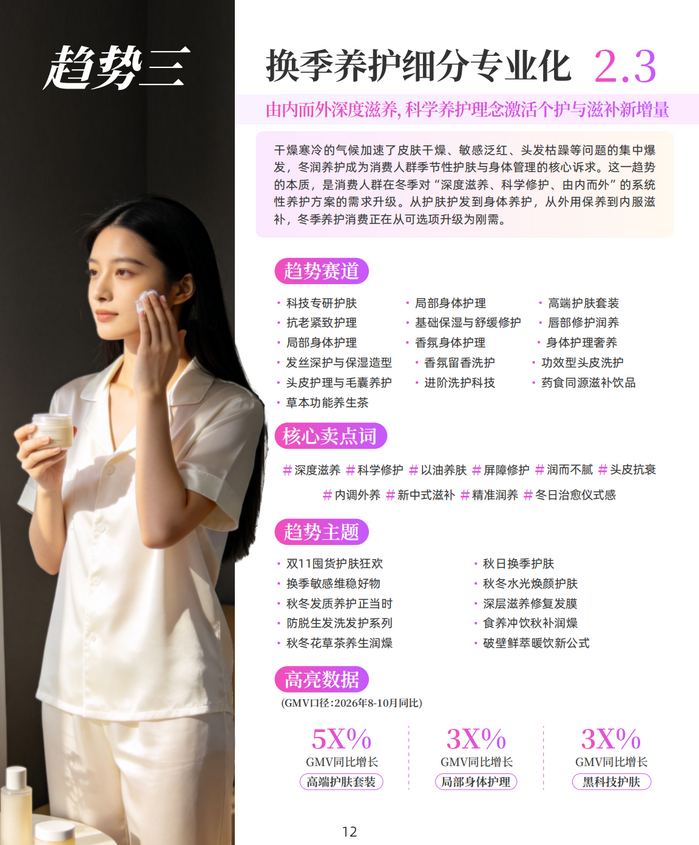
2. 阿里妈妈万相点睛以全淘系视角洞察跨行业新风向,三大趋势是暖绒穿搭从服饰延伸到家居、冰雪经济从运动辐射到亲子全场景、换季养护从护肤拓展到内服滋补。

总2:实操上可关注场景化组合与AI挖人群。

1. 需求按生活场景聚拢,货品结构可重排,滑雪服、儿童护具、保温杯可能在同一笔订单里组合。

2. 场景人群包括寒假返乡大学生、没有暖气的南方打工人、把滑雪当出片场景的年轻人,行为数据空白但有明确具体购买理由。

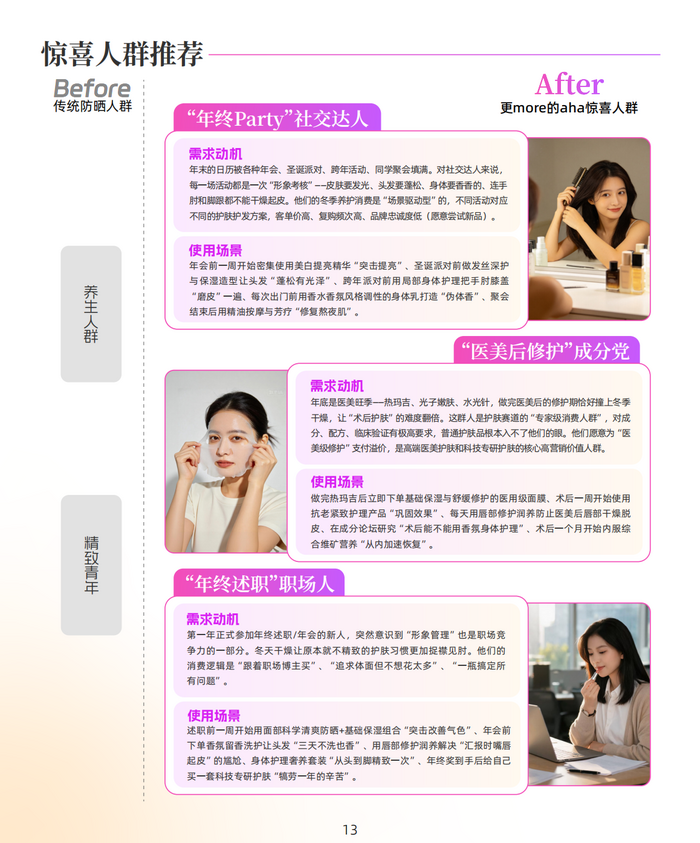
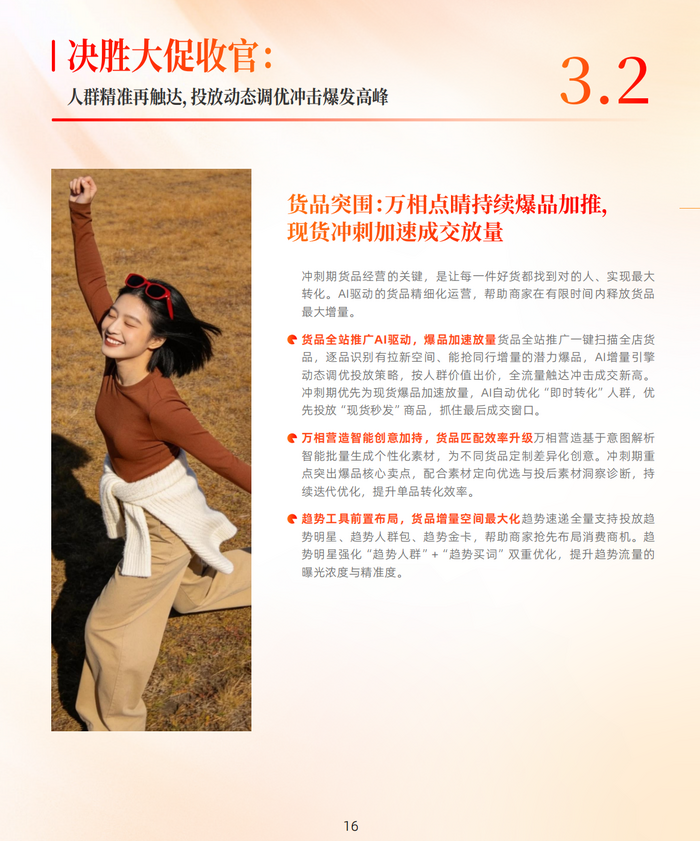
3. 万相点睛用AI大模型穿透行为表象,挖掘冲刺期无前置行为、有真实刚需的潜力人群,再配合冲刺期加推,把成交推到黄金窗口集中爆发;最后一周既是收官也是超越窗口。

总1:消费趋势和用户行为观察是品牌营销的关键。

1. 消费需求不再按类目划分,而是按生活场景聚拢,品牌可从暖绒穿搭、冰雪经济、换季养护三大趋势中寻找跨品类机会。

2. 暖绒从服饰到家居、冰雪从运动到亲子全场景、换季养护从护肤到内服滋补,品类边界被打破,释放全域增量空间。

总2:产品研发和营销可围绕场景与潜力人群展开。

1. 货品结构有重排空间,滑雪服、儿童护具、保温杯可形成同一订单组合,提示产品组合和场景化营销方向。

2. 潜力人群不在惯常标签池:寒假返乡大学生、没有暖气的南方打工人、把滑雪当出片场景的年轻人,行为数据空白但有明确具体购买理由。

3. 万相点睛用AI大模型穿透行为表象,精准挖掘无前置行为、有真实刚需人群;品牌可配合冲刺期加推提升投放效果,促成黄金窗口集中爆发。

总1:冲刺期增长市场来自三大跨行业趋势。

1. 降温消费红利下,暖绒穿搭从服饰延伸到家居、冰雪经济从运动辐射到亲子全场景、换季养护从护肤拓展到内服滋补,打破品类边界并释放全域增量。

2. 需求按生活场景聚拢,货品结构可重排,滑雪服、儿童护具、保温杯可能在同一笔订单组合,提示跨品类组合销售机会。

总2:消费需求变化和事件应对上,要抓潜力人群并加推。

1. 潜力人群包括寒假返乡大学生、没有暖气的南方打工人、把滑雪当出片场景的年轻人,行为数据空白但购买理由明确具体。

2. 万相点睛用AI大模型穿透行为表象,精准挖掘冲刺期无前置行为、有真实刚需的潜力人群。

3. 商家配合冲刺期加推,可让投放效果进一步提升,把成交推到黄金窗口集中爆发;双11最后一周既是收官也是超越窗口。

总1:产品生产和设计需求要关注场景化、跨品类组合。

1. 消费需求按生活场景聚拢,货品结构重排,滑雪服、儿童护具、保温杯可能是同一笔订单组合,提示工厂可围绕场景做产品组合与配套设计。

2. 三大趋势提供商业机会:暖绒穿搭从服饰延伸到家居、冰雪经济从运动辐射到亲子全场景、换季养护从护肤拓展到内服滋补。

总2:推进数字化和电商的启示是用AI识别刚需人群。

1. 场景背后人群不在商家惯常标签池,如寒假返乡大学生、没有暖气的南方打工人、把滑雪当出片场景的年轻人,行为数据几乎是空白,却有明确具体购买理由。

2. 万相点睛用AI大模型穿透行为表象,挖掘冲刺期无前置行为、有真实刚需的潜力人群。

3. 工厂可据此理解电商投放和货品匹配逻辑,配合冲刺期加推,提升成交爆发效率。

总1:行业趋势是需求按生活场景聚拢、品类边界被打破。

1. 阿里妈妈以全淘系视角洞察跨行业消费新风向,三大趋势为暖绒穿搭从服饰到家居、冰雪经济从运动到亲子全场景、换季养护从护肤到内服滋补。

2. 货品结构可重排,滑雪服、儿童护具、保温杯可能同单组合,说明跨品类场景方案有空间。

总2:客户痛点和解决方案围绕潜力人群识别。

1. 痛点:场景背后人群不在惯常标签池,行为数据空白,如寒假返乡大学生、没有暖气的南方打工人、把滑雪当出片场景的年轻人,但购买理由明确具体。

2. 解决方案:万相点睛用AI大模型穿透行为表象,精准挖掘冲刺期无前置行为、有真实刚需的潜力人群。

3. 配合冲刺期加推可提升投放效果,把成交推到黄金窗口集中爆发;可下载《经营蓝宝书》11月刊查看执行路径。

总1:平台最新做法是以全淘系视角洞察趋势并用AI产品解题。

1. 阿里妈妈万相点睛关注双11冲刺阶段的新增量,带来新场景、新人群、新增量的思路。

2. 平台观察到需求不再按类目划分,而按生活场景聚拢,三大趋势打破品类边界,释放全域增量空间;增长关键在于挖掘未满足需求、创造丰富商品、实现更高效率匹配。

总2:运营管理可围绕场景货品和潜力人群展开。

1. 货品结构有重排空间,滑雪服、儿童护具、保温杯可能同一订单组合,平台可支持场景化组合与匹配。

2. 潜力人群不在惯常标签池,行为数据空白但有真实刚需,万相点睛用AI大模型穿透行为表象进行精准挖掘。

3. 商家配合冲刺期加推,可提升投放效果并推动成交在黄金窗口集中爆发;本期蓝宝书由浅语担任超级制作人,解码趋势到执行路径。

总1:产业新动向是增长逻辑和需求组织方式变化。

1. 电商增长从关注流量多少、交易规模,转向挖掘消费人群未被满足的需求、创造更丰富商品、实现更高效率匹配。

2. 需求不再按类目划分,而按生活场景聚拢,暖绒穿搭、冰雪经济、换季养护等趋势打破品类边界,货品结构出现重排空间。

总2:新问题和商业模式启示值得研究。

1. 新问题:场景背后人群不在惯常标签池,行为数据几乎空白,如寒假返乡大学生、没有暖气的南方打工人、把滑雪当出片场景的年轻人,却有明确具体购买理由。

2. 商业模式启示:万相点睛用AI大模型穿透行为表象,精准挖掘冲刺期无前置行为、有真实刚需的潜力人群,再配合冲刺期加推推动成交集中爆发。

3. 平台以全淘系视角洞察跨行业趋势,并由浅语担任超级制作人,解码从趋势变化到执行路径的生意逻辑。

声明:快读内容全程由AI生成,请注意甄别信息。如您发现问题,请发送邮件至 run@ebrun.com 。

我是 品牌商 卖家 工厂 服务商 平台商 研究者 帮我再读一遍。

Quick Summary

Takeaway 1: The core message for the Double 11 sprint is a shift in growth logic and new paths to incremental growth.

1. E-commerce growth is moving away from a focus on traffic volume and transaction scale toward uncovering unmet consumer demand, creating richer product offerings, and improving matching efficiency.

2. Alimama's Wanxiang Dianjing uses an across-the-Taobao-ecosystem view to identify new cross-industry trends: warm fleece apparel extending from clothing into home goods, the ice-and-snow economy radiating from sports into all parent-child scenarios, and seasonal transition care expanding from skincare into ingestible wellness.

Takeaway 2: In practice, focus on scenario-based bundles and AI-driven audience discovery.

1. Demand is clustering around real-life scenarios, allowing product mixes to be reorganized; ski jackets, children's protective gear, and thermoses may be bundled in the same order.

2. Scenario-based audiences include college students returning home for winter break, southern workers without heating, and young people who treat skiing as a photo-op backdrop. They leave little behavioral data but have clear, specific purchase motivations.

3. Wanxiang Dianjing uses AI large models to look beyond surface behavior and identify high-potential audiences with genuine, immediate needs but no prior behavioral signals. Coupled with incremental promotion during the sprint, this can concentrate transactions into the golden window; the final week is both a closing and an outperformance window.

Takeaway 1: Consumer trends and user behavior are central to brand marketing.

1. Consumer demand is no longer organized by category but clusters around real-life scenarios. Brands can find cross-category opportunities in three trends: warm fleece apparel, the ice-and-snow economy, and seasonal transition care.

2. Warm fleece is moving from clothing into home goods, the ice-and-snow economy from sports into all parent-child scenarios, and seasonal transition care from skincare into ingestible wellness. Category boundaries are breaking down, opening up incremental space across the ecosystem.

Takeaway 2: Product development and marketing can be organized around scenarios and high-potential audiences.

1. Product mixes can be reorganized: ski jackets, children's protective gear, and thermoses can form a same-order bundle, pointing to product bundling and scenario-based marketing opportunities.

2. High-potential audiences sit outside conventional tag pools: college students returning home for winter break, southern workers without heating, and young people who treat skiing as a photo-op backdrop. They show little behavioral data but have clear, specific purchase motivations.

3. Wanxiang Dianjing uses AI large models to look beyond surface behavior and precisely identify audiences with genuine, immediate needs but no prior behavioral signals. Brands can pair this with incremental promotion during the sprint to improve campaign performance and drive concentrated transactions in the golden window.

Takeaway 1: Growth markets during the sprint come from three cross-industry trends.

1. Amid cold-weather consumption tailwinds, warm fleece apparel is extending from clothing into home goods, the ice-and-snow economy is radiating from sports into all parent-child scenarios, and seasonal transition care is expanding from skincare into ingestible wellness, breaking category boundaries and unlocking incremental growth across the ecosystem.

2. Demand is clustering around real-life scenarios, allowing product mixes to be reorganized. Ski jackets, children's protective gear, and thermoses may be combined in the same order, pointing to cross-category bundling opportunities.

Takeaway 2: In responding to shifts in consumer demand and seasonal events, sellers should target high-potential audiences and increase promotion.

1. High-potential audiences include college students returning home for winter break, southern workers without heating, and young people who treat skiing as a photo-op backdrop. They show little behavioral data but have clear, specific purchase motivations.

2. Wanxiang Dianjing uses AI large models to look beyond surface behavior and precisely identify high-potential audiences with genuine, immediate needs but no prior behavioral signals during the sprint.

3. Sellers can pair incremental promotion during the sprint with these insights to further improve campaign performance and concentrate transactions in the golden window; the final week of Double 11 is both a closing and an outperformance window.

Takeaway 1: Product production and design should focus on scenario-based and cross-category bundling.

1. Consumer demand is clustering around real-life scenarios, and product mixes are being reorganized. Ski jackets, children's protective gear, and thermoses may be bundled in the same order, suggesting that factories can design product bundles and supporting products around scenarios.

2. The three trends offer commercial opportunities: warm fleece apparel extending from clothing into home goods, the ice-and-snow economy radiating from sports into all parent-child scenarios, and seasonal transition care expanding from skincare into ingestible wellness.

Takeaway 2: The implication for digitalization and e-commerce is to use AI to identify audiences with genuine, immediate needs.

1. The audiences behind these scenarios sit outside merchants' conventional tag pools. Examples include college students returning home for winter break, southern workers without heating, and young people who treat skiing as a photo-op backdrop. Their behavioral data is almost absent, yet they have clear, specific purchase motivations.

2. Wanxiang Dianjing uses AI large models to look beyond surface behavior and identify high-potential audiences with genuine, immediate needs but no prior behavioral signals during the sprint.

3. Factories can use this to understand e-commerce promotion and product-matching logic, and pair it with incremental promotion during the sprint to improve the efficiency of concentrated transactions.

Takeaway 1: Industry trends show demand clustering around real-life scenarios and category boundaries breaking down.

1. Alimama uses an across-the-Taobao-ecosystem view to identify new cross-industry consumer trends. The three trends are warm fleece apparel moving from clothing into home goods, the ice-and-snow economy moving from sports into all parent-child scenarios, and seasonal transition care moving from skincare into ingestible wellness.

2. Product mixes can be reorganized: ski jackets, children's protective gear, and thermoses may be bundled in the same order, indicating room for cross-category scenario solutions.

Takeaway 2: Client pain points and solutions center on identifying high-potential audiences.

1. Pain point: the audiences behind these scenarios sit outside conventional tag pools and have sparse behavioral data. Examples include college students returning home for winter break, southern workers without heating, and young people who treat skiing as a photo-op backdrop, yet their purchase motivations are clear and specific.

2. Solution: Wanxiang Dianjing uses AI large models to look beyond surface behavior and precisely identify high-potential audiences with genuine, immediate needs but no prior behavioral signals during the sprint.

3. Pairing this with incremental promotion during the sprint can improve campaign performance and concentrate transactions in the golden window; the November issue of the Business Blue Book can be downloaded for the execution path.

Takeaway 1: The platform's latest approach is to identify trends from an across-the-Taobao-ecosystem view and solve problems with AI products.

1. Alimama's Wanxiang Dianjing focuses on new incremental growth during the Double 11 sprint and offers a framework around new scenarios, new audiences, and new incremental growth.

2. The platform observes that demand is no longer organized by category but clusters around real-life scenarios. The three trends break category boundaries and unlock incremental space across the ecosystem; the key to growth lies in uncovering unmet demand, creating richer product offerings, and achieving more efficient matching.

Takeaway 2: Operations management can be organized around scenario-based products and high-potential audiences.

1. Product mixes can be reorganized: ski jackets, children's protective gear, and thermoses may be bundled in the same order, and platforms can support scenario-based bundling and matching.

2. High-potential audiences sit outside conventional tag pools and show sparse behavioral data but genuine immediate needs; Wanxiang Dianjing uses AI large models to look beyond surface behavior and identify them precisely.

3. Sellers can pair incremental promotion during the sprint with these insights to improve campaign performance and drive concentrated transactions in the golden window; this issue of the Blue Book is produced by Qianyu as super producer, decoding the path from trends to execution.

Takeaway 1: The industry's new direction is a shift in growth logic and how demand is organized.

1. E-commerce growth is moving away from a focus on traffic volume and transaction scale toward uncovering unmet consumer demand, creating richer product offerings, and achieving more efficient matching.

2. Demand is no longer organized by category but clusters around real-life scenarios. Trends such as warm fleece apparel, the ice-and-snow economy, and seasonal transition care are breaking category boundaries, creating room to reorganize product mixes.

Takeaway 2: New questions and business-model implications are worth studying.

1. New question: the audiences behind these scenarios sit outside conventional tag pools and have almost no behavioral data. Examples include college students returning home for winter break, southern workers without heating, and young people who treat skiing as a photo-op backdrop, yet they have clear, specific purchase motivations.

2. Business-model implication: Wanxiang Dianjing uses AI large models to look beyond surface behavior and precisely identify high-potential audiences with genuine, immediate needs but no prior behavioral signals during the sprint, then pairs this with incremental promotion during the sprint to drive concentrated transactions.

3. The platform identifies cross-industry trends from an across-the-Taobao-ecosystem view, with Qianyu serving as super producer to decode the business logic from trend changes to execution paths.

Disclaimer: The "Quick Summary" content is entirely generated by AI. Please exercise discretion when interpreting the information. For issues or corrections, please email run@ebrun.com .

I am a Brand Seller Factory Service Provider Marketplace Seller Researcher Read it again.

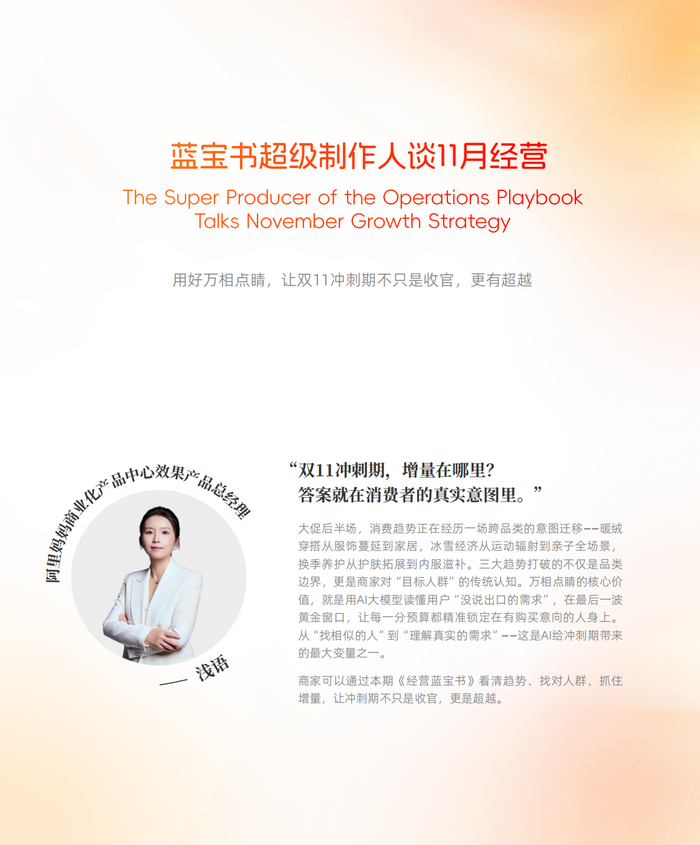
双11大促开门红已完成首轮需求释放,正式进入冲刺阶段。最后的冲刺窗口,往往也是全年增长最具爆发力的关键时刻。如何在此基础上打开新增量、实现新突破,是商家与平台共同关注的方向——阿里妈妈万相点睛也在这一背景下,带来全新的解题思路。

在阿里巴巴集团高级副总裁、天猫事业部总裁、阿里妈妈总裁、淘宝直播及内容事业部负责人刘博(家洛)看来,电商增长的逻辑正在发生变化。过去,商家更关注流量的多少、交易规模的大小;如今,在拥有庞大消费人群基础的情况下,增长的关键在于如何进一步挖掘消费人群尚未被满足的需求,创造出更丰富的商品,实现与消费人群更高效率的匹配。

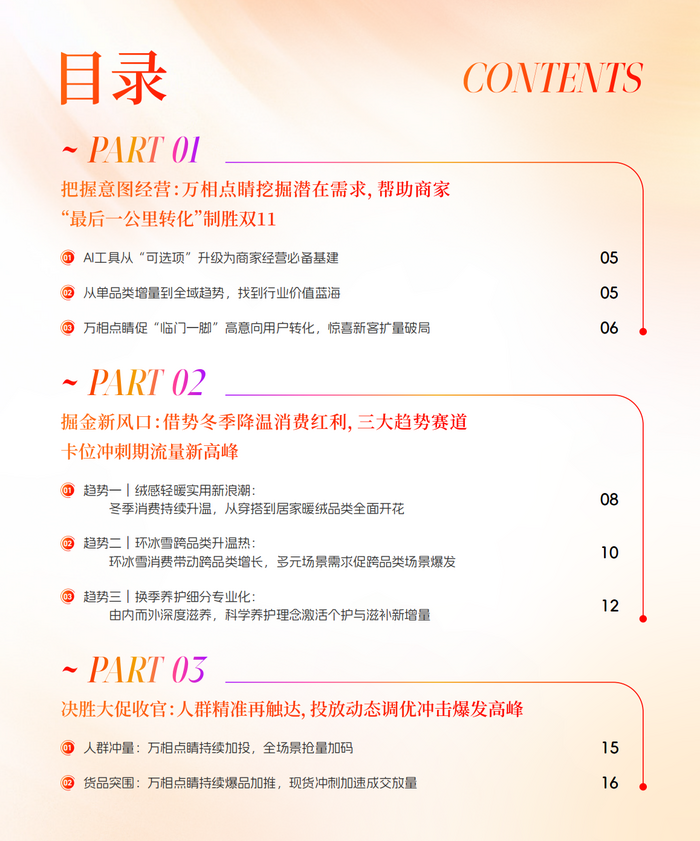
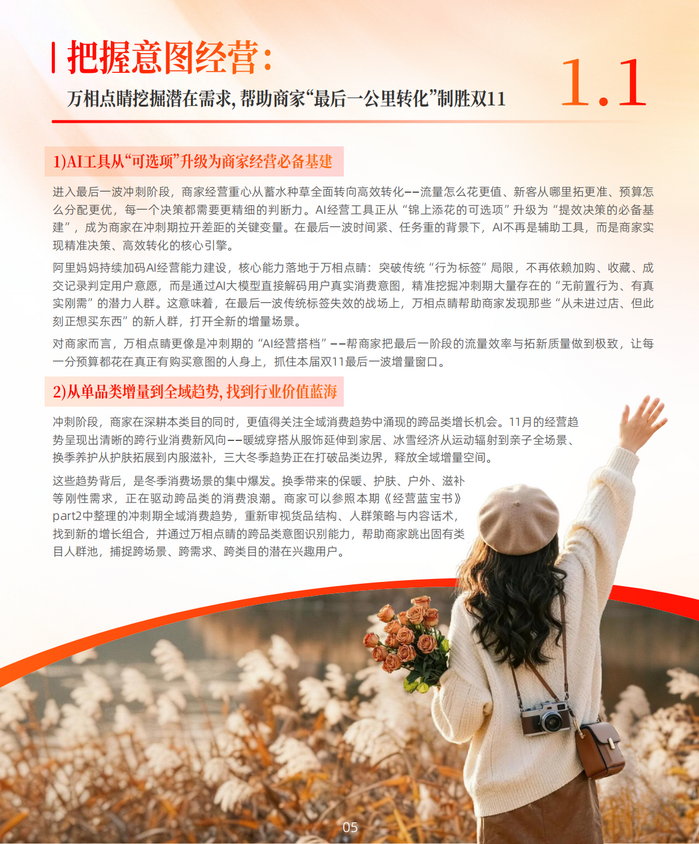
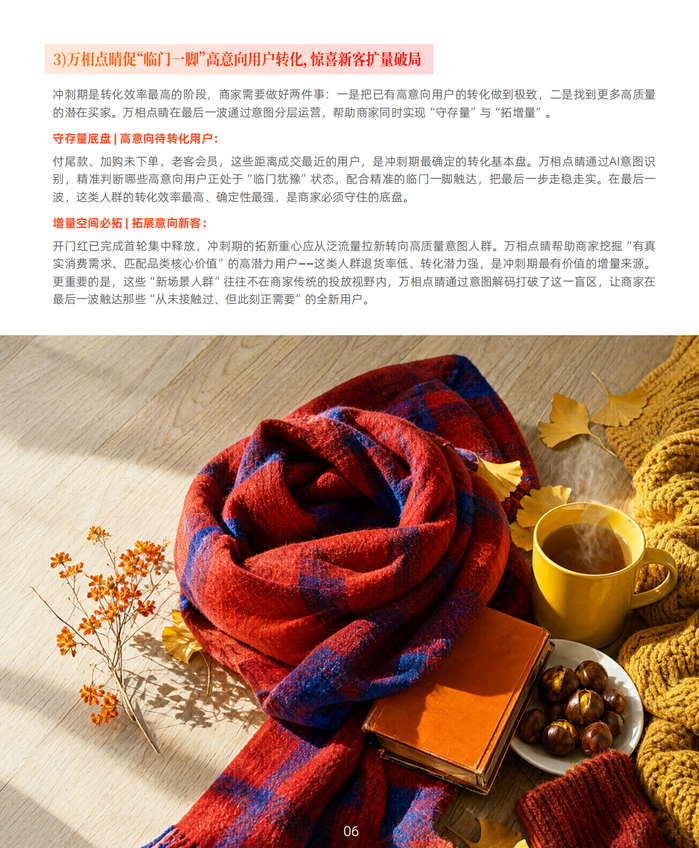
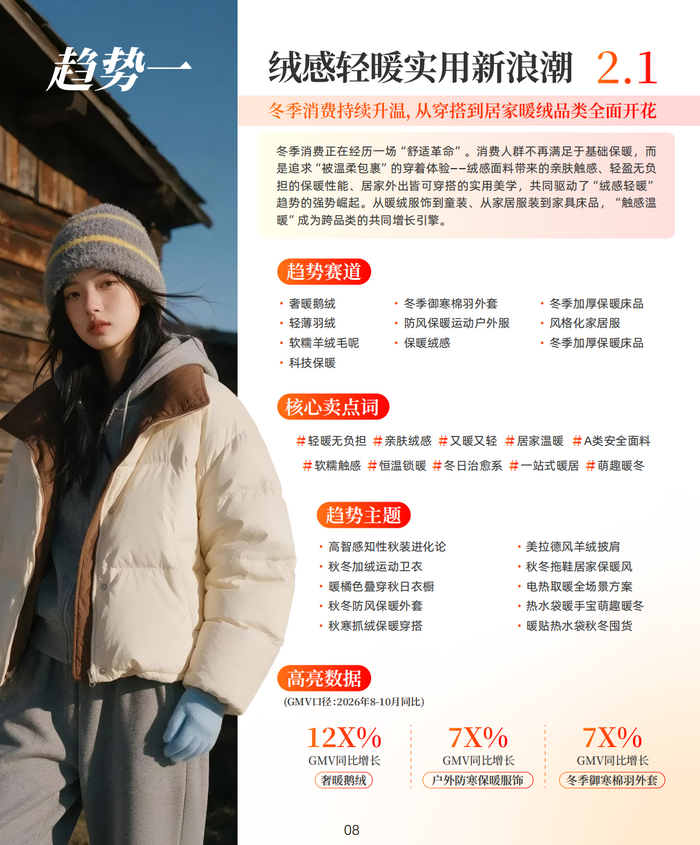
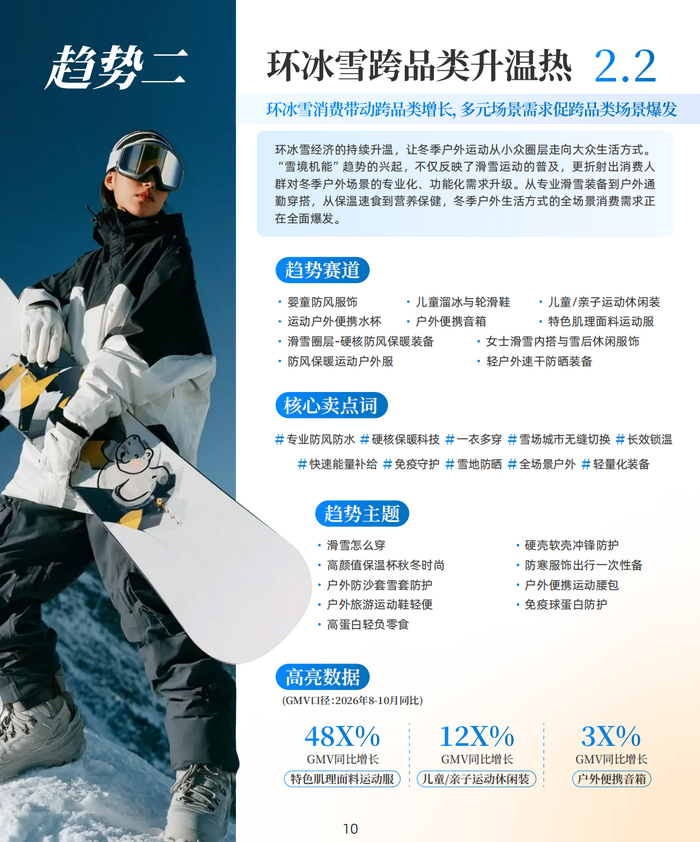
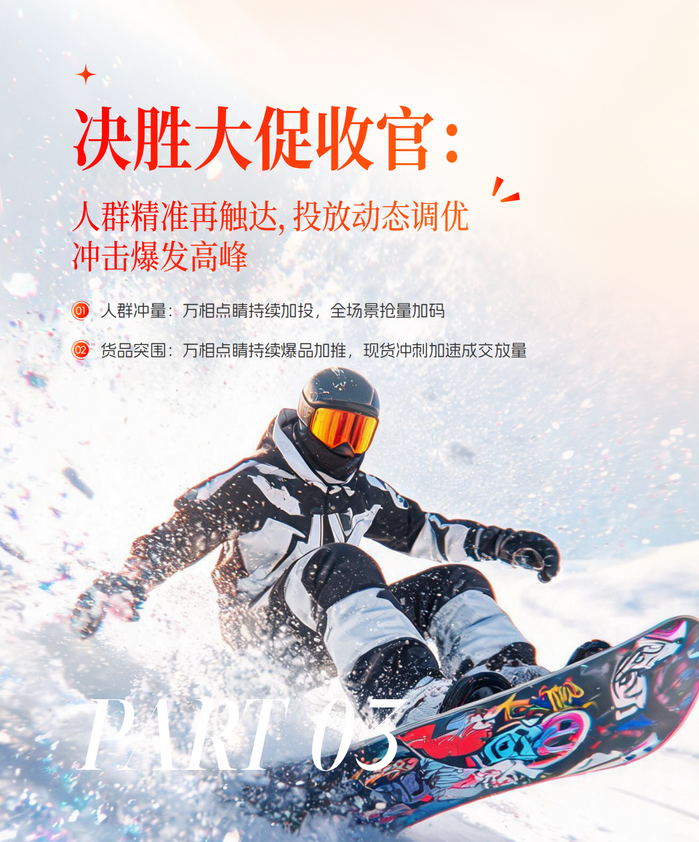
借势降温消费红利,阿里妈妈以全淘系视角洞察跨行业消费新风向——暖绒穿搭从服饰延伸到家居、冰雪经济从运动辐射到亲子全场景、换季养护从护肤拓展到内服滋补,三大趋势正在打破品类边界,释放全域增量空间。需求不再按类目划分,而是按生活场景聚拢,货品结构也随之有了重排的空间:滑雪服、儿童护具与保温杯,也可能是同一笔订单里的组合。

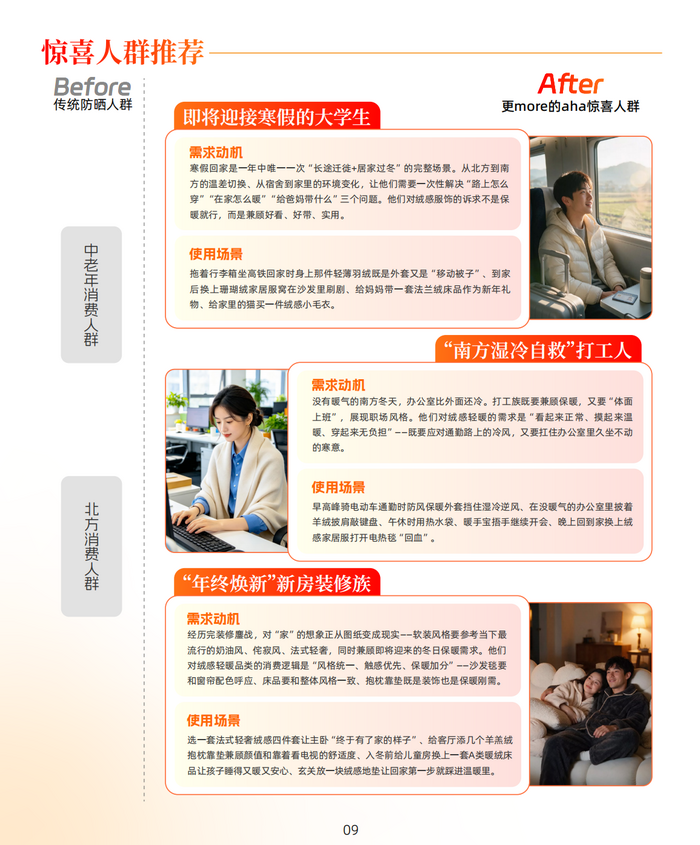
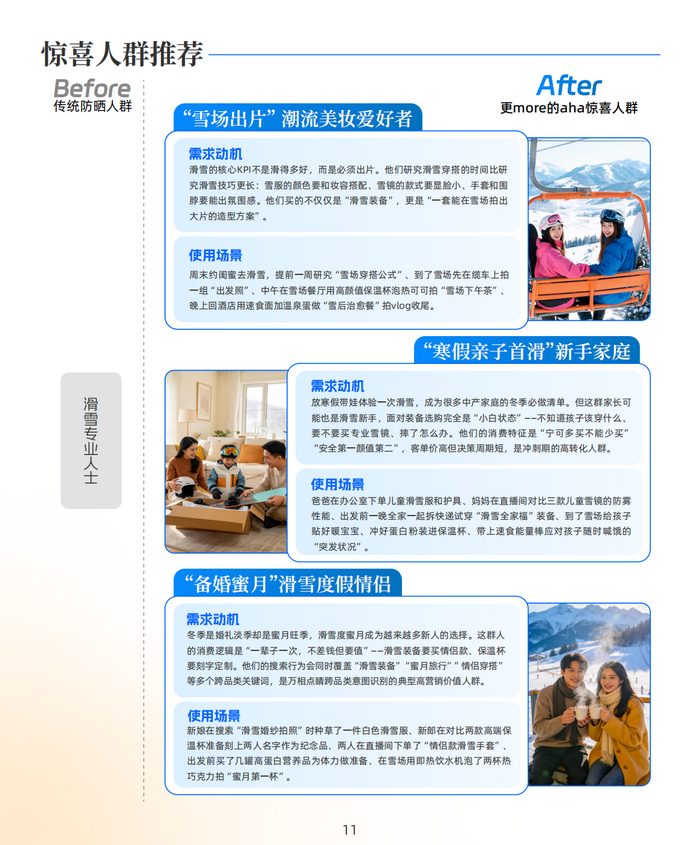
而这些场景背后的人,往往不在商家惯常的标签池里:寒假返乡的大学生、没有暖气的南方打工人、把滑雪当出片场景的年轻人,行为数据几乎是空白,却带着明确、具体的购买理由。万相点睛用AI大模型穿透行为表象,精准挖掘冲刺期大量存在的“无前置行为、有真实刚需”的潜力人群;商家再配合冲刺期加推,让投放效果进一步提升,把成交推到黄金窗口集中爆发。

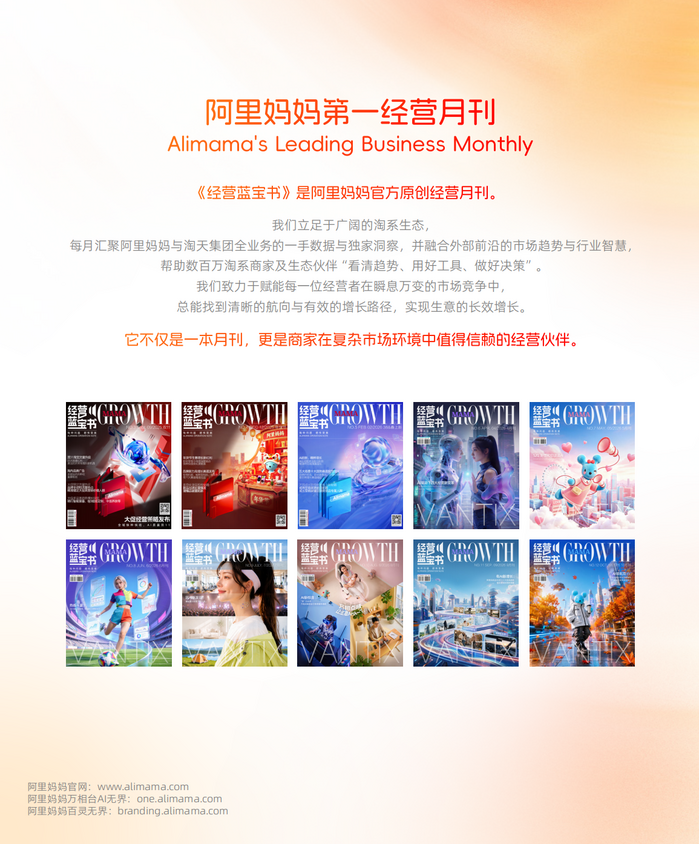
双11进入最后一周,既是收官,更是超越的窗口。本期《经营蓝宝书》聚焦万相点睛带来的“新场景”“新人群”“新增量”,特邀阿里妈妈商业化产品中心效果产品总经理浅语担任超级制作人,解码从趋势变化到执行路径的生意逻辑。欢迎下载阿里妈妈《经营蓝宝书》11月刊查看。
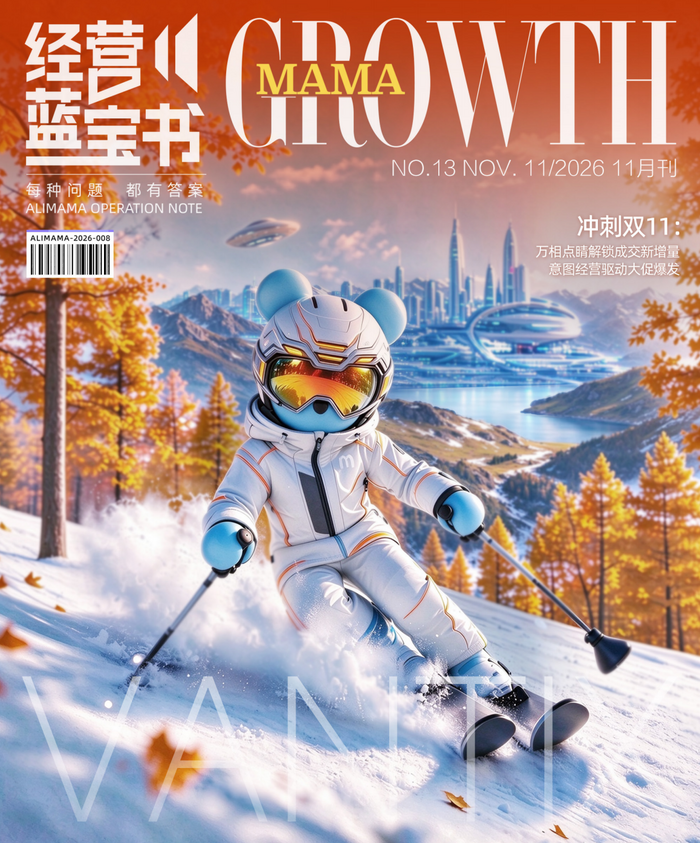

点击下载完整报告

注:文/龚作仁,文章来源:Laborer,本文为作者独立观点,不代表亿邦动力立场。

【版权提示】亿邦动力倡导尊重与保护知识产权。未经许可,任何人不得复制、转载、或以其他方式使用本网站的内容。如发现本站文章存在版权问题,烦请提供版权疑问、身份证明、版权证明、联系方式等发邮件至run@ebrun.com,我们将及时沟通与处理。

已点赞

+1

{{ praise_text }}

好文章,值得被更多人看到

FAQ回顾

万相点睛如何帮助商家在双11冲刺期挖掘新增量?

万相点睛通过AI大模型穿透行为表象,挖掘冲刺期大量存在的“无前置行为、有真实刚需”潜力人群,如寒假返乡大学生、没有暖气的南方打工人、把滑雪当出片场景的年轻人。商家再配合冲刺期加推,可提升投放效果,把成交集中到双11黄金窗口爆发。

双11大促冲刺期,电商增长逻辑发生了哪些变化?

电商增长逻辑正从关注流量多少、交易规模大小,转向在庞大消费人群基础上挖掘尚未被满足的需求,创造更丰富商品,并实现与消费人群更高效率的匹配。双11冲刺期的增长关键,在于围绕真实需求找到新增量。

双11冲刺期有哪些跨行业消费趋势值得关注?

双11冲刺期呈现三大跨行业消费趋势:暖绒穿搭从服饰延伸到家居,冰雪经济从运动辐射到亲子全场景,换季养护从护肤拓展到内服滋补。三大趋势打破品类边界,释放全域增量空间。

哪些“无前置行为、有真实刚需”的人群可能成为大促新增量?

这类人群包括寒假返乡的大学生、没有暖气的南方打工人,以及把滑雪当出片场景的年轻人。其行为数据在商家惯常标签池中几乎空白,但带有明确、具体的购买理由,属于有真实刚需的潜力人群。

商家如何按生活场景重排货品结构以抓住双11增量?

需求正按生活场景聚拢,而非按类目划分。商家可将滑雪服、儿童护具与保温杯等跨品类商品组合到同一场景订单中,并利用万相点睛识别潜力人群,配合冲刺期加推,推动成交在双11黄金窗口集中爆发。

广告

下一篇

征集报名《品牌数字化服务商资源手册》

《品牌数字化服务商资源手册》展示数字化服务商风采,亿邦全年零售大会通发,触达更多资源,马上加入!

马上入驻

Temu新拼姆开始“踩油门”了?

在跨境电商行业,平台亲自下场做供应链,从来不是一条轻松的路。从第三方业务起家、能真正把自营业务做大做强的案例,屈指可数。

电商平台 Temu 跨境电商

2026-11-10 16:18:25