



• 亿邦公众号
    • APP下载

未来机器人什么样?这家企业说:机器人会自己决定

作者:张睿 文章来源:亿邦动力

2026-06-23 14:09

作者:张睿 文章来源:亿邦动力

2026-06-23 14:09

邦小白快读

EN
全文速览

本文围绕具身智能机器人的形态方向和行业技术进展,梳理了当前行业的核心发展情况,干货如下:

1. 当前行业对机器人形态没有共识,不同企业探索方向差异明显:硅谷Genesisi AI推出放弃人形、主打干活的Eno机器人,国内优必选推出高度仿生的人形机器人,主打日常情感陪伴,市面还有金属外观人形、轮式双臂机器人等常见路线。

2. 国内企业星海图提出行业新观点,认为未来AI会围绕应用场景和任务设计机器人形态,不需要遵循人类身体结构,将这个方向概括为“进化智能”。

3. 星海图已经实现轮式双臂机器人量产出货,出货量达数千台,覆盖全球九成以上顶尖开发者,首款人形机器人也已推出,明确了三层技术发展路径。

本文披露了具身智能机器人行业的产品研发趋势、技术路线和商业模式演化方向,对品牌商把握行业方向有较高参考价值,干货如下:

1. 产品研发方向:机器人形态不需要拘泥于人形,核心要围绕目标场景和任务做设计,主打生产力的产品和主打情感陪伴的产品可以走完全不同的形态路线,当前结构化场景适合轮式方案,非结构化场景需要双足方案。

2. 技术路线分层:行业技术会沿着本能智能、作业智能、进化智能三层发展,最终由AI自主调整机器人构型参数,在最小成本下最大化生产力,未来本能智能和作业智能会走向融合。

3. 商业模式演化:行业会依次经历整机销售、方案订阅、Token销售三个阶段,方案订阅才是长期毛利核心,增长空间远高于整机销售,品牌商可提前布局转型。

本文梳理了具身智能机器人行业的增长空间、市场机会和可参考的发展路径,对相关从业卖家干货如下:

1. 行业增长潜力大:当前行业处于发展早期,即便是早期的整机销售阶段,年化增长率也能达到30%-100%,进入方案订阅阶段后,年增长可达到3倍到10倍,进入通用智能的Token阶段后,增长能达到10倍到100倍,增长空间充足。

2. 细分市场机会多:不同场景对机器人形态需求不同,工厂、仓储等结构化场景已经有成熟的轮式方案需求,农业、建筑业、储能巡检等非结构化场景,对具备双足运动能力的机器人需求还未被满足,存在大量市场空白。

3. 可参考的发展路径:可以借鉴星海图“本体出货→数据回流→模型进化”的正向循环路径,先落地可产生生产力的产品,再用数据迭代逐步升级智能能力,降低研发风险。

本文披露了机器人市场的产品需求方向和落地进展,对工厂把握市场需求、挖掘商业机会、推进数字化升级有诸多干货,内容如下:

1. 产品生产和设计需求明确:机器人不需要追求仿人形态,要围绕应用场景调整设计,工厂等结构化生产场景,更适配轮式双臂机器人,当前这类机器人已经能达到厘米级作业精度,达到80%左右的人类操作速度,学习新任务仅需要不超过100条数据,完全可以满足工厂生产需求。

2. 存在明确商业机会:未来农业、建筑业、复杂场景巡检等领域,对具备双足运动能力的人形机器人需求会持续提升,相关的关节、零部件、结构件生产业务会迎来增长,工厂可提前布局相关产能。

3. 数字化转型启示:可以参考“本体落地→数据回流→能力迭代”的路径,用真实数据驱动生产能力升级,逐步推进数字化转型,提升生产效率。

本文梳理了具身智能机器人行业的发展趋势、现存痛点和市场机会,对相关服务企业的干货内容如下:

1. 行业发展趋势清晰:当前具身智能机器人还处于形态探索早期,未来会从人工设计固定形态,走向AI自主根据任务定义形态,技术会沿着三层架构逐步进化,商业模式也会从卖整机转向卖方案、卖服务,服务环节的市场占比会持续提升,服务商的增长空间大。

2. 当前行业明确的客户痛点:目前本能智能机器人的能力远低于作业智能机器人,暂时无法满足复杂场景的作业需求,行业还需要解决机器人与复杂环境、物体交互的技术难题,很多企业缺乏相关的技术和数据能力。

3. 明确的解决方案方向:服务商可围绕AI模型训练、数据采集标注、本体构型优化、场景适配方案开发等环节布局,给具身智能企业提供配套服务,把握行业早期增长红利。

本文披露了具身智能机器人行业的企业需求、落地进度和行业风向,对平台商布局相关赛道的干货内容如下:

1. 明确了行业企业的核心需求:当前多数企业走“本体出货→数据回流→模型进化”的发展路线,核心需求是扩大出货获取更多真实数据,因此对获客对接、数据采集配套服务有刚性需求,平台可针对性推出相关服务。

2. 招商布局方向清晰:平台可同时引入不同技术路线的企业,既引入做轮式作业机器人的成熟落地玩家,也引入布局人形双足、进化智能的创新企业,覆盖结构化、非结构化不同场景的市场需求,丰富平台品类。

3. 风向规避提示:当前双足本能智能机器人技术还不成熟,短期内无法落地复杂作业场景,能力远低于已经成熟的作业智能机器人,平台不要过度跟风投入不成熟赛道,要区分技术落地阶段,合理分配资源,降低布局风险。

本文提出了具身智能领域的新观点、新技术框架和新商业模式总结,对产业研究者的干货内容如下:

1. 产业新观点和新技术框架:提出“智能定义本体”的核心观点,打破了机器人必须做仿人形态的固有认知,认为未来AI会自主根据任务和场景进化机器人的形态,还提出了本能智能、作业智能、进化智能的三层技术架构,明确了不同智能的训练方法,指出未来两种智能会走向融合,I 1.0版本会成为融合的关键拐点。

2. 清晰总结了新商业模式演化路径:将具身智能企业的商业模式分为三个阶段,分别是整机销售阶段,年化增长率30%-100%;方案订阅阶段,年增长3倍到10倍,是长期毛利核心;Token销售阶段,对应通用智能,增长可达10倍到100倍,清晰梳理了行业长期演化逻辑。

3. 提供了真实的行业落地案例:星海图轮式双臂R1系列出货数千台,覆盖全球九成以上顶尖开发者,作业智能已经实现厘米级精度,可落地分拣、分类等多个场景,为研究行业落地进度提供了实际参考。

声明:快读内容全程由AI生成,请注意甄别信息。如您发现问题,请发送邮件至 run@ebrun.com 。

我是 品牌商 卖家 工厂 服务商 平台商 研究者 帮我再读一遍。

Quick Summary

This article summarizes the core current development of the embodied intelligent robot industry, focusing on robot form directions and technological progress. Key takeaways are as follows:

1. There is currently no industry consensus on robot form, with companies pursuing vastly different exploration paths. Silicon Valley-based Genesis AI launched Eno, a non-humanoid robot built for practical work, while Chinese firm Ubtech has developed a highly biomimetic humanoid robot focused on daily emotional companionship. Other common approaches include metallic-finish humanoids and wheeled dual-arm robots.

2. Chinese company Xinghaitu has put forward a new industry perspective: future AI will design robot forms around application scenarios and specific tasks, rather than following human body structures. It terms this direction "evolutionary intelligence".

3. Xinghaitu has already achieved mass production and delivery of its wheeled dual-arm robots, with thousands of units shipped covering more than 90% of the world's top AI developers. It has also launched its first humanoid robot and laid out a three-layer technology development roadmap.

This article outlines product R&D trends, technological roadmaps and business model evolution in the embodied intelligent robot industry, offering high-value insights for brands to orient their strategic direction. Key takeaways are as follows:

1. Product R&D direction: Robot forms do not need to be constrained to humanoid designs. Instead, they should be centered on target scenarios and tasks: productivity-focused products and emotional companionship-focused products can follow completely different form paths. Structured scenarios are well-suited for wheeled solutions, while unstructured scenarios require bipedal designs.

2. Layered technological roadmap: Industry technology will develop along three layers: instinctive intelligence, operational intelligence, and evolutionary intelligence. Ultimately, AI will autonomously adjust robot configuration parameters to maximize productivity at minimum cost, and instinctive intelligence will eventually merge with operational intelligence.

3. Business model evolution: The industry will go through three successive stages: complete robot sales, solution subscription, and token sales. Solution subscriptions will be the core of long-term gross margins, with far greater growth potential than complete hardware sales. Brands can prepare for this transition in advance.

This article sorts out the growth potential, market opportunities and actionable development paths in the embodied intelligent robot industry for industry practitioners. Key takeaways are as follows:

1. Massive growth potential: The industry is still in its early development stage. Even in the initial complete hardware sales stage, it achieves an annual growth rate of 30% to 100%. After entering the solution subscription stage, annual growth will reach 3x to 10x, and in the general AI token stage, growth can hit 10x to 100x, leaving enormous room for expansion.

2. Abundant opportunities in niche segments: Different scenarios have distinct demands for robot forms. Structured scenarios such as factories and warehouses already have mature demand for wheeled solutions, while unstructured scenarios including agriculture, construction, and energy storage inspection still have unmet demand for bipedal robots, leaving large market gaps.

3. Actionable development path: Sellers can follow Xinghaitu's positive loop of "hardware shipment → data backflow → model evolution". First launch productivity-generating products, then iterate and upgrade intelligence with accumulated data to reduce R&D risk.

This article outlines market demand and commercialization progress in the robot industry, offering actionable insights for factories to capture market demand, identify business opportunities and advance digital upgrading. Key takeaways are as follows:

1. Clear product design and manufacturing demand: Robots do not need to pursue humanoid form; instead, design should be adjusted to fit application scenarios. Structured production scenarios such as factories are best suited for wheeled dual-arm robots. Currently, these robots can achieve centimeter-level operational accuracy, reach around 80% of human operating speed, and learn new tasks with no more than 100 data samples, fully meeting factory production requirements.

2. Clear commercial opportunities: Demand for bipedal humanoid robots will continue to rise in agriculture, construction, complex inspection and other fields in the future, driving growth in related joint, component and structural part manufacturing businesses. Factories can prepare by expanding relevant production capacity in advance.

3. Insights for digital transformation: Factories can follow the path of "hardware deployment → data backflow → capability iteration", using real operational data to drive production capability upgrades, gradually advance digital transformation, and improve production efficiency.

This article sorts out development trends, existing pain points and market opportunities in the embodied intelligent robot industry for relevant service enterprises. Key takeaways are as follows:

1. Clear industry development trend: The embodied intelligent robot industry is still in the early stage of form exploration. In the future, it will evolve from manually designed fixed forms to AI autonomously defining forms based on specific tasks. Technology will progress gradually along a three-layer architecture, and business models will shift from selling complete hardware to selling solutions and services. The market share of service links will continue to increase, bringing substantial growth space for service providers.

2. Clear current customer pain points: The capability of current instinctive intelligent robots is far lower than that of operational intelligent robots, and they cannot yet meet operational requirements in complex scenarios. The industry still needs to solve technical challenges related to robot interaction with complex environments and objects, and many companies lack the required technical and data capabilities.

3. Clear solution direction: Service providers can布局 in links including AI model training, data collection and annotation, body configuration optimization, and scenario-specific solution development, to provide supporting services for embodied intelligence enterprises and capture early industry growth dividends.

This article outlines enterprise demands, commercialization progress and industry trends in the embodied intelligent robot industry for platform players looking to布局 this track. Key takeaways are as follows:

1. Clear core demand of industry players: Most current companies follow the development path of "hardware shipment → data backflow → model evolution", and their core demand is to expand shipments to accumulate more real-world data. This creates rigid demand for customer acquisition对接 and data collection supporting services, which platforms can develop targeted offerings for.

2. Clear investment and recruitment direction: Platforms can引入 companies following different technological roadmaps at the same time: bring in both mature players building wheeled operational robots, and innovative companies developing humanoid bipedal robots and evolutionary intelligence, to cover market demand for both structured and unstructured scenarios and enrich platform product categories.

3. Risk mitigation guidance: Current bipedal instinctive intelligent robot technology is still immature, cannot be deployed in complex operational scenarios in the short term, and lags far behind mature operational intelligent robots in capability. Platforms should not overinvest in underdeveloped tracks by following hype; instead, they should distinguish between different technology commercialization stages, allocate resources rationally, and reduce layout risk.

This article puts forward new perspectives, a new technical framework and a new business model summary for the embodied intelligence field, offering valuable insights for industry researchers. Key takeaways are as follows:

1. New industrial perspective and technical framework: It advances the core perspective of "intelligence defines body", breaking the inherent cognition that robots must take humanoid form. It holds that future AI will autonomously evolve robot forms based on tasks and scenarios, and proposes a three-layer technical architecture of instinctive intelligence, operational intelligence, and evolutionary intelligence, clarifying training methods for each type of intelligence. It also notes that the first two types of intelligence will eventually merge, with I 1.0 serving as the key inflection point for this convergence.

2. Clear summary of new business model evolution paths: It divides the business model evolution of embodied intelligence enterprises into three stages: the complete hardware sales stage, with 30%-100% annual growth; the solution subscription stage, with 3x-10x annual growth, which serves as the core of long-term gross margins; and the token sales stage, corresponding to general artificial intelligence, with growth potential of 10x-100x, clearly sorting out the industry's long-term evolution logic.

3. Empirical real-world commercialization case: Xinghaitu has shipped thousands of units of its R1 series wheeled dual-arm robots, covering more than 90% of the world's top developers. Its operational intelligence has achieved centimeter-level accuracy and can be deployed in sorting, classification and multiple other scenarios, providing practical reference for researching industry commercialization progress.

Disclaimer: The "Quick Summary" content is entirely generated by AI. Please exercise discretion when interpreting the information. For issues or corrections, please email run@ebrun.com .

I am a Brand Seller Factory Service Provider Marketplace Seller Researcher Read it again.

【亿邦原创】具身智能机器人究竟应该长什么样,可能是当下行业最大的非共识之一。

比如,硅谷机器人公司Genesisi AI在6月16日发布的通用机器人Eno,驱干是“三折叠”面板,轮式底座,没有头和腿,但是有手臂和手,能够升降伸缩,不干活时可以折叠起来节省空间。也就是说,这是一款完全放弃“人形”,主打干活的机器人。

国内机器人公司优必选6月2号开启预售的新产品则是完全模拟真人,男生款身高1米83,体重42公斤,女生款1米68,重35.2公斤,不仅五官高度仿生,而且全身配备88个活动关节,使其肢体动作也能高度贴近真人。但这款产品不会做复杂家务功能,定位主要是日常情感陪伴。

当然,我们在公开宣传中更常见到的,是保留了金属外观的人形机器人,或者轮式双臂机器人。

未来机器人会是什么样?会不会有其他形态?星海图CEO高继扬最近提出了一个观点:“人的这副身体是大自然和基因互相作用了几千万年进化迭代而成的,未来的这个迭代进化过程会被AI取代。AI会围绕着我们要应用的场景和要执行的任务,去设计一个更好的自己的身体。”他将此概括为“进化智能”。

从轮式双臂机器人到人形双足机器人

实际上,星海图的优势品类是轮式双臂,其R1系列出货量已经数千台,客户包括斯坦福、PI、英伟达等150+机构,全球顶尖开发者覆盖率 >90%。

之所以优先开发轮式双臂,是因为星海图创始团队相信“智能定义本体”,他们首先想做的是具身智能大脑,然后考虑围绕智能的边界和需求去看本体应该怎么做。

基于真实数据采集、基础模型训练,星海图的R1系列能够做到"万物皆可抓取",即给出开放词汇指令,它可以理解语义、定位并执行。比如分拣快递、分类零件、叠衣服等等。
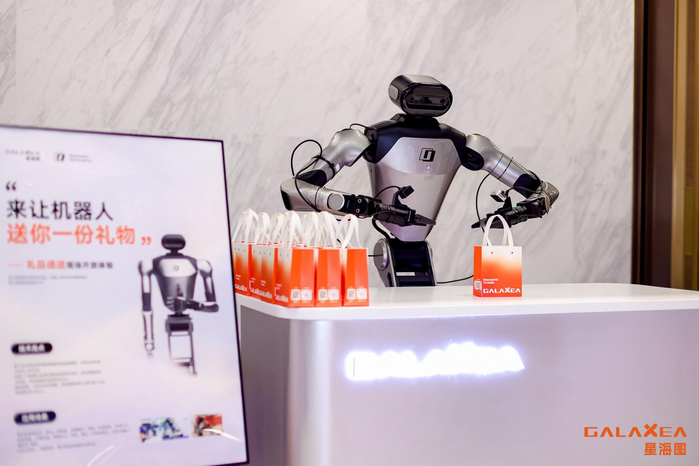
通过“本体出货→数据回流→模型进化”,星海图的核心目标是让机器人提供生产力。高继扬将此成为“作业智能”。可以说,星海图从成立到现在,主要在研究“作业智能”。

但是在今年6月,星海图推出了其首款人形双足机器人Kengo,这款机器人身高大约140cm,体重40kg,超过23个自由度,能做跑跳、跳舞、踢球等动作。
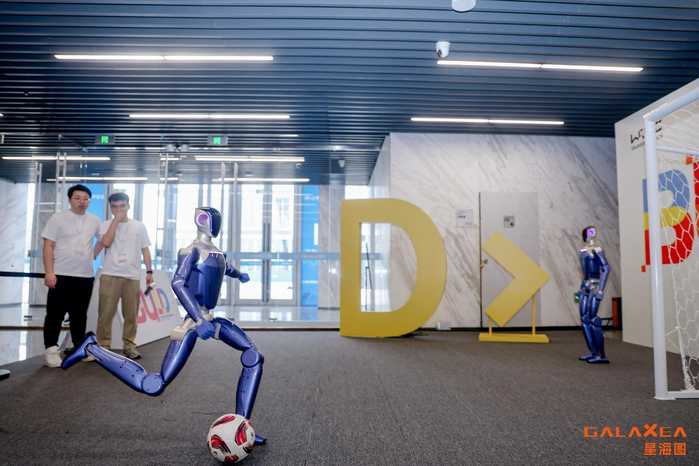
高继扬表示,推出双足机器人仍然是以“生产力”为出发点,因为轮式底盘适合工厂、实验室、仓储等结构化场景,但农业、建筑业、以及有楼梯、门、通道的非结构化场景中,则需要一副"走得进去"的身体。

双足机器人自身的运动能力,高继扬称之为“本能智能”,相当于让机器人学会驾驭自己的身体,就像人一样会保持平衡,会走、跑、跳,且不需要别人用很长的时间去教。

高继扬认为,随着模型能力的提升,本能智能的下个阶段是全身遥操作,也就是说,作业人员坐在办公室,机器人可以在代替他进入储能站巡检,相当于作业人员的远程化身。

作业智能和本能智能的训练方法是不一样的。作业智能以模仿学习为主,强化学习为辅;本能智能以强化学习为主,模仿学习为辅。但本能智能的模型能力会显著差于作业智能,作业智能的机器人如今已经能够实现厘米级别的精度,80%左右的人类操作速度,不超过100条数据的学习能够掌握新任务,这些本能智能机器人至少暂时是做不到的。

而未来,本能智能和作业智能会融合。据星海图CTO赵行介绍,星海图研发的本能智能模型I 0.5解决机器人与复杂环境和物体交互的问题,I 1.0将使机器人能够完成蓝领工人在复杂场景中的作业,因此I 1.0将是连接本能智能和作业智能的重要拐点。

本能智能、作业智能、进化智能

星海图的技术规划分为三个层次——

第一,“本能智能”:机器人通过AI的方法,学会如何控制自己的身体。

第二,“作业智能”:通过AI让机器人学会如何操作、改变世界,最终产生生产力价值。

第三,“进化智能”:AI不仅改变机器人控制身体的能力、改变世界的能力,最终连人形机器人本身的形态也会被AI所定义。

赵行解释称,在进化智能阶段,面对新场景时,AI可以根据任务目标,通过训练,不仅把梯度反传回策略模型,还反传到机器人构型参数——关节数量、肢体长度、扭矩、质量等。最终,在最小成本下最大化生产力价值。

与上述技术路线相匹配的,具身智能企业的商业模式也会发生变化。

高继扬认为可以分为三个阶段:第一阶段整机销售,第二阶段方案订阅,第三阶段Token销售。他认为,整机销售阶段跟智能没太大关系,年化增长率为30%-100%;方案订阅阶段,整机会成为收费入口,真正的毛利来源是方案,每年将实现3倍到10倍的增长;Token销售阶段,智能从单一场景有用走向多场景、多任务通用,将实现10倍到100倍的增长。

【版权提示】亿邦动力倡导尊重与保护知识产权。未经许可,任何人不得复制、转载、或以其他方式使用本网站的内容。如发现本站文章存在版权问题,烦请提供版权疑问、身份证明、版权证明、联系方式等发邮件至run@ebrun.com,我们将及时沟通与处理。

已点赞

+1

{{ praise_text }}

好文章,值得被更多人看到

广告

下一篇

AR+智能眼镜618销量出炉 雷鸟创新位列品类第一

618期间,雷鸟创新在国内主流电商平台AR+智能眼镜品类总销量位列第一。









