• 亿邦公众号
    • APP下载

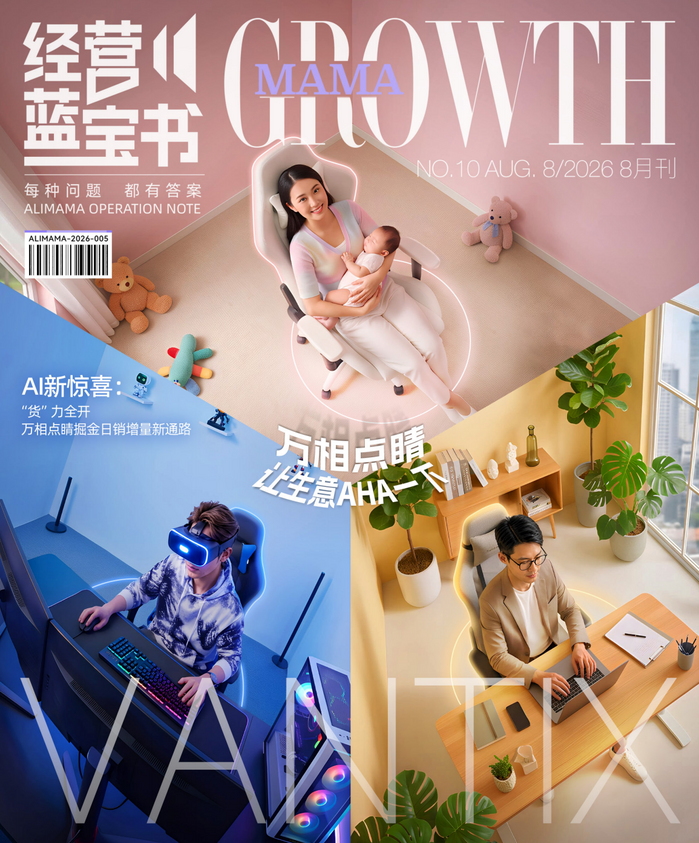
《经营蓝宝书》8月刊:AI新惊喜丨“货”力全开 万相点睛掘金日销增量新通路

作者:龚作仁 文章来源:Laborer

2026-08-18 14:47

作者:龚作仁 文章来源:Laborer

2026-08-18 14:47

邦小白快读

EN
全文速览

这篇文章梳理了8月电商经营的核心重点与可落地实操干货,核心内容如下

1. 8月并非双11前的蓄水空档,而是多节点场景实验场、高意图人群提纯期、AI经营链路练兵期的三重窗口期,传统泛流量囤积思路会导致投入散、资产沉、增长疲软,不建议采用。

2. 当前消费市场已经出现大量跨场景、跨圈层的新需求,比如七夕送礼扩展到闺蜜、毛孩子、二次元电子爱人,北方用户提前选购秋装,准大学生打造宿舍人设催生多种新品需求,这些需求都是新的生意增量。

3. 商家可借力超级88、七夕、开学季等多个节点,用万相点睛实现精准投放,分层运营人群,同时抓住月度增长和布局双11,完整经营策略可下载阿里妈妈《经营蓝宝书》8月刊查看。

本文给品牌商带来了最新消费趋势洞察和品牌营销方向指引,核心干货如下

1. 消费趋势层面,当前消费呈现明显的跨场景、跨圈层分化特征,传统消费边界被打破:七夕礼赠不再只针对恋人,延伸到闺蜜、毛孩子、二次元电子爱人;换季消费不再同步,北方尝鲜族提前下单,不同圈层需求分层;开学消费伴随身份转变催生多元需求,这些都是品牌可挖掘的新增量。

2. 品牌营销层面,8月是品牌测试新品、提纯人群、练习AI经营的关键窗口期,不要沿用传统思路囤积泛流量,应该接力多个节点做布局。

3. 经营方向层面,可借助万相点睛的AI能力挖掘隐形人群,实现货找人精准投放,分层运营场景人群,验证换季新品,同时完成月度确定性增长和双11前置布局,实现可预期的投入产出。

本文给电商卖家明确了8月的经营机会与实操方向,核心干货如下

1. 机会层面,打破了8月是双11前空档期的传统认知,重新定义8月为多节点场景实验场、高意图人群提纯期、AI经营链路练兵期的三重窗口期,存在大量传统认知之外的增量机会。

2. 需求变化层面,当前消费端已经出现很多新变化:七夕礼赠边界拓宽,换季消费错峰分层,开学季伴随身份转变产生多元新品需求,这些都是卖家可以抓住的新客群增量。

3. 经营实操层面,建议卖家接力多个节点,用刚完成全场景升级的万相点睛AI工具,从商机洞察到投放提效全链路运营,挖掘隐形需求,精准触达人群,验证换季货品,同时规避传统泛流量运营带来的投入分散、增长疲软的问题,同时实现8月增长和双11前置布局。

本文给对接电商的工厂带来了产品需求方向和数字化转型启示,核心干货如下

1. 产品生产设计需求层面,当前消费分层化、多元化特征明显,诞生了很多新的产品需求:七夕相关的毛孩子礼物、二次元周边,提前上市的早秋外套、秋季家居用品,开学季的电竞椅、氛围灯、银发新生学习用平板等,工厂可针对性开发相关产品,抓住新增量。

2. 商业机会层面,8月是商家验证换季新品的关键窗口,工厂可配合商家的新品测试需求,灵活调整生产排期,承接小批量多批次的新品订单,抢占市场先机。

3. 数字化转型启示,AI已经可以精准挖掘传统方式无法发现的消费需求,工厂可对接电商平台的AI需求洞察能力,优化自身产品设计和生产规划,提升产销匹配效率,降低库存风险。

本文给电商相关服务商梳理了行业发展趋势、客户痛点和新的服务机会,核心干货如下

1. 行业发展趋势层面,当前电商经营已经进入AI全域经营的新范式,传统的泛流量运营逐渐被AI驱动的货找人模式替代,越来越多商家有AI经营的需求,8月更是商家练习AI经营的关键窗口期,市场需求旺盛。

2. 客户核心痛点层面,传统商家沿用旧思路把8月作为泛流量囤积期,容易出现投入分散、资产沉淀重、增长疲软的问题,同时多数商家无法发现跨场景跨圈层的隐形消费需求,难以抓住新增量,急需相关服务支持。

3. 解决方案机会层面,服务商可围绕AI全链路经营,结合阿里妈妈万相点睛的全场景升级能力,为商家提供从商机洞察、人群挖掘、创意营销到投放提效的全链路服务,帮助商家抓住8月节点增量,同时完成大促前置布局,拓展自身业务空间。

本文给电商平台商梳理了商家的核心需求,以及平台运营的优化方向,核心干货如下

1. 商家核心需求层面,商家需要平台提供精准的需求洞察能力,帮助挖掘传统方式无法发现的跨圈层跨场景增量需求,同时需要工具和方法帮助实现确定性经营,明确阶段性的投入产出预期,降低经营不确定性。

2. 平台可参考的最新做法,平台可推出升级的AI经营工具,覆盖从商机洞察、人群破局、创意营销到投放提效的全链路,帮助商家实现货找人的精准运营,同时重新定义非大促节点的价值,把8月这类传统空档期变成经营窗口期。

3. 运营管理提示,平台可引导商家接力不同节点错峰运营,分层运营人群,验证新品,前置布局大促,提升平台整体GMV,还可推出经营蓝宝书这类内容服务帮助商家成长,规避泛流量运营带来的增长风险。

本文给电商产业研究者提供了产业新动向和经营模式创新的相关信息,核心干货如下

1. 消费端产业新动向,当前消费已经呈现明显的跨场景、跨圈层分化特征,很多传统消费场景的边界被打破,比如七夕礼赠从情侣拓展到闺蜜、宠物、二次元虚拟角色等多个对象,换季消费、开学消费都呈现分层化特征,催生了大量未被关注的增量需求,这是消费端的新变化。

2. 经营端产业新动向,AI正在重构电商经营链路,从原来的泛流量囤积转向AI驱动的货找人模式,原本被认为是大促前空档的8月,被重新定义为三重经营窗口期,AI可以挖掘出商家传统认知之外的新增量人群,实现场景、需求、人群合一的增量挖掘。

3. 商业模式创新,AI全域经营新范式正在形成,通过AI全链路工具帮助商家实现确定性经营,也就是明确阶段性的投入、用户获取和销量预期,降低经营不确定性,这是电商经营模式的新发展,完整研究可参考《经营蓝宝书》8月刊。

声明:快读内容全程由AI生成,请注意甄别信息。如您发现问题,请发送邮件至 run@ebrun.com 。

我是 品牌商 卖家 工厂 服务商 平台商 研究者 帮我再读一遍。

Quick Summary

This article outlines the core priorities and actionable insights for e-commerce operations in August, with key takeaways below:

1. Far from being an idle lull before the Double 11 shopping festival, August is a triple window of opportunity: it acts as a testing ground for multi-scenario campaigns, a period to refine high-intent consumer groups, and a training ground for AI-powered operation workflows. The traditional approach of hoarding generic traffic leads to scattered spending, stagnant customer assets and lackluster growth, and is not recommended.

2. A wide range of new cross-scenario, cross-segment consumer demands have emerged in the current market. For example, Qixi Festival gift-giving now extends to close friends, pets, and even "virtual partners" in anime and games; Northern consumers are already starting their autumn clothing purchases early; and prospective college students outfitting their dorms to match their personal brand have driven demand for a range of new products. All these represent new sources of growth for businesses.

3. Merchants can leverage events including Super 88, Qixi Festival, and the back-to-school season, use Alimama's Wanxiang Dianjing tool for precise ad targeting and tiered audience management, to capture monthly growth while laying the groundwork for Double 11. For the full operation strategy, readers can download the August issue of Alimama's "Operation Blue Book".

This article shares the latest consumer trend insights and strategic guidance for brand marketing, with key takeaways for brands below:

1. In terms of consumer trends, demand is clearly fragmenting across scenarios and consumer segments, breaking down traditional market boundaries: Qixi gifting is no longer limited to romantic partners, and now covers close friends, pets, and 2D virtual partners; seasonal demand is no longer synchronized, with early-adopting Northern consumers shopping for autumn apparel ahead of schedule, creating clear demand segmentation across groups; back-to-school consumption tied to identity transitions has also spawned diverse new needs. All of these represent untapped new growth opportunities for brands.

2. For brand marketing, August is a critical window to test new products, refine high-quality audience pools, and practice AI-powered operations. Brands should avoid sticking to the old playbook of hoarding generic traffic, and instead use the string of seasonal events for strategic layout.

3. For operation strategy, brands can leverage the AI capabilities of Wanxiang Dianjing to uncover hidden audience segments, achieve precise "product matching to consumer" targeting, run tiered operations for different scenario-based audience groups, and test new seasonal products. This approach allows brands to deliver certain monthly growth while completing pre-Double 11 preparations, helping deliver predictable return on ad spend.

This article clarifies the operational opportunities and actionable steps for e-commerce sellers in August, with key insights below:

1. It challenges the conventional view that August is an idle off-period before Double 11, redefining August as a triple window: a testing ground for multi-scenario campaigns, a period to refine high-intent audiences, and a training period for AI-powered operation workflows, with abundant growth opportunities overlooked by traditional thinking.

2. On the demand side, significant new shifts have emerged: the scope of Qixi gifting has expanded, seasonal shopping is split across different timeframes and segments, and the back-to-school identity shift has driven demand for a variety of new products. All of these represent new customer growth opportunities for sellers to capture.

3. For actionable operations, the article recommends that sellers leverage multiple sequential seasonal events, use the newly upgraded full-scenario AI tool Wanxiang Dianjing to run end-to-end operations from opportunity insight to ad efficiency optimization. This approach helps uncover hidden demand, reach the right audiences precisely, test seasonal products, avoid the problems of scattered spending and sluggish growth caused by traditional generic traffic strategies, and achieve both August growth and pre-Double 11 preparation.

This article shares guidance on product demand direction and digital transformation insights for e-commerce-connected manufacturers, with key takeaways below:

1. For product design and manufacturing planning, the current market is seeing clear demand segmentation and diversification, which has spawned a wide range of new product needs: pet gifts and anime merchandise tied to Qixi, early autumn outerwear and autumn home goods that launch ahead of the traditional season, and products such as gaming chairs, ambient lighting and tablets for older first-year college students for the back-to-school season. Factories can develop targeted products for these niches to capture new growth.

2. For business opportunities, August is a critical window for merchants to test new seasonal products. Manufacturers can align with brands' new product testing needs, adjust production schedules flexibly, and accommodate small-batch, multi-batch new product orders to get a first-mover advantage in the market.

3. For digital transformation insights, AI can now accurately identify consumer demands that go undetected by traditional methods. Manufacturers can leverage the AI-powered demand insight capabilities of e-commerce platforms to optimize their own product design and production planning, improve demand-supply matching efficiency, and reduce inventory risk.

This article outlines industry trends, core client pain points and new business opportunities for e-commerce service providers, with key insights below:

1. On industry trends, e-commerce operations have entered a new paradigm of AI-powered full-scope operations. Traditional generic traffic operation is gradually being replaced by the AI-driven "product to consumer" model, with a growing number of merchants seeking AI operation support. August is also a critical window for merchants to test and practice AI operations, meaning market demand is strong.

2. For core client pain points, traditional merchants that stick to outdated strategies treat August as a period to hoard generic traffic, which often leads to scattered spending, heavy stagnant assets and weak growth. Additionally, most merchants struggle to identify hidden cross-scenario, cross-segment consumer demand, making it difficult to capture new growth, so they are in urgent need of professional service support.

3. For business opportunity development, service providers can build offerings around end-to-end AI-powered operations, leveraging the full-scenario upgraded capabilities of Alimama's Wanxiang Dianjing, to deliver full-funnel services for merchants ranging from opportunity insight, audience discovery, creative marketing to ad performance optimization. This helps merchants capture August's incremental growth, complete pre-promotion preparation, and allows service providers to expand their own business scope.

This article summarizes core merchant needs and optimization directions for platform operations for e-commerce platform operators, with key takeaways below:

1. For core merchant needs, merchants require platforms to provide accurate demand insight capabilities to help uncover cross-segment, cross-scenario growth demands that are undetectable via traditional methods. They also need tools and methodologies to enable predictable operations, with clear phased return-on-investment expectations, to reduce operational uncertainty.

2. For reference platform practices, platforms can launch upgraded AI operation tools that cover the full funnel from opportunity insight, audience expansion, creative marketing to ad performance improvement, to help merchants run precise "product to consumer" operations. Platforms can also redefine the value of non-promotion periods, turning traditionally perceived slow periods like August into strategic operational windows.

3. For operational guidance, platforms can guide merchants to leverage sequential events for staggered operation, run tiered audience management, test new products, and prepare for major promotions in advance, boosting the platform's overall GMV. Platforms can also launch content resources such as the Operation Blue Book to support merchant growth and help them avoid the growth risks associated with generic traffic operations.

This article provides insights into new industry trends and business model innovation for e-commerce industry researchers, with key takeaways below:

1. New consumer-side trends: Consumption has clearly fragmented across scenarios and consumer segments, breaking down the boundaries of many traditional consumption categories. For example, Qixi gift-giving has expanded from romantic partners to close friends, pets, and 2D virtual characters, while seasonal shopping and back-to-school consumption both show clear segmentation, spawning a large number of under-noticed incremental demands. This is a key new shift on the consumer side.

2. New operational-side trends: AI is reshaping the e-commerce operation funnel. The industry is shifting from traditional generic traffic hoarding to an AI-driven "product to consumer" model. August, once seen as an idle lull before the major year-end promotion, has been redefined as a triple strategic operational window. AI can uncover incremental audience groups that fall outside traditional merchant understanding, enabling integrated growth discovery that unites scenarios, demands and audiences.

3. Business model innovation: A new paradigm of AI-powered full-scope operations is emerging. End-to-end AI tools help merchants achieve predictable operations — that is, clear phased expectations for spending, user acquisition and sales, reducing operational uncertainty. This represents a new development in e-commerce operation models. For full research details, readers can refer to the August issue of Alimama's "Operation Blue Book".

Disclaimer: The "Quick Summary" content is entirely generated by AI. Please exercise discretion when interpreting the information. For issues or corrections, please email run@ebrun.com .

I am a Brand Seller Factory Service Provider Marketplace Seller Researcher Read it again.

当七夕的礼物不再只送给恋人,而是送给闺蜜、送给毛孩子,甚至送给屏幕里的“电子爱人”;当北方刚进8月,换季族已经悄悄把秋装塞进购物车;当准大学生用电竞椅和氛围灯,定义自己的“宿舍人设”——你会发现,这些藏在跨场景、跨圈层里的鲜活需求,正是被AI一点点“看见”的生意新惊喜:那些你从没想过会买你东西的人,正在某个节点、某个情绪里,准备为你下单。

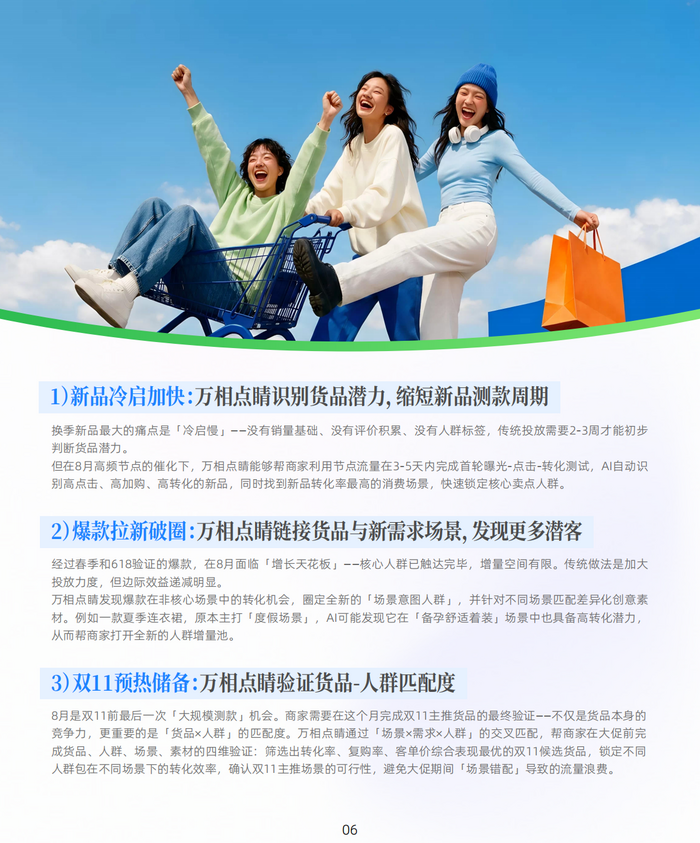
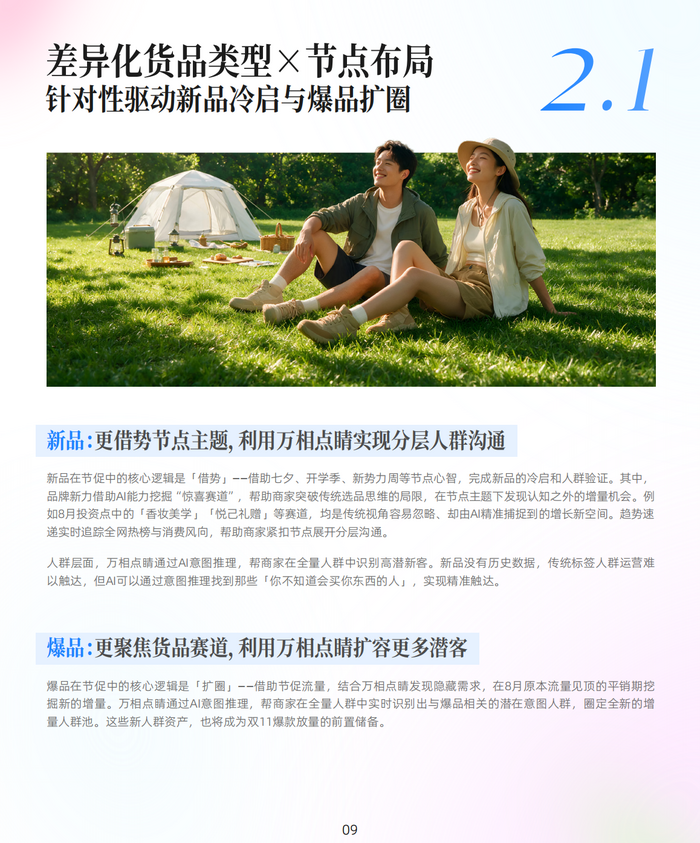
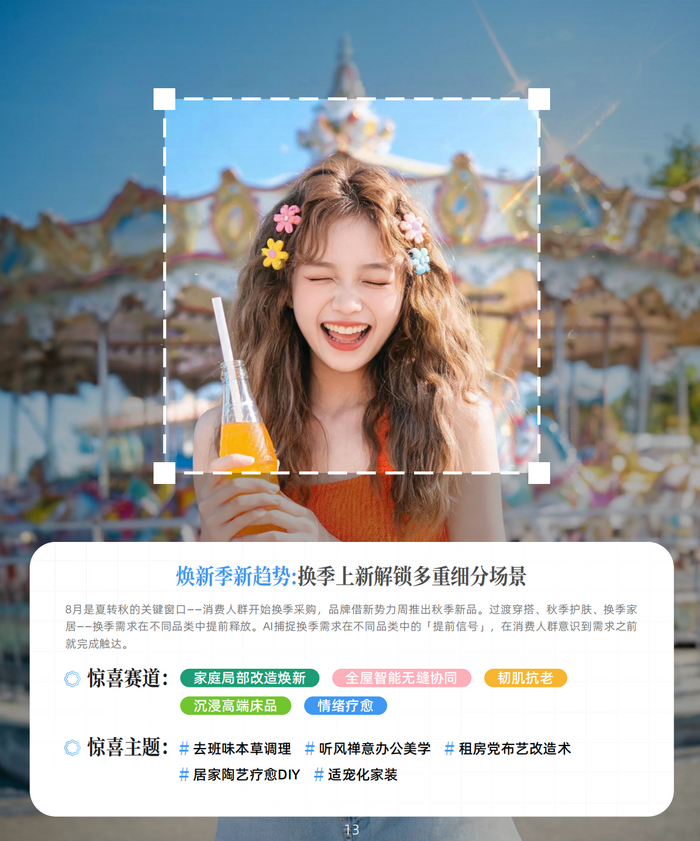
8月并非双11前的蓄水空档,而是一个关键的“三重窗口期”——多节点场景实验场、高意图人群提纯期、AI经营链路练兵期。传统思路习惯把8月当成泛流量的囤积期,却容易导致投入散、资产沉、增长疲软的结果;而在AI全域经营新范式下,商家更该借力超级88、七夕、开学季、新势力周等节点接力,用万相点睛实现“货找人”的精准投放,分层运营场景人群,敏捷验证换季货品,把月度确定性增长和双11前置布局,一并握在手里。

正如阿里巴巴集团高级副总裁、现任天猫事业部总裁、阿里妈妈总裁、淘宝直播及内容事业部负责人刘博(花名:家洛)所言:“所谓的确定性,不是你一定赢,而是你知道下一个月、下一个季度,你要投多少钱、能拿到多少用户、能卖多少货。”

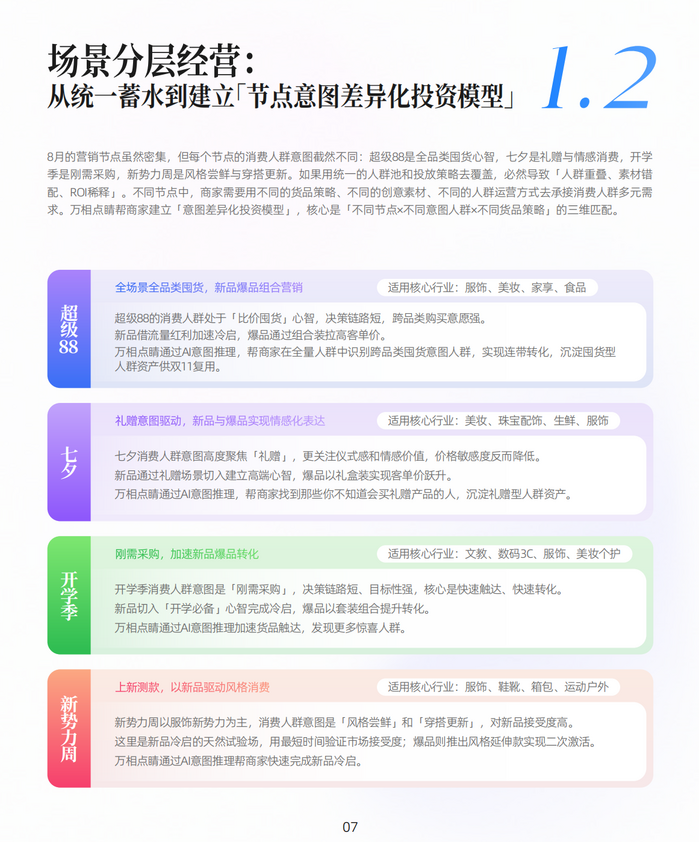
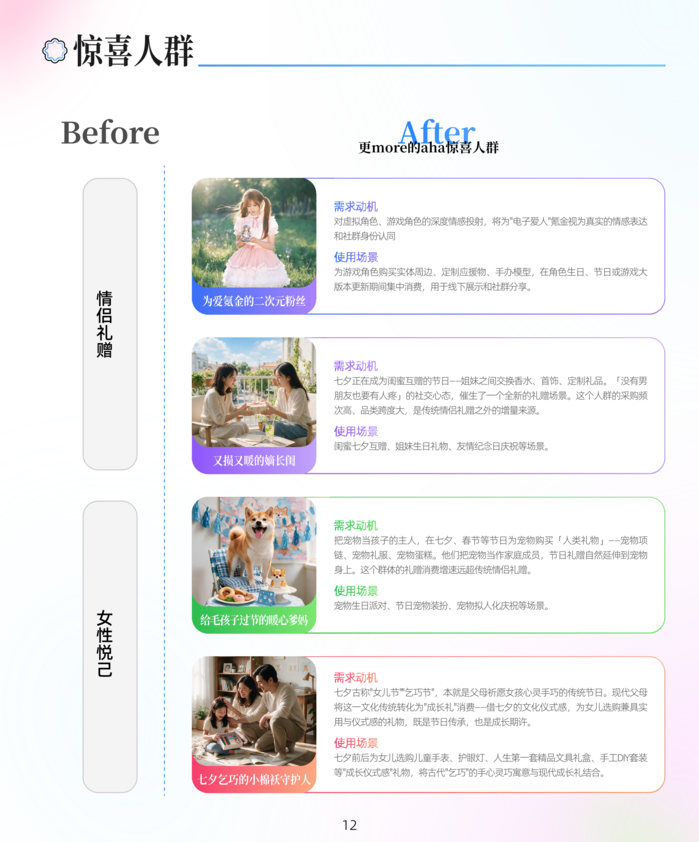
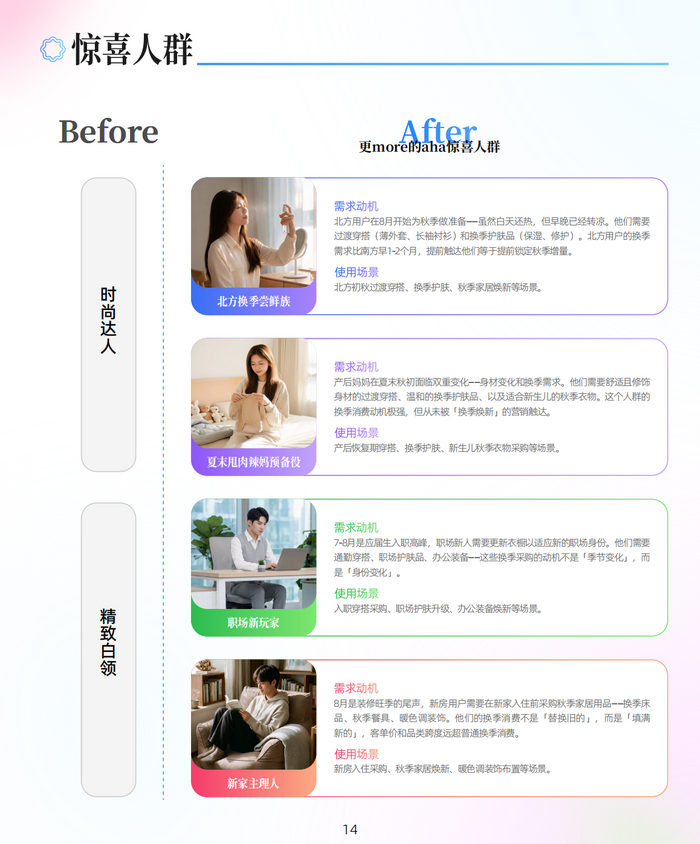
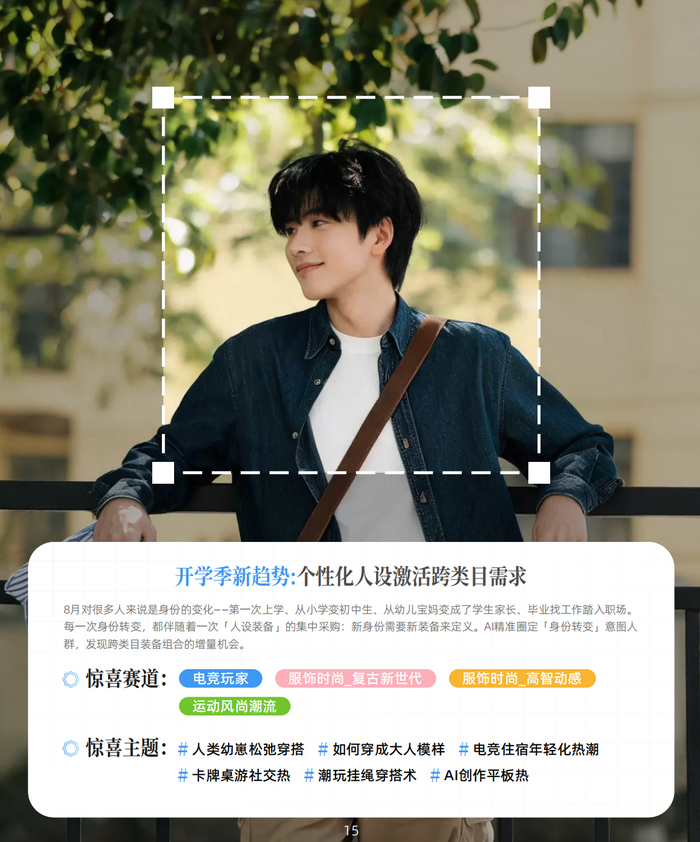
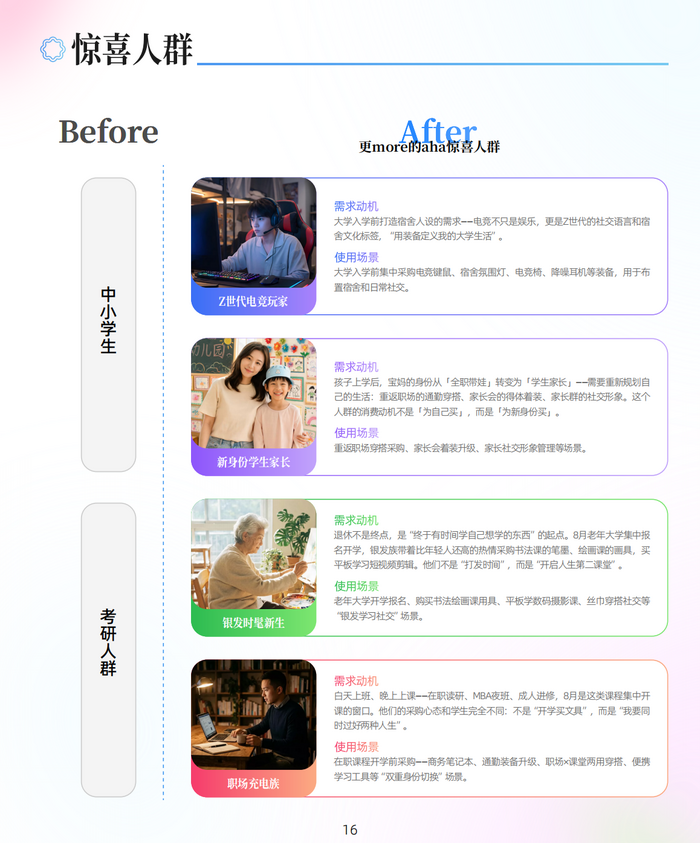
8月的营销节点虽然密集,但每个节点的消费意图都截然不同——七夕早已不只是两个人的事,二次元粉丝给“电子爱人”买周边、嫡长闺和姐妹互赠香水、暖心爹妈给毛孩子办派对,礼赠边界被彻底打开;新势力周里“换季”也不是统一动作,北方尝鲜族提前下单薄外套、辣妈预备役悄悄更新衣橱、新家主理人填满秋季家居,消费是“填满新的”;开学季更是一场身份转变,电竞玩家定义宿舍文化、银发新生买平板学剪视频、职场充电族过好“两种人生”。万相点睛通过AI意图推理,在三大投资机遇里挖出这批“认知之外”的惊喜人群——场景、需求、人群三重合一,才是真正的增量。

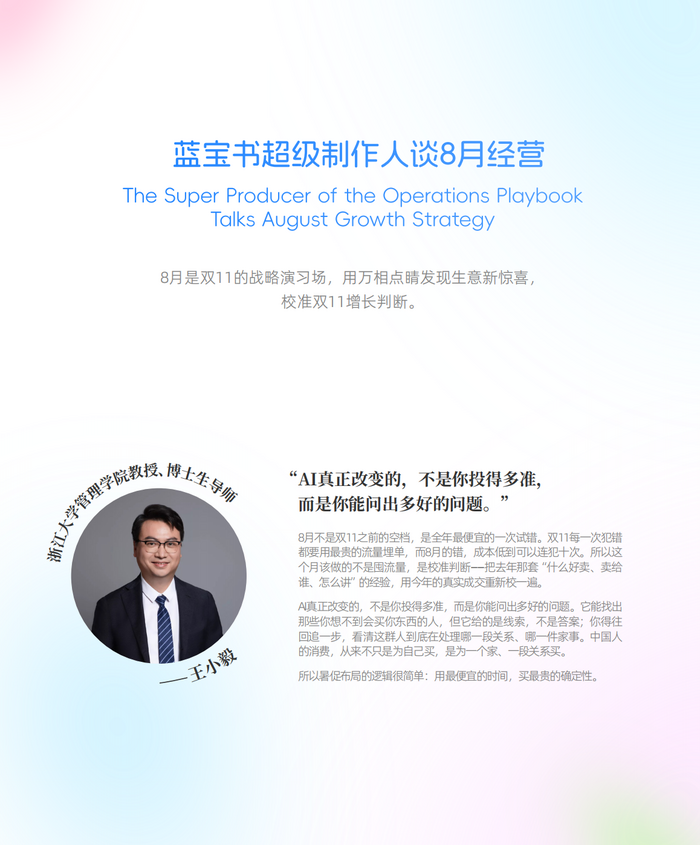
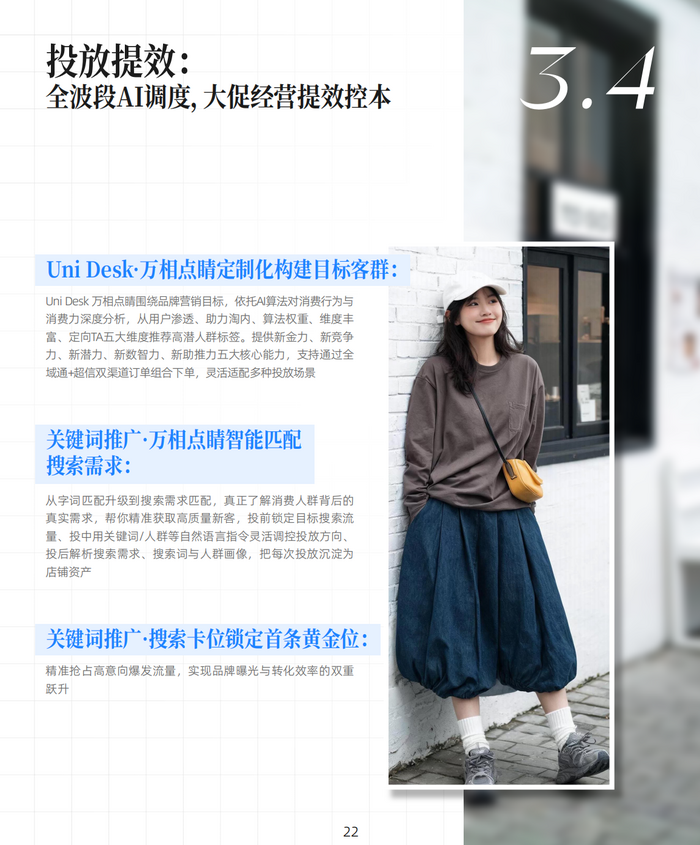
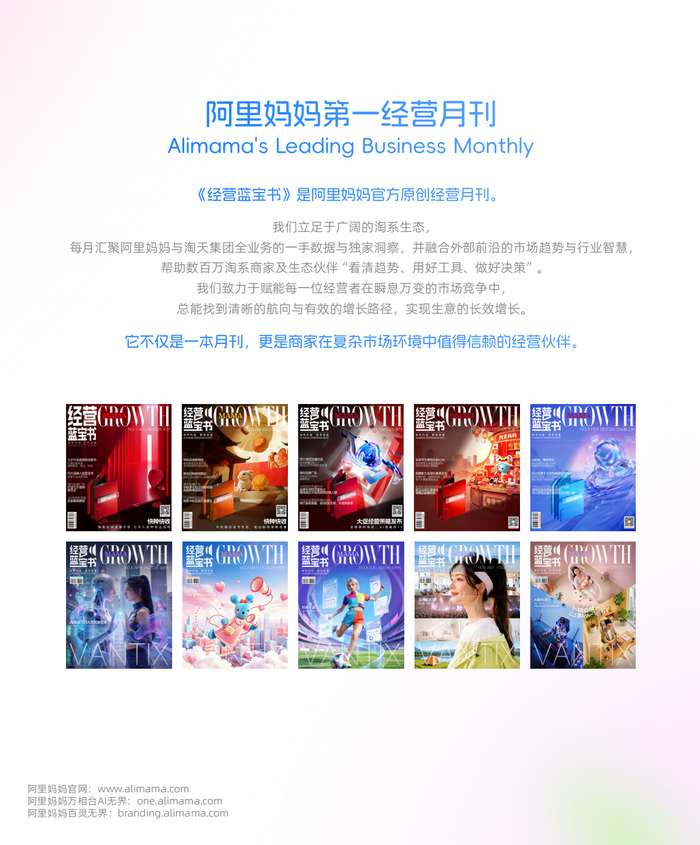
机遇被看见之后,下一步是如何真正落到经营动作。8月,万相点睛正式完成全场景升级,从商机洞察、人群破局、创意营销到投放提效,把“货找人”的全链路跑得更顺、更准。本期《经营蓝宝书》特邀浙江大学管理学院教授、博士生导师王小毅作为超级制作人,拆解8月的AI经营新惊喜。更多经营策略&趋势的完整拆解、万相点睛全链路实操指引,欢迎下载阿里妈妈「经营蓝宝书」8月刊查看。

点击链接下载报告原文

注:文/龚作仁,文章来源:Laborer,本文为作者独立观点,不代表亿邦动力立场。

【版权提示】亿邦动力倡导尊重与保护知识产权。未经许可,任何人不得复制、转载、或以其他方式使用本网站的内容。如发现本站文章存在版权问题,烦请提供版权疑问、身份证明、版权证明、联系方式等发邮件至run@ebrun.com,我们将及时沟通与处理。

已点赞

+1

{{ praise_text }}

好文章,值得被更多人看到

FAQ回顾

8月电商经营有哪些重要机遇?

8月是电商经营的三重关键窗口期,既是多节点场景实验场、高意图人群提纯期,也是AI经营链路练兵期,商家可借力超级88、七夕、开学季、新势力周等节点,实现月度确定性增长同时前置布局双11。

万相点睛能为电商商家带来哪些经营价值?

万相点睛可通过AI意图推理实现“货找人”的精准投放,目前已完成全场景升级,覆盖商机洞察、人群破局、创意营销到投放提效全链路,能帮助商家挖掘跨场景跨圈层的潜在消费人群,收获日销增量。

当前电商消费需求出现了哪些新变化?

当前电商消费需求呈现跨场景、跨圈层特征,礼赠边界延伸至闺蜜、宠物、电子爱人等对象,换季、开学等节点的消费需求更加细分个性化,不同人群的消费意图差异显著,存在大量潜在增量空间。

广告

下一篇

征集报名《品牌数字化服务商资源手册》

《品牌数字化服务商资源手册》展示数字化服务商风采,亿邦全年零售大会通发,触达更多资源,马上加入!

马上入驻

京东奢品节正式开启 集结众多国际奢品打造七夕送礼选择

七夕消费旺季来临,京东奢品节活动全面启动。七夕消费旺季来临,京东奢品节活动全面启动。本次活动联合 COACH、MCM、拉夫劳伦、PRADA、Miu Miu 等海内外奢侈及时尚品牌,

电商平台 京东 未来零售

2026-08-18 14:36:57