• 亿邦公众号
    • APP下载

营业总收入收窄13.02% 化妆品难以支撑福瑞达“回春”?

作者:张从容 文章来源:亿邦动力

2025-03-27 14:11

作者:张从容 文章来源:亿邦动力

2025-03-27 14:11

邦小白快读

EN
全文速览

福瑞达2024年财报显示整体业绩下滑,化妆品业务成为主力但增长乏力。

1.营业总收入39.83亿元,同比收窄13.02%,首次跌下40亿元;营业利润、利润总额、净利润等均同比下降约16%-19%,反映公司整体经营压力增大。

2.化妆品板块营收24.75亿元,占总营收62.15%,历史最高,但增速显著放缓:同比仅增长2.46%,远低于2023年的22.71%;其中颐莲营收9.63亿元增长12.36%(去年20.35%),瑷尔博士营收13.01亿元首次下降3.48%,提示重点品牌分化风险。

3.毛利15.49亿元同比增长3.19%,毛利率62.57%提升0.44个百分点,显示内部优化有空间但不足以支撑整体增长。

财报揭示化妆品行业消费趋势变化和品牌挑战,为营销和研发提供参考。

1.品牌表现分化:颐莲保持12.36%增长但增速放缓,瑷尔博士首次下滑3.48%,反映用户行为偏好转移,可能导致品牌定位需调整;消费趋势上,整体增速放慢(从22.71%至2.46%)提示市场竞争加剧或需求饱和。

2.产品研发启示:毛利和毛利率提升(62.57%增0.44%)显示高价值产品有潜力,但增速缓说明创新不足,需加强研发以应对变化;用户行为观察:瑷尔博士下滑可能因产品同质化,提示品牌营销需聚焦差异化策略。

3.行业趋势:化妆品占营收62.15%创新高,表明品类持续增长,但增速降幅大警示品牌商监控市场动态。

财报提示化妆品市场增长风险和机会,需关注消费需求变化应对。

1.风险提示:整体收入下降13.02%,化妆品增速锐减(22.71%至2.46%),瑷尔博士首次下滑3.48%,显示市场波动大,可能面临库存积压或需求萎缩;正面影响是化妆品占比62.15%提升,提供增长基石。

2.机会提示:颐莲仍增长12.36%,表明细分品牌需求强,可学习其策略;消费需求层面变化:毛利增3.19%和毛利率升,反映优化空间,卖家可挖掘高毛利产品机会;最新商业模式启示:占比突破60%提示电商渠道可能为核心,卖家可加强合作。

3.事件应对措施:增速放缓警示快速响应市场,如监测品牌表现并调整选品策略。

财报突出化妆品生产需求和商业机会,为设计和数字化提供启示。

1.产品生产需求:化妆品营收24.75亿元占比62.15%创新高,生产需求旺盛,但瑷尔博士下滑3.48%提示设计需创新,避免同质化;颐莲增长12.36%则显示高效设计机会。

2.商业机会:作为支柱业务,占比超60%提供稳定订单来源,工厂可瞄准高增长品牌如颐莲;推进数字化启示:整体增速放慢(2.46% vs 22.71%)可能推动效率优化,通过数字化提升生产响应力。

3.生产启示:毛利增3.19%和毛利率升0.44%反映成本控制有效,工厂可学习此点强化管理。

财报反映行业发展趋势和客户痛点,需提供针对性解决方案。

1.行业发展趋势:化妆品增速从22.71%降至2.46%,整体收入收窄13.02%,表明市场增长放慢,竞争加剧;新趋势是占比62.15%提升,但增速乏力凸显行业转折点。

2.客户痛点:品牌分化如瑷尔博士下滑3.48%可能因用户需求变化,痛点包括品牌维护和市场风险;解决方案:毛利增3.19%和毛利率升0.44%显示优化空间,服务商可推效率工具帮企业控制成本。

3.新技术需求:增速放缓警示客户需创新支持,服务商可开发数据监控方案应对市场波动。

财报揭示商业需求和平台管理挑战,影响招商和风险规避。

1.商业需求:化妆品占62.15%创新高,平台需聚焦此品类招商,但增速仅2.46% vs 22.71%,提示需求波动;品牌表现如颐莲增12.36%优于瑷尔博士降3.48%,平台应多样选品满足卖家需求。

2.平台运营管理:整体收入下滑警示平台审核商家资质,规避高风险品牌;风向规避:增速放慢可能因市场饱和,平台需强化数据监控和预警机制。

3.招商机会:高占比62.15%化妆品提供核心类目,平台可推出扶持政策吸引优质卖家如增长品牌。

财报凸显产业新动向和商业模式问题,为政策建议提供依据。

1.产业新动向:整体收入收窄13.02%,化妆品增速锐减(22.71%至2.46%),瑷尔博士首次下滑,反映行业竞争加剧和新问题如需求饱和;新动向是占比62.15%升至历史最高,表明结构变化。

2.商业模式:化妆品成支柱但增长乏力,提示现有模式可持续性挑战;政策法规建议:增速放缓警示需监管促进创新,如鼓励研发支持;启示:毛利增3.19%显示内部优化有效,但需监控外部风险。

3.问题分析:为何收入下降而占比提升?研究者可深入探讨商业模式瓶颈和竞争影响。

声明:快读内容全程由AI生成,请注意甄别信息。如您发现问题,请发送邮件至 run@ebrun.com 。

我是 品牌商 卖家 工厂 服务商 平台商 研究者 帮我再读一遍。

Quick Summary

Fulida's 2024 financial report indicates an overall decline in performance, with the cosmetics business becoming the mainstay but showing weak growth.

1. Total operating revenue was 3.983 billion yuan, narrowing by 13.02% year-on-year and falling below 40 billion yuan for the first time; operating profit, total profit, and net profit all decreased by approximately 16%-19% year-on-year, reflecting increased overall operational pressure on the company.

2. The cosmetics segment revenue was 2.475 billion yuan, accounting for a record 62.15% of total revenue, but growth slowed significantly: a mere 2.46% year-on-year increase, far below the 22.71% growth in 2023. Within this, Yilian's revenue grew 12.36% to 963 million yuan (compared to 20.35% last year), while A'ershi's revenue fell for the first time by 3.48% to 1.301 billion yuan, signaling risks of divergence among key brands.

3. Gross profit increased by 3.19% to 1.549 billion yuan, with the gross margin rising 0.44 percentage points to 62.57%, indicating room for internal optimization but insufficient to support overall growth.

The financial report reveals shifts in cosmetics industry consumption trends and brand challenges, offering insights for marketing and R&D.

1. Diverging brand performance: Yilian maintained 12.36% growth albeit at a slower pace, while A'ershi declined for the first time by 3.48%, reflecting shifting user preferences that may necessitate brand positioning adjustments. The sharp slowdown in overall growth (from 22.71% to 2.46%) signals intensified competition or market saturation.

2. R&D implications: The increase in gross profit and margin (62.57%, up 0.44 pp) suggests potential for high-value products, but slow growth indicates insufficient innovation, highlighting the need for stronger R&D. A'ershi's decline, potentially due to product homogeneity, underscores the importance of differentiation in brand marketing.

3. Industry trend: Cosmetics reaching a record 62.15% of revenue confirms the category's ongoing importance, but the significant growth deceleration warns brands to closely monitor market dynamics.

The financial report highlights growth risks and opportunities in the cosmetics market, urging attention to changing consumer demand.

1. Risk alerts: Overall revenue fell 13.02%, cosmetics growth plummeted (22.71% to 2.46%), and A'ershi's first-ever decline of 3.48% indicate high market volatility, potentially leading to inventory buildup or demand contraction. Positively, cosmetics' share rising to 62.15% provides a growth foundation.

2. Opportunity signals: Yilian's 12.36% growth demonstrates strong demand for specific brands, whose strategies can be emulated. The gross profit increase (3.19%) and margin improvement reflect optimization potential, suggesting sellers focus on high-margin products. The segment exceeding 60% share implies e-commerce channels are likely core, warranting stronger partnerships.

3. Actionable measures: The growth slowdown necessitates rapid market response, such as monitoring brand performance and adjusting product selection strategies.

The report underscores cosmetics production demand and business opportunities, offering insights for design and digital transformation.

1. Production demand: Cosmetics revenue of 2.475 billion yuan, a record 62.15% share, indicates robust demand. However, A'ershi's 3.48% decline signals a need for innovative design to avoid homogenization, while Yilian's 12.36% growth highlights opportunities for efficient design.

2. Business opportunities: As a pillar business exceeding 60% share, cosmetics provide a stable order source; factories can target high-growth brands like Yilian. The growth slowdown (2.46% vs. 22.71%) may drive efficiency optimization, prompting digital upgrades for better production responsiveness.

3. Operational insights: The 3.19% gross profit increase and 0.44 pp margin improvement demonstrate effective cost control, offering a model for factories to strengthen management.

The financial report reflects industry development trends and client pain points, necessitating targeted solutions.

1. Industry trends: Cosmetics growth slowing from 22.71% to 2.46%, coupled with a 13.02% overall revenue decline, indicates market maturation and intensified competition. The segment's rising share (62.15%) but weak growth highlights an industry inflection point.

2. Client pain points: Brand divergence, exemplified by A'ershi's 3.48% decline, likely stems from shifting user needs, creating challenges in brand maintenance and market risk. The gross profit increase (3.19%) and margin uptick (0.44 pp) reveal optimization potential, where service providers can offer efficiency tools for cost control.

3. Technology needs: The growth slowdown warns clients require innovation support; service providers can develop data monitoring solutions to manage market volatility.

The report reveals commercial demands and platform management challenges, impacting merchant acquisition and risk mitigation.

1. Commercial demand: Cosmetics' record 62.15% share necessitates focused merchant acquisition in this category, but the sharp growth deceleration (2.46% vs. 22.71%) signals demand volatility. Divergent brand performance (Yilian +12.36% vs. A'ershi -3.48%) requires diversified product selection to meet seller needs.

2. Platform management: The overall revenue decline underscores the need for stricter merchant qualification reviews to mitigate risks from underperforming brands. The growth slowdown, potentially due to market saturation, calls for enhanced data monitoring and early warning systems.

3. Acquisition opportunities: The high 62.15% cosmetics share represents a core category; platforms can introduce support policies to attract quality sellers, particularly those representing growing brands.

The report highlights new industry dynamics and business model issues, providing a basis for policy recommendations.

1. Industry dynamics: A 13.02% overall revenue contraction and sharp cosmetics growth deceleration (22.71% to 2.46%), alongside A'ershi's first decline, reflect heightened competition and emerging issues like demand saturation. The segment's record 62.15% share indicates structural change.

2. Business model: Cosmetics as a pillar yet with weak growth suggests sustainability challenges for current models. Policy implications: The slowdown warrants regulatory measures to spur innovation, such as R&D incentives. The effective internal optimization shown by the 3.19% gross profit increase must be balanced with monitoring external risks.

3. Analytical questions: Why does revenue fall while the segment's share rises? Researchers should investigate business model bottlenecks and competitive impacts.

Disclaimer: The "Quick Summary" content is entirely generated by AI. Please exercise discretion when interpreting the information. For issues or corrections, please email run@ebrun.com .

I am a Brand Seller Factory Service Provider Marketplace Seller Researcher Read it again.

【亿邦原创】日前,福瑞达发布2024年财报。2024年,福瑞达营业总收入39.83亿元,同比收窄13.02%,这是福瑞达营业收入首次跌下40亿元;营业利润3.38亿元,同比收窄19.46%;利润总额3.46亿元,同比收窄16.14%;净利润2.96亿元,同比收窄19.04%;归属于母公司股东的净利润2.44亿元,同比收窄19.73%。

2024年,化妆品板块无疑成为福瑞达营收的支柱业务,营业收入占总营收的62.15%,占比首次突破60%的同时也达到历史最高;2023年的占比为52.76%。虽然自2020年起,福瑞达的营业总收入整体呈下降趋势,但是化妆品板块的营收却一路增长。
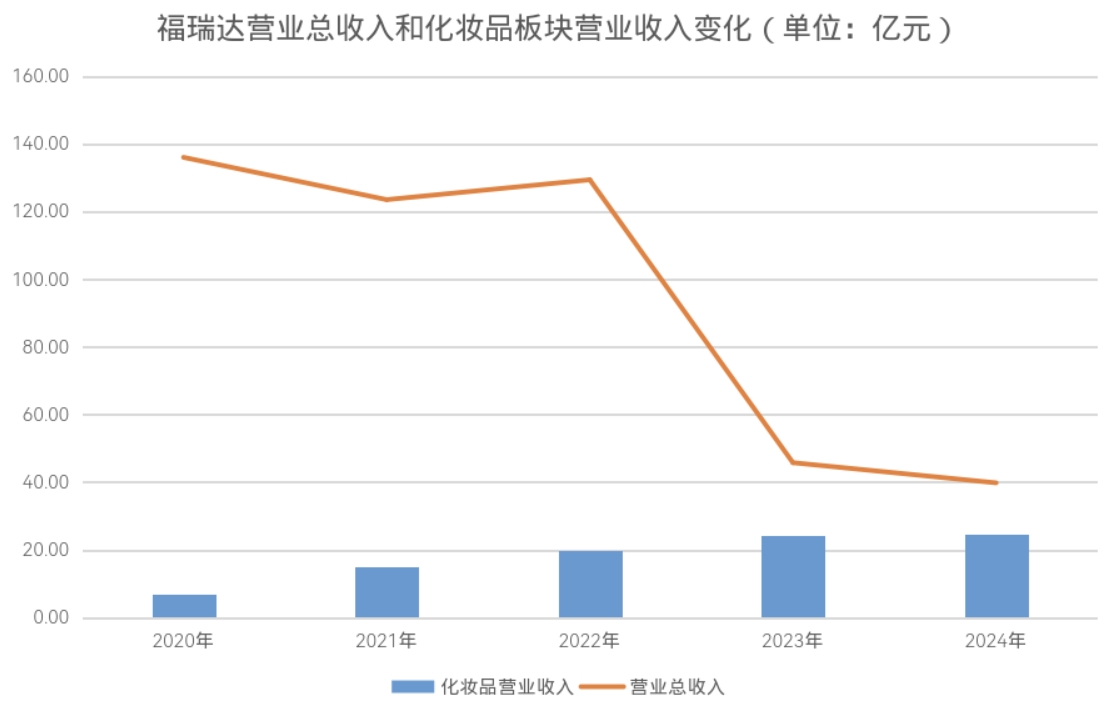
然而,该业务板块增速已然放缓。2024年,福瑞达化妆品板块营业收入24.75亿元,同比增长2.46%,2023年同比增长22.71%;毛利15.49亿元,同比增长3.19%,2023年同比增长25.05%;毛利率62.57%,对比2023年增长0.44个百分点。

其中,颐莲营收增速有所放缓,2024年营收9.63亿元,同比增长12.36%,2023年则同比增长20.35%;瑷尔博士营收则为2020年至2024年首次下降,营收13.01亿元,同比收窄3.48%。

亿邦持续追踪报道该情报,如想了解更多与本文相关信息,请扫码关注作者微信。

【版权提示】亿邦动力倡导尊重与保护知识产权。未经许可,任何人不得复制、转载、或以其他方式使用本网站的内容。如发现本站文章存在版权问题,烦请提供版权疑问、身份证明、版权证明、联系方式等发邮件至run@ebrun.com,我们将及时沟通与处理。

已点赞

+1

{{ praise_text }}

好文章,值得被更多人看到

FAQ回顾

福瑞达2024年主要财务数据有哪些?

2024年福瑞达营业总收入39.83亿元,同比下降13.02%;营业利润3.38亿元,下降19.46%;净利润2.96亿元,下降19.04%;归属于母公司股东的净利润2.44亿元,下降19.73%。

福瑞达化妆品业务2024年表现如何?

化妆品板块营收24.75亿元,占总营收62.15%,同比增长仅2.46%,增速大幅放缓。其中颐莲营收9.63亿元增12.36%,瑷尔博士营收13.01亿元首次下降3.48%。

福瑞达营收变化趋势是什么?

自2020年起福瑞达营业总收入整体呈下降趋势,2024年首次跌破40亿元。但化妆品板块营收持续增长,占比从2023年52.76%提升至62.15%。

广告

下一篇

征集报名《品牌数字化服务商资源手册》

《品牌数字化服务商资源手册》展示数字化服务商风采,亿邦全年零售大会通发,触达更多资源,马上加入!

马上入驻

紫燕百味鸡为什么能成功上市?终于有人讲明白了!

不做爆品、不做网红、不走捷径,是餐饮企业成功穿越周期的核心秘诀。

餐饮 未来零售

2025-03-27 13:46:26