• 亿邦公众号
    • APP下载

抽佣10% 7折补贴券…豆包电商的第一笔账怎么算?

作者:廖紫琳 文章来源:亿邦动力

2026-11-24 16:27

作者:廖紫琳 文章来源:亿邦动力

2026-11-24 16:27

邦小白快读

EN
全文速览

总1 豆包已能站内成交,双11优惠和下单链路值得关注

1.入口在“买前问豆包”和“豆包购物”,说需求后AI拆预算、场景、对象,检索商品库给方案和理由并附商品卡,领券站内付款。

2.双11“惊喜补贴券”让咖啡液7折券到手13.93元,同款抖音商城19.9元;豆包购物还有9.5折,做购物对话、拍照上传皮肤照片等任务可领券。

3.回答内嵌直播店铺,点进去可直接下单。

总2 商家后台、抽佣和品类机会要看清

1.抖店“豆包运营”专区可独立看曝光、点击、转化、成交、订单、客单价、退款和商机词。

2.抽佣为基础费加特定渠道补充费,5%类目加5%约10%,食品饮料滋补保健1%到3%叠加后不到10%。

3.3C数码、家电、母婴、健康食品先跑通;非标品能被一句人话问出来也有机会,白瓷靠“送长辈什么茶具比较有质感”场景成交额增约677%。

4.中小商家顾虑补充成本、流量不确定和不会运维;84.56%尝试AI选购,仅16.06%认为精准,38.79%反馈推高价。

总1 豆包成独立AI成交渠道,品牌营销和渠道建设有新抓手

1.7月15日豆包列为独立成交渠道,后台可单独看订单GMV和ROI;抖店“豆包运营”专区看曝光点击转化成交退款,商机词可发现高频需求、供给不足品类。

2.双11回答内嵌直播店铺,AI推荐后直播承接成交;母婴品牌用第三方GEO服务后婴儿推车订单同比增20%,全店豆包订单近千笔,退货率比抖音商城低10到20个百分点。

总2 定价竞争、产品研发和用户行为要重估

1.豆包“惊喜补贴券”形成渠道价差,咖啡液7折券13.93元,同款抖音商城19.9元;双11券商家出资1%到5%、平台补1%到10%,最高700元,品牌要算补贴和价格竞争账。

2.豆包用户偏女性、中高消费,3C家电母婴健康食品先跑通;购买决策能否被一句人话问出来比是否标品更关键,白瓷靠“送长辈什么茶具比较有质感”场景成交额增约677%。

3.84.56%尝试AI选购,仅16.06%认为精准,38.79%反馈推高价;购物非主场景且规模小,品牌需观察没券后的复购与信任。

总1 政策与费率:豆包成独立渠道,抽佣按类目算

1.7月15日豆包列独立成交渠道,后台可看订单GMV和ROI;8月生活服务独立费率;9月底“特定渠道”写入规则,含抖音商城App和豆包。

2.抽佣为基础费加补充费,5%类目加5%约10%,食品饮料滋补保健1%到3%叠加不到10%;本地生活酒店12%,孕产护理17.4%加0.6%等,多类比主站高约4个百分点。

总2 机会与风险:补贴和商机词在前,成本与规模风险在后

1.双11券商家出资1%到5%、平台补1%到10%,最高700元;商机词呈现热度高、供给不足品类,3C家电母婴健康食品先跑通,非标品能被一句人话问出来也有机会,白瓷增约677%。

2.中小商家顾虑补充成本、流量不确定、不会运维;单店订单占比从零到百分之十几;日均GMV约1000万、618约1亿,抖音半年2.4万亿,豆包占不到0.2%。

总3 可学习与协作:先补C端再收B端

1.平台先用补贴把价格压到比抖音商城低,再靠规模收渠道费请B端进场;商家可借第三方GEO服务,母婴推车增20%近千笔。

2.购物非主场景、推荐中立性会被追问,没券后是否打开对话框待验证。

总1 产品设计与生产需求:能被一句人话问出来更重要

1.品类是否标品不是唯一标准,关键是购买决策能否被一句人话问出来;非标品白瓷被装进“送长辈什么茶具比较有质感”场景后,成交额同比增约677%。

2.3C数码、家电、母婴、健康食品先跑通,因毛利相对高、选购有专业门槛,且豆包用户偏女性、中高消费;商机词可呈现热度高、供给不足的品类和关键词,反向指导产品设计与生产。

总2 商业机会与数字化电商启示

1.豆包已打通商品卡、加购、支付、订单、售后和直播间,工厂可接入商品库,用商品卡和直播承接AI推荐流量;抖店“豆包运营”专区可独立看曝光点击转化成交退款,AI对话流量能独立核算。

2.第三方GEO服务可帮助起步,母婴推车订单同比增20%;抽佣为基础费加补充费,5%类目约10%,食品饮料滋补保健1%到3%叠加不到10%,但购物非主场景、规模小,中小商家顾虑补充成本和不会运维。

总1 行业趋势与新技术:AI电商从推荐走向成交

1.豆包2025年10接入抖音商城挂商品卡,2026年3内测站内一句话购物,618前改“买前问豆包”,7月15日成独立成交渠道,9月底“特定渠道”写入规则。

2.链路是用户说需求,AI拆预算场景对象,检索商品库给方案和理由并附商品卡,领券站内付款;双11“问豆包”可按预算挑商品、比参数,回答内嵌直播店铺。

3.森博部分客户豆包成交额月环比增200%、抖店GMV占比5%、退货率低10到20个百分点;AIDSO称部分头部商家AI成交占比突破30%到40%。

总2 客户痛点与解决方案

1.商家痛点:补充成本、流量不确定、不会运维;抽佣实际高于主站,5%类目约10%,本地生活多类高约4个百分点;84.56%尝试AI选购,仅16.06%认为精准,38.79%反馈推高价。

2.服务商可帮做GEO和豆包渠道运营,母婴推车增20%近千笔;用抖店“豆包运营”看数据商机词;选3C家电母婴健康食品先跑通,把非标品包装成能被一句人话问出的场景,白瓷增约677%。

总1 平台最新做法:把豆包做成可独立核算的成交渠道

1.豆包从挂商品卡跳抖音付款,到站内一句话购物、618前“买前问豆包”,再到导航栏“豆包购物”推荐商品和直播。

2.7月15日列独立成交渠道,后台可看订单GMV和ROI;8月生活服务独立费率;9月底“特定渠道”写入规则;抖店开“豆包运营”专区看数据和商机词。

3.双11上线“问豆包”、惊喜补贴券、回答内嵌直播;补贴混资为商家出资1%到5%、平台补1%到10%,最高700元。

总2 商业需求问题与风向规避

1.商家要独立核算AI流量、区隔订单,但顾虑补充成本、流量不确定、不会运维;84.56%尝试AI选购,仅16.06%认为精准,38.79%反馈推高价。

2.购物非主场景,日均GMV约1000万、618约1亿,抖音半年2.4万亿,豆包占不到0.2%;中立性会被追问,推荐不透明且绑定自有电商佣金变现。

3.平台用先补C端再收B端招商,品类先跑3C家电母婴健康食品,非标品靠可语言化场景;但没券后用户是否打开对话框待验证。

总1 产业新动向:AI购物渠道成形,规模仍小

1.豆包半年内从推荐走到站内成交,7月15日成独立成交渠道,9月底“特定渠道”写入规则;双11形成AI推荐加直播成交。

2.2026上半年日均电商GMV约1000万、618约1亿;抖音半年2.4万亿,豆包占不到0.2%。样本有月环比200%、GMV占比5%、退货率低10到20个百分点、头部AI成交30%到40%。

总2 新问题与商业模式政策启示

1.抽佣为基础加补充费,5%类目约10%,食品饮料滋补保健1%到3%叠加不到10%;本地生活多类比主站高约4个百分点;溢价理由含区分订单成本、补贴回收、卖成交而非曝光、token成本,豆包模型日均token调用量6月破180万亿。

2.84.56%尝试AI选购,仅16.06%认为精准,38.79%反馈推高价;推荐不透明且绑定自有电商佣金,中立性受追问;购物非主场景。

3.先补C端再收B端,复用抖音电商基建,靠4.19亿用户和兴趣内容数据;品类逻辑是能否被一句人话问出来,非标品白瓷增约677%;政策需关注渠道费率透明、补贴混资、推荐中立和消费者保护。

声明:快读内容全程由AI生成,请注意甄别信息。如您发现问题,请发送邮件至 run@ebrun.com 。

我是 品牌商 卖家 工厂 服务商 平台商 研究者 帮我再读一遍。

Quick Summary

Summary 1: Doubao can now complete transactions on-platform; Double 11 discounts and the purchase funnel are worth watching.

1. Entry points are Ask Doubao Before Buying and Doubao Shopping. After users state needs, AI breaks down budget, scenario and recipient, searches the product library, returns options with reasons and product cards, and users can claim coupons and pay on-platform.

2. Double 11 surprise subsidy coupons bring a 30%-off coffee-liquid coupon down to RMB 13.93, versus RMB 19.9 for the same item on Douyin Mall; Doubao Shopping also offers 5% off, and coupons can be earned through shopping conversations and tasks such as uploading skin photos.

3. Answers embed livestream stores; users can tap through and place orders directly.

Summary 2: Merchants need to understand the seller back office, commission structure and category opportunities.

1. The Doubao Operations section in Douyin Shop separately shows impressions, clicks, conversion, GMV, orders, average order value, refunds and opportunity keywords.

2. Commission is a base fee plus a supplementary fee for specific channels; a 5% category plus 5% totals about 10%, while food, beverages, supplements and health products at 1% to 3% total less than 10% after stacking.

3. 3C digital, home appliances, maternal and infant, and health food are early categories that have worked; non-standard products also have opportunities if they can be elicited by a plain-language question. White porcelain GMV rose about 677% through the scenario 'what tea set makes a refined gift for an elder'.

4. SMB merchants worry about additional costs, traffic uncertainty and lack of operational capability; 84.56% have tried AI-assisted shopping, only 16.06% find it accurate, and 38.79% report it recommends higher-priced items.

Summary 1: Doubao has become an independent AI transaction channel, giving brands a new lever for marketing and channel building.

1. On July 15, Doubao was designated an independent transaction channel; the back office can separately track order GMV and ROI. The Doubao Operations section in Douyin Shop shows impressions, clicks, conversion, GMV and refunds, while opportunity keywords can reveal high-frequency demand and under-supplied categories.

2. Double 11 answers embed livestream stores, so livestreams capture transactions after AI recommendations; after a maternal and infant brand used third-party GEO services, stroller orders rose 20% year over year, with nearly 1,000 Doubao orders for the store and a return rate 10 to 20 percentage points lower than on Douyin Mall.

Summary 2: Pricing competition, product development and user behavior need to be reassessed.

1. Doubao surprise subsidy coupons create channel price gaps: a 30%-off coffee-liquid coupon is RMB 13.93, versus RMB 19.9 for the same item on Douyin Mall. For Double 11 coupons, merchants fund 1% to 5% and the platform subsidizes 1% to 10%, up to RMB 700; brands need to account for subsidies and price competition.

2. Doubao users skew female and mid-to-high spending; 3C, home appliances, maternal and infant, and health food are early categories that have worked. Whether a purchase decision can be elicited by a plain-language question matters more than whether the product is standard; white porcelain GMV rose about 677% through the scenario 'what tea set makes a refined gift for an elder'.

3. 84.56% have tried AI-assisted shopping, only 16.06% find it accurate, and 38.79% report it recommends higher-priced items; shopping is not a main scenario and scale is small, so brands need to watch repurchase and trust after coupons end.

Summary 1: Policy and fee rates: Doubao is an independent channel, and commissions are calculated by category.

1. On July 15, Doubao was listed as an independent transaction channel; the back office can show order GMV and ROI. In August, local services got independent fee rates; by end-September, specific channels were written into the rules, including the Douyin Mall app and Doubao.

2. Commission is a base fee plus a supplementary fee: a 5% category plus 5% is about 10%; food, beverages, supplements and health products at 1% to 3% stack to less than 10%. Local-life hotels are 12%, maternal care is 17.4% plus 0.6%, and many categories are about 4 percentage points higher than on the main site.

Summary 2: Opportunities and risks: subsidies and opportunity keywords come first; cost and scale risks follow.

1. For Double 11 coupons, merchants fund 1% to 5% and the platform subsidizes 1% to 10%, up to RMB 700; opportunity keywords reveal hot but under-supplied categories. 3C, home appliances, maternal and infant, and health food are early categories that have worked; non-standard products also have opportunities if they can be elicited by a plain-language question, with white porcelain up about 677%.

2. SMB merchants worry about additional costs, traffic uncertainty and lack of operational capability; Doubao orders as a share of a single store have gone from zero to the teens. Average daily GMV is about RMB 10 million, about RMB 100 million during 618; Douyin's half-year GMV is RMB 2.4 trillion, so Doubao accounts for less than 0.2%.

Summary 3: What can be learned and how to collaborate: subsidize the C-end first, then monetize the B-end.

1. The platform first uses subsidies to push prices below Douyin Mall, then charges channel fees at scale and invites B-end merchants in; merchants can use third-party GEO services, as maternal strollers rose 20% to nearly 1,000 orders.

2. Shopping is not a main scenario, and the neutrality of recommendations will be questioned; whether users open the chat box after coupons end remains to be verified.

Summary 1: Product design and production demand: being answerable in plain language matters more.

1. Whether a category is standard is not the only criterion; the key is whether the purchase decision can be elicited by a plain-language question. Non-standard white porcelain was packaged into the scenario 'what tea set makes a refined gift for an elder', and GMV rose about 677% year over year.

2. 3C digital, home appliances, maternal and infant, and health food are early categories that have worked because gross margins are relatively high, purchasing has professional barriers, and Doubao users skew female and mid-to-high spending; opportunity keywords can reveal hot but under-supplied categories and keywords, which can in turn guide product design and production.

Summary 2: Business opportunities and lessons for digital commerce.

1. Doubao has connected product cards, add-to-cart, payment, orders, after-sales and livestreams; factories can connect to the product library and use product cards and livestreams to capture AI-referred traffic. The Doubao Operations section in Douyin Shop separately shows impressions, clicks, conversion, GMV and refunds, so AI conversation traffic can be accounted for independently.

2. Third-party GEO services can help merchants get started; maternal stroller orders rose 20% year over year. Commission is a base fee plus a supplementary fee: a 5% category is about 10%, while food, beverages, supplements and health products at 1% to 3% stack to less than 10%. However, shopping is not a main scenario and scale is small, and SMB merchants worry about additional costs and lack of operational capability.

Summary 1: Industry trends and new technology: AI e-commerce is moving from recommendations to transactions.

1. Doubao connected to Douyin Mall with product cards in October 2025, tested one-sentence on-platform shopping in March 2026, changed to Ask Doubao Before Buying before 618, became an independent transaction channel on July 15, and had specific channels written into the rules by end-September.

2. The funnel is: users state needs; AI breaks down budget, scenario and recipient; it searches the product library, returns options with reasons and product cards; users claim coupons and pay on-platform. During Double 11, Ask Doubao can select products by budget and compare specs, and answers embed livestream stores.

3. For some Senbo clients, Doubao GMV rose 200% month over month, accounted for 5% of Douyin Shop GMV, and had a return rate 10 to 20 percentage points lower; AIDSO says AI transactions at some leading merchants exceed 30% to 40%.

Summary 2: Client pain points and solutions.

1. Merchant pain points: additional costs, traffic uncertainty and lack of operational capability; actual commissions are higher than on the main site, with a 5% category at about 10% and many local-life categories about 4 percentage points higher; 84.56% have tried AI-assisted shopping, only 16.06% find it accurate, and 38.79% report it recommends higher-priced items.

2. Service providers can help with GEO and Doubao channel operations; maternal strollers rose 20% to nearly 1,000 orders. They can use the Doubao Operations section in Douyin Shop to view data and opportunity keywords; select 3C, home appliances, maternal and infant, and health food as early categories; and package non-standard products into scenarios that can be elicited by a plain-language question, with white porcelain up about 677%.

Summary 1: Latest platform moves: making Doubao an independently accountable transaction channel.

1. Doubao has evolved from product cards that jump to Douyin payment, to one-sentence on-platform shopping, to Ask Doubao Before Buying before 618, and to Doubao Shopping in the navigation bar recommending products and livestreams.

2. On July 15, it was listed as an independent transaction channel; the back office can show order GMV and ROI. In August, local services got independent fee rates; by end-September, specific channels were written into the rules; Douyin Shop opened a Doubao Operations section to view data and opportunity keywords.

3. During Double 11, it launched Ask Doubao, surprise subsidy coupons and embedded livestreams in answers; subsidy co-funding is 1% to 5% from merchants and 1% to 10% from the platform, up to RMB 700.

Summary 2: Business demand issues and trend risks to avoid.

1. Merchants want independent accounting for AI traffic and separated orders, but they worry about additional costs, traffic uncertainty and lack of operational capability; 84.56% have tried AI-assisted shopping, only 16.06% find it accurate, and 38.79% report it recommends higher-priced items.

2. Shopping is not a main scenario: average daily GMV is about RMB 10 million, about RMB 100 million during 618; Douyin's half-year GMV is RMB 2.4 trillion, so Doubao accounts for less than 0.2%. Neutrality will be questioned; recommendations are opaque and tied to the platform's own e-commerce commission monetization.

3. The platform subsidizes the C-end first and then recruits B-end merchants; early categories are 3C, home appliances, maternal and infant, and health food, while non-standard products rely on language-able scenarios. But whether users open the chat box after coupons end remains to be verified.

Summary 1: New industry development: an AI shopping channel is taking shape, but scale remains small.

1. Within half a year, Doubao moved from recommendations to on-platform transactions, became an independent transaction channel on July 15, and had specific channels written into the rules by end-September; Double 11 formed a model of AI recommendations plus livestream transactions.

2. In the first half of 2026, average daily e-commerce GMV was about RMB 10 million, and about RMB 100 million during 618; Douyin's half-year GMV was RMB 2.4 trillion, so Doubao accounted for less than 0.2%. Samples show 200% month-over-month growth, 5% GMV share, return rates 10 to 20 percentage points lower, and 30% to 40% AI transaction share at leading merchants.

Summary 2: New issues and implications for business models and policy.

1. Commission is a base fee plus a supplementary fee: a 5% category is about 10%, while food, beverages, supplements and health products at 1% to 3% stack to less than 10%; many local-life categories are about 4 percentage points higher than on the main site. Premium reasons include order-separation costs, subsidy recovery, selling transactions rather than impressions, and token costs; Doubao's average daily token calls exceeded 180 trillion in June.

2. 84.56% have tried AI-assisted shopping, only 16.06% find it accurate, and 38.79% report it recommends higher-priced items; recommendations are opaque and tied to the platform's own e-commerce commission, so neutrality is questioned; shopping is not a main scenario.

3. The platform subsidizes the C-end first and then monetizes the B-end, reusing Douyin e-commerce infrastructure and relying on 419 million users and interest-content data. Category logic is whether a purchase can be elicited by a plain-language question; non-standard white porcelain rose about 677%. Policy should focus on channel fee transparency, subsidy co-funding, recommendation neutrality and consumer protection.

Disclaimer: The "Quick Summary" content is entirely generated by AI. Please exercise discretion when interpreting the information. For issues or corrections, please email run@ebrun.com .

I am a Brand Seller Factory Service Provider Marketplace Seller Researcher Read it again.

一个AI助手开始按成交收钱了。

文丨廖紫琳    编辑丨石航千

【亿邦原创】豆包电商的增长故事正在双11中发生。

亿邦AI曾报道过,早在7至9月,头部梯队的GEO服务商森博科技,其部分客户在豆包渠道成交额月环比涨幅达200%,不少抖店的豆包GMV占比达到5%,退货率也比抖音商城低10到20个百分点。

另一头部服务商AIDSO爱搜科技创始人波波也公开提到,部分赛道头部商家AI成交占比突破30%,甚至摸到40%,千万、亿级AI电商大单或在大促中落地。

今年双11,豆包电商暂未公布具体战绩。但据亿邦调研,不同商家单店豆包订单占比差异极大,从零到百分之十几都有,没有明显均值。

一位母婴品牌电商运营透露,公司购买第三方GEO服务后,双11店内有一款婴儿推车订单量同比增长20%,成为品牌小爆款,而且全店大促期间豆包订单累计有近千笔。

这是几个足够漂亮的样本,让大家看到了未来增长希望,但它不是行业全景。

更多商家在双11前看到的,是另一个数字。同样一笔订单,从豆包进来,结算单上会多一行:特定渠道补充技术服务费。

相比追逐这类爆发式增量,更多中小商家仍持观望态度,他们更顾虑这一新增渠道带来的补充成本、流量逻辑不确定性,以及不知如何开始运维“豆包电商”,因而不敢贸然加码。

一边是翻倍增长,一边是顾虑重重。这两种状态同时成立,才是豆包第一个双11的真实样子。

豆包推荐转化更高?

豆包不是突然能“卖东西”的。

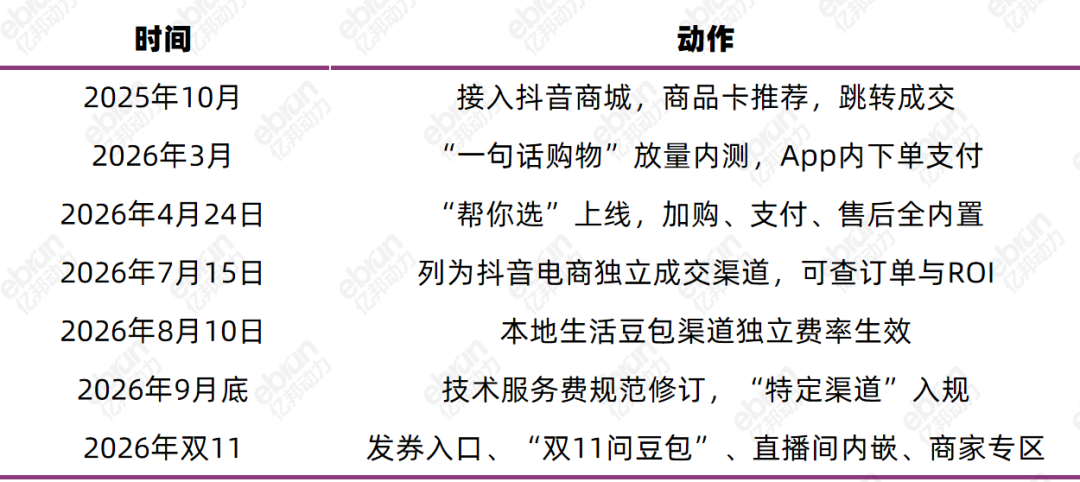
2025年10月,它接入抖音商城,回答里能挂商品卡,但点进去还要跳到抖音App付款。

转折在2026年3月。豆包放量内测“一句话购物”,把下单和支付都留在豆包App内。4月24日,豆包导航栏出现“帮你选”,加购、支付、订单、售后全部内置,订单页和抖音“我的订单”几乎长得一样。到今年618前,这个入口改名“买前问豆包”,并被放在了豆包首页更明显的位置。

从“能推荐”到“能成交”,豆包只用了半年。

但“引流”这笔生意真正算得清,是在今年夏天。

7月15日,抖音电商把豆包列为独立成交渠道,商家后台第一次能单独看到豆包来的订单、GMV和ROI。一个月后,抖音生活服务对豆包渠道订单执行独立费率;9月底,《商家技术服务费管理规范》修订生效,把“特定渠道”写进规则,名单里明确包括抖音商城App和豆包。
图片

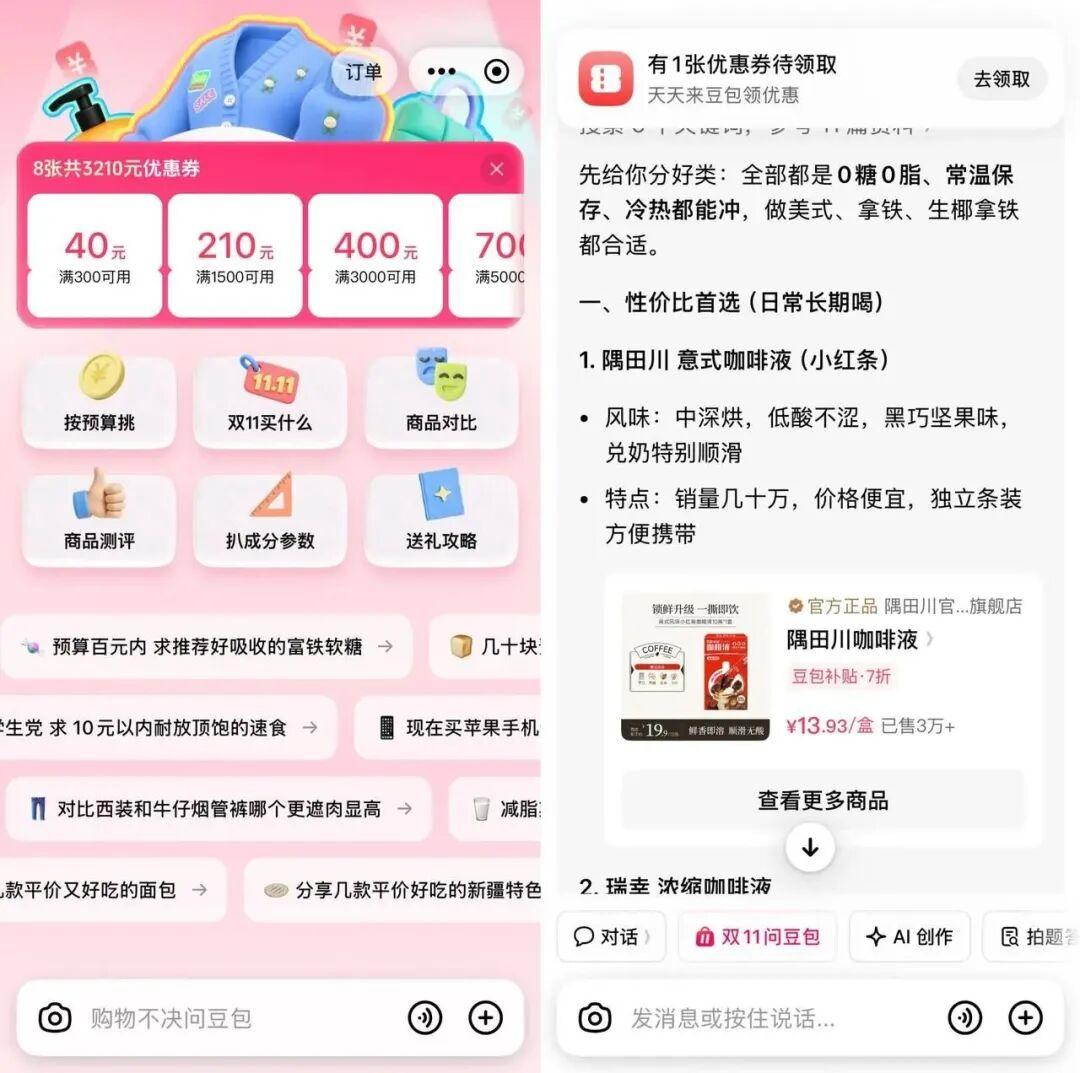
体验上,一条完整链路是这样的:用户说需求,AI拆条件(比如预算、场景、给谁买、忌讳什么),AI去商品库检索,给出两三个方案和推荐理由并附商品卡,用户领券、站内付款。

有开发者测算,在豆包内从对话到下单,和传统的搜索、比价再下单相比,时间更短,效率更高。也有媒体报道称,4月以来,通过豆包点击商品卡并看完详情页的转化率超过3%,已经高于信息流广告的均值。

今年双11,用户侧上线“双11问豆包”,它可以帮用户按预算挑商品,实现成分参数、商品对比等等;回答里还内嵌正在直播的店铺,用户点进去就能直接下单。相当于AI管推荐,直播间管临门一脚的成交。

而且豆包还有专属的“惊喜补贴券”。买一款咖啡液,豆包有“7折券”到手13.93元,同店同款在抖音商城直接买却需要19.9元。
图片

商家侧,抖店后台开了“豆包运营”专区,让商家可以独立查看豆包订单的经营数据(曝光量、点击量、转化率、成交金额、订单数、客单价及退款金额等指标)和商机词(豆包“大家都在问”汇总用户高频购物需求,呈现热度较高、供给相对不足的品类和关键词)。过去较难单独衡量的AI对话流量,由此成为可以独立核算的经营渠道,也标志着豆包作为一个“渠道”成熟的开始。

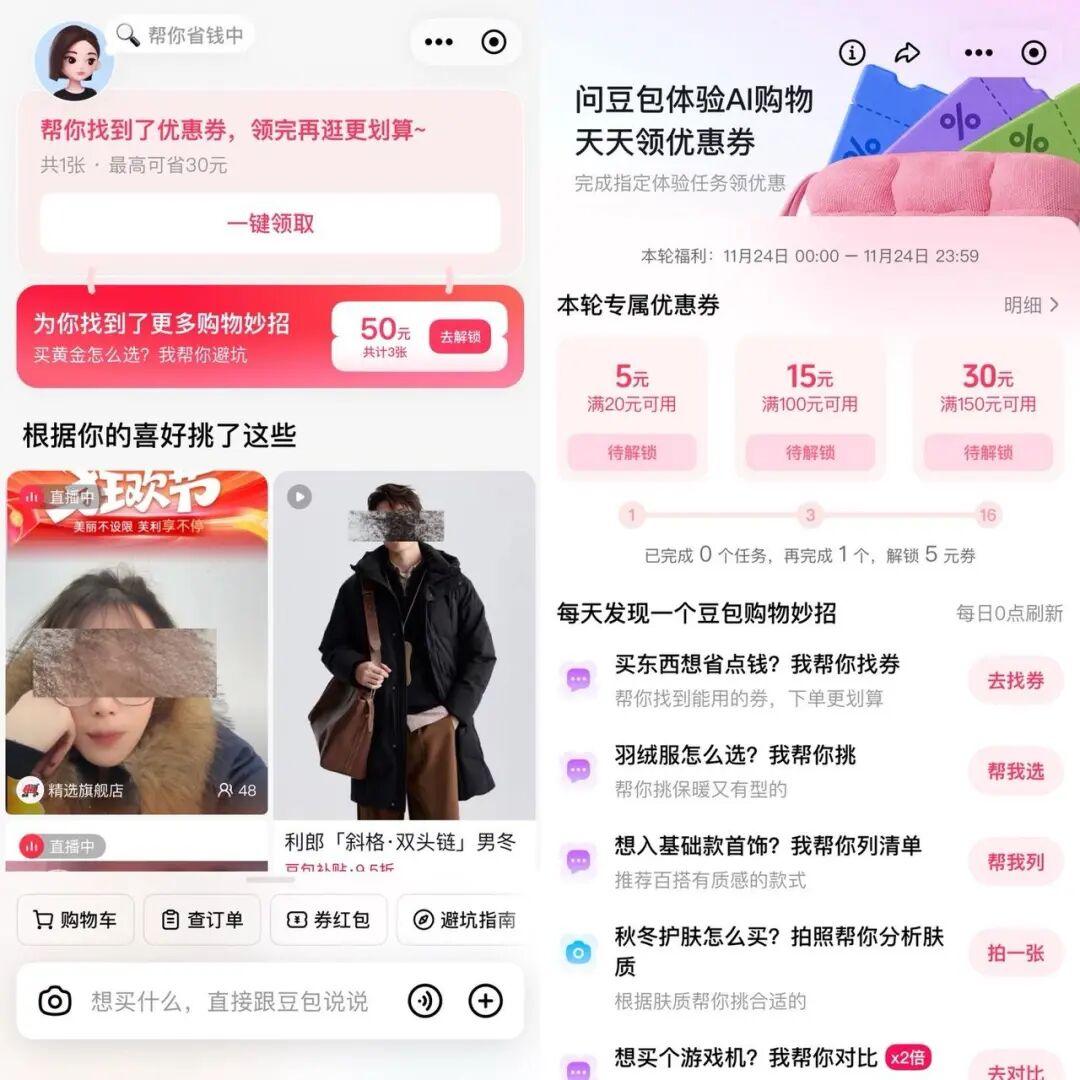
最近几天,豆包App内上线了专门的“豆包购物”功能,位于导航栏中,与新对话、新工作任务并列。该模块内,豆包会根据用户喜好推荐商品,呈现形式包括直播间、商品卡等。价格上,既有额外折扣9.5折,还能通过做任务领券,如主动发起有关购物需求的对话、拍照上传皮肤照片等。
图片

但其实,豆包的快速行动也还算克制。到今天,豆包仍然只是“推荐”,不是“代办”,搜索、对比、领券、付款每一步还得用户自己点。

毕竟,消费者也未必那么信任AI。上海市消保委《2026年618网购体验消费者调查报告》:84.56%的消费者尝试过AI选购,仅16.06%认为能精准匹配需求,38.79%反馈AI优先推送高价商品。

商家的AI账怎么算?

全网都在传,“豆包抽10%高佣”,商家圈里一片沸腾。这话不算错,但并不完整。

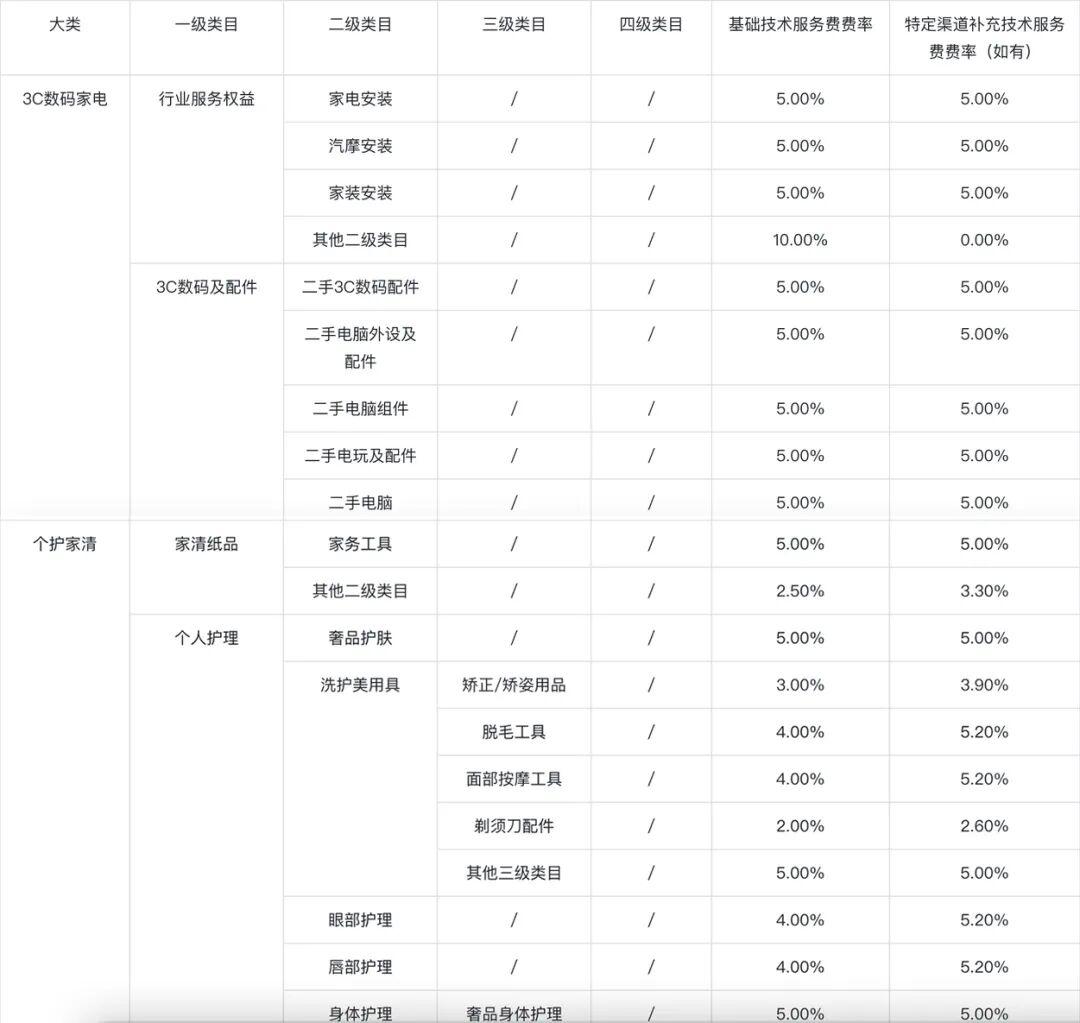
抖音电商的技术服务费分两段:基础技术服务费,加特定渠道补充技术服务费,豆包和抖音商城App同属“特定渠道”。

以服饰内衣、3C数码配件、母婴宠物这类基础费率5%的类目为例,5%加补充费率5%,合计约10%。但食品饮料、滋补保健这类基础费率只有1%-3%,叠加后不到10%。
图片

本地生活是另一套账。

比如,酒店类订单是“软件服务费11.4%+支付手续费0.6%”,总共12%抽佣。其他服务订单费率根据品类也不一样,比如孕产护理类17.4%+0.6%,家居家装类11.4%+0.6%,教育培训类13.4%+0.6%,休闲娱乐类9.4%+0.6%,运动健身类8.4%+0.6%。

相比之下,孕产护理、教育培训、休闲娱乐、运动健身等多个生活服务团购类目,通过豆包渠道下单的费率,普遍比抖音主站高出约4个百分点。

整体算下来,豆包渠道的实际抽佣高于主站订单的。只是,这份“溢价”凭什么存在?

第一,区分订单本身就会产生运营成本。过去豆包带来的订单会按照抖音自然流量订单结算,现在要把AI带来的订单,与信息流带来的订单区分开来,涉及到的识别、结算、对账,本身会产生新增的运营成本。

第二,补贴成本得有人负担。双11豆包渠道的券是混资的:商家出资1%到5%,平台补1%到10%,最高优惠金额700元。用户在豆包看到的7折(惊喜补贴券),是平台在C端付出的成本,终究要在B端找回来,渠道技术服务费就是一个回收口。

第二,“卖曝光”和“卖成交”的价值不同。传统电商卖曝光,广告只负责让人看到;豆包是卖成交,只有产生订单才收费。卖确定的交易结果,与卖不确定的曝光,本身价值就不同。
图片

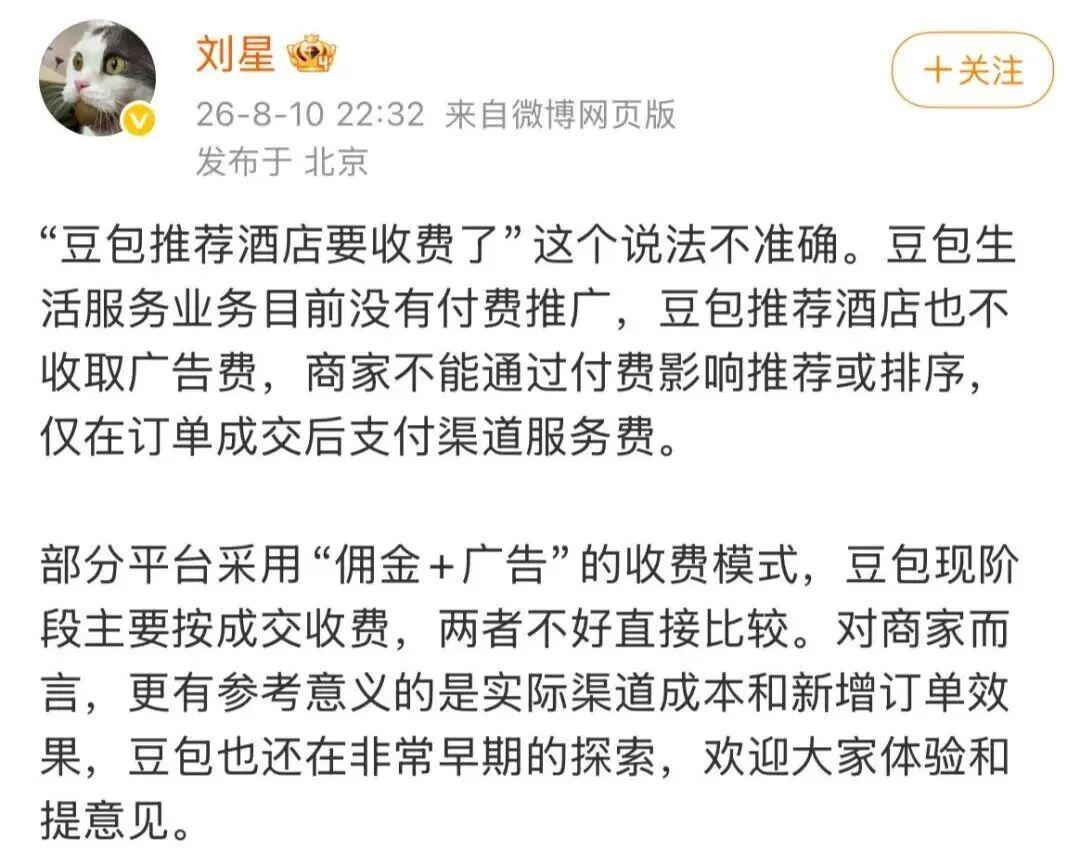
豆包公关负责人刘星在微博上的发言

第四,成本结构不一样。传统电商多开一个广告位,边际成本几乎是零;AI多接一次对话,就多一次推理,token消耗是笔庞大开销,边际成本降不下来。火山引擎总裁谭待曾透露,豆包的模型日均token调用量今年6月已破180万亿,一年涨了十倍以上。所以豆包收取补充渠道费,实际是也是在分摊“对话”本身产生的庞大开支。

综合商家和多位行业人士的观点,对于哪些品类更容易在豆包渠道内“跑得动”,眼下的共识是3C数码、家电、母婴用品、健康食品先跑通。

一方面,这部分品类毛利相对更高、选购有一定的专业性门槛;另一方面,豆包用户偏女性、中高消费,这些品类消费更符合用户画像。

不过也有服务商指出,“品类是否为标品”并不是在豆包里跑不跑得动的唯一标准。相对来说,“这个购买决策能不能被一句‘人话’问出来”更重要。

福建德化“月记窑”白瓷是非标品,但今年夏天成交额同比增长约677%,只因为它被装进了“送长辈什么茶具比较有质感”这个可以被语言描述的场景。上述人士表示,越“问得出来”的生意,越适合AI渠道。

先补C端,再请B端进场

回过头看,豆包电商双11做了什么?

先用补贴买第一次,把价格压到比抖音商城更低。用户不需要理解AI,只需要知道这里便宜。再用规模换利润,单量起来后,用渠道费把B端请进场。8月本地生活先收费,9月电商零售业务跟上。

如此一来,商家不是被“说服”进来的,是在结算单上发现这是一门生意,又或者发现他的目标客户都在豆包上买东西了,才主动选择跟进的。

这条路,滴滴走过。

2014年初的那场补贴大战,乘客端返现、司机端奖励,双方对着烧。补贴停了之后,平台转向按订单抽成。这条逻辑是:先让用户养成“在手机上叫车”的消费习惯,再向供给侧(司机/订单)收费。

豆包这一年几乎是同一个剧本,只是快太多——交易跑通四个月就开始单列渠道费。可当年滴滴用两年培养起来的用户习惯,今天只用四个月,真的够吗?

换个角度看,二者用户的消费逻辑也有不同。人们打车,从A到B,是已有的、固定的、显性的需求,而豆包购物,面对的可能是隐性需求,比如我双11想买点东西,但不知道买什么,也有可能是我想买个相机,但不知道买哪个品牌、哪一款产品。

还有一层更本质的差别:滴滴有双边网络效应,司机越多,等车时间越短,乘客越多,司机又越多,平台补贴能把飞轮“推”起来。但在豆包电商里,推动飞轮的不是供给和用户的增量,而是豆包能不能更理解用户,把推荐变得更让人更满意,而这,不是靠某些业务动作就能推动的。

当然,短期来看,“先补C端、再收B端”在豆包电商能成立,是因为字节不需要重新自建基建。商品、支付、履约、售后、直播间,全都被抖音电商做完了,豆包只需要打通即可。相比友商(千问×淘宝、元宝×京东、京东AI购等),豆包用户量更大(4.19亿),且有丰富的兴趣内容数据,为精准推荐打好快速崛起的基石。

但快,不等于稳。

第一,购物不是豆包的主场景。大部分用户打开豆包,并不是直接冲着购物去的,而是把它当搜索引擎用,当聊天工具用。现在把豆包完全定义为一个购物入口还为时尚早,但足够撑起一个新渠道的试验。

第二,规模还小。公开数据显示,2026年上半年豆包日均电商GMV约1000万,618期间约1亿。而抖音电商半年的交易有2.4万亿元,豆包的盘子还占不到其中的0.2%。

第三,中立性会被一直追问。作为AI推荐购物,它绑定自有电商渠道、依托佣金变现,推荐逻辑不透明,用户很难分清推荐是基于商品本身优劣,还是出于商业收益的考量。

或许,豆包会在双11里拿到一个好看的数字。但真正的答案不在双11,在双11之后的某一天——那天没有券,用户还会不会打开那个对话框。
图片

识别上方二维码,查看更多双11最新内容

亿邦持续追踪报道该情报,如想了解更多与本文相关信息,请扫码关注作者微信。

本文首发于 亿邦动力 官方网站

【版权提示】亿邦动力倡导尊重与保护知识产权。未经许可,任何人不得复制、转载、或以其他方式使用本网站的内容。如发现本站文章存在版权问题,烦请提供版权疑问、身份证明、版权证明、联系方式等发邮件至run@ebrun.com,我们将及时沟通与处理。

已点赞

+1

{{ praise_text }}

好文章,值得被更多人看到

FAQ回顾

豆包电商渠道的抽佣比例是多少?

抖音电商技术服务费由基础技术服务费和特定渠道补充技术服务费组成。服饰内衣、3C数码配件、母婴宠物等基础费率5%的类目,叠加5%补充费率后合计约10%;食品饮料、滋补保健基础费率1%-3%,叠加后不到10%。本地生活酒店类为软件服务费11.4%加支付手续费0.6%,合计12%。

双11期间豆包购物的补贴券力度如何?

豆包提供专属“惊喜补贴券”,例如咖啡液7折券到手13.93元,同店同款在抖音商城直接买为19.9元;豆包购物还有额外9.5折,并可通过做任务领券。双11豆包渠道券为混资,商家出资1%到5%,平台补1%到10%,最高优惠金额700元。

哪些品类更适合通过豆包电商成交?

当前共识是3C数码、家电、母婴用品、健康食品更容易在豆包渠道跑通,这些品类毛利相对更高、选购有专业门槛,且豆包用户偏女性、中高消费。非标品也可跑通,福建德化“月记窑”白瓷今年夏天成交额同比增长约677%,因为“送长辈什么茶具比较有质感”这类场景能被一句人话问出来。

豆包电商与抖音商城订单在经营上有什么区别?

豆包订单可在抖店后台“豆包运营”专区独立查看曝光、点击、转化率、成交金额、订单数、客单价和退款金额等;豆包被列为独立成交渠道并执行独立费率,结算单会多出“特定渠道补充技术服务费”,实际抽佣高于主站。豆包还有专属补贴券,但搜索、对比、领券、付款仍需用户自己操作。

豆包电商目前的交易规模有多大?

公开数据显示,2026年上半年豆包日均电商GMV约1000万元,618期间约1亿元;同期抖音电商半年交易额2.4万亿元,豆包占比不到0.2%。今年双11豆包电商未公布具体战绩,亿邦调研显示不同商家单店豆包订单占比从零到百分之十几,没有明显均值。

广告

下一篇

征集报名《品牌数字化服务商资源手册》

《品牌数字化服务商资源手册》展示数字化服务商风采,亿邦全年零售大会通发,触达更多资源,马上加入!

马上入驻

Q3利润承压 “申诉优赔“日均补偿商家超千万元 拼多多商家服务再升级

拼多多正在经历一段增长放缓期。11月19日,拼多多发布2026年第三季度财报。第三季度,公司实现营收1083.41亿元,同比增长0.1%,基本与去年同期持平

拼多多 电商平台 未来零售

2026-11-24 16:24:56