• 亿邦公众号
    • APP下载

千峰访谈灵犀科技姜琳杰:企业AI落地路径与模态进化的关键是从“工具”到“业务大脑”

作者:亿邦动力 文章来源:亿邦动力

2026-11-18 17:44

作者:亿邦动力 文章来源:亿邦动力

2026-11-18 17:44

邦小白快读
EN
全文速览

总1 企业AI落地核心路径

1. 灵犀把企业AI从工具层推向决策层,定位企业级AI决策基础设施和认知智能平台,以本体为核心建企业专属认知中枢,形成理解—决策—执行—进化闭环。

2. 落地路径是一个底座、三层数据、多场景智能体;三层数据为企业内部经营数据、产业与区域外部数据、FDE提取的个体隐性知识,经本体统一建模,让推理基于企业事实、产业情境和人的经验。

总2 可借鉴实操与风险

1. 核心应用包括慧金派银行对公获客尽调、产业智脑产业链图谱与供应链风险预警招商诊断、合同审查智能体输出交易对手经营与合同执行风险、制造业供应链情报预警与韧性决策、投资研判与投后管理。

2. 邮储银行青岛分行案例覆盖10家支行、260余个网点、800余名员工,用平台+模型+数据+报告把对公拓客升级为产业链主动授信,2025年中标智能营销系统2.0并打造资金一点通。

3. 瓶颈是共识缺失、大模型与本体协同门槛、复合人才稀缺;可信大脑要求可理解、可追溯、可验证、可进化。未来两年主线是大模型与本体深度融合、金融投资制造能源交通纵深落地。

总1 品牌定位与差异化

1. 灵犀不把自己定位为卖AI能力的厂商,而是企业级AI决策基础设施提供者和认知智能平台构建者,核心主张是企业AI从工具层进入决策层,为企业建脑立心。

2. 差异化锚点在本体:传统知识图谱静态描述事实,灵犀本体动态具备行动能力、规则层面认知系统,统一业务语义、约束推理边界,并通过建模—执行—回流—优化闭环把个体经验沉淀为组织共性知识。

总2 产品研发、定价与用户洞察

1. 产品研发走一个底座、三层数据、多场景智能体,已跑通慧金派、产业智脑、合同审查智能体、制造业供应链情报预警与韧性决策、投资研判与投后管理。

2. 定价不按token和调用量线性放大,而按智能体嵌入业务流后的业务结果定价;合同智能体从回答合规转向判断对手方执行风险和交易该不该做,价值锚点变为避免损失、促成交易。

3. 用户行为上,多数企业认同AI重要却处战略迷失阶段,缺可复制落地路径;品牌渠道应嵌入企业业务流,FDE应由深谙行业本质的业务专家发起,落脚业务流而非工作流。

总1 市场机会与可学习商业模式

1. 增长市场在金融投资、制造、能源与交通等规则密集、事实约束强、错误成本高的场景;应用机会包括银行对公智能获客尽调、产业链图谱与供应链风险预警、招商诊断、合同交易风险判断、制造业供应链韧性决策、投资研判与投后管理。

2. 可学习的最新商业模式是把专属智能体嵌入企业业务流、按业务结果获取回报,盈利从软件订阅和项目交付向结果绑定迁移;但前提是本体足够深、行业知识足够厚,否则按结果计费会变成不可控风险。

总2 风险提示与合作方式

1. 风险包括企业AI共识缺失、缺统一方法论,大模型与本体协同存在技术融合门槛,既懂业务流又能驾驭AI的复合人才稀缺,跨主体数据语义对齐成本高,行业级数据可用性和时效性参差不齐,隐性知识显性化是最后一公里难点。

2. 合作可参考平台+模型+数据+报告组合、FDE由业务专家发起并落脚业务流、联合中科院攻关规则选择逻辑;卖家应先在本体层做深专属能力,再在应用层探索与业务价值挂钩的收费结构。

总1 制造场景的产品与商业机会

1. 文章明确面向制造业有供应链情报预警与韧性决策产品,应用层未来在制造领域纵深落地;制造场景规则密集、事实约束强、错误成本高,适合用本体建立确定性边界。

2. AI原生组织不是在核心业务中替代人,而是让AI深度嵌入工作流与业务流关键环节承担决策执行;融资匹配、供应链预警、研发设计等只要产生可衡量价值,就具备AI原生属性。

总2 数字化推进启示

1. 数字化不是把文档塞进向量库,而是通过本体把显性知识、行业知识与隐性经验结构化为可推理认知层,实现用一个智能体指挥一群智能体承载业务。

2. 数据要三层贯通:企业内部经营数据提供事实基底,产业与区域外部数据提供情境,FDE提取个体经验提供判断逻辑,三者在本体交汇形成可迭代可追溯认知资产。

3. 落地可借鉴建模—执行—回流—优化闭环,让每次决策结果回流本体,个体经验沉淀为组织共性知识;同时关注共识缺失、技术融合门槛、复合人才稀缺和数据语义对齐成本。

总1 行业趋势与新技术

1. 趋势判断是企业AI从工具层进入决策层,产业互联网盈利模式从软件订阅和项目交付向结果绑定迁移,AI原生组织强调AI嵌入工作流与业务流承担决策执行。

2. 新技术核心是本体,区别于静态描述事实的传统知识图谱,本体是动态、具备行动能力、规则层面的认知系统,是企业认知的操作系统;未来主攻大模型与本体深度融合、信源采信机制和推理可解释性。

总2 客户痛点与解决方案

1. 客户痛点包括战略迷失缺可复制路径、行业缺统一落地方法论、大模型与本体协同门槛高、复合型人才稀缺、跨主体数据语义对齐成本高、行业数据可用性与时效性参差、隐性知识显性化难、规则选择逻辑尚未打通。

2. 解决方案是一个底座、三层数据、多场景智能体:三层数据为企业内部经营数据、产业与区域外部数据、FDE提取的个体隐性知识;已跑通慧金派、产业智脑、合同审查智能体、制造业供应链情报预警与韧性决策等;并用可理解、可追溯、可验证、可进化四标准构建可信企业大脑。

总1 平台需求与最新做法

1. 企业侧需求是获得可复制的AI落地路径和统一方法论,把AI从工具层嵌入决策层;灵犀以企业级AI决策基础设施和认知智能平台为定位,用本体作为企业专属认知中枢,向上承接大模型理解生成,向下约束企业规则与事实边界,向外连接产业链、区域与金融数据。

2. 平台做法是一个底座、三层数据、多场景智能体,并通过建模—执行—回流—优化闭环把个体经验沉淀为组织共性知识;FDE不由大厂销售导向团队主导,而由深谙行业本质的业务专家发起,落脚业务流而非工作流。

总2 运营管理、生态合作与风向规避

1. 运营管理强调可信企业大脑四标准:可理解、可追溯、可验证、可进化;信源采信机制决定用哪条事实,推理可解释性决定为什么用这条规则,后者是当前攻关核心前沿。

2. 生态合作可连接产业链、区域与金融数据,采用平台+模型+数据+报告组合,联合中科院等攻关规则选择逻辑;招商与市场风向可关注金融投资、制造、能源与交通等规则密集场景。

3. 风险需规避共识缺失、技术融合门槛、复合人才稀缺、跨主体数据语义对齐成本高、行业数据时效性差、隐性知识显性化难,以及在本体不深时贸然按结果计费带来的不可控风险。

总1 产业新动向与商业模式

1. 新动向是企业AI从工具层进入决策层,模态进化不在模型参数或应用形态迭代,而在底层转折;灵犀提出本体作为企业认知操作系统,AI原生组织以AI在核心业务中产生可衡量价值为标志。

2. 商业模式从软件订阅和项目交付向结果绑定迁移,智能体嵌入业务流后按业务结果定价;合同智能体例证价值锚点从调用次数转向避免损失、促成交易,但迁移前提是本体深、行业知识厚。

总2 新问题与政策法规启示

1. 新问题包括行业缺统一落地方法论和企业战略迷失,大模型与本体协同的技术融合门槛,复合型人才稀缺,跨主体数据语义对齐成本高,行业级数据可用性与时效性参差,隐性知识显性化最后一公里,以及大模型没有选择规则的规则这一根本问题。

2. 启示是建立可理解、可追溯、可验证、可进化的可信企业大脑标准,用信源采信机制选择权威信源并赋予权重,用推理可解释性说明规则选择;数据要素需企业、产业链、区域产业带三层贯通;FDE在中国语境应由业务专家发起、落脚业务流;可联合中科院攻关规则选择逻辑。

声明:快读内容全程由AI生成,请注意甄别信息。如您发现问题,请发送邮件至 run@ebrun.com 。

我是 品牌商 卖家 工厂 服务商 平台商 研究者 帮我再读一遍。

Quick Summary

Summary 1: Core path for enterprise AI implementation

1. Lingxi moves enterprise AI from the tool layer to the decision layer. It positions itself as enterprise-grade AI decision infrastructure and a cognitive intelligence platform, builds an enterprise-specific cognitive hub around ontology, and forms a closed loop of understanding, decision, execution, and evolution.

2. The implementation path is one foundation, three data layers, and multi-scenario agents. The three data layers are internal operating data, external industry and regional data, and individual tacit knowledge extracted by FDE. Unified ontology modeling lets reasoning rest on enterprise facts, industry context, and human experience.

Summary 2: Practical references and risks

1. Core applications include Huijinpai bank corporate client acquisition and due diligence; Industrial Brain for industrial chain mapping, supply chain risk alerts, and investment promotion diagnostics; a contract review agent that outputs counterparty operational and contract execution risk; manufacturing supply chain intelligence alerts and resilience decisions; and investment assessment and post-investment management.

2. The Postal Savings Bank of China Qingdao Branch case covers 10 branches, more than 260 outlets, and more than 800 employees. Using a platform plus models, data, and reports, it upgrades corporate client acquisition to proactive credit based on the industrial chain. In 2025 it won the bid for Intelligent Marketing System 2.0 and built Zijin Yidiantong.

3. Bottlenecks are missing consensus, the threshold for LLM-ontology collaboration, and a shortage of hybrid talent. A trustworthy brain must be understandable, traceable, verifiable, and evolvable. Over the next two years, the main themes are deep integration of LLMs and ontology and deeper implementation in finance, investment, manufacturing, energy, and transportation.

Summary 1: Brand positioning and differentiation

1. Lingxi does not position itself as a vendor selling AI capabilities. It positions itself as a provider of enterprise-grade AI decision infrastructure and a builder of a cognitive intelligence platform. Its core proposition is that enterprise AI moves from the tool layer into the decision layer, building an enterprise brain and establishing its core.

2. Differentiation is anchored in ontology. Traditional knowledge graphs statically describe facts. Lingxi's ontology is dynamic, action-capable, and a rule-level cognitive system. It unifies business semantics and constrains reasoning boundaries. Through a modeling-execution-feedback-optimization loop, it turns individual experience into organizational shared knowledge.

Summary 2: Product R&D, pricing, and user insight

1. Product R&D follows one foundation, three data layers, and multi-scenario agents. It has validated Huijinpai, Industrial Brain, the contract review agent, manufacturing supply chain intelligence alerts and resilience decisions, and investment assessment and post-investment management.

2. Pricing is not scaled linearly by tokens or call volume. It is priced by business outcomes after agents are embedded in business flows. The contract agent shifts from answering compliance questions to judging counterparty execution risk and whether a transaction should be done. The value anchor becomes avoiding losses and facilitating transactions.

3. In user behavior, most enterprises recognize that AI matters but are strategically lost and lack a replicable implementation path. Brand channels should be embedded in enterprise business flows. FDE should be initiated by business experts who understand the industry essence, and should be anchored in business flows rather than workflows.

Summary 1: Market opportunity and learnable business models

1. Growth markets are rule-intensive, fact-constrained, high-error-cost scenarios in finance and investment, manufacturing, energy, and transportation. Application opportunities include intelligent corporate client acquisition and due diligence for banks, industrial chain mapping and supply chain risk alerts, investment promotion diagnostics, contract transaction risk judgment, manufacturing supply chain resilience decisions, and investment assessment and post-investment management.

2. The latest learnable business model is to embed dedicated agents in enterprise business flows and earn returns based on business outcomes. Profitability shifts from software subscriptions and project delivery toward outcome-linked billing. The prerequisite is that the ontology is deep enough and industry knowledge thick enough; otherwise outcome-based billing becomes an uncontrollable risk.

Summary 2: Risk warnings and cooperation approaches

1. Risks include missing consensus on enterprise AI and the lack of a unified methodology; a technical integration threshold in LLM-ontology collaboration; a shortage of hybrid talent who understand both business flows and AI; high cost of cross-party data semantic alignment; uneven availability and timeliness of industry-level data; and the last-mile difficulty of externalizing tacit knowledge.

2. Cooperation can reference a platform plus models, data, and reports; FDE initiated by business experts and anchored in business flows; and joint work with the Chinese Academy of Sciences on rule-selection logic. Sellers should first deepen dedicated capabilities at the ontology layer, then explore business-value-linked charging structures at the application layer.

Summary 1: Products and commercial opportunities in manufacturing

1. The article explicitly covers supply chain intelligence alerts and resilience decisions for manufacturing. The application layer will deepen in manufacturing. Manufacturing scenarios are rule-intensive, fact-constrained, and high-error-cost, making them suitable for using ontology to establish deterministic boundaries.

2. AI-native organizations do not replace people in core business. Instead, they embed AI deeply in key links of workflows and business flows to undertake decision execution. As long as financing matching, supply chain alerts, and R&D design generate measurable value, they have AI-native attributes.

Summary 2: Implications for digitalization

1. Digitalization is not putting documents into a vector database. It uses ontology to structure explicit knowledge, industry knowledge, and tacit experience into a reasoning-capable cognitive layer, so that one agent can orchestrate a group of agents to execute business.

2. Data must connect three layers: internal operating data provides the factual base; external industry and regional data provides context; FDE-extracted individual experience provides judgment logic. The three converge in the ontology to form iterative, traceable cognitive assets.

3. Implementation can use the modeling-execution-feedback-optimization loop, feeding every decision result back into the ontology and turning individual experience into organizational shared knowledge. At the same time, watch for missing consensus, the technical integration threshold, scarce hybrid talent, and the cost of data semantic alignment.

Summary 1: Industry trends and new technology

1. The trend is that enterprise AI moves from the tool layer to the decision layer. The industrial internet profit model shifts from software subscriptions and project delivery toward outcome-linked billing. AI-native organizations emphasize AI embedded in workflows and business flows to undertake decision execution.

2. The core new technology is ontology. Unlike traditional knowledge graphs that statically describe facts, ontology is a dynamic, action-capable, rule-level cognitive system and an operating system for enterprise cognition. The future focus is deep integration of LLMs and ontology, source credibility mechanisms, and reasoning explainability.

Summary 2: Customer pain points and solutions

1. Customer pain points include strategic disorientation and the lack of a replicable path; the industry lacks a unified implementation methodology; the high threshold for LLM-ontology collaboration; scarce hybrid talent; high cost of cross-party data semantic alignment; uneven availability and timeliness of industry data; the difficulty of externalizing tacit knowledge; and rule-selection logic that has not yet been cracked.

2. The solution is one foundation, three data layers, and multi-scenario agents. The three data layers are internal operating data, external industry and regional data, and individual tacit knowledge extracted by FDE. It has validated Huijinpai, Industrial Brain, the contract review agent, and manufacturing supply chain intelligence alerts and resilience decisions. It uses four standards understandable, traceable, verifiable, and evolvable to build a trustworthy enterprise brain.

Summary 1: Platform demand and latest practices

1. Enterprise demand is for a replicable AI implementation path and a unified methodology that embeds AI from the tool layer into the decision layer. Lingxi positions itself as enterprise-grade AI decision infrastructure and a cognitive intelligence platform. It uses ontology as an enterprise-specific cognitive hub that connects upward to LLM understanding and generation, downward to enterprise rules and fact boundaries, and outward to industrial chain, regional, and financial data.

2. The platform approach is one foundation, three data layers, and multi-scenario agents. Through a modeling-execution-feedback-optimization loop, it turns individual experience into organizational shared knowledge. FDE is not led by a sales-oriented team from a large tech company; it is initiated by business experts with deep industry understanding and anchored in business flows rather than workflows.

Summary 2: Operations, ecosystem cooperation, and risk avoidance

1. Operations management emphasizes four standards for a trustworthy enterprise brain: understandable, traceable, verifiable, and evolvable. The source credibility mechanism determines which fact to use. Reasoning explainability determines why this rule is used. The latter is the core frontier being tackled now.

2. Ecosystem cooperation can connect industrial chain, regional, and financial data; use a platform plus models, data, and reports; and work with the Chinese Academy of Sciences and others on rule-selection logic. Investment promotion and market direction should focus on rule-intensive scenarios such as finance and investment, manufacturing, energy, and transportation.

3. Risks to avoid include missing consensus, the technical integration threshold, scarce hybrid talent, high cost of cross-party data semantic alignment, poor timeliness of industry data, difficulty in externalizing tacit knowledge, and the uncontrollable risk of premature outcome-based billing when the ontology is not deep enough.

Summary 1: New industry directions and business models

1. The new direction is that enterprise AI moves from the tool layer to the decision layer. The evolution is not about iterating model parameters or application forms; it is a shift at the underlying layer. Lingxi proposes ontology as an enterprise cognitive operating system. AI-native organizations are defined by AI generating measurable value in core business.

2. The business model shifts from software subscriptions and project delivery toward outcome-linked billing. Agents embedded in business flows are priced by business outcomes. The contract agent example shows the value anchor shifting from call volume to avoiding losses and facilitating transactions. The prerequisite for this shift is deep ontology and thick industry knowledge.

Summary 2: New problems and policy and regulatory implications

1. New problems include the industry's lack of a unified implementation methodology and enterprises' strategic disorientation; the technical integration threshold for LLM-ontology collaboration; scarce hybrid talent; high cost of cross-party data semantic alignment; uneven availability and timeliness of industry-level data; the last-mile challenge of externalizing tacit knowledge; and the fundamental problem that LLMs lack a rule for selecting rules.

2. Implications are to establish standards for a trustworthy enterprise brain that is understandable, traceable, verifiable, and evolvable; use a source credibility mechanism to select authoritative sources and assign weights; use reasoning explainability to explain rule selection; connect data elements across three layers: enterprises, industrial chains, and regional industrial belts; ensure FDE in the Chinese context is initiated by business experts and anchored in business flows; and work with the Chinese Academy of Sciences to tackle rule-selection logic.

Disclaimer: The "Quick Summary" content is entirely generated by AI. Please exercise discretion when interpreting the information. For issues or corrections, please email run@ebrun.com .

I am a Brand Seller Factory Service Provider Marketplace Seller Researcher Read it again.

【亿邦原创】亿邦:本届千峰奖以“AI与出海带来的模态进化”为核心主题。您如何解读这一轮由AI驱动的产业模态进化?灵犀科技的核心战略布局与业务定位是什么?
姜琳杰:灵犀科技对“模态进化”的判断,并不落在模型参数或应用形态的迭代上,而是落在一个更底层的转折:企业AI正在从“工具层”进入“决策层”。

有一个清晰的判断:企业AI应用正处在“爆发期”的前夜,但多数企业仍停留在“战略迷失阶段”——认同AI重要,却没有可复制的落地路径。真正的分水岭,不是谁先用上了大模型,而是谁先把AI嵌入企业的认知结构之中。

基于这一判断,灵犀科技将自身定位为企业级AI决策基础设施的提供者和认知智能平台的构建者。公司依托奇点控股旗下商业AI底座,以“本体”为核心,打造企业专属的认知中枢:向上承接大模型的理解与生成能力,向下约束AI在企业规则与事实边界内推理,向外连接产业链、区域与金融数据,最终形成“理解—决策—执行—进化”的闭环。这一战略的实质,是把AI从“通用能力的调用者”改造为“企业立场的承载者”——用灵犀内部的话说,就是为企业“建脑立心”。

亿邦:灵犀在哪些核心业务环节落地了AI/本体/智能体技术?形成了哪些特色应用?

姜琳杰:灵犀的落地路径可以概括为“一个底座、三层数据、多场景智能体”。三层数据是:企业内部经营数据、产业与区域外部数据、以FDE方式提取的个体隐性知识。三者通过本体统一建模,使AI的推理始终建立在“企业事实+产业情境+人的经验”之上,而非仅依赖大模型的参数记忆。

在此之上,已跑通的核心应用包括:慧金派,面向银行对公获客与尽调,提供智能圈客、客户精挑、专业营销、尽调提报等对公展业全流程的赋能,同时能结合客户经理下户流程提供任务指引、话术提示与反馈回流,提升企业初筛效率和客户转化率;产业智脑,覆盖产业链图谱、供应链风险预警与招商诊断;合同审查智能体,区别于仅做合规审查的传统工具,直接输出交易对手的经营状况与合同执行风险判断,带有业务判断与分析能力;以及面向制造业的供应链情报预警与韧性决策产品,面向投资机构的投资研判与投后管理产品等。这些应用的共同特征在于:它们都不是“通用能力的展示”,而是被本体的规则与语义约束过的专属智能体。

亿邦:灵犀所说的“本体”与传统知识图谱的根本区别是什么?“AI原生组织”在灵犀的定义中意味着什么?

姜琳杰:传统知识图谱是静态的、描述性的、事实层面的;灵犀的本体是动态的、具备行动能力(Action)的、规则层面的认知系统。它不仅统一业务语义、约束推理边界,还能通过“建模—执行—回流—优化”的闭环,把每一次决策的结果回流到本体中,使个体经验逐步沉淀为组织共性知识。本体不是“知识的仓库”,而是“企业认知的操作系统”。

灵犀并不把“AI原生组织”理解为由AI替代人,而是指AI深度嵌入工作流与业务流的关键环节,承担决策与执行职能。只要AI能在融资匹配、供应链预警、研发设计等核心业务中产生可衡量的价值,这个组织就已经具备AI原生属性。其本质,是让AI成为企业运营的“业务大脑”,而不是外挂的效率工具。

亿邦:请分享一个代表性的“AI+价值链”创新实践案例。是否有可量化的价值?

姜琳杰:邮储银行青岛分行是灵犀本体能力在金融场景中跑得最完整的标杆案例。合作覆盖青岛分行辖区10家支行、260余个网点、800余名员工,核心命题不是“做一个AI功能”,而是把银行对公拓客从“走街串巷”的点状模式,升级为基于产业链的主动授信模式。

灵犀以“平台+模型+数据+报告”的组合,为邮储输出了几个关键能力:基于重点产业链与企业评价模型筛选优质客户;基于风控指标、银行产品与客户动态特征定制拓客名单;贷中辅助主动授信,贷后实时监测企业百余项风险动态。更具标志性的是2025年中标邮储银行青岛分行智能营销系统2.0升级项目,打造“资金一点通”产品——以“金融垂类模型+企业大数据”实现从核心企业(链主)出发,智能输出上下游供应商与客户清单,让银行“沿着产业链有方向地拓客”,而不是在散落的企业名单中碰运气。这一案例的价值不在于单点效率提升,而在于证明了:当本体把产业数据、企业画像与银行规则对齐之后,AI可以真正参与“贷给谁、怎么贷、什么时候预警”的业务判断,而不仅是生成一份报告。

亿邦:数据要素在灵犀的体系中扮演什么角色?更侧重自有数据深耕还是跨主体协同?

姜琳杰:灵犀的判断是:数据要素不是“原料”,而是本体能够运转的前提。如果只使用企业内部数据,AI看到的是一张不完整的经营图景;只有把企业数据、产业链数据与区域产业带数据三层贯通,本体才能支撑真实业务情境下的推理。

因此灵犀走的是一条“三层贯通”的路线:企业内部数据提供事实基底,产业与区域数据提供外部情境,FDE方式提取的个体经验提供判断逻辑。三者在本体中交汇,形成可迭代、可追溯的认知资产。挑战同样明显:跨主体数据的语义对齐成本高,行业级数据的可用性与时效性参差不齐,而隐性知识的显性化更是“最后一公里”中最难的一段。

亿邦:灵犀的盈利模式如何看待“按AI调用与结果计费”的趋势?灵犀如何看待自身在产业互联网盈利模式演变中的位置?

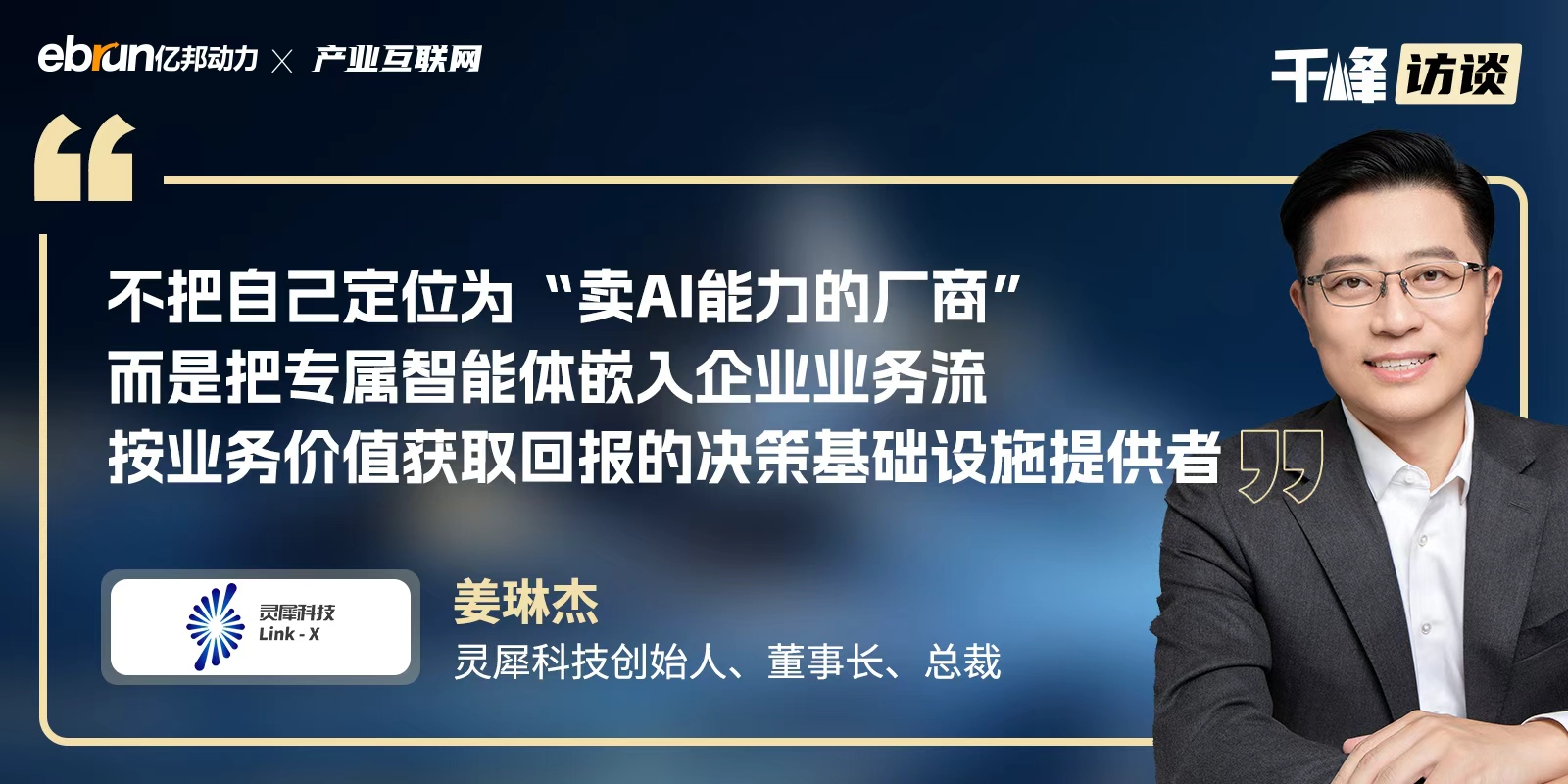
姜琳杰:灵犀不把自己定位为“卖AI能力的厂商”,而是把专属智能体嵌入企业业务流、按业务价值获取回报的决策基础设施提供者。盈利模式的进化,本质上是本体深度与行业理解厚度的变现,而不是调用量的线性放大。

灵犀当前的商业逻辑,不是把AI当成按token计价的“水电”,而是把智能体嵌入企业业务流后,按它创造的业务结果来定价。合同智能体是一个清晰的例证:如果只回答“合同是否合规”,它就是一个工具,按调用量收费合理;但当它要告诉用户“这家对手方的执行风险在哪里、这笔交易该不该做”时,它介入的是业务判断本身,价值锚点就从“用了多少次”转移到了“避免了多少损失、促成了多少交易”。

灵犀的预判是:产业互联网企业的盈利模式会从“软件订阅”和“项目交付”向“结果绑定”迁移,但这一迁移的前提是本体足够深、行业知识足够厚,否则“按结果计费”只会变成不可控的风险。灵犀的路径是先在本体层做深专属能力,再在应用层逐步探索与业务价值挂钩的收费结构。

亿邦:当前制约企业AI规模化落地的最大瓶颈是什么?

姜琳杰:灵犀将瓶颈拆为三个层次,其中第一层是共识缺失。行业缺乏关于“企业AI到底该怎么落地”的统一方法论,多数企业仍处在“意识阶段”——知道要做,但不知道从哪一步开始、做到什么程度算做成了。第二层是技术融合门槛:大模型与本体如何有效协同,使AI既有生成能力又不逸出企业规则,仍是高门槛挑战。第三层是复合型人才稀缺:真正既懂业务流、又能驾驭AI技术的专家团队极为有限。

这也直接指向灵犀对FDE(Forward Deployed Engineer)在中国语境的重新定义。灵犀认为,FDE不应由大厂的销售导向团队主导,而应由深谙行业本质的业务专家发起;其落脚点必须是“业务流”而非“工作流”——不是让审批更快、文档更漂亮,而是帮助企业把业务做得更好、营收更高、成本更低。FDE的核心任务,是让AI与业务流真正结合,而不是在流程表面做提效装饰。

亿邦:灵犀如何定义“可信企业大脑”的构建标准?

姜琳杰:四个标准:可理解、可追溯、可验证、可进化。每一步推理都有据可依,所有输出均可回溯至原始规则与数据;系统随企业经验积累而自我优化,既符合企业立场,又具备长期适应能力。灵犀同时强调双重保障:信源采信机制决定“用哪条事实”,推理可解释性决定“为什么用这条规则”——后者正是当前攻关的核心前沿。

亿邦:面向未来两年,灵犀在AI能力迭代上的重点投入方向是什么?

姜琳杰:灵犀未来两年的战略目标非常明确:为企业建脑立心。具体拆为两条主线。

第一条主线,是大模型与本体的深度融合。灵犀要解决的是“企业知识如何被AI真正拥有”的问题:不是把文档塞进向量库,而是通过本体把显性知识、行业知识与隐性经验结构化为可推理的认知层,最终实现“用一个智能体指挥一群智能体”来承载业务。第二条主线,是应用层在金融投资、制造、能源与交通等领域的纵深落地。这些领域的共同特征是规则密集、事实约束强、错误成本高,恰恰是本体能够发挥“确定性边界”价值的场景。

更前沿的投入,则指向“可信企业大脑”的底层机制。灵犀正在联合中科院等机构攻关一个根本性问题:规则的选择逻辑。大模型本身没有规则,也没有“选择规则的规则”。灵犀要在本体中明确标注每一步推理所依据的规则及其优先级,建立信源采信机制——面对不同问题,自动选择权威信源并赋予不同权重——从而使AI的输出不仅“有依据”,而且“依据的选择本身可解释、可追溯”。如果这一层不打通,即使使用了本体,也无法真正保证结果的可靠性。灵犀的目标,是让企业用户无需掌握复杂提示词,就能获得站在企业立场上、规则可验证的可信决策支持。

作为TO B领域年度风向标,“2026第八届亿邦产业互联网年会暨首届产业智能体大会”将于2026年11月20日在北京召开。主题定为“AI与出海带来的模态进化”,聚焦产业智能体落地、AI供应链价值重构、数据要素与TOKEN经济、产业出海新生态等前沿议题深度思辨。大会将集结学界权威、央国企标杆、产业龙头、投资机构、服务生态伙伴,汇聚产业核心力量、拆解产业数智化转型路径、分享前沿实战经验。同期还将发布年度产业互联网报告及标杆案例,举办决策人闭门会、“千峰奖”颁奖盛典。

本文首发于 亿邦动力 官方网站

【版权提示】亿邦动力倡导尊重与保护知识产权。未经许可,任何人不得复制、转载、或以其他方式使用本网站的内容。如发现本站文章存在版权问题,烦请提供版权疑问、身份证明、版权证明、联系方式等发邮件至run@ebrun.com,我们将及时沟通与处理。

已点赞

+1

{{ praise_text }}

好文章,值得被更多人看到

FAQ回顾

灵犀科技是什么公司?

灵犀科技定位为企业级AI决策基础设施的提供者和认知智能平台的构建者,依托奇点控股旗下商业AI底座,以“本体”为核心打造企业专属认知中枢,向上承接大模型能力,向下约束推理边界,向外连接产业链、区域与金融数据,形成理解、决策、执行、进化闭环,为企业“建脑立心”。

企业AI如何从工具层进入业务决策层?

灵犀科技给出的路径是“一个底座、三层数据、多场景智能体”:打通企业内部经营数据、产业与区域外部数据、FDE提取的个体隐性知识,通过本体统一建模,使推理基于企业事实、产业情境和人的经验,并用慧金派、产业智脑、合同审查智能体等承载对公获客、产业链预警和交易风险判断。

灵犀科技的“本体”与传统知识图谱有什么区别?

传统知识图谱是静态、描述性、事实层面的;灵犀的本体是动态、具备行动能力、规则层面的认知系统。它统一业务语义、约束推理边界,并通过“建模—执行—回流—优化”闭环,把每次决策结果回流到本体,使个体经验逐步沉淀为组织共性知识,被视为企业认知的操作系统,而非静态知识仓库。

邮储银行青岛分行如何用AI升级对公拓客?

合作覆盖10家支行、260余个网点、800余名员工,把对公拓客从“走街串巷”点状模式升级为产业链主动授信模式。2025年中标智能营销系统2.0升级项目,打造“资金一点通”,以金融垂类模型加企业大数据从链主出发输出上下游供应商与客户清单,并支持贷中主动授信、贷后百余项风险动态监测。

企业AI规模化落地的主要瓶颈是什么?

瓶颈分三层:一是共识缺失,行业缺乏“企业AI如何落地”的统一方法论,企业知道要做但不知从哪开始;二是技术融合门槛,大模型与本体需协同,使AI既有生成能力又不逸出企业规则;三是复合型人才稀缺,既懂业务流又能驾驭AI的专家团队有限,FDE应落脚业务流而非工作流。

广告

下一篇

征集报名《品牌数字化服务商资源手册》

《品牌数字化服务商资源手册》展示数字化服务商风采,亿邦全年零售大会通发,触达更多资源,马上加入!

马上入驻

“童年的消逝” 带火了哪些生意?

电话手表应是儿童接触智能设备的“新手村”,但小天才的社交隔离属性,一边加速抹平儿童与成人的边界,一边又将这种模糊转化为消费动力,购买产品的动机从“保证安全”变质为“特定社交圈的入场券”。