• 亿邦公众号
    • APP下载

星忆智能入选2026年度中关村科学城人工智能全景赋能典型案例

作者:龚作仁 文章来源:Laborer

2026-11-11 15:18

作者:龚作仁 文章来源:Laborer

2026-11-11 15:18

邦小白快读

EN
全文速览

总:最值得记住的是星忆智能凭借具身智能物理AI数据基础设施方案,入选2026年度中关村科学城人工智能全景赋能典型案例。

1. 方案核心是Astra全链路数据体系,按Ego采集、引擎处理、协同训练三层打通人类数据采集、多模态数据治理、模型训练测评闭环。

2. 采集端用EgoKit、Glove同步获取视觉、深度、手部姿态、触觉数据;处理端用自研S1手姿标注模型做时空对齐、三维重建、语义标注和质量校验;协同端用AstraBridge面向VLA和世界模型接入数据,并让测评反馈回流优化数据。

3. 技术亮点是攻克遮挡、暗光、高速、畸变四类手部姿态识别难题,应用面向人形机器人研发、工业灵巧操作、家庭服务,可降低研发与泛化训练成本。

4. 企业背景为清华计算机系孵化,团队来自清华、北航,累计发表CVPR、NeurIPS等顶会论文80余篇。

总:对品牌商最有价值的是权威背书、产品研发方向与场景化品牌叙事。

1. 品牌背书:入选2026年度中关村科学城人工智能全景赋能典型案例,获得中关村科学城对技术创新与产业实践的权威认可,可用于提升B端信任和行业影响力。

2. 产品研发:公司以高精度手部姿态理解与数据标注为核心,自研EgoKit、Glove采集终端、AstraEngine数据处理引擎和AstraBridge协同训练平台,形成硬件加软件加数据服务的产品矩阵。

3. 场景与趋势:具身智能正从看得懂走向做得成,人形机器人研发、工业灵巧操作、家庭服务是文中明确场景,品牌可围绕降低机器人研发与泛化训练成本讲价值。

4. 渠道合作:方案面向VLA和世界模型提供标准化数据集接入,具备复制推广价值,适合与机器人厂商、模型企业和场景方合作;文中未展开定价,但降本是其价格竞争逻辑。

总:卖家可关注政策信号、市场机会与可复制的商业模式。

1. 政策信号:中关村科学城典型案例遴选聚焦AI前沿创新与产业融合,强调技术创新性、复制推广价值和新质生产力转化,星忆智能入选具身智能方向案例,属于正面事件。

2. 市场机会:具身智能从看得懂走向做得成,但高质量多模态数据供给不足、数据链路割裂、适配机器人模型难,数据基础设施是明确短板,也是增长市场。

3. 需求变化:人形机器人研发、工业灵巧操作、家庭服务需要高质量、可溯源、可落地的训练数据,手部遮挡、暗光、高速、畸变是高频难点。

4. 可学习点:用Ego采集、Engine处理、Bridge协同训练形成数据到模型再到数据的闭环,并以标准化数据集接入VLA和世界模型;合作方式可围绕数据采集、标注、训练测评和场景落地展开。风险在于数据质量、链路协同和跨场景适配仍需持续攻关。

总:工厂可从产品设计需求、硬件采集和数字化启示三方面理解。

1. 生产与设计需求:方案需要EgoKit、Glove等硬件采集终端,同步采集视觉、深度、手部姿态、触觉等原始感知数据;处理端依赖S1手姿标注模型完成时空对齐、三维重建、语义标注与质量校验,说明硬件加算法加数据治理需要一体化设计。

2. 商业机会:工业灵巧操作是文中明确应用场景,工厂可作为数据采集、场景验证和落地合作方;具身智能数据基础设施可服务人形机器人研发,降低研发与泛化训练成本。

3. 数字化启示:把人类数据采集、多模态数据治理、模型训练测评打通为端到端流水线,并通过模型测评反馈回流优化数据生产,形成数据与模型双向迭代闭环;输出可溯源、高质量、标准化数据集,是推进数字化和智能化的重要基础。

总:服务商应抓住具身智能数据基础设施的行业趋势、客户痛点与解决方案。

1. 行业趋势:具身智能正从看得懂走向做得成,规模化落地受高质量多模态数据供给不足、数据链路割裂、适配机器人模型难制约,数据基础设施成为关键环节。

2. 新技术:第一视角多模态采集,EgoKit和Glove同步采集视觉、深度、手部姿态、触觉;自研S1手姿标注模型做时空对齐、三维重建、语义标注和质量校验;AstraBridge为VLA和世界模型提供标准化数据集接入,并联动训练、测评、部署。

3. 客户痛点:手部理解是数据标注技术高地,遮挡、暗光、高速、畸变四类难题影响数据质量;客户还需要可溯源、高质量、可落地的具身数据集。

4. 解决方案:以Astra全链路数据体系为底座,构建采集、处理、协同训练三层架构,形成数据到模型双向迭代闭环,面向人形机器人、工业灵巧操作、家庭服务落地。

总:平台商可关注具身智能数据平台的需求、做法与运营风向。

1. 平台需求:具身智能规模化落地需要高质量多模态数据供给、统一数据链路和适配机器人模型的能力,客户痛点是数据供给不足、链路割裂、适配难度大。

2. 最新做法:AstraBridge协同训练平台面向VLA和世界模型提供标准化数据集接入,联动训练、测评、部署环节;模型测评反馈回流到数据生产,持续优化数据筛选与标注质量检验,形成数据与模型双向迭代闭环。

3. 招商与运营:可围绕人形机器人研发、工业灵巧操作、家庭服务等场景,吸引机器人厂商、模型企业、数据标注与采集伙伴;以可溯源、高质量、标准化数据产品提升平台粘性,并以跨场景适配能力扩展服务边界。

4. 风向规避:需重视数据质量校验、链路协同和机器人模型适配,避免只做采集不做治理、只做标注不做反馈;入选典型案例可作为平台可信度和复制推广的背书。

总:研究者可提炼产业新动向、新问题、技术路线与政策启示。

1. 新动向:具身智能从看得懂走向做得成,物理AI数据基础设施成为规模化落地的关键;星忆智能以Astra全链路数据体系构建采集、处理、协同训练三层架构,形成人类数据采集到多模态数据治理再到模型训练测评闭环。

2. 新问题:高质量多模态数据供给不足、数据链路割裂、适配机器人模型难;手部理解是公认技术高地,遮挡、暗光、高速、畸变四类难题突出。

3. 技术与商业:EgoKit和Glove采集视觉、深度、手部姿态、触觉,S1手姿标注模型做时空对齐、三维重建、语义标注和质量校验,AstraBridge面向VLA和世界模型接入数据并让测评反馈回流。

4. 政策与主体:中关村科学城典型案例遴选强调技术创新性、复制推广价值和新质生产力转化;星忆智能孵化于清华计算机系,团队来自清华、北航,发表CVPR、NeurIPS等顶会论文80余篇,未来拓展跨场景标准化数据产品,服务十五五数字智能产业部署。

声明:快读内容全程由AI生成,请注意甄别信息。如您发现问题,请发送邮件至 run@ebrun.com 。

我是 品牌商 卖家 工厂 服务商 平台商 研究者 帮我再读一遍。

Quick Summary

Summary: The most memorable takeaway is that Xingyi Intelligence was selected as a 2026 Zhongguancun Science City AI Panoramic Empowerment Typical Case for its embodied-intelligence physical AI data infrastructure solution.

1. The solution's core is the Astra end-to-end data system, which connects human data collection, multimodal data governance, and model training and evaluation into a closed loop across three layers: Ego collection, engine processing, and collaborative training.

2. On the collection side, EgoKit and Glove synchronously capture visual, depth, hand-pose, and tactile data; on the processing side, the proprietary S1 hand-pose annotation model performs spatiotemporal alignment, 3D reconstruction, semantic annotation, and quality checks; on the collaboration side, AstraBridge provides data access for VLA and world models and feeds evaluation feedback back to optimize data.

3. The technical highlight is overcoming four types of hand-pose recognition challenges: occlusion, low light, high speed, and distortion. Applications target humanoid robot R&D, industrial dexterous manipulation, and home services, helping reduce R&D and generalization training costs.

4. Company background: incubated by Tsinghua University's Department of Computer Science, with a team from Tsinghua and Beihang University, and more than 80 papers published at top conferences such as CVPR and NeurIPS.

Summary: The most valuable points for brands are authoritative endorsement, product R&D direction, and scenario-based brand narrative.

1. Brand endorsement: Selection as a 2026 Zhongguancun Science City AI Panoramic Empowerment Typical Case provides authoritative recognition from Zhongguancun Science City for technological innovation and industrial practice, and can be used to enhance B2B trust and industry influence.

2. Product R&D: The company centers on high-precision hand-pose understanding and data annotation, with proprietary EgoKit and Glove collection terminals, the AstraEngine data processing engine, and the AstraBridge collaborative training platform, forming a product matrix of hardware, software, and data services.

3. Scenarios and trends: Embodied intelligence is moving from understanding to execution. Humanoid robot R&D, industrial dexterous manipulation, and home services are explicit scenarios; brands can frame value around lowering robot R&D and generalization training costs.

4. Channel cooperation: The solution provides standardized dataset access for VLA and world models, has replication and promotion value, and is suitable for cooperation with robot manufacturers, model companies, and scenario owners; pricing is not detailed, but cost reduction is its price-competition logic.

Summary: Sellers should watch policy signals, market opportunities, and replicable business models.

1. Policy signal: The Zhongguancun Science City typical-case selection focuses on frontier AI innovation and industrial integration, emphasizing technological innovation, replication and promotion value, and conversion into new quality productive forces. Xingyi Intelligence's selection in the embodied-intelligence category is a positive event.

2. Market opportunity: Embodied intelligence is moving from understanding to execution, but high-quality multimodal data supply is insufficient, data links are fragmented, and adaptation to robot models is difficult. Data infrastructure is a clear shortcoming and a growing market.

3. Demand changes: Humanoid robot R&D, industrial dexterous manipulation, and home services require high-quality, traceable, deployable training data. Hand occlusion, low light, high speed, and distortion are frequent pain points.

4. What can be learned: Use Ego collection, Engine processing, and Bridge collaborative training to form a closed loop from data to models and back to data, and provide standardized dataset access to VLA and world models. Cooperation can focus on data collection, annotation, training and evaluation, and scenario deployment. Risks are that data quality, link coordination, and cross-scenario adaptation still require continuous work.

Summary: Factories can understand this from three angles: product design requirements, hardware collection, and digitalization implications.

1. Production and design requirements: The solution requires hardware collection terminals such as EgoKit and Glove to synchronously collect raw perceptual data including vision, depth, hand pose, and touch; the processing side relies on the S1 hand-pose annotation model for spatiotemporal alignment, 3D reconstruction, semantic annotation, and quality checks. This shows that hardware, algorithms, and data governance need integrated design.

2. Business opportunity: Industrial dexterous manipulation is an explicit application scenario. Factories can act as data collection, scenario validation, and deployment partners; embodied-intelligence data infrastructure can serve humanoid robot R&D and reduce R&D and generalization training costs.

3. Digitalization implications: Connect human data collection, multimodal data governance, and model training and evaluation into an end-to-end pipeline, and feed model evaluation feedback back to optimize data production, forming a two-way iteration loop between data and models. Outputting traceable, high-quality, standardized datasets is an important foundation for advancing digitalization and intelligence.

Summary: Service providers should capture the industry trend, customer pain points, and solutions around embodied-intelligence data infrastructure.

1. Industry trend: Embodied intelligence is moving from understanding to execution. Large-scale deployment is constrained by insufficient high-quality multimodal data supply, fragmented data links, and difficulty adapting to robot models, making data infrastructure a key link.

2. New technology: First-person multimodal collection: EgoKit and Glove synchronously collect vision, depth, hand pose, and touch; the proprietary S1 hand-pose annotation model performs spatiotemporal alignment, 3D reconstruction, semantic annotation, and quality checks; AstraBridge provides standardized dataset access for VLA and world models and connects training, evaluation, and deployment.

3. Customer pain points: Hand understanding is a technical high ground in data annotation, and four problems—occlusion, low light, high speed, and distortion—affect data quality. Customers also need traceable, high-quality, deployable embodied datasets.

4. Solution: Use the Astra end-to-end data system as the foundation, build a three-layer architecture of collection, processing, and collaborative training, form a two-way iteration loop between data and models, and target humanoid robots, industrial dexterous manipulation, and home services.

Summary: Marketplace sellers can focus on demand, practices, and operational trends in embodied-intelligence data platforms.

1. Platform demand: Large-scale deployment of embodied intelligence requires high-quality multimodal data supply, unified data links, and the ability to adapt to robot models. Customer pain points are insufficient data supply, fragmented links, and high adaptation difficulty.

2. Latest practice: The AstraBridge collaborative training platform provides standardized dataset access for VLA and world models and connects training, evaluation, and deployment. Model evaluation feedback flows back to data production, continuously optimizing data selection and annotation quality checks, forming a two-way iteration loop between data and models.

3. Recruitment and operations: Around scenarios such as humanoid robot R&D, industrial dexterous manipulation, and home services, platforms can attract robot manufacturers, model companies, and data annotation and collection partners; use traceable, high-quality, standardized data products to increase platform stickiness and expand service boundaries through cross-scenario adaptation.

4. Trend avoidance: Pay attention to data quality checks, link coordination, and robot-model adaptation; avoid doing only collection without governance, or only annotation without feedback. Selection as a typical case can serve as endorsement for platform credibility and replication and promotion.

Summary: Researchers can extract new industry directions, new problems, technical routes, and policy implications.

1. New direction: Embodied intelligence is moving from understanding to execution, and physical AI data infrastructure has become key to large-scale deployment. Xingyi Intelligence uses the Astra end-to-end data system to build a three-layer architecture of collection, processing, and collaborative training, forming a closed loop from human data collection to multimodal data governance to model training and evaluation.

2. New problems: Insufficient high-quality multimodal data supply, fragmented data links, and difficulty adapting to robot models; hand understanding is a recognized technical high ground, with four prominent challenges: occlusion, low light, high speed, and distortion.

3. Technology and business: EgoKit and Glove collect vision, depth, hand pose, and touch; the S1 hand-pose annotation model performs spatiotemporal alignment, 3D reconstruction, semantic annotation, and quality checks; AstraBridge provides data access for VLA and world models and feeds evaluation feedback back.

4. Policy and actors: The Zhongguancun Science City typical-case selection emphasizes technological innovation, replication and promotion value, and conversion into new quality productive forces. Xingyi Intelligence was incubated in Tsinghua University's Department of Computer Science, with a team from Tsinghua and Beihang University and more than 80 papers at top conferences such as CVPR and NeurIPS. In the future it will expand cross-scenario standardized data products to serve the 15th Five-Year Plan's digital-intelligence industry deployment.

Disclaimer: The "Quick Summary" content is entirely generated by AI. Please exercise discretion when interpreting the information. For issues or corrections, please email run@ebrun.com .

I am a Brand Seller Factory Service Provider Marketplace Seller Researcher Read it again.

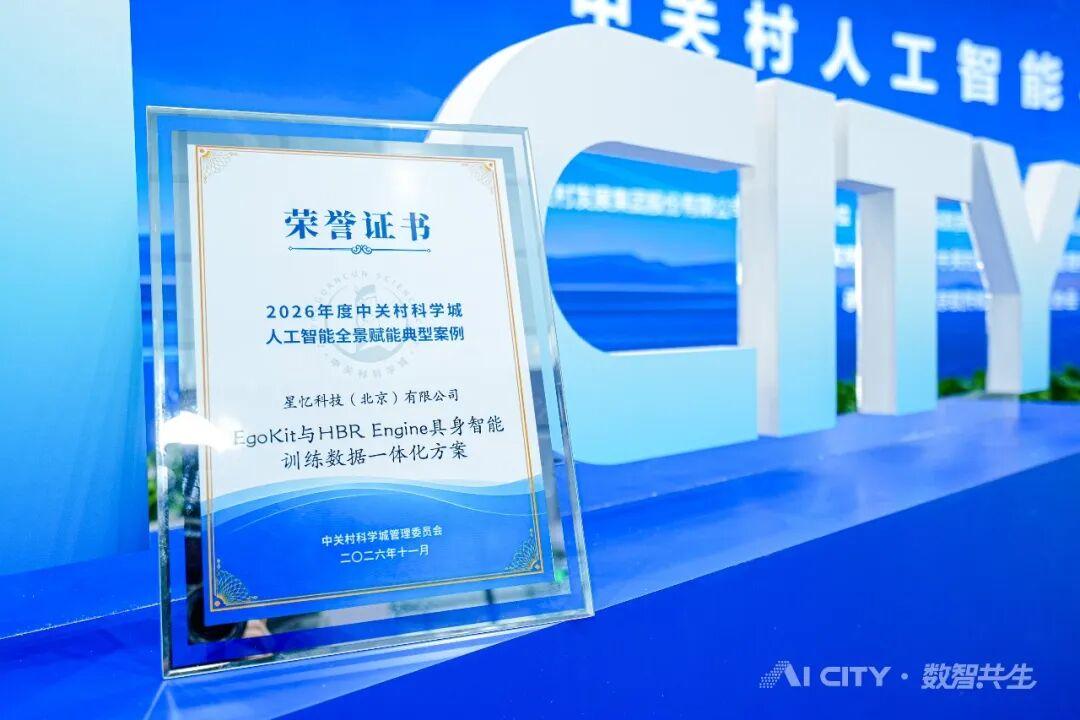
近日,2026中关村人工智能与未来城市论坛在京举办,论坛正式发布2026年度中关村科学城人工智能全景赋能典型案例名单。星忆智能凭借在具身智能物理AI数据基础设施领域的技术创新与产业落地实践,自研「EgoKit与 HBR Engine具身智能训练数据一体化方案」(经产品迭代升级,HBR Engine已更名为AstraEngine,后文以AstraEngine指代)成功入选本次具身智能方向典型案例。
图片

星忆智能获奖证书

本次典型案例遴选聚焦人工智能前沿创新与产业融合实践,挖掘技术创新性突出、具备复制推广价值的解决方案,加速科技创新势能转化为新质生产力。当前,具身智能正从 “看得懂” 走向 “做得成” ,规模化落地仍持续面临高质量多模态数据供给不足、数据链路割裂、适配机器人模型难度大等核心瓶颈。AstraEngine一体化方案构建闭环高质量数据生产体系,直击具身智能产业化最关键的数据供给短板。

图片

星忆智能以Astra全链路数据体系为核心底座,依托Ego采集、引擎处理、协同训练三层架构,打通 “人类数据采集 — 多模态数据治理 — 模型训练测评闭环” 端到端流水线,为具身智能大模型提供高质量、可落地的训练数据整套解决方案。

01 AstraEgo数据采集系统

搭建第一视角多模态采集体系,依托EgoKit、Glove硬件采集终端,同步采集视觉、深度、手部姿态、触觉等原始感知数据。

02 AstraEngine高精度训练数据超级工厂

依托自研S1手姿标注模型,对原始数据做多模态时空对齐、三维重建、语义标注与质量校验,输出可溯源、高质量的具身数据集。

03 AstraBridge协同训练平台

面向VLA/ 世界模型提供标准化数据集接入能力,联动训练、测评、部署环节,把标注好的高质量数据送入模型迭代流程;模型测评反馈反向回流至数据生产环节,持续优化数据筛选与标注质量检验,形成数据 - 模型双向迭代闭环。

在手部理解这一具身智能数据标注公认的技术高地上,星忆智能以自研手部姿态基础模型为核心,全球率先攻克遮挡、暗光、高速、畸变四大手部姿态识别难题。目前该解决方案已面向人形机器人研发、工业灵巧操作、家庭服务等多元场景开展实践应用,补齐具身智能的数据基础设施短板,有效降低机器人研发与泛化训练成本,为具身智能在多元场景落地提供可靠的数据支撑。

此次入选,是中关村科学城对星忆智能技术创新能力与产业实践成果的权威认可,也对企业后续技术迭代、场景拓展提出更高要求。未来,星忆智能将以此为契机,持续深耕具身智能物理AI数据基础设施攻关,拓展跨场景适配能力,输出更多标准化高质量数据产品,助力落实 “十五五” 数字智能产业发展部署,为我国智能机器人产业高质量发展贡献力量。

关于星忆智能

星忆智能(ASTRALIVE)孵化于清华大学计算机系,致力于成为全球领先的具身智能物理AI数据基础设施服务商。公司以高精度手部姿态理解与数据标注技术为核心,自研多模态数据采集设备与数据处理引擎,融合视觉、触觉、惯性等多源信息,攻克遮挡、强光、高速运动等真实场景难题,实现长序列、强接触及人手—物体交互场景下的毫米级三维手部姿态解析与精细化标注。核心团队源自清华、北航,兼具机器人、AI、自动驾驶汽车头部产业经验,累计发表CVPR、NeurIPS等顶会论文80余篇,斩获Oral、Highlight、Outstanding Paper等多项学术荣誉。

注:文/龚作仁,文章来源:Laborer,本文为作者独立观点,不代表亿邦动力立场。

【版权提示】亿邦动力倡导尊重与保护知识产权。未经许可,任何人不得复制、转载、或以其他方式使用本网站的内容。如发现本站文章存在版权问题,烦请提供版权疑问、身份证明、版权证明、联系方式等发邮件至run@ebrun.com,我们将及时沟通与处理。

已点赞

+1

{{ praise_text }}

好文章,值得被更多人看到

FAQ回顾

星忆智能是什么公司?

星忆智能(ASTRALIVE)孵化于清华大学计算机系,定位为具身智能物理AI数据基础设施服务商。公司以高精度手部姿态理解与数据标注技术为核心,自研多模态数据采集设备和数据处理引擎,融合视觉、触觉、惯性等多源信息;核心团队源自清华、北航,累计发表CVPR、NeurIPS等顶会论文80余篇。

具身智能规模化落地面临哪些数据瓶颈?

具身智能正从“看得懂”走向“做得成”,规模化落地仍面临高质量多模态数据供给不足、数据链路割裂、适配机器人模型难度大等核心瓶颈。星忆智能的AstraEngine一体化方案通过构建闭环高质量数据生产体系,直击具身智能产业化最关键的数据供给短板。

AstraEngine是什么,如何支撑具身智能模型训练?

AstraEngine是星忆智能自研的高精度训练数据超级工厂。它依托S1手姿标注模型,对原始数据进行多模态时空对齐、三维重建、语义标注与质量校验,输出可溯源、高质量的具身数据集,并通过AstraBridge协同训练平台接入VLA/世界模型,形成数据与模型双向迭代闭环。

星忆智能的具身智能数据方案适用于哪些场景?

星忆智能的具身智能数据一体化方案已面向人形机器人研发、工业灵巧操作、家庭服务等多元场景开展实践应用,补齐具身智能的数据基础设施短板,有效降低机器人研发与泛化训练成本,为具身智能在多元场景落地提供可靠的数据支撑。

星忆智能在手部姿态识别上有哪些技术突破?

星忆智能以自研手部姿态基础模型为核心,全球率先攻克遮挡、暗光、高速、畸变四大手部姿态识别难题,实现长序列、强接触及人手—物体交互场景下的毫米级三维手部姿态解析与精细化标注,支撑具身智能数据标注与模型训练。

广告

下一篇

跨境电商资源对接

《全球跨境电商服务商资源手册》第二期手册现已发布,触达更多资源,了解跨境服务商信息,欢迎点击链接下载。

了解详情

从本体到集群 智能体如何重塑产业:中铝股份谢海将出席2026第八届亿邦产业互联网年会

中国铝业股份有限公司数智化负责人谢海已确认出席2026第八届亿邦产业互联网年会,届时将从本体、模型与集群应用出发,分享智能体如何破解复杂产业链的落地难题。