• 亿邦公众号
    • APP下载

悦己消费走上C位 唯品会香水消费热度走高

作者:龚作仁 文章来源:Laborer

2026-09-23 13:10

作者:龚作仁 文章来源:Laborer

2026-09-23 13:10

邦小白快读

EN
全文速览

总体来看,香水消费正变得更看重性价比和悦己体验。

1.价格与促销:单次消费以200元至500元为主,45%消费者对促销有较强依赖,购物可重点抓住大促折扣节点。

2.产品选择:63.1%消费者倾向选择淡香水EDT,48.6%偏好淡香精EDP,可根据留香需求选择。

3.购买渠道:折扣电商是降低大牌香水尝试门槛的重要渠道,如爱马仕大地香水100ml可低至专柜定价三成,日常自用和礼赠都能划算入手。

总体来看,香水消费呈现出明显的悦己化、性价比化趋势,品牌需要从定价、产品结构、渠道与场景同步调整。

1.消费趋势:礼赠不再盲目追求奢华包装,自用属性、实用性与性价比是核心标尺;59.7%消费者购买香水是为了取悦自己、提升情绪体验,品牌沟通可重点围绕情绪价值。

2.产品研发:63.1%消费者选择淡香水EDT,48.6%偏好淡香精EDP;香调分散且单一规格可售量有限,需要精细化选品和小批量、多香型供给。

3.定价与渠道:200元至500元是主流单次消费区间,45%消费者对促销有较强依赖;00后香水购买数量同比增长130%,兼具品牌与折扣的商品关注度高,品牌可借助折扣渠道降低体验门槛。

总体来看,香水是具备高增长潜力的品类,性价比消费和礼赠日常化带来明确机会。

1.增长机会:2024年中国香水市场规模250亿元,预计2029年突破500亿元;2025上半年香水类产品进口额6.0亿美元,同比增长20.5%,已成为我国第二大化妆品进口类别。

2.需求变化:消费者更关注自用和性价比,200元至500元是主流价位,45%消费者对促销有较强依赖;可重点经营大牌折扣款、入门款以及淡香水EDT和淡香精EDP产品。

3.场景与人群:香水消费从送礼延伸到日常自用,00后购买量同比增长130%,折扣是核心关注要素;可利用电商大促节点和折扣心智触达年轻客群,同时注意礼赠选购趋于理性,不宜主打过度包装。

总体来看,香水品类对工厂的启示在于产品结构要适应香调分散、规格多但单款量有限的特点。

1.生产与设计:消费者偏好集中在淡香水EDT和淡香精EDP,工厂可优先完善这两类规格的生产能力;香调分散意味着单一香型订单可能不大,需要精细化选品和多香型组合排产。

2.商业机会:礼赠理性化、日常自用场景扩大,高性价比入门产品需求上升,可开发适合折扣渠道走量的小规格或经典款;大牌香水折扣价具备示范效应,高性价比产品有市场空间。

3.电商与渠道:折扣电商是重要出货通路,00后需求增长明显;生产计划需要配合线上大促节奏,并通过精细选品控制库存,避免单一规格压货。

总体来看,香水市场增长快但供给端存在选品难度,服务商可围绕精细化运营和折扣渠道需求提供支持。

1.行业趋势:中国香水市场渗透率低、增速快,礼赠与自用场景叠加,服务商面对的客户需求将从单一卖货转向消费者洞察和差异化选品。

2.客户痛点:香水属于宽度大、深度浅的品类,香调分散,单一规格可售量有限,品牌和卖家普遍需要更精准的选品方案;大牌香水折扣渠道关注度高,也需要价格与库存管理支持。

3.解决方案方向:可提供消费调研数据、趋势监测和大促运营服务;围绕200元至500元主流价位、淡香水EDT和淡香精EDP偏好以及促销依赖型消费者设计组合营销方案。

总体来看,香水消费热度上升且折扣心智明显,平台可将其作为礼赠旺季和日常消费双场景的重点品类。

1.品类机会:中国香水市场渗透率仅约5%,欧美成熟市场已超40%,增长空间大;香水类产品进口额同比增长20.5%,供给丰富度提升,平台可加大招商和品类运营。

2.平台做法:特卖电商的折扣活动正在拉动增长,00后香水购买量同比增长130%,兼具品牌与折扣的商品关注度高;平台可将大牌香水低价款作为引流品,并强化秋季新风尚等节点大促。

3.运营管理:礼赠选购趋于理性,自用属性和性价比是核心,平台需要筛选高性价比供给,避免过度强调奢华包装;同时要应对香调分散、单一规格可售量有限的问题,用数据指导商家精细化上品。

总体来看,香水消费呈现悦己化、性价比化和场景日常化,中国香水产业处于低渗透率高增长阶段。

1.产业动向:2024年市场规模250亿元,预计2029年突破500亿元;香水类产品进口额6.0亿美元、同比增长20.5%,为第二大化妆品进口类别;渗透率仅约5%,较欧美成熟市场超40%仍有较大距离。

2.消费行为结构:200元至500元为主流价位,45%消费者依赖促销;63.1%偏好淡香水EDT,48.6%偏好淡香精EDP;59.7%购买是为了取悦自己、提升情绪体验,显示悦己动机已明显超过展示性动机。

3.商业模式与问题:礼赠消费走向理性化,折扣电商以价格优势降低大牌体验门槛,推动品类从礼赠向日常延展;但香水品类宽度大、深度浅,香调分散,单一规格可售量有限,供给端选品能力成为下一阶段值得研究的问题。

声明:快读内容全程由AI生成,请注意甄别信息。如您发现问题,请发送邮件至 run@ebrun.com 。

我是 品牌商 卖家 工厂 服务商 平台商 研究者 帮我再读一遍。

Quick Summary

Overall, perfume consumption is increasingly driven by value-for-money and self-pleasing experiences.

1. Price and promotions: A single purchase typically ranges from 200 to 500 RMB, and 45% of consumers rely heavily on promotions, making major discount events key shopping windows.

2. Product choice: 63.1% of consumers prefer eau de toilette (EDT), while 48.6% favor eau de parfum (EDP), so choices can be made based on lasting-power needs.

3. Purchasing channels: Discount e-commerce is an important channel for lowering the barrier to trying premium perfumes. For example, a 100ml bottle of Hermès Terre d'Hermès can be priced as low as 30% of the counter price, making it affordable for both daily use and gifting.

Overall, perfume consumption is showing clear trends toward self-pleasing and cost-consciousness, requiring brands to adjust pricing, product mix, channels, and scenarios simultaneously.

1. Consumption trends: Gift-giving is no longer blindly chasing luxury packaging; self-use, practicality, and value for money are the core criteria. 59.7% of consumers buy perfume to please themselves and enhance their emotional experience, so brand communication should focus on emotional value.

2. Product development: 63.1% of consumers choose EDT and 48.6% prefer EDP. Fragrance preferences are fragmented, and the sellable volume per single SKU is limited, requiring refined product selection and small-batch, multi-fragrance supply.

3. Pricing and channels: The mainstream price range per purchase is 200–500 RMB, and 45% of consumers rely heavily on promotions. Post-00s perfume purchase volume grew 130% year-on-year, and products combining brand appeal with discounts attract high attention. Brands can leverage discount channels to lower the trial threshold.

Overall, perfume is a category with high growth potential, with clear opportunities from cost-conscious consumption and the normalization of gifting.

1. Growth opportunities: China's perfume market reached 25 billion RMB in 2024 and is expected to surpass 50 billion RMB by 2029. In the first half of 2025, perfume imports totaled USD 600 million, up 20.5% year-on-year, making it the second-largest cosmetics import category.

2. Demand shifts: Consumers are more focused on self-use and value for money, with 200–500 RMB as the mainstream price range and 45% relying heavily on promotions. Sellers should focus on discounted premium brands, entry-level products, EDT, and EDP.

3. Scenarios and demographics: Perfume consumption is extending from gifting to daily self-use, with post-00s purchase volume up 130% year-on-year and discounts being a key concern. Sellers can use e-commerce promotions and discount-oriented positioning to reach younger customers, while noting that gifting purchases are becoming more rational and should not overemphasize luxury packaging.

Overall, the key lesson for factories is that product structures must adapt to fragmented fragrance preferences, multiple specifications, and limited volume per SKU.

1. Production and design: Consumer preference is concentrated in EDT and EDP, so factories should prioritize production capacity for these formats. Fragrance preferences are fragmented, meaning individual fragrance orders may be small, requiring refined selection and flexible multi-fragrance production scheduling.

2. Business opportunities: With rationalized gifting and expanding daily self-use scenarios, demand for high-value entry-level products is rising. Factories can develop small-format or classic products suitable for volume sales through discount channels. The discounted pricing of premium perfumes has a demonstration effect, leaving room for high-value products.

3. E-commerce and channels: Discount e-commerce is an important sales channel, with notable growth in post-00s demand. Production planning should align with online promotion cycles, and refined selection is needed to control inventory and avoid overstock in single specifications.

Overall, the perfume market is growing fast, but supply-side selection is challenging. Service providers can support clients with refined operations and discount-channel needs.

1. Industry trends: China's perfume market has low penetration but rapid growth, with gifting and self-use scenarios overlapping. Client needs are shifting from simple selling to consumer insight and differentiated product selection.

2. Client pain points: Perfume is a category with wide breadth but shallow depth—fragrance preferences are fragmented, and sellable volume per SKU is limited. Brands and sellers generally need more precise product selection; the high attention to discounted premium perfumes also requires pricing and inventory management support.

3. Solution directions: Providers can offer consumer research data, trend monitoring, and promotion operation services. They can design combined marketing programs around the mainstream 200–500 RMB price range, EDT and EDP preferences, and promotion-dependent consumers.

Overall, perfume consumption is heating up with a clear discount mindset. Platforms can treat it as a key category for both gifting peak seasons and daily consumption.

1. Category opportunity: China's perfume market penetration is only about 5%, compared with over 40% in mature Western markets, indicating large growth potential. Perfume imports rose 20.5% year-on-year, increasing supply diversity, so platforms can step up merchant recruitment and category operations.

2. Platform actions: Flash-sale e-commerce discount campaigns are driving growth. Post-00s perfume purchase volume grew 130% year-on-year, and products combining brand appeal with discounts attract high attention. Platforms can use discounted premium perfumes as traffic generators and strengthen seasonal promotions like the autumn new-trend festival.

3. Operations management: Gifting purchases are becoming more rational, with self-use and value for money at the core. Platforms need to curate high-value supply and avoid overemphasizing luxury packaging. Managing fragmented fragrances and limited per-SKU volume also requires data-driven guidance for merchants on refined product listing.

Overall, perfume consumption is shifting toward self-pleasing, cost-effectiveness, and daily scenarios. China's perfume industry is in a stage of low penetration but high growth.

1. Industry dynamics: The market size reached 25 billion RMB in 2024 and is expected to exceed 50 billion RMB by 2029. Perfume imports were USD 600 million, up 20.5% year-on-year, making it the second-largest cosmetics import. Penetration is only about 5%, still far behind the 40%+ level of mature Western markets.

2. Consumption behavior structure: The mainstream price range is 200–500 RMB, and 45% of consumers rely on promotions. 63.1% prefer EDT, 48.6% prefer EDP. 59.7% buy perfume to please themselves and enhance emotional experience, showing that self-pleasing motives have clearly surpassed display motives.

3. Business models and issues: Gift-giving is becoming rational, and discount e-commerce lowers the threshold for experiencing premium brands through price advantages, pushing the category from gifting to daily use. However, the category has wide breadth but shallow depth, fragmented fragrances, and limited sellable volume per SKU, making supply-side product selection capability a key issue worth studying in the next phase.

Disclaimer: The "Quick Summary" content is entirely generated by AI. Please exercise discretion when interpreting the information. For issues or corrections, please email run@ebrun.com .

I am a Brand Seller Factory Service Provider Marketplace Seller Researcher Read it again.

中秋、国庆双节临近,香水消费延续升温态势,性价比成为其中的关键词。

这一判断在礼赠端有迹可循。尼尔森IQ发布的《2026中秋国庆备货趋势洞察》指出,消费者在节庆期间更趋理性,礼赠选购不再盲目追求奢华包装,自用属性、实用性与性价比成为核心标尺。

需求端的支付结构也指向同一方向。尚普咨询面向1385名香水消费者开展的调研显示,单次消费支出落在200元至500元区间的占比最高,达41%;45%的消费者对促销有较强依赖,其中18%属于非常依赖。艾媒咨询调研显示,63.1%的消费者倾向选择淡香水(EDT),48.6%偏好淡香精(EDP),取悦自己、提升情绪体验(59.7%)成为购买香水的主要原因。

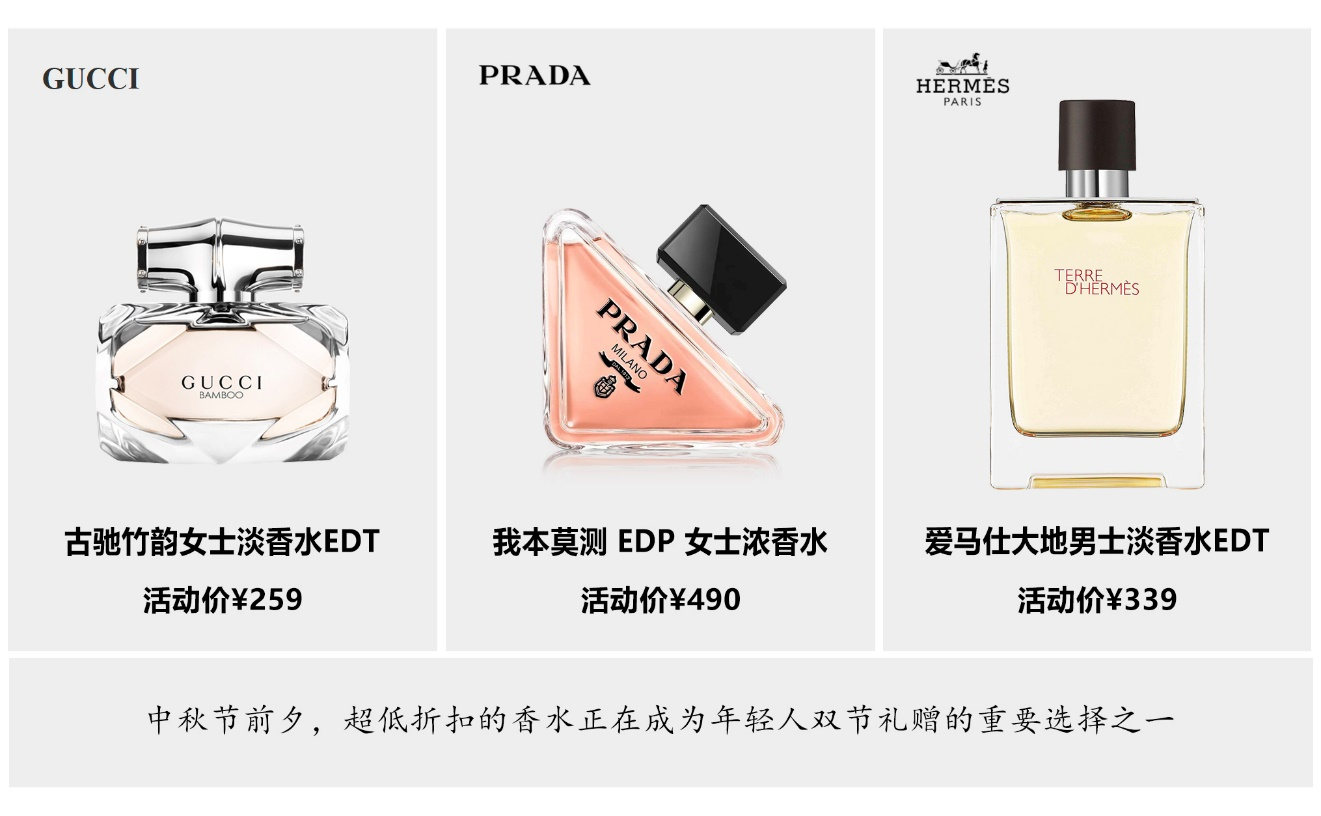
性价比趋势在折扣零售端获得了直观反馈。据特卖电商唯品会数据,今年以来,00后购买的香水数量同比增长130%,“折扣”是其核心关注要素。在唯品会“秋季新风尚”大促中,兼具品牌与折扣的香水关注度持续走高。以爱马仕大地香水100ml为例,其到手价约为专柜定价的三成,成为平台上关注度较高的商品之一。
香水市场本身仍有较大空间。艾媒咨询发布的《2026年中国香水行业研究及消费者洞察报告》显示,2024年中国香水市场规模达250亿元,预计2029年有望突破500亿元。国家统计局数据显示,2025年上半年香水类产品进口额为6.0亿美元,同比增长20.5%,并已跻身我国第二大化妆品进口类别。新华网2025年11月的报道援引行业数据显示,中国香水市场渗透率仅约5%,欧美成熟市场已超过40%。

业内人士介绍,香水品类呈现宽度大、深度浅的特征,香调分散、单一规格可售量有限,供给端需要更精细的选品能力。对刚接触香水的消费者而言,折扣渠道降低了尝试大牌香水的门槛。

从送礼场景到日常自用,香水消费的场景正在外扩。当价格不再构成主要门槛,这一品类的增长空间也将从礼赠旺季延伸至日常。

注:文/龚作仁,文章来源:Laborer,本文为作者独立观点,不代表亿邦动力立场。

【版权提示】亿邦动力倡导尊重与保护知识产权。未经许可,任何人不得复制、转载、或以其他方式使用本网站的内容。如发现本站文章存在版权问题,烦请提供版权疑问、身份证明、版权证明、联系方式等发邮件至run@ebrun.com,我们将及时沟通与处理。

已点赞

+1

{{ praise_text }}

好文章,值得被更多人看到

FAQ回顾

中国香水市场规模有多大,未来会怎么增长?

艾媒咨询《2026年中国香水行业研究及消费者洞察报告》显示,2024年中国香水市场规模达250亿元,预计2029年有望突破500亿元。国家统计局数据显示,2025年上半年香水类产品进口额为6.0亿美元,同比增长20.5%,香水已成为我国第二大化妆品进口类别。

消费者购买香水时最看重什么?

性价比和悦己是核心。尚普咨询调研显示,单次消费支出200元至500元占比最高,达41%;45%的消费者对促销有较强依赖。艾媒咨询调研显示,59.7%的消费者购买香水是为了取悦自己、提升情绪体验,63.1%倾向淡香水(EDT),48.6%偏好淡香精(EDP)。

为什么唯品会上的大牌香水价格这么低?

唯品会是以折扣为核心的特卖电商。平台数据显示,今年00后购买的香水数量同比增长130%,折扣是其核心关注要素。在“秋季新风尚”大促中,爱马仕大地香水100ml到手价约为专柜定价的三成,折扣渠道降低了大牌香水的尝试门槛。

中国香水市场还有哪些增长机会?

中国香水市场渗透率仅约5%,欧美成熟市场已超过40%,存在明显差距。与此同时,消费场景正从送礼延伸到日常自用,性价比和悦己需求走强;艾媒咨询预计市场规模将从2024年的250亿元增至2029年突破500亿元。

香水品牌在中国市场面临哪些挑战?

业内人士介绍,香水品类呈现宽度大、深度浅的特征,香调分散、单一规格可售量有限,给供给端的选品带来挑战。因此,供给端需要更精细的选品能力,才能适应消费者对性价比和多元香调的需求。

广告

下一篇

跨境电商资源对接

《全球跨境电商服务商资源手册》第二期手册现已发布,触达更多资源,了解跨境服务商信息,欢迎点击链接下载。

了解详情

小米发布MiMo-V2.6大模型 登顶开源AI性能榜单

小米发布MiMo-V2.6大模型,登顶开源AI性能榜,成本远低闭源,但遭Anthropic指控滥用Claude蒸馏数据,引发争议。

AI 服务商 芯片 AI技术

2026-09-23 11:38:47