• 亿邦公众号
    • APP下载

换季激发服饰消费 时尚感、性价比、品牌成核心关注点

作者:龚作仁 文章来源:Laborer

2026-09-16 10:01

作者:龚作仁 文章来源:Laborer

2026-09-16 10:01

邦小白快读

EN
全文速览

你可以依托今年秋冬换季服饰消费的趋势信息和平台活动安排,更高效、高性价比地完成置装计划,避开消费误区。

1. 明确选品核心参考:当下消费者挑选秋冬服饰时,已将款式版型配色的时尚感、价格合理性、品牌可信度放在和保暖功能同等重要的位置,不用为过度营销的非知名小众款支付不必要的溢价,也不必只关注厚度忽略穿搭的美观度。

2. 把握高性价比购买节点:可重点关注9月17日唯品会开启的时尚服饰品类日,活动覆盖换季置装、中秋国庆出行穿搭需求,其中MUJI松弛感舒适穿搭是当下热门风格,朗姿女式百搭衬衣低至501元、波司登长款90鹅绒服低至799元,能以折扣价买到大牌靠谱商品;买前可通过多渠道比价、查阅真实测评筛选合适商品。

3. 结合气候调整置装节奏:今年受厄尼尔诺现象影响,今冬将出现多次阶段性强降温,过山车式气温波动更常见,置装可搭配不同厚度的款式,适配多变的气温场景。

今年秋冬换季服饰消费的趋势特征和用户行为变化,能为品牌的经营策略调整提供明确的市场参考。

1. 把握核心消费趋势:据国家统计局数据,2026年1-7月我国服装、鞋帽、针纺织品类零售额达8628亿元,同比增长5.8%,在主要消费品类中增速位居前列。当下服饰市场正从价格竞争转向价值竞争,消费者的核心关注点集中在款式时尚度、性价比、品牌可信度三个维度,渴望以折扣价格买到大牌优质商品,非常看重消费的价值确定性。

2. 明确产品研发方向:设计生产时要兼顾款式的版型、配色时尚感与材质、工艺品质,同时结合秋冬换季、中秋国庆出行、今冬多轮阶段性强降温的场景需求,打造差异化的场景适配产品,比如松弛舒适风的日常穿搭款、适配气温波动的不同厚度保暖款都是当下的热门方向。

3. 优化营销与定价策略:可积极参与主流电商平台的换季主题活动,以可靠的品牌背书结合合理的深度折扣触达消费者,避免单纯的低价内卷,重点向用户传递品牌的品质价值感。

今年秋冬换季叠加双节出游、特殊气候影响形成的服饰消费风口,存在明确的业绩增长机会,卖家可找准需求方向调整经营动作。

1. 抓住核心增长窗口:秋冬换季消费高峰叠加中秋、国庆出游季,再加今年受厄尼尔诺现象影响,今冬将出现多次阶段性强降温,过山车式的气温波动会持续带起服饰消费热度,是下半年核心的业绩增长节点,外套、羽绒服、大衣、卫衣是消费者重点选购的核心品类。

2. 匹配最新消费需求变化:当下消费者的购买决策核心参考三个维度,即款式版型配色的时尚感、价格合理性、品牌可信度,日常决策中普遍会多渠道比价、查阅测评内容、等待电商平台活动节点下单,普遍认可知名品牌+深度折扣的模式,更倾向选择能提供价值确定性的商品。

3. 优化具体经营动作:可重点布局适配秋冬日常、双节出行场景的服饰款式,跟进主流电商平台的换季主题大促活动,选品侧重松弛舒适风等当下热门风格,经营中兼顾款式吸引力、价格竞争力与正品靠谱的心智传递,避免无品质支撑的单纯低价引流,警惕品质问题带来的用户信任风险。

今年秋冬服饰消费的需求变化和市场发展趋势,能为工厂的生产规划、设计调整、渠道对接提供清晰的行动指引。

1. 明确产品设计与生产方向:当前核心需求品类为外套、羽绒服、大衣、卫衣等秋冬服饰,设计上要兼顾版型、配色的时尚度与材质、工艺的实用性,当下松弛舒适风的穿搭款式热度较高;同时要适配今冬多轮阶段性强降温、气温波动大的气候特点,以及日常换季、中秋国庆出行的多元场景,可布局不同厚度的梯度产品矩阵。

2. 把握确定的商业机会:2026年1-7月服装鞋帽针纺织品类零售额同比增长5.8%,增速位居主要消费品类前列,秋冬叠加双节、气候因素将迎来持续消费高潮,消费者普遍倾向高性价比的大牌品质商品,市场正从价格竞争转向价值竞争,工厂可侧重品质工艺打磨,对接品牌方、电商平台的特卖类活动需求,供应高性价比的品质好货。

3. 获取渠道对接启示:可重点关注主流电商平台的换季品类活动招商需求,配合品牌客户的折扣化经营策略,提供柔性化的生产供给,匹配消费者对商品价值确定性的需求。

当下服饰行业折扣化、品牌化的发展趋势,以及消费端的需求变化,为服务商的业务布局和服务设计指明了方向。

1. 认清行业整体发展趋势:2026年1-7月服装、鞋帽、针纺织品类零售额达8628亿元、同比增长5.8%,秋冬换季将带动服饰消费高潮,服饰消费正从单纯的价格竞争转向价值竞争,消费者核心关注时尚款式、合理价格、可信品牌,希望以折扣价格买到大牌优质商品,对商品价值确定性的需求强烈。

2. 找准行业客户的核心痛点:品牌商、平台方、线上卖家当下既需要抓住换季、双节、强降温带来的消费窗口,又需要摆脱单纯低价竞争的困境,向消费者传递品牌与商品的价值感,同时适配消费者多渠道比价、看测评、等活动的决策习惯。

3. 明确服务优化方向:可围绕客户需求提供穿搭内容种草、真实测评内容制作、大促活动运营、品牌价值传递、品质供应链对接等相关服务,帮助客户打通时尚内容触达、高性价比心智传递、靠谱商品供给的全链路,满足消费者对价值确定性的需求。

今年秋冬换季服饰消费的风口特征与消费者决策习惯,能为平台的活动策划、商家运营、风险规避提供务实参考。

1. 把握消费窗口与用户核心需求:秋冬换季叠加中秋国庆出游、今冬多轮阶段性强降温,服饰消费将迎来持续高潮,用户搜索和购买核心集中在外套、羽绒服、大衣、卫衣等品类,决策时重点关注款式时尚度、价格合理性、品牌可信度,普遍习惯多渠道比价、查阅测评、等待大促活动,偏好以折扣价格购买大牌优质商品。

2. 参考成熟的运营玩法:可借鉴唯品会的运营思路,在适配节点上线时尚服饰品类主题活动,围绕换季、双节出行等核心场景组织货盘,引入MUJI、朗姿、波司登等大众熟知的知名品牌,设置有吸引力的深度折扣,用品牌热门穿搭款、高性价比的经典款爆品吸引消费者关注。

3. 做好运营与风向规避:平台招商可重点侧重具备品质优势、有一定品牌认知度的服饰商家,活动运营中要重点强化商品价值确定性的传递,避免引入低质低价的无品牌商品,顺应市场从价格竞争转向价值竞争的整体趋势,夯实用户的消费信任。

今年秋冬服饰消费呈现的趋势特征,为服饰产业发展动向的相关研究提供了鲜活的现实观察样本。

1. 核心产业数据与发展动向:据国家统计局数据,2026年1-7月我国服装、鞋帽、针纺织品类零售额达8628亿元,同比增长5.8%,在主要消费品类中增速位居前列;当前服饰市场正呈现明确的折扣化、品牌化趋势,正在从传统的价格竞争转向价值竞争,消费者决策时将款式时尚度、性价比、品牌可信度作为核心关注因素,对商品价值确定性的需求已经超越了单纯的低价诉求。

2. 驱动消费的多元影响变量:除了常规的换季周期、中秋国庆假期出游的场景带动外,厄尼尔诺现象带来的今冬多轮阶段性强降温、过山车式气温波动,也将成为拉长服饰消费周期、带动相关品类销售的特殊影响因素。

3. 商业模式演化特征:以特卖平台为代表的“知名品牌+深度折扣”模式正在获得消费者广泛认可,平台与品牌不再单纯比拼价格,而是通过品牌可信度、品质保障、合理价格的组合为消费者提供确定性价值,这一模式正成为当下服饰流通领域的重要发展方向。

声明:快读内容全程由AI生成,请注意甄别信息。如您发现问题,请发送邮件至 run@ebrun.com 。

我是 品牌商 卖家 工厂 服务商 平台商 研究者 帮我再读一遍。

Quick Summary

You can plan your fall and winter wardrobe purchases more efficiently and cost-effectively while avoiding common shopping pitfalls by leveraging this season’s apparel consumption trends and upcoming platform promotion schedules.

1. Align your priorities with mainstream consumer preferences: Today’s shoppers weigh fashion elements such as design, fit and color palette, reasonable pricing, and brand credibility as heavily as thermal functionality when choosing cold-weather clothing. There is no need to pay unnecessary premiums for overhyped, little-known niche designs, nor to prioritize thickness alone at the cost of wearable, stylish looks.

2. Time purchases for optimal value: Mark your calendar for Vipshop’s upcoming Fashion Apparel Category Day launching September 17, which covers wardrobe refresh needs for the season change as well as Mid-Autumn Festival and National Day holiday outfits. Popular picks on the campaign include MUJI’s sought-after relaxed, comfort-focused styles, LANCY women’s versatile blouses starting as low as RMB 501, and Bosideng long 90% goose down jackets starting at RMB 799, allowing shoppers to purchase reliable branded products at discounted prices. Before buying, compare prices across channels and check authentic user reviews to select the most suitable items.

3. Adjust your shopping timeline to match weather patterns: Driven by the El Niño phenomenon, this winter will see multiple rounds of abrupt, sharp temperature drops and frequent rollercoaster-like temperature swings. Build a layered wardrobe with pieces of varying thickness to adapt to erratic weather and different usage scenarios.

This fall/winter season’s apparel consumption trends and shifting user behaviors offer clear market benchmarks for brands to adjust their operational strategies.

1. Align with core consumption trends: Data from the National Bureau of Statistics shows that retail sales of apparel, footwear, hats and knitwear in China reached RMB 862.8 billion in the first seven months of 2026, up 5.8% year over year, ranking among the fastest-growing major consumer categories. The apparel market is currently shifting from price-based competition to value-based competition. Consumers prioritize three core dimensions: stylish design, cost-effectiveness, and brand credibility. They seek high-quality branded goods at discounted prices and place strong emphasis on predictable, guaranteed value in their purchases.

2. Refine product development direction: When designing and manufacturing products, balance on-trend fit and color palettes with reliable material quality and craftsmanship. In addition, develop differentiated, scenario-adapted products tailored to demand from the seasonal wardrobe refresh, Mid-Autumn Festival and National Day travel, and repeated sharp temperature drops expected this winter. High-potential categories include everyday relaxed, comfort-focused styles and thermal pieces of varying thickness designed to accommodate fluctuating temperatures.

3. Optimize marketing and pricing strategies: Brands are advised to participate in seasonal themed campaigns on major e-commerce platforms, leveraging trusted brand equity paired with reasonably deep discounts to reach consumers. Avoid getting trapped in homogeneous low-price competition, and prioritize communicating products’ quality and brand value to users.

This fall/winter’s apparel consumption boom—driven by the seasonal wardrobe shift, the dual holiday travel period, and unusual weather patterns—presents clear revenue growth opportunities for sellers who align their operations with evolving demand.

1. Capture the core growth window: The convergence of peak fall/winter shopping demand, the Mid-Autumn Festival and National Day travel season, and multiple rounds of abrupt, sharp winter temperature drops caused by El Niño will drive sustained consumer interest in apparel, making this period the key revenue growth node in the second half of the year. Core high-demand categories include outerwear, down jackets, coats, and sweatshirts.

2. Match shifting consumer demand: Today’s purchase decisions are guided by three core factors: the fashion appeal of design, fit and color, reasonable pricing, and brand credibility. Most shoppers compare prices across multiple channels, review user feedback, and wait for platform promotion events to place orders. They widely prefer the “well-known brand + deep discount” model and tend to choose products that deliver clear, guaranteed value.

3. Refine operational tactics: Prioritize apparel styles suited to everyday fall/winter wear and dual-holiday travel scenarios, and align inventory with major e-commerce platforms’ seasonal promotion events. Curate selections around trending styles such as relaxed, comfort-focused looks. In daily operations, balance stylish product appeal, price competitiveness, and clear communication of product authenticity and reliability. Avoid low-price customer acquisition tactics without underlying quality support, and guard against user trust risks caused by quality issues.

This fall/winter’s shifting apparel demand and broader market trends provide clear operational guidance for manufacturers to plan production, adjust design strategies, and pursue channel partnership opportunities.

1. Define clear product design and production priorities: Core high-demand categories include cold-weather staples such as outerwear, down jackets, coats, and sweatshirts. Designs should balance fashionable fit and color palettes with practical material quality and craftsmanship, with relaxed, comfort-focused styles emerging as a high-demand trend. Manufacturers should also prepare for repeated sharp temperature drops and volatile weather this winter, as well as diverse scenarios ranging from everyday seasonal wear to Mid-Autumn Festival and National Day travel, by building a tiered product matrix covering different thickness levels.

2. Capture tangible business opportunities: Retail sales of apparel, footwear, hats and knitwear grew 5.8% year over year in the first seven months of 2026, outpacing most other major consumer categories. The combination of seasonal demand, holiday travel, and weather factors will drive a sustained consumption boom. Consumers broadly prefer cost-effective, high-quality branded products as the market shifts from price competition to value competition. Factories can prioritize refining quality and craftsmanship, align with flash sale and discount campaign demand from brands and e-commerce platforms, and supply high-quality, cost-competitive products.

3. Align channel partnership strategies: Pay close attention to merchant recruitment for seasonal category campaigns on major e-commerce platforms. Support brand clients’ discount-focused operational strategies by providing flexible, responsive production capacity to meet consumer demand for guaranteed product value.

The apparel industry’s ongoing shift toward branded, discount-oriented retail, paired with evolving consumer demand, points to clear directions for service providers to plan business offerings and design client solutions.

1. Recognize overarching industry trends: Retail sales of apparel, footwear, hats and knitwear reached RMB 862.8 billion in the first seven months of 2026, up 5.8% year over year. The fall/winter seasonal transition will drive a major consumption peak, as the market shifts from pure price competition to value competition. Consumers prioritize three core factors: fashionable design, reasonable pricing, and trusted brands. They seek high-quality branded products at discounted prices and have strong demand for clear, guaranteed product value.

2. Identify core client pain points: Brands, e-commerce platforms, and online sellers currently need to both capture the consumption window created by the season change, dual holidays, and sharp temperature drops, and break free from unsustainable pure low-price competition. They must effectively communicate brand and product value to consumers, while adapting to shoppers’ established decision-making habits: comparing prices across channels, reviewing user feedback, and waiting for promotion events to purchase.

3. Refine service offerings: Service providers can build tailored solutions covering outfit-focused content seeding, authentic review content production, promotion event operation, brand value communication, and quality supply chain matching. These services can help clients build an end-to-end pipeline covering fashion content outreach, cost-effectiveness positioning, and reliable product supply, to meet consumer demand for guaranteed value.

This fall/winter’s apparel consumption boom and evolving consumer decision-making patterns offer practical references for e-commerce platforms to design campaigns, manage merchant ecosystems, and mitigate operational risks.

1. Capture the consumption window and core user demand: The convergence of the seasonal wardrobe shift, Mid-Autumn Festival and National Day travel, and repeated sharp winter temperature drops will drive sustained peak demand for apparel. User search and purchase activity will center on categories including outerwear, down jackets, coats, and sweatshirts. When making purchase decisions, users prioritize fashion appeal, reasonable pricing, and brand credibility. Most are accustomed to comparing prices across channels, reading user reviews, waiting for major promotion events, and prefer purchasing high-quality branded products at discounted prices.

2. Leverage proven operational playbooks: Platforms can reference Vipshop’s operational approach by launching themed fashion apparel campaigns at well-timed nodes, curating product selections around core scenarios such as seasonal wardrobe refreshes and holiday travel, onboarding widely recognized brands including MUJI, LANCY, and Bosideng, and offering attractive deep discounts. Trending branded outfits and high-value classic hit products can be used as core traffic drivers to attract consumer attention.

3. Strengthen operations and risk mitigation: When recruiting merchants, prioritize apparel sellers with quality advantages and established brand recognition. During campaign operations, emphasize communication of clear, guaranteed product value, avoid onboarding low-quality, unbranded products that compete solely on low prices, align with the broader market shift from price competition to value competition, and strengthen long-term user trust in the platform.

This fall/winter’s emerging apparel consumption trends provide a real-world observation sample for research on the evolution of the broader apparel industry.

1. Core industry data and development trends: According to National Bureau of Statistics data, China’s retail sales of apparel, footwear, hats and knitwear reached RMB 862.8 billion in the first seven months of 2026, up 5.8% year over year, making it one of the fastest-growing major consumer categories. The apparel market is showing clear discount-oriented, brand-focused trends, shifting away from traditional price-based competition toward value-based competition. Consumers now treat design fashionability, cost-effectiveness, and brand credibility as core decision-making factors, and their demand for guaranteed product value has surpassed the pursuit of purely low prices.

2. Multiple variables driving consumption: Beyond regular seasonal cycles and demand generated by Mid-Autumn Festival and National Day holiday travel, repeated rounds of sharp winter temperature drops and rollercoaster-like temperature fluctuations driven by El Niño will act as a special influencing factor that lengthens the apparel consumption cycle and drives sales of related categories.

3. Evolving business model characteristics: The “well-known brand + deep discount” model, popularized by discount retail platforms, is gaining widespread consumer recognition. Rather than competing purely on price, platforms and brands are delivering predictable, guaranteed value to consumers through a combination of brand credibility, quality assurance, and reasonable pricing. This model is emerging as a key development direction in China’s apparel distribution sector.

Disclaimer: The "Quick Summary" content is entirely generated by AI. Please exercise discretion when interpreting the information. For issues or corrections, please email run@ebrun.com .

I am a Brand Seller Factory Service Provider Marketplace Seller Researcher Read it again.

进入九月,北方昼夜温差拉大,南方暑热渐退,服饰消费进入一年一度的换季高峰。商场里秋冬装全面上新,线上平台秋冬服饰搜索量同步攀升,外套、羽绒服、大衣、卫衣等品类开始集中进入消费者的购物车。

事实上,今年以来,服饰消费的热度居高不下,国家统计局数据显示,2026年1至7月,我国服装、鞋帽、针纺织品类零售额达8628亿元,同比增长5.8%,在主要消费品类中增速位居前列。而从唯品会等电商平台的数据来看,消费者今年换季的关注点明显向三个方向集中:款式是否好看、价格是否合理、品牌是否可信。

换季置装天然带有形象更新属性,社交平台上的秋冬穿搭内容从8月底开始升温,消费者对款式、版型、配色的关注度与功能参数不相上下。此外,价格也成为服饰换季消费的另一个决定因素,多渠道比价、查阅测评、等待电商平台活动成为常规动作。

另一方面,电商平台也试图迎接消费风口,特卖电商唯品会消息显示,其将于9月17日开启时尚服饰品类日,聚焦于秋冬换季、中秋国庆出行等,活动中MUJI无印良品的松弛舒适穿搭热度持续走高, 朗姿的女式百搭衬衣低至501元,波司登长款90鹅绒服低至799元,知名品牌、深度折扣吸引了诸多消费者关注。
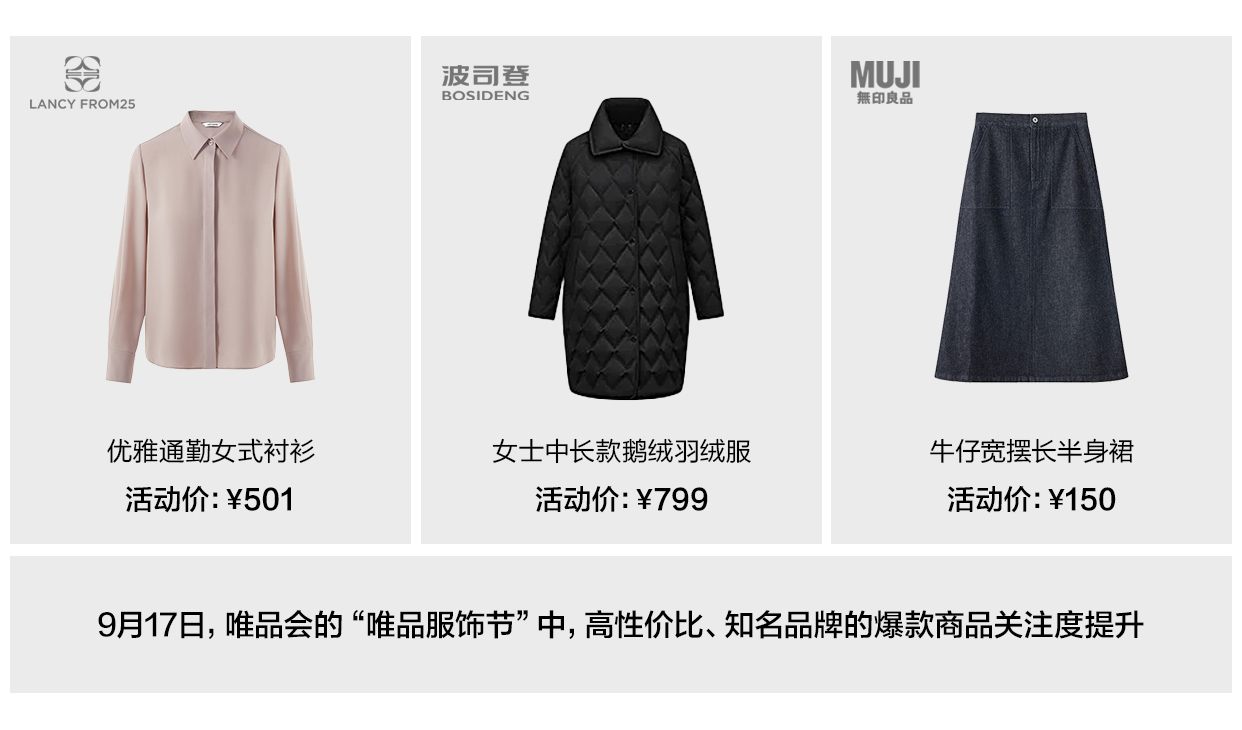
折扣化、品牌化的风正在剧烈地吹向服饰消费,零售专家介绍,服饰消费在当下会愈发重视品牌、品质与性价比,消费者渴望以折扣的价格购买到大牌优质的商品,电商平台与服饰品牌不仅仅需要为消费者提供好价格,更重要的是提供价值的确定性。同样,中国服装协会对行业趋势的观察则与之呼应:服装市场正从价格竞争转向价值竞争,材质、工艺与场景的差异化、性价比等因素都将成为服饰消费的关键。

据业内专家预测,秋冬换季再叠加中秋、国庆出游季,服饰消费将出现高潮。此外,今年厄尼尔诺现象严重,预计今冬会出现多次阶段性强降温,“过山车”式气温波动会更常见,服饰消费将成为下半年消费市场的关注焦点之一。

注:文/龚作仁,文章来源:Laborer,本文为作者独立观点,不代表亿邦动力立场。

【版权提示】亿邦动力倡导尊重与保护知识产权。未经许可,任何人不得复制、转载、或以其他方式使用本网站的内容。如发现本站文章存在版权问题,烦请提供版权疑问、身份证明、版权证明、联系方式等发邮件至run@ebrun.com,我们将及时沟通与处理。

已点赞

+1

{{ praise_text }}

好文章,值得被更多人看到

FAQ回顾

秋冬换季选购服饰消费者主要看重哪些因素?

2026年秋冬换季服饰消费阶段,消费者核心关注三大维度:一是款式时尚感,对版型、配色的关注度与服饰功能参数相当;二是性价比,普遍会多渠道比价、查阅测评、等待平台活动;三是品牌可信度,更倾向选择知名品牌的优质商品。

2026年我国服饰消费市场增长态势如何?

2026年我国服饰消费增长态势向好,据国家统计局数据,1-7月服装、鞋帽、针纺织品类零售额达8628亿元,同比增长5.8%,增速在主要消费品类中位居前列。叠加秋冬换季、双节出行、今冬阶段性强降温预期,下半年将迎来消费高潮。

当前国内服装消费市场呈现什么发展趋势?

当前国内服装市场正从价格竞争转向价值竞争。据中国服装协会观察,材质、工艺、场景差异化、高性价比成为消费决策关键,消费者普遍希望以折扣价格购入大牌优质商品,品牌、品质与性价比的消费权重持续提升。

购买折扣品牌秋冬服饰有哪些靠谱的活动渠道?

消费者可关注正规特卖电商的主题活动获取品牌服饰折扣,例如唯品会将于9月17日开启时尚服饰品类日,聚焦秋冬换季、中秋国庆出行场景推出优惠,朗姿女式衬衣低至501元、波司登长款90鹅绒服低至799元。

广告

下一篇

跨境电商资源对接

《全球跨境电商服务商资源手册》第二期手册现已发布,触达更多资源,了解跨境服务商信息,欢迎点击链接下载。

了解详情

深耕充电安全、拓展家庭AIoT体系 绿联科技生态布局“两路并进”

日前,UGREEN绿联在厦门举办了主题为「惊喜联接·智护生活」的品牌全球发布会,公布了其在充电安全生态与AIoT生态产品方面的最新战略。