• 亿邦公众号
    • APP下载

AI之于组织:智能驾驭与价值演进|外滩大会见解论坛

作者:龚作仁 文章来源:Laborer

2026-09-15 10:32

作者:龚作仁 文章来源:Laborer

2026-09-15 10:32

邦小白快读

EN
全文速览

这篇文章整理了2026外滩大会AI与组织主题论坛的核心内容,直面大众对AI的普遍职场焦虑,给出了清晰的认知参考与实用方向。

1. 直接回应大众最关心的两个核心疑问:AI提效下人反而更累、教AI干活会不会培养自己的替代者,明确当前AI工具普及不等于组织形成AI能力,个人效率提升也不必然带来组织增长,无需过度焦虑被替代。

2. 给出个人发展的实操参考:AI时代人要侧重积累审美、人文类知识,主动训练记忆力,重点为不确定性事务负责;选择工作时可对照好组织的四个判断标准,即能提供工作意义、同频协作的伙伴、容错的信任环境、创造社会影响力的平台。

3. 传递可参考的长期生活趋势:有业内人士预判2年左右手机APP会减少一半,10年内人类每周工作时长有望少于4天,AI与科研、医疗领域的深度结合会助力人人实现百岁寿命。

本次论坛释放的AI时代组织变革、产业演化信号,能为品牌商推进AI转型、强化长期竞争力提供明确的实践参考。

1. 提前把握消费与渠道趋势:有行业预判提出2年左右手机端APP将减少一半,品牌原有APP端的用户触达渠道会面临重构,需提前布局适配智能体场景的用户连接路径;长期来看10年内周工作时长将少于4天,AI带动医疗、科研领域突破,用户闲暇时间、健康需求会显著提升,可提前布局对应赛道的产品研发。

2. 明确品牌价值建设方向:不能只把AI当作降本增效工具,要围绕用户价值重新设计组织流程,打造适配业务的AI原生项目;要跳出单纯压缩成本的误区,在稳住原有业务基本盘的同时探索新增长曲线;品牌长期沉淀的使命愿景、能力积累、用户信任是比AI技术适配度更核心的竞争力,是用户选择的核心依据。

3. 优化内部组织管理:可通过AI落地实现管理知识的规模化即时传递、人才管理范式升级、延伸员工关怀,持续强化组织的学习迭代能力、内部创业精神,提升组织整体AI能力。

本次论坛分享的AI时代产业变化、企业转型经验,能为卖家识别增长机会、规避经营风险、优化运营模式提供实用指引。

1. 明确未来增长机会:未来2年手机APP数量减半,智能体将深度渗透消费全场景,卖家可提前布局AI智能体端的商品展示、咨询承接、交易转化路径,抓住渠道迭代的早期红利;长期来看用户闲暇时间增长、AI驱动健康领域发展,休闲消费、健康相关品类将迎来持续增长空间。

2. 提供可落地的运营参考:卖家落地AI工具可参考三步走路径,从数据看板搭配人工决策、到AI辅助经营决策、再到AI自主处理常规事务逐步推进,不要生硬把AI套入原有经营流程;可参考AI原生企业的过程管理思路,把AI工具使用相关指标纳入日常运营追踪,提升团队的AI应用效率。

3. 提示核心经营风险:要警惕“AI普及就能大幅降本、人员可以大量缩减”的认知误区,AI提升单个人效不代表经营业绩增长,要在稳住现有经营基本盘的基础上探索新曲线,同时通过愿景共识、信任氛围留住核心人才,避免人员流动带来的经营波动。

本次论坛分享的AI落地场景、实体组织数字化转型经验,能为工厂推进数智化升级、挖掘新商业机会提供清晰方向。

1. 挖掘新的商业机会:智能体正加速进入各行业场景成为数字员工,AI+科研、AI+健康领域将迎来长期发展窗口,工厂可重点关注AI配套硬件、智能交互终端、大健康相关产品的生产需求,提前对接品牌方布局对应产能;未来2年手机APP形态迭代,智能交互类终端的生产订单会持续增长,可提前做好生产能力储备。

2. 获取数智化转型启示:推进数字化不要生硬把AI工具套入原有生产管理流程,要围绕生产价值重构作业流程,打造适配生产场景的AI原生项目;可参考前沿企业的人机分工思路,让AI处理确定性的流程化生产、质检、数据统计工作,员工聚焦需要创意、经验判断的不确定性环节,逐步提升整体生产效率。

3. 优化内部管理:推进数智化过程中,要为一线员工明确工作价值,打造容错的创新试错环境,帮助员工适应AI协作模式,把员工个体的能力提升转化为工厂整体的生产能力增长。

本次论坛拆解的AI落地阶段普遍组织痛点、前沿企业实践经验,能为服务商把握行业趋势、打磨适配客户需求的服务方案提供明确方向。

1. 把握长期行业趋势:智能体正加速进入各类组织的工作流,企业的AI应用正在从“员工个人用AI提效”的早期阶段,转向组织层面AI能力搭建、AI原生生产关系重构的深水区,对应的组织操作系统搭建、人机协同流程设计、AI应用人才培养等服务需求会持续增长。

2. 识别客户核心痛点:当前多数组织面临“AI工具普及但组织能力未形成、个人效率提升但经营未增长”的普遍问题,存在生硬把AI套入旧流程、AI落地路径不清晰、员工对AI有替代焦虑、人机分工机制不明确等共性痛点。

3. 打磨适配的解决方案:可参考前沿企业实践,为客户设计分阶段的AI落地路径,配套搭建人主导介入、AI自主闭环相结合的协作机制,明确人负责不确定性决策、AI处理确定性事务的分工;还可延伸开发管理知识AI化、AI辅助人才管理等服务,帮助客户真正释放AI价值。

本次论坛释放的AI时代组织转型需求、产业演化趋势,能为平台商优化自身运营、调整生态招商策略、规避发展风险提供务实参考。

1. 响应平台上的商家普遍需求:随着大量商家、个体创业者从个人应用AI转向组织级AI能力建设,平台需要推出适配AI原生经营模式的工具,比如适配智能体场景的流量分发机制、人机协同的商家管理系统、AI辅助经营的功能套件,降低商家的AI应用门槛。

2. 规避生态发展的认知偏差:要警惕“AI会带来人员大幅缩减、一人公司会完全替代传统组织”的误导性判断,明确长期来看组织的信任机制、价值观、长期沉淀能力的价值会持续回归,平台招商和扶持不能只引导商家靠AI压减成本,要引导商家稳住基本盘、探索新增长曲线,可参考开源社区的运营思路,通过价值共创、资源链接凝聚生态参与方。

3. 优化平台内部管理:自身组织升级可从腰部管理层突破推进AI落地,分阶段从人工决策、AI辅助决策过渡到AI自主处理常规事务,围绕价值打造AI原生项目,提升整体运营效率。

本次外滩大会汇聚的多领域业界实践与前沿判断,为AI时代的组织演化、产业经济研究提供了丰富的前沿样本与值得深挖的研究命题。

1. 捕捉产业最新动向:当前智能体正加速渗透工作场景成为数字员工,组织应用AI已从早期个人提效阶段,进入组织能力重构、生产关系调整的深水区,目前已形成四类典型实践:大型科技企业打造AI原生项目的内部创新,技术企业搭建“人+AI助理+AI专家”分工体系的组织操作系统探索,无KPI、无汇报关系的开源社区样本,以及坚持AI First原则的原生AI企业管理实践。

2. 挖掘核心研究问题:当前AI落地存在“个人效率提升但组织未增长、AI工具普及未转化为组织能力”的普遍矛盾,人机协同机制演化、AI原生时代的决策分工与激励、非正式组织凝聚逻辑、AI对就业与分配的影响、AI经济普惠路径等议题都具备高研究价值。

3. 参考业界共识与预判:与会嘉宾普遍认为AI应用不能止步于降本增效,要走向价值创造,“人是目的”是AI组织升级的核心原则;从业者提出的APP形态演化、工作时长变化、AI赋能医疗科研等判断,可作为长期产业研究的参考。

声明:快读内容全程由AI生成,请注意甄别信息。如您发现问题,请发送邮件至 run@ebrun.com 。

我是 品牌商 卖家 工厂 服务商 平台商 研究者 帮我再读一遍。

Quick Summary

This article distills key insights from the AI and Organizations themed forum at the 2026 Bund Summit, addressing widespread public anxiety about AI’s workplace impact while offering clear, practical frameworks for understanding the technology and navigating related changes.

1. It directly answers two core public concerns: that AI-driven efficiency gains are making workers more burnt out, and that training AI tools effectively creates one’s own replacement. The forum clarifies that widespread adoption of AI tools does not equate to an organization building genuine AI capabilities, and individual productivity gains do not automatically translate to organizational growth — meaning fears of mass displacement are overblown at the current stage.

2. It offers actionable guidance for individual career development: In the AI era, people should prioritize building aesthetic and humanistic knowledge, proactively training memory capabilities, and focusing on taking ownership of high-uncertainty tasks. When evaluating employers, people can reference four markers of a healthy, future-ready organization: it provides meaningful work, fosters collaboration with aligned peers, maintains a trust-based environment that tolerates mistakes, and offers a platform to create broader social impact.

3. It shares notable long-term lifestyle trend forecasts from industry insiders: mobile apps are projected to decline by 50% within two years; the average workweek could fall below four days within a decade; and deep integration of AI with scientific research and healthcare will help extend healthy human lifespans to 100 years on average.

The signals of AI-era organizational transformation and industrial evolution shared at the forum offer clear, practical guidance for brands advancing AI transformation and strengthening long-term competitiveness.

1. Get ahead of evolving consumer and channel trends: Industry forecasts project a 50% reduction in mobile apps within two years, which will disrupt brands’ existing app-based user reach channels. Brands need to proactively build user connection pathways adapted to intelligent agent scenarios. In the longer term, with the average workweek set to fall below four days within a decade and AI driving breakthroughs in healthcare and scientific research, user demand for leisure and health-focused products will rise significantly, creating room to plan R&D pipelines for adjacent categories early.

2. Clarify the direction of long-term brand value building: Brands should not treat AI solely as a cost-cutting and efficiency-boosting tool. Instead, they should redesign organizational processes around user value and build AI-native projects tailored to core business needs, avoiding the narrow trap of pure cost reduction. While defending the stability of core existing business, brands should explore new growth curves; a brand’s long-held mission and vision, accumulated operational capabilities, and earned user trust are far more durable competitive advantages than technical AI adaptation, and remain the core driver of user choice.

3. Optimize internal organizational management: AI deployment can enable scaled, real-time transfer of institutional management knowledge, upgrade talent management paradigms, and expand employee care initiatives, continuously strengthening an organization’s iterative learning capacity and internal entrepreneurship to build cohesive, organization-wide AI capabilities.

The AI-era industry shifts and enterprise transformation experience shared at the forum provide practical guidance for sellers to identify growth opportunities, mitigate operational risks, and optimize operating models.

1. Map future growth opportunities: With the number of mobile apps set to halve in the next two years, intelligent agents will penetrate every link of the consumer journey. Sellers can pre-build pathways for product display, customer inquiry response, and transaction conversion on AI agent channels to capture early dividends from channel iteration. In the long run, rising user leisure time and AI-driven advances in the health sector will create sustained growth space for leisure consumption and health-related product categories.

2. Adopt actionable operational guidance: When deploying AI tools, sellers can follow a three-step implementation path, moving gradually from dashboards paired with human decision-making, to AI-assisted operational decision-making, and finally to AI autonomous handling of routine tasks, rather than force-fitting AI into existing operational workflows. Sellers can reference the process management frameworks of AI-native enterprises, incorporating metrics related to AI tool adoption into daily operational tracking to improve team-wide AI utilization efficiency.

3. Guard against core operational risks: Beware of the misconception that widespread AI adoption will automatically deliver large cost cuts and justify massive staff reductions. Improved individual productivity from AI does not guarantee higher business performance. While stabilizing core existing operations to explore new growth curves, sellers should retain core talent through shared vision alignment and a trust-based team culture to avoid operational disruption from high turnover.

The AI application scenarios and real-sector digital transformation experience shared at the forum provide clear direction for factories advancing intelligent digital upgrades and identifying new business opportunities.

1. Unlock new business opportunities: As intelligent agents rapidly enter cross-industry scenarios to function as digital employees, the AI+research and AI+healthcare sectors will see long-term growth windows. Factories can prioritize production demand for AI supporting hardware, intelligent interactive terminals, and broader health-related products, proactively connecting with brand clients to reserve corresponding production capacity. The evolution of mobile app formats over the next two years will also drive sustained growth in orders for intelligent interactive terminals, for which factories can build out production capacity in advance.

2. Gain insights for digital and intelligent transformation: When advancing digital upgrades, factories should not force-fit AI tools into existing production management processes; instead, they should restructure workflows around production value to build AI-native projects tailored to on-site production scenarios. Drawing on leading enterprises’ human-AI division of labor frameworks, factories can assign AI to handle deterministic, process-based work including production, quality inspection, and data statistics, while empowering employees to focus on high-uncertainty tasks requiring creativity and experiential judgment, to gradually lift overall production efficiency.

3. Optimize internal management: During the digital and intelligent upgrade process, factories should articulate clear work value for frontline employees, build a fault-tolerant environment for innovation and trial and error, support staff to adapt to AI-collaboration modes, and translate individual employee capability gains into overall factory production capacity growth.

The forum’s breakdown of common organizational pain points across AI implementation stages and case studies of leading enterprise practices provide clear direction for service providers to track industry trends and develop solutions aligned with client needs.

1. Align with long-term industry trends: As intelligent agents are rapidly integrated into organizational workflows, enterprise AI adoption is moving beyond the early stage of individual employees using AI for personal productivity gains, into the deep-water phase of building organization-wide AI capabilities and restructuring AI-native production relations. This shift will drive sustained demand for services including organizational operating system building, human-AI collaborative workflow design, and AI talent development.

2. Identify core client pain points: Most organizations currently face the common mismatch of widespread AI tool adoption without corresponding organizational capability building, and improved individual efficiency without correlated business growth. Shared pain points across clients include force-fitting AI into legacy processes, unclear AI implementation roadmaps, employee anxiety about AI replacement, and ambiguous human-AI division of labor mechanisms.

3. Develop tailored solutions: Drawing on leading enterprise practices, service providers can design phased AI implementation roadmaps for clients, supported by collaborative mechanisms that combine human-led intervention and AI autonomous closed-loop operations, clarifying the division of labor where humans take charge of high-uncertainty decisions and AI handles deterministic, routine tasks. Providers can also expand service lines covering AI-enabled institutional knowledge management and AI-assisted talent management, helping clients fully unlock AI’s business value.

The AI-era organizational transformation demands and industrial evolution trends highlighted at the forum offer practical references for platforms to optimize internal operations, adjust ecosystem investment and merchant support strategies, and mitigate development risks.

1. Address common needs of merchants on the platform: As large numbers of merchants and individual entrepreneurs shift from individual AI use to building organization-level AI capabilities, platforms need to launch tools adapted to AI-native operating models, including traffic distribution mechanisms for intelligent agent scenarios, human-AI collaborative merchant management systems, and AI-assisted business function suites, to lower barriers to AI adoption for merchants.

2. Avoid cognitive biases in ecosystem development: Guard against misleading narratives that AI will trigger mass layoffs and that one-person companies will fully replace traditional organizations. It is critical to recognize that over the long term, the value of organizations’ trust mechanisms, value systems, and long-accumulated capabilities will grow in importance. Platform merchant recruitment and support should not solely guide merchants to cut costs via AI, but rather encourage them to stabilize core business while exploring new growth curves. Platforms can reference open-source community operating models, uniting ecosystem participants through value co-creation and resource linkage.

3. Optimize internal platform management: Internal organizational upgrades can be driven by AI implementation starting with middle management, progressing in phases from human-only decision-making and AI-assisted decision-making to AI autonomous handling of routine affairs, building AI-native projects around core value to improve overall operational efficiency.

The cross-sector industry practices and frontier judgments gathered at the Bund Summit provide rich, cutting-edge samples and high-value research topics for the study of organizational evolution and industrial economics in the AI era.

1. Capture the latest industry dynamics: Intelligent agents are now rapidly penetrating work scenarios to serve as digital employees, and organizational AI adoption has moved past the early stage of individual productivity improvement into the deep-water phase of organizational capability restructuring and production relation adjustment. Four typical practice models have emerged to date: internal innovation by large technology firms building AI-native projects; exploration of organizational operating systems by technology firms establishing a “human + AI assistant + AI expert” division of labor; open-source community samples with no KPIs or formal reporting lines; and management practices of native AI companies adhering to an AI First principle.

2. Identify core research questions: Current AI implementation faces the widespread paradox of individual productivity gains failing to drive organizational growth, and widespread AI tool adoption not translating into cohesive organizational AI capabilities. High-value research topics include the evolution of human-AI collaboration mechanisms, decision-making division of labor and incentive design in the AI-native era, cohesion logic of informal organizations, AI’s impact on employment and income distribution, and pathways for inclusive AI economic development.

3. Reference industry consensus and forecasts: Participating experts broadly agreed that AI application should not stop at cost reduction and efficiency improvement, but advance toward value creation, with “humanity as the end” as the core principle of AI-driven organizational upgrading. Industry practitioners’ forecasts of mobile app format evolution, working hour changes, and AI-enabled healthcare and scientific research advances can serve as reference benchmarks for long-term industrial research.

Disclaimer: The "Quick Summary" content is entirely generated by AI. Please exercise discretion when interpreting the information. For issues or corrections, please email run@ebrun.com .

I am a Brand Seller Factory Service Provider Marketplace Seller Researcher Read it again.

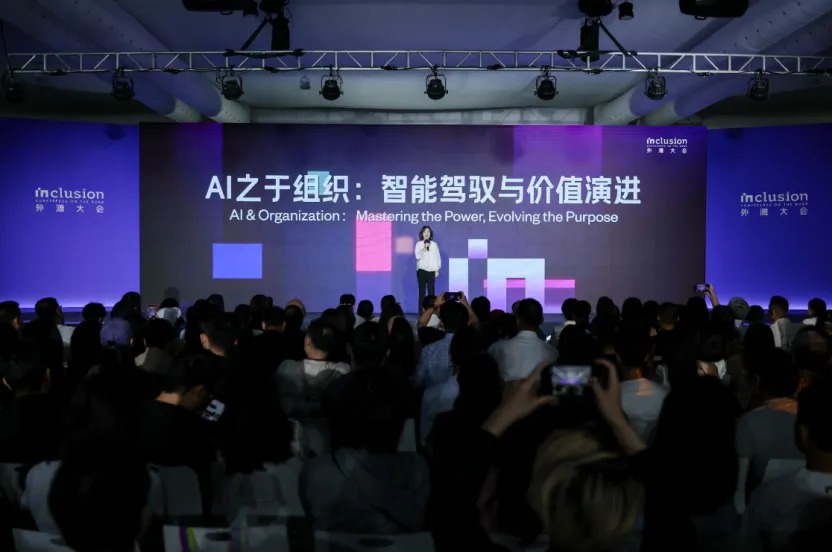
2026年9月12日,在2026 Inclusion·外滩大会期间,蚂蚁集团携手香港大学,联合哈佛商业评论中国,特别策划的「AI之于组织:智能驾驭与价值演进」见解论坛圆满落幕。本次论坛汇聚企业高管、资本市场的战略观察者、AI创业者,从真实实践与前沿思考出发,共同探索AI Native时代的生产关系、人才吸引与组织选择,重新审视组织何以凝聚,又将走向何处。

“都说AI让我们效率更高了,为什么我们反而变得更累了?”“我每天教AI怎么做我的工作,是在亲手训练自己的替代者吗?”

这是2026外滩大会发布的“AI科技人文十问”的前两问,都与组织相关。它反映了这个现实:AI正在重塑经济,革新技术和组织范式。

大模型技术的新形态——智能体(AI Agent)正加速进入经济运行的各个场景,渗透到工作流中,成为组织里“会思考,能干活”的数字员工。

经济学家关心的是,“AI可能同时改变劳动、资本、知识生产乃至决策方式。”AI新经济如何变得更包容、普惠?AI要如何改变就业结构、收入分配,从而影响消费和总需求?

对管理学家和企业来说,AI固然强大,但不能止步于降本增效,更应该走向价值创造。现实却是,AI不会自动转化为组织能力;AI提升了个人效率,却没有带来组织增长与发展。

在此背景下,「AI之于组织:智能驾驭与价值演进」见解论坛应时举办。多位来自业界前沿的嘉宾,分享了大型科技企业的组织创新探索,覆盖1500人的人机协同实践,以及持续生长的开放社区样本,并深入探讨了当下广受关注的关键议题:如何驾驭Al,释放人机协作的价值?AI Native(AI原生)的生产关系将如何重构决策、分工与激励?当AI持续放大个体能力,组织又将依靠何种独特价值吸引井凝聚顶尖人才?
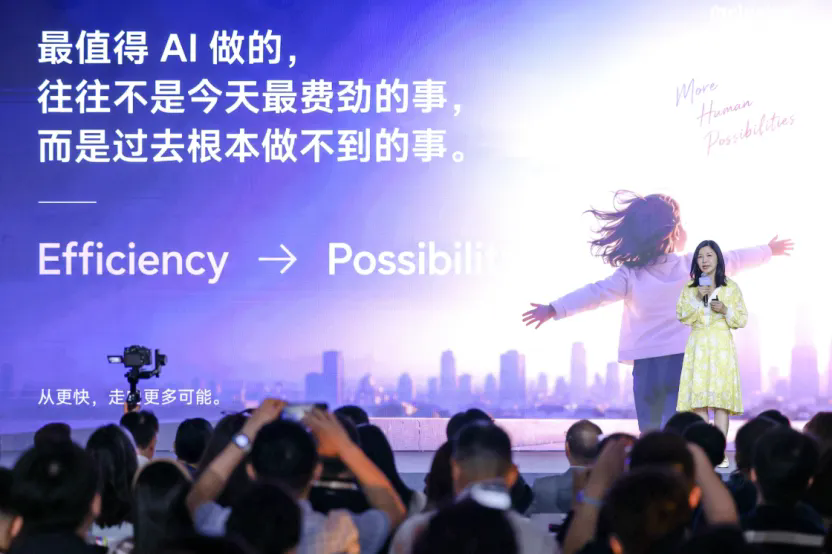
在「AI之于组织,到底意味着什么?」开场演讲中,蚂蚁集团资深副总裁、首席人才官吴敏芝提出,组织当下普遍处于既兴奋又焦虑的状态,因为AI工具的普及不代表AI组织能力的形成。如何转变?第一,从以前一直想做却没能力做的事开始;第二,不是把AI塞进旧组织,而是围绕价值重新设计组织,打造AI原生项目,真正释放AI的价值。目前,蚂蚁的组织工作在管理者赋能、人才管理、员工关怀等领域创造了多个AI原生项目:第一次让情境化的、及时的管理知识实现了规模化;开启了人才管理范式的转换;将关怀延伸到员工的家人。最后,吴敏芝提出了一个灵魂之问,一个好的组织到底给员工提供什么?首先是意义,我为什么要做这件事情?其次是志同道合的人,我跟谁一起做这件事情?三是信任,我是不是在一个可以创新、不怕犯错误的组织环境里?最后是影响力,能不能做到一个人无法完成的、对社会有影响的事情。
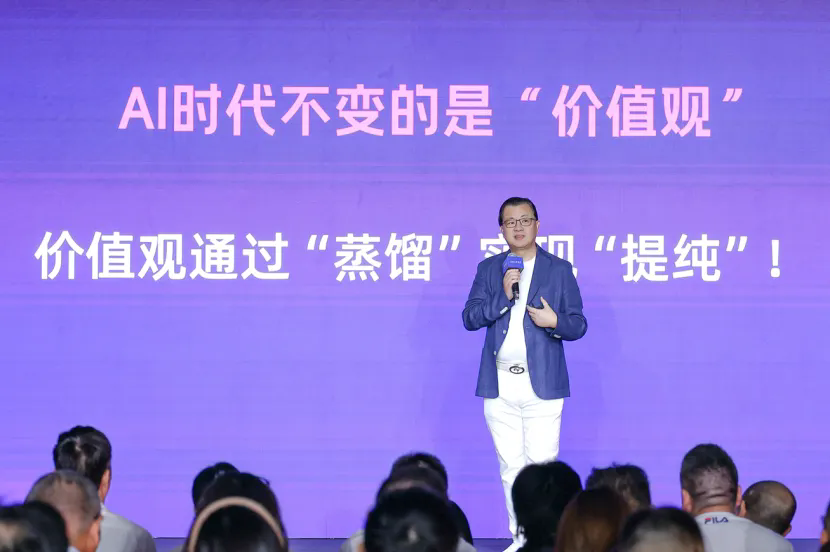
嘉御资本董事长兼创始合伙人卫哲在「从硅谷到中国:AI浪潮下的新机会与新组织」演讲中,先分析了AI产业发展的现状、机会,分享了AI原住民的新组织现象——搭建了以AI Hub为中心的工作流。然后,谈论了现有组织如何向AI原生组织转型:第一,从组织的“腰部”(总监级别)突破,开始改变;第二,分三步走用好AI,从数字仪表盘+人工驾驶到“辅助驾驶”,再到AI自主决策;第三,AI时代的人要努力学习审美、文科知识,并重新训练记忆力。最后,卫哲强调了三大预言:从现在开始,2年左右,手机中的APP会少一半;10年左右,人类每周的工作时间应该少于4天;AI+Science、AI+Healthcare能实现人人过百岁。
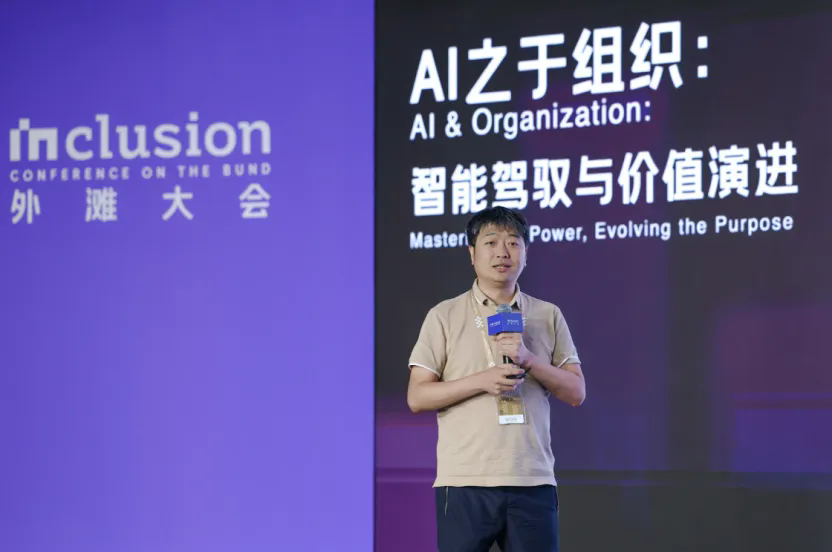
明略科技联合创始人、总裁兼CFO姜平在「AI时代的组织管理范式重构:从Human-in-the-Loop到Agent-in-the-Loop」演讲中,先介绍了明略科技当下的生产力和生产关系——4837个AI助理、2900个AI专家、1800名人类员工;人类、AI助理、AI专家各有分工,目前已跨过Token Ready、AI在线的阶段,向结构化沉淀、AI自我迭代探索迈进。这背后,是一套全新的、持续进化的组织操作系统。如何实现?一是Human in the Loop,一是Agent in the Loop;前者是人主导,人给系统更多的上下文和品味,介入整个流程;后者由Agent主导,让Agent自闭环,使整个组织能够循环起来。这两者的关系是,AI越能处理确定性,人就越要为不确定性负责。
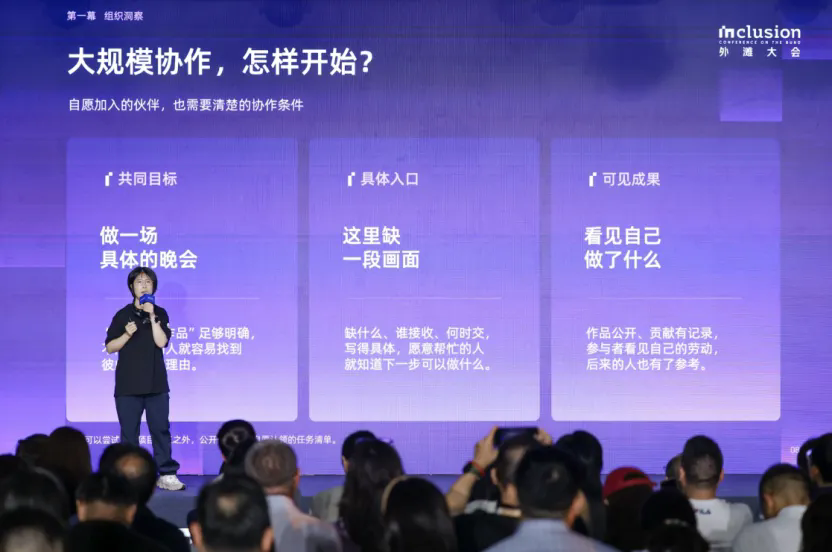
WaytoAGI发起人AJ在「没有KPI,什么让我们走向同一个方向?」的分享中,先介绍了WaytoAGI,一个基于兴趣爱好的开源组织,一个没有汇报关系、没有KPI的非正式组织,从2023年年初开始,到今天已经覆盖了52个城市,线上线下的活动超过了100场,办过“AI春晚”“AI大会”等等。那么,它是如何吸引越来越多的人加入的?最初,沉浸于共创作品的探索精神,被人看到的兴奋感;后来,参与者变成了组织者;再后来,实现更多的链接,包括资本、用户、孵化器、公益组织,等等。
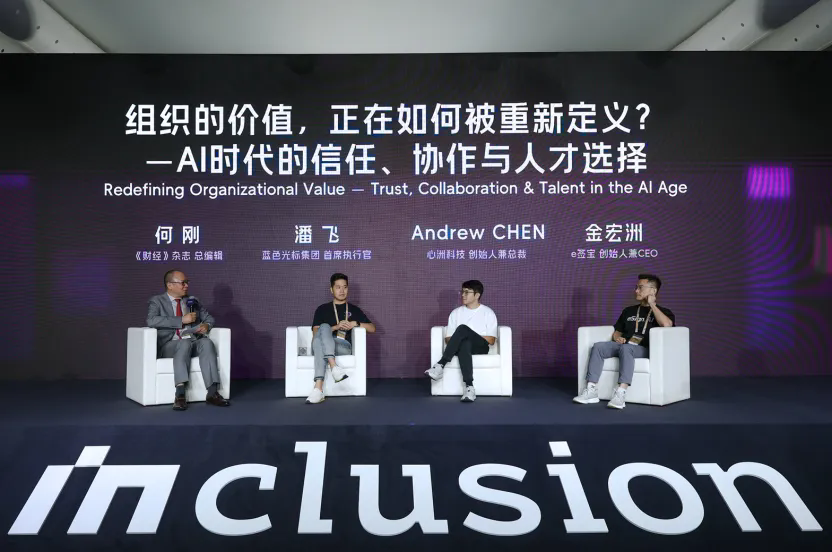
在论坛最后的「组织的价值,正在如何被重新定义?——AI时代的信任、协作与人才选择」圆桌对话环节,由《财经》杂志总编辑何刚主持,蓝色光标传播集团首席执行官潘飞、心洲科技创始人兼总裁Andrew Chen、e签宝创始人兼首席执行官金宏洲围绕“人因何而来?人因何而留下?”,结合自身的业务和实践各抒己见,带来了极具洞察力的观点。

潘飞认为,在AGI到来之前,AI必然带来人员的大量减少是一个非常有欺骗性的话题。一方面,企业应该跳出降本增效的视角,思考既要保留“旧城”,又要构建10座“新城”。另一方面,面对长链路、全链路、长程的智能任务,全闭环地做全球市场,组织的作用肯定要比团队大,大于个人。AI时代,组织能力的几个要素——学习能力、迭代能力、内部的创始人精神或创业精神,愿景、初心以及战略——的重要性被提到了空前的高度。组织的靠谱程度,和人与人之间的信任程度、人才密度与AI Native的原生度密切相关。而一人公司(OPC)需要一个成长的过程。当他们长大之后,必然会发现一些组织的经典要素,比如战略、存在的意义以及组织力的价值;信任和价值观会猛烈回归,重要性甚至超越之前AI Native组织的原生要素。

心洲科技是一家AI原生企业。Andrew Chen介绍道,目标的实现是AI First,而不是People First,即大部分任务的交付应该由AI全部完成。为了实现这一目标,心洲科技把Token消耗作为每天工作的重要指标,并基于此做过程管理。此外,心洲科技还用“养龙虾”把组织里的“文科生”变成了AI的信徒。但今天,真正重要的是事情是,把好的创意转化成模型的能力、用户的价值。这件事不是一个人的工作,而是一个系统要切切实实承受的压力。

金宏洲认为,AI让一个人的能力扩大了10倍甚至100倍,但一个组织的价值,过去、现在和未来都不会变。如何让具备百倍能力的个体或OPC,融入一个值得信任的强大系统,从而变成一个强大的整体,而不仅仅是一个个体?三点:第一,“意义”,即使命、愿景和价值观,一个组织做什么事情、该怎么做事情;第二,组织之所以强大,是因为它有长期的沉淀,无论是上下文,还是其他能力,这些长期沉淀能进一步形成规模化的能力;第三,信任或者品牌,消费者或客户是因为品牌而去选择。

作为组织新的操作系统,AI对重构组织、提升能力提出了全新的命题与挑战。

AI让人更强大,也应该让组织更强大。没有组织能力的升级,没有美好组织建设,个体的能力跃升,未必能带来价值的突破与爆发。

诚然,不管是AI原生企业的试验,还是大型企业的转型,今天都得不到最终的答案。但是,人是目的这一原则、主旨是不会变的,AI应该成为人、组织仰望星空、探究未知、奔赴星辰大海的新动力、新航船。从此出发,我们才能真正发现AI之于组织的价值、意义。

注:文/龚作仁,文章来源:Laborer,本文为作者独立观点,不代表亿邦动力立场。

【版权提示】亿邦动力倡导尊重与保护知识产权。未经许可,任何人不得复制、转载、或以其他方式使用本网站的内容。如发现本站文章存在版权问题,烦请提供版权疑问、身份证明、版权证明、联系方式等发邮件至run@ebrun.com,我们将及时沟通与处理。

已点赞

+1

{{ praise_text }}

好文章,值得被更多人看到

FAQ回顾

AI时代企业该如何构建AI原生组织能力?

企业构建AI原生组织能力,可从过往想做却无能力落地的事项切入,避免将AI生硬套入旧有组织架构,围绕价值重新设计组织、落地AI原生项目;可从腰部管理层突破,按人工驾驶、AI辅助驾驶、AI自主决策三阶段逐步推进。

AI Agent普及会给企业组织带来哪些变化?

智能体(AI Agent)正加速渗透各行业工作流,成为“会思考、能干活”的数字员工,将重构组织的决策模式、分工体系与激励机制;AI可大幅提升个体效率,但不会自动转化为组织能力,需配套组织机制升级才能释放价值。

AI时代企业组织的核心价值体现在哪些方面?

AI时代组织的核心价值并未发生本质改变,一是为员工提供工作意义、志同道合的协作伙伴、允许试错的信任环境,支撑个体创造更大社会价值;二是通过长期沉淀形成规模化能力,依托信任与品牌凝聚高能力个体,实现整体价值突破。

国内AI原生企业有哪些可参考的组织管理实践?

国内已有不少AI原生组织探索出可参考实践:心洲科技以AI First为目标,将Token消耗作为核心过程管理指标;明略科技搭建人机协同组织操作系统,配置AI助理、AI专家与人类员工分工协作;开源社区WaytoAGI靠兴趣与资源链接凝聚参与者。

广告

下一篇

跨境电商资源对接

《全球跨境电商服务商资源手册》第二期手册现已发布,触达更多资源,了解跨境服务商信息,欢迎点击链接下载。

了解详情

微软将Grok模型接入Word等三款Office办公软件

当地时间2026年9月14日,微软将SpaceX旗下Grok大模型接入Word等三款核心Office软件,目前为预览版,Office Copilot已支持三家厂商的主流大模型。