



• 亿邦公众号
    • APP下载

红熊AI发布MemorySkills:给你的AI助手装上“专属记忆”

作者:龚作仁 文章来源:Laborer

2026-09-11 23:26

作者:龚作仁 文章来源:Laborer

2026-09-11 23:26

邦小白快读

EN
全文速览

这篇文章核心介绍了红熊AI最新发布的MemorySkills记忆插件,能够解决日常使用各类AI助手时记忆不互通、会话清零的痛点,普通用户尤其是常用AI工具的开发者,可以按照明确的实操步骤快速用上跨工具的专属AI记忆。

1. 当前AI使用的普遍痛点:大家常用的Claude Desktop、Cursor、VS Code、Cline等AI工具,各自记忆互不连通,关掉会话前设置的偏好、定下的规则就会清零,换工具就要重新给AI“立规矩”,重复消耗时间。

2. 插件的核心实用价值:接入后可以主动稳定记录长期偏好、项目决策,AI会在需要时自动调取相关记忆,检索深度有三档可按需切换,一份记忆能在所有主流AI客户端通用,记忆库内容可查可回溯,还有三重安全机制保护敏感信息不泄露。

3. 实操步骤简单易上手:不需要复杂修改配置,三步即可完成,先给AI加载对应Skill文件,再通过邮箱免密登录领取专属记忆钥匙,后续配置由AI自动完成,几分钟就能正常使用。

这篇内容展现了AI工具赛道最新的用户需求转向与产品创新逻辑,对AI相关品牌的产品研发、价值传递、竞争策略制定有明确的参考意义。

1. 用户行为与消费趋势方面,Stack Overflow2025年开发者调查显示,84%的开发者已在开发流程中使用或计划使用AI工具,过半专业开发者每天使用,AI工具已进入高渗透阶段,用户核心痛点已从基础能力不足转向多工具切换下的记忆割裂问题。

2. 产品研发的差异化方向:当前主流AI工具的记忆功能都绑定自有产品,用户攒下的项目记忆、工作偏好无法迁移,本质是把用户的工作资产锁在了平台里,品牌可以主打“记忆属于用户”的价值点,打造跨会话、跨客户端的通用记忆能力,搭配分档检索、记忆可视化、安全防护等功能形成差异化。

3. 竞争策略参考:红熊AI将原本服务B端千行百业的成熟记忆引擎能力复用在C端,提出AI下一阶段竞争核心是“记住用户”而非拼参数规模,为品牌的价值传递提供了新思路。

这篇内容释放了AI工具赛道的新需求缺口与落地参考,AI相关工具、数字服务类卖家可以从中捕捉增量机会,借鉴成熟产品的设计与运营逻辑,规避潜在经营风险。

1. 增长机会提示:当前AI开发工具渗透率已经处于高位,用户需求已经从“有没有AI辅助能力”升级为“AI能不能适配个人习惯、跨工具流畅使用”,跨工具通用记忆类插件、配套服务是明确的增量市场,覆盖高频使用AI工具的庞大开发者群体。

2. 可学习的运营与产品逻辑:红熊AI的记忆产品精准击中用户怕麻烦、怕信息泄露的核心顾虑,功能上设置三档检索适配不同场景、记忆可视化消除黑盒疑虑、三重安全机制防止敏感信息泄露,接入流程做到极致简化,无需用户手动改配置、三步即可完成操作、自动备份原有设置,大幅降低使用门槛。

3. 模式参考与风险提示:卖家可以借鉴B端成熟能力轻量化落地C端的路径,用同一底层能力覆盖两类客群;要注意避免做封闭绑定自有产品的记忆功能,这类容易形成记忆孤岛的产品会逐渐被可迁移的通用记忆服务替代。

这篇内容展现的AI工具迭代方向,能为软件、数字技术类产品的生产设计端明确需求导向,也能为各类工厂自身的数字化、AI工具落地提供实用参考。

1. 产品生产与设计需求:当前高频使用AI工具的开发者群体,核心未被满足的需求是跨工具的记忆互通,相关数字产品生产端可以围绕可迁移记忆能力做配套设计,功能上需要覆盖主动记忆存储、场景化自动召回、多档位检索适配、记忆可视化查询、敏感信息安全防护几个核心模块,做好对主流AI客户端的适配。

2. 商业机会提示:类脑记忆这类技术能力,既可以面向B端千行百业提供企业级基础设施服务,也可以轻量化改造为面向C端个人用户的插件类产品,形成ToB加ToC的双线业务布局,扩大营收覆盖范围。

3. 自身数字化推进启示:工厂在研发、办公场景落地AI工具时,可以优先选择支持跨工具通用记忆的服务,避免不同AI工具间的信息孤岛,减少员工重复给AI输入规则、交代项目背景的时间成本,提升数字化工具的实际使用效率。

这篇内容清晰呈现了AI服务赛道的最新发展趋势、客户核心痛点与可落地的解决方案,为各类AI服务商的业务布局、产品迭代提供了明确参考。

1. 行业发展趋势方面,当前AI助手的模型能力差距正在快速缩小,下一阶段的行业竞争核心已经从模型参数规模比拼,转向用户长期记忆能力的比拼,不管是面向B端的企业服务还是面向C端的个人服务,能留存、调用用户专属记忆的服务会形成更强的用户粘性。

2. 客户核心痛点:无论是企业客户还是个人开发者用户,使用AI工具时都面临记忆孤岛问题,不同AI客户端的记忆互不连通,会话关闭后记忆清零,换工具就要重新输入偏好、交代背景,重复消耗时间成本,同时用户还普遍担心记忆内容黑盒、敏感信息泄露的问题。

3. 可落地的解决方案参考:服务商可以采用分层密钥的安全架构,把记忆归属权交还给用户,设计主动记忆、自动触发召回、多档检索适配、可视化记忆库的功能矩阵,同时打造低门槛接入流程,无需用户复杂配置即可快速使用,还可将成熟ToB能力复用在C端场景,拓展服务边界。

这篇内容反映了当前AI工具用户对跨平台记忆互通的明确诉求,能为AI工具平台、开发者服务平台的功能迭代、生态建设、风险规避提供参考方向。

1. 平台当前面临的用户需求与共性问题:平台上的用户普遍会在多个AI客户端间切换使用,各平台自带的记忆功能互相隔离、无法迁移,会话关闭后记忆就会清零,导致用户重复输入规则、使用体验断层,同时用户对记忆内容的透明度、敏感信息安全有很高的要求。

2. 平台运营与生态建设可参考的方向:平台可以开放自身接口能力,支持合规的第三方通用记忆服务接入,允许用户将自身的偏好、项目记忆等个人数字资产在平台内留存并支持跨端迁移,降低用户使用成本;自有记忆功能可以参考主动记忆、自动召回、分档检索、记忆可视化的设计,搭配分层密钥、敏感信息不落地的安全机制,提升用户信任度。

3. 风向规避提示:平台如果将用户产生的记忆资产锁死在自有产品内、不支持迁移,长期来看会被支持记忆随用户流动的服务分流,需要及时调整功能逻辑;招商引入记忆类工具服务商时,要优先选择有大规模落地经验、安全机制完善的合作方,降低生态风险。

这篇内容反映了AI Agent产业发展进程中的最新竞争动向、现存核心问题与创新商业模式,具备明确的产业研究价值。

1. 产业新动向方面,据Stack Overflow2025年开发者调查数据,AI开发工具已经进入高渗透阶段,84%的开发者已在开发流程中使用或计划使用AI工具,过半专业开发者每天使用;行业竞争逻辑正在发生转变,AI助手的模型能力差距快速缩小,竞争焦点从参数规模比拼转向用户长期记忆能力的比拼,记忆能力将成为拉开产品体验差距的核心要素。

2. 产业现存新问题:当前主流AI工具的记忆功能属于绑定平台的封闭功能,形成了跨工具的记忆孤岛,用户产生的工作记忆、偏好设置无法在不同工具间迁移,会话关闭就清零,本质上是用户的个人数字资产被平台割裂,同时还存在记忆内容黑盒、敏感信息泄露的潜在风险。

3. 创新商业模式参考:红熊AI将自研的、已在千行百业落地的MemoryBear类脑记忆引擎作为底层能力,一方面面向B端提供企业级记忆基础设施服务,另一方面将能力轻量化封装为跨端通用的插件,以专属记忆钥匙的形态交付给C端个人用户,实现同一底层能力支撑ToB与ToC两类场景,践行记忆归属用户的产品逻辑。

声明:快读内容全程由AI生成,请注意甄别信息。如您发现问题,请发送邮件至 run@ebrun.com 。

我是 品牌商 卖家 工厂 服务商 平台商 研究者 帮我再读一遍。

Quick Summary

This article introduces MemorySkills, the newly launched memory plugin from Red Bear AI, designed to address two widespread pain points for everyday AI users: disconnected memory across different AI assistants, and memory resets when conversations end. Regular users, especially developers who frequently work with AI tools, can follow clear, simple steps to set up cross-tool, personalized AI memory in minutes.

1. Common pain points in current AI usage: Popular AI tools including Claude Desktop, Cursor, VS Code, and Cline operate with siloed memory. User preferences and custom rules set in one conversation are erased once the session closes, forcing users to reconfigure instructions every time they switch tools, creating unnecessary repetitive work.

2. Core practical value of the plugin: Once integrated, the plugin proactively and reliably stores long-term user preferences and project decisions, which AI tools will automatically retrieve when relevant. It offers three adjustable retrieval depth levels to fit different use cases, makes a single set of memory accessible across all mainstream AI clients, supports searchable, traceable memory archives, and includes three layers of security mechanisms to prevent sensitive information leaks.

3. Simple, accessible setup process: No complex configuration changes are required. Users can complete setup in three steps: load the corresponding Skill file to their AI tool, sign in via password-free email authentication to claim their personal memory key, and let the AI complete the remaining configuration automatically, with full functionality ready in just a few minutes.

This article highlights shifting user demands and emerging product innovation logic in the AI tool sector, providing actionable insights for AI-relevant brands to inform product development, value communication, and competitive strategy.

1. User behavior and consumption trends: According to Stack Overflow’s 2025 Developer Survey, 84% of developers already use or plan to use AI tools in their development workflows, and more than half of professional developers use AI daily. As AI tool penetration reaches high levels, core user pain points have shifted from insufficient basic model capabilities to fragmented memory across multi-tool workflows.

2. Differentiated product development direction: The memory features of current mainstream AI tools are all tied to their respective proprietary products, locking users’ accumulated project context and work preferences within individual platforms and preventing cross-tool migration. Brands can differentiate themselves by centering the value proposition that “memory belongs to the user,” building universal memory capabilities that work across conversations and clients, supported by tiered retrieval, memory visualization, and security protection features.

3. Competitive strategy reference: Red Bear AI has repurposed its mature memory engine, originally built for enterprise clients across industries, for consumer use cases. The company argues that the next phase of AI competition will center on “remembering the user” rather than scaling model parameters, offering a new framework for brands to communicate product value.

This article identifies unmet demand gaps and practical implementation references in the AI tool sector, helping sellers of AI tools and digital services capture incremental growth opportunities, draw lessons from proven product and operational design, and avoid potential business risks.

1. Growth opportunity signals: With AI development tool penetration already at a high level, user demand has evolved from “access to AI assistance” to “AI that adapts to personal habits and works seamlessly across tools.” Cross-tool universal memory plugins and supporting services represent a clear incremental market, serving the large base of developers who use AI tools on a daily basis.

2. Actionable product and operational logic: Red Bear AI’s memory product directly targets core user concerns around unnecessary hassle and information leakage. Its feature set includes three retrieval tiers to fit different scenarios, visual memory access to eliminate “black box” distrust, three layers of security to prevent sensitive data leaks, and a maximally streamlined onboarding process that requires no manual configuration changes, works in three steps, and automatically backs up existing settings to lower usage barriers.

3. Model reference and risk alerts: Sellers can leverage the go-to-market approach of adapting mature B2B capabilities for lightweight consumer deployment, using a single underlying technical system to serve both customer segments. They should avoid building siloed, product-locked memory features, as such closed, isolated memory functions will gradually be displaced by portable, universal memory services.

The AI tool iteration trends outlined in this article provide clear demand guidance for the production and design of software and digital technology products, as well as practical references for factories implementing their own digital transformation and AI tool deployments.

1. Product production and design requirements: The core unmet need for frequent AI-using developers is cross-tool memory interoperability. Digital product teams can design supporting products around portable memory capabilities, with core modules covering proactive memory storage, context-triggered automatic recall, multi-tier retrieval, visual memory search, and sensitive information security protection, while ensuring compatibility with all mainstream AI clients.

2. Commercial opportunity insights: Technical capabilities such as brain-like memory systems can be deployed both as enterprise-grade infrastructure for B2B clients across industries, and repackaged as lightweight consumer plugins for individual C2C users, creating a dual B2B+B2C business structure to expand revenue reach.

3. Implications for internal digital transformation: When deploying AI tools for R&D and office scenarios, factories can prioritize services that support cross-tool universal memory to avoid information silos between different AI systems, reduce time spent by employees repeatedly inputting rules and project background to AI tools, and improve the practical efficiency of digital tool deployments.

This article clearly outlines the latest development trends, core customer pain points, and actionable solutions in the AI services sector, providing explicit guidance for AI service providers on business layout and product iteration.

1. Industry development trends: The capability gap between AI assistant models is narrowing rapidly, and the core focus of industry competition is shifting from model parameter scale to long-term user memory capabilities. For both enterprise-facing B2B services and consumer-facing personal services, offerings that can store and retrieve user-specific memory will drive stronger user stickiness.

2. Core customer pain points: Both enterprise clients and individual developer users face memory silo issues when using AI tools: memory across different AI clients is disconnected, resets after a session ends, and forces users to re-enter preferences and project context every time they switch tools, incurring repeated time costs. Users also hold widespread concerns about black-box memory processes and sensitive information leaks.

3. Actionable solution references: Service providers can adopt a layered key security architecture to return memory ownership to users, building a feature matrix including proactive memory capture, automatic trigger-based recall, multi-tier retrieval adaptation, and a visual memory library, paired with a low-friction onboarding process that requires no complex user configuration. They can also extend service boundaries by reusing mature B2B capabilities for C-end scenarios.

This article reflects clear user demand for cross-platform memory interoperability among AI tool users, providing directional guidance for AI tool platforms and developer service platforms on feature iteration, ecosystem building, and risk mitigation.

1. Current user demands and common platform pain points: Platform users commonly switch between multiple AI clients, but built-in memory features across platforms are isolated, non-portable, and reset when sessions close. This leads to repetitive rule input and fragmented user experiences, while users also hold high expectations for memory transparency and sensitive information security.

2. Operational and ecosystem building directions: Platforms can open their API capabilities to support compliant third-party universal memory services, allowing users to store personal digital assets such as preferences and project memory within the platform and support cross-end migration to reduce user friction. Proprietary memory features can incorporate design elements including proactive memory capture, automatic recall, tiered retrieval, and memory visualization, paired with security mechanisms such as layered keys and zero sensitive data retention to build user trust.

3. Risk mitigation guidance: Platforms that lock user-generated memory assets within proprietary products and block portability will face long-term user churn to services that support portable, user-controlled memory, requiring timely adjustments to feature logic. When onboarding memory tool service providers, platforms should prioritize partners with large-scale implementation experience and robust security mechanisms to reduce ecosystem risk.

This article reflects the latest competitive dynamics, outstanding core challenges, and innovative business models in the evolution of the AI Agent industry, carrying clear industrial research value.

1. Emerging industry trends: Per Stack Overflow’s 2025 Developer Survey, AI development tools have reached a high penetration stage, with 84% of developers using or planning to use AI tools in their development workflows, and more than half of professional developers using AI daily. The logic of industry competition is shifting: as capability gaps between AI assistant models narrow rapidly, competitive focus is moving from parameter scale competition to long-term user memory capabilities, which will become the core differentiator for product experience.

2. Outstanding industry challenges: The memory features of current mainstream AI tools are closed, platform-tied functions that create cross-tool memory silos. Users’ work memory and preference settings cannot migrate between tools and are erased when sessions close, effectively fragmenting users’ personal digital assets across platforms, alongside underlying risks of black-box memory processes and sensitive information leaks.

3. Innovative business model reference: Red Bear AI uses its self-developed MemoryBear brain-like memory engine, already deployed across enterprise use cases in multiple industries, as its underlying technical capability. It provides enterprise-grade memory infrastructure services for B2B clients on one hand, and packages the capability into a lightweight cross-platform universal plugin delivered to C-end individual users via a personal memory key, supporting both B2B and C2C scenarios with a single underlying system and enacting the product logic that memory ownership belongs to the user.

Disclaimer: The "Quick Summary" content is entirely generated by AI. Please exercise discretion when interpreting the information. For issues or corrections, please email run@ebrun.com .

I am a Brand Seller Factory Service Provider Marketplace Seller Researcher Read it again.

过去两年,AI助手全面进入开发者的日常工作。Stack Overflow 2025年开发者调查显示,84% 的开发者已在开发流程中使用或计划使用AI工具,过半专业开发者每天使用。

Claude Desktop、Cursor、VS Code、Cline……工具越来越多、越来越强,但一个新的尴尬却浮现出来:每个工具都记得一点你,却没有一个完整记得你。

在Cursor里教过的规矩、定下的技术选型,换到Claude Desktop需要重新“立规矩”。会话一关,说过的偏好、聊过的上下文随之清零。你换工具的速度越快,向AI「重新自我介绍」的次数就越多。

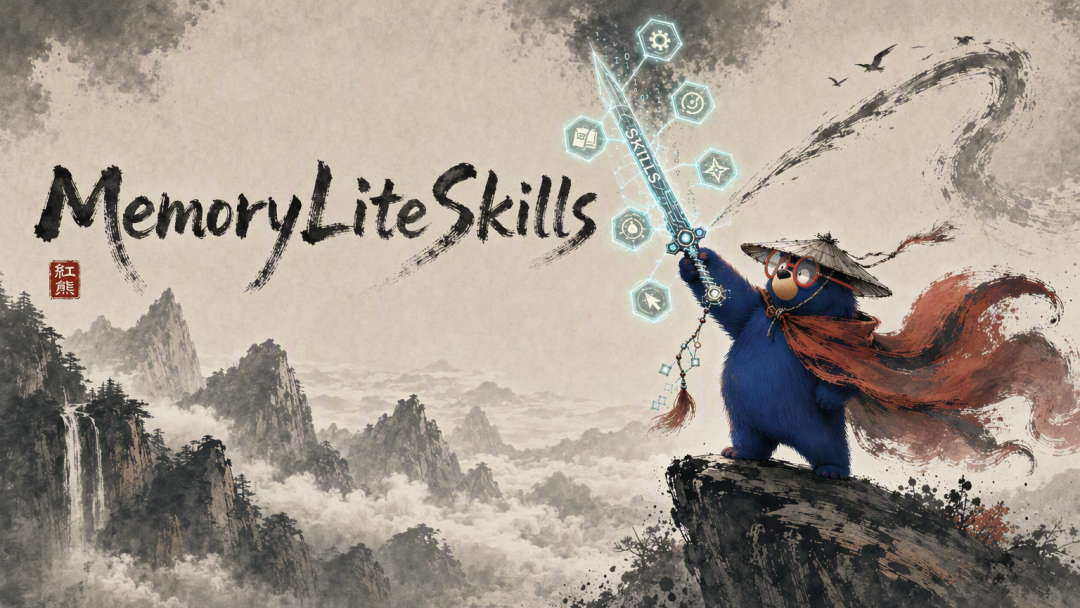
今天,红熊AI记忆科学正式发布MemorySkills,帮你把红熊AI自研的MemoryBear记忆服务接入任意AI客户端:打造一份专属于你的,跨会话、跨客户端的长期记忆。

它不仅是一个好用的记忆插件,更是红熊AI用记忆科学写给 “Agent时代” 的一次回答:当AI助手的能力差距在快速缩小,真正拉开体验差距的,是谁记得住用户。
图片

01 让“记忆”专属于用户,而非工具

主流工具陆续推出各自的记忆功能,但记忆都锁在各自的产品里。你在某一个工具里攒下的项目记忆、调教好的工作偏好,带不走、换不了,换一个工具,等于从零开始。工具在多点开花,记忆却被切成了彼此隔离的孤岛。

但记忆本来就是用户自己的工作资产。你做过的技术选型、踩过的坑、定下的团队规范,都是拿真实的工作时间换来的。

在红熊AI看来:记忆应该属于用户,而不该散落在各个工具里。工具可以换,偏好不该重教;模型可以升级,积累不该清零。所以,红熊AI将MemoryBear的核心能力转化为Skill,让它成为一份跟随用户的记忆。

02 五大记忆功能,让记忆跟着用户走

MemorySkills把这个判断做成了产品。接入之后,你的AI客户端会多出两个记忆工具,「记住」和「回忆」,它能帮你做到:

❖ 主动记住重要的事:

你对AI说「记住我以后都用pnpm」,稳定偏好、长期决策、持续跟进的事项就会写进记忆,跨天有效,跨项目也有效,而不是关掉窗口就清零。

❖ 该回忆时,它自己回忆:

当问题依赖你的历史偏好或过往上下文时,AI会自动从记忆里取回相关内容,回答直接贴合你的实际情况,不再答得像第一次见你。

❖ 检索深浅,三档可调:

日常对话走快速召回,秒回不啰嗦;认真翻旧账时切到深度档,把散落在历史里的记忆扫得更完整;做研究性回顾,还有最深的一档。速度与全面,按需切换。

❖ 一份记忆,多处通用:

一次领用,Claude Desktop、Cursor、VS Code、Cline等客户端共享同一份记忆。在哪个工具里记下的,换个工具照样想得起来。对每天在多个工具间切换的开发者来说,记忆第一次真正归了自己。

❖ 记住了什么,看得见:

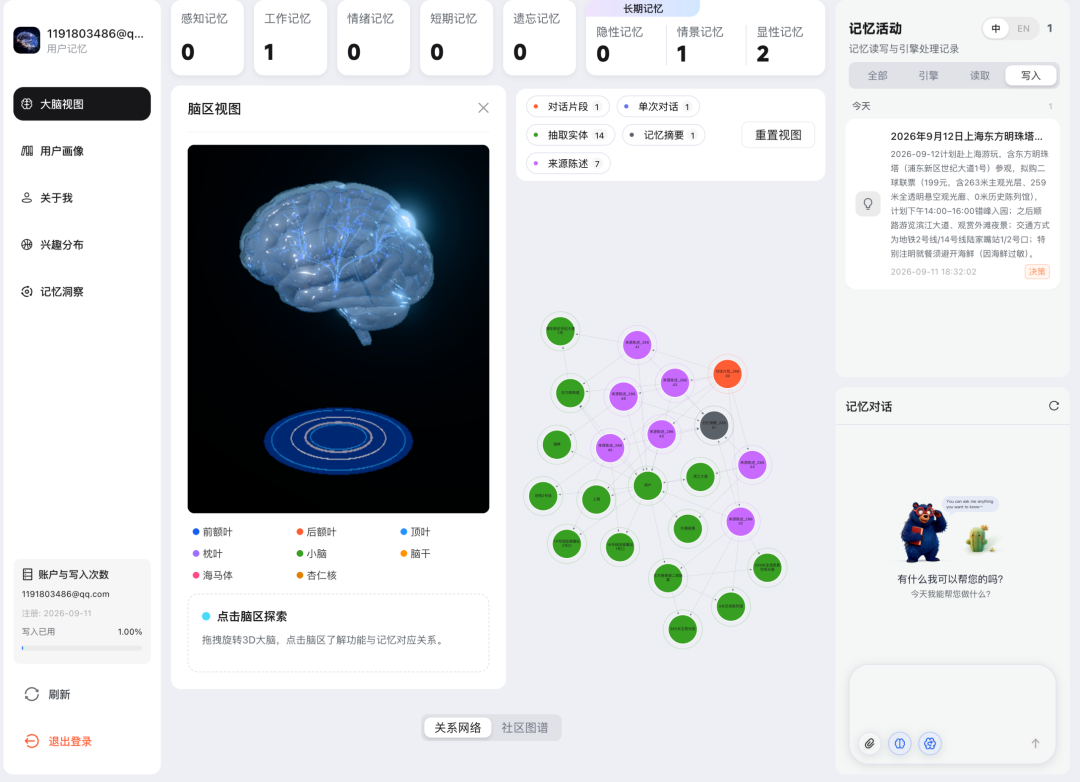
记忆库不是黑盒。随时打开记忆图谱,AI到底沉淀了哪些关于你的信息,可查、可回溯。
图片

在安全层面,MemorySkills设了三道安全门,把记忆能力交给你,把安全边界留在架构:

◉ 你手里的记忆钥匙只到达MemorySkills服务端;

◉ 服务端用一把独立的空间钥匙代理读写MemoryBear记忆库,两层钥匙互不交叉、互不下发;

◉ 验证码、密钥等敏感凭证一律不写入记忆、不落盘到代码仓库。

03 简单三步,领取你的专属记忆钥匙

整个领用和接入不需要密码,也不需要手动改配置,你亲自要做的,只有浏览器里的几次点击。

第一步,安装Skill

在GitHub页面搜索MemoryBearLiteSkill,把仓库里的SKILL.md交给你的AI Agent,作为Skill加载,或直接把内容贴进对话,再对它说一句「按这份Skill帮我接入MemoryBear记忆服务」。

图片

第二步,领取记忆钥匙

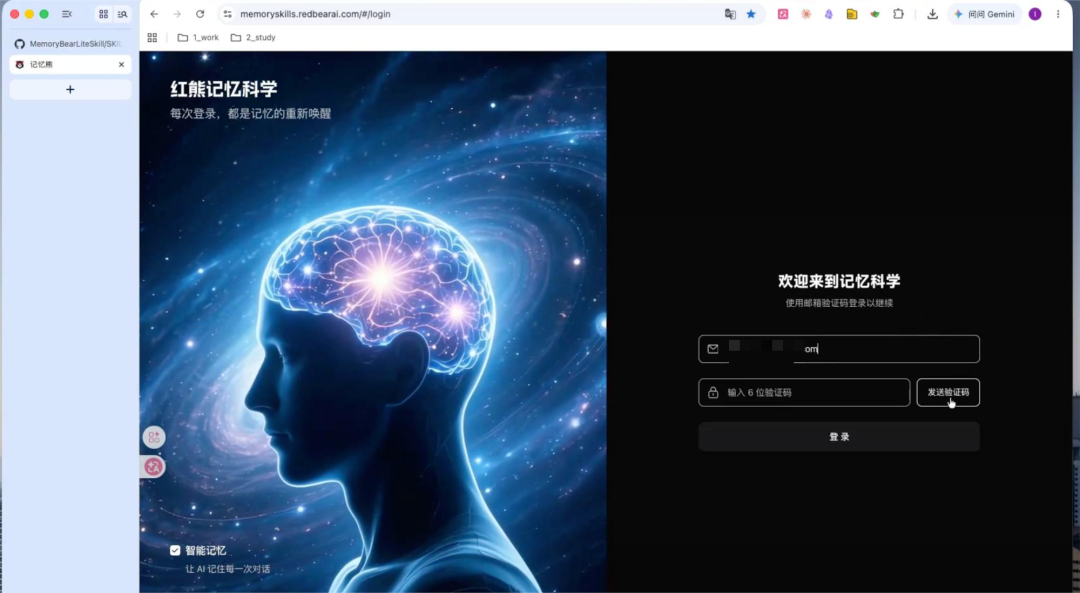
Agent会帮你打开登录页:在浏览器里用邮箱验证码免密登录,新用户自动注册;登录后从凭证卡复制属于你的记忆钥匙。同一账号每次登录拿到的都是同一把钥匙,不用担心重新登录会让旧配置失效。
图片

第三步,Agent自动配置

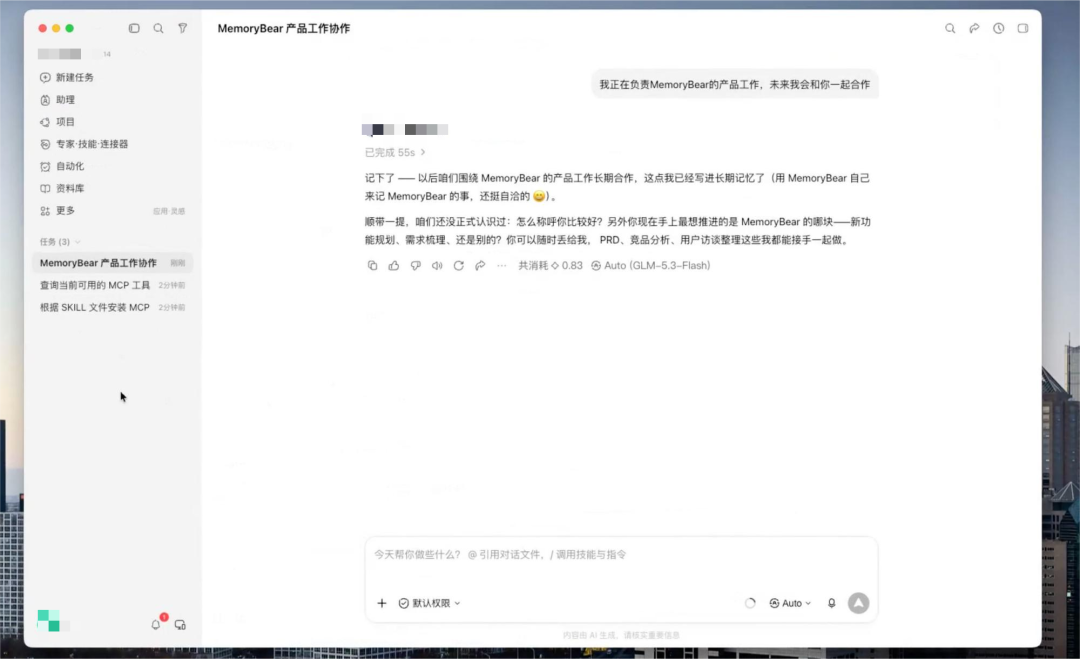
Agent识别你当前使用的客户端,自动写入配置、验证连接,写入前先备份,只新增、不动你已有的配置。
图片

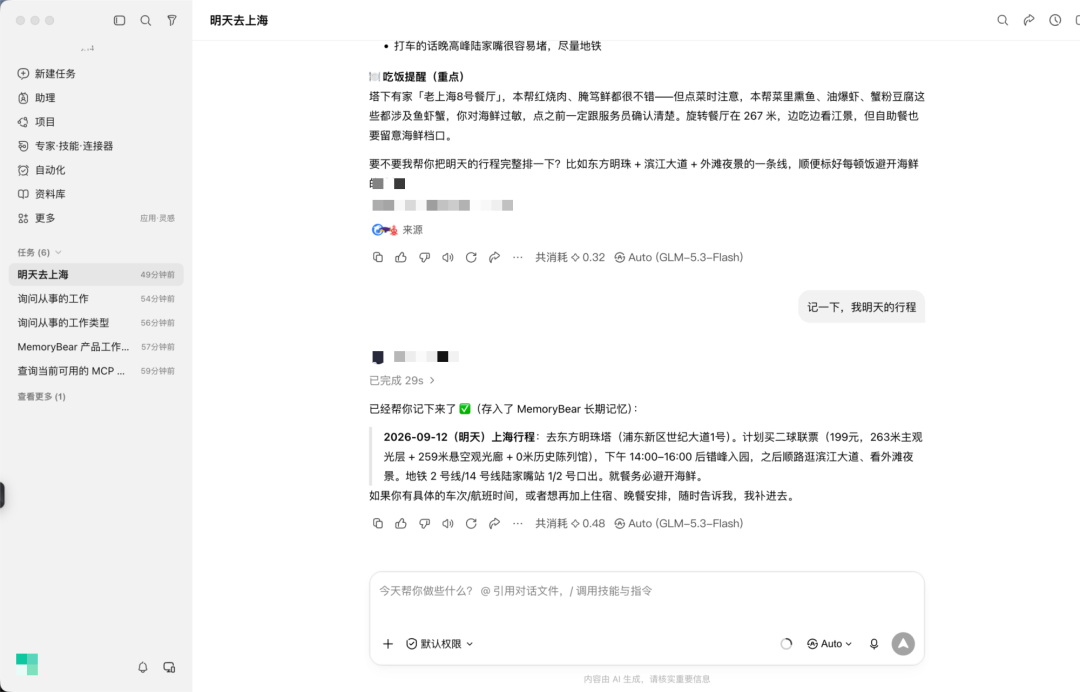
几分钟之后,你的AI客户端就多出了「记住」和「回忆」两个记忆工具。当你对它说「记住XXXX」,它都会自动调用工具,把属于你的记忆留下来。
图片

04 从ToB到ToC,记忆是同一种底层能力

MemorySkills的背后,是红熊AI自研的MemoryBear类脑记忆引擎。作为企业级记忆基础设施,它已在千行百业落地。现在,同样的记忆能力以一把钥匙的形态,交到每一个开发者手里。

对B端企业客户,记忆是持续增值的资产;对C端个人用户,记忆是越用越顺手的默契。AI助手的下一轮竞争,不在谁的模型参数更大,而在谁真正记得住自己的用户。

工具会不断更替,记忆始终跟着人走。

注:文/龚作仁,文章来源:Laborer,本文为作者独立观点,不代表亿邦动力立场。

【版权提示】亿邦动力倡导尊重与保护知识产权。未经许可,任何人不得复制、转载、或以其他方式使用本网站的内容。如发现本站文章存在版权问题,烦请提供版权疑问、身份证明、版权证明、联系方式等发邮件至run@ebrun.com,我们将及时沟通与处理。

已点赞

+1

{{ praise_text }}

好文章,值得被更多人看到

FAQ回顾

怎么解决不同AI工具记忆不互通、换工具就要重设偏好的问题?

可使用红熊AI发布的MemorySkills插件,将自研MemoryBear记忆服务接入任意AI客户端,打造跨会话、跨客户端的用户专属长期记忆,支持Claude Desktop、Cursor、VS Code、Cline等多端记忆共享,无需换工具重复设置偏好。

MemorySkills具备哪些核心功能?

它为接入的AI客户端提供「记住」「回忆」两大工具,支持主动记录用户长期决策与偏好、自动召回相关历史上下文、三档记忆检索深度可调、多端记忆通用、记忆内容可查可回溯,同时设置三道安全机制保障用户数据安全。

个人开发者接入MemorySkills的操作流程复杂吗?

接入流程十分简便,全程无需密码、无需手动修改配置,仅需三步:在GitHub获取MemoryBearLiteSkill的SKILL.md加载到AI Agent,通过邮箱验证码免密登录领取专属记忆钥匙,由Agent自动识别客户端完成配置即可使用。

当前开发者使用AI助手普遍存在哪些记忆相关痛点?

据Stack Overflow 2025年开发者调查,超八成开发者已在使用或计划使用AI工具,但主流AI工具的记忆多封闭在各自生态内,无法跨工具流转,切换客户端时需重复告知偏好,会话关闭后上下文易清零,重复沟通成本较高。

广告

下一篇

跨境电商资源对接

《全球跨境电商服务商资源手册》第二期手册现已发布,触达更多资源,了解跨境服务商信息,欢迎点击链接下载。

了解详情

AI应用的最后一公里 产业公司接棒

“AI的下一站,不是会聊天的模型,而是会行动的智能体。”Google I/O开发者大会上,Google CEO桑达尔·皮查伊(Sundar Pichai)如是直言。

AI 找钢网 智能商业 钢铁电商

2026-09-11 17:24:10










