• 亿邦公众号
    • APP下载

连连数字发布8月跨境商家信心指数:旺季预期提振明显 商家“轻资产”策略备战大促

作者:龚作仁 文章来源:Laborer

2026-09-10 11:05

作者:龚作仁 文章来源:Laborer

2026-09-10 11:05

邦小白快读

EN
全文速览

本文核心是连连数字发布的2026年8月LianLian跨境商家信心指数,整体展现了当前跨境电商商家对旺季的预期和经营状态,干货要点如下:

1. 指数整体回暖:8月总信心指数为118,环比上升2.6%,预期指数147,环比上升3.5%,创下2025年10月以来新高,即期指数89,环比微升1.1%。指数大于100代表整体持乐观态度,当前行业整体乐观,但商家当前经营压力尚未明显缓解。

2. 商家备战策略:多数商家采用轻资产策略备战大促,人力端偏保守,50%商家采取防守型招聘,备货端偏积极,65%商家计划未来三个月扩大备货。

3. 品类与销售预期:家居园艺、电子消费品两类品类信心回升幅度均为4%,85%商家预期未来三个月销售额会实现增长,仅15%预期下滑。

这份报告为跨境品牌商提供了当前行业态势与消费趋势参考,可帮助品牌调整经营策略,核心干货如下:

1. 消费趋势参考:Q4跨境大促旺季临近,行业整体销售预期向好,85%商家预期销售增长,海外跨境消费需求具备较强韧性,DHL调查显示70%的消费者会进行跨境购物,同比提升10个百分点,其中家居园艺、电子品类需求回升明显,服装品类整体保持稳定。

2. 经营策略参考:当前地缘冲突风险向仓储物流传导、汇率波动侵蚀利润、海外合规要求变化、平台规则不确定等因素仍压制经营信心,多数品牌选择轻资产模式备战旺季,即控制人力固定成本,扩大备货捕捉旺季需求,品牌可参考该模式平衡成本与增长机会。

这份报告为跨境卖家备战Q4大促提供了明确的行情参考与策略方向,核心干货如下:

1. 机会提示:当前旺季预期提前升温,行业整体对Q4销售持乐观态度,85%卖家预期销售增长;家居园艺、电子产品两类品类信心回升幅度达4%,是当前热门增长赛道;海外跨境消费需求韧性较强,70%消费者选择跨境购物,同比提升10个百分点,市场空间充足。

2. 风险提示:当前商家经营压力尚未明显缓解,地缘冲突影响仓储物流、汇率波动侵蚀利润、海外合规变化、平台规则不确定等问题仍然存在,需要提前做好风险应对。

3. 可参考策略:多数卖家采用轻资产备战模式,控制人力固定成本,扩大备货捕捉旺季机会,该策略适配当前环境,可供卖家参考。

这份指数报告能给对接跨境业务的工厂提供需求侧参考,帮助工厂调整生产布局与数字化转型方向,核心干货如下:

1. 生产与商业机会:Q4跨境旺季临近,65%跨境商家计划扩大备货,整体行业85%商家预期销售增长,其中家居园艺、电子两个品类信心回升幅度达到4%,对应这两类产品的生产备货需求会明显提升,工厂可提前调整产能布局,匹配需求增量。

2. 生产经营启示:当前跨境商家普遍重视成本控制,走轻资产路线,工厂需要优化供应链生产环节,控制自身成本,为商家提供更具竞争力的供货价格。

3. 数字化转型启示:连连的信心指数依托云原生、大数据、AI融合的智能平台产出,工厂布局跨境业务时,可参考这种数字化方式,借助技术提升对市场需求的预判能力,降低经营不确定性。

这份报告清晰展现了当前跨境电商行业的发展趋势与商家核心痛点,可为跨境服务商调整业务方向提供参考,核心干货如下:

1. 行业发展趋势:当前跨境电商整体预期向好,Q4旺季临近带动商家信心回暖,85%商家预期未来三个月销售增长,家居、电子品类需求回升明显,行业整体对旺季需求的确定性逐步提升,市场增量空间充足。

2. 商家核心痛点:当前商家仍然面临多重经营压力,地缘冲突传导的仓储物流风险、汇率波动影响利润、海外合规变动、平台经营规则不确定,都在压制商家经营信心,同时商家普遍有较强的成本控制需求,倾向轻资产运营。

3. 业务解决方案方向:服务商可针对商家降本、降不确定性的核心需求,开发对应产品,比如灵活用工服务、汇率避险产品、合规咨询服务、物流风险对冲方案等,匹配商家当前的核心诉求。

这份指数报告反映了当前跨境商家的经营状态与核心诉求,对平台商调整招商、运营、风险管控策略有参考价值,核心干货如下:

1. 商家核心诉求:当前商家对经营不确定性非常敏感,平台风控与经营规则的不确定会明显压制商家经营信心,同时商家倾向轻资产运营,控制固定成本,对稳定经营环境的需求较高。

2. 招商方向参考:当前家居园艺、电子品类增长态势好,信心回升幅度领先,平台可针对性加大这两类商家的招商力度,匹配市场增长趋势,丰富平台品类结构。

3. 运营与风控调整方向:平台需要明确自身经营规则,稳定商家预期,降低商家的不确定性;同时可针对商家备货需求,推出配套的仓储、资金扶持服务,帮助商家备战旺季,还要整合资源帮助商家规避合规、汇率、物流等领域的风险,提升商家留存。

这份连连数字推出的月度跨境商家信心指数,展现了当前跨境电商产业的最新动向,暴露了行业存在的新问题,为产业研究提供了一手数据支撑,核心干货如下:

1. 产业新动向:当前跨境电商行业呈现旺季预期先行的回暖态势,8月总信心指数达118,预期指数创下2025年10月以来新高,85%商家预期销售增长,行业形成了轻资产备战旺季的新策略,即收缩人力成本控制固定投入,同时扩大备货抓住旺季需求。

2. 行业新问题:当前行业仍然面临多重不确定性,地缘冲突传导物流仓储风险、汇率波动、海外合规政策变化、平台规则不确定等问题,使得即期指数仍低于100,商家当前经营压力并未得到明显缓解。

3. 商业模式新探索:连连数字依托云原生、大数据、AI融合技术推出月度信心指数,打造帮助跨境行业降低不确定性的智能基础设施,这种服务跨境商家的创新B2B商业模式,具备较高的研究价值。

声明:快读内容全程由AI生成,请注意甄别信息。如您发现问题,请发送邮件至 run@ebrun.com 。

我是 品牌商 卖家 工厂 服务商 平台商 研究者 帮我再读一遍。

Quick Summary

This article centers on the August 2026 LianLian Cross-border Merchant Confidence Index released by Lianlian Digital, which outlines cross-border e-commerce merchants' current peak-season expectations and operating conditions. Key takeaways are as follows:

1. Overall confidence is rebounding: The August overall confidence index stands at 118, up 2.6% month-on-month. The expectation index hits 147, up 3.5% month-on-month and reaching the highest level since October 2025, while the current operating index edged up 1.1% month-on-month to 89. A reading above 100 indicates overall optimism, so the industry as a whole is optimistic now, though merchants' current operating pressure has not eased significantly.

2. Peak-season preparation strategies: Most merchants are preparing for major promotions with an asset-light strategy. They take a conservative approach to headcount: 50% of merchants have adopted defensive hiring practices. On inventory planning, however, they are more proactive: 65% plan to expand inventory over the next three months.

3. Category trends and sales expectations: Confidence in both home & garden and consumer electronics categories rose by 4%. 85% of merchants expect sales growth over the next three months, while only 15% forecast a decline.

This report provides cross-border brand owners with references on current industry dynamics and consumer trends to help adjust business strategies. Key takeaways are as follows:

1. Consumer trend insights: As the Q4 peak promotion season approaches, overall industry sales expectations are improving, with 85% of merchants forecasting sales growth. Overseas cross-border consumer demand remains resilient: a DHL survey shows 70% of consumers will shop cross-border, up 10 percentage points year-on-year. Demand for home & garden and electronics categories has rebounded notably, while the apparel category remains broadly stable.

2. Strategic insights for operations: Current headwinds including geopolitical risks spillovers to warehousing and logistics, exchange rate volatility eroding profits, changing overseas compliance requirements and uncertain platform rules still weigh on operating confidence. Most brands are adopting an asset-light model to prepare for the peak season, which means controlling fixed labor costs while expanding inventory to capture peak-season demand. Brands can reference this model to balance cost control and growth opportunities.

This report offers clear market insights and strategic guidance for cross-border sellers preparing for the Q4 peak promotion season. Key takeaways are as follows:

1. Opportunity alerts: Peak-season expectations have warmed earlier than usual, and the industry as a whole is optimistic about Q4 sales, with 85% of sellers forecasting growth. Confidence in home & garden and consumer electronics rose 4%, making them the current high-growth segments. Overseas cross-border consumer demand is resilient, with 70% of consumers planning cross-border purchases, up 10 percentage points year-on-year, leaving ample market room.

2. Risk alerts: Merchants' current operating pressure has not eased significantly. Challenges including geopolitical spillovers to warehousing and logistics, exchange rate volatility eroding profits, changing overseas compliance rules, and uncertain platform policies remain, requiring proactive risk mitigation.

3. Reference strategy: Most sellers are using an asset-light preparation model that controls fixed labor costs while expanding inventory to capture peak-season opportunities. This model fits the current market environment and is a useful reference for sellers.

This confidence index report provides demand-side insights for factories engaged in cross-border business, helping adjust production layout and digital transformation priorities. Key takeaways are as follows:

1. Production and business opportunities: As the Q4 cross-border peak season approaches, 65% of cross-border merchants plan to expand inventory, and 85% of all industry merchants forecast sales growth. Confidence in home & garden and electronics categories both rose 4%, meaning production and stocking demand for these two categories will increase notably. Factories can adjust capacity layout in advance to match this incremental demand.

2. Production and operation takeaways: Cross-border merchants currently prioritize cost control and generally adopt asset-light models. Factories need to optimize supply chain production processes, control their own costs, and offer more competitive supply prices to merchants.

3. Digital transformation takeaways: Lianlian's confidence index is generated by an intelligent platform integrating cloud native architecture, big data and AI. When developing cross-border business, factories can reference this digital approach to leverage technology for more accurate market demand forecasting and reduce operating uncertainty.

This report clearly outlines current development trends of the cross-border e-commerce industry and merchants' core pain points, providing references for cross-border service providers to adjust business direction. Key takeaways are as follows:

1. Industry development trends: Overall cross-border e-commerce expectations are improving, and the approaching Q4 peak season has driven a rebound in merchant confidence. 85% of merchants expect sales growth over the next three months, and demand for home & garden and electronics categories has rebounded notably. The industry's overall certainty around peak-season demand is gradually increasing, with ample incremental market space.

2. Core merchant pain points: Merchants still face multiple operating pressures: warehousing and logistics risks from geopolitical conflicts, profit erosion from exchange rate volatility, changing overseas compliance requirements, and uncertain platform operating rules all weigh on merchant confidence. Meanwhile, merchants generally have strong demand for cost control and tend to adopt asset-light operations.

3. Direction for business solutions: Service providers can develop targeted products to address merchants' core demands for cost reduction and lower uncertainty, such as flexible staffing services, exchange rate hedging products, compliance consulting services, and logistics risk mitigation solutions, to align with merchants' current core needs.

This confidence index report reflects cross-border merchants' current operating status and core demands, providing valuable reference for platforms to adjust investment attraction, operation and risk management strategies. Key takeaways are as follows:

1. Core merchant demands: Merchants are highly sensitive to operating uncertainty. Uncertainty around platform risk control and operating rules significantly weighs on merchant confidence. Meanwhile, merchants tend to adopt asset-light operations to control fixed costs, and have strong demand for a stable operating environment.

2. Reference for merchant recruitment direction: Home & garden and electronics categories are seeing stronger growth momentum, leading the industry in confidence gains. Platforms can step up targeted recruitment of merchants in these two categories to align with market growth trends and enrich platform category structure.

3. Direction for operation and risk control adjustment: Platforms need to clarify their operating rules to stabilize merchant expectations and reduce uncertainty for merchants. They can also launch supporting warehousing and capital support services to match merchants' inventory needs and help them prepare for the peak season. In addition, platforms should integrate resources to help merchants mitigate risks in compliance, exchange rate, logistics and other fields to improve merchant retention.

This monthly cross-border merchant confidence index launched by Lianlian Digital captures the latest developments in the cross-border e-commerce industry, reveals emerging industry issues, and provides first-hand data support for industrial research. Key takeaways are as follows:

1. New industry developments: The cross-border e-commerce industry is seeing a rebound led by early peak-season expectations. The overall confidence index reached 118 in August, with the expectation index hitting the highest level since October 2025. 85% of merchants forecast sales growth, and the industry has developed a new asset-light peak-season preparation strategy: cutting labor costs to control fixed investment while expanding inventory to capture peak-season demand.

2. New industry issues: The industry still faces widespread uncertainty. Challenges including geopolitical spillovers to logistics and warehousing, exchange rate volatility, changing overseas compliance policies, and uncertain platform rules have kept the current operating index below 100, meaning merchants' current operating pressure has not eased significantly.

3. New business model exploration: By leveraging integrated cloud native, big data and AI technologies to launch a monthly confidence index, Lianlian Digital has built intelligent infrastructure to reduce uncertainty for the cross-border industry. This innovative B2B business model serving cross-border merchants carries high research value.

Disclaimer: The "Quick Summary" content is entirely generated by AI. Please exercise discretion when interpreting the information. For issues or corrections, please email run@ebrun.com .

I am a Brand Seller Factory Service Provider Marketplace Seller Researcher Read it again.

8月跨境商家信心指数回暖,旺季预期成主要拉动力。

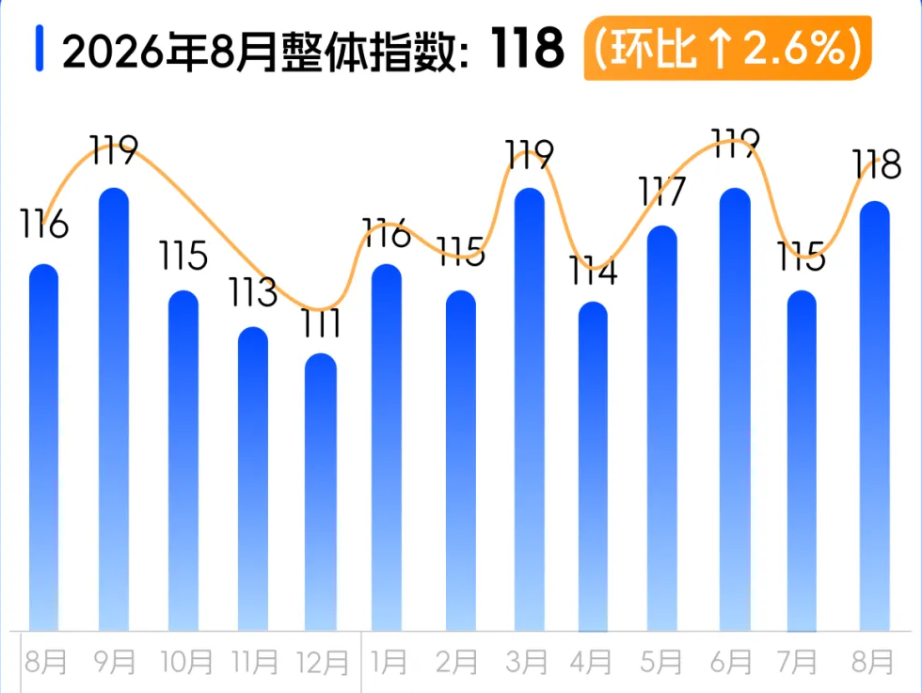
近日,连连数字发布的《2026年8月LianLian跨境商家信心指数报告》(以下简称《报告》)显示,8月跨境商家信心指数为118,环比上升2.6%。其中,即期指数为89,环比上升1.1%;预期指数为147,环比上升3.5%,创下2025年10月以来新高。

报告显示,从当月开放性问卷反馈来看,商家信心回升主要源于旺季预期带动。随着秋季大促、黑五及圣诞旺季的临近,商家对下半年销售回暖的预期增强。但同期的即期指数仅上升1.1%,这意味着跨境商家当前的经营压力尚未得到明显缓解。

本期要点:

·指数出现回暖:总指数118、预期指数147、即期指数89,环比上升2.6%、3.5%、1.1%。

·经营策略分化:50%的商家采取防守型招聘策略,65%的商家计划未来三个月扩张备货。

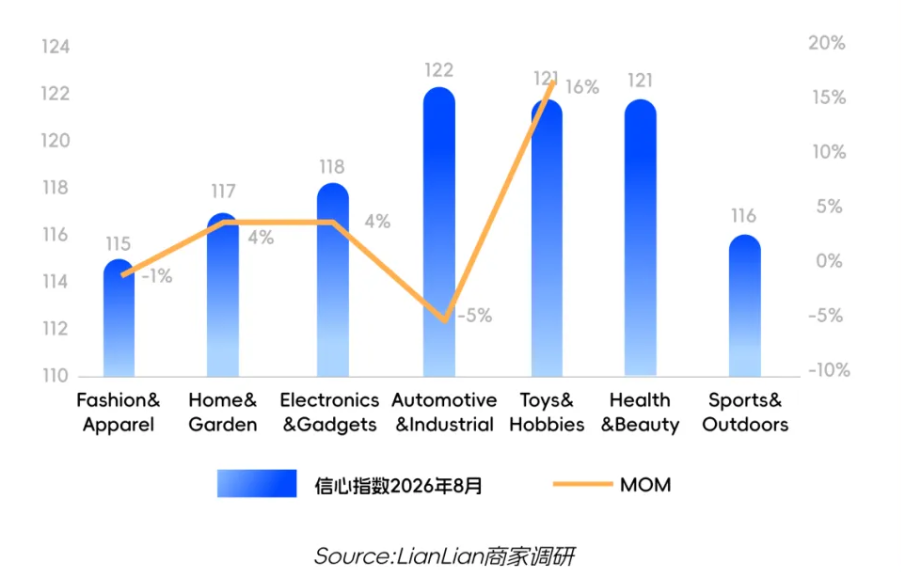
·两类品类回升:Home&Garden、Electronics&Gadgets信心指数分别为117、118,环比提升幅度均为4%。

·销售预期扩张:85%的商家预期销售增长,预期下滑的仅占15%,市场整体呈扩张预期。

旺季未至、预期先热:跨境商家信心指数升至118

跨境商家信心指数,反映了跨境电商卖家对未来海外经济、行业环境,以及自身经营状况等的预期。指数大于100意味着卖家对未来经济和经营状况持乐观态度,等于100表示卖家持中立态度,小于100则表示卖家持悲观态度。

据了解,该指数由即期指数和预期指数综合计算得出。前者反映卖家对现状的看法,后者反映卖家对未来3个月内预期的看法。《报告》显示,8月跨境商家信心指数从7月的115跃升至118,环比上升2.6%。
图片来源:《2026年8月LianLian跨境商家信心指数报告》

从结构上看,这一增长主要来自于预期指数的显著回升。8月,预期指数为147,环比上升3.5%,仅次于2025年9月创下的148高点。究其原因,随着秋季大促、黑五及圣诞旺季临近,商家对下半年销售回暖的预期增强,带动预期指数上升。

而即期指数表现则相对温和,8月即期指数89,环比微升1.1%,表明当前经营压力尚未明显缓解。一升一稳之间,显示出商家对旺季的期待与对现实的谨慎。

《报告》分析,俄乌冲突相关风险向仓储及物流环节传导、汇率波动对利润及资金价值的影响、海外税务及合规要求变化,以及平台风控与经营规则的不确定性,仍对当前经营信心形成压制。

整体来看,8月商家信心改善更多体现为对未来经营的预期增强。

招聘保守、备货积极:跨境商家的“轻资产”策略

旺季未至,预期先热,这种“温差”直接传导至经营层面。“不敢招人,但敢备货”,成为8月跨境电商卖家心态的真实写照。

具体来看,人力端的防守力度有所回升。《报告》显示,选择防守型招聘的企业占比为50%,环比上升3个百分点,其中暂停招聘的占41%,缩减人员的占9%。选择“人力维稳”的企业占比为39%,环比上升4个百分点。明确扩张招聘的企业仅占11%,环比下降2个百分点。这表明,即便看好旺季销售,多数卖家对成本控制和现金流仍然保持警惕,不愿轻易扩大固定成本。

备货端则呈现另一番景象。数据显示,65%的商家计划未来三个月扩大备货,环比上升5个百分点;选择备货不变的商家占比为22%,环比下降2个百分点;主动收缩备货的仅占13%,环比下降3个百分点。这与预期指数上行3.5%相互印证,说明卖家对Q4旺季销售回暖抱有较强期待,愿意通过增加库存来捕捉旺季需求。

在《报告》看来,"不敢招人、但敢备货”的组合,反映出当前卖家的典型心态:对旺季机会保持乐观,但对经营环境和成本压力仍有顾虑,因此选择以库存而非人力作为备战旺季的主要杠杆。

85%商家预期销售增长,家具、电子品类信心修复

值得一提的是,在整体信心回暖的背景下,不同品类的修复节奏各有差异。

数据显示,8月,在样本量充足的三大品类中:Home&Garden信心指数为117、Electronics&Gadgets为118,环比提升幅度均为4%;Fashion&Apparel为115,环比下降1%,整体保持稳定。《报告》表示,前两类品类信心均有所回升,或与海外线上消费需求保持增长、跨境电商市场持续扩容有关。
图片来源:《2026年8月LianLian跨境商家信心指数报告》

近期,跨境电商需求仍具韧性。DHL最新调查显示,70%的消费者会进行跨境购物,同比提升10个百分点;同时,美国跨境电商政策及关税环境仍在调整,跨境经营成本与市场不确定性持续影响商家预期。

品类信心的分化与修复,最终体现在商家对销售收入的判断上。从销售增幅预期来看,8月卖家对未来三个月销售增长的信心相对强化。《报告》显示,85%的商家预期未来三个月销售额实现增长,仅15%预期下滑,市场整体呈扩张预期。

从经营策略的“温差”到品类走势的分化,再到销售预期的整体上移,旺季的传导链条正在逐步形成。连连数字表示,这一趋势是秋季大促、黑五及圣诞旺季临近的直接体现,商家对销售回暖的判断正趋于一致。

关于LianLian跨境商家信心指数

LianLian跨境商家信心指数是由港股上市公司连连数字于2025年1月推出的月度调研产品,旨在通过持续追踪跨境卖家的经营现状与未来预期,为行业提供有价值的洞察与决策支持。该指数在云原生×大数据×AI深度融合的智能平台运行。基于这一套技术,连连希望持续构建的不只是单点洞察工具,而是一套帮助跨境商家降低不确定性、提升可预期性的智能基础设施。

跨境商家信心指数由总指数、预期指数和即期指数构成。其中,即期指数反映卖家对当前经营状况的看法;预期指数反映卖家对未来3个月内预期的看法;总指数由即期指数和预期指数综合计算得出,用以综合反映跨境电商卖家对未来海外经济、行业环境及自身经营状况的预期。

注:文/龚作仁,文章来源:Laborer,本文为作者独立观点,不代表亿邦动力立场。

【版权提示】亿邦动力倡导尊重与保护知识产权。未经许可,任何人不得复制、转载、或以其他方式使用本网站的内容。如发现本站文章存在版权问题,烦请提供版权疑问、身份证明、版权证明、联系方式等发邮件至run@ebrun.com,我们将及时沟通与处理。

已点赞

+1

{{ praise_text }}

好文章,值得被更多人看到

FAQ回顾

跨境商家信心指数是什么?有什么参考意义?

跨境商家信心指数是连连数字2025年1月推出的月度调研产品,综合反映跨境电商卖家对海外经济、行业环境及自身经营状况的预期。指数大于100代表卖家持乐观态度,等于100为中立,小于100为悲观,可为跨境行业提供决策参考。

2026年8月跨境商家信心指数表现如何?

2026年8月跨境商家信心指数为118,环比上升2.6%;其中预期指数为147,环比上升3.5%,创下2025年10月以来新高;即期指数为89,环比仅上升1.1%,说明商家对旺季预期乐观,但当前经营压力尚未得到明显缓解。

跨境商家备战旺季采取什么经营策略?

跨境商家普遍采取轻资产备战策略,人力端偏谨慎,50%的商家采取防守型招聘策略,仅11%的商家明确扩张招聘;备货端偏积极,65%的商家计划未来三个月扩大备货,优先以库存而非人力作为旺季备战的核心杠杆。

2026年8月哪些跨境电商品类信心回升明显?

2026年8月Home&Garden、Electronics&Gadgets两个品类的跨境商家信心指数分别为117、118,环比提升幅度均为4%,回升态势明显;Fashion&Apparel品类信心指数为115,环比下降1%,整体保持稳定。

广告

下一篇

跨境电商资源对接

《全球跨境电商服务商资源手册》第二期手册现已发布,触达更多资源,了解跨境服务商信息,欢迎点击链接下载。

了解详情

诺奖得主萨金特:AI经济的风险与应对

AI正在成为推动经济增长的重要力量,但围绕AI的投资、决策与政策制定,也正面临巨大的不确定性。资本投入的规模不断扩大,并不意味着未来回报就更加确定。

未来零售 金融 蚂蚁集团 AI

2026-09-10 11:01:21