• 亿邦公众号
    • APP下载

美团王莆中谈“AI错配” 小店从“会用”到“有用”还有多远?

作者:姜琪 文章来源:亿邦动力

2026-08-21 17:29

作者:姜琪 文章来源:亿邦动力

2026-08-21 17:29

邦小白快读

EN
全文速览

这篇文章核心讲解了AI进入实体小店的落地现状和普通小店老板用好AI的实操干货,具体内容如下:

1. 当前多数小店用AI的普遍痛点:缺人手、缺资金、缺技术背景,通用型AI只能聊天互动,解决不了定价、数据整理、排班这些实际经营问题,自己开发训练AI试错成本太高,普通人根本玩不转。

2. 可直接照搬的实操方法:不用从零开始自己做AI,找懂本地生意的成熟平台,直接用现成工具“抄作业”就能降低试错成本;不用追求一步到位换全套系统,先找到门店里最耗时、最烧钱、最头疼的重复性环节,让AI先承接这个环节的工作,积小胜为大胜。

3. 已有实际验证的效果:目前已有超180万实体商家用上这类AI工具,单体酒店用AI一年能节省5万元运营成本,餐饮小店每周能节省2小时整理数据的时间,实实在在实现降本提效。

本文围绕AI落地实体品牌经营的痛点、经验展开,对品牌布局AI有较多参考干货,具体如下:

1. 当前AI落地的行业现状与已有成果:头部连锁品牌已经落地AI实现明显降本,原本100家门店需要五六十人总部团队,落地AI后仅需3-5人就能运营;但国内多数品牌内部存在能力短板,调研显示71.4%的员工无法将业务问题转化为AI方案,60.7%对AI技术边界理解不足。

2. AI落地的常见坑点:总结了五大AI错配问题,包括认知上过度神化或全盘否定、高性能模型用在低价值工作、AI停留在经营外圈不接触核心环节、急于短期看回报、没有重新设计人机协同流程。

3. 落地建议:存量市场竞争下AI能帮品牌挤出成本端利润,品牌不用盲目上马大工程,可先从重复性高的核心环节切入,借助成熟平台的行业模型和数据积累降低自身试错成本。

本文针对中小本地实体卖家布局AI给出了明确的机会提示、风险提示和实操方法,干货如下:

1. 行业环境与机会:当前中小商家处于残酷淘汰周期,数据显示到2025年末65.1%的出清商户经营不满两年,存量市场中任何无效投入都可能压垮生意,AI能帮卖家降本提效挤出利润,是明确的增长机会。

2. 风险提示:不要盲目自己开发训练AI,也不要随便使用通用大模型,通用大模型没有门店经营数据和行业积累,解决不了选址、定价、排班这些核心经营问题,中小卖家缺人缺资金,试错成本根本负担不起。

3. 实操机会:目前成熟本地生活平台已经把自身试错后的AI工具开放给卖家,多数核心功能免费,卖家可以直接“抄作业”,先从自身最头疼的重复性环节切入用AI,已有超180万商家验证了效果,单体酒店一年可省5万运营成本。

本文围绕AI落地中小实体商家的行业需求展开,给面向本地生活领域的工厂带来不少数字化和业务发展的启示,干货如下:

1. 明确的产品开发机会:当前全国数百万中小实体商家对贴合经营场景的AI工具需求迫切,现有通用AI无法满足实际需求,市场空白较大,面向中小商家开发适配本地生意场景、能解决实际问题的AI相关产品,有很大的市场空间。

2. 产品设计需求启发:做面向中小商家的产品不能只追求技术参数,必须深入理解不同行业的经营逻辑,积累真实经营数据,能对接门店实际业务,解决核心痛点,才能真正被商家接受,避免变成无用的摆设。

3. 自身数字化转型启示:工厂推进AI转型也可以避开五大错配问题,不要盲目投入大量资金试错,不用追求一步到位,先从工厂内部重复性最高、最耗时的环节切入落地AI,积小胜为大胜,可借鉴成熟平台的经验降低转型成本。

本文梳理了AI服务本地实体商家的行业痛点、发展趋势和可行方向,给相关服务商的干货内容如下:

1. 客户核心痛点清晰:客户以中小实体商家为主,普遍缺专业AI团队、缺试错资金和精力,通用AI不贴合本地经营场景,解决不了定价、数据整理、排班等核心问题,目前AI落地普遍存在五大错配:认知错配、效率错配、场景错配、考核错配、流程错配。

2. 行业发展趋势明确:AI目前处于生产率红利兑现前的“黑暗隧道”,接下来懂本地行业场景、有真实经营数据支撑的垂直AI,会比通用大模型更受商家欢迎,市场空间巨大。

3. 解决方案方向清晰:服务商不需要让商家自己摸索试错,要自己先跑通全流程,输出成熟可直接用的落地方案,让商家“抄作业”,可以开放核心功能免费获客,先切入商家最头疼的重复性环节,逐步落地,比追求一步到位更符合商家需求。

本文以美团AI服务中小商家的实践为例,总结了本地生活平台布局AI服务商家的经验,干货内容如下:

1. 商家对AI服务的核心需求:中小商家希望降低AI落地门槛,不用自己承担高额试错成本,就能用上解决实际经营痛点的工具,不需要复杂的操作和大额度投入。

2. 可借鉴的成熟做法:平台可以先自身完成AI试错踩坑,把沉淀的成熟工具和经验开放给商家,核心功能免费开放给中小商家,覆盖多品类本地生活领域,目前该模式已经验证可行性,美团的AI工具已经服务超180万实体商家。

3. 需要规避的风向:要避免陷入AI错配的陷阱,不要过度追求技术参数而忽略商家实际经营价值,不要要求商家一次性投入大成本转型AI,要引导商家从单点核心痛点切入,积小胜为大胜,同时要深耕行业场景积累经营数据,打造比通用AI更强的核心竞争力。

本文提出了AI落地实体产业的新问题、新动向和新商业模式,对相关研究有较高的参考价值,干货内容如下:

1. 产业新动向:AI时代催生了新的数字鸿沟,AI在实体商家中的渗透并不均匀,头部连锁品牌已经实现AI降本增效,数量庞大的中小商家还无法落地AI,由此催生了平台沉淀AI能力开放给中小商家的新产业方向。

2. 新研究问题:文章总结了当前企业AI落地普遍存在的五大错配:认知错配、效率错配、场景错配、考核错配、流程错配,提出AI能力不等于AI生产力,通用大模型无法适配实体经营的核心需求,点出了当前AI落地产业的核心矛盾。

3. 新商业模式总结:文章梳理了“平台先自身试错沉淀AI能力,再开放成熟工具给中小商家,核心功能免费”的商业模式,该模式已经服务超180万商家,验证了可行性,适配存量市场下中小商家的降本需求,同时文章提出AI目前处于生产率红利兑现前的黑暗隧道,该领域后续发展值得持续追踪研究。

声明:快读内容全程由AI生成,请注意甄别信息。如您发现问题,请发送邮件至 run@ebrun.com 。

我是 品牌商 卖家 工厂 服务商 平台商 研究者 帮我再读一遍。

Quick Summary

This article explains how artificial intelligence is being adopted by small physical retail businesses, and shares actionable insights for small business owners to leverage AI effectively:

1. Key pain points for most small businesses: Most small operators lack staff, budget and technical expertise. General-purpose AI tools can only handle basic chat interactions, and cannot solve practical operational issues such as pricing, data organization and staff scheduling. Building and training custom AI in-house carries prohibitively high trial-and-error costs that are out of reach for most small operators.

2. Actionable strategies small businesses can adopt directly: Instead of building AI from scratch, small businesses can reduce trial-and-error costs by using pre-built tools from established platforms with local business expertise. Rather than replacing all existing systems at once, operators should first identify the most time-consuming, costly and repetitive pain points in their daily operations, have AI take over these tasks, and build incremental wins over time.

3. Proven real-world results: More than 1.8 million physical businesses have already adopted this type of AI tool. Independent hotels save an average of ¥50,000 in annual operating costs, while small food service outlets save 2 hours per week on data organization, delivering tangible cost reductions and efficiency gains.

This article explores the pain points and lessons of AI adoption for physical retail brands, offering actionable insights for brands looking to integrate AI into their operations:

1. Current industry landscape and existing outcomes: Leading chain brands have already achieved significant cost reductions through AI adoption. For example, a chain with 100 stores that previously required 50 to 60 head office employees can now operate with just 3 to 5 staff after AI integration. However, most domestic brands face internal capability gaps: surveys show 71.4% of employees cannot translate business problems into workable AI solutions, while 60.7% lack a clear understanding of AI’s technical limitations.

2. Common pitfalls of AI adoption: The article summarizes five major "AI misalignment" mistakes: overhyping or outright rejecting AI in terms of cognition, deploying high-performance models for low-value tasks, limiting AI to peripheral operations rather than core business functions, rushing to demand short-term returns, and failing to redesign workflows for effective human-AI collaboration.

3. Recommendations for implementation: In today’s competitive saturated market, AI can help brands unlock cost-side profits. Brands do not need to rush into large-scale AI overhauls; instead, they can start with high-repeatability core business links, and leverage industry models and data assets from mature platforms to reduce their own trial-and-error costs.

This article provides clear opportunity and risk alerts, plus actionable guidance for small and medium-sized local physical sellers looking to adopt AI:

1. Industry landscape and opportunities: Small and medium-sized merchants are currently going through a period of intense consolidation, with data showing 65.1% of exited merchants operated for less than two years by the end of 2025. In this saturated market, any unproductive investment can sink a business. AI represents a clear growth opportunity by helping sellers cut costs, boost efficiency and unlock profits.

2. Risk alerts: Sellers should not attempt to build and train custom AI in-house, nor should they rely on generic large language models. Generic large models lack merchant-specific operational data and industry expertise, so they cannot solve core operational problems such as site selection, pricing and staff scheduling. For cash-strapped small sellers with limited headcount, the trial-and-error costs are simply unaffordable.

3. Actionable opportunities: Established local life service platforms have already opened their trial-and-error tested AI tools to sellers, with most core functions available for free. Sellers can adopt these ready-to-use solutions directly, starting AI implementation with their most troublesome repetitive tasks. This approach has been validated by more than 1.8 million merchants, with independent hotels seeing annual cost savings of ¥50,000.

This article explores the industry demand for AI adoption among small and medium-sized physical merchants, offering insights for digital transformation and business growth for factories serving the local life services sector:

1. Clear product development opportunities: Millions of small and medium-sized physical merchants across China have strong demand for AI tools tailored to their specific operational scenarios. Existing general-purpose AI cannot meet their practical needs, leaving significant untapped market potential. There is huge market opportunity for developing AI-related products adapted to local business scenarios that solve merchants’ actual pain points.

2. Insights for product design: Products built for small and medium-sized merchants should not prioritize technical specifications alone. To gain merchant adoption and avoid becoming a useless gimmick, developers must deeply understand the operational logic of different industries, accumulate real operational data, integrate with actual in-store business processes, and address core pain points.

3. Insights for a factory’s own digital transformation: Factories pursuing AI transformation can also avoid the five common AI misalignment mistakes. Instead of investing heavily in blind trial-and-error or chasing end-to-end transformation in one step, factories should start by rolling out AI to the most repetitive, time-consuming internal processes, build incremental wins, and draw on experience from mature platforms to reduce transformation costs.

This article outlines industry pain points, development trends and viable paths for AI service providers serving physical small businesses, with key takeaways as follows:

1. Clear core customer pain points: Most clients are small and medium-sized physical merchants, who generally lack in-house AI expertise, trial-and-error budget and bandwidth. General AI solutions do not align with local operational scenarios, and cannot solve core problems including pricing, data organization and staff scheduling. Currently, AI adoption suffers from five major misalignments: cognitive misalignment, efficiency misalignment, scenario misalignment, performance measurement misalignment and process misalignment.

2. Clear industry development trends: AI is currently in the "tunnel of darkness" before its productivity dividends are realized. Going forward, vertical AI solutions tailored to local industry scenarios and backed by real operational data will be far more popular with merchants than generic large models, with enormous market potential.

3. Clear direction for solutions: Instead of leaving merchants to experiment and figure out AI on their own, service providers should first validate the full workflow in-house, then deliver mature, ready-to-use implementation solutions that let merchants adopt proven practices directly. Providers can offer core features for free to acquire customers, start with merchants’ most troublesome repetitive tasks, and roll out AI incrementally — this approach is far better aligned with merchant needs than pursuing full transformation in one step.

Drawing on Meituan’s practice of serving small merchants with AI, this article summarizes lessons for local life platforms building AI-powered merchant services:

1. Core merchant demand for AI services: Small and medium-sized merchants want to lower the barrier to AI adoption: they need tools that solve actual operational pain points without requiring complex operations or large upfront investment, and do not want to bear high trial-and-error costs themselves.

2. Proven, replicable best practices: Platforms can first complete their own AI trial-and-error to work through pitfalls, then open their refined mature tools and experience to merchants, offering core functions for free to small and medium-sized merchants across multiple local life categories. This model has already been validated: Meituan’s AI tools currently serve more than 1.8 million physical merchants.

3. Pitfalls to avoid: Platforms should avoid falling into the AI misalignment trap. They should not overprioritize technical specifications at the expense of actual business value for merchants, nor require merchants to make large upfront investments for AI transformation. Instead, platforms should guide merchants to start by addressing single core pain points to build incremental wins, while deepening expertise in industry scenarios and accumulating operational data to build stronger core competitiveness than generic AI.

This article presents new issues, trends and business models for AI adoption in physical industries, offering high reference value for relevant research:

1. New industry trends: The AI era has created a new digital divide. AI penetration among physical merchants is highly uneven: leading chain brands have already achieved cost reduction and efficiency gains through AI, while the vast population of small and medium-sized merchants still cannot access workable AI. This gap has spawned a new industry direction where platforms沉淀 AI capabilities and open them to small and medium-sized merchants.

2. New research questions: The article summarizes five common misalignments in current enterprise AI adoption: cognitive misalignment, efficiency misalignment, scenario misalignment, performance measurement misalignment and process misalignment. It argues that AI capability does not equal AI productivity, and generic large models cannot adapt to the core needs of physical operations, highlighting the core contradiction of current AI adoption in industry.

3. Summary of a new business model: The article outlines a business model where "platforms first complete in-house trial-and-error to沉淀 AI capabilities, then open mature tools to small and medium-sized merchants with free core functions". This model has been validated, serving more than 1.8 million merchants, and is well aligned with small merchants’ demand for cost reduction in today’s saturated market. The article also notes that AI is currently in the tunnel of darkness before its productivity dividends are realized, making this a sector worthy of continued research and tracking.

Disclaimer: The "Quick Summary" content is entirely generated by AI. Please exercise discretion when interpreting the information. For issues or corrections, please email run@ebrun.com .

I am a Brand Seller Factory Service Provider Marketplace Seller Researcher Read it again.

让商家先“抄作业”,再改,再试,慢慢长出自己的判断。

【亿邦原创】1990年,美国著名未来学家托夫勒在《权力的转移》一书中,首次提出了“数字鸿沟”,认为信息和电子技术造成了发达国家与欠发达国家之间的分化。

三十多年后,AI时代让这道鸿沟再次成为焦点。清华大学公共管理学院院长朱旭峰曾分析称,掌握AI技术的差异,可能产生新的精英群体。

如今,AI正在以前所未有的速度进入企业。

近期一场公开演讲中,美团核心本地商业CEO王莆中也对此进行过反思:“人人都在谈论AI,很多人日常都在使用AI,但落到企业财报、生产效率数据上,AI带来的提升却很难看见。”他举例美团内部曾掀起了一场“养虾运动”,也曾有过上千个项目赛马试错的阶段,全员AI科普完成了,但单日消耗一度达到一千万元。

“高投入、低回报”的AI落地,对于大型企业而言,可能是一场组织和技术变革;但对于数百万本地中小商家而言,它更像一个每天都会遇到的棘手问题。

“几个月前,看到北京金谷园饺子馆的老板手搓了AI助手后,我就也想做一个,希望能缓解暑期店里的忙碌。”日照一家专做海鲜饺子的小店老板杜丽丽对亿邦说,“一上手才意识到人家老板就是技术背景出身的,我们普通人真搞不来。”

缺人手、缺精力、缺资金、缺经验的本地实体商家,既没有大连锁品牌的专业运营和技术团队支持,也缺乏足够的试错成本。

如何让街头的百万小店都用上懂生意的“AI经营助理”?美团希望把自己走过的弯路变成商家可以“抄作业”的经验。

01

对小店来说,门槛可能不止技术

过去一年,AI在本地实体商家中的存在感越来越强,但它并不是“均匀渗透”的,并由此催生出新的问题:一部分人先用AI了,剩下的人怎么办?

一端,是已经开始把AI嵌入经营流程的大型连锁品牌——麦当劳、海底捞等头部餐饮集团均打造了自己的AI系统,有行业数据预测,过去100家店需五六十人总部团队,未来仅需3至5人即可运营;另一端,则是数量庞大的中小商家,他们甚至还没有找到想落地AI究竟应该从哪里开始。

更值得注意的是,对实体商家来说,真正的门槛可能已经不只是“有没有AI”,而是有没有人能够把AI真正变成一门生意的经营工具。中国连锁经营协会相关调研显示,71.4%的员工仍无法将业务问题转化为具体的AI解决方案,60.7%的员工对AI技术原理和边界理解不足。

这对连锁企业来说,已经是一道需要专门解决的问题;但对于一家只有夫妻两个人的10平米小店来说,问题可能更加直接——他们既没有专门的AI团队,也没有产品经理和数据分析师,更没有足够的时间去研究一款工具究竟适不适合自己的生意。

来自北京的王秉宇,就经历过这样的阶段。他和合伙人守着一家美式汉堡店,每天从早上八点干到晚上十点,几乎全年无休。开店初期,他曾经每个月花1500元请外卖代运营,希望有人能帮自己把线上经营做起来。
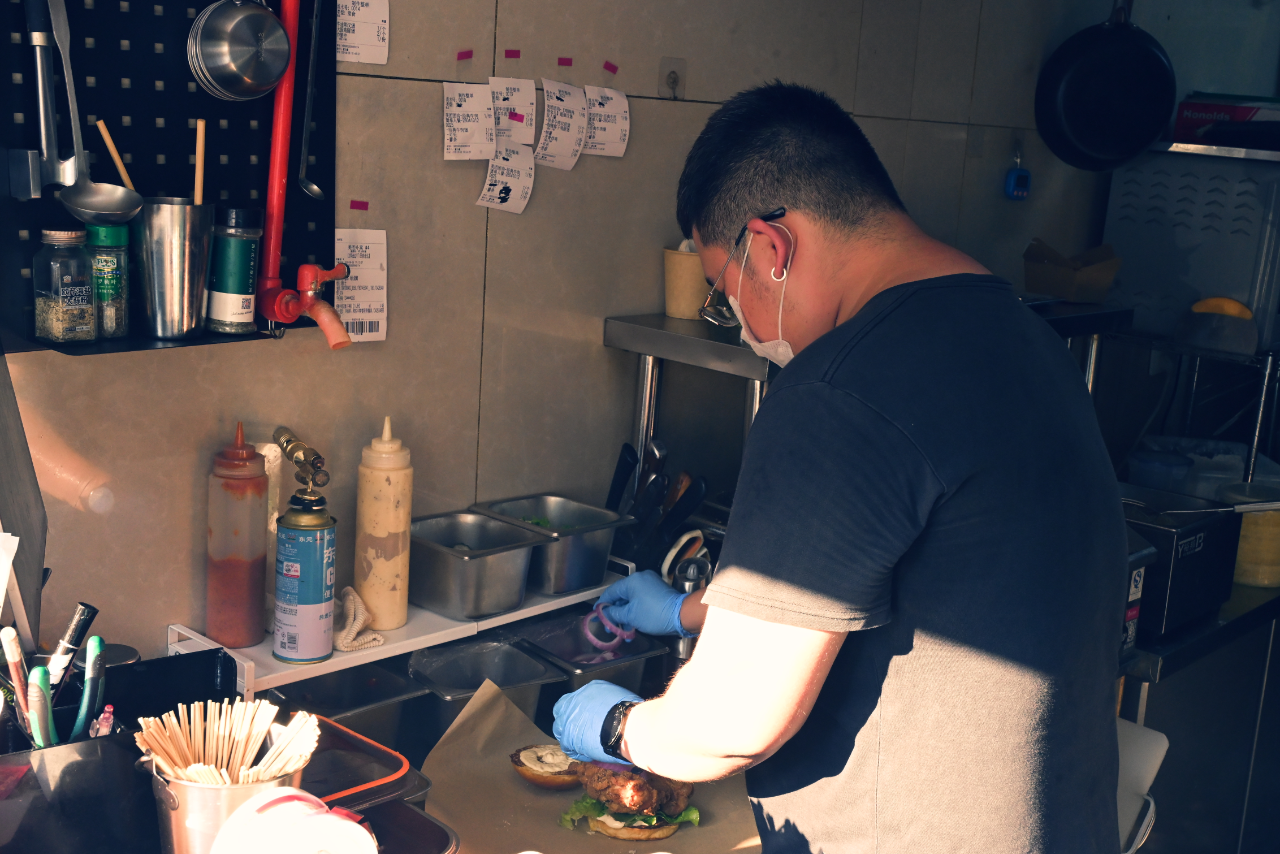
王秉宇正在制作汉堡,受访者供图

结果折腾一圈,他发现,但即使是上架一款新产品这样简单的工作,代运营也需大约两周的时间才能完成;他也尝试招过一名新店员,很多来试岗的人都感觉太累,没做两三天就走了。

最初,王秉宇也想过训练一个“龙虾”来帮自己经营,但店里已经忙得连轴转,更别说再腾出时间研究AI。

酒店行业也有类似情况。今年3月,夏安然在常州接手了一家28间房的单体酒店,只有两三个员工负责接待和日常运转,她每天则需要花费大量时间盯价格、调房态。最忙的时候,她这个有20多年经验的“酒店老兵”甚至都想“放手不干”了。

夏安然最初有尝试过使用市面上的通用型AI,但后来发现“跟它的互动仅限于聊聊天”,因为它没有门店的详细经营数据,还经常给出错误的定价建议和运营分析。

或许,这才是今天多数实体商家使用AI最真实的状态:AI已经进入了小店,但还没有真正帮助做生意。

02

AI最难的是理解“做生意”

这种困局,也正是王莆中在演讲中归纳的企业AI落地时的“五个错配”:

· 认知上过度神化或全盘否定;

· 效率上把高性能模型消耗在低价值工作;

· 场景上AI停留在经营外圈;

· 考核上急于看短期回报;

· 流程上需要重新设计人机协同。

实际落地当中,一家奶茶店用AI生成数十条精致文案或者机器人味十足的回复话术,对生意未必有本质帮助。真正决定其生死的,往往是隔壁竞品店降价2块钱的直接撕扯,或是外卖高峰期出杯效率能否跟得上。

AI若无法触碰这些决定生死的经营环节,充其量只是一件漂亮的摆设。

这也解释了为什么AI能力和AI生产力其实是两回事——AI会不会回答问题,背后是模型能力;AI能不能少帮老板走一次弯路,是需要强大的物理世界数据来支撑的,是实打实的业务能力。

“本地实体商家的每一笔交易,都发生在真实的门店里,AI要真正产出生产力,必须先搞懂这门生意到底如何运转。市面上绝大多数通用大模型,聊起天来对答如流,可一旦让它替一家街边小店选址、排班、优化菜单等,它便无能为力。”有业内人士对亿邦AI分析称,即使这些AI真正生成了“解决方案”,小店老板也很难信任并去执行。

那么,实体小店该怎么落地AI?王莆中给的思路是,中小企业更省力的方法是找到一个真正懂你行业并且已经跑通AI的平台,复用它的行业模型、数据积累和验证过的方法论。

毕竟,“抄答案”比“亲自解题”要简单不少。

03

试错后美团先把作业做了一遍

那么,谁来帮小商家把“答案”写好?美团的思路是——自己先做一遍。在公开演讲中,王莆中谈及了美团自身在年初的实践。

今年二三月份,伴随OpenClaw兴起,美团内部掀起了一场“养虾运动”,完成了全员AI的“科普”,但单日消耗一度达到一千万元。经历4月顶层规划、六七月份上千个项目赛马试错后,美团得出一个关键结论:

企业AI转型,绝非单纯的技术问题,而是复杂的系统性工程。走过的弯路,也变成了“写作业”的经验,中小商家无需重走大厂踩坑的试错阵痛,借力平台沉淀的成果即可实现提效。

王莆中认为,小店想用好AI,不是先买工具,而是先想清楚,你的门店每天花在重复性工作上的时间有多少?哪些流程是一个人跑1-2个月、AI两天就能搞定的?

基于经验,美团开始把“完成的答卷”开放给商家。过去一段时间内,美团在本地生活的各个领域都面向商家做了相应的AI工具,且多数核心功能免费向中小商家开放。

据公开资料显示,目前美团在餐饮、酒旅、服务零售、医药、即时零售等领域推出了袋鼠管家、智能掌柜、既白AI、数字员工、牵牛花Claw、AI经营专家团等工具,产品的核心功能已服务超180万实体商家。

饱受“盯价”困扰的夏安然,现在在美团既白AI中设了三家同行检测,周边酒店价格一有变化,手机就会直接推送。她根据AI提醒快速决策,看到两家同行涨价,立刻语音指令“大床房涨8元”,一分钟搞定。

“跨行入局”的新疆伊犁酒店老板史凯,此前也经常得依靠手动查询周边酒店房价变动,晚上刷短视频学运营到凌晨两三点。

但现在,AI改变了史凯的工作模式,他在每天早起会直接询问既白AI,让它分析自家酒店的经营优势、订单变化、曝光量数据等等。

他还算了一笔账:“既白在特定方面的能力,已经基本上相当于一个有两三年工作经验的运营,算上其他开销,单体酒店老板如果AI用得好,全年节省五万元的运营成本。”

“现在终于有时间睡觉和社交了,”史凯说。以往朋友聚餐都得在酒店附近,如今AI把他解放出来了。

AI正在把人从复杂的数据汇总、异常识别、策略输出等重复性工作中解放出来,转向投入到选品、服务和经营判断等更关键的环节中去,这也正是中小实体商家用好AI的正确姿势——不是一上来就换模型、搞大工程,而是各自找到自己“最烧钱、最耗时、最头疼”的那个环节,让AI先把这个环节扛下来,实现“积小胜为大胜”的第一步。

04

解题之外,未来的路该往哪走?

行业数据显示,中小商家正处在一个残酷的淘汰周期里。至2025年末,65.1%的出清商户经营不满两年。这一数字背后的更深层原因,是大量创业者在用增量时代的逻辑进入存量时代的市场。

在这样的环境中,任何一笔无效投入都可能成为压垮生意的最后一根稻草,而一个能帮商家在成本端挤出利润、能给出真正有价值的观点的AI,就变得愈发重要。

本地生活这条赛道上,通用AI的边界有限。真正能帮商家解决问题的,永远是最懂这门生意的平台。回到“到底该用哪家AI?”这个问题上,答案或许已经明了——选对平台,比选对模型更重要。一个懂行业的AI,才算得上真正意义上的生产力。

注重数据分析的王秉宇,经常需要手动整理堂食、外卖的经营数据。由于店铺和外卖菜单的不同,导致同一款餐品会有很多个名称,比如顾客在店内点单时叫“经典牛肉堡”的汉堡,在外卖套餐中就叫“招牌牛肉堡”。过去,王秉宇通常需要逐条筛选和汇总销量、销售额、退款率等数据,仅这一项工作每周就能占用他大约两小时的时间。

但现在,袋鼠管家会完成智能整合,直接将去重后的版本输出给他,让他不用逐条计算,王秉宇能直接基于这些销售数据定套餐、做活动,平均每个月能省下一天的时间。

相比于“一步登天”,第一波“抄作业”的商家全是小胜累积,但确实解决了第一关难题。

1987年索洛发出那句“计算机时代随处可见,唯独在生产率统计中看不到显著提升”的感叹之后,美国等了整整十年,直到1995-2005年间才迎来IT驱动的生产率大爆发。

经济学家保罗·大卫把这个历史规律总结为:通用技术在被经济体真正吸收之前,必然要经历一段生产率下滑的“黑暗隧道”。

现在,AI就正处在生产率红利兑现前的“黑暗隧道”里。“抄作业”只是起点,“让每个商家都用上自己的AI助理”才是隧道尽头的答案。

亿邦持续追踪报道该情报,如想了解更多与本文相关信息,请扫码关注作者微信。

本文首发于 亿邦动力 官方网站

【版权提示】亿邦动力倡导尊重与保护知识产权。未经许可,任何人不得复制、转载、或以其他方式使用本网站的内容。如发现本站文章存在版权问题,烦请提供版权疑问、身份证明、版权证明、联系方式等发邮件至run@ebrun.com,我们将及时沟通与处理。

已点赞

+1

{{ praise_text }}

好文章,值得被更多人看到

FAQ回顾

本地中小商家落地AI面临哪些困难?

本地中小商家普遍缺人手、缺精力、缺资金、缺经验,无专业技术运营团队支撑,试错成本不足。调研显示71.4%的员工无法将业务问题转化为AI解决方案,60.7%对AI技术原理边界认知不足,通用AI也缺乏门店经营数据难给出有效方案。

中小商家如何高效低成本落地AI?

中小商家落地AI无需自行承担高额试错成本,可选择懂所属行业、已跑通AI落地路径的平台,复用其行业模型、数据积累和验证过的方法论,优先解决门店最烧钱、最耗时的重复性工作环节,逐步实现经营提效。

美团推出的商家AI工具能带来什么价值?

美团基于自身AI落地试错经验,面向餐饮、酒旅、医药等多领域推出袋鼠管家、既白AI等经营工具,核心功能免费开放,目前已服务超180万实体商家,可解决定价、经营数据整理等具体痛点,单店年最高可省约5万元运营成本。

为什么说选对AI平台比选对模型更重要?

通用AI缺乏具体行业的真实经营数据,无法解决门店选址、排班、优化菜单等实际经营问题,只有懂行业的平台AI才能贴合商家实际经营场景,给出可落地的有效方案,真正转化为经营生产力。

广告

下一篇

征集报名《品牌数字化服务商资源手册》

《品牌数字化服务商资源手册》展示数字化服务商风采,亿邦全年零售大会通发,触达更多资源,马上加入!

马上入驻

沃尔玛获29亿美元关税退税 上调全年预期但股价仍下挫

沃尔玛2026财年Q2营收、每股收益超预期,获29亿美元关税退税拟用于降价,虽上调全年业绩指引但仍低于市场预期,财报发布当日股价大跌近10%。