• 亿邦公众号
    • APP下载

全球大跌 市场在等什么?

作者:段明珠&张博 文章来源:妙投APP

2026-07-30 11:24

作者:段明珠&张博 文章来源:妙投APP

2026-07-30 11:24

邦小白快读
EN
全文速览

本文梳理了当前全球股市震荡的核心原因,明确了影响市场走向的三大关键变量,并给出了不同市场结果下的实操应对策略,适合普通投资者参考。

1. 当前全球股市处于混沌矛盾状态,短期底部已现但上涨方向未明,核心影响因素为美联储7月议息会议、AI产业链头部企业财报、国内7月底政治局会议,三个变量分别从估值、盈利层面影响市场走向。

2. 针对不同结果组合给出明确应对方案:三重利好全市场上涨时,积极布局AI北美链、国内科技自主可控、顺周期三大方向;两好一坏时把握结构性机会,远离海外AI链转向国产替代和政策受益板块;一好两坏时以防御为主,持有低估值确定性资产;全坏时持有现金等避险资产等待拐点。

3. 当前极致悲观情绪已经充分释放,拐点临近,投资者不必过度恐慌,耐心等待信号明确即可。

本文对全球资本市场走势、产业趋势和国内政策方向的分析,能帮助品牌商把握消费和科技领域的发展趋势,调整自身战略方向。

1. AI产业当前已经进入业绩验证期,普遍存在资本开支高增但自由现金流缩水的问题,AI相关品牌需要警惕估值泡沫,不能只追求规模增长,要优先保障投入产出效率,避免过度烧钱导致资金链断裂。

2. 国内政策大概率以落实存量政策为主,后续可能在服务消费提振、科技自主可控、重大基础设施建设三个方向发力,消费品牌可提前布局服务消费赛道,科技品牌可抓住国产替代的政策红利,提前布局相关业务。

3. 当前市场对政策预期偏低,一旦出现超预期政策,市场会出现剧烈反应,品牌可提前做好资本层面准备,把握政策带来的融资和扩张窗口。

本文梳理了当前A股的结构性机会与风险,明确了不同行情下的应对策略,对从事投资或实体经营的卖家都有参考价值。

1. 机会层面,若美联储转鸽、AI业绩达标、国内政策超预期三重利好落地,可重点把握三大方向的机会:AI北美供应链的光模块、服务器代工领域,国内半导体设备材料等自主可控领域,以及顺周期的消费、新基建板块,这些方向都能直接受益于利好政策和产业趋势。

2. 风险层面,当前AI产业链业绩存在较大不确定性,若头部巨头财报显示收入增长但利润率和自由现金流恶化,AI全产业链都会面临估值重塑,AI相关赛道的卖家要警惕回调风险,提前做好应对。

3. 应对层面,不同行情对应不同策略,利空环境下优先持有低估值高股息的确定性资产,极致悲观行情下可持有现金等待恐慌情绪释放后的抄底机会。

本文对AI产业需求和国内政策方向的分析,能给各类生产制造工厂指明商业机会和转型方向,有较高参考价值。

1. 需求层面,当前AI产业链进入业绩验证期,上游芯片、存储、光模块的订单真实性需要验证,相关配套生产工厂要密切关注海外AI巨头的资本开支和订单落地情况,对接真实需求,避免盲目扩张产能导致产能过剩。

2. 政策层面,国内明确会加码科技自主可控,推进半导体产业链、“六张网”等基础设施建设,国内半导体设备、材料、先进封装领域的制造工厂,可抓住国产替代的政策红利,加大相关领域的技术研发和产能布局,获得政策支持。

3. 数字化转型层面,AI领域越来越看重投入产出效率,工厂推进数字化和AI转型时,要兼顾效率和盈利,不能盲目烧钱投入,要优先选择能明确带来成本下降或收入增长的转型项目。

本文梳理了当前行业发展的趋势和客户的核心痛点,能帮助服务商找准业务方向,开发适配市场需求的解决方案。

1. 行业发展趋势方面,AI产业已经从概念普及进入业绩验证阶段,市场从追求规模转向追求真实盈利,AI相关服务商要调整业务方向,解决企业客户AI转型中高投入低回报的核心痛点,帮助客户控制资本开支,提升AI投入的回报率。

2. 财富管理类服务商来看,当前市场处于磨底阶段,不确定性高,投资者的避险需求明显提升,可针对性开发现金、短债、黄金相关的配置方案,满足投资者的防御性配置需求。

3. 机会层面,国内后续会在消费提振、科技自主可控、风险化解三个方向发力,服务商可围绕这三个方向开发对应的解决方案,抓住政策带来的行业增量机会,拓展自身客户群体。

本文对市场趋势、政策方向的分析,能帮助平台商调整运营策略,规避风险,抓住发展机会。

1. 风险防控层面,当前市场处于情绪磨底阶段,不确定性较高,AI板块波动尤其大,平台要做好投资者教育和风险提示,引导用户理性应对波动,避免盲目追高AI概念股,防范市场大幅波动引发的各类风险,维护平台运营稳定。

2. 业务布局层面,后续市场的结构性机会集中在AI国产替代、顺周期消费、新基建三大方向,平台可围绕这些方向优化招商和产品布局,吸引相关领域的企业和资金入场,丰富平台的业务供给。

3. 长期发展层面,国内对资本市场的定位已经从短期信心工具转向长期制度完善,平台要顺应政策导向,完善自身长期制度建设,提升平台内在稳定性,助力市场风险防范,符合政策要求获得长期发展空间。

本文梳理了当前全球资本市场和AI产业的最新动向,提出了很多新现象新规律,对产业和经济领域的研究者有较高的参考价值。

1. 产业新动向方面,AI产业已经从概念叙事阶段进入业绩验证阶段,当前出现了高资本开支、自由现金流普遍转负的新问题,AI“循环融资”模式引发市场泡沫担忧,市场对AI商业模式的验证标准已经转向投入产出比和自由现金流,这一新变化值得深入研究。

2. 政策研究方面,总结了近年政治局会议对资本市场定调的演变规律:政策力度与经济增长压力正相关,与资本市场表述的新颖度正相关,资本市场定位从短期信心工具逐步升级为稳增长抓手,再转向长期制度完善,这一规律对研究国内政策与市场的关系有重要参考意义。

3. 市场研究方面,当前全球资本市场出现投资者与经济学家对美联储加息预期的定价分裂,这种分歧推高市场波动率,也是值得研究的新现象。

声明:快读内容全程由AI生成,请注意甄别信息。如您发现问题,请发送邮件至 run@ebrun.com 。

我是 品牌商 卖家 工厂 服务商 平台商 研究者 帮我再读一遍。

Quick Summary

This article outlines the core drivers of the current global stock market volatility, identifies three key variables shaping market trajectory, and provides actionable coping strategies for different market outcomes, making it a useful reference for retail investors.

1. The global stock market is currently in a chaotic, conflicting state: a short-term bottom has formed, but the direction of the next rally remains unclear. The core variables are the Federal Reserve's July interest rate meeting, earnings reports from leading AI industry players, and China's late-July Politburo meeting. These three factors impact market direction via valuation and earnings channels respectively.

2. Clear coping strategies are outlined for different combinations of outcomes: When all three factors turn positive and the broader market rallies, actively position in three sectors: the North American AI supply chain, China's domestic technology self-reliance, and pro-cyclical assets. When two are positive and one negative, focus on structural opportunities, shifting away from overseas AI chains to domestic substitution and policy-benefiting sectors. When one is positive and two negative, adopt a defensive stance and hold low-valuation assets with clear cash flow certainty. When all three are negative, hold cash and other safe-haven assets to wait for an inflection point.

3. Current extreme market pessimism has been fully priced in, and an inflection point is approaching. Investors do not need to panic excessively, and can simply wait patiently for clear signals.

This article's analysis of global capital market trends, industry trajectories and China's domestic policy direction can help brands capture development trends in consumer and technology sectors and adjust their strategic positioning.

1. The AI industry has now entered a phase of earnings validation, facing the widespread challenge of surging capital expenditure paired with shrinking free cash flow. AI-focused brands should stay alert to valuation bubbles, avoid chasing pure scale growth, prioritize return on investment, and prevent cash chain rupture from excessive burn rate.

2. China's domestic policy will most likely focus on implementing existing stimulus measures, with future support expected to target three areas: boosting service consumption, technology self-reliance, and major infrastructure construction. Consumer brands can position early in the service consumption track, while technology brands can capitalize on policy dividends for domestic substitution and lay out related business in advance.

3. Current market expectations for policy are relatively low. If stronger-than-expected policies are released, the market will see sharp upward moves. Brands can prepare in advance for capital market operations to capture the financing and expansion windows brought by policy shifts.

This article sorts out the structural opportunities and risks in China's A-share market, outlines coping strategies for different market conditions, and offers reference value for sellers engaged in both investment and physical operations.

1. In terms of opportunities: If the three positive catalysts — a dovish shift from the Fed, in-line AI earnings, and stronger-than-expected domestic policy — all materialize, focus on opportunities in three areas: optical modules and server OEM in the North American AI supply chain, domestic semiconductors equipment and materials for self-reliance, and pro-cyclical consumer and new infrastructure sectors. All these areas will directly benefit from favorable policies and industry trends.

2. In terms of risks: AI industry earnings currently face high uncertainty. If leading giants' earnings reports show revenue growth but deteriorating margins and free cash flow, the entire AI supply chain will face valuation reset. Sellers in AI-related tracks should watch for correction risk and prepare in advance.

3. In terms of coping: Different market conditions call for different strategies. In a bearish environment, prioritize holding low-valuation, high-dividend assets with certain cash flow. In an extremely pessimistic market, hold cash to wait for a bottom-fishing opportunity after panic selling subsides.

This article's analysis of AI industry demand and China's domestic policy direction points out commercial opportunities and transformation directions for manufacturing factories of all types, offering high reference value.

1. On the demand side: The AI industry is now in an earnings validation phase, and the authenticity of orders for upstream chips, memory and optical modules needs verification. Supporting manufacturing factories should closely track capital expenditure and order fulfillment from overseas AI giants, align production with actual demand, and avoid盲目 capacity expansion that leads to overcapacity.

2. On the policy side: China has clearly committed to ramping up support for technology self-reliance, and advancing development of the semiconductor supply chain and "six networks" infrastructure. Domestic manufacturing factories focused on semiconductor equipment, materials and advanced packaging can capitalize on policy dividends for domestic substitution, scale up R&D and capacity布局 in these areas, and access policy support.

3. On digital transformation: The AI sector is increasingly focused on return on investment. When advancing digital and AI-enabled transformation, factories should balance efficiency and profitability, avoid blind cash burn, and prioritize transformation projects that deliver clear cost reductions or revenue growth.

This article sorts out current industry development trends and core client pain points, helping service providers align their business direction and develop market-aligned solutions.

1. In terms of industry trends: The AI industry has moved from concept popularization to earnings validation, with the market shifting focus from scale growth to actual profitability. AI-related service providers should adjust their business direction to solve the core pain point of high input and low return for enterprise clients' AI transformation, helping clients control capital expenditure and improve AI investment returns.

2. For wealth management service providers: The market is currently in a bottom-consolidation phase with high uncertainty, and investor demand for safe-haven assets has risen notably. Providers can develop targeted allocation solutions linked to cash, short-term bonds and gold to meet investors' defensive allocation demand.

3. In terms of opportunities: China will prioritize three policy areas going forward: boosting consumption, technology self-reliance, and risk mitigation. Service providers can develop targeted solutions around these three areas to capture incremental industry opportunities brought by policy and expand their client base.

This article's analysis of market trends and policy direction helps platform operators adjust operational strategies, mitigate risks, and capture growth opportunities.

1. In terms of risk control: The market is currently in a phase of bottom consolidation driven by sentiment, with high overall uncertainty and especially large volatility in the AI sector. Platforms should strengthen investor education and risk disclosure, guide users to respond rationally to volatility, avoid blindly chasing highs in AI concept stocks, prevent various risks triggered by large market swings, and maintain stable platform operations.

2. In terms of business布局: Future structural market opportunities are concentrated in three areas: AI domestic substitution, pro-cyclical consumption, and new infrastructure. Platforms can optimize investment promotion and product布局 around these areas to attract enterprises and capital in related sectors, and enrich the platform's business offerings.

3. In terms of long-term development: China's positioning of the capital market has shifted from a short-term confidence tool to long-term institutional improvement. Platforms should align with policy guidance, improve their own long-term institutional construction, enhance inherent platform stability, support market risk prevention, and secure long-term development space in line with policy requirements.

This article sorts out the latest developments in global capital markets and the AI industry, presents multiple new phenomena and patterns, and offers high reference value for industry and economic researchers.

1. In terms of new industry trends: The AI industry has transitioned from a narrative-driven concept phase to an earnings validation phase, and is now facing the new widespread challenge of high capital expenditure and negative free cash flow. The "circular financing" model for AI has raised concerns about market bubbles, and the market's validation standard for AI business models has shifted to return on investment and free cash flow. This new change warrants in-depth research.

2. In terms of policy research: This article summarizes the evolution pattern of the Politburo's positioning of the capital market in recent years: policy intensity is positively correlated with economic growth pressure, and positively correlated with the novelty of official descriptions of the capital market. The positioning of the capital market has gradually evolved from a short-term confidence tool, to a key pillar for stabilizing growth, and now to long-term institutional improvement. This pattern offers important reference for research on the relationship between China's domestic policy and markets.

3. In terms of market research: Global capital markets currently see a pricing divergence between investors and economists regarding Federal Reserve rate hike expectations. This divergence has pushed up market volatility, and is also a new phenomenon worthy of research.

Disclaimer: The "Quick Summary" content is entirely generated by AI. Please exercise discretion when interpreting the information. For issues or corrections, please email run@ebrun.com .

I am a Brand Seller Factory Service Provider Marketplace Seller Researcher Read it again.

出品 | 妙投APP

作者 | 段明珠 张博

编辑 | 丁萍

全球股市像是在等待刮开一张又一张彩票。

先是今晚美联储开启为期两天的7月议息会议,这将决定全球折现率是否松动;再是海力士、三星、铠侠叠加苹果、微软、亚马逊、Meta等AI链条上各巨头发财报,至少需要多份完美数据预期才能把AI叙事眼下的裂缝给暂时补上;月底的政治局会议则影响国内股市未来走势和主线。

众多悬而未定的关键事件让全球股市也跟着起伏不定。

周一受英伟达“循环融资”和光刻机阿斯麦(ASML)的利空消息影响,美股AI硬件股集体大跌,费城半导体指数一度暴跌5%;周二开盘韩股再次向下熔断;A股在经历多轮宽幅震荡后,周一国产存储龙头长鑫科技平稳上市,周二在外界腥风血雨之下易中天等龙头补跌,但仍有热点不断轮动。

可见,市场指数短期底部区间已现,但仍处于混沌矛盾中,上涨动力和方向未明。

如果用最基本的股价公式来看,股价 =EPS×PE,当下显然盈利和估值两端都缺乏系统性改善的信号。

而在本周三组重要变量中,海外流动性主要作用于PE,AI订单主要作用于局部EPS,而国内政策能同时影响PE(风险溢价)和全市场EPS(盈利预期)。

所以,市场想真正打破僵局需要,美联储利率变化减少对成长股弹性的影响,AI业绩符合甚至超预期让科技股逻辑继续;落在A股,还有个关键点是国内政策。

本周伴随答案一一揭晓,投资者需要搞清楚每种结果可能带来的冲击,以及如何在不同的结果组合下做出应对。

加息,不加息?

眼下首先要关注的是美联储的利率政策。

市场正处于罕见的定价分裂状态,投资者和经济学家站在两端。

市场已经提前反应加息预期。在期货玩家看来,7月加息的可能性超过三分之一,而两周前只有10%(CME数据);银行、对冲基金、养老金等大型机构参与的利率互换市场定价隐含的加息概率约40%;10年期美债收益率上周一度触及4.71%,而科技股已经提前为高利率买单。

经济学家押注不动。无论是彭博对76位经济学家的调查,还是路透对104名经济学家的调查,所有受访者均预计维持利率不变。他们的逻辑同样扎实:数据不支持、就业在降温、加息对供给冲击无效。

但这种不确定性迫使市场用更高的波动率和更大的分歧来博弈。

即便本周不加息,只要沃什释放鹰派信号、9月加息预期不被削弱,长端美债收益率就难以趋势性回落。对高估值科技股而言,这意味着分母端的估值压力不会真正解除。

短期来看,全球成长资产折现率上升,也会导致A股外资风险偏好下降,让AI硬件板块估值承压,相关科技板块的估值修复空间将被进一步压缩。

当然,如果美联储转鸽,可能出现的结果是,美债利率下行、AI科技股估值短暂反弹,但全市场成交额和盈利预期没有改善。这属于局部修复,不是整体破局。

也即,对受利率影响最大的AI科技股来说,当前的每次反弹都可能是卖出机会。

AI还能看吗?

对AI链条,年内最重要的基本面考验陆续到来。

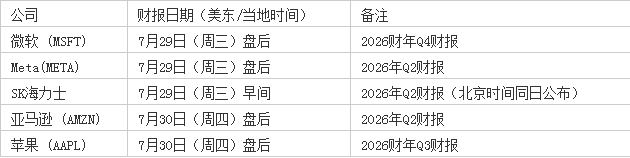
公司 财报日期(美东/当地时间) 备注
微软 (MSFT) 7月29日(周三)盘后 2026财年Q4财报
Meta(META) 7月29日(周三)盘后 2026年Q2财报
SK海力士 7月29日(周三)早间 2026年Q2财报(北京时间同日公布)
亚马逊 (AMZN) 7月30日(周四)盘后 2026年Q2财报
苹果 (AAPL) 7月30日(周四)盘后 2026财年Q3财报

7月上旬谷歌与特斯拉的财报,已经给市场敲响警钟:科技巨头仍在加码,但资本开支越堆越高,自由现金流却在缩水,AI赚回来的钱还填不上花出去的缺口。

谷歌云收入暴增82%,但资本开支同比翻倍、自由现金流转负,股价照跌不误。特斯拉则是增收不增利,自由现金流同样转负。

另一边,AI“卖铲人”英特尔整体营收创下近15年最快增速,但其正在推动新一轮规模超过7500亿美元的人工智能交易,又被市场解读为AI“循环融资”引发泡沫担忧。

赶在这节点上,AI产业链多个巨头发财报,它们的业绩成色,既检验AI科技股的估值底,也很大程度上影响整条产业链的走势。

上游芯片、光模块存储订单是否兑现,是本周财报的核心看点。如SK海力士订单增长是否来自真实份额提高、收入确认周期是否匹配当前估值,仍需验证。

关键还要看微软、Meta、亚马逊和苹果等几家巨头的财报。

从业绩预期看,四家公司的收入仍可能保持较强韧性,但更要看增速、资本支出指引、和自由现金流数据。如果高增长依赖更快的资本投入、利润率持续下降,自由现金流又无法改善,业绩超预期也可能无法带来股价上涨。

以微软来说,其拥有业界最完整的AI商业闭环,既能卖云算力赚钱,又能让老客户为AI功能额外付费;其财报数据最有代表性。

市场之前预计其2026财年(2025年7月1日-2026年6月30日)资本开支创历史新高:资本开支约1900亿美元,同比大增61%;Q4单季(4月1日-6月30日)或达410亿美元;而Q3约2/3的经营现金流被资本开支吸收。

微软财报的核心矛盾在资本回报率,若Azure增长提速但利润率跌破市场预测基准38%一线,很可能被认为是AI收入增量回报不足,从而影响估值。

而且,市场关注的焦点会转向未来一年的资本开支指引,如果指引继续大幅上修至2000亿美元以上,才是真正考验股价的时候。

其他AI科技巨头,短期也各有各的难处。

若巨头们连续交出“收入达标、但利润率和FCF恶化”的成绩单,AI硬件股此前的暴跌可能只是开始,整条产业链都将面临估值重塑。

AI叙事的修复,需要巨头们拿出“既赚钱又高效”的硬证据,而目前看,难度确实不小。

托底,托举?

以上外部环境,也为A股提供了关键坐标系。美联储加息与否,美股的财报结果决定了外部映射的风险偏好,而国内相关政策方向则决定了内部资金的结构选择。

按照惯例,7月底即将召开政治局会议,研判当前国内宏观经济形势,部署下半年经济工作。这是下半年经济政策的最高级别定调。

理解今年会议可能的方向,需要先看清过去三年定调的演变轨迹。

2023年会议首次提出“要活跃资本市场,提振投资者信心”,这被誉为“政策及时雨”带给市场爆发式上涨;

2024年会议定调宏观政策“持续用力、更加给力”,资本市场内在稳定性被上升至风险防范化解层面,这给市场注入“强心针”,市场全线大涨;

2025年会议基调积极,延续了“适度宽松”货币政策和“更加积极有为”的财政政策,但保持了克制,随后上证指数走出连阳态势。

连起来看,当预期疲弱时,政策选择通过直接激活资本市场来扭转信心;之后资本市场从“信心工具”升级为“稳增长抓手”;再到从短期稳定转向长期制度完善。

可见,政策力度与经济增长压力正相关,与资本市场表述的新颖度正相关。

目前市场对今年会议预期不高。首先是,因为完成全年增长目标的压力不大;其次,之前召开的总理座谈会已定调“加大逆周期调节力度,用好用足存量政策,预研储备增量政策”,这意味着政策可能体现为存量落实而非增量刺激。

基于此,机构也普遍预期对市场会“托而不举”,“边走边看”。从当前市场状态看,悲观预期已基本打满,A股也处于会议前“磨底”状态。

但这并不表示后续股市没有好的行情。恰恰相反,正因为预期低,只要无超预期利空,结构性轮动修复概率将明显提升;一旦有超预期信号,市场的反应可能更为剧烈。

比如高盛首席中国经济学家闪辉预判,财政政策将是下半年稳增长的“主力军”。落到A股就是说,过去靠PE撑估值,现在要看在财政等合力下能不能把企业业绩撑起来。

财政资金具体投向上,可能有三个:

内需提振方面,政策或突出服务消费、加快“六张网”和“十五五”重大项目实施;

风险化解方面,关注地方债务与中小金融机构处置表述是否升级;

科技自主可控方面,政治局会议议题或将覆盖科技创新、产业链发展、“六张网”基础设施建设。

这也对应A股三个完全不同的方向。消费和地产链订单改善对应A股高切低,顺周期接棒;化债落地对应银行和地方国企估值修复;科技加码对应AI继续当主线。

后续要继续关注会议对以上三点的表述,这或将直接决定消费、周期、科技三大板块的中期行情方向。

怎么应对?

对投资者来说,只要盯住以上三种关键信号,不同结果组合采用不同应对方式。

1、三好:存量博弈转向增量机会

估值端,美债利率回落直接释放成长股的估值压力;产业端,AI业绩验证意味着资本开支不再是无底洞,而是转化为可见的回报,产业链逻辑得以闭环;资金端,国内超预期政策将改善盈利预期、压低风险溢价,吸引增量资金入场。

应对上,应积极布局三大方向:一是AI北美链(光模块、PCB、服务器代工),直接受益于巨头CapEx确认与订单兑现;二是国内科技自主可控(半导体设备、材料、先进封装),受益于政策加码和国产替代加速;三是顺周期板块(消费、新基建),受益于财政发力、内需改善。

2、两好一坏:结构性机会

比如,如果美联储鸽,国内政策托举,但AI财报不理想:海外AI链承压,但国内自主可控加码形成对冲。远离北美出口链,转向国产替代(设备/材料)+ 政策受益的消费/新基建。

3、一好两坏:防御为主

仅一项利好,另外两项偏负面,市场大概率震荡或下行。仅持有低估值高股息、业绩确定的消费龙头,科技股暂避锋芒。

4、最差情况下:回避等待

如果市场持续迎来负面消息,投资者可持有现金、短债、黄金,等待恐慌情绪释放后的机会。

整个7月,全球资本市场都在震荡走弱,但极致悲观情绪的充分释放,往往预示着拐点临近。

所以投资者也不必过分恐慌,只要耐心等待观察,从密集的信息披露中找到下一阶段主线脉络的端倪。

注:文/段明珠&张博,文章来源:妙投APP(公众号ID:huxiupro),本文为作者独立观点,不代表亿邦动力立场。

【版权提示】亿邦动力倡导尊重与保护知识产权。未经许可,任何人不得复制、转载、或以其他方式使用本网站的内容。如发现本站文章存在版权问题,烦请提供版权疑问、身份证明、版权证明、联系方式等发邮件至run@ebrun.com,我们将及时沟通与处理。

已点赞

+1

{{ praise_text }}

好文章,值得被更多人看到

FAQ回顾

2025年7月全球股市震荡的主要影响因素有哪些?

当前全球股市震荡主要受三大关键变量影响:一是美联储7月议息会议的利率决议,影响全球流动性及科技股估值;二是微软、Meta等AI产业链巨头的财报表现,决定AI板块逻辑是否成立;三是国内7月底政治局会议的政策定调,影响A股后续走势。

美联储7月议息结果会对A股产生什么影响?

若美联储释放鹰派信号、9月加息预期未消,长端美债收益率难趋势性回落,将导致A股外资风险偏好下降,AI硬件等科技板块估值承压,修复空间被压缩;若美联储转鸽,美债利率下行将短暂缓解成长股估值压力,带来局部修复行情。

2025年7月AI产业链巨头财报的核心看点是什么?

核心看点包括上游芯片、光模块、存储订单是否真实兑现,微软、Meta等巨头的收入增速、资本支出指引、自由现金流数据,以及AI业务的资本回报率是否符合预期,这些将直接决定AI科技股的估值逻辑及产业链走势。

全球股市震荡下普通投资者该怎么配置资产?

投资者可根据美联储利率决议、AI财报表现、国内政策三大信号的组合调整配置:三者均利好时可布局AI北美链、国产科技替代、顺周期板块;仅一项利好时以防御为主,持有高股息消费龙头;全为利空时可持有现金、短债、黄金等待机会。

广告

下一篇

跨境电商资源对接

《全球跨境电商服务商资源手册》第二期手册现已发布,触达更多资源,了解跨境服务商信息,欢迎点击链接下载。

了解详情

扎克伯格称美国不应禁止中国AI模型

Meta CEO扎克伯格反对美国封禁中国AI模型,认为禁令无效,美国企业应通过解决自身瓶颈来竞争。其表态正值美国讨论对华AI监管,并已出台针对机器人等产品的进口禁令。

AI 其它属性 大模型 meta

2026-07-30 10:28:36