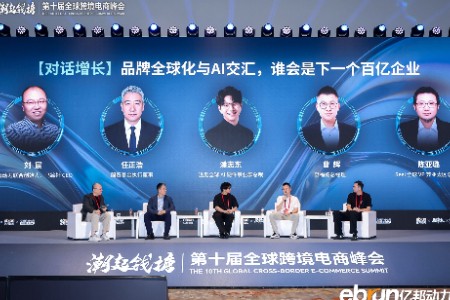
• 亿邦公众号
    • APP下载

年增长超50%、续费率破80%:易海创腾如何用“时间复利”定义B2B出海营销?

作者:何洋 文章来源:亿邦动力

2026-07-24 14:28

作者:何洋 文章来源:亿邦动力

2026-07-24 14:28

邦小白快读

EN
全文速览

这篇文章介绍了成立近十年的B2B出海营销服务商易海创腾的发展经验,该公司近年保持年增长超50%、客户续费率破80%,核心逻辑是做“时间复利”型的B2B出海营销,而非单纯流量买卖。

1.核心行业判断:当前是中国制造出海最好的时代,中国制造已经从早期加工出口迈入品牌出海新阶段,多数制造企业存在海外数字营销能力不足的问题,赛道仍有较大发展空间。

2.可参考的实操干货:打造B2B出海品牌可遵循易海创腾总结的出海营销八步法,从市场调研到品牌资产沉淀全链路落地,核心是长期输出专业内容积累客户信任。

3.AI时代应对方向:出海营销要结合垂直行业专业知识应用AI,提前布局AI搜索可见度建设,才能抓住时代红利。

本文针对B2B出海品牌商,梳理了当前的行业趋势、品牌打造核心逻辑与可落地实操方法,参考价值较高。

1.行业与消费趋势:当前中国制造已经进入打造世界级品牌的出海新阶段,新能源、智能制造、医疗器械等新质生产力领域成为出海主力,品牌化是未来的核心发展方向。

2.品牌营销核心逻辑:B2B品牌决策周期长、参与方多,打造品牌的核心是长期积累信任,要通过持续内容建设做长期陪伴式教育,同时要实现品牌营销部与外贸销售部的体系化协同,不能只追求短期线索回报。

3.落地方法:可参考“出海营销八步法”全链路推进,AI时代要提前布局海外GEO服务,提升品牌在AI搜索与大模型中的可见度,沉淀品牌数字资产,依靠时间复利打造长期竞争力。

本文为出海卖家梳理了当前B2B出海的市场机会、风险提示与可参考的发展路径。

1.市场机会:当前是中国制造品牌出海的黄金时代,B2B是中国外贸增长的核心阵地,专业B2B出海数字营销服务仍存在较大市场空白,AI技术还给品牌建设带来了新的加速红利。

2.可学习的经验:做B2B出海不能停留在传统人盯人的低效获客模式,也不能只做短期流量买卖,要围绕长期客户信任打造品牌,构建体系化营销能力,打通营销与销售的内部协同,沉淀品牌数字资产。

3.风险与机会提示:风险方面,多数卖家存在不懂数字营销、低估品牌长期价值的问题,AI营销若没有垂直行业知识积累,产出内容很难达标。机会方面,可对接易海创腾的免费培训、全流程营销服务,获得专业支持。

本文为中国制造工厂出海提供了明确的方向启示与商业机会,适配工厂的发展需求。

1.当前商业机会:中国制造拥有全球最完整的产业链体系,产品技术、品质已经达到国际领先水平,现在正处于从OEM/ODM代工向自主品牌出海跃迁的好时代,工厂出海可获得更高的利润空间与品牌价值。

2.发展需求:工厂普遍存在重生产轻营销的问题,即便产品品质过硬,也因为不会海外营销导致国际影响力不足,需要补足数字营销短板,才能把中国制造的优势传递给海外客户。

3.数字化出海启示:B2B出海营销要走长期路线,围绕客户全采购链路布局营销触点,持续输出专业内容建立信任,AI时代可借助专业服务商的能力,提升品牌在AI搜索中的可见度,沉淀品牌数字资产,构筑长期竞争壁垒,目前易海创腾已经服务超4000家中国制造企业,可对接合作。

本文为出海营销服务商梳理了行业发展趋势、客户核心痛点与可复制的发展方案,参考价值较高。

1.行业发展趋势:中国B2B企业已经从产品出海走向品牌出海,出海营销需求已经从基础执行转向高阶品牌策划与咨询,AI发展带来行业新一轮洗牌,同时伴随中国品牌出海,中国营销服务商也迎来全球化出海的机会,可填补海外市场的服务空白。

2.核心客户痛点:多数中国B2B企业老板不懂海外数字营销,传统获客效率低下,不会做海外品牌包装,品牌建设过程中存在营销与销售部门协同割裂、只看重短期线索回报忽略长期价值的问题,AI时代不知道如何提升在大模型中的可见度。

3.可参考的解决方案:走重交付重积累的时间复利路线,打造后端交付占比更高的团队结构,深耕垂直行业积累专业know how,构建完整产品矩阵,提前布局AI营销,推出适配AI时代的新服务,通过行业培训积累口碑提升影响力。

本文梳理了当前B2B出海领域对平台的新需求,提示了平台发展的风向与可优化方向。

1.市场新需求:当前B2B出海企业不再满足于简单的关键词投放等基础服务,需要覆盖客户全采购链路的整合营销服务,AI时代企业新增了提升在AI搜索、大模型中可见度的需求,需要平台适配新的营销场景调整规则与产品。

2.合作模式启示:易海创腾的出海培训已经和Google、Yandex、LinkedIn等头部平台合作,共同赋能出海企业,平台可以深化和专业出海营销服务商的合作,共同培育市场,拓展用户群体。

3.运营管理与风向规避:出海营销已经从短期流量买卖转向长期品牌数字资产运营,平台不能过度追逐短期流量变现,要适配品牌长期建设的需求,提前把握AI带来的搜索规则变革,布局相关产品与服务,抓住AI时代的营销新机会,避免落后于行业变革。

本文呈现了中国B2B出海营销领域的产业新动向、新问题与创新商业模式,为相关研究提供了鲜活的一手案例。

1.产业新动向:中国外贸已经完成了从早期单纯出口到OEM/ODM再到品牌出海的三次跃迁,新质生产力成为出海核心动力,B2B出海营销也从简单的谷歌投放发展到全链路整合营销,现在进入AI驱动的品牌数字资产运营阶段,营销核心已经从获取流量转向影响决策。

2.行业新问题:当前B2B品牌出海普遍存在数字营销能力不足、内部营销与销售协同割裂、经营者普遍低估品牌长期价值、高估短期线索回报的问题,AI时代如何在大模型语料库中构建品牌信任链条,成为行业新课题。

3.创新商业模式参考:易海创腾打造了重交付、重积累的时间复利型B2B出海营销服务模式,依靠高交付质量获得高续费率与口碑,AI时代结合垂直行业know how打造AI营销系统,推出海外GEO等创新服务,中国营销服务商跟随中国品牌出海也成为新的产业发展方向,具备较高研究价值。

声明:快读内容全程由AI生成,请注意甄别信息。如您发现问题,请发送邮件至 run@ebrun.com 。

我是 品牌商 卖家 工厂 服务商 平台商 研究者 帮我再读一遍。

Quick Summary

This article shares the development experience of Inbound Plus, a B2B cross-border marketing service provider that has been operating for nearly a decade. The company has maintained annual growth of over 50% in recent years with a customer renewal rate exceeding 80%, built on its core philosophy of "time-compounded" B2B cross-border marketing, rather than pure traffic trading.

1. Core industry insight: We are currently in the best era for Chinese manufacturing to go global. Chinese manufacturing has evolved from early processing for export to a new stage of building global brands, but most manufacturing enterprises still lack mature overseas digital marketing capabilities, leaving significant room for industry growth.

2. Actionable takeaways: To build a B2B cross-border brand, enterprises can follow Inbound Plus's 8-step cross-border marketing framework, which covers the full process from market research to brand equity accumulation. The core of this approach is long-term consistent output of professional content to build customer trust.

3. Strategy for the AI era: Cross-border marketing needs to integrate vertical industry expertise with AI applications, and proactively build AI search visibility to capture the opportunities brought by this new era.

This article outlines current industry trends, core brand building logic and actionable implementation strategies for B2B cross-border brand owners, with high reference value.

1. Industry and consumer trends: Chinese manufacturing has now entered a new stage of going global focused on building world-class brands. New-quality productivity sectors such as new energy, intelligent manufacturing and medical devices have become the main drivers of cross-border expansion, and branding is the core development direction going forward.

2. Core logic of B2B brand marketing: B2B brand decisions have long cycles and involve multiple stakeholders, so building a brand relies fundamentally on long-term trust accumulation. Brands need to deliver consistent content to provide long-term educational engagement for potential customers, and achieve systematic alignment between the brand marketing team and foreign sales team, rather than only pursuing short-term lead generation.

3. Implementation approaches: Brands can follow the full 8-step cross-border marketing framework to advance their efforts. In the AI era, they should proactively deploy overseas GEO services to improve brand visibility in AI search and large language models, accumulate digital brand assets, and build long-term competitiveness through the power of time compounding.

This article sorts out current market opportunities, risk warnings and actionable development paths for cross-border sellers.

1. Market opportunities: We are currently in a golden era for Chinese B2B brands to expand overseas. B2B is the core growth engine of China's foreign trade, and there is still a large unmet demand for professional B2B cross-border digital marketing services. AI technology has also brought new accelerated growth opportunities for brand building.

2. Key lessons: B2B cross-border expansion cannot rely on traditional inefficient one-on-one customer acquisition, nor can it stop at short-term traffic trading. Sellers need to build brands centered on long-term customer trust, develop systematic marketing capabilities, align marketing and sales internal collaboration, and accumulate digital brand assets.

3. Risk and opportunity warnings: On the risk side, most sellers lack expertise in digital marketing and underestimate the long-term value of brand building; AI-generated content cannot meet standards without deep vertical industry knowledge. On the opportunity side, sellers can access free training and end-to-end marketing services from Inbound Plus for professional support.

This article provides clear directional insights and business opportunities for Chinese manufacturing factories expanding overseas, tailored to the development needs of factories.

1. Current business opportunities: China has the world's most complete industrial chain for manufacturing, and Chinese products have reached global leading levels in technology and quality. We are now in an opportune moment for factories to transition from OEM/ODM contract manufacturing to building their own independent brands for global markets, which unlocks higher profit margins and greater brand value for factories.

2. Core development needs: Most factories prioritize production over marketing. Even with high-quality products, they lack international influence due to limited overseas marketing capabilities, and need to strengthen their digital marketing短板 to communicate the advantages of Chinese manufacturing to global customers.

3. Insights for digital cross-border expansion: B2B cross-border marketing requires a long-term approach, covering marketing touchpoints across the entire customer purchase journey and consistently outputting professional content to build trust. In the AI era, factories can leverage the capabilities of professional service providers to improve brand visibility in AI search, accumulate digital brand assets, and build long-term competitive moats. To date, Inbound Plus has served more than 4,000 Chinese manufacturing enterprises and is open for partnership.

This article sorts out industry development trends, core customer pain points and replicable development paths for cross-border marketing service providers, with high reference value.

1. Industry development trends: Chinese B2B enterprises have shifted from exporting products to exporting brands, so cross-border marketing demand has evolved from basic execution to high-end brand strategy and consulting. The development of AI is driving a new round of industry consolidation, and alongside the global expansion of Chinese brands, Chinese marketing service providers also have opportunities to go global and fill service gaps in international markets.

2. Core customer pain points: Most leaders of Chinese B2B enterprises lack expertise in overseas digital marketing, and traditional customer acquisition methods remain inefficient. Many also struggle with overseas brand positioning, face misalignment between marketing and sales teams during brand building, prioritize short-term lead generation over long-term value, and do not know how to improve brand visibility in large language models in the AI era.

3. Reference solution: Adopt a time-compounded business model focused on high-quality delivery and long-term accumulation, build a team structure with a larger share of resources allocated to backend delivery, develop deep vertical industry expertise, build a complete product matrix, proactively develop AI-enabled marketing capabilities, launch new services adapted to the AI era, and build reputation and influence through industry training.

This article sorts out new demands from the B2B cross-border industry for platforms, and outlines strategic directions and optimization opportunities for platform development.

1. New market demands: Today's B2B cross-border enterprises are no longer satisfied with basic services such as simple keyword advertising. They need integrated marketing services covering the entire customer purchase journey. In the AI era, enterprises also have new demand for improving their visibility in AI search and large language models, requiring platforms to adjust rules and products to adapt to these new marketing scenarios.

2. Partnership insights: Inbound Plus's cross-border training programs have already partnered with leading platforms including Google, Yandex and LinkedIn to jointly empower cross-border enterprises. Platforms can deepen cooperation with professional cross-border marketing service providers to jointly cultivate the market and expand their user base.

3. Operations management and risk mitigation: Cross-border marketing has shifted from short-term traffic trading to long-term digital brand asset operation. Platforms should not overly pursue short-term traffic monetization, but instead adapt to the needs of long-term brand building, proactively prepare for AI-driven changes to search rules, develop related products and services, capture new marketing opportunities in the AI era, and avoid falling behind industry changes.

This article presents new industry trends, emerging problems and innovative business models in China's B2B cross-border marketing sector, providing vivid first-hand case material for relevant research.

1. New industry trends: China's foreign trade has completed three transitions, from early simple export to OEM/ODM, and now to brand global expansion. New-quality productivity has become the core growth driver of cross-border expansion. B2B cross-border marketing has also evolved from simple Google advertising to full-funnel integrated marketing, and is now entering a stage of AI-powered digital brand asset operation, with the core focus shifting from traffic acquisition to purchase decision influence.

2. New industry challenges: Most B2B brands expanding overseas currently lack sufficient digital marketing capabilities, face internal misalignment between marketing and sales teams, and operators commonly underestimate the long-term value of brands while overestimating the returns of short-term lead generation. Building a trusted brand positioning within large language model corpora has become a new key challenge for the industry in the AI era.

3. Reference for innovative business models: Inbound Plus has built a time-compounded B2B cross-border marketing service model focused on high delivery quality and long-term accumulation, which generates high customer renewal rates and word-of-mouth through strong delivery. In the AI era, the company has integrated vertical industry know-how to build an AI-powered marketing system and launched innovative services such as overseas GEO services. The trend of Chinese marketing service providers globalizing alongside Chinese brands has also emerged as a new industry development direction with high research value.

Disclaimer: The "Quick Summary" content is entirely generated by AI. Please exercise discretion when interpreting the information. For issues or corrections, please email run@ebrun.com .

I am a Brand Seller Factory Service Provider Marketplace Seller Researcher Read it again.

“我们身处中国制造最好的时代,必须更加努力才能不负时代赐予我们的机会。”谈及2017年成立易海创腾,王志龙难忘当时那种兴奋和冲劲儿。

创业前,中兴出身的他已在外贸行业干了十几年,见证了中国制造“质的飞跃”,但同时也看到中国制造在海外数字营销上的缺失。“每家企业的发展都需要营销拉动,但90%以上的老板不怎么懂营销。他们很多人做销售出身,但在互联网时代,过去那种人对人的低效方式行不通了。”王志龙谈道。

于是,易海创腾以出海营销服务商身份一头扎进产业带,立志要为中国制造在全球的品牌化进阶献出一份力。

接下来的近十年间,在中国新质生产力出海大潮下,王志龙带领易海创腾一步步证明,B2B出海数字营销绝不是简单的流量买卖,而是时间复利生意,是中国企业以新姿态走向世界的重要驱动力。

亿邦动力获悉,近几年来,易海创腾一直保持着每年50%以上的增长,超80%的客户续费率更是行业里难得的“稳赢”。这背后到底做对了什么?由此出发,亿邦动力与易海创腾创始人兼CEO王志龙进行了一场深度对话。

01

深耕B2B出海,助力产业带企业走向全球

成立易海创腾时,王志龙正值人生阅历与商业智慧的成熟期。此前,他长期扎根于环球资源等传统跨境B2B平台,致力于推动中国制造走向海外。

“这个年龄创业,不是一心想做一款扬名立万的产品、获得爆发式增长,而是想找一个能干到退休的事业。”他回忆道。B2B出海营销服务正是他坚信可以“成为人生最后一次创业”的赛道。

一方面,B2B是中国外贸增长的重要资源地;另一方面,当时B2B出海数字营销服务市场一片空白——大量企业完成了从线下搬到线上的转变,但几乎没有专业的数字营销,多数人的理解停留在“挂个关键词去谷歌做投放”,而且能做好B2B谷歌投放的也不多。

“中国是全球唯一拥有联合国产业分类中全部工业门类的国家,有完整齐全的产业链体系。在高效的产业链协同下,中国制造日益强大。但为何我们的国际影响力跟欧洲、日本仍有差距?不在技术、不在生产效率、不在产品品质,而在于不会营销自己。”王志龙谈道。

这也让易海创腾有了一种无形中的使命感:助力中国企业学会合理包装和宣传自己,让中国制造优势被全世界看到。

但单纯的流量买卖是没有出路的,易海创腾作为出海企业的“全球化增长合作伙伴”,从前端市场分析到后端提案落地执行,全流程覆盖。而且,在王志龙看来,这是一个重资产、需要长时间积累的慢项目。

B2B客户的产品多是非日常消费品,如新能源、机器人、工业机械、医疗器械、半导体设备等。针对他们的“特种”营销服务,要先吃透产品,才能完成从技术语言到商业语言的“翻译”,从而通过整合营销打动这些行业的目标受众。比如,为了真正搞懂医疗器械行业客户的产品,易海创腾曾专门招了几个医科大学毕业的人才加入团队。负责俄语区营销的团队全员20%是俄罗斯籍母语营销专家,80%毕业自名校并有留学经历,而且她们均有甲方工作背景,在理解客户诉求和产品性能方面备受好评。

B2B营销的核心不在于盲目追求流量规模,而在于建立品牌与其利益相关者之间的信任和实现精准触达。此外,相较于B2C,B2B客户的采购链路更为冗长且复杂,通常需要经历认知、评估、询价、测试、合同谈判乃至最终交付等多个环节,整体周期显著拉长。

这天然决定了B2B营销的重投入和长期性——整个客户采购旅程都要有营销触点,持续输出专业内容且渗入渠道纵深,而效果又非短期可见。

“你需要有耐心去理解客户的产品和相关产业链。”他对亿邦动力谈道,“只有扎下去、肯投入,才能服务好客户。”

易海创腾现有员工400多人,15%是海外名校毕业的留学生及外籍人士,其中约20%属于销售人员、75%是后端交付人员——这和很多同行相比是倒挂的。在王志龙看来,做好交付带来的续费率、行业口碑,远比花大量精力去拉新客更重要。

服务好客户是易海创腾的职责,而提升行业水平则是王志龙作为老外贸人的情怀。至今,公司已举办超500场行业峰会与免费培训课程;2024年推出的【创腾出海大讲堂】直播栏目授课超200场,邀请Google、Yandex、LinkedIn等平台高管及法律、物流、支付等领域专家,为中国外贸从业者提供一站式出海数字营销培训;易海创腾旗下两大直播栏目中,《创腾出海大讲堂》已授课200余场,观看人次位列视频号知识类直播全国前1%,侧重专家实战教学;而2025年推出的《蓝海领航计划》,讲述中国品牌真实出海历程,将一线实战经验沉淀为可复制的方法论,为正在或准备出海的中国企业提供参考范本,助推更多中国品牌走向世界。目前,栏目总曝光已达110万,聚焦“中国智造”的企业家深度对话与品牌故事。

02

中国制造进入打造世界级品牌时代,怎么做才有效?

回顾中国外贸行业的发展历程,王志龙表示,从早期单纯的劳动力出口与组装加工,到后来的低端OEM、中高端ODM,再到如今,中国制造已然迈入“品牌出海”时代,正向着“打造世界一流品牌”的目标阔步前行。

“很多行业都已成为新质生产力出口的代表,有更高的研发和制造门槛,也在不断增强品牌化意识。”王志龙说。

从B2B生意特性出发,出海企业打造品牌面临的最大挑战就是:建立客户信任需要更长时间。其客户决策是“多人、长期、专业”的——老板看ROI、技术总监看参数、采购经理看价格、维修团队看售后等等,因而,品牌打造的核心动作,除了产品价值外化表达之外,还要注重决策者关系沉淀及每个环节持续的认知影响。

“B2B品牌的信任不是一次建立的,是持续积累。相关决策者常看到你的内容、在专业圈子看到你的内容,长期下来,你的品牌自然就在他心里了。”王志龙解释,“正因此,B2B打造品牌,要建立信任,内容建设尤其重要,是一种长期陪伴式教育。”

与此同时,企业出海还需要进行体系化建设,实现从营销策略到组织架构的全面升级。”王志龙指出,“许多出海企业虽然具备了品牌意识并设立了品牌营销部,但往往与外贸销售部各自为战,导致内部协同割裂。其根本原因在于,人们普遍低估了品牌长期推广的时间价值,却高估了短期线索的即时回报。”

事实上,多年来易海创腾始终紧扣客户需求与出海数字营销趋势,构建起涵盖海外广告投放、海外品牌站营销、海外GEO、海外社媒营销、泛俄语区与小语种营销、DTC品牌出海整合营销的完整产品矩阵。

迄今为止,公司已为超4000家中国企业提供出海整合营销服务,助力其成功拓展海外市场并树立品牌形象。客户群体广泛覆盖机器人、中国头部电商、文旅、OTA(在线旅游服务行业)、新能源、3C电子、智能制造、汽车等多元赛道。

在助力中国B2B企业打造品牌上,易海创腾提出“出海营销八步法”:

1、市场调研:全面数据分析,洞察市场机会。

2、策略制定:目标校正、区域产品渠道策略,以及品牌曝光、创意活动、新品发布、展会宣传、私域运营、线上销售等策略。

3、形象塑造:打造国际化品牌形象,提升信任度。

4、全渠覆盖:多触点曝光,最大化品牌声量。

5、私域循环:搭建360私域系统,实现业务正向协同。

6、精准营销:基于用户画像靶向触达,反馈驱动体系。

7、流量监控:全域数据追踪,动态优化营销策略。

8、资产沉淀:转化营销成果,构筑长期壁垒。

在具体落地时,易海创腾形成了一套严密的出海营销方法论:以数据调研定策略,借全渠道与私域闭环促协同,凭精准画像与全域监控动态优化,最终将营销成果沉淀为品牌数字资产。
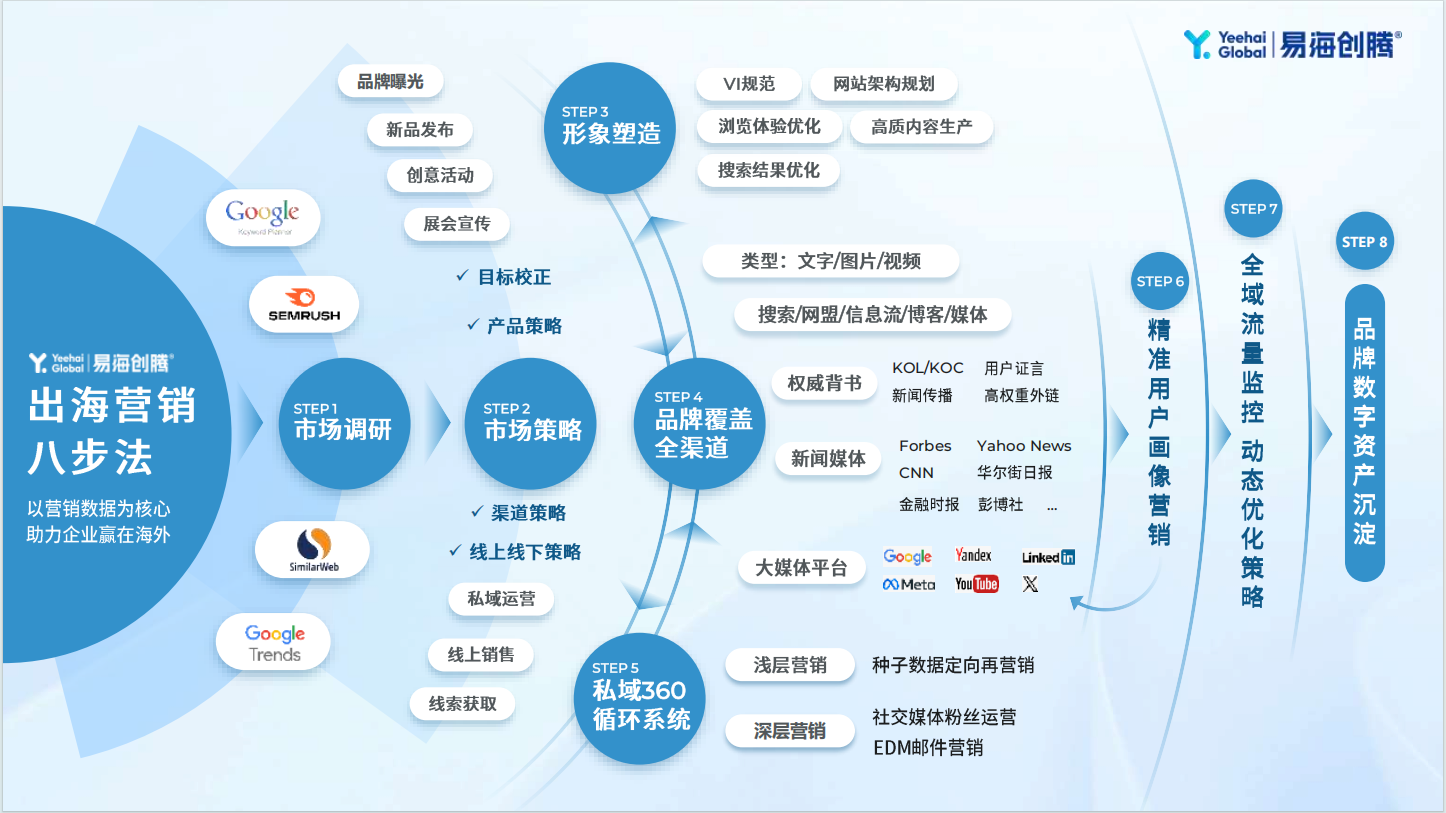
“真正能够成就品牌的,都是懂得如何去沉淀品牌数字资产,获得了时间复利。”王志龙总结道。这也是易海创腾以营销数据为核心助力企业赢在海外的底层逻辑。

03

AI时代的数字营销,“know how”变得更重要

从早期的谷歌广告、到SEO优化、到社媒营销,再到2024年开始布局AI营销(海外GEO等产品),各个时期最热门的营销方式和渠道,易海创腾可谓与时俱进。在王志龙看来,中国企业从产品出海走向品牌出海,相应地,必然带来出海营销服务公司的大浪淘沙,只有不断自我迭代才能生存下来。

对AI的全面应用,除了因为它是数字营销大势所趋之外,易海创腾更有着一种责任感——AI给中国企业带来了品牌建设加速的机会,作为出海营销领域服务商,更要率先在营销领域深度嵌入AI、打造可行的系统,才能帮助他们吃到这波时代红利。

正如王志龙所说,从传统SEO到AI时代的GEO,标志着品牌营销正从“获取流量”向“影响决策”发生深刻变革。顺应这一趋势,易海创腾于2025年率先推出海外GEO服务,帮助出海品牌系统性提升在AI搜索及大模型中的可见度,构建AI信任链条。目前,该服务已沉淀出系统性的方法论,并成功落地了大量海外实战案例。

易海创腾的核心定位,是成为AI时代出海品牌的数字资产基础设施;其核心The Omni-Narrative AI Engine通过语义源构建、共识验证、思想领袖语境注入及真实情绪喂养四大维度,全面占领AI语料库与信任链。

在此基础上,公司推出海外GEO哨兵系统,打通从内容布局、AI可见度提升、引用增强到流量转化与策略迭代的完整闭环;同时辅以Envision AI系统,实现海外社媒从内容规划、生成到精准投流与数据复盘的全流程智能化运营。
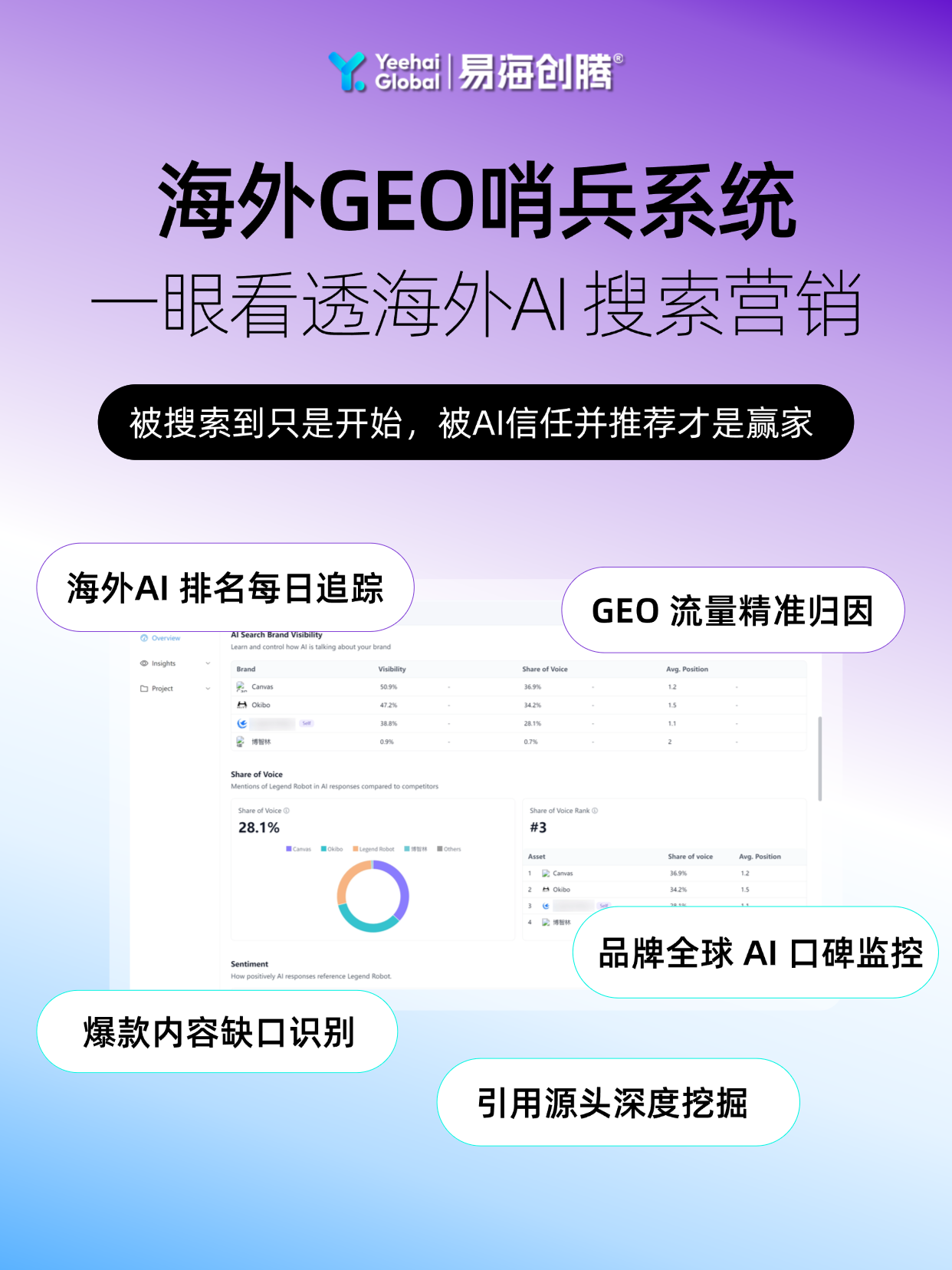
有人说,AI快速发展必然给出海营销服务商带来了新一轮洗牌。如何才能不被“洗”掉?王志龙的答案是:“know how+做出改变”。

“AI赋能营销,前提是深谙外贸、营销及垂直行业知识。尤其在B2B领域,若缺乏专业数据库和长期训练,AI生成的品牌内容往往难以达标。”王志龙对亿邦动力谈道。

王志龙认为,出海企业的数字营销正从“基础执行”向“高阶品牌策划与咨询”转型。在AI时代,出海营销服务商的核心价值已不再是单纯的执行,而是提供精准的决策与判断力。易海创腾凭借近十年在20多个行业沉淀的深厚“know-how”,结合领先的AI出海布局,正将这种专业积累转化为时间复利,构筑起难以逾越的真正护城河。

此外,易海创腾也在加速自身业务的出海。“就像当初美国品牌出海伴随着美国营销机构的出海一样,中国品牌出海必定伴随中国营销机构的出海。”王志龙指出。

一方面,中国总结的数字营销方法论在全球B2B领域都有适用性,尤其海外类似的服务提供商相对较少,易海创腾有机会填补市场空白;另一方面,AI时代,中国营销机构的全球化也会加速——AI带来的机会,不仅在于中国企业的技术优势,更重要的是中国有大量应用场景和用户去跑通相应的营销产品。

事实上,易海创腾的深耕之路,见证了中国外贸从“产品出海”向“品牌出海”的跃迁。B2B营销正从短期的“流量买卖”走向长期的“时间复利”。

出海企业唯有摆脱单一渠道依赖,构建以内容和信任为核心的数字资产壁垒,方能在AI时代抢占先机。作为深耕出海营销领域多年的专业咨询机构,易海创腾正推动中国智造向全球价值链上游攀升,这不仅是服务商的自我进化,更是中国新质生产力建立全球话语权的生动缩影。
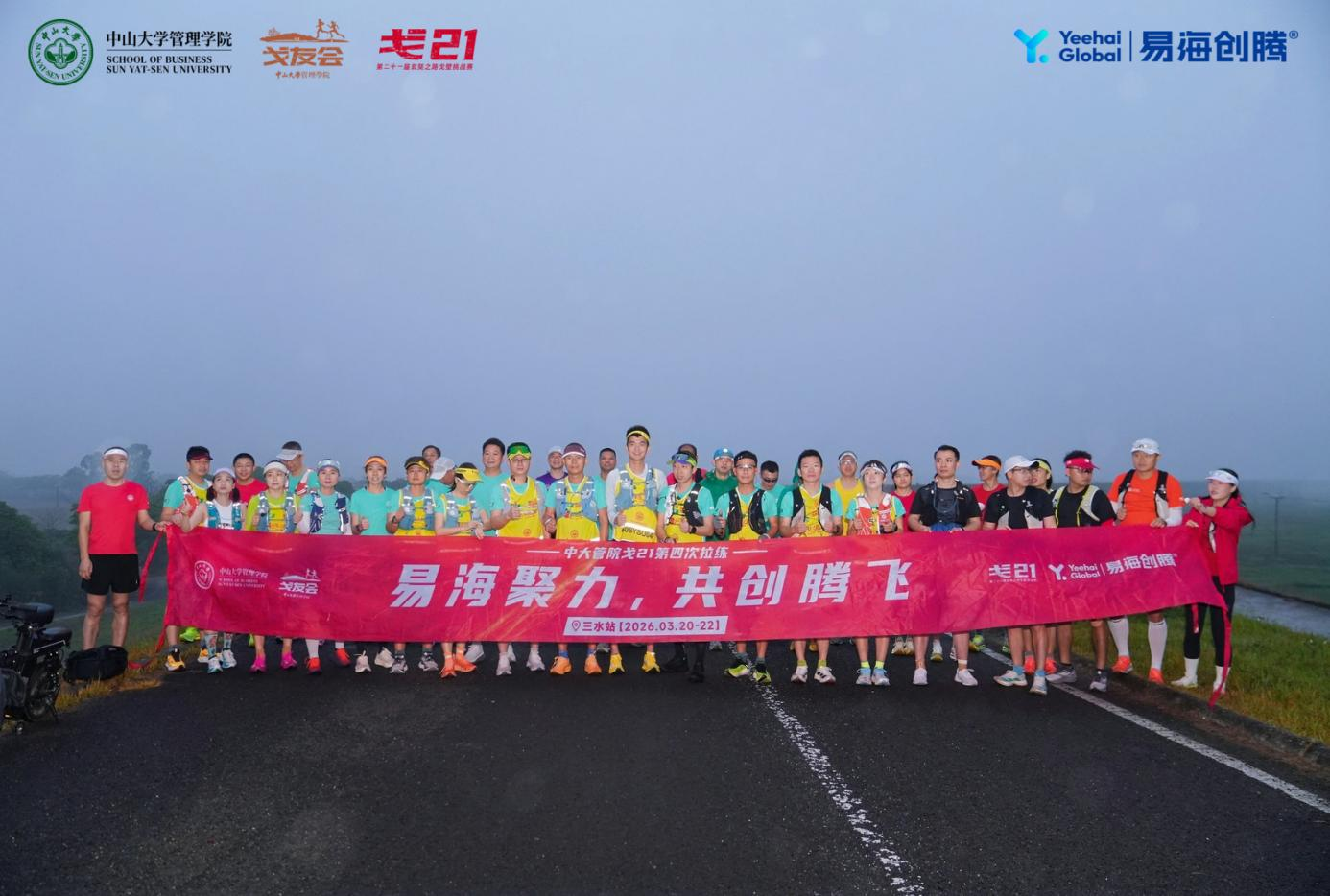
易海创腾连续三年冠名赞助并参加中山大学EMBA戈友会拉练选拔活动

亿邦持续追踪报道该情报,如想了解更多与本文相关信息,请扫码关注作者微信。

【版权提示】亿邦动力倡导尊重与保护知识产权。未经许可,任何人不得复制、转载、或以其他方式使用本网站的内容。如发现本站文章存在版权问题,烦请提供版权疑问、身份证明、版权证明、联系方式等发邮件至run@ebrun.com,我们将及时沟通与处理。

已点赞

+1

{{ praise_text }}

好文章,值得被更多人看到

FAQ回顾

易海创腾是做什么的?

易海创腾是成立于2017年的B2B出海营销服务商,可为出海企业提供涵盖海外广告投放、品牌站营销、海外GEO、社媒营销、小语种营销等在内的全流程整合营销服务,已服务超4000家中国企业,助力其拓展海外市场、树立品牌形象。

B2B出海企业打造品牌的核心难点是什么?

B2B出海企业打造品牌最大的挑战是建立客户信任需要更长时间,其客户决策具有多人、长期、专业的特点,采购链路冗长复杂,品牌打造需要贯穿客户全采购旅程,持续输出专业内容,营销效果无法短期显现。

AI时代出海营销服务商的核心价值是什么?

AI时代出海营销服务商的核心价值已不再是单纯的执行,而是提供精准的决策与判断力,需要深谙外贸、营销及垂直行业知识,结合AI技术帮助出海企业沉淀品牌数字资产,获得长期时间复利。

易海创腾的海外GEO服务有什么作用?

易海创腾2025年率先推出的海外GEO服务,可帮助出海品牌系统性提升在AI搜索及大模型中的可见度,构建AI信任链条,目前该服务已沉淀出系统性方法论,落地了大量海外实战案例。

广告

下一篇

泛鼎国际刘波:激活闭环数据、集群抱团“入海” 构建全球供应链三赢模式

7月23日,在亿邦动力举办的“2026全球化新品牌AI竞争力大会”上,泛鼎国际集团创始人、董事长刘波发表了题为《全域机会,品牌出海的百亿级数智供应链服务模式》的演讲。