• 亿邦公众号
    • APP下载

把百年农业经验交给 AI 正大集团和零一万物要让AI走进农业一线

作者:龚作仁 文章来源:Laborer

2026-06-05 17:18

作者:龚作仁 文章来源:Laborer

2026-06-05 17:18

邦小白快读

EN
全文速览

本文核心干货是AI公司零一万物与农业龙头正大集团成立合资公司万蜂智能,共同推进AI走进农业生产一线,是产业AI落地实体产业的系统性探索,先以中国蛋鸡养殖为试点,未来计划拓展品类并推向正大覆盖的东南亚市场

1. 项目核心解决传统农业的痛点:养鸡是知识密集型行业,资深老师傅的养殖经验难以规模化复制,AI可实现可规模化的定制化,让一位场长就能管好上百个鸡场

2. 落地路径清晰:提出五层一体的智慧农业架构,形成从感知数据到决策执行再到自我优化的完整闭环,参照自动驾驶分为L3到L5三个成熟阶段,从限定场景切入逐步升级

3. 模式有所创新:摒弃传统甲乙方采购模式,改成合资共创模式,解决AI落地责任边界模糊、需要持续迭代的问题,所有项目都锚定真实经营指标,不做虚有演示

本次AI+农业的合作为传统农业品牌数字化转型提供了完整参考路径,带来很多品牌升级和发展的干货

1. 符合消费趋势:当前消费者对农产品的食品安全、供给稳定性要求越来越高,AI养殖可以提升巡检准确率,降低交叉感染风险,稳定产蛋品质,能帮助品牌建立核心品质优势,契合消费升级方向

2. 可复制的经验升级方法:传统农业品牌的核心竞争力依赖资深人才经验,经验分布不均难以放大,AI可以把头部人才的经验沉淀到智能系统中,让所有门店、养殖场都对齐最优管理水平,放大品牌的管理优势,优化核心成本指标料蛋比

3. 转型模式可参考:不是简单采购AI技术,而是用合资共创绑定科技公司,共同迭代解决问题,满足一把手愿景对齐、场景有足够深度价值、数据流程复杂三个条件,就可以用这种模式

4. 有清晰的扩张路径:从单一细分品类切入跑通样板,再拓展到其他养殖品类,最后可以依托品牌的海外网络复制到东南亚市场

本次AI+农业的落地探索,给农业领域相关从业者带来新的增长机会和落地经验参考

1. 市场机会判断:农业不是AI的边缘场景,是未被开发的价值富矿,蛋鸡养殖等细分赛道每天产生海量结构化数据,有大量明确的智能化需求,是AI落地的理想场景,属于新的增量增长市场

2. 核心切入场景明确:有三个已经验证的高价值场景,分别是养殖安全智能巡检、AI场长经验复制、产销智能协同,每个场景都直接对应降本增效的明确收益,适合作为切入点

3. 落地要避坑:要警惕产业AI只炫技不落地的陷阱,所有项目都要锚定真实的经营指标,先定义基线再验证提升,不能只做无法产生收益的演示demo

4. 合作模式参考:对于需要持续迭代的AI项目,传统交付即结束的模式不适用,可以参考深度绑定的共创模式,实现风险共担利润共享,解决责任划分不清的问题

对于农牧生产以及配套硬件工厂,本次合作带来产品需求、数字化转型和商业机会多方面的启示

1. 生产端数字化转型启示:传统单点自动化只能帮工人提效,无法解决经验规模化的问题,农牧工厂可以参考零一万物的五层一体架构,打造从感知、数据、决策到执行、自我迭代的全链路闭环智能系统,真正实现生产端的智能化升级,优化核心成本指标

2. 配套工厂的商业机会:AI农业落地需要大量前端感知硬件,比如传感器、摄像头、自动执行装置等,随着AI农业逐步推广,市场对这类硬件的需求会持续增长,给生产这类产品的工厂带来明确的增量需求

3. 转型模式参考:AI农业落地的验证周期长、数据整合难度大,传统的外部采购技术模式不适用,可以参考正大集团的做法,和科技公司成立合资公司深度共创,共同解决落地过程中的各类问题,实现风险共担收益共享

4. 未来拓展空间大:本次先从蛋鸡养殖切入,未来会拓展到肉鸡、猪、水产等多个品类,给不同品类的农牧生产工厂都带来转型机会

作为产业AI服务商,可以从本次合作中获取行业趋势、客户痛点和落地方案多方面的干货

1. 行业发展趋势:当前产业AI已经从数字领域的辅助工作,走向改造物理世界的实体产业,农业是价值极大的未开发赛道,AI从辅助决策走向自主闭环是明确的发展方向,市场空间广阔

2. 客户核心痛点:农业客户的核心痛点包括:资深养殖经验难以规模化复制、人工巡检效率低易遗漏引发安全问题、产销衔接不畅造成库存浪费,传统甲乙方合作模式无法适配AI持续迭代的特性,责任边界模糊难以划分

3. 落地方案参考:架构上采用五层一体架构,形成数据-决策-执行-迭代的完整闭环,成熟度上从L3限定场景切入,逐步向L4、L5升级,所有方案都围绕客户核心经营指标设计,可直接验证对财报的提升效果

4. 合作模式创新:满足一把手愿景对齐、场景有深度价值、数据流程复杂三个条件时,采用合资共创模式,替代传统甲乙方交付,实现利润共享风险共担,解决责任划分和持续迭代的问题

对于布局农业智能化的平台商,本次合作揭示了产业端需求,也提供了运营和风险规避的参考

1. 产业端对AI平台的核心需求:不追求炫技的概念演示,需要能真正落地提升经营指标的方案,适配农业生产长周期、数据多元复杂、需要持续迭代的特点,解决经验规模化、责任边界模糊的核心问题

2. 招商合作模式参考:摒弃传统的甲乙方招商交付模式,参考本次合资共创的做法,联合科技企业和产业龙头深度绑定,共同解决落地问题,适配AI动态演化、需要持续迭代的特性,更容易跑通样板

3. 布局路径参考:先从细分成熟场景切入,比如先做蛋鸡养殖的L3级限定场景智能化,验证效果后再逐步拓展到多品类、全产业链,先做国内试点跑通可复制模式,再向海外市场扩张,能有效降低试错风险

4. 风向规避:要避开只做概念不落地的陷阱,所有平台服务都要围绕产业客户的核心经营指标设计,只有能给客户带来明确可算的收益,才能真正获得市场认可

本次合作为产业AI和农业智能化研究提供了完整的新案例,带来很多新动向和新思考

1. 产业新动向:当前产业AI已经完成从辅助决策到自主闭环的升级,正式进入农业这类实体物理生产场景,AI+农业已经从概念探索进入系统性落地阶段,未来会逐步从单品类拓展到全产业链,还会从中国复制到东南亚市场,是非常值得关注的新产业方向

2. 产业AI落地的新问题:本次合作明确提出,AI落地实体产业的最大挑战不是技术,而是责任边界划分,传统甲乙方模式无法适配AI持续动态演化的特性,此外长周期验证、多元异构数据整合、算法泛化都是待深入研究的问题

3. 新商业模式和落地范式:本次合作提出了合资共创的新商业模式,实现利润共享风险共担,解决了责任划分的问题,同时提出了五层一体架构、L3-L5分级成熟度框架,形成了锚定经营指标的闭环落地路径,为产业AI落地提供了完整参照

4. 对Palantir模式做了本土化实践探索,依托本体论实现底层数据和高层业务逻辑的耦合,为国内产业AI落地提供了可验证的实践路径

声明:快读内容全程由AI生成,请注意甄别信息。如您发现问题,请发送邮件至 run@ebrun.com 。

我是 品牌商 卖家 工厂 服务商 平台商 研究者 帮我再读一遍。

Quick Summary

This article centers on a key development: AI firm 01.AI and agricultural giant Charoen Pokphand Group (CP Group) have established a joint venture called OneBee Intelligence to advance AI adoption in frontline agricultural production. This initiative represents a systematic exploration of industrial AI deployment in the real economy. It will start with a pilot program in Chinese layer chicken farming, with plans to expand to more product categories and enter CP Group’s existing markets in Southeast Asia in the future.

1. Core problem addressed: Chicken farming is a knowledge-intensive industry, and the practical expertise of senior experienced farmers is difficult to scale and replicate. AI enables scalable customization, allowing a single farm manager to oversee hundreds of chicken farms.

2. Clear deployment roadmap: The project introduces a "five-layer integrated" smart agriculture architecture that forms a complete closed loop from data perception to decision-making, execution and autonomous optimization. Similar to autonomous driving, it is divided into three maturity stages from L3 to L5, starting with constrained scenarios before gradual upgrading.

3. Innovative partnership model: Instead of the traditional client-vendor procurement model, the two parties adopted a joint venture co-creation approach. This model solves issues including blurred responsibility boundaries and the need for continuous iteration in AI deployment, and all projects are anchored to actual business performance indicators rather than being just hollow demonstrations.

This AI+agriculture collaboration provides a complete actionable roadmap for digital transformation of traditional agricultural brands, with valuable insights for brand upgrading and growth.

1. Aligns with consumer trends: Today’s consumers increasingly demand food safety and supply stability for agricultural products. AI-powered farming improves inspection accuracy, reduces the risk of cross-infection, and stabilizes egg production quality. This helps brands build a core competitive advantage in product quality, matching the direction of consumption upgrading.

2. A replicable method for scaling expertise: The core competitiveness of traditional agricultural brands relies on the experience of senior talent, which is unevenly distributed and hard to scale. AI can codify top talent’s experience into intelligent systems, aligning all outlets and farms with optimal management standards, amplifying a brand’s management advantages and optimizing the key cost metric of feed-to-egg ratio.

3. A referenceable transformation model: Rather than simply procuring AI technology as a one-off purchase, brands can partner with tech firms through joint venture co-creation to bind interests and iterate on solutions together. This model works well when three conditions are met: aligned vision from top leadership, sufficiently deep value in the targeted scenario, and complex data and processes.

4. A clear expansion path: Brands can start with a single niche category to build and validate a replicable model, then expand to other farming categories, and finally replicate the model across Southeast Asia leveraging the brand’s existing overseas network.

This on-the-ground exploration of AI+agriculture brings new growth opportunities and actionable insights for agricultural industry practitioners.

1. Market opportunity assessment: Agriculture is not a marginal use case for AI, but an untapped high-value market. Niche segments such as layer chicken farming generate massive amounts of structured data every day and have a large number of clear demand for intelligent solutions. It is an ideal scenario for AI deployment and represents a new incremental growth market.

2. Clear high-value entry points: Three verified high-value entry scenarios have been identified: intelligent inspection for farming safety, replication of expert farm manager experience, and intelligent production-sales coordination. Each scenario directly delivers clear cost reduction and efficiency improvement gains, making them ideal starting points.

3. Pitfalls to avoid: Industry players should watch out for the common trap of "AI for show" that never delivers real value. All projects must be anchored to actual business performance indicators: establish a baseline performance first, then validate improvements, rather than building useless demonstration demos that generate no real gains.

4. Referenceable partnership model: For AI projects that require continuous iteration, the traditional "deliver and done" vendor model does not work. A deeply bound co-creation model can be adopted to share risks and profits, solving the problem of unclear responsibility division.

This collaboration brings insights on product demand, digital transformation and business opportunities for livestock farming enterprises and supporting hardware manufacturers.

1. Insights for production-side digital transformation: Traditional point automation only improves worker efficiency, and cannot solve the problem of scaling expertise. Livestock farming enterprises can adopt 01.AI’s five-layer integrated architecture to build a full-closed-loop intelligent system covering perception, data processing, decision-making, execution and autonomous iteration, to achieve real intelligent upgrading at the production end and optimize core cost indicators.

2. Business opportunities for supporting manufacturers: AI agriculture deployment requires a large number of front-end perception hardware, including sensors, cameras and automated execution devices. As AI agriculture is gradually adopted, market demand for these hardware products will continue to grow, bringing clear incremental demand for manufacturers that produce these products.

3. Referenceable transformation model: AI agriculture deployment has a long validation cycle and high difficulty for data integration. The traditional external technology procurement model is not suitable. Companies can follow CP Group’s example: establish a joint venture with a tech company for deep co-creation, solve all kinds of problems encountered during deployment together, and share risks and returns.

4. Large room for future expansion: This initiative starts with layer chicken farming, but will expand to multiple categories including broiler chicken, hog and aquaculture in the future, bringing transformation opportunities to livestock production enterprises across different categories.

As an industrial AI service provider, you can gain valuable insights on industry trends, customer pain points and deployment solutions from this collaboration.

1. Industry development trends: Today, industrial AI has moved beyond supporting tasks in the digital space to transforming real-world physical industries. Agriculture is a large untapped market with enormous value, and the clear development direction is for AI to move from supporting decision-making to autonomous closed-loop operations, with a vast market space.

2. Core customer pain points: Core pain points for agricultural customers include: difficulty scaling and replicating senior farming expertise, low efficiency and missed risks in manual inspection that cause safety issues, and inventory waste from poor production and sales alignment. The traditional client-vendor model cannot adapt to the continuous iteration requirement of AI, leading to blurred responsibility boundaries.

3. Referenceable deployment solutions: Adopt the five-layer integrated architecture to form a complete closed loop of data, decision-making, execution and iteration. In terms of maturity, start with L3 constrained scenarios, and gradually upgrade to L4 and L5. All solutions should be designed around the customer’s core business indicators, and can directly verify improvements to financial performance.

4. Innovative partnership model: When three conditions are met – aligned vision from top leadership, sufficiently deep value in the scenario, and complex data and processes – the joint venture co-creation model can be adopted to replace the traditional client-vendor delivery model. This enables profit and risk sharing, and solves problems of responsibility division and continuous iteration.

For platform operators布局农业智能化, this collaboration reveals actual industry demand and provides references for operations and risk mitigation.

1. Core demand from the industry for AI platforms: Industry players do not pursue flashy concept demonstrations – they need solutions that actually deliver tangible improvements to business performance. Solutions need to adapt to the characteristics of agricultural production: long cycles, diverse and complex data, and the need for continuous iteration, to solve the core problems of scaling expertise and blurred responsibility boundaries.

2. Referenceable investment and partnership model: Abandon the traditional client-vendor sourcing and delivery model, and follow the co-creation joint venture example in this collaboration: deeply bind tech firms and industry leaders to solve deployment problems together. This adapts to the dynamic evolution and continuous iteration requirements of AI, making it easier to build and validate a successful replicable model.

3. Referenceable layout roadmap: Start with niche mature scenarios – for example, start with L3 constrained-scenario intelligence for layer chicken farming. After validating results, gradually expand to multiple categories and the entire industrial chain. Run a domestic pilot first to build a replicable model, then expand to overseas markets, which effectively reduces trial and error risk.

4. Risk mitigation: Avoid the trap of focusing only on concepts rather than real deployment. All platform services should be designed around core business indicators of industry clients. Only when solutions deliver clear, measurable benefits for clients can they win genuine market recognition.

This collaboration provides a complete new case for research on industrial AI and agricultural intelligentization, bringing new insights and new thinking.

1. New industry trends: Industrial AI has now completed its upgrade from auxiliary decision-making to autonomous closed-loop operations, and has officially entered physical production scenarios such as agriculture. AI+agriculture has moved from conceptual exploration to the systematic deployment stage. In the future, it will gradually expand from a single category to the entire industrial chain, and replicate from China to Southeast Asia, making it a very noteworthy new industry direction.

2. New questions for industrial AI deployment: This collaboration clearly identifies that the biggest challenge for AI deployment in real industries is not technology, but the division of responsibility boundaries. The traditional client-vendor model cannot adapt to the continuous dynamic evolution characteristic of AI. In addition, long validation cycles, integration of heterogeneous data, and algorithm generalization are all questions that require further in-depth research.

3. New business model and deployment paradigm: This collaboration introduces a new business model of joint venture co-creation, which enables profit and risk sharing and solves the responsibility division problem. It also puts forward the five-layer integrated architecture and the L3-L5 maturity grading framework, forming a closed-loop deployment path anchored to business indicators, providing a complete reference for industrial AI deployment.

4. It conducts a localized practical exploration of the Palantir model, coupling underlying data and high-level business logic based on ontology, providing a verifiable practical path for industrial AI deployment in China.

Disclaimer: The "Quick Summary" content is entirely generated by AI. Please exercise discretion when interpreting the information. For issues or corrections, please email run@ebrun.com .

I am a Brand Seller Factory Service Provider Marketplace Seller Researcher Read it again.

当大多数AI初创公司还在用“写文作画”和“生成代码”向客户兜售未来的时候,零一万物选择进入田间地头,在产业前线创造真金白银。

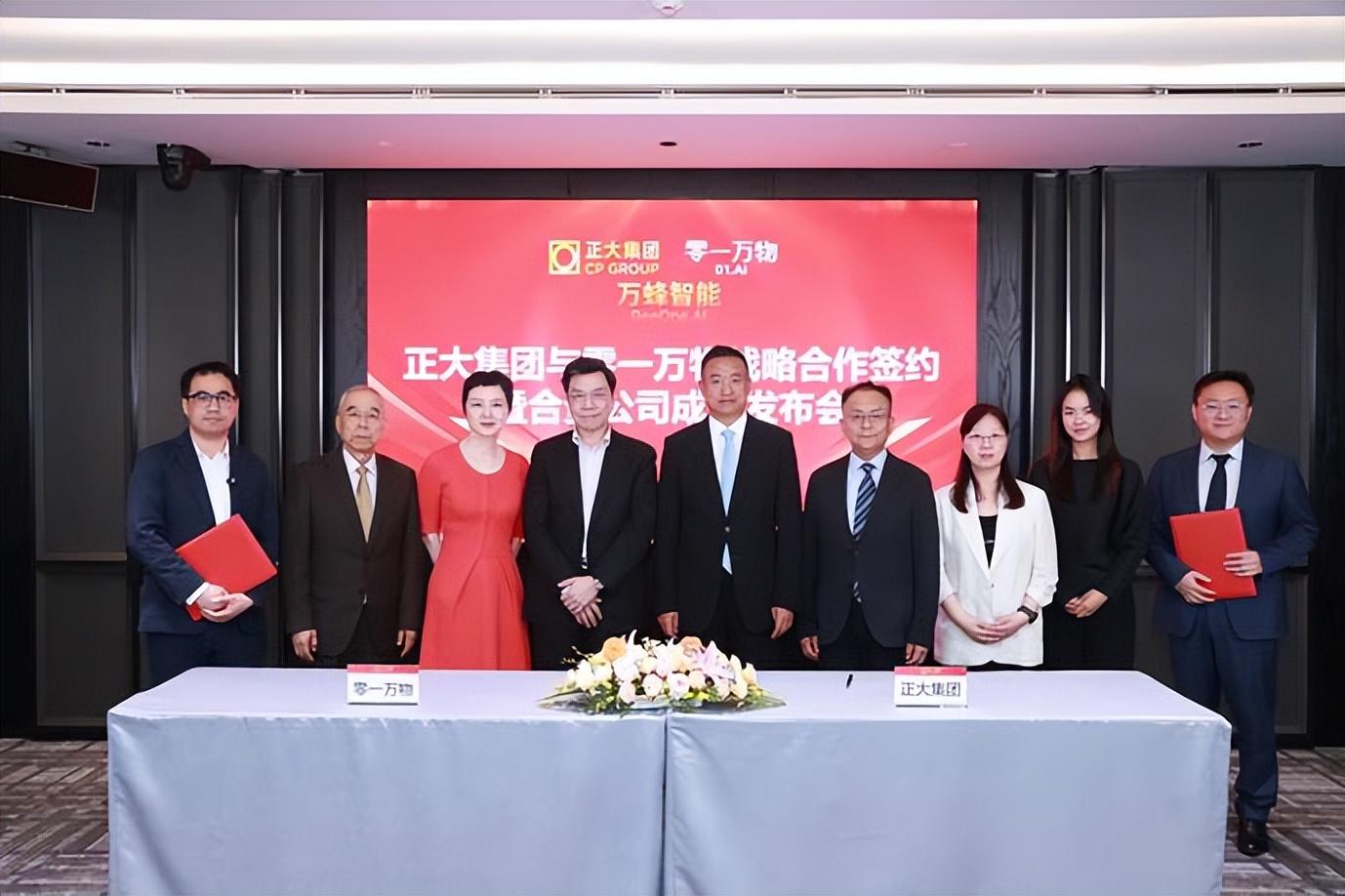
6月2日,零一万物与正大集团宣布达成战略合作,并共同成立合资公司“万蜂智能”,把“AI+农业”推向新高度。这不是一次普通的AI采购或技术试点,而是一次围绕农业智能化的系统性探索:双方合作落地的首个重点领域为蛋鸡养殖,将以中国市场为试点,未来有望推向正大集团覆盖的其他东南亚市场。

在新公司成立的发布会上,零一万物国际业务与AI咨询副总裁宁宁博士首次系统性地阐述了产业AI落地的愿景,以大模型驱动的企业级智能体,正在从“辅助决策”走向“自主闭环”,而农业,成为产业AI进入物理世界的重要战场。
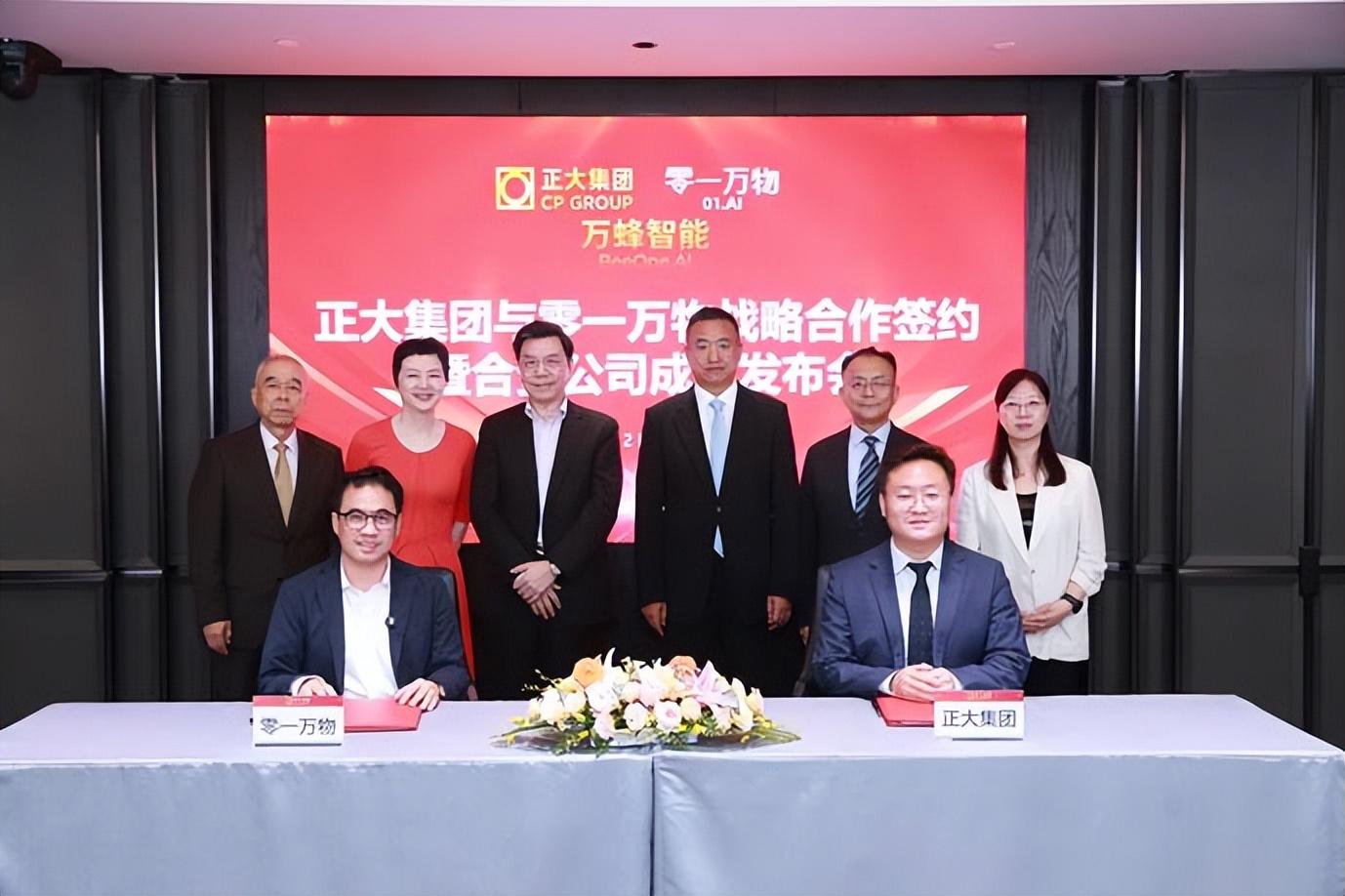
零一万物与正大集团战略合作签约暨合资公司成立发布会现场

对于零一万物而言,此次战略合作意味着企业AI、产业大模型与企业级多智能体能力,正在进入真实、连续、高复杂度的农业生产现场;对于正大集团而言,这也意味着百年农业企业的经验、组织能力和全球产业网络,正在与AI 2.0时代的新型智能中枢结合。
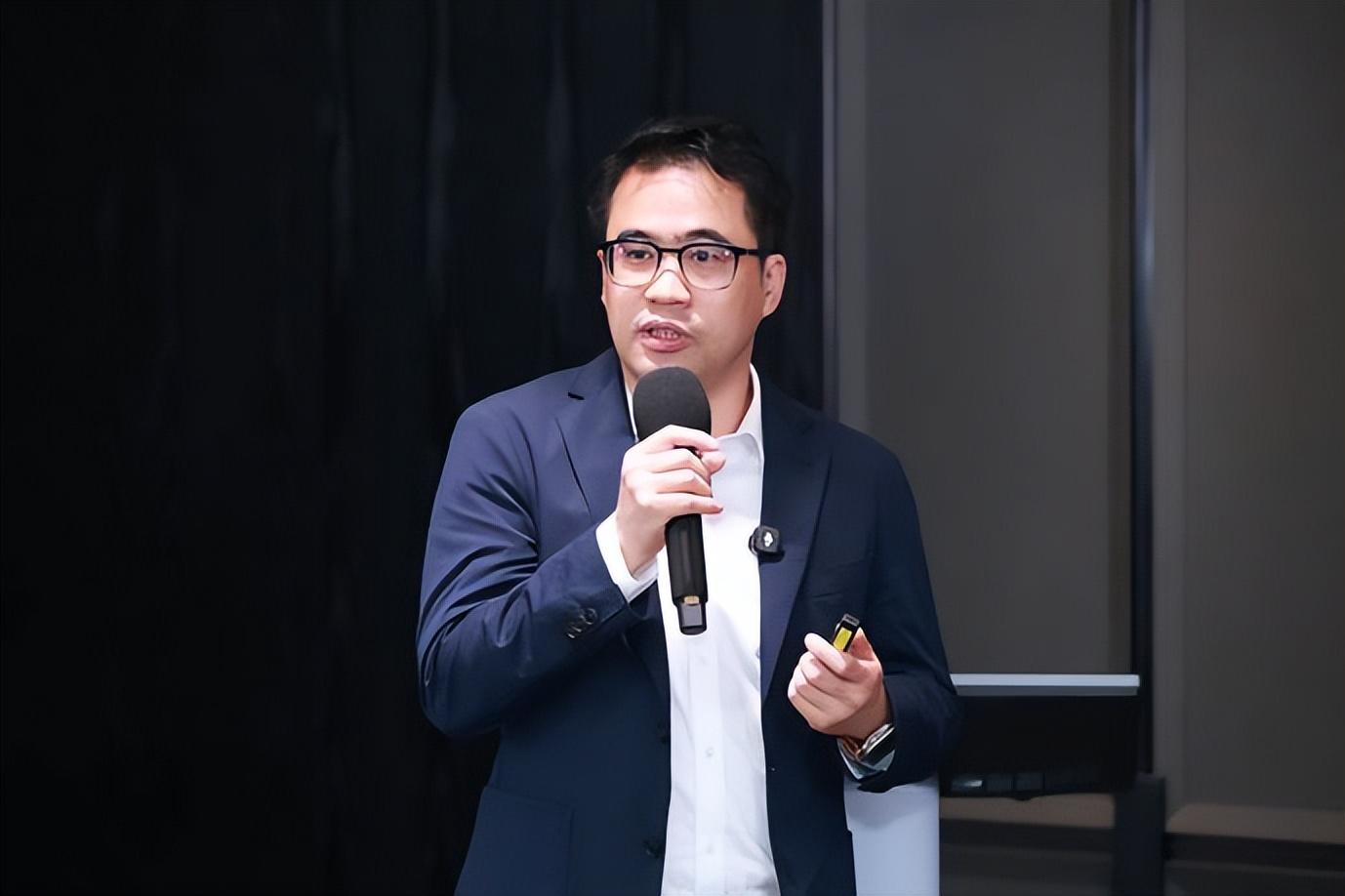
零一万物国际业务与AI咨询副总裁宁宁博士

农业不是AI边缘场景,而是未被看见的价值富矿

“AI离农业很远”是许多人的第一反应。行业通常认为企业级AI的主战场在工业制造、自动驾驶或金融风控。但零一万物团队这一次却瞄准了最传统的农业。

“没想到在农业养殖领域,竟然存在着如此多值得AI深度介入的应用场景。”零一万物团队驻扎在现场的FDE工程师们,和养鸡场员工同吃同住多天,全程参与业务,调研各方需求。几个月下来,他们更加确信AI 2.0在养鸡场里大有可为。

一方面,养鸡场是数据的富矿。鸡蛋看似简单,但它是24小时不间断运转的产业链产物。正大蛋业每天产生海量的结算数据、鸡群健康数据和经营数据——规模足够大、数据足够齐备、迭代速度足够快。这正是AI落地理想的可进入场景。
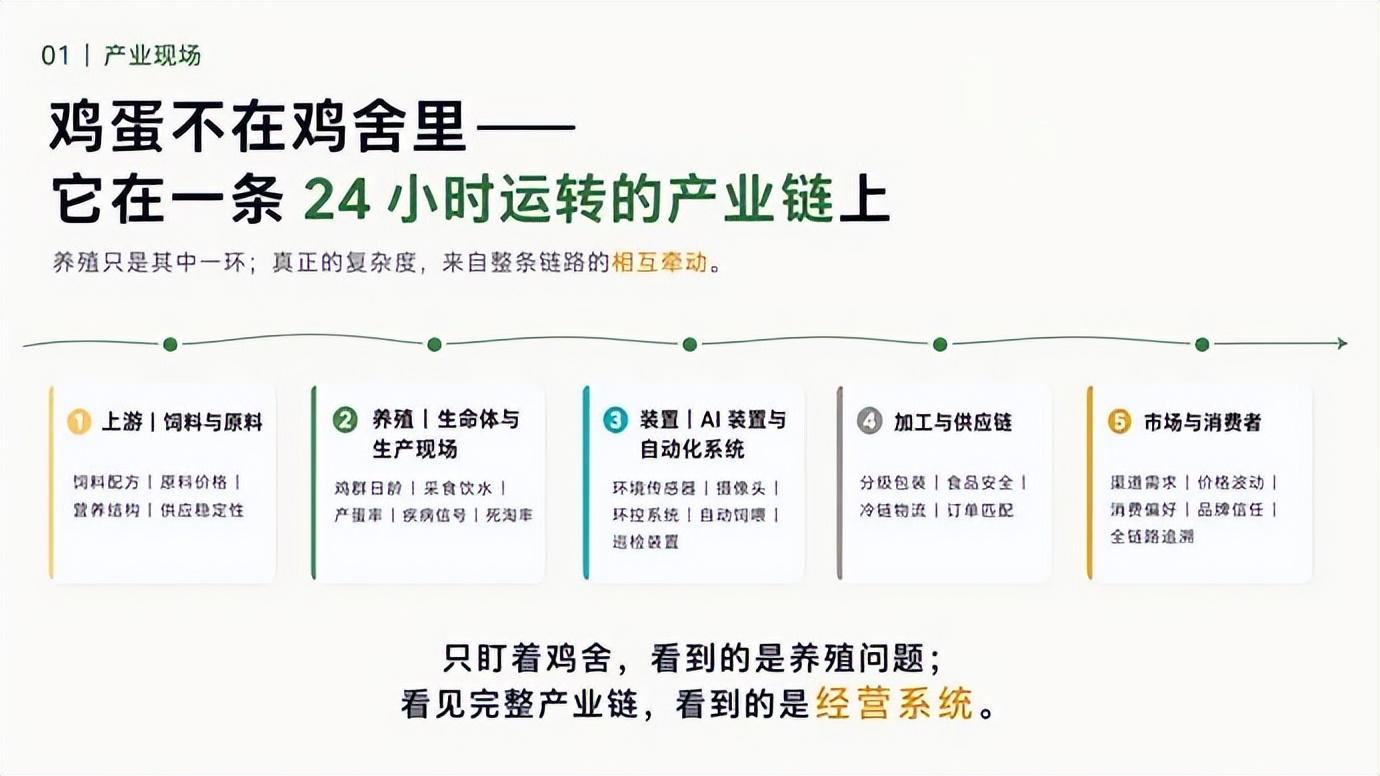
尤其值得关注的是,养鸡其实还是一个知识密集型行业。有大量沉淀在“老师傅脑子里的经验”,这些经验分布极不均匀。一个优秀的场长能把一个鸡舍管好,但很难把一百个鸡舍都管到同等水准。养鸡厂有一个衡量成本效益的核心指标——料蛋比,也就是饲料消耗量与鸡蛋产出量之间的比例,一位资深师傅对某个养殖场的料蛋比把控,未必能够直接适用于另一个养殖场,不同场区之间往往存在着十分显著的差异。

以前,自动化和单点智能化可以帮师傅干活提效,但难以把经验和判断力规模化。“AI 2.0最大的价值就是‘可规模化的定制化’,让一个场长通过AI方式管好100个场,这才是AI的真功夫。”宁宁博士说。

AI+农业路线图:五层架构迈向组织智能

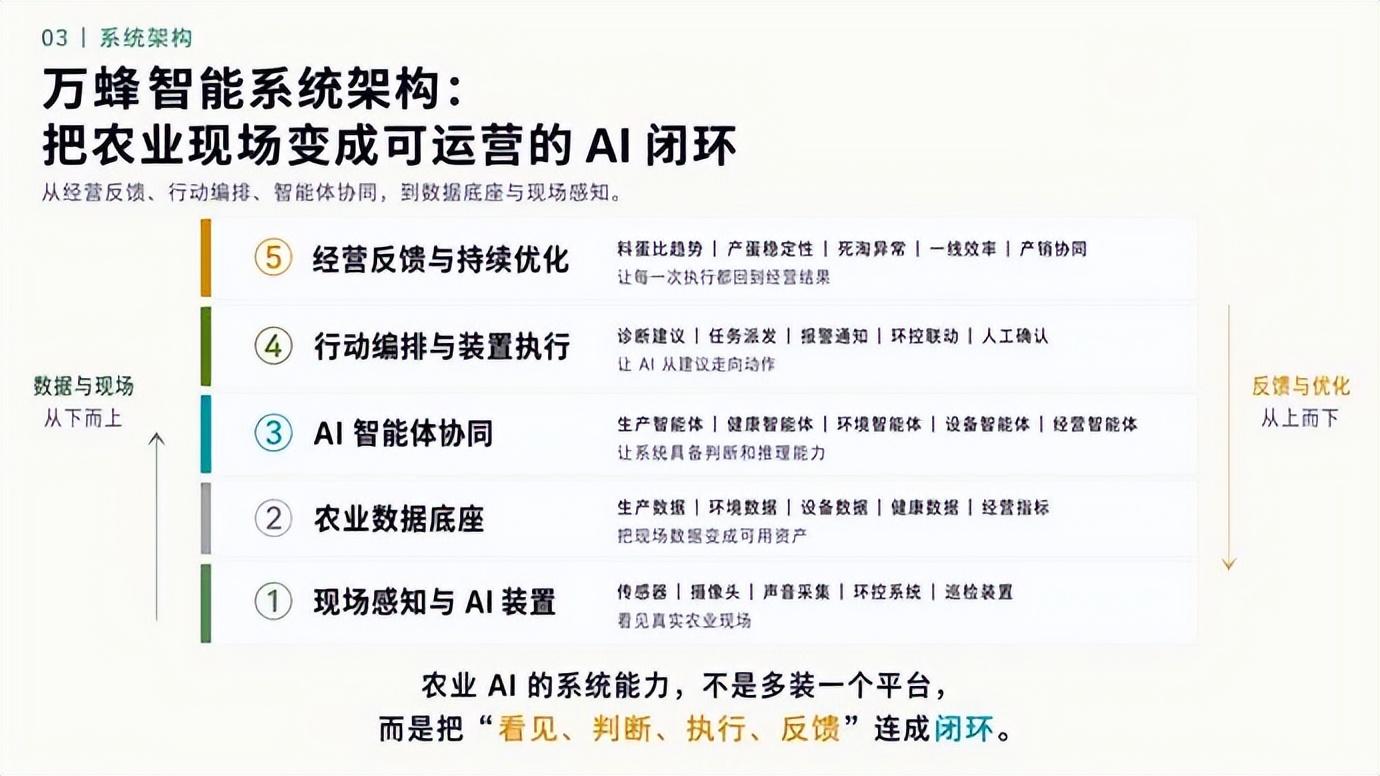
在宁宁博士看来,做产业AI跟做办公AI有本质区别。办公场景中,AI辅助写作、辅助数据分析,本质上都在数字世界内部运转。而农业AI必须改变物理世界。为了让AI知行合一,不仅想到,更能做到,零一万物提出五层一体的智慧农业系统架构,由底层向上分别为:现场感知与AI装置、数据底座、AI智能体协同、物理装置执行和自我学习与迭代。

第一层是现场感知与AI装置,在鸡舍部署传感器、摄像头、环境控制系统,形成完整的物理感知网络;

第二层是数据底座,将传感器、经营、营销数据完全打通,构建统一的农业数据基础设施;

第三层是AI智能体协同,基于大模型的智能体不仅接收数据,更要理解数据背后的含义并做出推理;

第四层是物理装置执行,智能体的决策能自动驱动装置完成巡检、定位和隔离等动作;

当系统运转起来后,零一万物还会再加上第五层:自我学习与迭代,系统在持续运转中实现自我优化,让系统“越用越好,越用越准”。

通过机器人采集数据,模型分析处理,AI智能体决策,机器人执行的链路,智慧农业系统中各个要素形成了从数据到业务决策,再到行动最终实现全局管理的闭环。
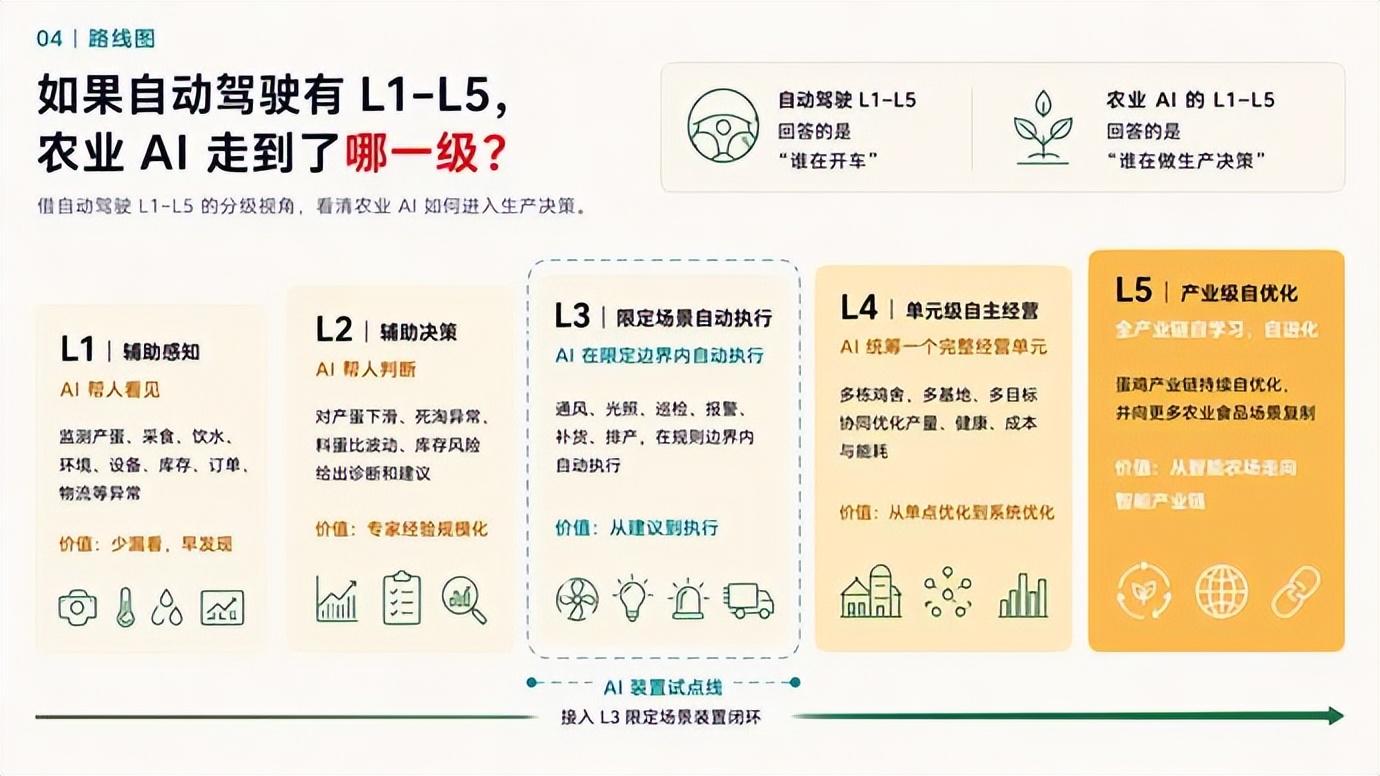
在发展阶段上,参考自动驾驶分级体系,万蜂智能为农业AI提出了类似的成熟度框架:L3级在限定场景内实现AI装置与智能体的闭环运作,这是当前的切入点;L4级拓展到多个鸡舍与基地,涉及多目标协同和系统级迭代;L5级则实现覆盖饲料供应、零售加工与餐饮配送的完整产业链智能化体系。

“我们从L3切入,目标是逐步走向L5。”宁宁博士表示,万蜂智能将在纵轴上提升智能化深度,横轴上将能力延展到更多细分领域,打造全球AI农业样板。
围绕经营指标,每一个场景都要与财报有关

产业AI最大的陷阱,是只炫技却落不到真实业务指标上。宁宁博士反复强调:“产业不能只有demo,我们要看真实的指标。”在他看来,万蜂智能要回答的不是“AI能不能在鸡舍里跑起来”,而是“AI到底优化了什么”:鸡蛋产出的稳定性、生产效率、养殖安全、饲料成本、流通损耗,这些才是能够进入企业经营结果的硬指标。

这也是万蜂智能设计解决方案的基本逻辑:先定义基线指标,再让AI介入具体场景形成闭环,经过一段时间运行后,评估其对指标的真实提升。宁宁博士给出的判断标准十分朴素:“我们做的东西是不是能够写到正大集团财务报表里面去。”
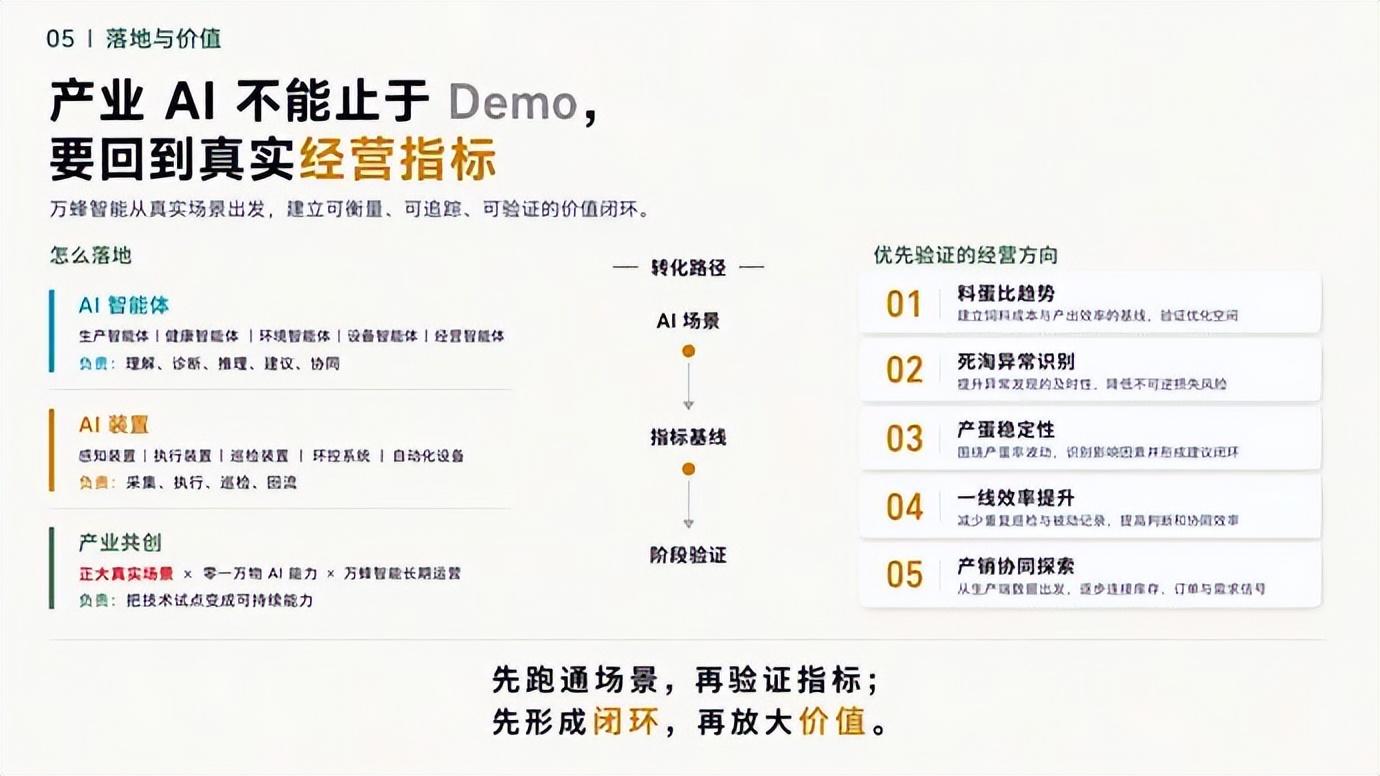
首先是养殖安全智能体。传统模式下一栋鸡舍的巡检需要员工每天花费3个小时逐个检查,高度重复且易遗漏。AI安全巡检智能体通过机械装置精准定位、快速分析,能在更短时间内识别病鸡、低产鸡,并及时隔离异常个体,从而降低淘汰率和交叉感染风险。这对应的不只是巡检效率提升,更是鸡群健康水平、产蛋稳定性和食品安全能力的提升。

其次是AI场长。农业养殖长期依赖资深场长和老师傅的经验,但经验分布并不均匀。一位优秀场长能把一个农场管好,却很难把一百个农场都管理到同等水准。AI场长的价值,是把资深场长对环境、饲喂、鸡群状态和生产节奏的判断沉淀到智能体中,让更多农场向最优水平看齐。

还有产销智能体协同。鸡蛋是一个24小时不间断运转的产业链终端结果,生产端和供给端一旦衔接不畅,就可能带来库存积压、流通损耗和供需错配。通过产销智能体协同,系统可以更精准地根据市场变化调节供给平衡,减少浪费,提高整体周转效率。

宁宁博士表示,所有方案设计都围绕核心经营指标提升展开,遵循从发现问题到MVP(最小可用产品)定义、系统上线,再到稳定运行的四部标准化SOP。对产业AI而言,真正的价值不在于演示时有多炫,而在于能否持续进入业务现场,沉淀数据、修正判断、优化动作,最终把AI能力转化为企业看得见、算得清的经营结果。

共创制取代甲乙方,企业AI需要新的合作范式

被问到AI 2.0落地最大挑战时,宁宁博士的回答出乎意料:“不是技术,而是时间与责任。AI进入产业现场后,人与AI的责任边界变得模糊。比如AI驱动某个指标上升但另一个下降,到底归因于哪个环节?谁为此负责?在过去,供应商和客户之间的责任边界非常清晰,但AI时代会把这条边界模糊掉,这是一个极具挑战性的问题。”

此外,蛋鸡长达500多天的生命周期意味着验证周期需一年半,多元异构数据的整合困难和算法泛化能力都不是短期能完美解决的。但正如宁宁博士所言,两个团队紧密协作后才能挖出更多的“金矿”。
零一万物与正大集团的合作,颇具开创性的部分在于合作范式的重构。

“我们告别了传统的甲乙方采购模式。”宁宁博士是万蜂智能成立的核心推动者,他强调,系统部署完成之时,恰恰是共创的开始。

传统软件是“交付即固化,验收即终结” 。但AI本质上是一个活的系统,是持续学习的系统,AI智能体不是在第一天上线时就被彻底固化下来的。宁宁博士说,它需要每天不断地获取新数据,并在此基础上持续进行自我迭代和进化。

正因为AI是在动态演进的,当系统刚刚部署之后,随着AI大量进入产业现场,一定会有全新的数据涌现,许多此前未曾预料到的问题也会逐渐浮现。

传统采购模式无法承载这种持续演化关系,双方需要用合资公司的形式来“固化”共创关系:零一万物带来AI技术和工程师团队,正大集团提供深厚的产业场景、一线经验和海量数据。双方团队需要频繁碰撞,一起深入鸡舍、定义问题、设计方案、拿到结果。

更重要的是,这种模式实现了从“互相讨价还价”到“利润共享、风险共担”的转变,过往很多边界模糊的责任划分问题,现在也迎刃而解。

对于未来是否复制该模式,宁宁博士提出三个判断标准:一是双方一把手是否达到高度共识和愿景对齐;二是场景是否有足够的深度和价值点;三是流程和数据是否足够复杂,确实需要深度绑定而非简单的应用交付。当这三个条件具备时,合资共创就是最优解。

从中国试点到全球样板,不止于做中国的Palantir

有很多家中国公司都想学习Palantir,但往往形似而神不似。

Palantir模式的过人之处在于深深扎根于企业最核心业务,在极度碎片化、个性化的垂直行业场景中,通过“本体(Ontology)”这一层级,实现底层数据处理与高层业务逻辑的标准化耦合,从而用AI重塑企业决策体系。

在宁宁博士看来,智能体需要借助本体论来深入理解这些冰冷数据背后所代表的真实生产含义,明确决策的“因”与“果”,只有借助本体论等技术实现了对数据的深度理解与决策推演,智能体才能最终驱动物理装置去输出行动结果,从而真正实现让AI进入物理世界。

要实现这一点,需要技术和组织的双重变革能力,业界具备零一万物这样能力的AI公司寥寥无几。这也是正大集团选择与零一万物合作的原因。

正大集团资深副董事长兼中国区CEO杨小平对合作抱有极高期待:“我们期待与零一万物以中国市场为试点,率先跑通可验证、可复制的智慧农业样板。从蛋鸡AI作为试点,扩展至肉鸡、猪、水产等其他品类。未来,在结合当地农业条件、管理方式和市场需求做好本地化的基础上,这些经过中国市场验证的能力,逐步推向正大集团覆盖的其他东南亚市场,为更多区域的农业智能化提供新的实践路径。”

从“能回答问题”到“能拆解任务”,从“能调用工具”到“能改变物理世界”,企业AI正在经历质的飞跃。零一万物与正大集团的这次合作,为产业AI的落地路径提供了一个完整的参照系——回到经营指标,建立持续共创机制,一步一个脚印走向L5的产业智能。

这种产业AI发展新范式,必将在全球舞台上发挥独特价值。正如零一万物CEO李开复博士所言:“万蜂智能的落地,是我们为全球实体经济输出的一条全新增长曲线。中国深厚的产业底蕴、硬件实力与产业AI整合,所提供的全局解决方案将在包括农业在内的各个领域将发挥前所未有的价值,推动全球智能经济发展。”

注:文/龚作仁,文章来源:Laborer,本文为作者独立观点,不代表亿邦动力立场。

【版权提示】亿邦动力倡导尊重与保护知识产权。未经许可,任何人不得复制、转载、或以其他方式使用本网站的内容。如发现本站文章存在版权问题,烦请提供版权疑问、身份证明、版权证明、联系方式等发邮件至run@ebrun.com,我们将及时沟通与处理。

已点赞

+1

{{ praise_text }}

好文章,值得被更多人看到

广告

下一篇

跨境电商资源对接

《全球跨境电商服务商资源手册》第二期手册现已发布,触达更多资源,了解跨境服务商信息,欢迎点击链接下载。

了解详情

中国最大鸡排店要IPO了

近日彭博社消息称,正新鸡排母公司正新食品正考虑赴港上市,预计筹集约3亿美元。更多细节显示,银河、中金公司等机构已受聘协助开展一系列工作。