



• 亿邦公众号
    • APP下载

零一万物携手世界500强正大集团 打造“AI+智慧农业”全球新范本

作者:龚作仁 文章来源:Laborer

2026-06-02 18:25

作者:龚作仁 文章来源:Laborer

2026-06-02 18:25

邦小白快读
EN
全文速览

本文核心内容是AI科技公司零一万物与世界500强正大集团成立合资公司万蜂智能,联手打造AI+智慧农业,首个落地领域为蛋鸡养殖,试点成功后将拓展品类并推向东南亚市场,核心干货如下:

1. 核心变革方向:区别于传统的机器替人,本次合作推动农业生产从人类劳动体系向AI劳动体系迁移,AI将承担认知、管理和执行劳动,对标汽车自动驾驶,目标直接迈向L4-L5级AI全托管规模化养殖,人类仅负责高层战略管理。

2. 实际落地价值:项目第一阶段预计将养殖自动化率从20%提升至40%,死淘率降低5%,产能提升30%,成本降低35%,可有效解决传统养殖依赖人工经验、数据孤岛、产销错配等常见痛点,未来无人农场的图景已经初步显现。

本文为农牧及相关消费品牌的AI转型提供了可参考的路径和方向,核心干货如下:

1. 消费端变化与趋势:当下下游消费需求越来越精细化,对农产品的规格、品质都提出了精准要求,倒逼上游品牌从传统大规模标准化生产转向柔性生产,AI技术可以帮助品牌实现产销协同,快速匹配消费端差异化需求。

2. 生产端升级路径:蛋鸡产业因高标准化、强闭环的特征,成为智慧农业落地的优选赛道,品牌可以把积累数十年的专家隐性经验转化为可复用的数字资产,解决超大规模养殖带来的管理复杂、产销错配问题,实现明显降本提效。

3. 合作与扩张模式:本次合作告别传统IT项目外包模式,采用成立合资公司、利润共享风险共担的紧密模式,更适合深度AI转型,试点成功后可先拓展到肉鸡、生猪、水产等品类,再向海外市场输出,打开品牌增长空间。

本文透露出AI智慧农业赛道的新增机会,给农牧及相关领域卖家提供了多重参考,核心干货如下:

1. 市场机会梳理:传统农业长期存在人工依赖度高、人工判断易出错、数据孤岛、产销脱节等痛点,数智化转型需求强烈,AI赋能智慧农业拥有广阔的增长空间,蛋鸡养殖作为首个落地赛道验证后,还将向多品类拓展,市场空间广阔。

2. 合作模式参考:区别传统IT外包模式,科技企业与产业龙头合资成立公司、利润共享风险共担的模式,更能推动AI深入核心业务,实现全流程重构,更容易落地产生实际价值,为卖家对接AI转型提供了新的合作思路。

3. 增长路径参考:本次合作先以中国市场做试点验证模式,再依托正大集团的布局推向东南亚市场,这种先验证再扩张的路径,降低了创新风险,也给卖家拓展海外市场提供了可复制的路径参考,第一阶段的降本提效数据也验证了该模式的商业价值。

本文给传统农业生产及相关硬件工厂的数字化转型提供了方向,也透露出新的商业机会,核心干货如下:

1. 产品设计需求变化:传统农业正在向AI全托管转型,对AI友好型生产基础设施需求强烈,比如可统一数据标准的传感器、适配鸡舍场景的顶吊轨道机器人、执行操作的机械臂等硬件,相关工厂可针对性调整产品设计,适配AI生产的新需求。

2. 数字化转型启示:传统生产场景普遍存在不同设备标准不一、数据无法对齐形成数据孤岛的问题,可参考本次合作的改造思路:从底层业务架构重构着手,将复杂业务抽象为统一的数据流,清洗融合异构数据,构建适配AI的生产体系,分阶段实现数智化升级。

3. 商业机会:AI智慧农业从蛋鸡试点后,会拓展到多品类,未来还将进入东南亚市场,给相关工厂带来了大量新订单和拓展机会,工厂也可参考该模式推进自身的数字化改造,提升生产效率。

本文给产业AI服务商进入传统农业领域提供了行业趋势、痛点和解决方案的参考,核心干货如下:

1. 行业发展趋势:产业AI已经从浅层的技术咨询走向深度耦合实体经济,未来AI将全面替代传统的认知、管理和执行劳动,推动传统产业从自动化升级走向生产体系重构,深度扎根垂直核心业务场景的服务商将获得更大的发展空间。

2. 客户核心痛点:传统农业企业的核心痛点集中在三点:一是人工巡检高度依赖经验,易受人员状态影响出现判断失误,效率偏低;二是不同设备标准不一,数据长期割裂形成数据孤岛,无法做全局关联分析;三是传统设备扩展性差,无法适配AI决策落地。

3. 可复制解决方案:可以参考四层一体智慧农业架构,采用大小模型融合做中枢,调度多领域专业智能体,同时对接数字数据和物理硬件,实现从决策到执行的闭环;还要派驻前沿工程师下沉一线,对核心业务做毛细血管级重构,构建AI友好型基础设施,最终实现降本提效。

本文给农业数字化相关平台的发展提供了方向参考,核心干货如下:

1. 市场需求梳理:传统农业产业对AI数智化转型有强烈需求,现有平台大多只能提供单点数据辅助,无法满足全流程智能决策、自主执行的深度需求,平台存在很大的升级和创新空间。

2. 平台运营参考:平台做产业AI服务不能停留在浅层的系统对接,需要下沉到企业核心业务场景,从底层重构业务架构,帮助企业打通异构数据,解决数据孤岛问题,构建AI友好型基础设施,才能真正解决客户痛点,留存客户。

3. 布局方向与风险规避:蛋鸡养殖是AI智慧农业的优质切入赛道,模式验证后可拓展到更多农牧品类,还可以从中国市场向东南亚等海外市场拓展,平台可围绕该方向吸引AI技术方、产业龙头开展合作,打造可复制的样板项目,规避只做概念不落地的风险,挖掘长期增长价值。

本文呈现了产业AI融合实体经济的最新动向,给产业研究提供了新的案例和方向,核心干货如下:

1. 产业新动向:当前AI已经成体系进入传统重资产农业领域,推动全球生产力范式发生转移,从传统工业革命中机器放大人类体力,转向AI承担认知、管理和执行劳动,生产主体从人类劳动体系向AI劳动体系迁移,2026年被定义为企业多智能体上岗的元年,开启产业AI的新阶段。

2. 创新商业模式:本次合作探索了全新的产业AI合作模式,区别于传统IT外包模式,科技企业与产业龙头联合成立合资公司,利润共享风险共担,能够深度扎根企业核心业务实现全流程重构,也是探索中国版Palantir模式的新尝试,具备很高的研究价值。

3. 行业新启示:该项目验证了中国AI方案改造重资产行业的闭环交付能力,未来做成可复制样板后,有望成为全球蛋鸡养殖AI标准的制定者,还可将中国验证的模式输出到海外,为全球传统产业AI转型提供了中国新范式,值得持续跟踪研究。

声明:快读内容全程由AI生成,请注意甄别信息。如您发现问题,请发送邮件至 run@ebrun.com 。

我是 品牌商 卖家 工厂 服务商 平台商 研究者 帮我再读一遍。

Quick Summary

This article covers a new joint venture, Wanfeng Intelligence, founded by AI company 01.AI and Fortune Global 500 agribusiness Charoen Pokphand Group (CP Group) to build AI-powered smart agriculture. The first sector the venture will target is layer chicken farming; after successful piloting, it will expand to more product categories and enter the Southeast Asian market. Key takeaways are as follows:

1. Core transformation direction: Unlike traditional automation that only replaces manual labor, this partnership aims to shift agricultural production from a human-led labor system to an AI-led one. AI will take over cognitive, management and operational tasks, mirroring the development of autonomous driving, with an end goal of reaching L4-L5 level fully AI-managed large-scale farming. Human workers will only oversee high-level strategic management.

2. Tangible on-ground value: In the first phase, the project is expected to raise farming automation rate from 20% to 40%, reduce mortality and culling rate by 5%, lift output by 30%, and cut costs by 35%. It will effectively solve common pain points in traditional farming such as over-reliance on manual experience, data silos, and mismatched production and demand. A clear blueprint for future unmanned farms is now emerging.

This article outlines a actionable reference path for AI transformation for agricultural and consumer-facing food brands. Key insights are as follows:

1. Downstream consumer trends: Consumer demand for agricultural products is growing increasingly segmented, with precise requirements for product specifications and quality. This is forcing upstream brands to shift from traditional large-scale standardized production to flexible production. AI technology enables brands to achieve production-sales coordination and quickly match differentiated consumer demand.

2. Upstream production upgrade path: The layer chicken industry, with its high standardization and closed operational loop, is an ideal starting point for smart agriculture deployment. Brands can convert decades of accumulated implicit expert experience into reusable digital assets, solve management complexity and production-sales mismatches brought by ultra-large-scale farming, and achieve significant cost reduction and efficiency gains.

3. Partnership and expansion model: Unlike the traditional IT outsourcing model, this deep AI transformation is delivered through a joint venture with shared profits and risks. After successful piloting, the model will first expand to broilers, hogs, aquaculture and other categories, before expanding to overseas markets to unlock new brand growth.

This article highlights new opportunities in the AI-powered smart agriculture track, and offers multiple insights for sellers in agriculture and related sectors. Key takeaways are as follows:

1. Market opportunity mapping: Traditional agriculture has long suffered from high labor dependence, error-prone manual judgment, data silos, and disconnected production and sales, resulting in strong demand for digital transformation. AI-enabled smart agriculture has broad growth potential. After validation in the first use case of layer chicken farming, the model will expand to multiple categories, opening up a huge total addressable market.

2. Reference partnership model: Unlike traditional IT outsourcing, the joint venture model between a technology player and an industrial leader with shared profits and risks enables AI to penetrate deep into core business and reconstruct end-to-end processes, making it easier to deliver tangible value. This provides a new cooperative framework for sellers pursuing AI transformation.

3. Reference growth path: This partnership first validates the model via a pilot in China, then expands to Southeast Asia leveraging CP Group's existing local footprint. This "validate first, scale later" approach reduces innovation risk, and provides a replicable framework for sellers looking to enter overseas markets. The first-phase cost and efficiency results have already confirmed the commercial viability of the model.

This article outlines a direction for digital transformation for traditional agricultural production and related hardware factories, and highlights new commercial opportunities. Key insights are as follows:

1. Shifting product design requirements: As traditional agriculture transitions to fully AI-managed operations, there is strong demand for AI-friendly infrastructure, including sensors with unified data standards, ceiling-mounted rail robots adapted for chicken house environments, and robotic arms for field operations. Relevant factories can adjust their product design to meet the new requirements of AI-led production.

2. Insights for digital transformation: Most traditional production scenarios suffer from inconsistent equipment standards and disconnected data that forms silos. Factories can follow the transformation framework of this project: start by restructuring the underlying business architecture, abstract complex operations into a unified data flow, clean and integrate heterogeneous data, build an AI-adapted production system, and roll out digital upgrades in phases.

3. New commercial opportunities: After the layer chicken pilot, AI smart agriculture will expand to multiple categories and enter the Southeast Asian market, bringing large volumes of new orders and expansion opportunities for relevant factories. Factories can also adopt this model to drive their own digital transformation and improve production efficiency.

This article provides insights into industry trends, core pain points and solutions for industrial AI service providers looking to enter the traditional agriculture sector. Key takeaways are as follows:

1. Industry development trends: Industrial AI has evolved from superficial technical consulting to deep integration with the real economy. In the future, AI will fully replace traditional cognitive, management and operational labor, driving traditional industries to upgrade from automation to full production system restructuring. Service providers that deeply embed into vertical core business scenarios will capture greater growth opportunities.

2. Core customer pain points: Traditional agricultural enterprises face three core pain points: First, manual inspection is heavily reliant on experience, prone to human error from worker fatigue, and low in efficiency. Second, inconsistent equipment standards have left data disconnected in silos, making global correlational analysis impossible. Third, traditional equipment has poor extensibility and cannot support the deployment of AI-driven decision-making.

3. Replicable solution: Providers can adopt a four-layer integrated smart agriculture architecture: a central nervous system combining large and small models that orchestrates multiple domain-specific intelligent agents, connects both digital data and physical hardware, and closes the loop from decision-making to execution. Providers should also deploy frontline engineers on-site to deliver granular restructuring of core business, build AI-friendly infrastructure, and ultimately achieve cost reduction and efficiency gains.

This article provides directional guidance for the development of agricultural digital platforms. Key insights are as follows:

1. Market demand analysis: Traditional agriculture has strong demand for AI-driven digital transformation, but most existing platforms only provide isolated data support, and cannot meet the deep demand for end-to-end intelligent decision-making and autonomous operation. There is significant room for platform upgrade and innovation.

2. Operational guidance for platforms: To deliver industrial AI services, platforms cannot stop at shallow system integration. They must embed into clients' core business scenarios, restructure underlying business architecture, help enterprises integrate heterogeneous data to eliminate silos, and build AI-friendly infrastructure, to truly solve customer pain points and improve retention.

3. Layout guidance and risk mitigation: Layer chicken farming is an ideal entry point for AI smart agriculture. After model validation, platforms can expand to more agricultural categories and from China to overseas markets such as Southeast Asia. Platforms can attract AI technology players and industrial leaders to partner around this direction, build replicable benchmark projects, avoid the pitfall of unimplemented concept projects, and unlock long-term growth value.

This article presents the latest developments in the integration of industrial AI with the real economy, and provides new case studies and research directions. Key insights are as follows:

1. New industrial trends: AI is now entering traditional capital-intensive agriculture as a complete system, driving a paradigm shift in global productivity. Unlike the Industrial Revolution, where machinery augmented human physical labor, AI now takes over cognitive, management and operational work, and production is shifting from a human-led labor system to an AI-led one. 2026 has been defined as the first year of enterprise multi-agent deployment, marking the start of a new era of industrial AI.

2. Innovative business model: This partnership explores a brand new industrial AI cooperation model. Unlike traditional IT outsourcing, the joint venture between a technology company and an industrial leader with shared profits and risks enables deep embedding into core business and end-to-end process restructuring. It is also a new attempt to explore a Chinese version of the Palantir model, carrying high research value.

3. New industry insights: This project validates China's AI capability to deliver closed-loop transformation for capital-intensive industries. After the model is replicated across deployments, China is positioned to become the global standard-setter for AI-powered layer chicken farming, and export the China-validated model to overseas markets. It provides a new Chinese paradigm for AI transformation of traditional industries worldwide, and deserves continued research tracking.

Disclaimer: The "Quick Summary" content is entirely generated by AI. Please exercise discretion when interpreting the information. For issues or corrections, please email run@ebrun.com .

I am a Brand Seller Factory Service Provider Marketplace Seller Researcher Read it again.

当鸡群中出现微小的异常波动,顶吊滑轨上的传感器已瞬间捕捉。视觉模型识别异常行为,环境模型判断温湿度和通风变化,产销智能体同步读取下游订单与库存节奏,随后向通风、投喂、清洁和防疫设备下达物理指令。没有繁杂的人工巡检和层层上报,硅基智能已经开始进入养殖现场,参与判断、决策和执行。

这不是传统意义上的“机器替人”,也不是给农场加一套软件系统。它指向的是一个更深的生产力变化:工业革命的核心逻辑,是人类组织能源、机器和工厂,让机器放大人的体力;AI 革命的核心逻辑,则是人类组织算力、模型、数据、智能体和机器人,让 AI 承担越来越多的认知劳动、管理劳动和执行劳动。农业因此不再只是“更自动化”,而是在生产主体上发生迁移——从人类劳动体系,走向 AI 劳动体系。
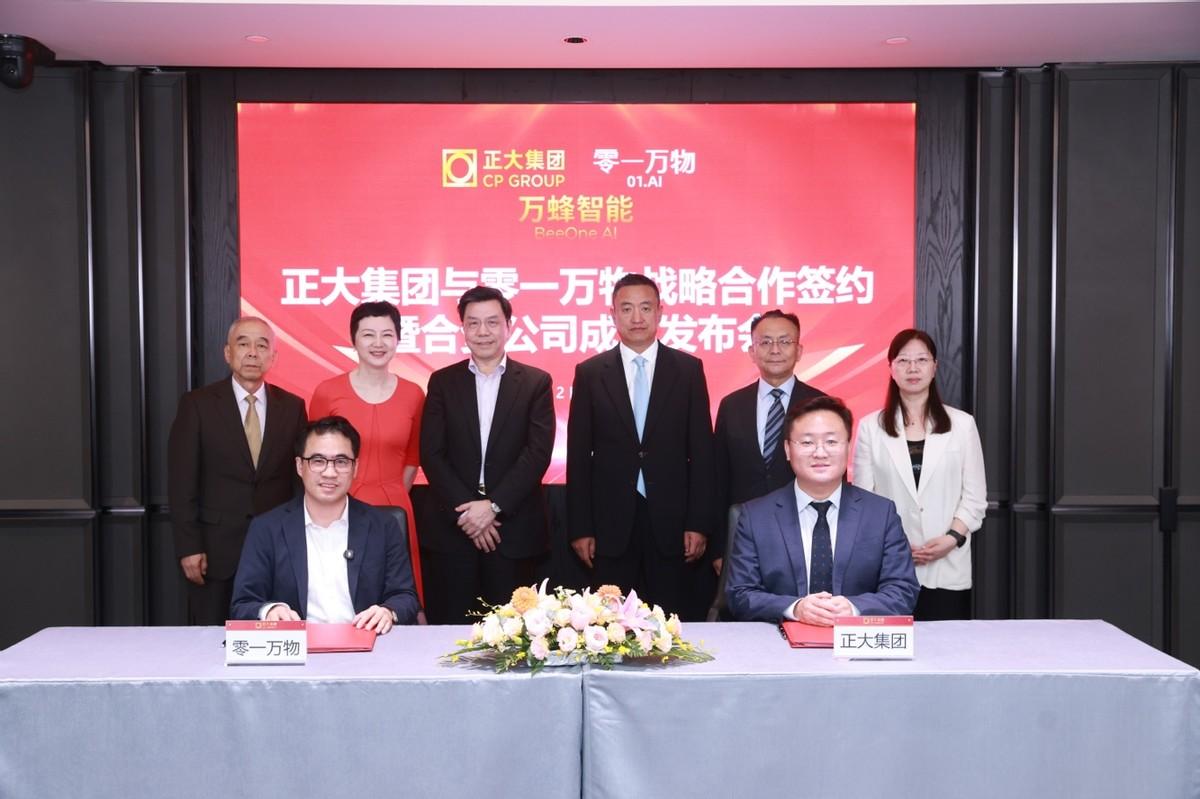
零一万物与正大集团战略合作签约暨合资公司成立发布会现场

这是零一万物与世界农牧巨头、亚洲第一大蛋品企业正大集团联合规划的AI农业图景。2026年6月2日,零一万物宣布联手世界500强正大集团,以前所未有的紧密合作方式,共同推进智能农业。双方合作落地的首个重点领域为蛋鸡养殖。未来,正大和零一合作以中国市场做试点,未来有推向正大集团覆盖的其他东南亚市场。
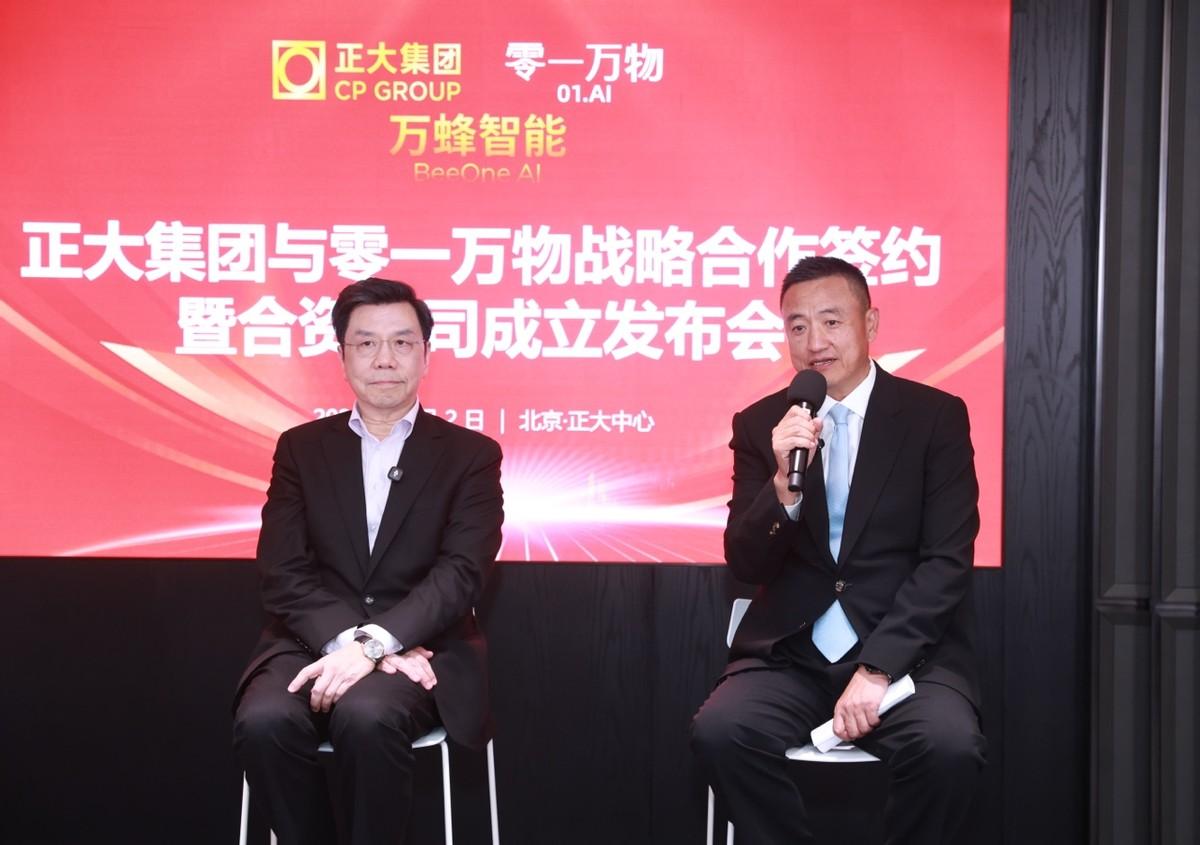
零一万物CEO李开复博士(左)、正大集团资深副董事长兼中国区CEO杨小平(右)在发布会现场

零一万物与正大集团将共同成立合资公司“万蜂智能”,告别传统的IT项目外包关系模式,双方实现利润共享、风险共担。万蜂智能将为传统重资产行业的AI转型提供极具参考价值的样本。合作的落地,标志着”硅基员工”成体系进入传统产业,也将中国的产业AI能力带入全球实体经济的深水区。

“AI企业家”重塑农业核心生产流程,未来无人农场图景初现

提起传统养鸡场,人们的印象往往是密集的鸡笼、刺鼻的气味以及繁重的人工巡检。由于高度依赖人工经验,工人的疲劳和情绪波动往往直接影响着鸡只的健康判断与产能效益。
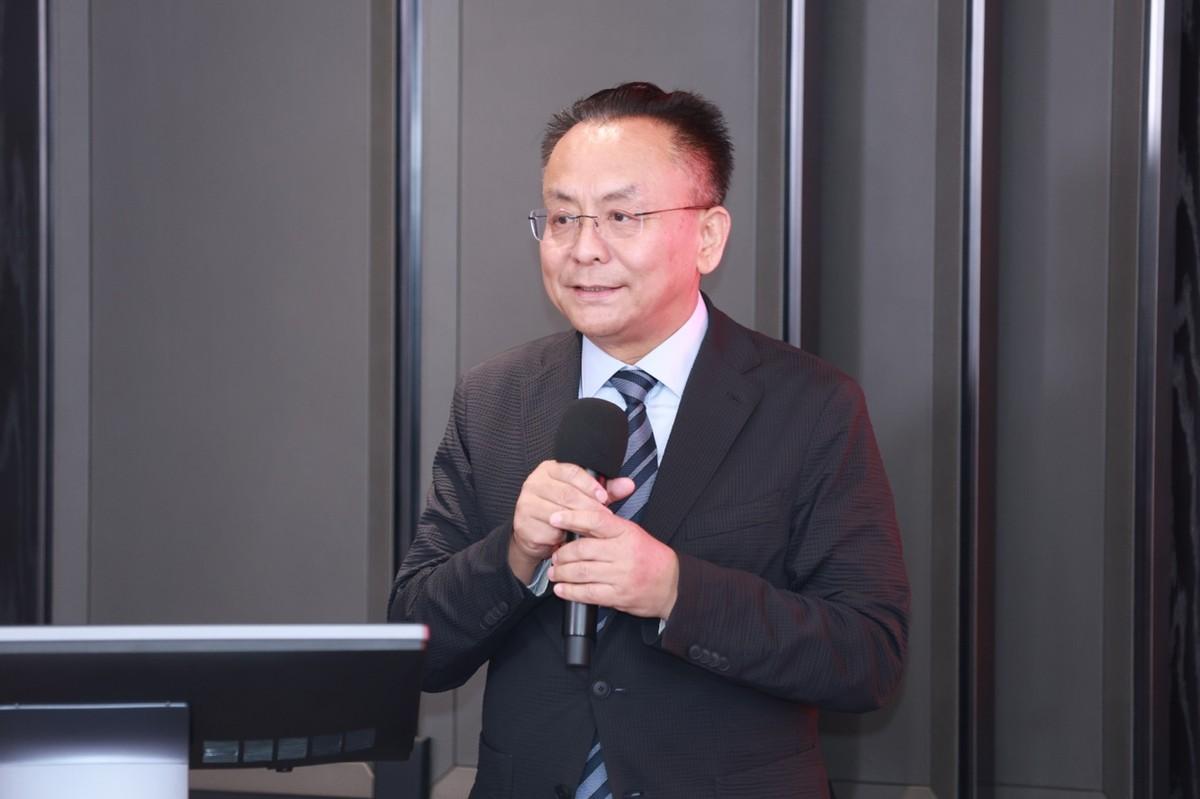
正大集团农牧食品企业中国区资深副董事长邢继宪现场致辞

但在万蜂智能的全新蓝图里,养鸡场则是另一种景象:鸡舍的顶吊滑轨上布满了传感器和轨道机器人,它们24小时不知疲倦地巡检;一旦发现有生病的鸡,机械手臂会自动进行防疫喷洒;环境调控系统会根据温度、风向甚至外部市场需求,实时进行动态调整。

这种从传统人工养殖向高度自动化的演进,被零一万物形象地定义为“养殖业的自动驾驶(L1-L5)”。就像汽车的自动驾驶一样,L1是简单的AI辅助,而零一万物正助力正大直接瞄准L4甚至L5级别迈进,在这一阶段AI全权托管且可规模化复制。

在L4级别的高度自动化农场中,AI智能体(Agent)将全面接管日常的巡检、健康识别、甚至鸡笼清洗与精准投喂等复杂策略的制定与执行,人类专家将从繁杂的日常事务中解放出来,仅负责更高维度的战略管理与目标设定。

双方将以建设“AI企业家”智能中枢为目标,首阶段将重点打通养殖、生产、销售与安全数据,率先落地数字养殖员、产销协同中枢、安全智能体等核心场景,解决经验依赖、产销错配、响应滞后等痛点。在此基础上,双方将打造专属蛋业大模型,实现从单点提效到全局智能决策的跃迁,并形成可复制的智慧蛋业样板。

四层一体智慧农业,从毛细血管级场景提升生产力

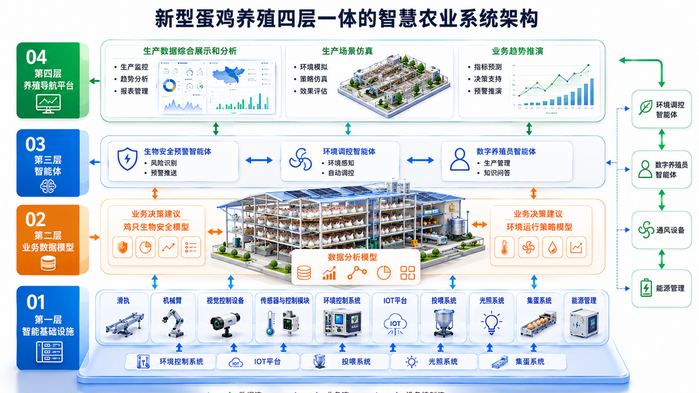
零一万物提出了四层一体的智慧农业系统架构,由底层向上分别为:智能基础设施、业务数据模型、智能体和养殖导航平台。通过机器人采集数据,模型分析处理,AI智能体决策,机器人执行的链路,智慧农业系统中各个要素形成了从数据到业务决策,再到行动最终实现全局管理的闭环。
此次与正大集团的合作,也被业界视做是探索中国版Palantir模式的新尝试。Palantir模式的过人之处在于深深扎根于企业最核心业务,在极度碎片化、个性化的垂直行业场景中,通过“本体(Ontology)”这一层级,实现底层数据处理与高层业务逻辑的标准化耦合,从而用AI重塑企业决策体系。

在与正大集团的合作中,零一万物派出了FDE(前沿部署工程师)团队,直接下沉到正大的业务线,与一线团队同吃同住,以AI-First思维为核心,对核心业务逻辑进行毛细血管级的重构。

以蛋鸡养殖场景为例,传统的生产线里交织着来自不同国家、遵守不同标准的传感器。数据无法对齐,甚至连每天鸡场真实产出了多少枚鸡蛋都难以精准统计。这种软硬件层面的“语言不通”,本质上是物理世界与数字世界之间的断裂。在传统业务流程中,遍布着类似的断裂。

零一万物选择从底层业务架构着手。基于咨询团队的深度调研以及FDE的一线观察,零一万物将复杂的养殖业务抽象为“鸡流、物流、环境流、信息流”的四流合一模型。利用大模型强大的语义抽象与泛化能力,团队对异构、低质量的物联网数据进行清洗与融合治理,并引入具身智能机器人执行高质量数据采集与生产任务。

这些改造的本质,是为传统产业构建一套“AI友好型”的基础设施,通过让环境适配AI,让模型和智能体能够更高效地替代重复劳动、赋能核心业务,分阶段实现传统农业场景的数智化升级。

业务变革:AI从“能想”到“能做”:企业级多智能体连通改变物理世界

在万蜂智能的架构中,产业AI大模型不再仅仅是一个提供咨询的“大脑”,更连接着物理世界的“手和脚”。零一万物的“多智能体(Multi-Agent)”正式上岗后,基于软硬件深度耦合与联动,人类从而可以真正意义上坐在智能大脑面前,指挥硅基员工干活。
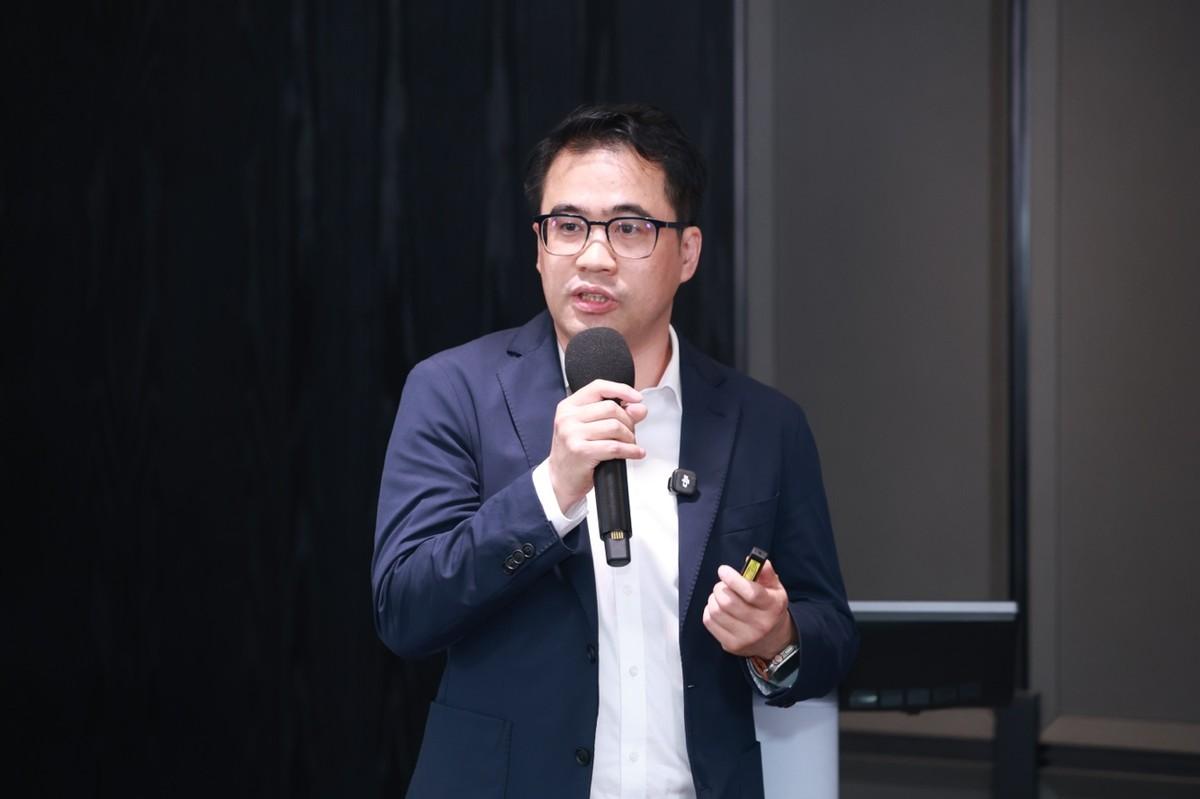
零一万物国际业务与AI咨询副总裁宁宁博士

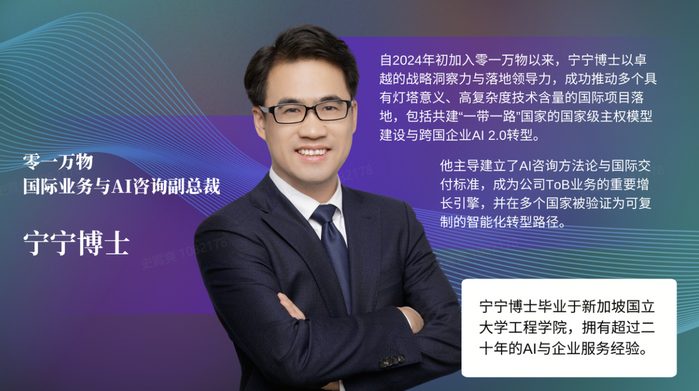
零一万物国际业务与AI咨询副总裁、万蜂智能核心推动者宁宁博士做了一个形象的比喻,要让硅基员工批量上岗并且产生业务结果,需要“两只手”,一只是“数字的手”,对接系统数据,一只是“物理的手”,对接轨道机器人、机械臂等具身智能硬件,只有这样,AI才能实现了从“能想”到“能做”的闭环。
以供需平衡这一核心痛点为例,过去,前端养殖和后端销售往往脱节。现在,如果下游连锁商超客户下达了“需要5万盒、单颗重量精准控制在50克以内”的鸡蛋订单,订单需求会直接反馈给“产销智能体”。该智能体会立刻进行反向推演,自动指导前端鸡舍调整饲料配方、环境温度等参数,让传统农业具备了惊人的“柔性生产”能力。
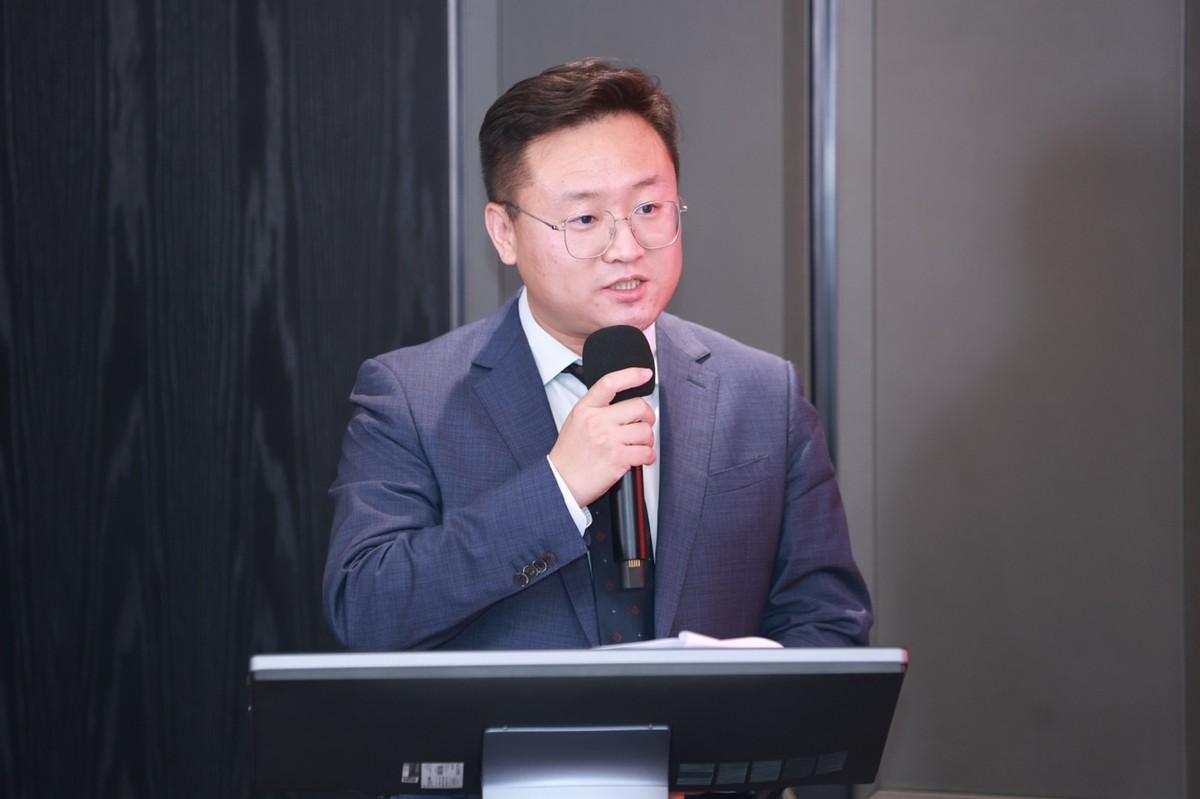
正大集团蛋鸡事业首席财务官刘翔鹤

双方的合作已经进入第一阶段,预计将显著提升业务效益,包括

将自动化率由20%提升至40%

大幅提升死鸡识别率、寡产鸡识别率、疾病提前预测准确率,死淘率降低5%

实现柔性产销协同,为正大集团的农业AI数智化转型战略奠定基础。

正大集团x零一万物打造智能养鸡场

当下显性业务痛点:

人工瓶颈:传统巡检高度依赖人工经验,易受人员状态波动的干扰,导致判断失误和效率受限。

数据孤岛:设备标准不一导致业务与环境数据长期割裂,无法形成全局视角的关联分析。

执行局限:传统农用设备(如履带机器人)扩展性弱,且易引发活体动物的应激反应。

零一万物解决方案:

全流程架构重塑:部署“大脑决策+物理执行”的系统协同机制。以大小模型融合架构作为中枢,调度“生物安全”、“环境调控”及“产销协同”等专业智能体。

软硬件深度融合与联动:打破传统农业设备的数据孤岛,将AI大脑与定制化的顶吊轨道机器人、机械臂等物理硬件深度耦合,实现指令的直接下达与精准执行。

第一阶段预期价值:

自动化程度由20%提升至40%:推动传统农场从局部的数据辅助,向L4级多智能体自主决策与执行的“自动驾驶”阶段演进。

死淘率降低5%:大幅提高疾病早筛和寡产鸡识别的精准度,提前锁定健康风险,全面优化料蛋比。

产销柔性协同:打通供需两端,AI可根据下游连锁客户的精细化订单,反向自动调整前端鸡舍的饲料配比与环境参数,实现真正的柔性生产与敏捷响应。

打造农业AI标杆,探索中国产业AI输出全球新范式

产业AI与实体经济的深度融合,正展现出清晰的商业价值与广阔的发展前景。正大集团的农业行业经验与零一万物的科技能力,催生出农业新质生产力。而蛋鸡产业高标准化、强经济型、高密度、强闭环以及需要高频反馈的特点,成为了打造农业AI标杆的优选赛道。

通过合理构建“AI企业家”的智能决策中枢,万蜂智能将正大集团过去数十年依赖资深专家经验的“管理艺术”,转化为基于数据与算法的“科学决策”,从而解决由于超大规模养殖带来的管理复杂性与产销错配难题。双方的合作,将会把正大的隐性经验转化为组织共有的数字资产,打造一个可复制的全球智慧蛋业样板,成为全球蛋鸡养殖AI标准的制定者,引领行业发展。

零一万物国际业务与AI咨询副总裁宁宁博士表示:“真正的产业AI革命,是生产力范式的深度重构。在与正大集团的合作中,零一万物通过‘一把手工程’将企业最高层的管理智慧抽象为标准化的算法逻辑,让AI真正渗透进传统农业的‘毛细血管’,具备了跨越虚实边界、在泥土地里创造价值的真本事。这不仅解决了传统养殖业的产销错配,更向全球证明了中国AI方案在改造重资产行业时的‘闭环交付’实力。”
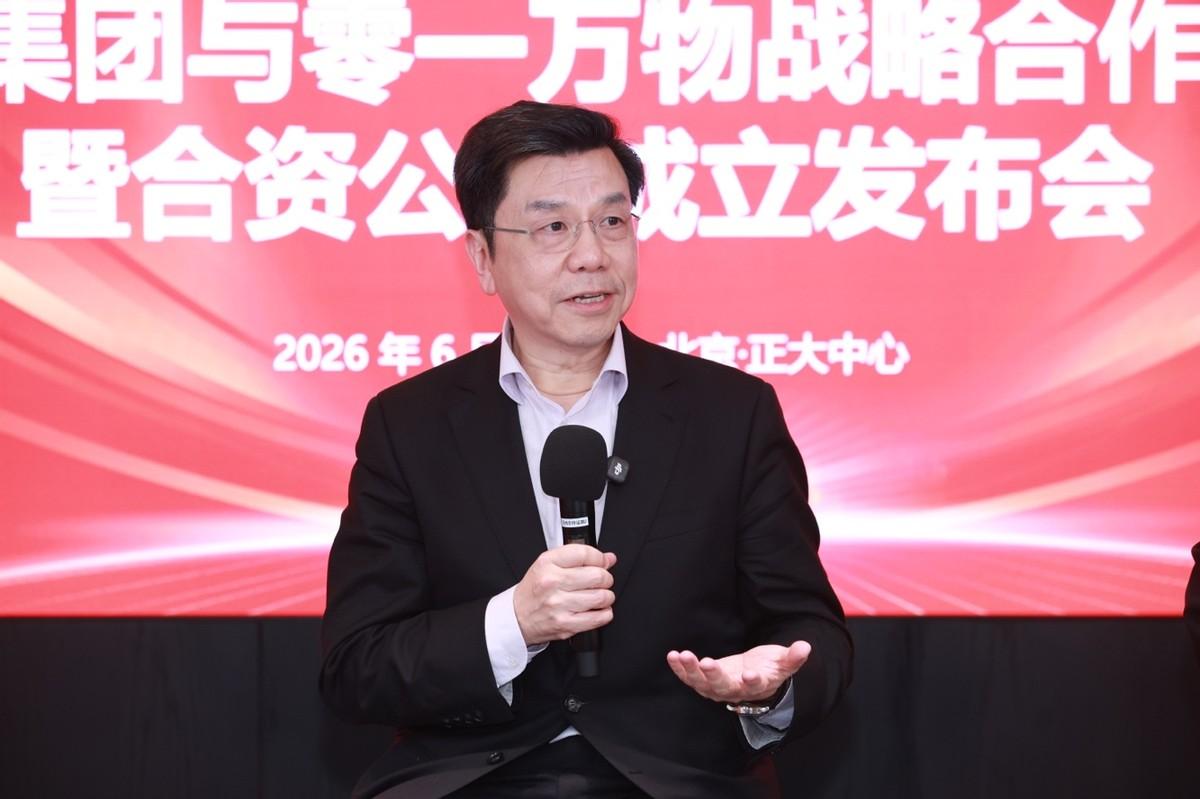
零一万物CEO李开复博士

零一万物创始人及CEO李开复博士指出:“人类正在经历一场生产力的范式转移。2026年将是‘企业多智能体’上岗的元年。中国拥有全球最齐全的产业门类和超大规模的市场,每一间农场,每一个生产车间、每一段供应链流程,都是多智能体进化的绝佳场景。万蜂智能的落地,是我们为全球实体经济输出的一条全新增长曲线。中国深厚的产业底蕴、硬件实力与产业AI整合,所提供的全局解决方案将在包括农业在内的各个领域将发挥前所未有的价值,推动全球智能经济发展。”
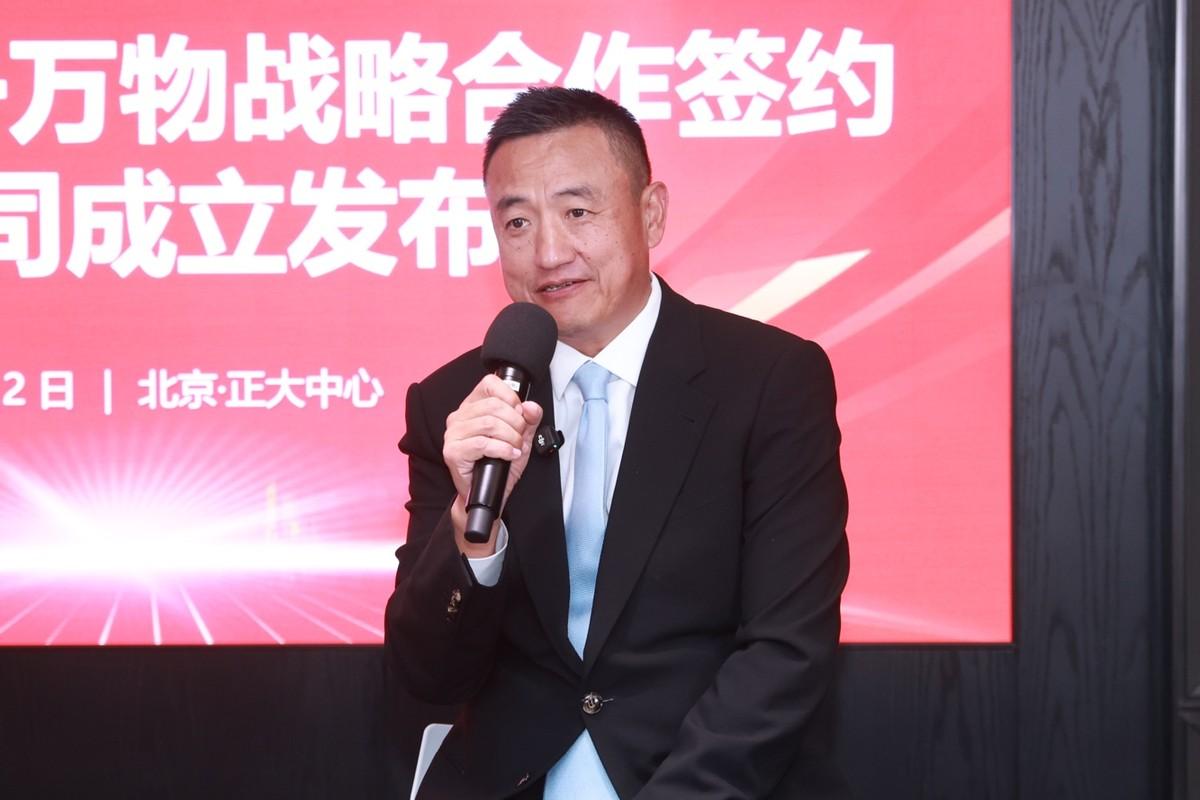
正大集团资深副董事长兼中国区CEO杨小平

正大集团资深副董事长兼中国区CEO杨小平表示:“AI正在进入农业生产现场,这不仅是一次技术升级,更是农业生产方式和组织能力的升级。正大在中国拥有深厚的产业基础和大量真实场景,可以检验AI能否真正提升效率、降低风险、稳定质量。我们期待与零一万物以中国市场为试点,率先跑通可验证、可复制的智慧农业样板。从蛋鸡AI作为试点,扩展至肉鸡、猪、水产等其他品类。未来,在结合当地农业条件、管理方式和市场需求做好本地化的基础上,这些经过中国市场验证的能力,逐步推向正大集团覆盖的其他东南亚市场,为更多区域的农业智能化提供新的实践路径。”

这不是单一养殖场的技术创新项目,而是在AI时代零一万物与正大集团共同构建的AI 农业世界—— 以 AI 原生为根基、token 经济为纽带、全品类覆盖为核心、市场化资本化为目标,彻底告别项目制外包,重构全球肉蛋白农业生产力。

注:文/龚作仁,文章来源:Laborer,本文为作者独立观点,不代表亿邦动力立场。

【版权提示】亿邦动力倡导尊重与保护知识产权。未经许可,任何人不得复制、转载、或以其他方式使用本网站的内容。如发现本站文章存在版权问题,烦请提供版权疑问、身份证明、版权证明、联系方式等发邮件至run@ebrun.com,我们将及时沟通与处理。

已点赞

+1

{{ praise_text }}

好文章,值得被更多人看到

广告

下一篇

跨境电商资源对接

《全球跨境电商服务商资源手册》第二期手册现已发布,触达更多资源,了解跨境服务商信息,欢迎点击链接下载。

了解详情

九号公司胜诉!竞争对手恶意诋毁构成侵权

法院认定,被告作为极核品牌代理商,长期制作视频贬低竞争对手,损害了九号公司的商业信誉和商品声誉,已构成商业诋毁。











