• 亿邦公众号
    • APP下载

欧盟PPWR实施在即:“史上最严包装法”将掀起新一轮合规风暴?

作者:王昱 文章来源:亿邦动力

2026-06-02 11:34

作者:王昱 文章来源:亿邦动力

2026-06-02 11:34

邦小白快读
EN
全文速览

这篇文章核心梳理了欧盟即将实施的“史上最严包装法”PPWR的核心信息,给关注出海合规的普通读者整理了关键干货如下:

1. 基本法规信息:PPWR将于2026年8月12日在欧盟27个成员国全面实施,取代旧的指令变成统一直接适用的强制法规,所有向欧盟投放带包装商品的市场主体都需要合规,非欧盟卖家必须配备欧盟授权代表。

2. 核心硬性要求:对电商影响最直接的是电商包装空隙率不得超过40%,同时要求包装按可回收率分三级,2030年所有包装至少达到C级,违规会面临产品下架、海关扣货、高额罚款等处罚。

3. 实操提示:普通跨境从业者需要提前自查现有包装,尽早整改不合规内容,合规难度大可以寻求专业合规服务商的帮助。

PPWR的实施将对出海欧盟的品牌商的全链路运营产生深刻影响,核心干货整理如下:

1. 行业与消费趋势:欧盟正推动包装领域全面绿色转型,可回收、单一材质的环保包装已经成为进入欧盟市场的硬性要求,绿色合规将成为品牌在欧洲市场的核心竞争力,提前布局才能获得竞争优势。

2. 经营环节影响:产品研发端需要重构包装设计,满足空隙率限制、有害物质管控、再生料比例、可回收分级的要求,原有的不可回收复合包装将被淘汰,需要提前切换为单一材质方案;合规成本整体上涨,原来一国一规的合规模式不再适用,全欧盟统一合规后的整体投入从几千元上涨到数万元甚至更高。

3. 风险提示:不合规会直接导致产品被扣、下架,失去欧洲市场准入资格,品牌需要尽早完成合规布局。

本文针对欧盟PPWR新规解读了政策内容、影响与应对方法,面向跨境卖家整理核心干货如下:

1. 政策核心变化:欧盟包装监管从原来的“一国一规则”升级为全欧盟统一适用的强制法规,所有做欧洲市场的卖家都属于合规责任方,非欧盟卖家必须配备欧盟授权代表,新规分阶段落地,多个核心要求2026年8月就正式生效。

2. 影响与风险提示:卖家合规成本会明显上涨,EPR注册、包装检测、材料升级、标签改造都需要新增投入,且不同国家EPR账号不通用,需要投入更多时间规划布局,部分小体量市场可能会被卖家主动放弃;不合规会面临海关扣货、产品下架、库存冻结、与营业额挂钩的高额罚款,主流平台也会强化包装审核,不合规产品无法入仓销售。

3. 应对建议:卖家需要提前开展包装自查,尽快整改不合规项,必要时可以寻求专业合规服务商的帮助完成合规排雷。

PPWR的实施给生产包装、出海产品的工厂带来了新的需求、机会和转型启示,核心干货整理如下:

1. 产品生产和设计的新需求:欧盟新规对包装提出了明确的硬性要求,市场需求全面转向绿色环保、单一材质、可回收方向,原有带塑料窗口的牛皮纸袋、多层复合膜等常见包装,2030年后将被禁止使用,工厂必须调整产品设计,适配空隙率限制、有害物质管控、可回收分级的新要求,还要研发强度更高的轻量化包装满足运输保护需求。

2. 新商业机会:全欧盟统一新规落地后,所有出海卖家都需要更换符合要求的新包装,具备达标环保包装生产能力的工厂会获得大量新增订单。

3. 转型启示:工厂需要提前跟进欧盟绿色监管要求,升级再生料应用、可回收包装设计的相关技术,推进适配新规的产能调整,才能抓住出海电商的新机会,避免被市场淘汰。

本文透露出海欧盟合规服务领域的新趋势、客户痛点和业务机会,给相关服务商整理核心干货如下:

1. 行业发展趋势:欧盟PPWR新规将于2026年8月正式实施,这是欧盟包装监管近三十年来最重要的改革,所有出海欧盟的卖家、品牌商、工厂都产生了新的合规需求,整个跨境出海行业会掀起一轮合规整改浪潮,合规服务的市场规模会明显增长。

2. 核心客户痛点:大量中小卖家对新规不熟悉,不清楚自身包装是否合规,原有合规模型不再适用统一新规,独立完成全欧盟范围的合规布局成本高、难度大,普遍面临合规不通过导致损失的风险,迫切需要专业服务支持。

3. 业务方向:服务商可以推出包装合规自查、整改咨询、EPR注册代办、包装检测等针对性服务,帮助卖家提前完成合规排雷,同时要熟悉新规分阶段落地的时间节点,给客户提供精准的时效规划,抓住这一轮业务增长机会。

PPWR新规对出海欧盟的电商平台提出了新的责任要求,整理核心干货如下:

1. 新规对平台的法定要求:PPWR明确将在线电商市场纳入合规责任体系,如果平台代表第三方卖家处理包装或者物流,平台需要承担相应的合规责任,成为监管的责任主体,必须落实对应的合规审核义务。

2. 平台运营管理调整方向:未来平台不能只核验卖家的EPR资质,还需要新增对包装材料、包装结构、标签标识等维度的合规审核,完善全链条的合规审核机制,对不合规产品要及时管控。

3. 风险规避提示:如果平台没有落实对应的审核义务,会面临欧盟监管部门的处罚,同时不合规产品流入市场也会影响平台的合规声誉,平台需要尽早完善规则,对不合规产品采取下架、停售、限制入仓的管控措施,既规避自身合规风险,也帮助平台卖家提升合规水平。

本文梳理了欧盟PPWR新规出台的背景、内容和产业影响,给产业研究者整理核心干货如下:

1. 产业新动向:欧盟为落实绿色协议和循环经济目标,对包装监管体系进行了近三十年来最重要的改革,从原来的各国分散指令监管升级为统一强制法规,这是全球绿色贸易监管升级的标志性事件,也会推动全球跨境电商包装产业向绿色可回收方向系统性转型,绿色合规已经成为出海企业的核心竞争力。

2. 产业新问题:新规大幅推高了非欧盟出海企业的合规成本,重构了跨境电商的成本结构和运营模式,中小卖家因为成本压力被迫退出部分市场,同时新规将电商平台纳入合规责任体系,重构了整个跨境生态的责任分配格局,改变了原有产业的利益结构。

3. 研究方向启示:可以研究绿色贸易监管对跨境电商产业格局的影响,统一监管对欧盟单一市场效率的改变,以及非欧盟中小出海企业的合规转型路径等相关议题。

声明:快读内容全程由AI生成,请注意甄别信息。如您发现问题,请发送邮件至 run@ebrun.com 。

我是 品牌商 卖家 工厂 服务商 平台商 研究者 帮我再读一遍。

Quick Summary

This article summarizes key information about the EU's upcoming Packaging and Packaging Waste Regulation (PPWR), widely described as the strictest packaging regulation in history, and shares core takeaways for general readers focused on cross-border compliance:

1. Basic regulatory details: The PPWR will enter into full force across all 27 EU member states on August 12, 2026, replacing existing outdated directives to become a single, directly enforceable regulation. All market participants placing packaged goods on the EU market must comply, and non-EU sellers are required to appoint an EU-based authorized representative.

2. Core mandatory requirements: The most impactful rule for e-commerce is a mandatory 40% cap on void space in e-commerce packaging. The regulation also introduces a three-tier classification system for packaging based on recyclability, requiring all packaging to meet at least the minimum Class C standard by 2030. Non-compliance can result in product delisting, customs detention, and heavy fines.

3. Practical guidance: Cross-border practitioners should conduct proactive audits of their existing packaging and complete整改 of non-compliant designs as early as possible. Those facing complex compliance challenges can seek support from professional compliance service providers.

The implementation of the PPWR will reshape end-to-end operations for brands selling into the EU market, with key takeaways outlined below:

1. Industry and consumer trends: The EU is driving a full-scale green transition in packaging, making recyclable, monomaterial, environmentally friendly packaging a non-negotiable requirement for market access. Green compliance has become a core competitive advantage for brands in the European market, and early布局 will unlock long-term competitive edges.

2. Impacts across operations: Product R&D teams must redesign packaging to meet new requirements for void space limits, hazardous substance restrictions, recycled content proportions, and recyclability grading. Traditional non-recyclable composite packaging will be phased out, requiring an early switch to monomaterial solutions. Overall compliance costs are rising: the old "one rule per country" framework is being replaced by EU-wide unified compliance, pushing total investment from thousands of yuan to tens of thousands of yuan or higher.

3. Risk reminder: Non-compliance directly leads to customs detention, product delisting, and loss of EU market access eligibility. Brands need to complete compliance planning as early as possible.

This article explains the policy content, impacts, and response strategies for the new EU PPWR, with key takeaways for cross-border sellers outlined below:

1. Core policy changes: EU packaging regulation has been upgraded from the old "one rule per country" framework to a single, directly enforceable regulation applicable across the entire EU. All sellers operating in the European market are designated as responsible parties for compliance. Non-EU sellers are required to appoint an EU-based authorized representative, and core requirements of the new regulation will officially take effect in August 2026 in a phased rollout.

2. Impact and risk reminder: Sellers will see a notable increase in compliance costs, with new expenses required for EPR registration, packaging testing, material upgrades, and label redesign. EPR registrations are not valid across national borders, requiring additional time for compliance planning, and many smaller sellers may choose to exit smaller markets voluntarily. Non-compliance carries risks of customs detention, product delisting, inventory freezes, and heavy fines tied to total turnover. Major platforms will also strengthen packaging audits, barring non-compliant products from entering fulfillment centers and going on sale.

3. Response recommendations: Sellers should proactively audit existing packaging, rectify non-compliant issues as soon as possible, and engage professional compliance service providers for support when needed to address compliance gaps.

The implementation of the PPWR brings new demand, business opportunities, and transformation insights for factories that produce packaging or export goods, with key takeaways outlined below:

1. New requirements for product design and manufacturing: The new EU regulation sets clear mandatory requirements for packaging, shifting market demand fully toward green, monomaterial, recyclable designs. Common existing packaging formats such as kraft paper bags with plastic windows and multi-layer composite films will be banned after 2030. Factories must adjust product designs to meet new requirements for void space limits, hazardous substance controls, and recyclability grading, while also developing lighter-weight, higher-strength packaging that meets transportation protection requirements.

2. New business opportunities: Following the implementation of the unified EU-wide regulation, all cross-border sellers will need to replace their packaging with PPWR-compliant alternatives. Factories with the capacity to produce qualified eco-friendly packaging will secure a large volume of new orders.

3. Transformation insights: Factories need to proactively align with EU green regulatory requirements, upgrade technologies for recycled content application and recyclable packaging design, and adjust production capacity to meet the new regulation. This is the only way to capture new opportunities from cross-border e-commerce and avoid being phased out of the market.

This article outlines new trends, client pain points, and business opportunities in the EU cross-border compliance service sector, with key takeaways for relevant service providers outlined below:

1. Industry development trends: The new EU PPWR will officially enter into force in August 2026, marking the most significant reform of EU packaging regulation in nearly 30 years. All sellers, brands, and factories exporting to the EU now have new compliance demands, triggering a wave of compliance整改 across the entire cross-border export industry that will drive notable growth in the compliance services market.

2. Core client pain points: The large majority of small and medium-sized sellers are unfamiliar with the new regulation, unclear on whether their existing packaging is compliant, and find that old compliance models no longer fit the new unified regulatory framework. Completing full EU-wide compliance independently is costly and technically challenging, and sellers face widespread risk of losses from failed compliance, creating strong unmet demand for professional support.

3. Recommended business focus: Service providers can launch targeted services including packaging compliance audits,整改 consulting, EPR registration agency, and packaging testing to help sellers resolve compliance gaps ahead of the deadline. Providers should also familiarize themselves with the timeline of the regulation's phased rollout to offer clients accurate timeline planning, and capture this round of growth opportunities.

The new PPWR introduces new compliance obligations for e-commerce platforms selling into the EU, with key takeaways outlined below:

1. Statutory requirements for platforms: The PPWR explicitly includes online e-commerce marketplaces in the compliance liability framework. If a platform handles packaging or logistics on behalf of third-party sellers, the platform becomes a liable responsible subject for regulation and must fulfill corresponding compliance audit obligations.

2. Adjustments for platform operations and governance: Going forward, platforms will need to go beyond verifying seller EPR qualifications to add compliance audits for packaging materials, packaging structure, labeling, and other dimensions. Platforms must improve full-chain compliance audit mechanisms and implement timely controls for non-compliant products.

3. Risk mitigation guidance: If platforms fail to fulfill required audit obligations, they face fines from EU regulators. In addition, the entry of non-compliant products to the market can damage a platform's compliance reputation. Platforms need to update their rules as early as possible, and implement controls including delisting, sales bans, and warehouse entry restrictions for non-compliant products. This not only mitigates the platform's own compliance risk but also helps sellers on the platform improve their overall compliance standards.

This article sorts out the background, content, and industrial impacts of the new EU PPWR, with key takeaways for industry researchers outlined below:

1. New industry trends: To deliver on its Green Deal and circular economy goals, the EU has carried out the most significant reform of its packaging regulatory system in nearly 30 years, upgrading from fragmented national directive-based regulation to a unified mandatory regulation. This is a landmark event in the global upgrade of green trade regulation, and will drive a systematic transformation of the global cross-border e-commerce packaging industry toward green, recyclable design. Green compliance has already become a core competitiveness for export-focused enterprises.

2. New industry challenges: The new regulation has substantially increased compliance costs for non-EU export enterprises, restructuring the cost structure and operating model of cross-border e-commerce. Many small and medium-sized sellers have been forced to exit some markets due to cost pressures. The regulation also includes e-commerce platforms in the compliance liability framework, restructuring the allocation of responsibilities across the entire cross-border ecosystem and reshaping the original interest structure of the industry.

3. Insights for future research: Priority research topics can include the impact of green trade regulation on the cross-border e-commerce industrial landscape, how unified regulation changes the efficiency of the EU single market, and the compliance transformation paths of non-EU small and medium-sized export-focused enterprises.

Disclaimer: The "Quick Summary" content is entirely generated by AI. Please exercise discretion when interpreting the information. For issues or corrections, please email run@ebrun.com .

I am a Brand Seller Factory Service Provider Marketplace Seller Researcher Read it again.

【亿邦原创】距离欧盟《包装和包装废弃物法规》(Packaging and Packaging Waste Regulation,简称PPWR)正式适用已不足三个月。

根据欧盟立法安排,2026年8月12日起,PPWR将在欧盟27个成员国全面实施。这部被视为欧盟近三十年来包装监管领域最重要改革的法规,不仅将取代沿用已久的《包装和包装废弃物指令》(94/62/EC),还将以统一法规的形式直接适用于整个欧盟市场。

对于数以万计布局欧洲市场的跨境电商卖家、品牌商、平台企业及物流服务商而言,一场围绕包装设计、材料使用、标签标识、生产者责任以及回收体系的新一轮合规变革正在加速到来。

PPWR为何出台?其具体要求有哪些?跨境电商行业将受到哪些影响?面对即将到来的监管升级,出海企业又该如何应对?带着这一系列问题,亿邦与出海合规服务商 恒标跨境 创始人兼CEO、欧盟合规领域专家李恒彪展开对话,旨在对这场即将到来的合规变局进行深度剖析。


一.从“各国各管”到“统一监管”:欧盟新包装法的诞生始末

回顾历史,PPWR的出台并非偶然。

以新冠疫情作为分界线,欧洲电商进入了一轮加速渗透期。与之相应的,则是欧洲包装废弃物总量的持续攀升。欧盟委员会数据显示,包装垃圾已成为欧洲增长最快的废弃物流类别之一,人均包装废弃量长期处于高位。

与此同时,由于1994年开始施行的《包装与包装废弃物指令》(PPWD)属于“指令”性质,各成员国需要自行转化为国内法律,导致德国、法国、意大利、西班牙等国在包装回收、环境标签以及生产者责任制度方面形成了大量差异化要求。

对于跨境经营企业而言,这意味着进入欧洲市场往往需要面对“一国一规则”的局面,不仅增加了合规成本,也影响了欧盟单一市场的统一性。

在此背景下,欧盟于2022年11月正式提出PPWR立法草案,希望通过建立统一且直接适用的法规框架,推动包装减量化、可回收化和循环利用,减少包装废弃物产生,并为实现欧洲绿色协议和循环经济目标提供制度支撑。

经过两年多的立法讨论与产业博弈,2024年欧洲议会通过相关法规文本。2025年1月22日,PPWR正式刊登于《欧盟官方公报》,并于同年2月生效。在18个月过渡期结束后,法规将于2026年8月12日正式进入全面实施阶段。

从立法层级来看,PPWR最根本的变化在于其从“指令”升级为“法规”,拥有了统一且强制的法律效力:过去的包装指令更多是为成员国设定目标,而PPWR则直接适用于欧盟全部成员国,无需各国再次转化立法——这意味着未来包装监管规则将进一步趋于统一,执法尺度和监管要求也将更加一致。

在李恒彪看来,这既是挑战,也意味着跨境企业未来将面对更加清晰的合规框架。

“PPWR法规要求,只要向欧盟27国市场投放带包装商品的生产者都需要完成相应合规义务,而这里的生产者不仅包括制造商,还包括进口商、分销商、零售商以及电商平台。”他说。


二.从包材、包装设计到数字标识:全面合规步入倒计时

距离正式实施仅剩不到一年半,PPWR给卖家留下的是一张极为苛刻,且精确到每一细节的合规清单——以至于不少卖家都揶揄其为“史上最严包装法”。

据李恒彪介绍,新的合规体系,主要涉及七大类要求。

其一,适用主体与地域界定:划定合规责任方、覆盖包装类型、欧盟27国适用范围,非欧盟卖家须配备欧盟授权代表。

其二,有害物质管控:限制重金属总量,严控食品接触类包装的PFAS含量,杜绝超标物料。

其三,包装设计减量规范:禁止过度包装,限定电商包装空隙率,限制禁用一次性包装品类。

其四,可回收与再生料指标:划分包装回收等级,分阶段达标;强制塑料包装搭载对应比例再生原料。

其五,包装标识溯源要求:统一材质编码、回收标识,加注EPR注册号、欧代信息,后期新增产品追溯码、实现合规信息数字化。

其六,EPR生产者责任制度:销售国别单独注册账号,按包装重量年度申报、缴纳回收处置费用,平台核验资质。

其七,合规时限与违规惩处:分阶段落地各项条款,违规面临产品下架、海关扣货、高额营业额比例罚款;

在以上新规中,对电商卖家影响最直接的,或许就是包装空隙率的硬性限制。

PPWR规定,自生效日起,所有电商包裹内的空置空间不得超过40%。过去那种为了保护商品、过度填充泡沫气囊的“大箱装小物”的做法,将直接面临违规风险。包装必须实现重量和体积的最小化,双层壁、假底板等增加包装“分量感”的鸡肋设计将被明令禁止。

更为深远的影响来自对包装可回收性的量化分级制度。

PPWR首次引入A、B、C三级标准,要求可回收率分别达到95%、80%和70%以上。到2030年,所有包装必须至少达到C级,并在2038年进阶至B级。

这一分级体系将直接淘汰当前市场上大量使用的不可回收或难回收的复合材料包装。例如带塑料窗口的牛皮纸袋、多层复合膜这类常见的包装形式,将在2030年后面临被禁的风险。”这将迫使卖家不得不提前向“单一材质”的环保包装方案进行转型。

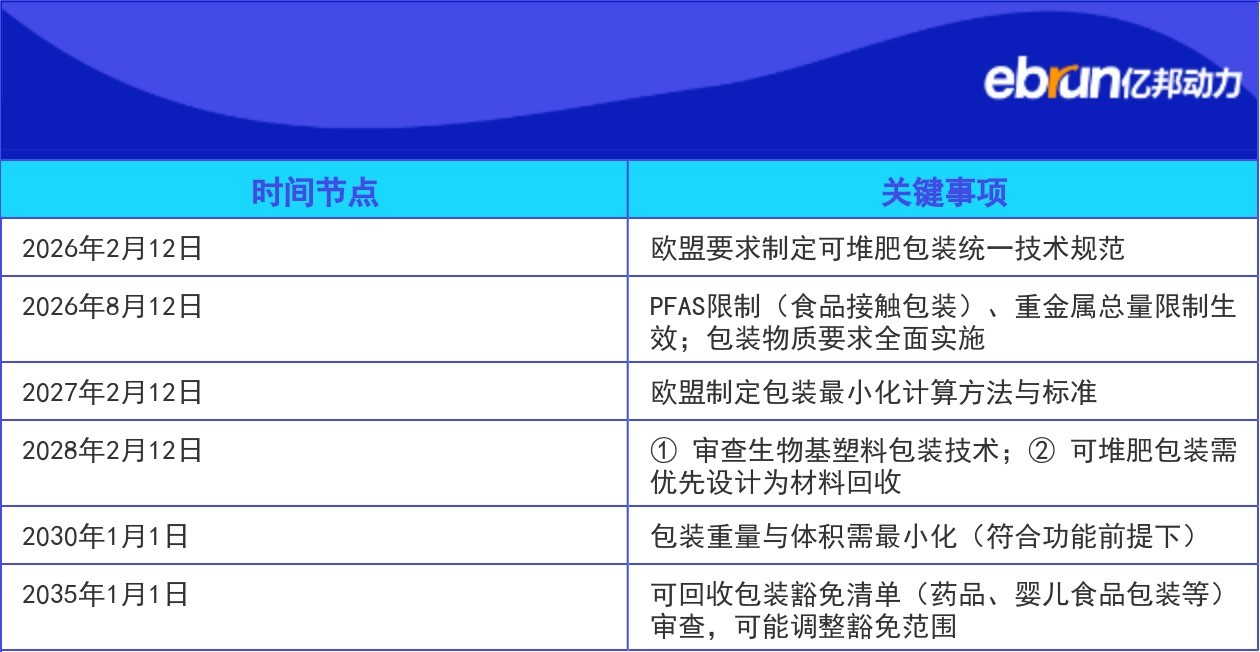
而根据欧盟披露的时间线,对于出海企业而言,未来几年将会面临一场持续推进的合规“倒计时”。


时间节点 关键事项
2026年2月12日 欧盟要求制定可堆肥包装统一技术规范
2026年8月12日 PFAS限制(食品接触包装)、重金属总量限制生效;包装物质要求全面实施
2027年2月12日 欧盟制定包装最小化计算方法与标准
2028年2月12日 ① 审查生物基塑料包装技术;② 可堆肥包装需优先设计为材料回收
2030年1月1日 包装重量与体积需最小化(符合功能前提下)
2035年1月1日 可回收包装豁免清单(药品、婴儿食品包装等)审查,可能调整豁免范围

三.合规风暴中心的卖家:成本结构、运营模式迎来重塑

“PPWR不是一次短期整改,而是欧洲对跨境电商包装的一次系统性的‘绿色革命’。”李恒彪指出。“未来,准入门槛变高、成本上升、包装重构、平台严管、违规重罚, 绿色合规将成为卖家做欧洲站的核心竞争力 。”

事实上,在他看来,这一法规实际上正在推动整个行业向“绿色环保、单一材质、可回收”的方向转型。

“过去很多卖家更关注包装的运输保护功能,但今后包装本身也将成为被监管的对象;易回收、可降解、单一材质,将成为未来包装设计的主流方向。”一位卖家向亿邦动力表示。

“另一方面,随着冗余度标准变得更严格,如何在有限的包材和体积内提升外包装对产品的保护性能,也是一个值得思考的问题,”他补充道,“我想到的可能出路是,引入结构强度更高的外壳,甚至直接调整产品形态本身。”

值得关注的是,PPWR并非单纯针对卖家,其影响范围正在向整个跨境生态链延伸。

李恒彪认为,平台企业将成为本轮监管升级的重要责任主体。

“PPWR明确将在线市场纳入责任体系。当平台代表第三方卖家处理包装或者物流时,也需要承担相应责任。”他说,“未来平台不仅要审核EPR合规状态,还会进一步关注包装材料、包装结构以及标签标识等方面是否符合要求。”

就此而言,这意味着亚马逊、eBay、Temu、TikTok Shop等主流平台未来可能进一步强化包装审核机制,不合规产品面临下架、停售甚至限制入仓的风险。

对于卖家而言,更直接的挑战则来自成本与运营压力。

李恒彪表示,PPWR实施后,卖家的合规成本将出现明显增长。

“过去卖家可能只需要关注少数几个国家的包装法规,但未来合规范围扩展到整个欧盟市场。EPR注册、包装检测、材料升级、标签改造等成本都会增加,整体投入可能从几千元提升到数万元甚至更高。”

与此同时,由于不同国家的EPR(Extended Producer Responsibility)账号不通用、合规注册周期不一致、执行节奏也存在差异,卖家还需要投入更多时间进行市场规划和合规布局。李恒彪坦言,在合规压力骤增的背景下,一些销售规模有限、订单量较小的市场,未来甚至可能被部分卖家主动放弃。

除了成本上升之外,库存与资金风险也成为行业关注重点。

李恒彪指出,PPWR实施后,任何一个环节出现问题,都可能带来“多米诺骨牌”式的连锁影响:“海关查验、平台抽检、市场监管抽查,只要发现包装不符合要求,都有可能导致产品扣押、库存冻结甚至罚款。”

事实上,PPWR本身比较特殊的一点在于:它规定了企业必须遵守什么,但具体罚多少钱、怎么处罚,并不是由欧盟统一规定,而是交给各成员国制定。

目前来看,不合规企业除了面临海关扣货、产品下架、市场准入、强制召回受限等后果之外,还可能遭受与营业额挂钩的行政处罚。

“直面复杂新规,卖家需提前自查、快速整改,甚至寻求专业服务商的帮助,进行一轮‘包装排雷’,提前剔除不合规因素。”李恒彪指出。


亿邦持续追踪报道该情报,如想了解更多与本文相关信息,请扫码关注作者微信。

【版权提示】亿邦动力倡导尊重与保护知识产权。未经许可,任何人不得复制、转载、或以其他方式使用本网站的内容。如发现本站文章存在版权问题,烦请提供版权疑问、身份证明、版权证明、联系方式等发邮件至run@ebrun.com,我们将及时沟通与处理。

已点赞

+1

{{ praise_text }}

好文章,值得被更多人看到

广告

下一篇

跨境电商资源对接

《全球跨境电商服务商资源手册》第二期手册现已发布,触达更多资源,了解跨境服务商信息,欢迎点击链接下载。

了解详情

天猫618第一阶段:成交破亿品牌数增长40%

截至5月31日,天猫618第一阶段,超40000个品牌成交额翻倍,破亿品牌数同比增长40%,破亿且双位数增长的直播间同比增长50%。

阿里巴巴 平台 天猫 未来零售

2026-06-02 11:12:48