• 亿邦公众号
    • APP下载

活动回顾 | 沙之星2026跨境出海财税合规私享会·深沪双城站圆满收官

作者:龚作仁 文章来源:Laborer

2026-05-22 14:15

作者:龚作仁 文章来源:Laborer

2026-05-22 14:15

邦小白快读

EN
全文速览

本次沙之星2026跨境出海财税合规深沪双城私享会,聚焦四大核心出海市场输出了多维度落地实操干货,核心共识为:2026年财税合规已经从出海企业的成本项,彻底转变为核心资产与竞争壁垒,合规是出海企业的生存必需。

1. 顶层架构设计干货:明确架构的终极目标不是单纯节税,而是为业务全球化扩张、本地化运营、资本化路径预留空间,不同商业模式对应不同最优架构选择。

2. 四大区域合规实操:针对欧洲、美国、加拿大、澳洲的最新监管政策,梳理了各类合规风险,给出了对应的落地应对策略。

3. 关联交易与利润回流:讲解了在全球反避税框架下,如何设定合理关联交易价格抵御稽查,以及如何合规实现资金安全高效回流。

对于布局跨境出海的品牌商而言,本次私享会明确了当前全球财税监管新趋势,输出了适配品牌出海的合规干货,能帮助品牌搭建自身竞争壁垒。

1. 行业趋势判断:2026年全球税务监管进入数据联动新时代,财税合规不再是可选项,而是出海品牌的生存题,更是品牌的核心竞争壁垒。

2. 顶层架构适配:针对品牌型商业模式,可设计兼顾税务效率、法律隔离与资本通道的全球架构,为品牌全球化扩张和后续资本化运作预留空间。

3. 核心市场合规支持:针对欧美加澳四大品牌出海核心市场,梳理了最新监管政策影响,明确了海关归类、税务稽查等风险点,给出了可落地的合规应对方案,帮助品牌规避合规风险。

本次私享会针对跨境卖家梳理了最新全球财税监管政策,明确了合规要求,提示了风险,给出了应对方案,对卖家经营有重要参考价值。

1. 最新政策解读:欧洲出台DAC7平台数据上报、ViDA增值税数字化改革,取消150欧元以下包裹关税豁免;美国IRS稽查从抽样扫描升级为全量数据穿透;加拿大、澳洲税务机关利用数据匹配精准定位非居民企业合规缺口,整体监管全面趋严。

2. 风险提示:明确了不同跨境经营模式下的税务申报陷阱,以及商品错误归类、定价不合理等常见风险,可能会导致无法享受关税优惠、多缴税款甚至稽查处罚。

3. 机会与应对:合规已经成为新的竞争壁垒,提前做好财税体系重构的卖家能获得竞争优势,会议针对各类风险给出了VAT合规扫描等落地应对方案,还讲解了合规利润回流的方法。

对于计划转型出海或是已经布局跨境业务的工厂而言,本次私享会传递了出海行业的最新变化,给出了多方面的启发,助力工厂稳健出海。

1. 商业机会与合规前提:当前合规已经成为出海企业的核心竞争壁垒,工厂出海不管是做供应链整合还是自有品牌,都必须将财税合规作为基础前提,才能在监管趋严的环境下获得生存发展空间。

2. 架构适配参考:针对工厂常见的供应链整合型出海模式,有对应的最优顶层架构设计方案,能兼顾税务效率与扩张需求,支撑工厂业务的全球化拓展。

3. 数字化出海启示:工厂布局跨境电商,需要提前重构自身财税体系,提前了解欧美加澳四大主流出海市场的监管要求,重点规避海关商品归类、原产地判定、税务申报等常见风险,保障业务平稳推进。

针对提供跨境出海相关服务的服务商而言,本次私享会明确了行业发展趋势、客户核心痛点,指明了业务发展方向,干货价值较高。

1. 行业发展趋势:2026年全球税务监管进入数据联动全透明时代,各国稽查力度大幅升级,跨境财税合规已经从可选服务变成出海企业的刚性需求,市场需求大幅提升。

2. 客户核心痛点:当前出海企业的痛点集中在三个方面,一是顶层架构设计不合理,无法支撑业务扩张与资本化路径;二是不了解四大核心市场的最新监管规则,容易踩合规陷阱;三是关联交易定价不合规、利润回流不合规容易遭遇各国税务稽查。

3. 业务方向参考:服务商可以围绕全球顶层架构设计、区域合规风险扫描、稽查应对、利润回流合规等方向,打造具备落地性的解决方案,匹配当前市场的刚性需求。

本次私享会传递出跨境出海行业的需求变化,给跨境平台的招商、运营以及风险规避都带来了明确的启发。

1. 商家需求变化:当前全球监管趋严,欧洲明确要求平台完成DAC7数据上报,卖家对合规服务的需求已经从增值需求转变为生存需求,平台可以新增合规服务板块,联动专业机构给卖家提供合规支持,提升卖家粘性。

2. 招商方向调整:合规能力已经成为出海企业的核心竞争力,平台在招商时可以优先引入已经搭建合规财税体系的卖家,优化平台整体商家质量,降低平台的整体合规风险。

3. 平台风险规避:平台需要按照各国最新监管要求完成自身合规操作,配合数据上报等要求,同时可以定期给卖家开展合规培训,帮助卖家规避合规风险,也降低平台自身的监管风险。

本次私享会传递出跨境出海产业的最新发展动向,提出了行业当前的新问题,给相关领域的研究者提供了明确的研究方向参考。

1. 产业新动向:2026年全球税务监管全面进入数据联动时代,各国通过数据匹配、全量穿透稽查升级监管,推动跨境出海行业完成合规升级,合规已经从原来的成本项转变为企业的核心竞争壁垒,这是跨境出海产业近年最核心的变化之一。

2. 行业新问题:当前大量跨境出海企业存在财税架构不符合监管要求的问题,不同商业模式的架构需求不匹配,同时不少企业对各国最新监管政策不了解,普遍存在关联交易不合规、利润回流不合规等共性问题。

3. 研究方向启示:研究者可以围绕全球监管升级背景下,跨境出海企业的合规商业模式、差异化顶层架构设计、不同区域合规落地方案等方向展开深入研究,探索不同类型出海企业的合规发展路径。

声明:快读内容全程由AI生成,请注意甄别信息。如您发现问题,请发送邮件至 run@ebrun.com 。

我是 品牌商 卖家 工厂 服务商 平台商 研究者 帮我再读一遍。

Quick Summary

At the StarShore 2026 Cross-Border Tax Compliance Private Summit, held across Shanghai and Shenzhen, industry practitioners shared multi-dimensional, actionable insights focused on the world's four largest core cross-border markets. Participants reached a core consensus: by 2026, cross-border tax compliance is no longer a mere cost center for global sellers, but has fully transformed into a core asset and competitive moat — compliance is a prerequisite for survival for cross-border companies.

1. Top-level structure design: The ultimate goal of a global corporate structure is not simply tax optimization, but to reserve room for business global expansion, local operations, and future capitalization paths. Optimal structure designs align with different business models.

2. Regional compliance practice: The summit sorted out compliance risks and provided actionable response strategies tailored to the latest regulatory updates in Europe, the U.S., Canada and Australia.

3. Related-party transactions and profit repatriation: Attendees learned how to set reasonable related-party transaction prices to withstand tax audits under the global anti-tax-avoidance framework, and how to achieve safe, efficient and fully compliant capital repatriation.

For cross-border brands, this private summit clarified the latest trends in global tax regulation and delivered compliance insights tailored for brand global expansion, helping brands build sustainable competitive moats.

1. Industry trend outlook: Global tax regulation has entered a new era of data-driven interconnected oversight by 2026. Tax compliance is no longer optional; it is a survival requirement for global brands, and a core competitive advantage.

2. Aligning top-level structure to brand needs: For brand-focused business models, companies can design global structures that balance tax efficiency, legal liability separation and access to capital pathways, reserving flexibility for global expansion and future capital operations.

3. Compliance support for core markets: The summit sorted out the impact of the latest regulatory policies in Europe, the U.S., Canada and Australia — the four core markets for most brand exporters — clarified risk points including customs classification and tax audits, and delivered actionable compliance solutions to help brands avoid penalties.

For cross-border sellers, this private summit sorted out the latest global tax regulations, clarified compliance requirements, flagged risks and delivered response strategies, offering valuable actionable guidance for daily operations.

1. Latest policy updates: Europe has rolled out DAC7 platform data reporting and the ViDA digital VAT reform, eliminating the tariff exemption for packages under €150. The U.S. IRS has upgraded from sample audits to full-data penetrating reviews. Tax authorities in Canada and Australia now use data matching to accurately identify compliance gaps among non-resident enterprises. Overall, global regulation has tightened significantly.

2. Risk warnings: The summit clarified tax filing traps for different cross-border operating models, as well as common risks such as incorrect product classification and unreasonable pricing, which can lead to lost tariff benefits, overpaid taxes, and even audit penalties.

3. Opportunities and response: Compliance has become a new competitive moat, and sellers that restructure their tax systems early will gain a competitive edge. The summit provided actionable solutions including VAT compliance scans for common risks, and detailed methods for compliant profit repatriation.

For factories planning to go global or already operating cross-border businesses, this private summit outlined the latest industry changes and delivered multi-faceted insights to support factories in expanding globally in a stable, sustainable manner.

1. Business opportunities and compliance prerequisites: Compliance is now a core competitive moat for cross-border enterprises. Whether a factory is pursuing supply chain integration or launching its own brand, tax compliance must be a foundational prerequisite to secure survival and growth amid tightening regulation.

2. Structure design for common factory models: Optimal top-level structure designs exist for the common supply chain integration-focused go-global model adopted by many factories, balancing tax efficiency and expansion needs to support global business growth.

3. Insights for digital cross-border expansion: Factories entering cross-border e-commerce need to restructure their tax systems in advance, understand the regulatory requirements of the four major markets (Europe, the U.S., Canada, Australia) ahead of time, and prioritize avoiding common risks such as incorrect customs classification, incorrect origin determination, and non-compliant tax filing to keep operations running smoothly.

For service providers supporting cross-border enterprises, this private summit clarified industry development trends, core client pain points and future business directions, delivering high-value actionable insights.

1. Industry development trend: By 2026, global tax regulation has entered an era of full transparency powered by interconnected data, and tax audit intensity has increased sharply across all major markets. Cross-border tax compliance has shifted from an optional add-on service to a core rigid demand for global enterprises, driving substantial market growth.

2. Core client pain points: Cross-border enterprises currently face three core pain points: 1) poorly designed top-level structures that cannot support business expansion and capitalization paths; 2) lack of familiarity with the latest regulatory rules in the four core markets, leading to frequent missteps into compliance traps; and 3) non-compliant related-party transaction pricing and non-compliant profit repatriation that leave enterprises exposed to tax audits in multiple jurisdictions.

3. Guidance for business development: Service providers can build actionable, end-to-end solutions around global top-level structure design, regional compliance risk scanning, audit response, and compliant profit repatriation to meet the current rigid market demand.

This private summit highlighted shifting demand in the cross-border industry, delivering clear actionable insights for cross-border platforms on seller recruitment, operations and risk mitigation.

1. Shifting seller demand: Amid tightening global regulation, Europe now explicitly requires platforms to complete DAC7 data reporting. Seller demand for compliance services has shifted from a value-added need to a survival requirement. Platforms can add a dedicated compliance service segment, partner with professional institutions to provide compliance support for sellers, and improve seller retention.

2. Adjusting recruitment strategy: Compliance capability has become a core competitiveness for cross-border enterprises. Platforms can prioritize recruiting sellers that have already built a compliant tax system, improve overall platform seller quality, and reduce the platform's aggregate compliance risk.

3. Platform risk mitigation: Platforms need to complete their own compliance work in line with the latest regulatory requirements of each jurisdiction, cooperate with mandates including data reporting, and can also regularly hold compliance training for sellers to help them avoid compliance risks, while reducing the platform's own regulatory exposure.

This private summit outlined the latest development trends in the cross-border go-global industry, raised new industry-wide issues, and provided clear guidance on research directions for scholars and industry analysts.

1. New industry trends: By 2026, global tax regulation has fully entered the era of interconnected data. Governments have upgraded oversight through data matching and full-data penetrating audits, driving a sector-wide compliance upgrade across the cross-border industry. Compliance has transformed from a historical cost center to a core competitive moat for enterprises — this is one of the most fundamental shifts in the cross-border industry in recent years.

2. New industry challenges: A large share of cross-border enterprises currently operate with tax and corporate structures that do not meet regulatory requirements, with misalignment between structure design and business model needs. Additionally, many enterprises lack awareness of the latest regulatory policies in major markets, leading to widespread common issues such as non-compliant related-party transactions and non-compliant profit repatriation.

3. Guidance for future research: Researchers can conduct in-depth research on compliance business models for cross-border enterprises, differentiated top-level structure design, and region-specific compliance implementation strategies, against the background of global regulatory upgrading, to map out compliant development paths for different types of cross-border enterprises.

Disclaimer: The "Quick Summary" content is entirely generated by AI. Please exercise discretion when interpreting the information. For issues or corrections, please email run@ebrun.com .

I am a Brand Seller Factory Service Provider Marketplace Seller Researcher Read it again.

2026年3月24日,深圳

2026年3月26日,上海

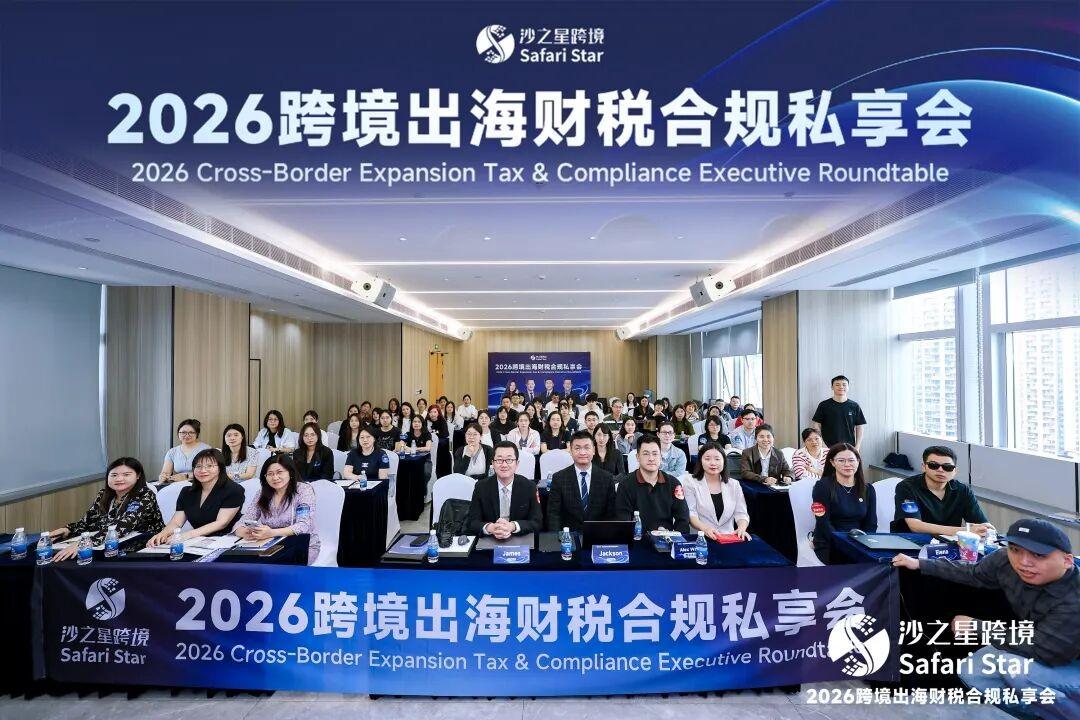
两日,两城,两场高密度、高质量的沙之星跨境2026跨境出海财税合规私享会·深沪双城站圆满收官。

本次深沪双城私享会,均以小规模闭门交流的形式展开,由沙之星跨境FCCA、ACCA及美国USCPA专业会计师团队,携手普华永道税务团队联合呈现。

活动聚焦欧洲、美国、加拿大、澳洲四大核心市场,围绕顶层架构设计、多国税务监管动态、利润合规与跨境风控、财税体系重构等维度,系统输出具备落地价值的实战解决方案。

现场汇聚近百位来自深沪及华东区域的跨境出海企业决策者、CFO及财税负责人,形成高密度的专业对话场域,议题深度与交流实效获得与会者高度认可。后续系列活动将持续聚焦全球税务合规与架构优化,欢迎财务与税务板块负责人持续关注。

这不仅是一场知识的传递,更是一次共识的凝聚:

在2026年,合规已从“成本项”彻底转变为出海企业的“核心资产”与“竞争壁垒”。

1、顶层架构:不止于“搭建”,更关乎“未来”

如何从集团战略出发,设计一个兼具税务效率、法律隔离与资本通道的全球架构?

——架构的终极目标不是单纯“节税”,而是为业务的全球化扩张、本地化运营、资本化路径预留空间。普华永道税务团队结合真实案例,剖析了不同商业模式(品牌型、平台卖家、供应链整合)下的最优架构选择。

2、区域合规实战:直面“欧美加澳”监管风暴

1)欧洲VAT的“后数字化时代”

重点解析了DAC7(平台数据上报)、ViDA(增值税数字化改革)及取消150欧元以下包裹关税豁免三大政策的深远影响,并针对PE风险、VAT合规扫描、海关估计风险、利润合理性评估提供了应对策略。

2)美国销售与使用税(SUT)的“网格化监管”

深入浅出地梳理了“中国公司远程经营”、“在美设立LLC”、“美国本土公司”及“美国母公司全球控股”四种模式下的核心申报义务(如Form 1120-F,5472,1065)及陷阱,并预警2026美国IRS稽查已从“抽样扫描”转向“数据全量穿透”。

3)加拿大与澳洲GST的“稽查重点”

揭示了加、澳税务机关如何利用数据匹配技术,精准定位非居民企业的合规缺口,并结合加拿大GST退税被税局稽查案例和澳洲海关“轮毂单元归类案”实例,警示不要被“看似合规”的表象所迷惑,以及强调海关对商品归类、原产地判定、海关估价的审查重点,错误归类可能导致无法享受关税优惠并多缴税款。

3、关联交易与利润回流:安全与效率的平衡艺术

如何为集团内部交易(货品、服务、IP)设定“合理”价格,以抵御各国税务机关的“双重检查”,并探讨在CRS、BEPS 2.0全球反避税框架下,如何通过合规的股息、特许权使用费、债务安排等方式,实现资金安全、高效、低成本地回归。

写在最后:


2026年,全球税务监管已迈入“数据联动”新时代。对于跨境电商企业而言,跨境财税合规不再是“选择题”,而是“生存题”。

未来,沙之星跨境将继续携手全球专业合作伙伴,为跨境卖家带来更多全球财税合规与出海战略交流会,帮助企业在复杂多变的国际监管环境中稳健出海、行稳致远。

沙之星跨境,期待与您下一程相见!

注:文/龚作仁,文章来源:Laborer,本文为作者独立观点,不代表亿邦动力立场。

【版权提示】亿邦动力倡导尊重与保护知识产权。未经许可,任何人不得复制、转载、或以其他方式使用本网站的内容。如发现本站文章存在版权问题,烦请提供版权疑问、身份证明、版权证明、联系方式等发邮件至run@ebrun.com,我们将及时沟通与处理。

已点赞

+1

{{ praise_text }}

好文章,值得被更多人看到

FAQ回顾

2026年欧洲跨境电商面临哪些主要税务监管变化?

2026年欧洲VAT监管重点包括DAC7平台数据上报规则、ViDA增值税数字化改革,以及取消150欧元以下包裹的关税豁免政策,企业需关注PE风险、VAT合规扫描与海关估价审查。

美国销售与使用税(SUT)对不同经营模式的中国企业有哪些核心申报义务?

针对中国公司远程经营、在美设立LLC、美国本土公司及美国母公司全球控股四种模式,核心申报义务包括Form 1120-F、5472、1065等,且2026年美国IRS稽查已转向数据全量穿透。

跨境企业如何在全球反避税框架下实现合规的利润回流?

在CRS与BEPS 2.0框架下,企业需为集团内部交易设定合理价格,并通过合规的股息、特许权使用费及债务安排,实现资金安全、高效且低成本的跨境回流。

广告

下一篇

跨境电商资源对接

《全球跨境电商服务商资源手册》第二期手册现已发布,触达更多资源,了解跨境服务商信息,欢迎点击链接下载。

了解详情

有赞春季发布会:没讲大模型 只讲“怎么帮商家多卖2.41亿”

谁也不知道未来5年10年有赞会变成什么样,能抓住的只有眼前的确定性,是1000个销售的面聊签单,是有效果的智能体和数字员工。