



• 亿邦公众号
    • APP下载

Moka 2026 产品发布会:用三位 AI “同事” 迎接 AI 原生组织时代

作者:龚作仁 文章来源:Laborer

2026-05-14 12:48

作者:龚作仁 文章来源:Laborer

2026-05-14 12:48

邦小白快读

EN
全文速览

总:本文梳理了Moka 2026产品发布会的核心干货,披露了AI人力资源领域的最新产品和行业趋势,核心信息如下:

1. 行业趋势层面:AI已经完成三次能力跃迁,从辅助思考的大脑、执行任务的手脚,变成能融入组织的AI同事,AI原生组织已经从战略选项进入落地执行阶段,先发企业已经拉开指数级的效率差距,HR的角色也从事务执行者转向信任建立者和人才组织架构师。

2. 产品价值层面:Moka完成了从HR SaaS到Moka AI的战略升级,推出招聘Eva、人事Eva、BP Eva三位AI同事,搭配底层定制引擎Moka AI工坊,能接走HR80%的重复事务,系统性提升企业识人用人的能力。

3. 模式变化层面:传统SaaS千家统一版本的时代已经过去,现在依托AI技术可以实现千企千面定制,企业不用懂代码就能快速调整功能,落地门槛大幅降低。

总:本次发布会透露出AI组织转型的最新趋势,对品牌商升级组织能力、适配AI时代发展有诸多干货参考:

1. 趋势层面:AI转型已经不再是可选的战略规划,已经进入必须落地的执行阶段,国际头部企业Duolingo、Shopify、Block的实践已经验证,AI不只是提升单点效率,还会重构整个组织的运作逻辑,先布局的品牌已经拉开难以追赶的差距,品牌商需要尽快推动AI转型落地。

2. 组织升级参考:品牌商可以借助AI工具解放HR的精力,让HR从繁琐事务中脱离,聚焦人才组织架构建设,三位AI同事分别解决了招聘标准不统一、人事事务占精力、人才盘点低效静态三大痛点,能帮助品牌提升人才密度,适配业务扩张的需求。

3. 成本参考:现在AI SaaS已经可以实现低成本个性化定制,适配品牌自身的管理规则,零代码就能调整需求,落地变革成本极低,适合各类规模的品牌尝试。

总:本次发布会披露了AI人力服务领域的最新动向,能给卖家尤其是To B服务类卖家带来机会提示和经验参考,核心干货如下:

1. 市场机会层面:AI原生组织已经进入爆发式落地阶段,企业对AI人力工具的需求已经从可选配置变成刚性需求,尤其是能适配企业个性化管理需求的AI产品,市场缺口大,增长空间十分可观。

2. 可学习的模式经验:Moka将产品定位从“HR工具”转向“AI同事”,精准切中了传统人力工具被动响应、无长期记忆、标准化不符合企业需求的痛点,三位AI同事分别覆盖招聘、人事、人才管理三大核心场景,这种场景化定位思路值得卖家借鉴。

3. 风险与机会提示:AI转型会带来行业效率分化,卖家自身如果不尽快完成AI组织升级,就会被先发者拉开差距,同时定制化是未来SaaS的核心方向,卖家需要调整产品思路,适配千企千面的需求,抓住新的增长红利。

总:本次发布会关于AI原生组织的判断,对工厂推进数字化转型、升级组织能力有诸多启示,也带来新的发展机会,核心干货如下:

1. 数字化转型启示:AI转型已经不是工厂可选的战略方向,已经进入必须落地的执行阶段,越早布局越能提前拉开效率差距,AI的价值不只是提升单点生产效率,还会重构整个组织的运作逻辑。国际案例显示,AI能帮助企业精简人员、压缩管理层级,还能在人员规模不变的情况下实现营收大幅增长,转型价值已经得到验证。

2. 组织升级方向:工厂推进数字化转型的过程中,对人才管理的要求更高,可以引入AI工具分担HR的事务性工作,优化招聘、人事、内部人才匹配流程,提升人才管理效率,让HR聚焦组织能力建设,适配工厂数字化转型对人才的需求。

3. 落地成本参考:AI技术已经压低了定制化数字化系统的门槛,工厂也可以低成本获得适配自身管理需求的人力系统,不用改变现有流程适配系统,数字化落地的成本大幅降低。

总:本次发布会透露出AI企业服务领域的最新发展趋势,明确了客户痛点和可行的解决方案方向,对各类企业服务服务商有较高参考价值,核心干货如下:

1. 行业发展趋势:AI技术已经完成能力跃迁,AI原生组织成为全新的组织形态,SaaS行业也已经延续十余年的“千家企业同一版本”,进入千企千面定制的新时代,基础大模型Agent能力的成熟,同时压低了软件构建和定制的门槛,让定制化规模化落地成为可能,这是服务商未来的核心发展方向。

2. 客户核心痛点:传统HR SaaS普遍存在被动响应、无法适配企业差异化管理需求的问题,具体来看,招聘环节标准不统一、决策靠经验,人事事务繁琐重复占精力,人才盘点静态低效,都是企业客户的核心痛点,市场仍有很大的优化空间。

3. 可参考的解决方案:服务商可以参考Moka的转型路径,将产品定位从“工具”转向“企业的AI伙伴”,采用底层定制引擎+上层场景化AI产品的架构,既满足企业的个性化需求,又能通过数据持续沉淀优化产品能力,适配AI原生组织的需求。

总:本次发布会披露了AI时代企业对SaaS平台的新需求,也给出了可参考的产品方向和风控思路,对企业服务平台商有诸多干货,核心内容如下:

1. 企业用户的新需求:随着AI原生组织的发展,企业对SaaS平台的需求已经从标准化统一产品,转向可个性化定制、能主动推进工作的AI产品,企业需要平台产品适配自身的业务和管理流程,而不是调整自身流程适配产品,这对平台的产品架构提出了新的要求。

2. 可参考的最新做法:Moka采用“底层定制AI工坊+上层场景AI产品”的架构,底层AI工坊支持用户用业务语言描述需求,不用代码就能小时级上线新功能,还支持沙盒预演和存档回滚,既满足了定制需求,又降低了落地调整的风险,这种架构模式值得平台参考。

3. 风向规避提示:AI转型已经进入落地期,停留在传统标准化SaaS模式的平台会逐渐失去竞争力,平台需要尽快完成产品模式升级,抓住AI原生组织的需求红利,同时要通过技术手段控制定制化落地的风险,降低企业的试错成本。

总:本次发布会披露了人力资源服务和组织形态领域的最新产业动向,还提出了新的商业模式探索,对相关领域研究者有较高的研究价值,核心干货如下:

1. 产业新动向:AI技术已经完成三次能力跃迁,从辅助工具变为能融入组织日常工作的AI同事,AI原生组织作为全新的组织形态开始浮现,AI时代的组织竞争逻辑更新为AI人才密度乘以AI协同深度,HR的角色也发生根本性跃迁,这是人力资源领域近年最核心的新变化。

2. 商业模式创新:传统SaaS行业一直存在定制化和规模化难以平衡的矛盾,Moka依托大模型Agent的成熟能力,创新出“底层定制AI工坊+垂直场景AI同事”的新模式,实现了可规模化的千企千面定制,解决了定制化与规模化的矛盾,是SaaS商业模式的重要新探索。

3. 值得研究的新问题:AI作为同事进入组织后,组织的运作逻辑、人才管理模式都会发生系统性重构,先发企业已经获得了显著的效率和营收增长,这种新组织形态的演化方向、对整体产业效率的影响,都是值得深入研究的新命题。

声明:快读内容全程由AI生成,请注意甄别信息。如您发现问题,请发送邮件至 run@ebrun.com 。

我是 品牌商 卖家 工厂 服务商 平台商 研究者 帮我再读一遍。

Quick Summary

This article distills key insights from Moka’s 2026 product launch, outlining the latest product developments and industry trends in AI-powered human resources. Core takeaways are as follows:

1. Industry trends: AI has completed three rounds of capability evolution, shifting from a "thinking assistant" to a "task executor", and now an "AI colleague" embedded into organizational operations. AI-native organizations have moved from being a strategic option to active implementation. Early adopters have already opened an exponential efficiency gap, while HR’s role is transforming from a transactional executor to a trust builder and talent organization architect.

2. Product value: Moka has completed its strategic upgrade from an HR SaaS provider to Moka AI, launching three AI colleagues: Hiring Eva, People Operations Eva and BP Eva. Paired with its underlying custom engine Moka AI Studio, the solution can take over 80% of HR’s repetitive tasks and systematically improve enterprises’ ability to identify and deploy talent.

3. Model shift: The era of one-size-fits-all traditional SaaS is over. AI now enables enterprise-specific customization, allowing companies to adjust functions quickly without coding knowledge, drastically lowering implementation barriers.

This product launch reveals the latest trends in AI-driven organizational transformation, offering valuable insights for brands looking to upgrade organizational capabilities for the AI era:

1. Trend outlook: AI transformation is no longer an optional strategic plan—it has entered a mandatory implementation phase. Practices from global leading companies including Duolingo, Shopify and Block have confirmed that AI does not only improve isolated efficiency, but also重构 the entire organizational operating logic. Early movers have already built an uncatchable gap, so brands should accelerate AI transformation as soon as possible.

2. Organizational upgrade takeaways: AI tools free HR from tedious administrative work, allowing them to refocus on talent and organizational architecture. Moka’s three AI colleagues address three core pain points: inconsistent hiring standards, excessive time spent on people operations, and inefficient static talent reviews. This helps brands increase talent density to support business expansion.

3. Cost insights: Modern AI SaaS now enables low-cost personalized customization that aligns with a brand’s unique management rules, with no-code adjustments for evolving needs. Implementation and transformation costs are extremely low, making it accessible for brands of all sizes.

This launch discloses the latest developments in AI-powered HR services, offering opportunity signals and practical insights for sellers, especially B2B service providers:

1. Market opportunities: AI-native organizations have entered a phase of explosive adoption. Enterprise demand for AI HR tools has shifted from optional to mandatory, with particularly large market gaps and strong growth potential for AI products that support customized management requirements.

2. Actionable takeaways: Moka repositioned its offering from "HR tool" to "AI colleague", precisely addressing the flaws of traditional HR tools: passive responsiveness, no persistent memory, and one-size-fits-all designs that fail to fit enterprise needs. With three AI colleagues covering the core scenarios of hiring, people operations, and talent management, this scenario-based positioning approach is valuable for sellers to learn from.

3. Risk and opportunity outlook: AI transformation is driving efficiency divergence across the industry. Sellers that do not complete their own AI organizational upgrade quickly will fall behind early movers. Customization is the core future direction of SaaS, so sellers need to adjust their product strategy to meet the demand for enterprise-specific solutions and capture new growth opportunities.

This launch’s analysis of AI-native organizations offers valuable insights and new opportunities for factories advancing digital transformation and upgrading organizational capabilities:

1. Digital transformation insights: AI transformation is no longer an optional strategic direction for factories—it has entered mandatory implementation. Early adopters gain an early efficiency gap, as AI does not only improve individual production efficiency, but also重构 the entire organizational operating logic. International cases confirm AI helps enterprises streamline headcount, flatten management hierarchies, and drive substantial revenue growth without expanding workforce size, proving the value of transformation.

2. Organizational upgrade direction: Digital transformation raises higher requirements for talent management in factories. Introducing AI tools to handle HR’s transactional work optimizes hiring, people operations and internal talent matching processes, improves talent management efficiency, and allows HR to focus on organizational capability building to meet the talent needs of digital transformation.

3. Implementation cost insights: AI has drastically lowered the barrier for customized digital systems. Factories can now obtain HR systems adapted to their own management needs at low cost, without having to adjust existing workflows to fit the system, which substantially cuts the cost of digital implementation.

This launch reveals the latest development trends in AI-powered enterprise services, clarifying core customer pain points and viable solution directions, offering high reference value for all enterprise service providers:

1. Industry development trends: AI has completed its capability evolution, with AI-native organizations emerging as an entirely new organizational form. After more than a decade of the one-size-fits-all SaaS model, the industry is entering a new era of enterprise-specific customization. The maturation of foundational large model agent capabilities has lowered barriers for software development and customization, making large-scale customized implementation achievable. This is the core development direction for service providers going forward.

2. Core customer pain points: Traditional HR SaaS generally suffers from passive responsiveness and inability to adapt to enterprises’ differentiated management needs. Specifically, inconsistent hiring standards, experience-reliant decision-making, time-consuming repetitive people operations work, and static inefficient talent reviews are all core pain points for enterprise customers, leaving significant room for market improvement.

3. Reference solution framework: Service providers can learn from Moka’s transformation path, repositioning products from "tools" to "enterprise AI partners", and adopting an architecture of underlying customization engine plus upper-layer scenario-based AI products. This approach meets enterprises’ personalized requirements while allowing continuous product improvement through accumulated data, to adapt to the needs of AI-native organizations.

This launch discloses enterprises’ new demands for SaaS platforms in the AI era, and outlines reference product directions and risk control strategies, offering valuable insights for enterprise service platform providers:

1. New demands from enterprise users: With the growth of AI-native organizations, enterprise demand for SaaS platforms has shifted from standardized uniform products to personalized customizable AI products that proactively drive work. Enterprises now require platforms to adapt to their existing business and management processes, rather than adjusting their own processes to fit the product. This poses new requirements for platform product architecture.

2. Reference best practices: Moka adopts an architecture of "underlying custom AI Studio + upper-layer scenario AI products". The underlying AI Studio allows users to describe requirements in business language, deploy new functions in hours without coding, and supports sandbox testing and version rollback. This meets customization needs while lowering the risk of implementation adjustments, making the architecture a valuable reference for platforms.

3. Risk mitigation: AI transformation has entered the implementation phase. Platforms that stick to the traditional standardized SaaS model will gradually lose competitiveness. Platforms need to complete product model upgrade as soon as possible to capture the demand dividend from AI-native organizations, while using technical solutions to control the risk of customized implementation and lower enterprises’ cost of trial and error.

This launch discloses the latest industry developments in human resources services and organizational forms, and presents new business model explorations, offering high research value for scholars in related fields:

1. New industry developments: AI has completed three rounds of capability evolution, shifting from an auxiliary tool to an AI colleague embedded into daily organizational operations. AI-native organizations are emerging as an entirely new organizational form. The competitive logic for organizations in the AI era has been updated to (AI talent density × AI collaboration depth), while HR’s role has gone through a fundamental transformation. This is the most core new change in human resources in recent years.

2. Business model innovation: The traditional SaaS industry has long faced the contradiction between customization and scalability. Leveraging mature large model agent capabilities, Moka has innovated a new model of "underlying custom AI Studio + vertical scenario AI colleagues", enabling scalable enterprise-specific customization and resolving the long-standing tension between customization and scale. This is an important new exploration for SaaS business models.

3. New research questions: As AI joins organizations as working colleagues, organizational operating logic and talent management models will both go through systematic restructuring. Early adopters have already achieved significant gains in efficiency and revenue growth. The evolutionary trajectory of this new organizational form and its impact on overall industry efficiency are both new propositions worthy of in-depth research.

Disclaimer: The "Quick Summary" content is entirely generated by AI. Please exercise discretion when interpreting the information. For issues or corrections, please email run@ebrun.com .

I am a Brand Seller Factory Service Provider Marketplace Seller Researcher Read it again.

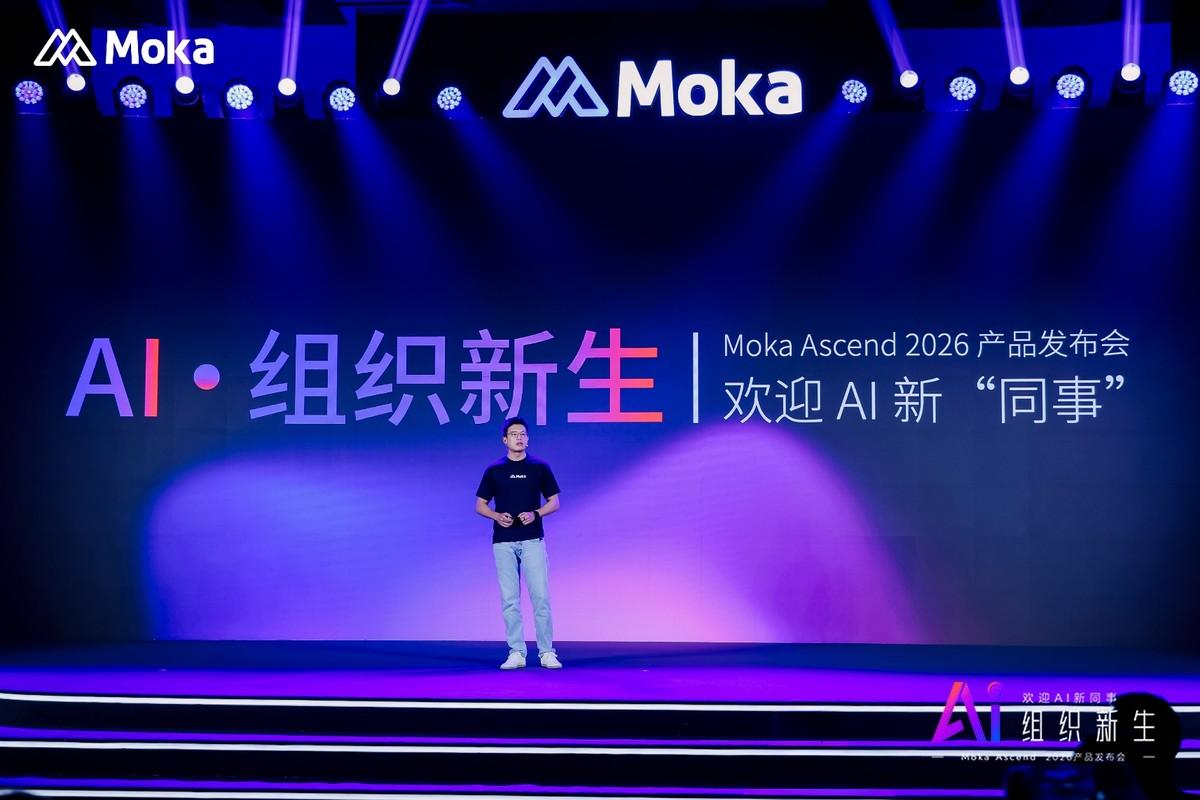
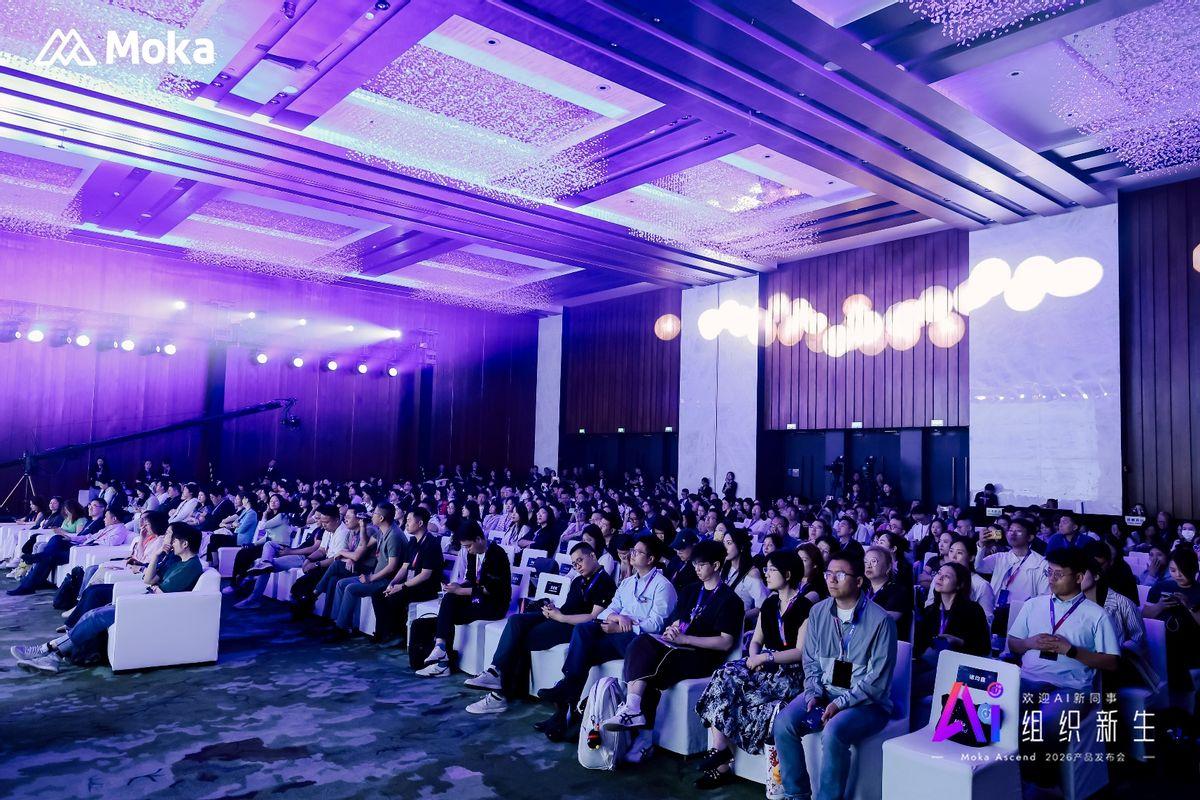
2026年 5月 13日,中国领先的AI人力资源软件服务商Moka在北京举办Moka Ascend 2026产品发布会,以「AI组织新生 · 欢迎AI新“同事”」为主题,正式将旗下HR SaaS全面升级为Moka AI,并推出三位AI“同事” —— 招聘Eva(勤奋的招聘专家)、人事Eva(可靠的人事伙伴)、BP Eva(懂人的人才军师),以及AI定制与数据沉淀的底层引擎Moka AI工坊(Moka AI Studio)。

这是Moka自 2015年成立以来最大规模的一次产品战略升级。从HR SaaS到 Moka AI,从工具到“同事”,从被动响应到主动推进——Moka试图回答HR行业最尖锐的命题:当组织进入AI原生时代,HR的价值边界在哪里?
一、AI原生组织正在浮现,HR角色面临根本跃迁

过去两年,AI的能力曲线已经经历了三次跃迁。最初AI是“大脑”,帮人想、帮人答;后来AI变成了“手脚”,能调用工具、能执行任务;而现在,AI正在成为“同事”——拥有记忆、理解偏好,能访问被授权的文件数据、执行被授权的操作,从入职第一天起参与组织工作。

这一转变带来的影响,已超出技术层面。组织AI转型已经从「战略选项」进入「执行议程」,从CEO到 CHRO都在追问同一个问题:我们的AI战略到底落地了没有?先动的人正在拉开难以追赶的差距 ,不只是效率快一点,而是整个组织的运作逻辑都在被重写。组织内部也正在出现指数级的效率分化:一面是更AI原生的个体,一面是更AI原生的协作机制与决策机制。

国际市场上,先行者已经给出了答案。Duolingo借助AI在一年内创建了148门新语言课程,超过此前12年总和;Shopify全员推广AI应用,在人数几乎无变化的情况下营收增长近60%;Block以 AI为核心重新设计组织建设,公司从1 万人精简至6000人,管理层级压缩至三层。AI改变的已经不只是效率,而是整个组织的运作模式。

一种全新的组织形态正在浮现 ——AI原生组织。

Moka将这一时代的组织竞争公式概括为:AI人才密度 ×AI协同深度 =AI时代组织的核心竞争力。在这一公式下,HR的角色发生了根本性跃迁,不再是困在事务里的执行者,而是信任建立者和人才组织架构师。
二、Moka HR SaaS升级为Moka AI,三位AI“同事”亮相

基于上述行业判断,Moka在本次发布会上正式将Moka HR SaaS升级为Moka AI。这不是一次产品命名的变化,而是产品定位的根本转变:从「更好的HR工具」,转向「与HR并肩作战的AI团队」。

围绕这一定位,Moka推出三位AI“同事”:招聘Eva、人事Eva、BP Eva。它们具有共同的特征:有记忆、更主动、越用越懂你。它们会记住企业的偏好、标准、文化;不等指令,主动发现问题、推进任务、给出建议;不只理解被说出来的需求,还能识别那些没说出口的判断与直觉。
招聘Eva·「勤奋的招聘专家」

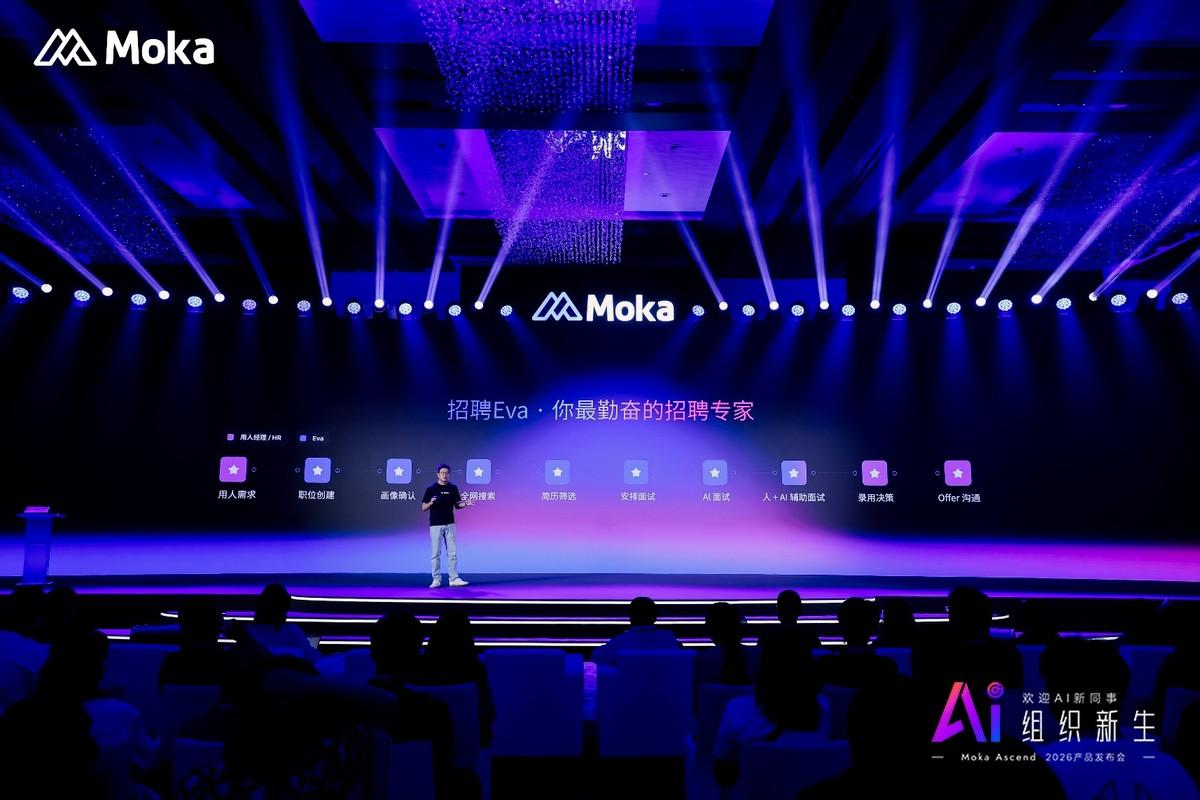
招聘Eva不是对传统ATS的功能升级,而是招聘方式的代差跃迁。传统的招聘工具本质上是“人找系统”,即人来操作、系统被动响应;候选人画像依赖人的经验判断;没有记忆,每次招聘几乎都要从零开始。招聘Eva则在三个维度上完成反向重构:

主动推进:不是你去找系统,是她主动找你,主动推进招聘进程,繁琐事务全程包揽;

动态画像:汇聚内外部数据,结合招聘过程中的反馈,持续迭代职位画像;

长期记忆:记住企业的用人偏好与考察方法,越招越懂你,越招越快。

一次完整的招聘需要经历至少十个环节,招聘Eva让用人经理只需做四件事:提需求,面试评估,录用决策和确定Offer;其余环节由招聘Eva全程贯穿、自动推进。

招聘Eva的一项核心能力是「面试教练Eva」。面试是企业最昂贵、但管理最混乱的环节之一 ,因为标准不一致,方法五花八门,决策靠感觉。而每一次面试决策,都在决定组织的人才密度。

面试教练Eva将会进入每一场面试,提炼金标准与好方法;再渗透回每一场面试,辅助面试官面得更好。Eva不需要采访面试官、也不需要翻面试记录,而是从企业真实的面试历史中自动提炼用人金标准,并全程参与面试:面试前生成定制化的考察点与问题清单,面试中作为面试官的副驾驶实时提示与追问,面试后自动打分并将录用与入职后数据反馈回金标准本身。整个过程对组织几乎是零变革成本,面试工作照旧推进,Eva以润物细无声的方式,系统性提升组织“招对人”的能力。

“让少数伯乐的识人能力,变成整个组织的能力。”李国兴在发布会上表示。“Moka Eva把企业最昂贵的黑箱,变成最可复利的资产。”

人事Eva·「可靠的人事伙伴」

传统人事系统的逻辑是「HR操作系统完成事务」。人事Eva把这一逻辑改写为「HR设计、Eva执行」,HR告诉Eva这件事该怎么做,后续执行由Eva承担。

人事Eva的能力可以归纳为三件事:数据与报表、日常事务流程和员工咨询。在数据与报表上,人事Eva自动读懂邮件、表格、截图、会议纪要等非结构化输入,自动拼齐散落各处的数据,秒级生成各类报表;在事务流程上,排班、考勤、算薪、入离职办理、组织架构调整等核心流程,人事Eva可以从头到尾跑完,HR只需审核确认 ,因为Eva懂企业自己的假勤算法、薪酬结构和审批层级;在员工咨询上,人事Eva 7×24在线、自动应答处理员工需求。

三件事合起来,接走HR 80% 的重复事务,让HR的精力流向那些只有人才能做好的事 —— 理解每一个员工、设计每一项制度、和业务一起把组织建强。

BP Eva·「懂人的人才军师」

BP Eva面向的是组织中最复杂的命题 —— 人才管理。传统人才盘点存在三个根本性缺陷:人才画像静态、岗职位体系难以落地、评估反馈节奏过慢。BP Eva要解决的,就是让人才管理融入每一天,而不是每半年做一次“大工程”。

BP Eva的底层是“一个库 + 一张地图”,即「人才数字基因库」与「组织能力地图」。前者是对每一位员工动态画像的持续沉淀,基于能力、行为、结果三个维度的数据持续更新:每一次会议发言、项目交付、AI工具使用,都会被自动识别并沉淀进画像。后者是以基因库的宏观视角,对组织整体能力进行可视化呈现,哪些维度强、哪些维度有短板、能力分布是否与业务战略匹配,清晰可见。

当业务有新的用人需求,BP Eva可以在全组织范围内基于真实能力数据自动匹配,跨岗位边界发现合适人选,让那些原本容易被忽视的内部人才被看见、被用起来。最终,真正实现人才的度量、生长与复用。

三、对SaaS模式的再思考:千企千面时代到来

过去十余年,企业SaaS的逻辑是“千家企业、同一个版本”,而如今量身定制的AI软件时代已经来临。这一转变的底层支撑,是基础模型Agent能力的成熟——软件的构建门槛与定制门槛被同时压低,使得“软件适应企业、而非企业适应软件”第一次成为可规模化的现实。

面对每家企业差异化的业务场景、管理方式与规则体系,Moka同步推出Moka AI工坊(Moka AI Studio)。作为Moka AI的能力底层,AI工坊围绕三项核心能力构建:第一,响应提速——用户用业务语言描述需求,无需懂代码、写需求文档或等待IT部门,小时级上线可用;第二,个性落地——千企千面,从标准版到“我的那一版”;第三,安心上线——通过沙盒预演与存档回滚,让每一次系统调整都在掌握之中。

有了AI工坊,Eva的能力可以无限延展,企业的每一个需求都能被快速响应。

四、做组织的AI大脑,迎接AI原生时代

Moka AI的整体架构可以概括为“组织的AI大脑”:底层能力是Moka AI工坊;系统层是Moka招聘、Moka People,作为企业关于招聘和人事数据的核心载体;智能层则是招聘Eva、人事Eva、BP Eva,以及未来更多Eva“同事”。
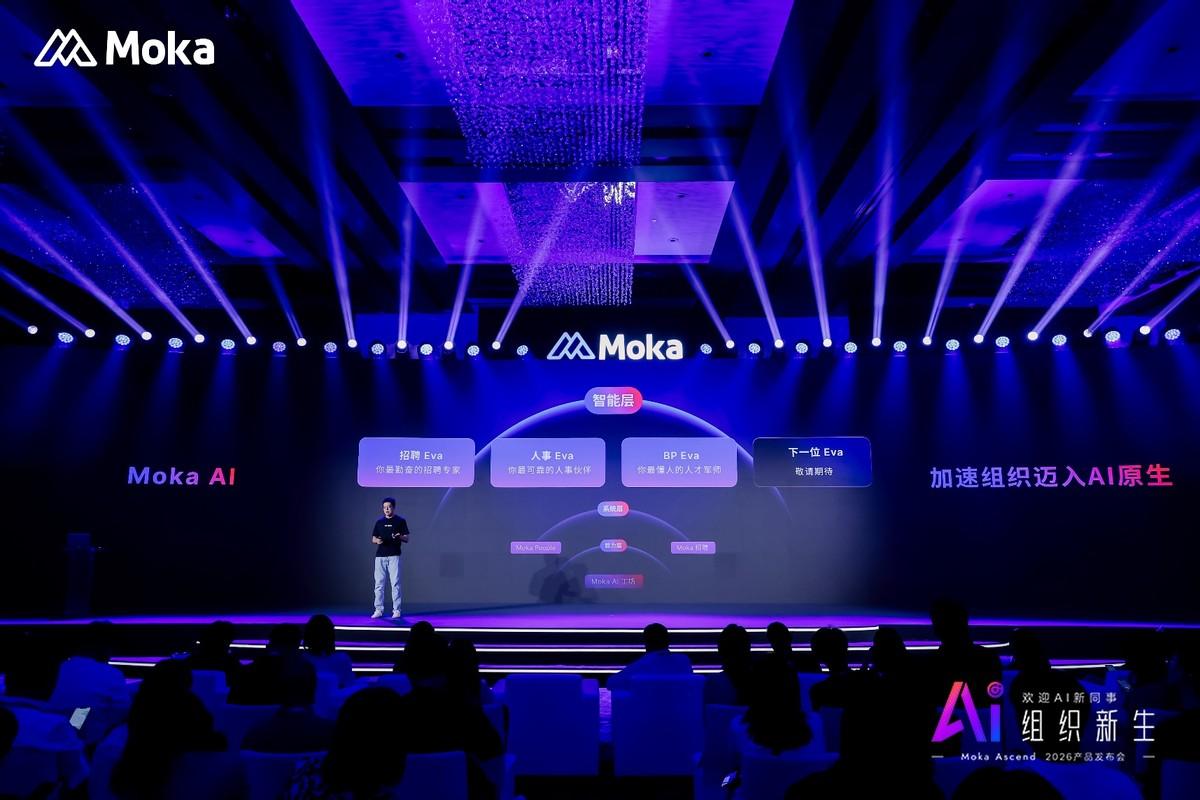
Eva不只在完成任务,它也在持续沉淀数据 —— 每一次招聘,沉淀用人偏好数据;每一场面试,沉淀识人标准数据;每一次人事操作,沉淀流程和规则数据;每一个员工的成长轨迹,沉淀人才能力数据。这些数据不断汇聚,形成组织关于人的知识库。知识库越丰富,Eva就越聪明;Eva越聪明,组织就越懂人。

“Moka AI,不是一个工具,不是一套系统,是你的组织真正的智能伙伴。” 李国兴在发布会上表示,“迎接新‘同事’Eva,让组织向AI原生进发——这不只是一句口号,是Moka在这个时代最重要的一次选择。”

注:文/龚作仁,文章来源:Laborer,本文为作者独立观点,不代表亿邦动力立场。

【版权提示】亿邦动力倡导尊重与保护知识产权。未经许可,任何人不得复制、转载、或以其他方式使用本网站的内容。如发现本站文章存在版权问题,烦请提供版权疑问、身份证明、版权证明、联系方式等发邮件至run@ebrun.com,我们将及时沟通与处理。

已点赞

+1

{{ praise_text }}

好文章,值得被更多人看到

FAQ回顾

Moka在2026年产品发布会上推出了哪三位AI“同事”?它们分别有什么功能?

Moka推出了三位AI“同事”:招聘Eva(主动推进招聘全流程、动态画像、面试教练)、人事Eva(处理数据报表、日常事务、员工咨询)和BP Eva(基于人才数字基因库和组织能力地图进行动态人才管理与盘点)。

什么是Moka AI工坊(Moka AI Studio)?它的核心能力是什么?

Moka AI工坊是Moka AI的底层引擎,核心能力包括:用业务语言快速响应需求(小时级上线)、支持个性化定制(实现“千企千面”)、以及通过沙盒预演和存档回滚确保系统调整安全可控。

Moka如何定义AI原生时代的组织核心竞争力?HR的角色发生了什么变化?

Moka将AI时代组织核心竞争力概括为“AI人才密度 × AI协同深度”。在此背景下,HR的角色从事务执行者跃迁为信任建立者和人才组织架构师,负责设计而非仅仅执行。

广告

下一篇

跨境电商资源对接

《全球跨境电商服务商资源手册》第二期手册现已发布,触达更多资源,了解跨境服务商信息,欢迎点击链接下载。

了解详情

亚马逊推出30分钟极速配送服务 预计年底覆盖数千万用户

覆盖生鲜杂货、家居必需品、电子产品、个护用品及合规区域的酒类等数千种商品,符合配送要求的商品会标注30分钟配送标识。

跨境电商 电商平台 亚马逊

2026-05-14 11:58:33









