• 亿邦公众号
    • APP下载

最惨618 女购男装火了

作者:姜琪 文章来源:亿邦动力

2026-05-13 19:42

作者:姜琪 文章来源:亿邦动力

2026-05-13 19:42

邦小白快读

EN
全文速览

本文曝光了当前国内女装行业普遍存在的各类坑点,同时给普通消费者买衣服提供了实操避坑干货。

1. 当前女装行业的常见问题:普遍存在尺码标注模糊、尺码数据和真实身材脱钩,面料敷衍、质量和价格倒挂,预售周期过长,种草笔记、商品评价多为刷单刷来的模板化内容,毫无参考价值;还存在隐形粉红税,同款同质量女款比男款价格高15%-30%。目前已经有大量女性转而购买男装和大码童装避坑。

2. 避坑实操方法:买衣服先看面料成分,优先选择纯棉、长绒棉、精梳棉、桑蚕丝、棉麻、绵羊毛等优质面料,同时要留意面料的克重和含量;选版型要重点关注腰型、立档深度、胯部放量以及裤腿中线,好版型的裤子裤腿中线笔直,不容易显歪显胯宽。

本文梳理了当前女装行业的消费趋势和现存痛点,能给女装品牌的营销、产品研发和战略调整提供参考。

1. 消费端趋势变化:当前女性消费者对女装的满意度大幅下滑,普遍不满尺码混乱、货不对版、价高质低的问题,大量消费者开始逃离女装区,转向购买男装和大码童装;目前男装市场中女性消费者占比已经从15%升至28%,相关搜索量年增长超过200%,消费者更看重实用、品质和性价比,反感针对女性的隐形粉红税。

2. 行业现存问题:当前行业陷入低价内卷、抄款泛滥的恶性循环,劣币驱逐良币,原创品牌生存空间被挤压,设计师失去自主创作空间,产品为流量做而非为穿着做,已经出现了消费者信任崩塌的问题。

3. 产品研发方向:品牌要坚持原创设计,用心打磨版型和品质,沉淀品牌文化,才能建立长期竞争力,脱离低价内卷的陷阱。

本文揭示了女装行业的现存风险,也挖掘了新的市场增长机会,能给服装卖家提供方向参考。

1. 风险提示:当前女装行业已经陷入低价抄款、恶性内卷的循环,消费者信任严重缺失,行业退货率极高,买十件留一件是常态,原创品牌很容易被抄袭挤压,生存难度极大,目前国内平均每天就有2600家服装店关闭,其中不乏知名女装品牌。

2. 新市场机会:当前大量有消费能力的女性消费者流出女装赛道,转入男装和大码童装赛道,这类需求增长迅猛,相关话题阅读量破亿,目前还是蓝海市场,消费者对这类产品的核心要求是版型稳定、面料扎实、质检严格、价格亲民,刚好避开了女装的现有痛点。

3. 可借鉴的经验:卖家可以切入男装女穿、大码成人童装的赛道,学习男装实用化设计、标准化尺码体系,坚持做品质就能获得消费者认可,抓住新的增长机会。

本文分析了当前服装行业的消费需求变化和行业痛点,能给服装工厂调整生产方向、抓住新机会提供参考。

1. 生产设计需求变化:当前消费者对传统女装的版型混乱、面料劣质、尺码不准问题已经极度不满,大量成年女性转而购买男装和大码童装,这类需求对产品的核心要求是版型标准稳定、面料扎实、质检严格、设计简约实用、价格亲民,工厂可以根据需求调整生产设计方向。

2. 新商业机会:目前男装女穿的需求增长十分迅猛,相关搜索量年增长超过200%,女性消费者占男装市场的比例已经提升至28%,大码童装也受到成年女性的欢迎,工厂可以提前布局对应产品线,抓住新的需求增量。

3. 行业发展启示:原本的小单快反模式已经变味,过度追求速度反而牺牲了品质,引发消费者不满,工厂需要平衡快反效率和产品品质,坚持做原创做品质,才能避开低价抄款的恶性循环,获得长期生存空间。

本文梳理了当前女装行业的发展趋势和供需两端的痛点,能给服装相关服务商把握行业方向、挖掘客户需求提供参考。

1. 行业发展趋势:当前女装行业整体增长放缓,根据公开数据,2025年中国限额以上服装零售额同比仅增长2.8%,网上零售额同比仅增长1.9%,服装企业周转速度放缓,运营压力加大;同时消费端呈现新趋势,大量消费者流出女装赛道,男装女穿、大码童装成人穿的需求快速增长,消费者整体向品质化、实用化需求回归。

2. 核心客户痛点:品牌端面临原创成果被抄袭、低价内卷生存难的问题,消费者端面临买不到合身优质女装的问题,市场上还普遍存在尺码标注不规范、种草内容造假的乱象。

3. 可布局的解决方案:服务商可以针对市场痛点,推出原创品牌保护、标准化尺码检测、真实内容营销等服务,还可以针对新崛起的男装女穿需求,推出配套的选品、引流服务,抓住新的市场机会。

本文曝光了当前平台服装品类存在的诸多问题,也指出了新的消费趋势,能给平台商优化运营、抓住新机会提供参考。

1. 当前平台存在的问题:不少平台内的女装商家普遍存在刷单刷评、尺码标注模糊、超长预售、货不对版的问题,已经引发消费者的集体不满,导致消费者对平台女装品类的信任崩塌,大量用户开始转向其他品类购物。

2. 平台运营优化方向:平台需要加强对商家的合规管理,明确商家尺码标注的规范要求,严厉打击刷单刷评、虚假种草的行为,管控超长预售等损害消费者权益的行为,重建消费者对平台服装品类的信任,规避行业系统性风险。

3. 新机会把握:当前男装女穿、大码童装成人穿的需求快速增长,平台可以抓住这个风口,开辟专属的流量入口,推出针对性的招商活动,吸引符合需求的商家入驻,挖掘新的增长动力,提升平台服装品类的整体交易额和用户满意度。

本文揭示了当前中国女装行业的系统性危机,呈现了产业发展的新动向新问题,对服装产业研究有较高的参考价值。

1. 产业新问题:当前国内女装行业出现系统性反噬,行业陷入低价内卷、抄款泛滥的恶性循环,劣币驱逐良币,原创力严重枯竭,产品为流量而非为消费者穿着设计,尺码体系混乱、质量持续下滑,还存在针对女性的粉红税隐形溢价,消费者信任崩塌;行业整体增长放缓,平均每天有2600家服装店关闭,不少知名品牌也未能幸免。

2. 产业新动向:大量女性消费者转向购买男装和大码童装,目前男装市场女性消费者占比已经从15%升至28%,相关搜索量年增长超过200%,成为新的消费趋势;行业内部也出现了关于服装行业核心竞争力的讨论,一派认为坚持原创设计打磨品质是长期立身的根本,另一派认为品牌才是服装行业的核心壁垒。

3. 研究启示:研究者可以围绕女装行业系统性危机的成因、新消费趋势对产业格局的影响,进一步展开研究,探索服装行业可持续发展的可行商业模式。

声明:快读内容全程由AI生成,请注意甄别信息。如您发现问题,请发送邮件至 run@ebrun.com 。

我是 品牌商 卖家 工厂 服务商 平台商 研究者 帮我再读一遍。

Quick Summary

This article exposes common pitfalls pervasive in China’s current women’s apparel industry, and shares actionable tips to help ordinary consumers avoid these issues when shopping for clothes.

1. Common industry problems: vague size labeling where listed measurements do not match actual body dimensions, low-quality fabrics sold at inflated prices, excessively long pre-order wait times, and fake templated reviews and influencer种草 posts generated through刷单刷单 that offer no real reference value. The industry also suffers from the "pink tax": identical products of the same quality cost 15% to 30% more for women than for men. Today, a large number of women have turned to buying men’s clothing and oversized children’s clothing to avoid these problems.

2. Actionable avoidance tips: Check fabric composition first when shopping, and prioritize high-quality materials including pure cotton, long-staple cotton, combed cotton, mulberry silk, cotton-linen blends, and merino wool, while paying close attention to fabric weight and fiber content. When selecting cuts, focus on waist design, crotch depth, hip room, and pant leg center seam: well-tailored pants have a straight center seam that avoids highlighting wide hips or uneven leg shapes.

This article sorts out current consumer trends and pain points in China’s women’s apparel industry, offering insights to inform marketing, product development, and strategic adjustments for women’s apparel brands.

1. Shifting consumer trends: Female consumer satisfaction with women’s apparel has dropped sharply, driven by widespread dissatisfaction with inconsistent sizing, misrepresented products, and low quality at high prices. Many consumers are abandoning the women’s apparel category entirely, shifting to men’s clothing and oversized children’s clothing. Women now account for 28% of China’s men’s apparel market, up from 15%, and related search volume has grown more than 200% year-over-year. Consumers increasingly prioritize functionality, quality, and value for money, and reject the hidden "pink tax" targeting women.

2. Existing industry challenges: The sector is stuck in a vicious cycle of cutthroat low-price competition and rampant design copying, where bad money drives out good. Original brands face shrinking market space, designers lose creative autonomy, and products are designed for traffic rather than wearability, leading to a widespread collapse in consumer trust.

3. Product development direction: To build long-term competitiveness and escape the low-price competition trap, brands must stick to original design, invest in refining cut and quality, and cultivate authentic brand culture.

This article outlines existing risks in the women’s apparel industry and uncovers new growth opportunities, offering directional guidance for apparel sellers.

1. Risk warnings: The women’s apparel sector is trapped in a vicious cycle of low-price copying and cutthroat competition, with severely eroded consumer trust and extremely high return rates. It is now common for consumers to keep just one out of every 10 items purchased. Original brands face constant copying and market squeeze, making survival extremely difficult. On average, 2,600 clothing stores close across China every day, including many well-known women’s apparel brands.

2. New market opportunities: A large number of spending-power female consumers are leaving the traditional women’s apparel track and shifting to men’s apparel and oversized children’s apparel. This demand is growing rapidly, with related topic views exceeding 100 million, and the segment remains largely untapped. Consumers’ core requirements for these products are consistent sizing, solid fabric quality, strict quality inspection, and affordable pricing, which directly addresses the existing pain points of traditional women’s apparel.

3. Actionable takeaways: Sellers can enter the "women wearing men’s apparel" and "adults wearing oversized children’s apparel" tracks, adopt men’s apparel’s practical design philosophy and standardized sizing system, and win consumer recognition by prioritizing quality to capture new growth opportunities.

This article analyzes changing consumer demand and industry pain points in China’s apparel sector, offering reference for factories to adjust production direction and capture new opportunities.

1. Shifting production and design demand: Consumers are extremely dissatisfied with inconsistent sizing, low-quality fabrics, and inaccurate measurements of traditional women’s apparel. Many adult women have shifted to buying men’s apparel and oversized children’s apparel, which demand consistent sizing, solid fabrics, strict quality control, simple practical designs, and affordable prices. Factories can adjust their production and design direction to align with this demand.

2. New business opportunities: Demand for "women wearing men’s apparel" is growing very rapidly, with related search volume up more than 200% year-over-year, and women now account for 28% of the men’s apparel market. Oversized children’s apparel is also popular among adult women. Factories can布局 corresponding product lines early to capture this new demand growth.

3. Industry insights: The traditional "small-batch quick response" model has devolved: overprioritizing speed has come at the cost of quality, fueling consumer dissatisfaction. Factories need to balance quick response efficiency and product quality, and commit to original design and quality production, to escape the vicious cycle of low-price copying and secure long-term survival.

This article sorts out development trends and supply-demand side pain points in China’s women’s apparel industry, helping apparel-related service providers understand industry direction and identify customer needs.

1. Industry development trends: Overall growth of the women’s apparel sector is slowing. According to public data, China’s above-quota retail sales of apparel are projected to grow just 2.8% year-over-year in 2025, while online apparel retail sales will grow just 1.9% year-over-year. Inventory turnover is slowing for apparel firms, increasing operational pressure. Meanwhile, new consumer trends have emerged: many consumers are leaving traditional women’s apparel, and demand for "women wearing men’s apparel" and "adults wearing oversized children’s apparel" is growing rapidly, with consumers overall shifting back to prioritizing quality and practicality.

2. Core customer pain points: Brands face challenges including unprotected original designs and difficulty surviving cutthroat low-price competition, while consumers struggle to find well-fitting, high-quality women’s apparel. The market also suffers from widespread non-standard size labeling and fake influencer marketing content.

3. Solutions to布局: Service providers can develop targeted solutions to address these market pain points, including original brand protection, standardized sizing testing, and authentic content marketing services. They can also develop supporting product selection and traffic-driving services tailored to the fast-growing demand for "women wearing men’s apparel" to capture new market opportunities.

This article exposes widespread problems in the apparel category of online platforms and outlines new consumer trends, offering reference for platforms to optimize operations and capture new opportunities.

1. Existing platform problems: Many women’s apparel sellers on platforms engage in fake reviews, vague size labeling, excessively long pre-order wait times, and misrepresented products, which have triggered widespread consumer dissatisfaction, eroded trust in platform women’s apparel categories, and driven large numbers of users to shop in other categories.

2. Operational optimization directions: Platforms need to strengthen merchant compliance management, clarify clear requirements for size labeling, crack down hard on fake reviews and false influencer marketing, and regulate harmful practices such as excessively long pre-orders to rebuild consumer trust in platform apparel categories and mitigate systemic industry risk.

3. Capturing new opportunities: Demand for "women wearing men’s apparel" and "adults wearing oversized children’s apparel" is growing rapidly. Platforms can capitalize on this trend by opening dedicated traffic entries, launching targeted recruitment campaigns to attract qualified merchants, unlock new growth drivers, and boost overall apparel category GMV and user satisfaction.

This article reveals the systemic crisis currently facing China’s women’s apparel industry, and outlines new trends and emerging problems in industrial development, offering high reference value for apparel industry research.

1. New industrial challenges: China’s women’s apparel sector is facing systemic backlash, trapped in a vicious cycle of cutthroat low-price competition and rampant design copying, where bad money drives out good. Original creative capacity has severely eroded, products are designed for traffic rather than wearability, sizing systems are inconsistent, quality continues to decline, and hidden "pink tax" price premiums targeting women are widespread, leading to a total collapse in consumer trust. Overall industry growth is slowing, with an average of 2,600 clothing stores closing daily, including many well-known brands.

2. New industrial trends: A large number of female consumers have shifted to buying men’s apparel and oversized children’s apparel. Women now account for 28% of the men’s apparel market, up from 15%, and related search volume has grown more than 200% year-over-year, making this a major new consumer trend. Industry discussion has emerged over what constitutes core competitiveness in apparel: one camp argues that original design and refined quality are the foundation of long-term success, while the other holds that brand is the core barrier in the apparel industry.

3. Research implications: Researchers can further explore the causes of the systemic crisis in the women’s apparel industry and the impact of new consumer trends on industrial structure, to explore viable sustainable business models for the apparel sector.

Disclaimer: The "Quick Summary" content is entirely generated by AI. Please exercise discretion when interpreting the information. For issues or corrections, please email run@ebrun.com .

I am a Brand Seller Factory Service Provider Marketplace Seller Researcher Read it again.

年轻人,逃离畸形女装。

文丨姜琪

编辑丨董金鹏

【亿邦原创】168cm,125斤,BMI指数22.1。林晓属于标准身材,却抱怨说总挑不到合身的女装。

今年五一,她提前两周,把小红书、淘宝、抖音的女装页面翻了个底儿朝天,手机屏幕都划到发烫。收藏夹里,四五十款连衣裙和十几套搭配好的官方穿搭,从299元的基础款到899元的“高端定制”。

林晓先后下18单,试穿几乎崩溃,最终只留1件,其余全退。L码连衣裙,拉链拉到胸口就窒息;阔腿裤自带鼓风效果,胯宽腿粗被无限放大;号称“温柔奶绿”的半身裙,实物绿得发暗,面料薄如塑料纸;预售7天的衬衫,走线歪歪扭扭,纽扣一扯就掉。

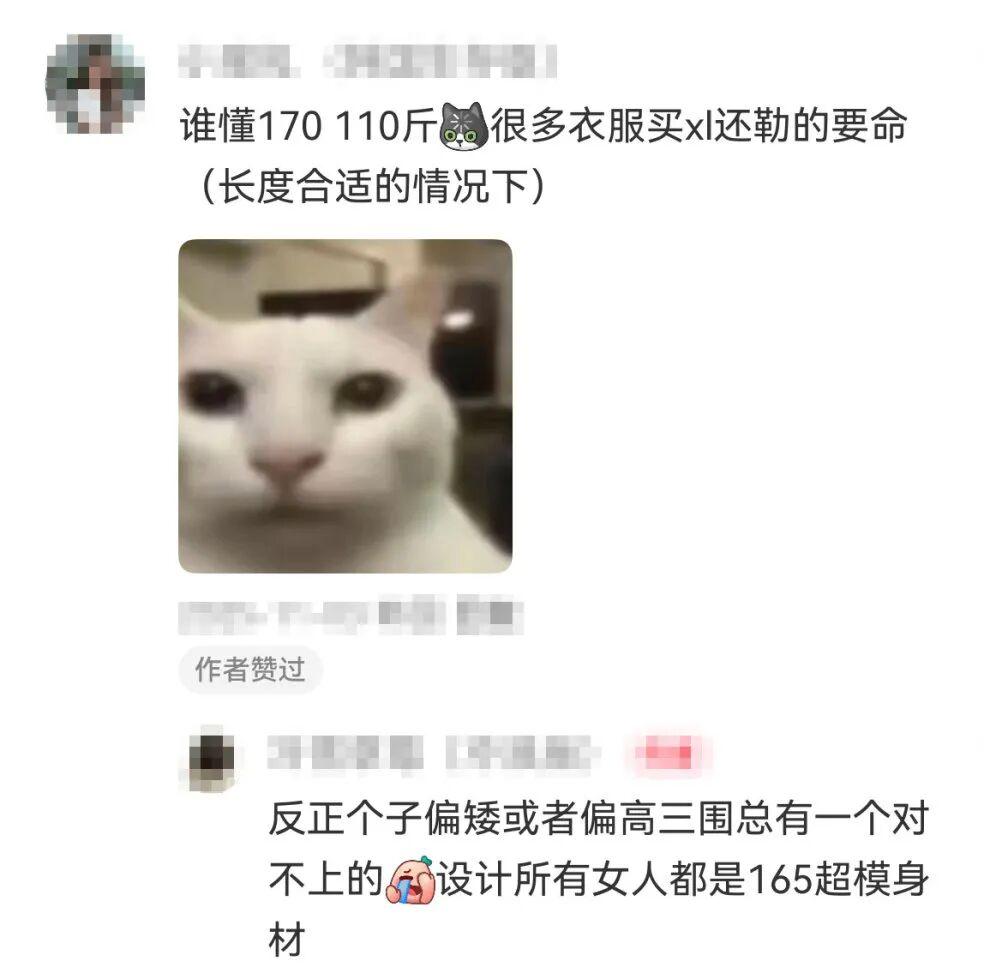
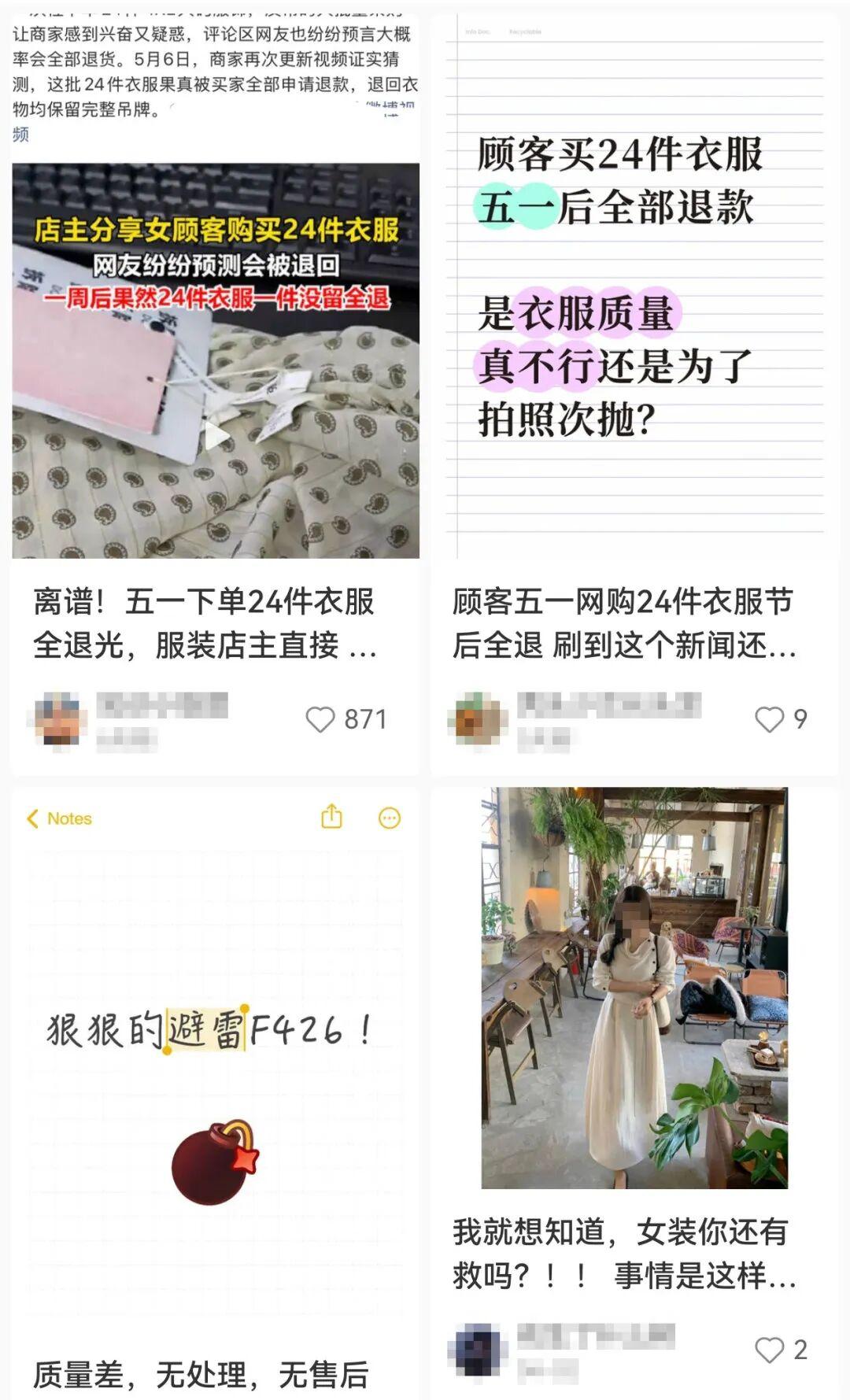
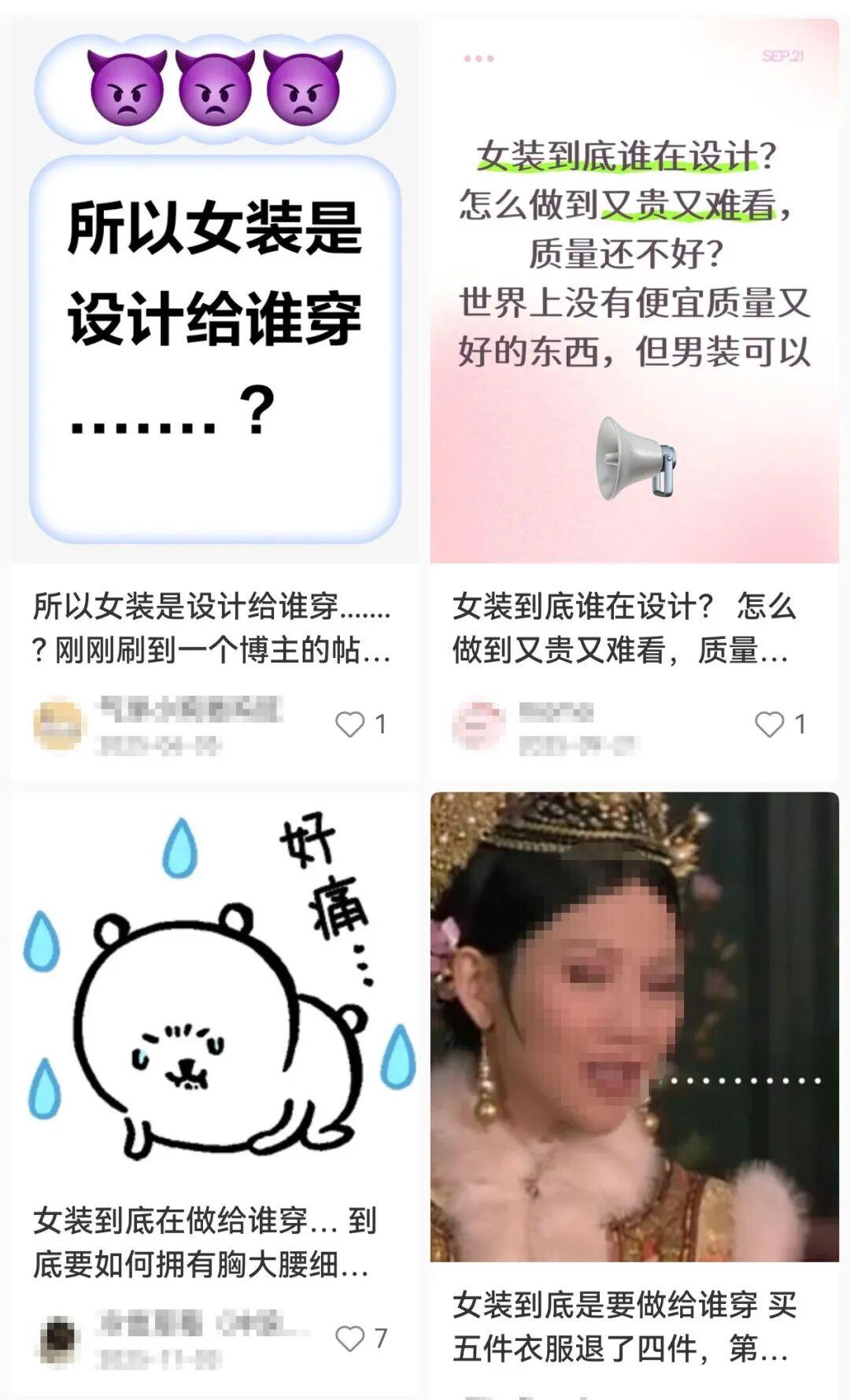
林晓的经历,不是个例。打开社交平台,“五一买衣翻车”“女装到底在给谁做”“今年没买到一件合身的春装”等话题频频刷屏,评论区里满是无奈:有人被迫买童装160码,有人转战男装区淘货,有人干脆放弃搭配,穿着旧衣出门。
图片

图片

长假,本该是商家销售的小高峰,也是消费者释放穿搭魅力和尽情享受的时刻,却成了无数女生的“买衣渡劫记”。一件合适女装,从“随手可得”变成“全网难寻”,背后折射的绝不是简单的消费者审美变苛刻,而是整个行业的变革与沉沦。

五一过后,紧接着又是母亲节、520情人节和618大促,也是女装销售旺季。我们不禁要问:为什么刷遍全网却找不到一件合身女装?女装原创力真的已死?行业溃败从何而来?又会走向何处?

“我真没时间和你们闹了”

临近五一,温度逐渐攀升,人们开始为换装做准备。每年这个时候,平台和商家都会推出相关折扣促销活动,春夏潮流服装销量开始逐渐走高。

不过今年,却成了大型翻车现场。翻看社交媒体上的女装“避雷帖”,高频关键词不是“显瘦”“时髦”等,而是尺码、面料、色差和预售等一系列问题。

一位消费者分享称,自己平时穿S码,在某网红店下单,买L码才勉强合身。这不是个别品牌或者商家的问题,而是行业普遍面临的困境。

图片

图片

图片

亿邦动力发现,许多平台上商家商品的评价区,已经沦为刷分重灾区,清一色模的板化好评,甚至同一用户账号出现在不同场景,种草内容毫无参考价值;而商家的尺码表,敷衍潦草,肩宽、衣长、胸围关键数据模糊不清,消费者只能凭着感觉“盲买”。

衣不合身,第一次踩雷后,你或许会陷入自我怀疑,纠结是不是自己身材走样;但当你多下几单,或者与朋友交流以后,会发现事实绝非如此。就连身形纤瘦的女生,也同样面临“无衣可穿”的困境。

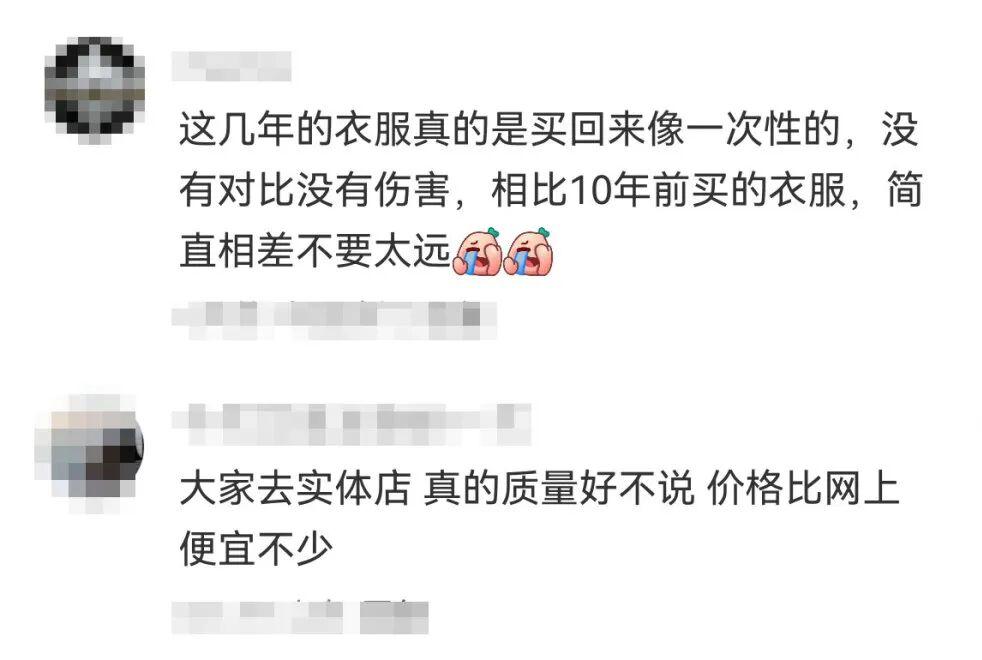
尺码表数字,与真实人体脱钩,仿佛一件衣服在出厂前从未经过试穿和质检。更离谱的是价格与质量倒挂,女装标价逐年走高,用料却愈发敷衍。动辄四五百元的连衣裙,拿到手“薄如蚊翼”“透光如纱”“走线七扭八歪”。

许多消费者有同样体感,相比三五年前,同价位衣服的质量断崖式下跌。有消费者称,早些年网购,虽无“七天无理由”,但商家钻研货品,面料、版型对得起价格;但最近几年,AI生成模特图,美则美矣,但毫无真实质感,到手后“廉价的塑料感”扑面而来。

“小单快反”,一种按需定产的供应链管理模式,其核心在于小批量生产个性化的商品,拿到市场上做测试,再根据结果进行快速返单和追加订单。与此对应的预售制,则让消费者获得更精准、快速和个性化的购物体验。

但现在,有些商家的“小单快反”和预售制,似乎在慢慢变味儿。7天、15天、30天……春装下单夏天收到,假期穿搭节后到货,“预售制”将购买变成一场无尽等待。商家拿着货款,零成本测试市场反应。而消费者,承担了时间与资金的双重风险。

相应地,用户却换来“货不对版”。这些现象叠加起来,导致的结果是“买十件留一件”成为女装行业常态。消费者选累了,商家退累了。从“为设计买单”降级为“为不退货庆幸”,女装正经历一场信任的崩塌。

经历今年五一的出行穿搭购物风波后,林晓彻底失望。她在社交媒体发文说:“五一穿搭又踩雷,女装,我真没时间和你们闹了。”

逃离“粉红税”,不买女装买男装

于是,越来越多女性开始逃离“女装区”,转向原本不属于她们的货架。

妙妙早年做过女装卖家,曾在拍拍网等购物网站开店。她说,今年是自己买衣服最少的一年,“春装夏装都不合适,甚至外套开始买童装160码。”

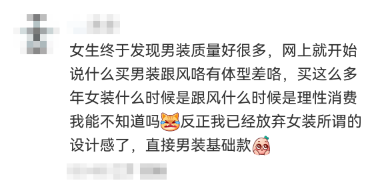
妙妙说,160和170码的童装,版型简约利落,质检标准更严苛,也没有网红女装的浮夸设计,价格也很亲民。“穿上身清爽精神,完美避开成人女装尺码畸形、版型怪异、价高质低的所有坑。”

除了童装,越来越多女性开始光顾男装区。当女装沉迷于制造“纸片人”的视觉奇观时,男装反而成了实用主义的避难所。多位消费者称,跟女装相比,同等价位的男装面料更扎实、口袋容量更大且尺码体系稳定,也不存在“为潮流牺牲舒适”的设计问题。

有数据显示,在男装市场,女性消费者占比已从15%飙升至28%,相关搜索量年增长超过200%。在小红书等平台,“男装女穿攻略”“童装最大码真香” 等话题频繁刷屏,阅读量破亿。

图片

图片

女性逃离“女装区”,也被称作逃离“粉红税”。在服装市场中,隐形的“粉红税”早已成常态。比如,同为基础款的T恤、卫衣和衬衫,女款往往用料更省、面料更薄、剪裁更小,价格却比男款高出15%-30%;同样材质的羽绒服,女款充绒量更少、版型更单薄,定价却不低于男款。

甚至有些商家,同样的商品,只是将衣服换成粉色包装、增加花哨装饰,价格就能翻倍。这种针对女性的隐形溢价,让女性在消费时陷入“花更多钱,买更差品质”的困境。

消费者的讨伐声,共同指向女装设计师,却不知设计师早已失去自主创作的话语权和空间。一位从业者坦言:“我能有什么办法?每天设计一些自己不喜欢的款式。卖得好被夸一句,卖不好被嘲讽‘看,你设计的衣服不好卖吧’。”

品牌老板和资本盯着平台爆款数据和趋势,只问款式能不能引流、能不能走量,至于版型是否贴合女性生理结构、面料是否舒适耐穿、设计是否具备审美逻辑,则通通被抛之脑后。于是就导致,女装不是为穿而做,而是为流量而做。

一款衣服卖得火爆,功劳归于市场选品;一旦销量低迷,所有嘲讽和指责便会落到设计师身上。“尤其在经历定制面料、设计、打版、辅料、工艺、洗水和染色的漫长链条后,看到自己呕心沥血的成品,最终在奥莱打折甩卖,更是心灰意冷。”上述从业者称。

到底谁在杀死女装?

狂飙的女装,让消费者和设计师陷入“双向内耗”。但这份窘境的根源,并非因为某个单一变量,而是一次系统性的反噬。

根据中国服装协会披露的数据,2025年中国限额以上服装零售额同比增长仅2.8%,其网上零售额同比增长1.9%;服装企业周转速度普遍放缓,运营压力加大。在微观层面,平均每天有2600家服装店关门,其中不乏知名女装品牌。

“用心做服装的品牌、买手店和设计师工作室,几年前就开始淡出市场。”服装设计师莫卡称,“今天能活下来的,要么是实力雄厚、消费者粘性极高,要么已经转向完全迎合低价的供应链模式。”

商家为了生存,只能压缩成本——面料降级、取消QC(质量控制)和抄袭版型,最终形成劣币驱逐良币的恶性循环。用心做原创的卖599元,被抄袭后卖59.9元,消费者用脚投票,原创品牌黯然退场。

图片

图源:无语

低价内卷、相互抄款,正在成为杀死女装原创力最直接的利刃。

大品牌、设计师工作室投入高昂成本,请高水平设计师,打版数十次,不同尺码模特试穿,使用优质面料,聘请QA/QC质检,最终挂牌价499元、599元。第二天,这些新品会就被商家买回“打版”,换用劣质化纤面料、简化剪裁工艺,短短几天就能批量出货,以十分之一的价格抢占市场。

莫卡调侃说,如今的女装行业,从秀场到平替,只需三天时间。原创的心血被轻易窃取,投入的成本无法收回,久而久之,品牌和设计师失去做原创的动力,要么加入抄款行列,要么彻底退出行业。

图片

小敏,一家原创设计公司的服装设计,她认为,“跟风是短期谋生,原创是长期立身”。服装买版复刻,永远只能跟着市场走,陷入低价内卷、同款泛滥和比价内耗。

此外,她还提到,服装行业下半场的终极壁垒是原创意识的全面觉醒。“坚持独立原创设计,用心做好版型与审美,做小众、独特、有质感、不撞款的衣服,慢慢沉淀,才能长久经营。”

也有人认为,服装核心是品牌,不是设计。“设计是一个迷宫,颜色、款式、材质的组合上亿种,无论你做什么设计,都无法达到最佳效果,无法形成竞争优势。”

一件衣服,没有品牌和文化附着,就成了可被廉价复制的布料组合;没有好的面料、工艺和设计,品牌和文化附着也将是无源之水,陷入一场营销上的噱头。

消费者如何避免踩雷?小敏建议,判断起点其实是面料成分,然后是版型。

具体来说:优先选择棉含量高的纯棉、长绒棉、精梳棉,或是桑蚕丝、棉麻、绵羊毛等优质面料,同时留意面料克重及含量;版型也可以重点观察,重点留意腰型、立档深度、胯部放量以及裤腿中线等具体参数。版型好的裤子,裤腿中线通常会显得笔直,不会轻易显歪或显胯宽。

当消费者刷遍全网,却找不到一件合身女装,该反思的或许不是自己的身材,而是这个行业。如果不能回答这个问题,那么同样的吐槽,只会换一批用户ID,重复上演。杀死女装的,从来不是退货率等,而是女装自身。


注:文中林晓、妙妙均为化名

亿邦持续追踪报道该情报,如想了解更多与本文相关信息,请扫码关注作者微信。

【版权提示】亿邦动力倡导尊重与保护知识产权。未经许可,任何人不得复制、转载、或以其他方式使用本网站的内容。如发现本站文章存在版权问题,烦请提供版权疑问、身份证明、版权证明、联系方式等发邮件至run@ebrun.com,我们将及时沟通与处理。

已点赞

+1

{{ praise_text }}

好文章,值得被更多人看到

FAQ回顾

为什么很多女性消费者开始购买男装和童装?

因为女装行业普遍存在尺码体系混乱、面料质量下降、预售等待期长、货不对版等问题。相比之下,男装面料更扎实、尺码稳定,童装160/170码版型简约、质检严格,能避开女装的诸多痛点。数据显示,男装市场女性消费者占比已升至28%。

女装行业面临哪些主要问题?

主要问题包括:尺码与真实人体脱节,面料质量与价格倒挂(同价位质量断崖式下跌);“小单快反”和预售制变味,导致消费者等待时间长且货不对版;行业抄袭成风,低价劣质仿款挤压原创设计生存空间,形成劣币驱逐良币的恶性循环。

消费者如何避免购买到质量差的女装?

建议从面料和版型入手:优先选择棉、桑蚕丝、棉麻等优质面料,并留意面料克重及成分含量。观察版型细节,如裤子的腰型、立档深度、胯部放量及裤腿中线是否笔直。避免仅依赖网红模特图和刷分评价,多关注真实用户反馈。

广告

下一篇

征集报名《品牌数字化服务商资源手册》

《品牌数字化服务商资源手册》展示数字化服务商风采,亿邦全年零售大会通发,触达更多资源,马上加入!

马上入驻

科研破局、引领行业,汤臣倍健:做良性生态的构建者

汤臣倍健作为VDS行业领导品牌,面对行业同质化内卷与信任危机,选择以长期主义破局:通过牵头制定行业标准