



• 亿邦公众号
    • APP下载

2026抖音电商国货消费报告:直播电商助力新市场、新人群双增长

作者:龚作仁 文章来源:Laborer

2026-05-06 17:07

作者:龚作仁 文章来源:Laborer

2026-05-06 17:07

邦小白快读

EN
全文速览

总1:国货消费增长关键数据

1.新增活跃国货商家数同比增长47%,直播间成交额占比达63%,国货商品好评率93.8%

2.人均购买国货商品12种,主要集中在服饰、美妆、数码、食品、图书,购买3次及以上用户占比近七成

总2:热销商品和消费趋势

1.技术型国货如AI智能家电成交额增73%、3C数码增49%,热销代表包括手机、笔记本电脑、无人机等

2.老字号及区域特色商品增长显著,如镇江香醋增106%、清河羊绒增209%

3.新赛道如国货潮玩成交额增38%、珠宝黄金增41%、宠物用品增36%,提供实用购物参考

总1:品牌营销和渠道建设

1.国货品牌在直播电商中梯队扩容,年成交额过百万元品牌超1万个、过亿元超2000个,探索成长路径

2.内容消费增长,国货短视频播放量同比增34%,消费者通过内容了解产地、工艺和品牌故事,增强品牌粘性

总2:消费趋势和用户行为观察

1.消费主力为24-40岁中青年群体,占比超六成,用户行为显示长期选择国货趋势

2.消费城市格局稳定(上海、北京等前五),新兴区域如三线及以下城市贡献超五成新增用户,提示渠道下沉机会

总3:产品研发和价格竞争

1.技术型国货在科技含量和品质消费同步增长,中高端品类(1000-5000元价格带)占比超六成

2.受政策影响,“国补”相关商品成交额增79%,启示定价策略结合外部因素

总1:政策解读和增长市场

1.“以旧换新”政策带动“国补”商品成交额同比增长79%,手机、笔记本电脑等热销,提供政策红利机会

2.增长市场聚焦新兴消费区域,三线及以下城市新增用户占比超五成,贡献显著增量,提示区域拓展

总2:消费需求变化和机会提示

1.需求层面:新锐赛道如国货潮玩、珠宝黄金、宠物用品成交额增长超35%,小众品类形成稳定规模,机会在品类创新

2.风险提示:基本盘稳固但增量面拓宽,需关注竞争加剧;可学习点:直播电商缩短供应链,提供直接用户反馈通道

总3:最新商业模式和扶持政策

1.合作方式:产业带与直播电商深度结合,如广东服饰产业带成交额增38%,工厂、老字号、新锐品牌同台

2.平台扶持:抖音电商将继续支持产业带、老字号、非遗和新锐品牌,提供招商和运营启示

总1:产品生产和设计需求

1.产业带工厂直接参与直播电商,如广东服饰产业带国货成交额同比增长38%,缩短制造端到消费端距离

2.市场反馈直接:消费者通过直播间了解工艺和产地,需求集中在技术型国货(如AI家电)和新锐品类(如潮玩),启示设计优化

总2:商业机会和数字化启示

1.机会:老字号和非遗品类增长超四成,如蜡染刺绣、曹县汉服增38%,提示传统技艺复兴需求

2.推进数字化:直播电商结合产业带,为实体产业带来增量,启示电商转型,如利用平台获取用户反馈

总3:生产需求拓展

1.技术型国货稳步增长,AI智能家电等需求上升,中高端商品占比高,生产需注重品质

2.新赛道如宠物用品增长36%,显示多元化需求,工厂可探索新品类合作

总1:行业发展趋势和新技术

1.直播电商成为国货连接消费者重要渠道,带动消费品类扩容,技术型国货(AI家电增73%)、老字号、非遗同步增长

2.新技术应用:AI智能家电、3D数码等成交额显著提升,显示技术驱动消费趋势

总2:客户痛点和解决方案

1.痛点:如何触达新兴消费人群(如三线及以下城市用户)和解决小众品类推广

2.解决方案:直播间提供直接用户反馈通道,内容与消费叠加延长生命周期,如短视频播放量增34%帮助品牌故事传播

总3:行业动向启示

1.消费人群持续扩大,新增用户超1亿,中青年群体主力,服务需聚焦用户行为分析

2.案例:产业带结合直播电商(广东服饰增38%),启示服务商开发整合方案

总1:平台最新做法和招商

1.平台支持:抖音电商围绕产业带、老字号、非遗与新锐品牌提供扶持,新增活跃国货商家数同比增长47%

2.招商机会:国货品牌梯队持续壮大,年成交额过百万元品牌超1万个,平台可吸引更多商家入驻

总2:运营管理和需求响应

1.运营数据:直播间成交额占比63%,国货短视频播放量增34%,管理需优化内容与消费结合

2.商业需求:商家对平台需求包括市场拓展(如新兴区域增量)和风险规避(如竞争加剧),平台做法是深化产业带结合

总3:风向规避和机会

1.机会提示:新兴消费区域(三线及以下城市)贡献超五成新增用户,平台可重点布局

2.案例:老字号通过直播拓展渠道(镇江香醋增106%),显示平台在渠道建设中的作用

总1:产业新动向和新问题

1.国货消费呈现双增长:新市场(品类扩容如技术型国货、老字号、非遗)和新人群(中青年主力、新兴区域增量)同步扩大

2.新问题:如何持续拓展增量面(三线及以下城市)和平衡基本盘(一线城市稳定),案例显示消费格局变化

总2:政策法规启示

1.“以旧换新”政策带动“国补”商品成交额增79%,启示政策可有效刺激消费,需研究法规优化

2.商业模式:直播电商连接消费者,缩短供应链,内容与消费叠加延长生命周期,提供新型商业模型

总3:研究启示和趋势

1.产业带与直播电商深度结合(如广东服饰增38%),启示实体产业数字化转型

2.数据:国货消费好评率93.8%,新增用户超1亿,人均购买12种商品,提示研究消费行为长期化

声明:快读内容全程由AI生成,请注意甄别信息。如您发现问题,请发送邮件至 run@ebrun.com 。

我是 品牌商 卖家 工厂 服务商 平台商 研究者 帮我再读一遍。

Quick Summary

Key data on domestic brand consumption growth:

1. The number of new active domestic brand merchants increased by 47% year-on-year, with live streaming sales accounting for 63% of total transactions. Domestic products achieved a 93.8% positive review rate.

2. Consumers purchased an average of 12 types of domestic goods, primarily in apparel, beauty, electronics, food, and books. Nearly 70% of users made three or more purchases.

Hot-selling products and consumption trends:

1. Tech-driven domestic goods saw significant growth: AI smart home appliances rose 73%, and 3C electronics increased 49%. Top sellers included smartphones, laptops, and drones.

2. Time-honored brands and regional specialties grew markedly: Zhenjiang aromatic vinegar sales surged 106%, while Qinghe cashmere jumped 209%.

3. Emerging categories like domestic trendy toys grew 38%, jewelry and gold rose 41%, and pet supplies increased 36%, offering practical shopping references.

Brand marketing and channel development:

1. Domestic brands expanded their presence in live streaming e-commerce, with over 10,000 brands exceeding ¥1 million in annual sales and more than 2,000 surpassing ¥100 million, highlighting growth pathways.

2. Content consumption grew: domestic brand short video views increased 34% YoY. Consumers engaged with content about origins, craftsmanship, and brand stories, enhancing loyalty.

Consumption trends and user behavior insights:

1. Core consumers are aged 24–40, accounting for over 60% of purchases, indicating a long-term preference for domestic brands.

2. Top cities (e.g., Shanghai, Beijing) remained stable, while tier-3 and lower cities contributed over 50% of new users, signaling channel expansion opportunities.

Product R&D and pricing strategies:

1. Tech-driven domestic goods grew in both innovation and quality, with mid-to-high-end categories (¥1,000–5,000) representing over 60% of sales.

2. Policy-driven demand: "National subsidy" related products surged 79%, underscoring the need to align pricing with external factors.

Policy insights and growth markets:

1. The "replace old with new" policy boosted sales of "subsidy-eligible" goods by 79%, with smartphones and laptops as top performers, offering policy-driven opportunities.

2. Growth focused on emerging regions: tier-3 and lower cities contributed over 50% of new users, highlighting expansion potential.

Demand shifts and opportunity alerts:

1. Emerging categories like trendy toys, jewelry/gold, and pet supplies grew over 35%, showing niche segments gaining scale. Innovation is key.

2. Risks: While the core market is stable, competition is intensifying. Live streaming shortens supply chains and enables direct consumer feedback.

Latest business models and support policies:

1. Collaboration: Industrial clusters integrated with live streaming (e.g., Guangdong apparel belt sales up 38%), featuring factories, heritage brands, and new labels.

2. Platform support: Douyin E-commerce will continue backing industrial belts, heritage brands, intangible cultural heritage, and emerging brands, offering merchant insights.

Production and design demands:

1. Industrial belt factories directly engaged in live streaming (e.g., Guangdong apparel belt sales rose 38%), shortening the path from production to consumers.

2. Direct market feedback: Consumers learned about craftsmanship and origins via live streams, driving demand for tech goods (e.g., AI appliances) and new categories (e.g., trendy toys).

Business opportunities and digitalization insights:

1. Heritage and intangible cultural heritage categories grew over 40% (e.g., batik/embroidery +38%, Cao County Hanfu), signaling revived interest in traditional techniques.

2. Digital advancement: Live streaming + industrial belts brought incremental growth, highlighting e-commerce transformation and user feedback utilization.

Production expansion needs:

1. Steady growth in tech-driven goods (e.g., AI appliances) with mid-to-high-end products dominating, emphasizing quality focus.

2. New segments like pet supplies (+36%) show diversified demand, suggesting exploration of collaborative production.

Industry trends and technology adoption:

1. Live streaming became a key channel for domestic brands, driving category expansion: tech goods (AI appliances +73%), heritage brands, and intangible cultural heritage all grew.

2. Tech applications: AI appliances and 3C electronics saw notable sales increases, reflecting technology-driven consumption.

Client pain points and solutions:

1. Challenges: Reaching emerging consumers (e.g., tier-3 cities) and promoting niche categories.

2. Solutions: Live streams enable direct feedback; content-consumption integration extends lifecycle (e.g., short video views +34% aided brand storytelling).

Industry implications:

1. Consumer base expanded with over 100 million new users, led by young adults, necessitating user behavior analysis.

2. Case study: Industrial belt + live streaming (Guangdong apparel +38%) suggests integrated service solutions.

Platform strategies and merchant recruitment:

1. Support measures: Douyin E-commerce aids industrial belts, heritage brands, intangible cultural heritage, and emerging brands, with new active domestic merchants up 47%.

2. Recruitment opportunities: Domestic brand tiers expanded (10,000+ brands exceeding ¥1 million annually), attracting more merchants.

Operations management and demand response:

1. Metrics: Live streaming accounted for 63% of sales; domestic short video views rose 34%, requiring optimized content-commerce integration.

2. Merchant needs: Include market expansion (e.g., emerging regions) and risk mitigation (e.g., competition). Platform response: deepen industrial belt ties.

Trend navigation and opportunities:

1. Opportunity: Tier-3 and lower cities contributed over 50% of new users, suggesting focused platform investment.

2. Case: Heritage brands expanded via live streaming (Zhenjiang vinegar +106%), demonstrating platform-led channel building.

Industry developments and research questions:

1. Dual growth in domestic consumption: new markets (category expansion like tech goods, heritage brands) and new consumers (young adults, emerging regions) expanded simultaneously.

2. Research focus: Sustaining growth in tier-3 cities while balancing core markets (top-tier cities), reflecting shifting consumption patterns.

Policy and regulatory implications:

1. "Replace old with new" policy drove "subsidy-eligible" goods sales up 79%, showing policy efficacy in stimulating demand. Regulatory optimization needed.

2. Business models: Live streaming shortened supply chains, with content-consumption integration extending lifecycle, offering new commercial frameworks.

Research insights and trends:

1. Industrial belt + live streaming integration (e.g., Guangdong apparel +38%) highlights digital transformation of physical industries.

2. Data: 93.8% positive review rate, over 100 million new users, and 12 product categories per capita suggest long-term consumption behavior studies.

Disclaimer: The "Quick Summary" content is entirely generated by AI. Please exercise discretion when interpreting the information. For issues or corrections, please email run@ebrun.com .

I am a Brand Seller Factory Service Provider Marketplace Seller Researcher Read it again.

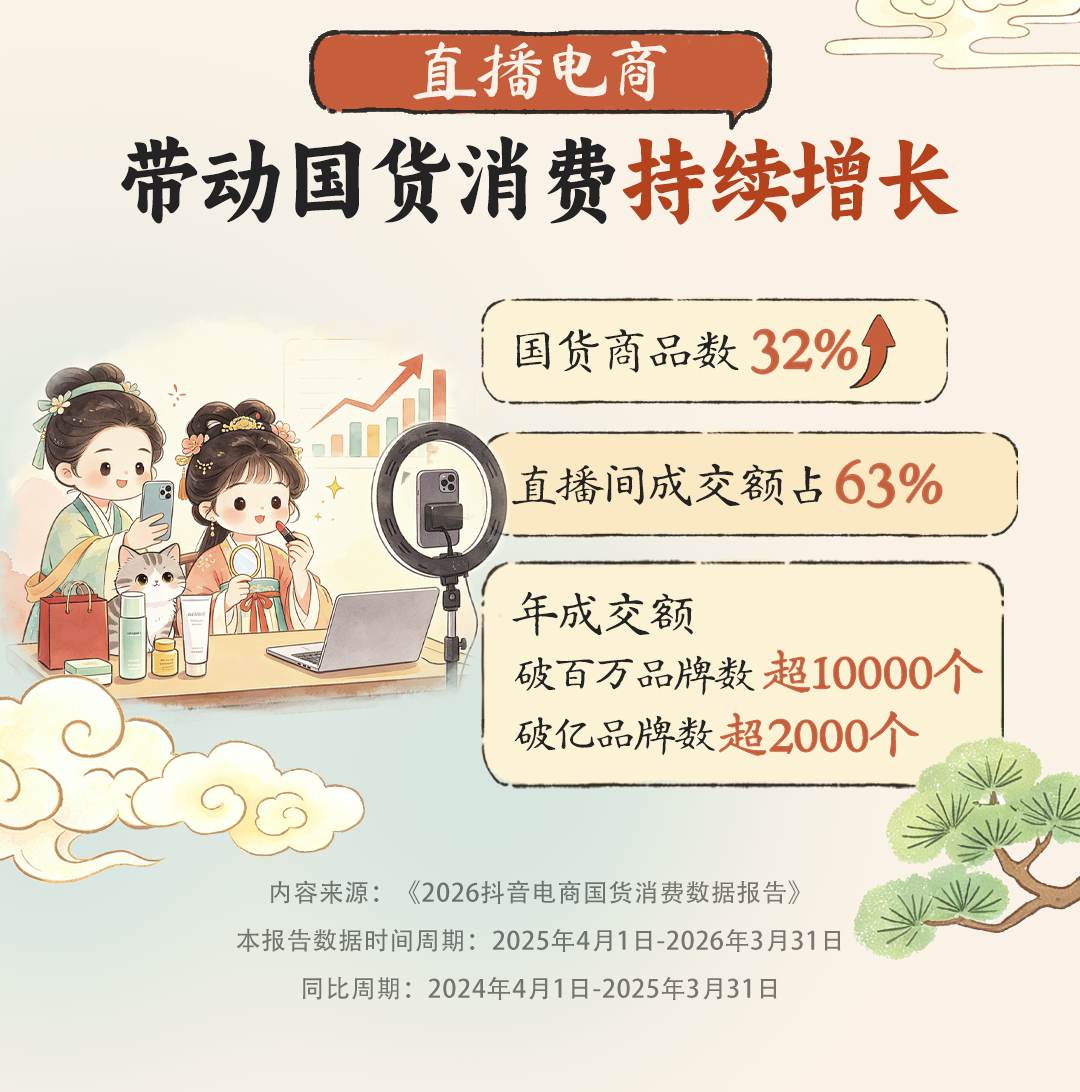
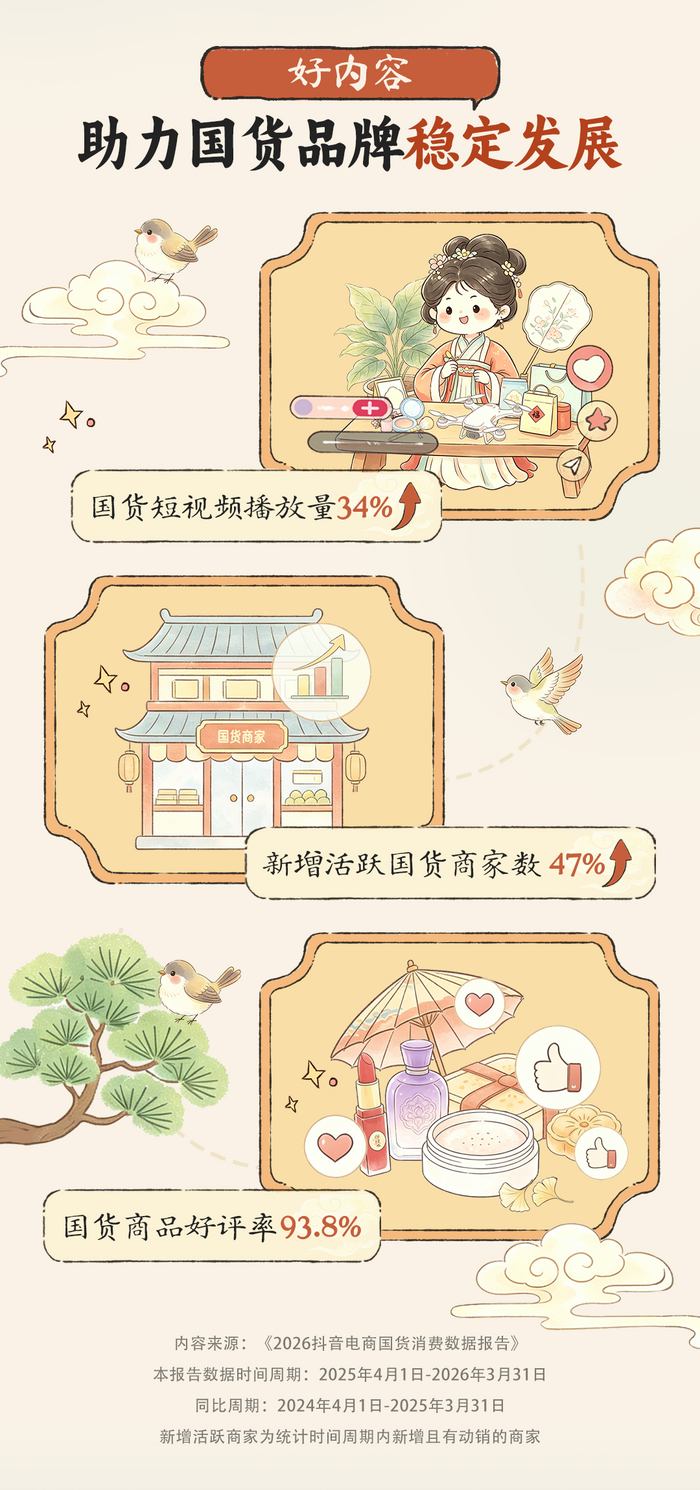
近日,抖音电商发布《2026抖音电商国货消费数据报告》(以下简称“报告”)。报告显示,过去一年,抖音电商新增活跃国货商家数同比增长47%,直播间成交额占比达到63%,国货商品好评率达93.8%,国货消费延续增长态势。

在直播电商的带动下,国货消费呈现两方面变化。一是消费品类持续扩容,技术型国货、老字号、非遗和新锐赛道共同丰富供给;二是消费人群持续扩大,中青年群体保持消费主力地位,新兴消费区域贡献显著增量。新市场与新人群同步扩大,为国货品牌与实体产业带来更多增量空间
图源:抖音电商

从直播间到产业带,国货品牌梯队持续壮大

报告显示,抖音电商国货品牌梯队持续扩容。过去一年,年成交额过百万元的国货品牌数超1万个,过亿元的国货品牌超2000个。不同规模、不同阶段的国货品牌,在直播电商里探索出各自的成长路径。

国货内容消费也在同步增长。过去一年,抖音电商国货短视频播放量同比增长34%,消费者不只是买国货,也在了解国货的产地、工艺和品牌故事。内容与消费叠加,让国货消费有了更长的生命周期。
图源:抖音电商

产业带与直播电商实现更深度的结合。过去一年,抖音电商广东服饰产业带国货成交额同比增长38%。产业带工厂、老字号企业、新锐国货品牌同台出现在直播间,从制造端到消费端的距离被直接拉近,为实体产业带来了更直接的市场反馈。

技术型国货稳步增长,老字号与新锐赛道同步扩容

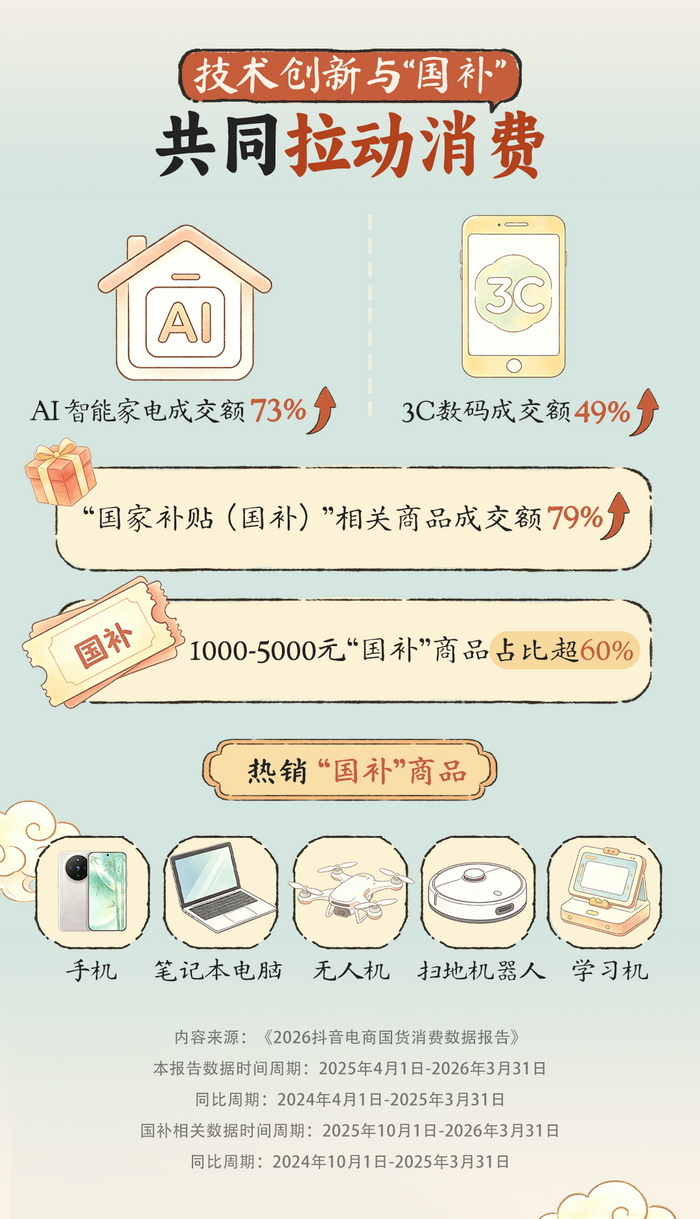
供给侧的扩容,首先体现在技术型国货。报告显示,过去一年抖音电商AI智能家电成交额同比增长73%,3C数码成交额同比增长49%。受“以旧换新”政策带动,“国补”相关商品成交额同比增长79%,手机、笔记本电脑、无人机、扫地机器人、学习机成为热销代表,1000-5000元价格带商品占比超过六成。国货在科技含量和品质消费两方面同步增长,中高端消费品类形成新的增长点。
图源:抖音电商

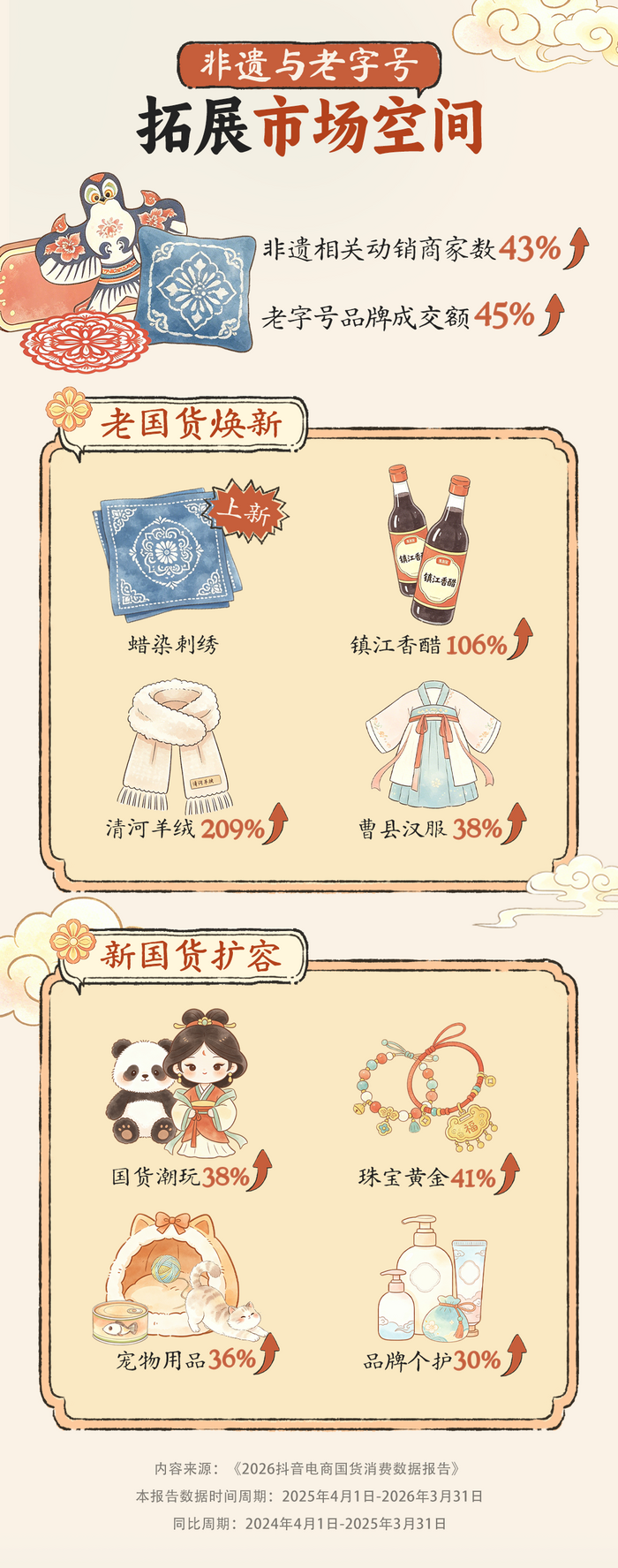
与技术型国货同步增长的,是老字号与非遗品类。报告显示,抖音电商老字号品牌成交额、非遗相关动销商家数同比增长均超四成。其中,蜡染刺绣等传统技艺通过直播间触达更多消费者;老字号及区域特色商品通过直播间进一步拓展了销售渠道——镇江香醋同比增长106%,清河羊绒同比增长209%,曹县汉服同比增长38%。

新赛道、新品类在直播间里被更多人看见。国货潮玩成交额同比增长38%,珠宝黄金同比增长41%,宠物用品同比增长36%。过去被视为“小众”或“新锐”的品类方向,如今在直播间里形成稳定的成交规模,也为国货品牌提供了更直接的用户反馈通道。
图源:抖音电商

消费人群持续扩大,新兴消费区域贡献增量

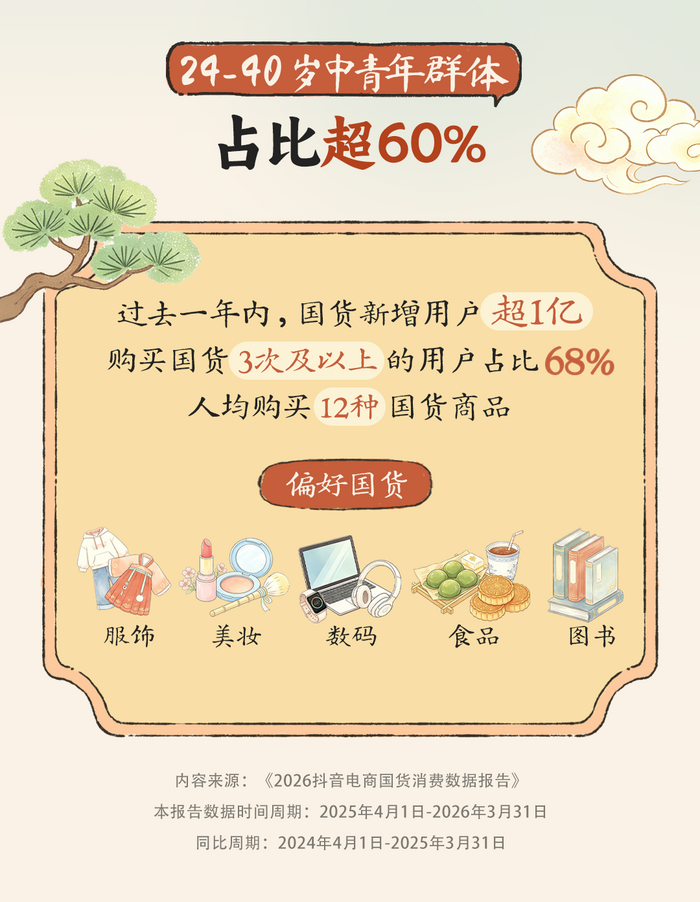
供给变丰富的同时,消费人群也在延展。报告显示,过去一年,抖音电商国货新增用户数超过1亿。24-40岁中青年群体占比超过六成,构成国货消费的稳定主力。人均购买国货商品12种,主要集中在服饰、美妆、数码、食品、图书。过去一年购买国货3次及以上的用户占比接近七成,越来越多消费者已经从偶尔买一次国货,变为长期选择国货。
图源:抖音电商

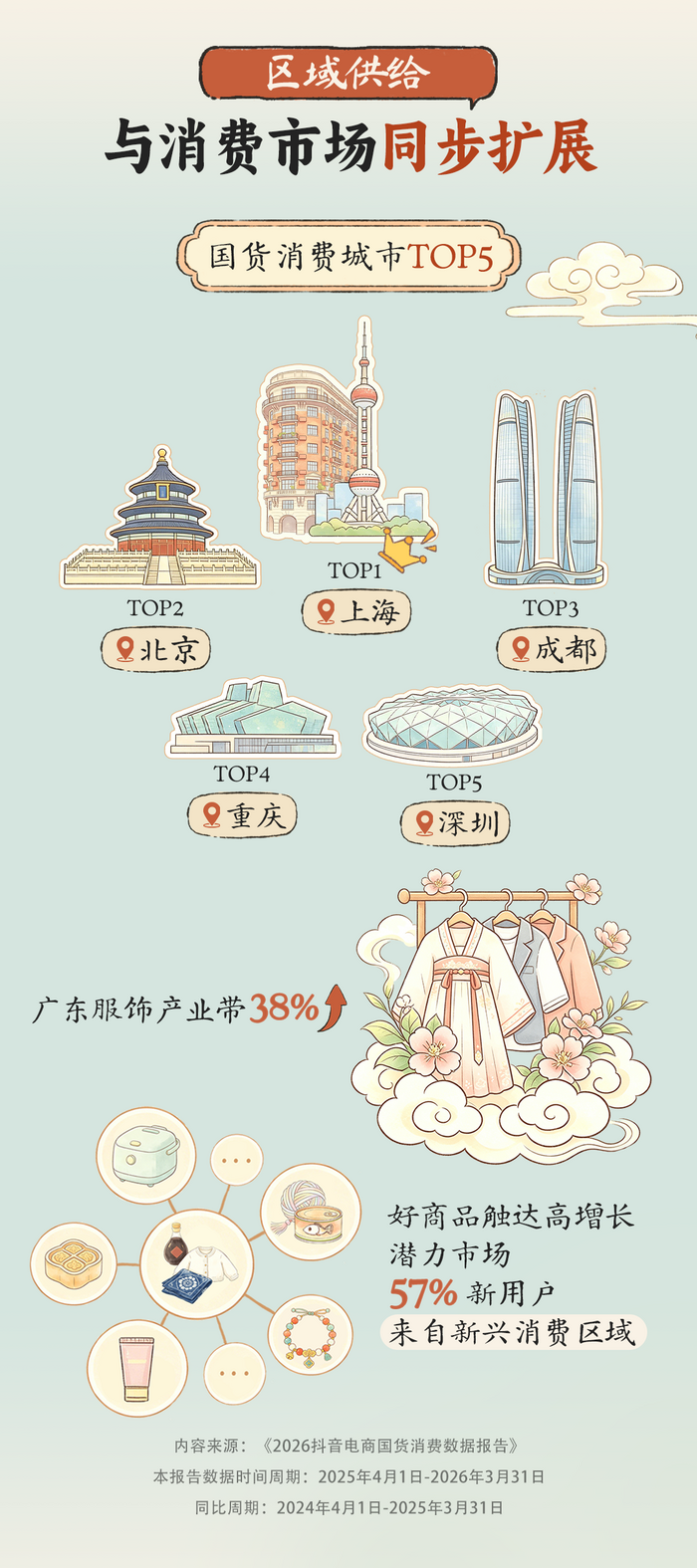
消费城市格局保持稳定,新兴市场则在持续扩容。报告显示,上海、北京、成都、重庆、深圳位列国货消费城市前五,一线与新一线城市稳住基本盘。与此同时,过去一年新增国货用户中,超过五成来自新兴消费区域,三线及以下城市正在成为国货消费增量的重要来源。国货消费呈现出基本盘稳固、增量面拓宽的特征。
图源:抖音电商

抖音电商相关负责人表示,直播电商正在成为国货连接消费者的重要渠道。下一步,平台将继续围绕产业带、老字号、非遗与新锐国货品牌提供支持,持续拓展国货消费的新市场与新人群,助力中国制造稳步走向更广阔的市场。

注:文/龚作仁,文章来源:Laborer,本文为作者独立观点,不代表亿邦动力立场。

【版权提示】亿邦动力倡导尊重与保护知识产权。未经许可,任何人不得复制、转载、或以其他方式使用本网站的内容。如发现本站文章存在版权问题,烦请提供版权疑问、身份证明、版权证明、联系方式等发邮件至run@ebrun.com,我们将及时沟通与处理。

已点赞

+1

{{ praise_text }}

好文章,值得被更多人看到

广告

下一篇

跨境电商资源对接

《全球跨境电商服务商资源手册》第二期手册现已发布,触达更多资源,了解跨境服务商信息,欢迎点击链接下载。

了解详情

AI围剿 产能狂飙 短剧演员失业潮来了

或许谁也不曾想到,短剧演员,竟成了被AI“斩杀”的第一批受害者。制作成本被砍至地板价,5-10人小团队就能完成昔日几十人剧组的工作,产能暴增的同时,真人演员却无戏可拍、中小剧组批量退场。

独家

2026-05-06 16:17:07











