



• 亿邦公众号
    • APP下载

小家电的后国补时代:性价比仍是关注焦点 深度折扣成“王牌”

作者:龚作仁 文章来源:Laborer

2026-04-14 16:23

作者:龚作仁 文章来源:Laborer

2026-04-14 16:23

邦小白快读

EN
全文速览

小家电市场在国补暂停后保持强劲增长,性价比是消费者核心关注点。

1. 市场趋势:2026年小家电预计继续增长,厨房、个护、清洁类增速超10%,消费需求不减反增。

2. 实操干货:消费者应优先选择平台和品牌提供的深度折扣商品,如唯品会超级家电节中美的吹风机158元、追觅洗地机1039元等爆款,折扣价甚至低于国补价。

3. 实用价值:小家电是“耐用品里的快消品”,如咖啡机、空气炸锅、洗地机等已成为家庭必需品,既可靠耐用又易更新迭代。

4. 未来建议:关注AI驱动下的产品升级,聚焦高性价比购买策略以适应市场变化。

品牌商需把握小家电消费趋势和竞争策略,以驱动营销和产品创新。

1. 品牌营销:平台和品牌补贴长期存在,效仿唯品会等提供深度折扣可吸引消费者,折扣商品成为爆款焦点。

2. 定价竞争:性价比是王牌,消费者优先参考促销活动,品牌需制定低价策略以应对价格竞争。

3. 产品研发:小家电属性为“耐用品里的快消品”,需设计易迭代产品如迷你咖啡机或电炖盅,满足用户更新需求。

4. 消费趋势:需求驱动增长,小家电已成为家庭必备,观察用户行为显示促销活动是决策关键。

5. 机会提示:利用电商渠道强化品牌建设,抓住市场增长机遇。

卖家应解读政策变化并抓住小家电增长机会,学习平台应对策略。

1. 政策解读:国补暂停仅覆盖冰箱等6类大家电,小家电未纳入,但市场仍以两位数增速扩张。

2. 增长市场:厨房、个护、清洁小家电需求旺盛,2026年预测持续增长,提供高性价比商品是核心机会。

3. 消费需求变化:国补培养的消费习惯支撑市场,用户偏好深度折扣,如唯品会案例中低价爆款受欢迎。

4. 可学习点:平台采用超级家电节等促销模式,实现销量增长,卖家可效仿此商业模式。

5. 风险提示:市场难预测,需规避不确定性,通过提供折扣商品应对竞争。

工厂可聚焦小家电生产需求和商业机会,推进数字化生产。

1. 产品需求:小家电需求增长,需生产高性价比、耐用且易迭代的产品,如洗地机或空气炸锅,满足“耐用品里的快消品”属性。

2. 商业机会:市场增速超10%,工厂可合作品牌提供商品,抓住唯品会等平台促销中的爆款机会。

3. 数字化启示:电商平台如唯品会展示在线促销成功案例,启示工厂利用数字化渠道优化生产和销售。

4. 机会提示:关注AI技术驱动下的产品升级,提升生产效率和性价比竞争力。

服务商需关注小家电行业趋势和解决方案,解决核心痛点。

1. 行业发展趋势:小家电市场保持两位数增长,2026年预测继续扩张,AI浪潮将驱动产品质量、体验和性价比升级。

2. 新技术:AI技术应用将优化小家电使用体验,服务商可提供相关技术支持。

3. 客户痛点:消费者关注性价比,深度折扣需求高,唯品会案例显示低价商品是痛点解决方案。

4. 解决方案:效仿平台促销模式,提供折扣策略服务,帮助客户应对市场不确定性。

平台商应优化招商和运营管理,利用性价比策略吸引用户。

1. 平台最新做法:提供深度折扣活动如唯品会超级家电节,美的吹风机158元等爆款折扣价低于国补价,成功吸引消费者。

2. 平台招商:吸引品牌合作提供高性价比商品,强化爆款策略以提升销量。

3. 运营管理:管理促销活动确保性价比优势,如监控折扣力度和用户偏好。

4. 风向规避:市场难预测,需通过性价比维持竞争力,规避政策变化风险。

5. 需求问题:商业对小家电平台需求聚焦折扣和便利,平台需持续优化服务。

研究者可分析小家电产业动向和政策启示,探索商业模式创新。

1. 产业新动向:国补暂停后市场回归本质,需求驱动与供给升级共振,小家电增速超10%或成家电增长先行者。

2. 新问题:市场难预测,需研究消费者行为如优先促销参考和折扣偏好。

3. 政策法规启示:补贴暂停仅覆盖6类大家电,启示行业需自力更生,依赖市场机制。

4. 商业模式:平台如唯品会采用深度折扣策略,展示有效商业模式,案例中爆款商品受追捧。

5. 未来展望:AI浪潮下,小家电将在质量、体验、性价比持续升级,提供研究新方向。

声明:快读内容全程由AI生成,请注意甄别信息。如您发现问题,请发送邮件至 run@ebrun.com 。

我是 品牌商 卖家 工厂 服务商 平台商 研究者 帮我再读一遍。

Quick Summary

The small appliance market maintains strong growth after the suspension of national subsidies, with cost-effectiveness being the core consumer focus.

1. Market Trends: The small appliance market is projected to continue growing through 2026, with categories like kitchen, personal care, and cleaning appliances exceeding 10% growth, indicating unabated consumer demand.

2. Practical Tips: Consumers should prioritize deeply discounted items offered by platforms and brands, such as the Midea hair dryer for ¥158 and Dreame floor washer for ¥1,039 during Vipshop's Super Appliance Festival, where prices even undercut previous subsidized levels.

3. Practical Value: Small appliances represent "fast-moving consumer goods within durables," with products like coffee machines, air fryers, and floor washers becoming household essentials that balance durability with frequent upgrades.

4. Future Outlook: Focus on AI-driven product upgrades and high value-for-money purchasing strategies to adapt to market evolution.

Brands must grasp small appliance consumption trends and competitive strategies to drive marketing and product innovation.

1. Brand Marketing: Platform and brand subsidies are here to stay; emulating deep discount models like Vipshop's can attract consumers, making discounted items key sales drivers.

2. Pricing Competition: Cost-effectiveness is paramount; consumers prioritize promotional activities, necessitating low-price strategies to stay competitive.

3. Product R&D: Design easily iterable products (e.g., mini coffee makers, electric stew pots) to meet upgrade demands, reflecting the "fast-moving consumer goods within durables" attribute.

4. Consumption Trends: Demand-driven growth persists as small appliances become household staples, with promotions being a critical decision factor based on user behavior.

5. Opportunity Alert: Leverage e-commerce channels to strengthen brand building and capture market growth opportunities.

Sellers should interpret policy shifts and capitalize on small appliance growth opportunities by learning from platform strategies.

1. Policy Insight: The subsidy suspension only covers six major appliance categories (e.g., refrigerators), leaving small appliances unaffected and still expanding at double-digit rates.

2. Growth Market: Kitchen, personal care, and cleaning appliances show robust demand, with sustained growth projected for 2026, making high-value products a core opportunity.

3. Demand Shift: Post-subsidy consumption habits sustain the market; users favor deep discounts, as seen in Vipshop's popular low-priced hit products.

4. Strategy Takeaway: Adopt promotional models like "Super Appliance Festival" to boost sales, mirroring successful platform approaches.

5. Risk Note: Mitigate market unpredictability by offering discounted goods to stay competitive.

Factories should focus on small appliance production demands and business opportunities while advancing digital manufacturing.

1. Product Demand: Produce cost-effective, durable, and easily upgradable items (e.g., floor washers, air fryers) aligned with the "fast-moving consumer goods within durables" trend.

2. Business Opportunity: With market growth exceeding 10%, collaborate with brands to supply products for platform promotions like Vipshop's hit item campaigns.

3. Digital Insight: E-commerce platforms (e.g., Vipshop) demonstrate successful online promotions, highlighting the need to optimize production and sales via digital channels.

4. Future Focus: Embrace AI-driven product upgrades to enhance production efficiency and value competitiveness.

Service providers must track small appliance industry trends and solutions to address core pain points.

1. Industry Trend: The market sustains double-digit growth, projected to expand through 2026, with AI driving upgrades in quality, user experience, and affordability.

2. New Technology: AI applications will optimize appliance usability, creating opportunities for technical support services.

3. Client Pain Points: Consumers prioritize cost-effectiveness and deep discounts; Vipshop's case shows low-priced products as key solutions.

4. Solution Approach: Emulate platform discount strategies to help clients navigate market uncertainties with tailored promotional services.

Platforms should optimize merchant recruitment and operations using value-for-money strategies to attract users.

1. Latest Tactics: Deep discount events (e.g., Vipshop's Super Appliance Festival) with hit products like Midea hair dryers at ¥158 (below subsidized prices) successfully draw consumers.

2. Merchant Recruitment: Attract brands offering high-value products and reinforce hit-item strategies to boost sales.

3. Operations Management: Oversee promotions to maintain competitive pricing, monitoring discounts and user preferences.

4. Risk Mitigation: Counter market unpredictability through cost-effective positioning to offset policy risks.

5. Demand Focus: Small appliance platform demand centers on discounts and convenience, requiring continuous service optimization.

Researchers can analyze small appliance industry shifts and policy implications to explore business model innovations.

1. Industry Dynamics: Post-subsidy market normalization sees demand-driven growth and supply upgrades converging, with over 10% growth potentially making small appliances an industry bellwether.

2. New Questions: Study consumer behaviors like promotional reliance and discount preferences to navigate market unpredictability.

3. Policy Insight: Subsidy suspensions (limited to six major appliance categories) highlight the need for industry self-reliance and market-driven mechanisms.

4. Business Models: Platforms like Vipshop demonstrate effective deep-discount strategies, with hit products gaining traction.

5. Future Outlook: AI advancements will drive continuous upgrades in quality, experience, and affordability, opening new research avenues.

Disclaimer: The "Quick Summary" content is entirely generated by AI. Please exercise discretion when interpreting the information. For issues or corrections, please email run@ebrun.com .

I am a Brand Seller Factory Service Provider Marketplace Seller Researcher Read it again.

2026年,小家电成为整个家电消费市场中最难预测的一个品类。

这一方面源自国补暂停,根据《关于2026年实施大规模设备更新和消费品以旧换新政策的通知》,2026年家电换新补贴仅包括冰箱、洗衣机、电视、空调、电脑、热水器6类,众多小家电品类并未被纳入补贴。但硬币的另一面是,小家电增长势头不减,在过去一年,厨房、个护、清洁小家电增速均在两位数以上,多家研究机构预测,2026年,小家电消费将继续保持增长态势。

国补的退潮并未带来消费降温,小家电的后国补时代,性价比仍是消费者关注的核心。业内人士介绍,国补虽然暂停,但平台方、品牌方的补贴却长期存在。这导致消费者在选购小家电时,会优先参考平台、品牌方的促销活动,具有深度折扣的商品尤其受到欢迎,这意味着在小家电领域,已经难言有绝对优势平台的存在。

甚至并不以家电而知名的平台,如今也因为高性价比,而收获更多关注——据特卖电商唯品会相关负责人介绍,其4月14日早10点开启的超级家电节中,美的低至158元的等离子高速吹风机、追觅低至1039元的A30洗地机等,折扣价甚至比此前国补价更低,成为活动中关注度最高的爆款商品。
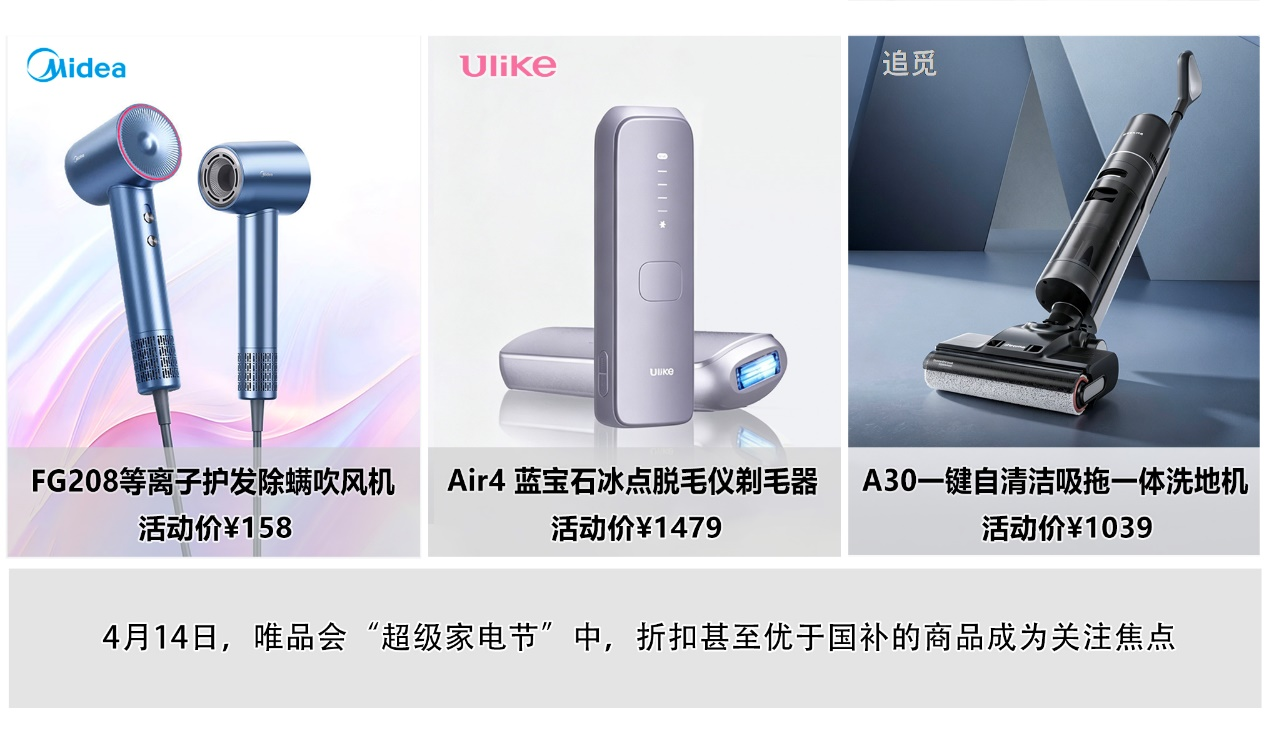
国补虽然暂停,但其培养出的消费与使用习惯,成为支撑小家电市场进一步增长的种子。这不仅得益于小家电“耐用品里的快消品”属性:既靠谱耐用,又能跟着生活节奏迭代换新。更重要的是,小家电已经成为很多家庭必不可少的一部分:早上煮咖啡的迷你咖啡机、晚上烤面包的空气炸锅、周末煲汤的电炖盅、能够高效清洁房间的洗地机等,这些小巧又实用的物件,早已走进千家万户。

业内人士表示,小家电市场的持续增长,本质是需求驱动与供给升级的共振。国补退场只是行业回归市场本质的开始,在AI浪潮的驱动下,未来的小家电,将在产品质量、使用体验、性价比等多方面持续升级,或将成为家电市场增长的先行者。

注:文/龚作仁,文章来源:Laborer,本文为作者独立观点,不代表亿邦动力立场。

【版权提示】亿邦动力倡导尊重与保护知识产权。未经许可,任何人不得复制、转载、或以其他方式使用本网站的内容。如发现本站文章存在版权问题,烦请提供版权疑问、身份证明、版权证明、联系方式等发邮件至run@ebrun.com,我们将及时沟通与处理。

已点赞

+1

{{ praise_text }}

好文章,值得被更多人看到

FAQ回顾

2026年小家电有哪些政策变化?

根据《关于2026年实施大规模设备更新和消费品以旧换新政策的通知》,2026年家电换新补贴仅包括冰箱、洗衣机等6大类,小家电品类未被纳入国家补贴范围。

小家电市场如何保持增长态势?

小家电市场通过平台和品牌方的深度折扣活动维持增长,如唯品会超级家电节中美的等离子高速吹风机低至158元,折扣价甚至低于此前国补价。

小家电有哪些热门品类?

热门小家电包括迷你咖啡机、空气炸锅、电炖盅和洗地机等,这些产品因满足日常高频使用需求而持续受到消费者欢迎。

广告

下一篇

跨境电商资源对接

《全球跨境电商服务商资源手册》第二期手册现已发布,触达更多资源,了解跨境服务商信息,欢迎点击链接下载。

了解详情

不计后果 只计温度与态度:BJHG不计后果品牌主理人许多出席2026亿邦新竞争力品牌大会

以科技面料革新与情绪价值设计重塑潮牌竞争力。4月24日,以“科技与美学”为主题,2026亿邦新竞争力品牌大会将在上海外滩W酒店举办。

未来零售

2026-04-14 14:38:12










