



• 亿邦公众号
    • APP下载

最新快消行业“红蓝海指数”揭晓 婴童服饰成为“双11”季度潜力增长品类

作者:龚作仁 文章来源:Laborer

2026-03-20 14:46

作者:龚作仁 文章来源:Laborer

2026-03-20 14:46

邦小白快读

EN
全文速览

文章揭示了快消行业最新趋势和增长点。

1. 最新“红蓝海指数”显示高潜力增长类目包括婴童裤子、童装外套/夹克/大衣、洁面、面膜和婴童护肤。

2. 新锐品牌榜单中,花知晓、HBN等位列前五,BeBeBus为母婴第一;国货表现强劲,前100名中92个是国内品牌。

3. 消费趋势包括功效性产品增长、场景细分需求,如双11囤货心智驱动度假、运动等童装细分。

电商数据反映关键市场变化。

1. 美妆领域“次抛”剂型高增长,品牌如夸迪强化成分活性稳定。

2. 个护赛道功效洗护发成蓝海,Off&Relax等主打清洁防脱;秋冬沐浴油新形态满足滋润需求。

3. 宠物经济升温,国产品牌麦富迪接近国际水平;情绪消费如泡泡玛特引领潮玩。

消费趋势和产品研发方向是核心干货。

1. 用户行为观察:双11囤货心智推动场景细分,童装品牌如豆几妈聚焦度假风、小米步专攻运动鞋,满足多元需求。

2. 产品研发启示:美妆“次抛”剂型增长,强调精准用量和成分活性;个护功效洗护发成蓝海,品牌以清洁防脱为突破口。

3. 消费趋势:功效性成重要增长点,反映国货从营销驱动向研发驱动的转型;沐浴油等新形态应对季节性需求。

品牌营销和渠道建设参考。

1. 红蓝海指数基于进入壁垒、搜索成交增速差等指标,帮助识别婴童服饰等高潜力赛道。

2. 国货竞争力凸显,但美妆领域国际品牌在原料、技术方面占优,需差异化策略。

3. 案例如绽家在家清行业领先,智能创新品牌大疆推动3C数码升级。

增长市场和机会提示显著。

1. 政策解读:红蓝海指数评估婴童裤子、童装外套等为高增长赛道,提供市场进入参考。

2. 消费需求变化:双11囤货心智激活细分需求,如礼仪社交、度假休闲场景;秋冬沐浴油满足干燥环境洗浴痛点。

3. 机会提示:功效洗护发成蓝海赛道,Off&Relax等品牌可学习;婴童护肤增长潜力大。

风险与商业模式应对。

1. 正面影响:国货新锐品牌崛起,浙江、上海等地品牌数量领先;宠物经济中国产品牌认可度提升。

2. 风险提示:国际品牌在美妆细分领域占比超60%,具有原料优势;需关注竞争策略。

3. 最新商业模式:童装品牌如图图小象深耕冬季保暖,体现细分策略;合作方式如电商平台数据驱动招商。

产品生产设计需求和商业机会丰富。

1. 生产需求:婴童服饰细分如度假风、运动鞋和冬季保暖设计;个护领域沐浴油新形态需更强滋润功效。

2. 商业机会:红蓝海高分赛道如婴童裤子、面膜提供增长方向;功效洗护发品牌如诗裴丝的控油蓬松产品需求上升。

3. 数字化启示:电商平台数据如搜索成交增速差指导生产;案例显示童装品牌小米步专攻运动鞋成功。

推进电商的实践参考。

1. 国货品牌占比66.8%,工厂可合作新锐品牌如BeBeBus;浙江上榜品牌最多,提供区域机会。

2. 机会提示:秋冬季节推动身体清洁产品创新;智能创新如大疆显示技术升级需求。

3. 启示:红蓝海指标帮助识别低壁垒类目,加速生产适配。

行业发展趋势和解决方案突出。

1. 趋势:国货主导快消榜单,功效性驱动增长;美妆“次抛”剂型采用小剂量独立包装技术。

2. 客户痛点:消费者需求如干燥环境洗浴滋润不足;场景细分如童装需覆盖多元需求。

3. 解决方案:品牌推新形态产品如沐浴油满足痛点;案例中绽媄娅强化成分活性稳定。

新技术和服务启示。

1. 趋势延伸:宠物经济升温,国产品牌如麦富迪解决方案接近国际;情绪消费如泡泡玛特潮玩兴起。

2. 痛点应对:红蓝海指数基于进入壁垒等指标,服务商可提供数据分析支持;个护蓝海赛道如EHD的控油产品。

3. 案例参考:电商大促激活囤货需求,服务可优化细分场景覆盖。

商业对平台需求和运营管理关键。

1. 平台需求:招商应聚焦红蓝海高分赛道如婴童服饰、洁面;新品牌占比指标助识别蓝海机会。

2. 平台做法:发布榜单如CBI指数引导商家;浙江、上海等地上榜品牌多,提供区域招商重点。

3. 风险规避:国际品牌在美妆领域优势明显,平台需平衡资源;消费趋势变化如功效性增长需快速响应。

运营和风向提示。

1. 运营管理:利用搜索成交增速差等数据优化;情绪消费如泡泡玛特位列21名,可加强潮玩类目支持。

2. 风向:宠物经济中国产品牌认可度提升,平台可推广;智能创新品牌大疆表现优异。

3. 风险提示:秋冬季节需求变化,平台需关注沐浴油等新品上架。

产业新动向和政策启示清晰。

1. 动向:国货向研发驱动转型,功效性产品增长显著;美妆国际品牌在原料、技术占优是新问题。

2. 政策建议:红蓝海指数基于量化指标如进入壁垒,可用于产业扶持政策参考;数据显示浙江上榜品牌最多。

3. 商业模式:细分需求策略成功,如童装品牌聚焦度假、运动场景;次抛剂型商业模式强化精准用量。

法规和动向延伸。

1. 动向:情绪消费驱动泡泡玛特崛起;宠物经济中国产比例提升;智能创新如大疆推动品质升级。

2. 启示:电商数据如CBI榜单反映消费趋势,可用于区域发展研究;国际品牌优势领域需政策平衡。

3. 案例:国货占比66.8%,但子行业差异,研究需深入类目分析。

声明:快读内容全程由AI生成,请注意甄别信息。如您发现问题,请发送邮件至 run@ebrun.com 。

我是 品牌商 卖家 工厂 服务商 平台商 研究者 帮我再读一遍。

Quick Summary

The article reveals the latest trends and growth areas in the FMCG sector.

1. The latest "Red-Blue Ocean Index" identifies high-potential growth categories, including baby/toddler pants, children's outerwear/jackets/coats, facial cleansers, face masks, and baby skincare.

2. Among emerging brands, Florasis and HBN rank in the top five, with BeBeBus leading in the mother-and-baby segment; domestic brands show strong performance, accounting for 92 of the top 100 brands.

3. Key consumption trends include the growth of efficacy-driven products and scenario-based segmentation, such as the 'stock-up' mentality during Double 11 driving demand for specialized children's wear like vacation and sportswear.

E-commerce data reflects critical market shifts.

1. In beauty, single-dose formats ('次抛') show high growth, with brands like Quady emphasizing ingredient stability and potency.

2. In personal care, efficacy-focused hair care represents a blue ocean, with brands like Off&Relax targeting cleansing and anti-hair loss; new formats like shower oils meet moisturizing needs for winter.

3. The pet economy is heating up, with domestic brand Myfoodie nearing international standards; emotional consumption, led by brands like Pop Mart, is driving the trendy toy segment.

Consumer trends and product R&D directions are core insights.

1. User behavior observation: The Double 11 stock-up mentality fuels scenario-based segmentation, with children's wear brands like Doujima focusing on vacation styles and Xiaomibu specializing in sports shoes to meet diverse needs.

2. Product R&D implications: The growth of single-dose formats in beauty highlights precise dosing and ingredient stability; efficacy-focused hair care is a blue ocean, with brands using cleansing and anti-hair loss as key differentiators.

3. Consumption trends: Efficacy-driven products are a major growth driver, reflecting the shift of domestic brands from marketing-led to R&D-led strategies; new formats like shower oils address seasonal demands.

Brand marketing and channel development references.

1. The Red-Blue Ocean Index, based on metrics like entry barriers and search-to-sales growth gaps, helps identify high-potential segments like children's apparel.

2. Domestic brands show strong competitiveness, but international brands retain advantages in raw materials and technology in beauty, necessitating differentiated strategies.

3. Cases like Zhanjia's leadership in home cleaning and DJI's innovation in 3C electronics illustrate successful upgrades.

Growth markets and opportunity signals are prominent.

1. Policy interpretation: The Red-Blue Ocean Index rates categories like baby pants and children's outerwear as high-growth, providing market entry guidance.

2. Shifting consumer demands: The Double 11 stock-up mindset activates niche needs, such as formal social occasions and vacation leisure scenarios; winter shower oils address dry-skin pain points.

3. Opportunity alerts: Efficacy-focused hair care is a blue ocean, with brands like Off&Relax offering learnings; baby skincare shows significant growth potential.

Risks and business model responses.

1. Positive impacts: Domestic emerging brands are rising, with Zhejiang and Shanghai leading in brand numbers; recognition of domestic pet brands is increasing.

2. Risk warnings: International brands hold over 60% share in certain beauty sub-categories, leveraging raw material advantages; competitive strategies require attention.

3. Latest business models: Children's wear brands like Tutu Xiang focus on winter warmth, exemplifying segmentation; partnerships like data-driven merchant recruitment by e-commerce platforms are emerging.

Product design demands and commercial opportunities are abundant.

1. Production needs: Segmented children's apparel like vacation styles, sports shoes, and winter warmth designs; new personal care formats like shower oils require enhanced moisturizing efficacy.

2. Commercial opportunities: High-scoring Red-Blue Ocean segments like baby pants and face masks indicate growth directions; demand rises for efficacy-focused hair care brands like Spes offering oil-control and volumizing products.

3. Digital insights: E-commerce metrics like search-to-sales growth gaps guide production; cases show success with specialized brands like Xiaomibu in children's sports shoes.

E-commerce advancement practices.

1. Domestic brands account for 66.8% of the market, offering collaboration opportunities with emerging brands like BeBeBus; Zhejiang has the most上榜 brands, highlighting regional potential.

2. Opportunity alerts: Winter seasons drive innovation in body cleansing products; smart innovations like DJI reflect demand for technological upgrades.

3. Implications: Red-Blue Ocean metrics help identify low-barrier categories, accelerating production adaptation.

Industry trends and solution highlights are prominent.

1. Trends: Domestic brands dominate FMCG rankings, with efficacy-driven growth; beauty single-dose formats utilize small, independent packaging technology.

2. Client pain points: Consumer needs like inadequate moisturization in dry bathing environments; scenario segmentation requires children's wear to cover diverse demands.

3. Solutions: Brands launch new formats like shower oils to address pain points; cases like Zhanmeiya emphasize ingredient stability and potency.

New technology and service implications.

1. Trend extensions: The pet economy grows, with domestic brands like Myfoodie offering solutions near international standards; emotional consumption fuels the rise of trendy toys like Pop Mart.

2. Pain point addressing: The Red-Blue Ocean Index, based on entry barriers, allows service providers to offer data analytics support; blue ocean segments like EHD's oil-control products in personal care.

3. Case references: E-commerce promotions activate stock-up demand, suggesting services optimize scenario-based coverage.

Commercial demands on platforms and operational management are key.

1. Platform needs: Merchant recruitment should focus on high-scoring Red-Blue Ocean segments like children's apparel and facial cleansers; new brand ratio metrics help identify blue ocean opportunities.

2. Platform practices: Releasing rankings like the CBI Index guides merchants; Zhejiang and Shanghai have numerous上榜 brands, indicating regional recruitment priorities.

3. Risk mitigation: International brands hold clear advantages in beauty, requiring balanced resource allocation; rapid response is needed to trends like efficacy-driven growth.

Operations and trend alerts.

1. Operational management: Leverage data like search-to-sales growth gaps for optimization; emotional consumption brands like Pop Mart (ranked 21st) warrant increased support in trendy toys.

2. Trends: Rising recognition of domestic pet brands offers promotion opportunities; smart innovation brands like DJI perform strongly.

3. Risk alerts: Seasonal demand shifts in winter necessitate attention to new products like shower oils.

Industry movements and policy implications are clear.

1. Movements: Domestic brands are shifting to R&D-driven strategies, with significant growth in efficacy-focused products; international brands' advantages in beauty raw materials and technology present new challenges.

2. Policy suggestions: The Red-Blue Ocean Index, based on quantitative metrics like entry barriers, can inform industry support policies; data shows Zhejiang has the most上榜 brands.

3. Business models: Segmentation strategies succeed, e.g., children's wear brands focusing on vacation and sports scenarios; single-dose formats reinforce precise dosing business models.

Regulatory and movement extensions.

1. Movements: Emotional consumption drives Pop Mart's rise; domestic share in the pet economy increases; smart innovations like DJI push quality upgrades.

2. Implications: E-commerce data like CBI rankings reflect consumption trends, useful for regional development studies; policy balance is needed in sectors where international brands dominate.

3. Cases: Domestic brands account for 66.8%, but sub-sector variations require deeper category analysis in research.

Disclaimer: The "Quick Summary" content is entirely generated by AI. Please exercise discretion when interpreting the information. For issues or corrections, please email run@ebrun.com .

I am a Brand Seller Factory Service Provider Marketplace Seller Researcher Read it again.

2026年3月19日,北京大学国家发展研究院依托淘宝天猫平台2025年第四季度的真实消费行为数据,发布了最新一期“快消行业新锐品牌榜”,聚焦日用个护、日用清洁、日用美妆与母婴亲子四个快消子行业的新锐品牌。

花知晓、HBN、Off&Relax、至本、Fan Beauty Diary位列榜单前五名,BeBeBus成为母婴亲子行业第一,绽家成为家清行业第一。

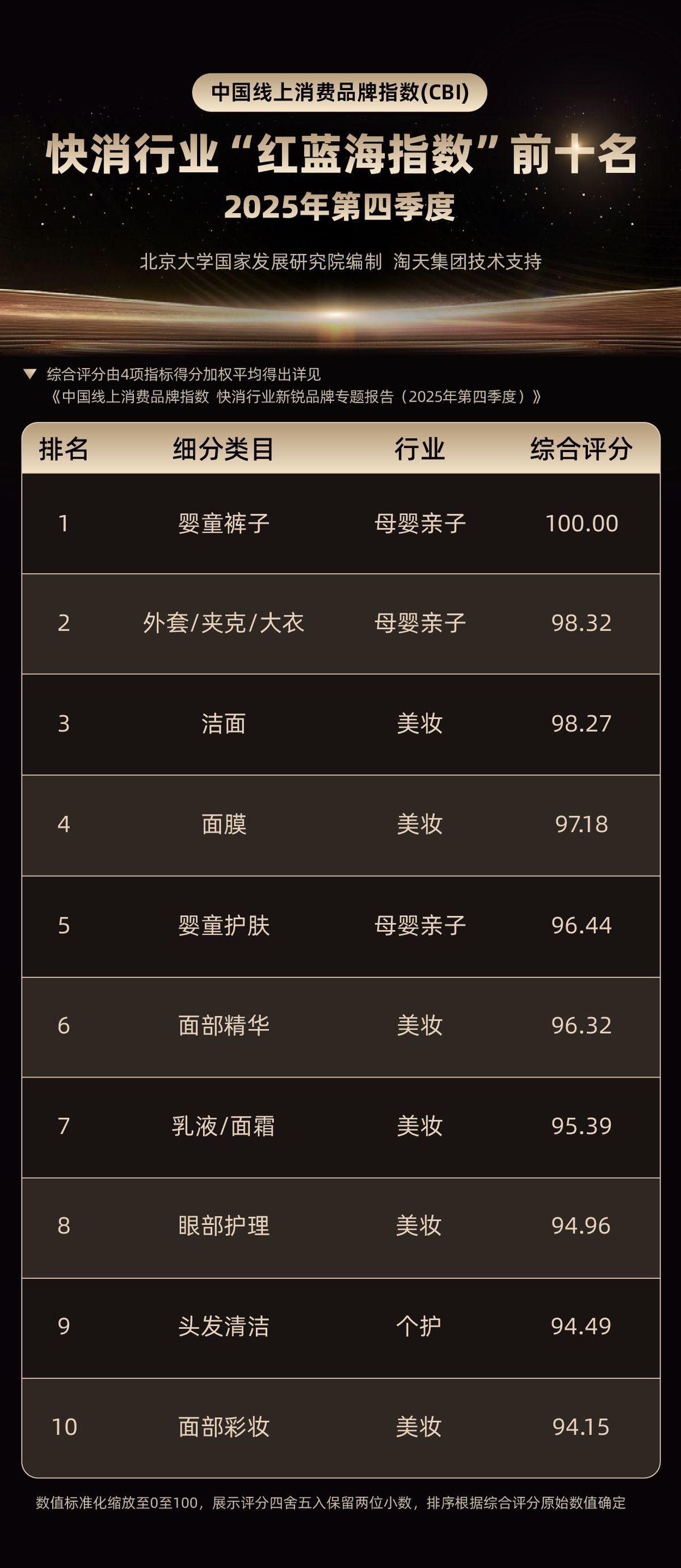
除了品牌排名,本次专题同时更新了去年“双11”季度的快消行业赛道“红蓝海指数”,研究对于快消行业上述四个子行业的近200个细分类目进行了综合评分,利用进入壁垒、搜索成交增速差、新品牌占比等指标,计算可量化的赛道“红蓝海指数”,挖掘更具成长潜力的类目。

研究显示,2025年第四季度,这项“红蓝海”评分最高的五个赛道依次为:婴童裤子,(童装)外套/夹克/大衣,洁面,面膜,婴童护肤。
电商大促激活细分囤货需求,功效性成重要增长点

本季度国货新锐品牌持续表现出色,快消行业新锐榜单前100名的品牌中,国内品牌(含港澳台)数量达92个。

根据类目的“红蓝海评分”,本季度母婴行业下,儿童服饰表现较为突出。在双11大促的囤货心智带动下,市场呈现显著的场景细分特征,覆盖礼仪社交、度假休闲、运动及防寒等多元需求。

其中,豆几妈聚焦度假风,小米步专攻运动鞋,图图小象深耕冬季保暖,均体现了童装品牌的需求细分趋势。

在美妆领域,“次抛”剂型成为高增长趋势。夸迪、听研、绽媄娅等品牌的核心单品均围绕次抛剂型展开,借助小剂量独立包装,强化成分活性稳定、精准用量的产品特征。

高浓度、强功效产品获得更加明确的市场空间,折射出国货品牌从营销驱动向研发驱动的转型趋势。

个护赛道中,功效洗护发品牌增长显著,已成为当前个护领域重要的蓝海赛道,Off&Relax、诗裴丝、EHD等上榜新锐品牌均以清洁防脱、控油蓬松为突破口。

此外,受秋冬季节影响,独特艾琳、浴见等上榜品牌推出新形态的身体清洁产品——沐浴油,具有更强的滋润功效,推动身体清洁和护理赛道排名上升,满足干燥环境下的洗浴需求。

年榜浙江上榜数量居首,关注情绪消费、智能创新

同期,北大国发院中国线上消费品牌指数(CBI)发布了2025年四季度及全年指数,以及全球品牌中国线上500强榜单,覆盖淘宝天猫平台的全量品牌。排名前五的品牌依次为苹果、美的、小米、海尔、华为。

在上榜的年度前1000品牌中,创立于中国内地(不含港澳台)的品牌占比达66.8%,国货消费品牌的竞争力凸显。不过,在美妆等细分行业中,国际品牌占比接近或超过60%,在原料、工艺、技术等方面具有一定的优势。

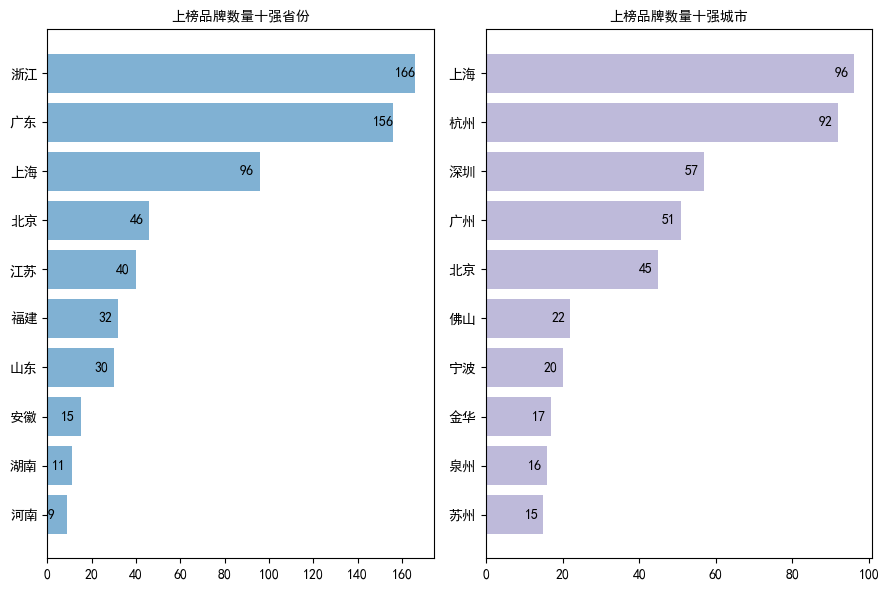
从省份层面来看,浙江省的上榜品牌数量位列全国首位;创立于广东、上海、北京的消费品牌上榜数量也位于全国前列。在城市层面,上海、杭州、深圳、广州、北京等城市的上榜品牌数量最多。
榜单显示,宠物经济持续升温,麦富迪等国产头部品牌评分接近国际巨头皇家,前200强中国产宠物品牌占据多数,消费者对行业的本土认可度提升。情绪消费驱动下,泡泡玛特位列第21名,引领潮玩赛道。在3C数码领域,大疆等智能创新品牌表现优异,数字技术有力推动消费品质升级。

注:文/龚作仁,文章来源:Laborer,本文为作者独立观点,不代表亿邦动力立场。

【版权提示】亿邦动力倡导尊重与保护知识产权。未经许可,任何人不得复制、转载、或以其他方式使用本网站的内容。如发现本站文章存在版权问题,烦请提供版权疑问、身份证明、版权证明、联系方式等发邮件至run@ebrun.com,我们将及时沟通与处理。

已点赞

+1

{{ praise_text }}

好文章,值得被更多人看到

FAQ回顾

2025年第四季度快消行业红蓝海指数最高的五个赛道是什么?

红蓝海指数最高的五个赛道依次为婴童裤子、童装外套/夹克/大衣、洁面、面膜和婴童护肤,基于进入壁垒、搜索成交增速差及新品牌占比等指标综合评分。

快消行业新锐品牌榜单前100名中国内品牌占比多少?

前100名新锐品牌中,国内品牌(含港澳台)数量达92个,占比92%,显示国货品牌在快消领域的强劲竞争力。

中国线上消费品牌指数(CBI)2025年全年榜单前五名是哪些品牌?

CBI全球品牌中国线上500强榜单前五名依次为苹果、美的、小米、海尔和华为,覆盖淘宝天猫平台全量品牌。

广告

下一篇

跨境电商资源对接

《全球跨境电商服务商资源手册》第二期手册现已发布,触达更多资源,了解跨境服务商信息,欢迎点击链接下载。

了解详情

一采通:深耕高端制造领域 以集成供应链与智能化步入采购数字化深水区

一采通深耕高端制造,通过AI体系化融合与集成供应链落地,助力央国企实现从流程集中到供应链协同的跨越。2026年将聚焦集成供应链与数字化运营,推动采购向智能化、标准化深度转型。










