



• 亿邦公众号
    • APP下载

2月LianLian跨境商家信心指数出炉:增长预期持续走强 品类信心全面上扬

作者:龚作仁 文章来源:Laborer

2026-03-09 11:44

作者:龚作仁 文章来源:Laborer

2026-03-09 11:44

邦小白快读

EN
全文速览

文章介绍了2026年2月LianLian跨境商家信心指数报告的核心干货,显示商家信心整体乐观但有小幅回调,未来预期持续走强。

1. 信心指数数据:总指数115环比下降1%,即期指数90环比下降3%,预期指数140环比上升1%,表明商家对市场前景持积极态度。

2. 品类信心全面上升:家居园艺指数飙升至118环比增长13%,时尚服饰指数111环比增长3%,电子数码指数112环比增长1%,各品类均受益于季节性需求和营销创新。

3. 销售增幅预期改善:30%商家预期5%-10%增长为主流,负增长商家占比降至16%环比下降2%,显示市场回暖趋势;高增幅区间如20%-25%占比小幅上升。

4. 风险提示与实操建议:中东地缘冲突带来物流成本上升等风险,商家应优化物流方案、调整产品结构以应对挑战。

文章提供了品牌在跨境电商中的营销和趋势洞察干货,重点包括消费趋势和产品研发机会。

1. 品牌营销与渠道建设:时尚服饰品类通过直播带货和社交电商等新型模式拓宽销售渠道,推动信心指数升至111环比增长3%;品牌可借鉴此模式强化线上营销。

2. 消费趋势与用户行为:春季需求带动家居园艺品类信心飙升至118环比增长13%,消费者对户外家具、绿植盆栽等新品需求增加;品牌应抓住季节性热点推出符合趋势的产品。

3. 产品研发与定价策略:电子数码品类信心稳定在112环比增长1%,源于技术更新如智能穿戴设备需求增长;品牌需加强研发提升品质,同时利用价格竞争优化新品定价。

4. 机会提示:全球市场复苏预期下,品牌可参考销售增幅数据(如30%商家预期5%-10%增长)调整策略,避免中东冲突风险影响品牌建设。

文章解读了跨境电商市场的增长机会、风险提示及应对措施干货,帮助卖家把握趋势。

1. 政策解读与增长市场:信心指数显示预期持续走强至140环比上升1%,源于全球经济复苏;销售增幅预期中负增长占比降至16%,表明市场回暖,卖家可瞄准家居园艺等增长品类。

2. 消费需求变化与机会提示:品类信心全面上扬,如家居园艺因春季装修需求激增;卖家应加大备货推出新品,抓住5%-10%增长主流区间(占30%商家)。

3. 风险提示与事件应对:中东地缘冲突加剧物流成本上升和供应链中断风险;建议优化供应链、降低运营成本,并参考20%-25%高增幅商家策略强化创新。

4. 可学习点与商业模式:直播带货等模式提升时尚服饰销售;卖家可学习此经验,结合指数数据(如即期指数90)调整短期运营,实现可持续发展。

文章揭示了产品生产和设计需求、商业机会及数字化启示的干货,助力工厂优化生产。

1. 产品生产和设计需求:品类信心全面上升,家居园艺指数118环比增长13%源于春季装修高峰,消费者对家居用品、园艺工具需求增加;工厂应加大相关产品生产,如户外家具和绿植盆栽。

2. 商业机会与需求变化:时尚服饰指数111环比增长3%因春夏上新周期,电子数码指数112环比增长1%因智能设备需求稳定;工厂可针对这些品类提升设计,满足市场多样化需求。

3. 推进数字化和电商启示:连连国际的智能平台融合云原生、大数据和AI技术,帮助降低不确定性;工厂可借鉴此数字化工具优化生产预测和供应链管理。

4. 机会与风险:销售增幅预期改善(负增长降至16%),但中东冲突风险可能影响物流;工厂应强化抗风险能力,如调整产品结构应对市场波动。

文章聚焦行业发展趋势、新技术、客户痛点及解决方案的干货,为服务商提供洞察。

1. 行业发展趋势:跨境商家信心指数高位运行(总指数115),预期指数140环比上升1%显示市场复苏;服务商可关注品类全面上扬趋势,如家居园艺领涨。

2. 新技术应用:指数在云原生、大数据和AI深度融合的智能平台运行,旨在构建降低不确定性的基础设施;服务商可参考此技术框架开发类似工具。

3. 客户痛点与解决方案:商家面临季节性波动(如即期指数90下降)和风险(中东冲突导致物流问题);服务商应提供优化物流方案或数据分析服务,帮助客户提升可预期性。

4. 机会提示:销售增幅预期结构优化(负增长减少至16%),服务商可针对高增幅商家(如20%-25%区间)推出创新解决方案,强化合作。

文章分析了商业对平台的需求、平台最新做法及运营管理的干货,指导平台策略。

1. 商业对平台的需求和问题:商家信心指数(如预期指数140)显示对平台降低不确定性的需求;中东冲突引发物流成本上升等风险,平台需提供解决方案如招商支持。

2. 平台的最新做法与招商:连连国际作为跨境支付平台推出月度指数调研,使用云原生和AI技术;平台可借鉴此做法强化招商,吸引商家利用数据洞察。

3. 运营管理与风向规避:指数显示品类信心全面上扬(家居园艺118),平台应优化运营如支持季节性新品上架;同时规避中东冲突风险,建议加强物流管理。

4. 机会提示:销售增幅预期改善(负增长降至16%),平台可参考主流增长区间(5%-10%占30%)调整政策,推动合作方式创新。

文章探讨了产业新动向、新问题及政策建议的干货,为研究提供依据。

1. 产业新动向:跨境商家信心指数显示整体高位(总指数115),预期持续走强至140环比上升1%,品类全面上扬如家居园艺118环比增长13%,表明市场复苏趋势。

2. 新问题与风险:中东地缘冲突加剧供应链中断和全球需求不确定性,形成新挑战;研究者可分析此问题对指数即期下降(90环比降3%)的影响。

3. 政策法规建议和启示:基于风险提示(物流成本上升),建议政策制定者支持商家优化资金管理和全球化布局;参考销售增幅数据(如负增长降至16%),推出稳增长措施。

4. 商业模式与数据价值:连连国际的指数平台整合云原生和大数据,提供可预期性;研究者可评估此模式效果,结合案例(如时尚服饰直播带货)深化商业模式研究。

声明:快读内容全程由AI生成,请注意甄别信息。如您发现问题,请发送邮件至 run@ebrun.com 。

我是 品牌商 卖家 工厂 服务商 平台商 研究者 帮我再读一遍。

Quick Summary

The February 2026 LianLian Cross-Border Merchant Confidence Index report reveals overall optimism among sellers, though with a slight dip, while future expectations continue to strengthen.

1. Confidence Index Data: The overall index stands at 115, down 1% month-on-month. The current index is 90, a 3% decline, while the expectation index rose 1% to 140, indicating positive sentiment towards market prospects.

2. Category Confidence Rises Across the Board: The Home & Garden index surged 13% to 118, Fashion & Apparel increased 3% to 111, and Electronics & Digital rose 1% to 112, with all categories benefiting from seasonal demand and marketing innovation.

3. Improved Sales Growth Expectations: 30% of merchants expect 5%-10% growth as the mainstream trend, while the proportion anticipating negative growth fell 2 percentage points to 16%, signaling market recovery. High-growth segments like 20%-25% saw a slight increase.

4. Risk Alerts & Practical Advice: Geopolitical conflicts in the Middle East pose risks such as rising logistics costs. Merchants should optimize logistics solutions and adjust product portfolios to mitigate challenges.

The article provides insights for brands on cross-border e-commerce marketing trends and product development opportunities.

1. Brand Marketing & Channel Building: The Fashion & Apparel category, with a 3% increase to 111, leverages livestreaming and social commerce to expand sales channels—a model brands can adopt to enhance online marketing.

2. Consumer Trends & User Behavior: Spring demand drove the Home & Garden index up 13% to 118, with rising interest in outdoor furniture and potted plants. Brands should capitalize on seasonal trends with relevant product launches.

3. Product R&D & Pricing Strategy: Electronics & Digital held steady at 112 (up 1%), fueled by tech updates like smart wearables. Brands should invest in R&D for quality improvement and optimize pricing amid competition.

4. Opportunity Alert: With global recovery expectations, brands can align strategies with sales growth data (e.g., 30% of merchants project 5%-10% growth) while mitigating Middle East conflict risks to brand building.

The article deciphers growth opportunities, risks, and countermeasures for cross-border sellers to navigate market trends.

1. Policy Insights & Growth Markets: The expectation index rose 1% to 140, reflecting global economic recovery. The share of sellers forecasting negative growth dropped to 16%, indicating market回暖—sellers should target high-growth categories like Home & Garden.

2. Shifting Consumer Demand & Opportunities: Category confidence is up universally; for instance, Home & Garden surged due to spring renovation demand. Sellers should increase inventory and launch new products to capture the 5%-10% growth band (30% of merchants).

3. Risk Alerts & Crisis Response: Middle East conflicts heighten logistics costs and supply chain disruptions. Sellers are advised to optimize supply chains, reduce operational costs, and emulate strategies of high-growth peers (20%-25% band).

4. Learnings & Business Models: Livestreaming boosted Fashion & Apparel sales. Sellers can adapt these approaches, using index data (e.g., current index of 90) to fine-tune short-term operations for sustainable growth.

The article highlights product demand, commercial opportunities, and digitalization insights to help factories optimize production.

1. Product Demand & Design Needs: Category confidence is rising—Home & Garden jumped 13% to 118 due to spring renovation peaks, boosting demand for home goods and gardening tools. Factories should ramp up production of items like outdoor furniture and potted plants.

2. Commercial Opportunities & Demand Shifts: Fashion & Apparel rose 3% to 111 with seasonal launches, while Electronics & Digital held at 112 (up 1%) on stable smart device demand. Factories can enhance designs for these categories to meet diverse market needs.

3. Digitalization & E-commerce Insights: LianLian International’s smart platform integrates cloud-native, big data, and AI to reduce uncertainty. Factories can adopt similar digital tools for better production forecasting and supply chain management.

4. Opportunities & Risks: Sales growth expectations improved (negative growth down to 16%), but Middle East conflicts may disrupt logistics. Factories should build resilience by adjusting product mixes to counter market volatility.

The article focuses on industry trends, new technologies, client pain points, and solutions for service providers.

1. Industry Trends: The cross-border merchant confidence index remains high (overall 115), with the expectation index up 1% to 140 signaling market recovery. Service providers should note universal category growth, led by Home & Garden.

2. New Technology Applications: The index runs on an intelligent platform blending cloud-native, big data, and AI to build uncertainty-reducing infrastructure. Service providers can reference this framework to develop similar tools.

3. Client Pain Points & Solutions: Merchants face seasonal fluctuations (e.g., current index down to 90) and risks like Middle East conflict-driven logistics issues. Service providers should offer optimized logistics or data analytics to enhance predictability.

4. Opportunity Alert: Sales growth expectations are optimizing (negative growth down to 16%). Service providers can target high-growth merchants (e.g., 20%-25% band) with innovative solutions to strengthen partnerships.

The article analyzes merchant needs, platform strategies, and operational management for marketplace operators.

1. Merchant Needs & Challenges: Confidence indices (e.g., expectation index of 140) highlight demand for platforms to reduce uncertainty. Middle East conflicts raise logistics costs, requiring platforms to offer solutions like merchant support.

2. Platform Initiatives & Merchant Acquisition: LianLian International, as a cross-border payment platform, launches monthly index surveys using cloud-native and AI. Marketplaces can emulate this to attract merchants with data-driven insights.

3. Operations & Risk Mitigation: With category confidence rising (e.g., Home & Garden at 118), platforms should optimize operations, such as supporting seasonal product launches, while mitigating Middle East risks through enhanced logistics management.

4. Opportunity Alert: Sales growth expectations improved (negative growth down to 16%). Platforms can adjust policies based on mainstream growth bands (5%-10%, 30% of merchants) to innovate collaboration models.

The article examines industry trends, emerging issues, and policy implications for research purposes.

1. Industry Trends: The cross-border merchant confidence index remains elevated (overall 115), with expectations strengthening to 140 (up 1%). Universal category growth, like Home & Garden’s 13% surge to 118, indicates market recovery.

2. Emerging Risks & Issues: Middle East geopolitical conflicts exacerbate supply chain disruptions and global demand uncertainty, posing new challenges. Researchers can analyze their impact on the current index decline (90, down 3%).

3. Policy Recommendations: Given risks like rising logistics costs, policymakers should support merchants in optimizing capital management and global expansion. Sales growth data (e.g., negative growth down to 16%) informs stability measures.

4. Business Models & Data Value: LianLian International’s index platform integrates cloud-native and big data to enhance predictability. Researchers can evaluate this model’s efficacy, using cases like Fashion & Apparel livestreaming to deepen business model studies.

Disclaimer: The "Quick Summary" content is entirely generated by AI. Please exercise discretion when interpreting the information. For issues or corrections, please email run@ebrun.com .

I am a Brand Seller Factory Service Provider Marketplace Seller Researcher Read it again.

日前,连连国际发布2026年2月LianLian跨境商家信心指数报告。报告显示,尽管整体信心指数出现小幅回调,但商家对未来的预期持续走强,各品类信心普遍上升,销售增幅预期呈现出积极变化态势,为跨境电商市场的发展释放出暖意。

LianLian跨境商家信心指数是由港股上市公司连连数字旗下跨境支付品牌连连国际于2025年1月推出,旨在通过月度调研,持续追踪卖家经营现状与未来预期,为行业提供有价值的洞察与决策支持。该指数在云原生×大数据×AI深度融合的智能平台运行。基于这一套技术,连连希望持续构建的不只是单点洞察工具,而是一套帮助跨境商家降低不确定性、提升可预期性的智能基础设施。

一、信心指数:高位回调下的乐观预期

2026年2月商家信心总指数为115,环比下降1%,整体保持高位小幅回调,体现跨境电商商家整体信心的坚实基础。即期指数为90,环比下降3%,显示当前市场交易活跃度略有降温,可能受到季节性因素或短期供需调整等多重影响。

与之形成鲜明对比的是预期指数,达到140,环比上升1%,延续了增长势头。这表明商家对未来跨境电商市场的发展持乐观态度,可能源于对全球经济复苏的预期、新兴市场需求的挖掘以及自身运营策略的调整升级。
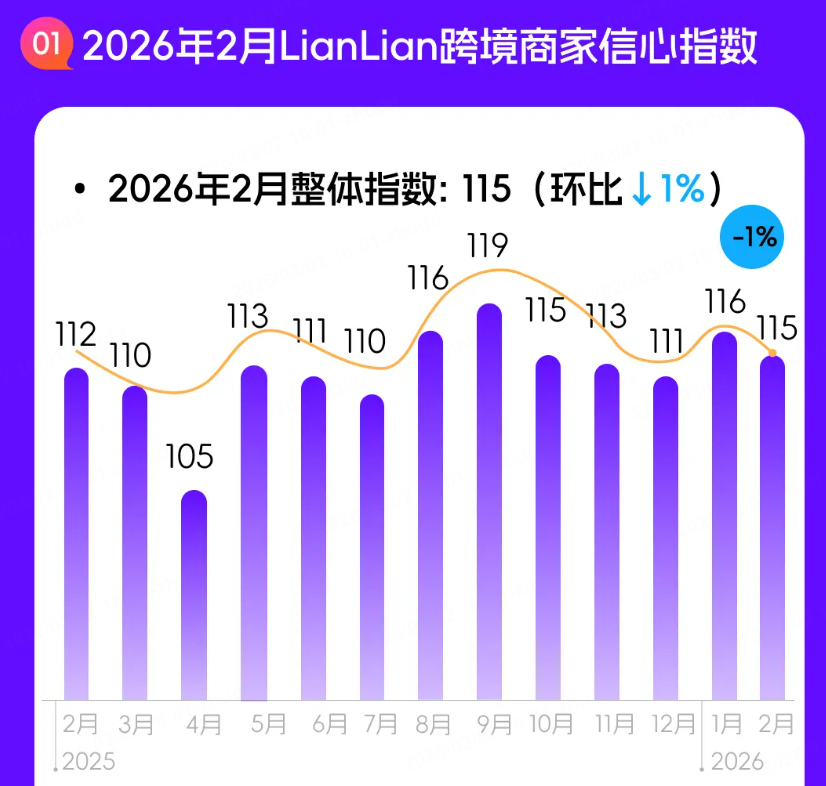
(信心指数由总指数、预期指数和即期指数构成。其中,即期指数反映卖家对现状的看法,预期指数反映卖家对未来3个月内预期的看法,而总指数由即期指数和预期指数综合计算得出,用以反映跨境电商卖家对未来海外经济、行业环境及自身经营状况的预期,指数值大于100表示乐观,等于100表示中立,小于100则表示悲观。)

二、品类信心:全面上升Home&Garden(家居与园艺)品类领衔

根据商家信心指数的调研数据显示,2026年2月,各品类商家信心呈现全面上升的良好态势,不同品类凭借自身特点和市场需求,展现出强劲的发展动力。
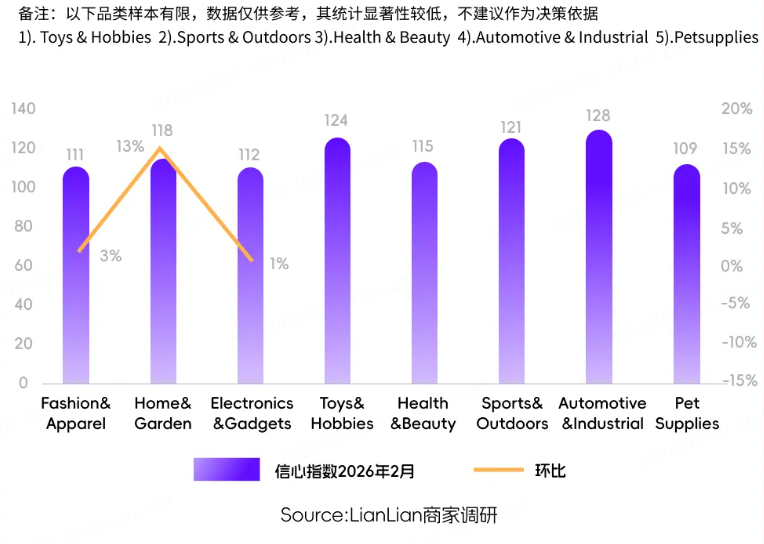
Home&Garden(家居与园艺):信心指数飙升至118,环比大幅增长13%。随着春季的来临,全球多地进入装修和庭院改造的高峰期,消费者对家居用品、园艺工具等产品的需求显著增加。商家们纷纷抓住这一季节性机遇,加大备货力度,推出符合春季消费热点的新品,如户外家具、绿植盆栽、园艺装饰等,带动了整个品类信心的高涨。

Fashion&Apparel(时尚服饰):信心指数为111,环比增长3%。春夏上新周期的开启,成为推动该品类信心回升的关键因素。各大品牌和商家早早推出了2026年春夏新款服饰,涵盖了休闲、商务、运动等多个风格,满足不同消费者的审美和需求。同时,直播带货、社交电商等新型营销模式的广泛应用,也为时尚服饰的销售拓宽了渠道,增强了商家对市场的信心。

Electronics&Gadgets(电子数码):信心指数为112,环比增长1%,虽增幅相对较小,但保持了稳步上行的趋势。随着科技的不断进步,电子数码产品的更新换代速度加快,消费者对智能穿戴设备、智能家居产品、便携式电子产品等的需求持续稳定增长。商家们通过加强技术研发、提升产品品质和服务水平,不断巩固和扩大市场份额,推动品类信心逐步提升。

三、销售增幅预期:结构优化 暖意渐显

从商家的销售增幅预期来看,整体呈现出“负增长减少、低增区间扩大、高增小幅回升”的特征,反映出商家对未来销售的预期正在逐步改善。
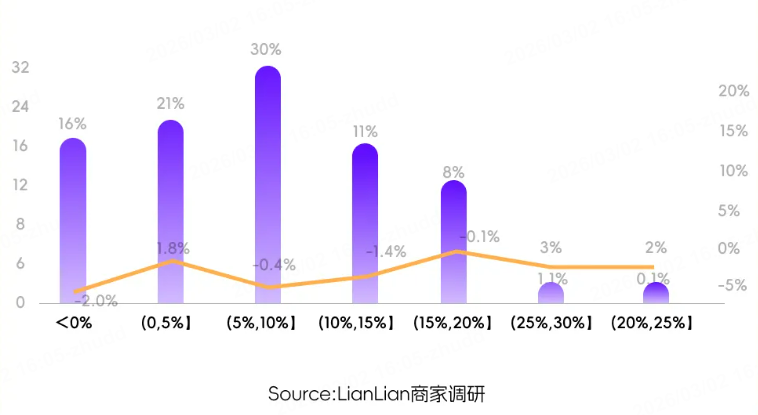
预计增长5%–10%的商家:占比最高,达到30%,仍是主流区间,说明多数商家对未来销售增长持稳健态度,既不盲目乐观,也不过度悲观。

预期0–5%小幅增长的商家:占比为21%,较上月环比上升1.8%,显示出谨慎乐观情绪的上升。越来越多的商家认为,在当前市场环境下,能够实现小幅增长也是一种积极的信号,表明市场正在逐步回暖。

预期负增长的商家:占比降至16%,环比下降2%,悲观情绪有所收窄。这得益于全球经济形势的逐步好转、跨境电商政策的持续利好以及商家自身抗风险能力的提升。不少曾经对市场持悲观态度的商家,通过优化供应链、降低运营成本、提升产品竞争力等措施,重新看到了业务增长的希望。

中高增幅区间:10%–15%和15%–20%的商家占比虽有小幅下降,但20%–25%和25%–30%的商家占比分别环比上升1.1%和0.1%,实现了小幅回升。这部分商家往往具有较强的创新能力、品牌影响力和市场开拓能力,他们能够敏锐捕捉市场热点,推出具有竞争力的产品和服务,从而有望在未来实现较高的销售增长。

总结:抓住市场回暖机遇 积极应对地缘政治冲突带来的风险

综合2月LianLian跨境商家信心指数各项数据来看,跨境电商市场正处于复苏和调整的关键时期。商家信心的整体高位运行、预期的持续走强以及品类信心的全面上升,为市场的发展注入了强大动力。然而,近期中东地区持续升级的地缘冲突为这片复苏的市场蒙上了一层阴影,其引发的物流成本上升、供应链中断风险加剧、全球市场需求不确定性增加等多重风险可能给跨境商家带来严峻挑战。

对于跨境电商商家而言,商家需在抓住市场回暖机遇的同时,充分认识并积极应对中东局势变化带来的风险,通过优化物流方案、调整产品结构、强化资金管理、推进全球化布局与加强品牌建设等措施,不断增强自身的核心竞争力,实现业务的可持续发展。

注:文/龚作仁,文章来源:Laborer,本文为作者独立观点,不代表亿邦动力立场。

【版权提示】亿邦动力倡导尊重与保护知识产权。未经许可,任何人不得复制、转载、或以其他方式使用本网站的内容。如发现本站文章存在版权问题,烦请提供版权疑问、身份证明、版权证明、联系方式等发邮件至run@ebrun.com,我们将及时沟通与处理。

已点赞

+1

{{ praise_text }}

好文章,值得被更多人看到

FAQ回顾

2026年2月LianLian跨境商家信心指数是多少?

2026年2月商家信心总指数为115,环比下降1%;即期指数为90,环比下降3%;预期指数达140,环比上升1%,显示商家对未来市场持乐观态度。

哪些跨境电商品类在2月表现最好?

家居园艺品类信心指数118,环比大幅增长13%;时尚服饰品类111,增长3%;电子数码品类112,增长1%,各品类信心全面上升。

跨境商家对未来销售增幅有何预期?

30%商家预期增长5%-10%,21%预期小幅增长0-5%,负增长商家占比降至16%。高增幅区间20%-30%的商家占比小幅回升。

广告

下一篇

跨境电商资源对接

《全球跨境电商服务商资源手册》第二期手册现已发布,触达更多资源,了解跨境服务商信息,欢迎点击链接下载。

了解详情

财报解析丨B站首现年度盈利 中长视频要起飞了?

3月5日,B站发布2025年财报数据,营收303.5亿元同比增长13.1%,经调整净利润25.9亿元,为上市以来首次全年盈利。Q4营收83.2亿元同比增长8%,经调整净利8.78亿元同比增长94%,为近六年单季最高。


直播 二次元 平台 短视频

2026-03-09 10:31:00








