



• 亿邦公众号
    • APP下载

微信屏蔽元宝红包链接 回应:涉违规诱导分享

作者:胡镤心 文章来源:亿邦动力

2026-02-04 11:36

作者:胡镤心 文章来源:亿邦动力

2026-02-04 11:36

邦小白快读

EN
全文速览

总:微信屏蔽腾讯元宝链接事件的关键干货信息。

1. 事件详情:2月4日,微信屏蔽腾讯旗下AI助手“元宝”的春节红包活动链接,因涉及违规诱导分享行为,用户无法在微信内直接打开。

2. 原因背景:微信为维护平台秩序,基于1月29日发布的打击公告和用户投诉,认定元宝活动存在高频分享至微信群的行为,干扰正常体验。

3. 用户操作影响:当前需通过其他渠道或直接使用元宝App参与活动,抢红包体验受限。

4. 回应措施:元宝团队紧急优化分享机制,承诺尽快上线以改善体验,但未直接否认违规。

5. 核心启示:事件强调平台规则严格执行的重要性,即使是自家产品也一视同仁,用户应关注官方公告避免类似问题。

6. 业内观察:平台在春节营销密集期需平衡促进活跃与防止骚扰,这是行业共同挑战,用户可从中学习合规操作方式。

总:此事件对品牌营销和用户行为的深刻启示。

1. 品牌营销策略:腾讯元宝通过“做任务领红包”春节活动推广AI助手,但被微信屏蔽,显示诱导分享营销方式存在高风险,可能损害品牌形象。

2. 用户行为观察:用户投诉高频分享行为干扰微信秩序,影响体验,品牌需关注用户反馈以避免负面舆情。

3. 消费趋势:春节红包营销成为科技公司推广新产品的常见手段,但平台监管趋严,品牌应探索合规创新方式。

4. 品牌渠道建设:微信作为主流社交平台,对内部产品元宝也采取限制,强调品牌在渠道推广中需遵守统一规则。

5. 产品研发启示:事件突显设计活动时需避免违规元素,如过度诱导分享,应注重用户体验以提升品牌好感度。

6. 机会分析:优化分享机制后,品牌可重建用户信任,并借鉴此案例调整营销策略,增强可持续性。

总:平台政策解读及事件应对的可学习点。

1. 政策解读:微信1月29日公告明确打击春节过度营销和诱导分享行为,卖家需严格遵守平台规则以避免违规风险。

2. 风险提示:类似元宝事件中,高频分享链接被屏蔽,可能导致推广中断,卖家应监测用户反馈并及时调整策略。

3. 机会提示:元宝团队优化分享机制,卖家可学习此应对措施,开发合规营销方式以抓住节日消费需求。

4. 可学习点:事件显示卖家需平衡营销活跃度与用户体验,避免投诉,如减少高频分享依赖。

5. 事件应对措施:及时响应平台规则,内部优化机制可减轻负面影响,卖家应建立快速调整流程。

6. 最新商业模式启示:依赖社交平台推广时,卖家需创新模式确保合规,此次案例提供实操参考。

总:产品设计和电商推进的合规启示。

1. 产品生产设计需求:元宝春节活动因诱导分享被屏蔽,启示工厂在设计类似数字化产品时需避免违规元素,优先考虑用户友好性和合规性。

2. 商业机会:节日营销需求旺盛,但需创新不依赖诱导的方式,工厂可探索技术驱动解决方案以抓住增长机会。

3. 推进数字化和电商启示:事件显示大型企业在电商活动中需对齐平台规则,工厂在推进数字化时应注意微信等平台的治理政策。

4. 风险规避:高频分享行为可能导致产品推广受阻,工厂在设计产品时应融入风控机制,确保可持续运营。

5. 机会分析:合规优化后,元宝活动可重启,工厂可学习此案例强化产品测试,提升市场适应性。

总:行业发展趋势及客户痛点解决方案洞察。

1. 行业发展趋势:微信加强打击诱导分享等行为,平台治理趋严,服务商需关注此趋势以提供合规支持。

2. 客户痛点:用户投诉高频分享干扰体验,服务商可针对此痛点开发解决方案,如优化分享算法或监测工具。

3. 解决方案:元宝团队承诺优化分享机制,服务商可借鉴此方式,为客户提供技术升级服务以避免违规。

4. 新技术应用:事件启示在营销活动中采用AI或自动化工具可减少手动分享依赖,服务商应推广相关创新技术。

5. 机会点:服务商可基于此案例设计咨询服务,帮助客户平衡活跃度与用户体验,抓住市场增长需求。

总:平台运营管理和风险规避的关键启示。

1. 商业对平台需求和问题:企业推广需求如元宝活动需符合平台规则,平台商应明确政策以解决用户投诉问题。

2. 平台最新做法:微信主动屏蔽内部产品链接,基于公告和用户反馈处理违规,显示一致治理态度,平台商可学习此运营模式。

3. 平台招商启示:在吸引商业合作时,平台商需强调规则遵守,避免诱导分享等高风险行为,确保可持续生态。

4. 运营管理:事件凸显平台商需结合用户反馈与规则,及时处置违规行为,维护秩序和用户体验。

5. 风向规避:防止高频分享等骚扰行为,平台商应建立预警机制,规避潜在风险。

6. 机会分析:优化内部管理流程可提升平台公信力,平台商可从此事件汲取经验强化规则执行。

总:产业新动向和政策法规研究的深刻启示。

1. 产业新动向:大型互联网企业如腾讯面临产品线间规则一致性挑战,事件揭示内部协调的重要性。

2. 新问题:平台在节日营销密集期如何平衡促进活跃与防止骚扰,成为行业运营难题,研究者可深入分析此动态。

3. 政策法规建议和启示:微信基于公告处理违规,显示平台规则对营销行为的约束力,研究者可探讨政策制定启示。

4. 商业模式:微信独立治理模式坚持规则执行,即使对兄弟产品,研究者可分析其商业可持续性。

5. 案例研究:事件提供实际案例,涉及数据(用户投诉)、代表企业(腾讯、微信),研究者可从中挖掘新问题如数字生态治理。

声明:快读内容全程由AI生成,请注意甄别信息。如您发现问题,请发送邮件至 run@ebrun.com 。

我是 品牌商 卖家 工厂 服务商 平台商 研究者 帮我再读一遍。

Quick Summary

Summary: Key takeaways from WeChat's blocking of Tencent's Yuanbao AI assistant link.

1. Event details: On February 4th, WeChat blocked links to the Spring Festival red envelope campaign for Tencent's AI assistant "Yuanbao" due to violations of its rules against incentivized sharing, preventing users from opening the links directly within the app.

2. Cause and background: To maintain platform order, WeChat, acting on a January 29th policy announcement and user complaints, determined the Yuanbao campaign involved excessive sharing in group chats, disrupting the user experience.

3. Impact on users: Users must now participate via other channels or the Yuanbao app directly, limiting the convenience of the red envelope feature.

4. Response measures: The Yuanbao team is urgently optimizing its sharing mechanism, promising a swift update to improve the experience, without directly denying the violation.

5. Key insight: The incident underscores the strict enforcement of platform rules, applying even to a company's own products, and highlights the need for users to follow official announcements to avoid similar issues.

6. Industry observation: Platforms face the ongoing challenge of balancing user engagement with spam prevention during peak marketing periods like the Spring Festival, offering a lesson in compliant user operations.

Summary: Profound implications of this incident for brand marketing and user behavior.

1. Marketing strategy: Tencent Yuanbao's "complete tasks for red envelopes" Spring Festival campaign was blocked by WeChat, indicating the high risks of incentivized-sharing tactics, which can damage brand reputation.

2. User behavior insights: User complaints about spammy sharing disrupting the WeChat experience highlight the need for brands to monitor feedback to avoid negative sentiment.

3. Consumer trends: While red envelope campaigns are a common tactic for tech companies launching products, stricter platform enforcement necessitates exploring innovative, compliant alternatives.

4. Channel strategy: WeChat's restriction of its sister product, Yuanbao, reinforces that brand promotions must adhere to uniform platform rules, even on owned channels.

5. Product development: The event underscores the need to avoid non-compliant elements like aggressive sharing prompts in campaign design, prioritizing user experience to enhance brand perception.

6. Opportunity analysis: Post-optimization, brands can rebuild user trust and use this case to refine marketing strategies for greater long-term sustainability.

Summary: Actionable learnings on platform policy interpretation and incident response.

1. Policy interpretation: WeChat's January 29th announcement explicitly targets excessive holiday marketing and incentivized sharing; sellers must strictly comply to avoid penalties.

2. Risk alert: As seen with Yuanbao, links flagged for spammy sharing can be blocked, halting promotions; sellers should monitor user feedback and adjust tactics promptly.

3. Opportunity alert: The Yuanbao team's move to optimize its sharing mechanism is a lesson for sellers to develop compliant marketing that taps into holiday demand.

4. Key takeaway: The incident shows sellers must balance promotional intensity with user experience, reducing reliance on high-frequency sharing to prevent complaints.

5. Response strategy: A swift internal adjustment process, aligned with platform rules, can mitigate negative impacts; sellers should establish agile optimization workflows.

6. Business model insight: When leveraging social platforms for promotion, sellers need innovative, rule-compliant models; this case offers a practical reference point.

Summary: Compliance insights for product design and e-commerce advancement.

1. Product design requirements: The blocking of Yuanbao's campaign for incentivized sharing highlights the need to avoid non-compliant elements in digital product design, prioritizing user-friendliness and rule adherence.

2. Business opportunity: Strong holiday marketing demand exists, but requires innovation beyond incentivized sharing; factories can explore tech-driven solutions to capture growth.

3. Digital/e-commerce advancement: The incident shows that large enterprises must align e-commerce activities with platform governance; factories advancing digitally should heed policies on platforms like WeChat.

4. Risk mitigation: High-frequency sharing can disrupt product launches; factories should integrate risk control mechanisms into product design for sustainable operation.

5. Opportunity analysis: Post-compliance optimization, campaigns like Yuanbao's can resume; factories can learn from this case to strengthen product testing and market adaptability.

Summary: Insights into industry trends and solutions for client pain points.

1. Industry trend: WeChat's crackdown on incentivized sharing reflects stricter platform governance; service providers must track this trend to offer compliant support.

2. Client pain point: User complaints about spammy sharing disrupting experience present an opportunity for providers to develop solutions like optimized sharing algorithms or monitoring tools.

3. Solution: The Yuanbao team's commitment to optimizing its mechanism is a model; providers can offer technical upgrade services to help clients avoid violations.

4. New tech application: The incident suggests using AI or automation in marketing can reduce manual sharing reliance; providers should promote such innovative technologies.

5. Opportunity: Service providers can design consulting services based on this case, helping clients balance engagement with user experience to capture market growth.

Summary: Key revelations for platform operation management and risk avoidance.

1. Business demands and issues: Enterprise promotions, like the Yuanbao campaign, must comply with platform rules; marketplace operators should clarify policies to address user complaints.

2. Latest platform practices: WeChat's proactive blocking of an internal product link, based on policy and feedback, demonstrates consistent governance—a model for other platforms.

3. Merchant recruitment insight: When attracting partners, platforms must emphasize rule adherence and discourage high-risk behaviors like incentivized sharing to ensure a sustainable ecosystem.

4. Operation management: The incident highlights the need for platforms to combine user feedback with rules, acting swiftly against violations to maintain order and user experience.

5. Risk avoidance: To prevent spammy behaviors like high-frequency sharing, platforms should establish early warning systems to mitigate potential risks.

6. Opportunity analysis: Optimizing internal governance processes can boost platform credibility; operators can learn from this event to strengthen rule enforcement.

Summary: Deep implications for studying industry dynamics and policy regulations.

1. Industry dynamic: Major internet firms like Tencent face challenges ensuring rule consistency across product lines; the event reveals the importance of internal coordination.

2. Emerging issue: Balancing user engagement with spam prevention during intensive holiday marketing is an operational dilemma for platforms, warranting deeper academic analysis.

3. Policy/regulation insight: WeChat's action, based on its published policy, demonstrates the constraining power of platform rules on marketing; researchers can explore implications for policy design.

4. Business model: WeChat's independent governance, enforcing rules even on affiliated products, offers a case for analyzing the sustainability of such models.

5. Case study: The incident provides a rich case involving data (user complaints) and key players (Tencent, WeChat), enabling research into new questions like digital ecosystem governance.

Disclaimer: The "Quick Summary" content is entirely generated by AI. Please exercise discretion when interpreting the information. For issues or corrections, please email run@ebrun.com .

I am a Brand Seller Factory Service Provider Marketplace Seller Researcher Read it again.

【亿邦原创】2月4日,不少微信群用户发现,腾讯旗下AI助手“元宝”推出的春节红包活动链接在微信内遭到屏蔽,无法直接打开。这一“自家产品屏蔽自家”的异常情况迅速引发网络关注。
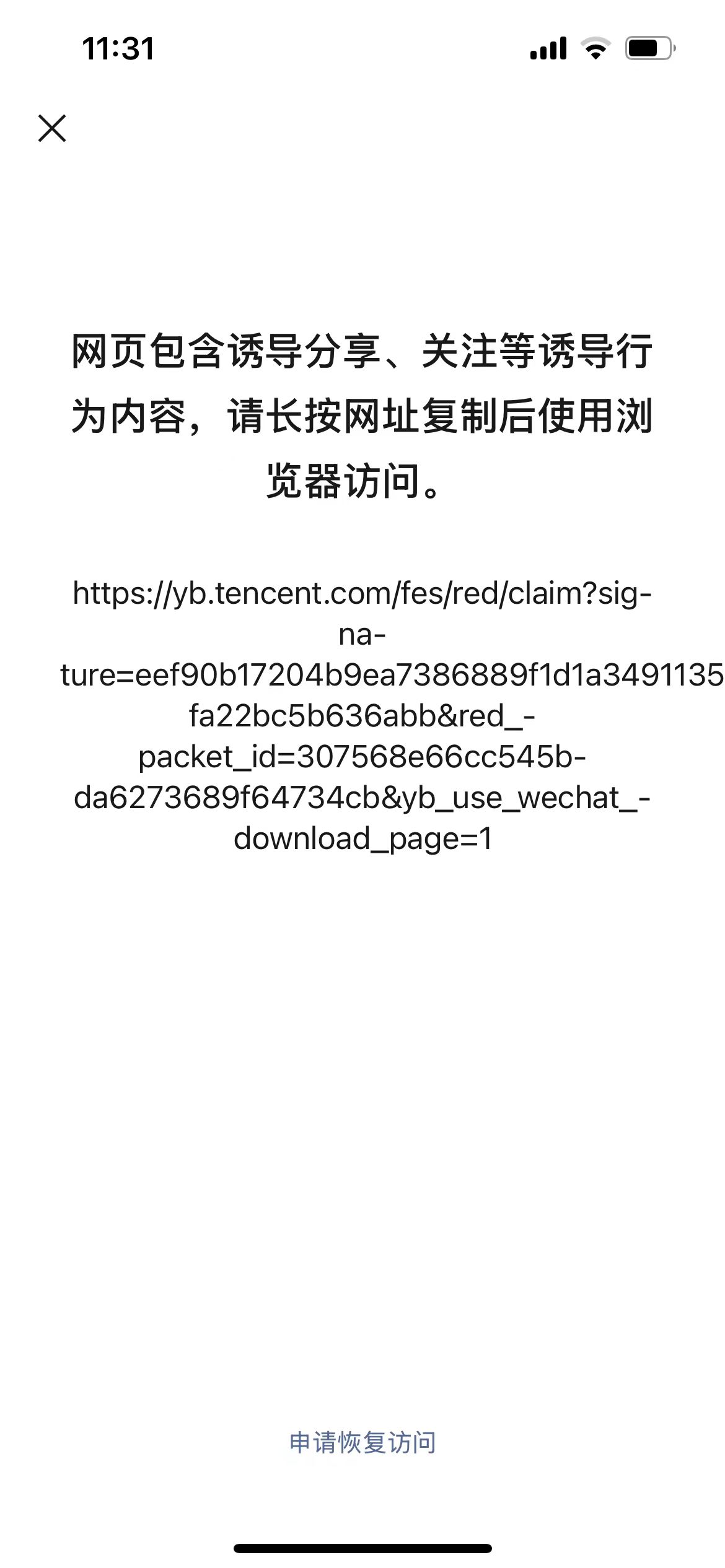

事件源于近期各家科技公司围绕春节红包开展的AI助手推广活动。腾讯元宝通过“做任务、领红包”等春节营销方式,鼓励用户将活动链接分享至微信群,以此扩大传播。然而,此类分享行为先引发“微信双标”讨论,很快又遭到微信屏蔽处理。

微信安全中心于2月4日对此作出说明,为维护平台生态秩序,已于1月29日发布《针对第三方违规行为的打击公告》,明确将打击以春节为名进行的过度营销、诱导分享等行为。在此基础上,微信收到多起用户投诉,反映腾讯元宝的春节活动存在诱导用户高频分享链接至微信群的行为,干扰了微信正常秩序、影响用户体验。

经研判,微信认定元宝相关链接存在违规,决定对其采取限制在微信内直接打开的处置措施,并于2月4日生效。微信同时表示,将持续关注各类春节营销活动,结合用户反馈与平台规则,保障用户体验。

腾讯元宝团队在官方微博回应称:“我们正在紧急优化调整分享机制,将尽快上线,确保用户抢红包体验。”该回应未直接否认违规行为,而是侧重于改进体验。

此次事件折射出大型互联网企业在多产品线运营中面临的内外规则一致性问题。业内观察指出,春节期间各类红包营销活动密集,平台如何在促进活跃与防止骚扰之间取得平衡,已成为行业共同面对的运营挑战。此次微信主动处置内部产品链接,也显示出其对维护平台内容治理规则一致性的态度。

目前元宝红包分享链接已变更为“口令红包”。

【版权提示】亿邦动力倡导尊重与保护知识产权。未经许可,任何人不得复制、转载、或以其他方式使用本网站的内容。如发现本站文章存在版权问题,烦请提供版权疑问、身份证明、版权证明、联系方式等发邮件至run@ebrun.com,我们将及时沟通与处理。

已点赞

+1

{{ praise_text }}

好文章,值得被更多人看到

FAQ回顾

微信为什么屏蔽腾讯元宝的链接?

微信于2月4日屏蔽腾讯元宝链接,因其春节红包活动存在诱导用户高频分享至微信群的行为,违反了微信1月29日发布的《针对第三方违规行为的打击公告》,被认定为违规影响平台秩序和用户体验。

腾讯元宝团队对链接被屏蔽如何回应?

腾讯元宝团队在官方微博回应称,正在紧急优化调整分享机制,将尽快上线以确保用户抢红包体验,但未直接否认存在违规行为。

用户现在如何参与腾讯元宝的春节活动?

截至发稿,用户若需参与腾讯元宝春节活动,仍需通过其他渠道或直接使用元宝App进行操作,因为调整后的分享机制尚未在微信平台上线。

广告

下一篇

征集报名《品牌数字化服务商资源手册》

《品牌数字化服务商资源手册》展示数字化服务商风采,亿邦全年零售大会通发,触达更多资源,马上加入!

马上入驻

亚马逊广告发布2026年全球营销趋势洞察:AI成广告策略关键 全渠道协同效应放大

亚马逊广告发布2026年全球营销趋势洞察,并提出五大趋势正在改变品牌营销策略、广告的运作方式。










