• 亿邦公众号
    • APP下载

亚马逊将关闭所有生鲜超市及便利店 重心转向即时配送及全食超市

作者:亿邦动力 文章来源:亿邦动力

2026-01-29 10:11

作者:亿邦动力 文章来源:亿邦动力

2026-01-29 10:11

邦小白快读

EN
全文速览

亚马逊关闭生鲜超市和便利店,转向在线配送和全食超市扩张,带来重点信息和实操干货。

1.关闭57家Amazon Fresh生鲜超市和15家Amazon Go无人便利店,部分改造为全食超市门店,原因是未能建立差异化客户体验和可扩展商业模式。

2.继续通过在线渠道提供Amazon Fresh服务,顾客可在线下单享受配送,重点扩展当日达和半小时达快速配送服务。

3.数据支持:已服务1.5亿食品杂货客户,创造1500亿美元销售额,覆盖5000多个城市当日达,日常必需品占亚马逊销售额1/3。

4.计划增加100多家全食超市门店,推广Whole Foods Market Daily Shop便利型门店,提供熟食、咖啡等,预计2026年前新开五家此类门店。

5.测试新零售概念,如大型商场式杂货店和“店中店”体验,为消费者提供更多选择。

亚马逊的品牌策略调整聚焦在线配送和全食超市,涉及品牌营销、渠道建设和消费趋势。

1.品牌渠道建设:关闭自有品牌实体店(Amazon Fresh和Amazon Go),转向在线配送和全食超市扩张,显示品牌资源重新分配。

2.消费趋势:日常必需品在线销售占比达1/3,用户行为偏好快速配送(如当日达和半小时达),推动品牌研发便利型产品。

3.品牌营销:全食超市销售额增幅超40%,计划新增100多家门店并推广Daily Shop形式,提供熟食等产品,强化品牌差异化。

4.产品研发:基于用户需求,开发小型便利门店和“店中店”体验,迎合消费者对熟食和日常必需品的即时获取需求。

5.数据参考:服务1.5亿客户,1500亿美元销售额,为品牌定价和竞争提供市场基准。

亚马逊关闭门店事件带来政策解读、增长机会和风险提示,为卖家提供可学习点。

1.政策解读:亚马逊停止实体店探索,转向在线配送,显示政策支持在线业务,卖家可借鉴减少实体投资。

2.增长市场:即时配送服务(当日达和半小时达)扩展,覆盖5000多个城市,日常必需品需求高,带来在线生鲜市场机会。

3.消费需求变化:用户偏好快速配送,日常必需品销售占比1/3,卖家可调整产品线应对需求。

4.风险提示:实体店商业模式失败,风险在于差异化不足,卖家需避免类似错误;机会在合作方式,如与全食超市或在线平台合作。

5.可学习点:亚马逊推广Daily Shop便利门店和测试新概念,卖家可学习最新商业模式,如小型门店或“店中店”。

6.数据支持:1.5亿客户基础和1500亿美元销售额,为卖家提供市场规模参考。

亚马逊转向在线配送和全食扩张,为工厂提供产品需求、商业机会和电商启示。

1.产品生产和设计需求:日常必需品销售占比1/3,需求量大,工厂可聚焦此类产品生产;全食超市推广便利门店,需熟食等设计。

2.商业机会:全食超市计划新增100多家门店,销售额增40%,带来供应合作机会;在线配送扩展,需更多产品支持电商渠道。

3.推进数字化和电商启示:亚马逊加强在线服务(如当日达),启示工厂需数字化生产流程以适应快速配送;实体店关闭,强调电商优先策略。

4.数据支持:服务1.5亿客户,1500亿美元销售额,显示大规模市场潜力,工厂可据此规划产能。

行业趋势向在线即时配送发展,涉及新技术和解决方案,为服务商提供洞察。

1.行业发展趋势:亚马逊关闭实体店,专注在线配送,显示零售向数字化转移;日常必需品在线销售占比1/3,增长明显。

2.新技术:扩展当日达和半小时达配送服务,覆盖5000多个城市,技术驱动快速配送创新。

3.客户痛点:实体店未能差异化体验,痛点在于商业模式不足;解决方案是亚马逊转向在线平台,加强配送效率。

4.解决方案:推广全食超市和Daily Shop便利门店,提供“店中店”等新概念,解决消费者即时需求;数据支持(1.5亿客户)为服务优化提供基础。

亚马逊作为平台的最新做法聚焦在线需求、招商和运营管理,提供风向规避参考。

1.商业对平台的需求和问题:消费者偏好快速配送(当日达),平台需响应扩展服务;问题包括实体店模式失败,需规避风险。

2.平台的最新做法:关闭所有生鲜超市和便利店,资源转向在线配送和全食超市;推广Daily Shop便利门店,测试大型商场式杂货店。

3.平台招商:计划新增100多家全食超市门店,并开新Daily Shop,带来招商机会;在线渠道继续服务,支持合作。

4.运营管理:优化资源分配,专注在线业务;数据管理:服务1.5亿客户,1500亿美元销售额,需高效运营支持。

5.风向规避:避免实体店扩张风险,转向已验证模式如全食超市(销售额增40%)。

零售产业新动向涉及商业模式转型和新问题,为研究者提供政策启示。

1.产业新动向:亚马逊从实体店转向在线配送和全食扩张,显示零售数字化趋势;测试新概念如“店中店”,推动产业创新。

2.新问题:实体店未能建立差异化体验和可扩展模式,问题在于商业模式不足;在线配送占比提升(日常必需品占1/3),引发效率研究。

3.政策法规建议和启示:支持在线业务发展,如扩展配送服务;启示是政策应促进电商和即时配送基础设施。

4.商业模式:即时配送(当日达)结合全食超市扩张,形成混合模式;数据案例:1.5亿客户,1500亿美元销售额,550+全食门店,为研究提供实证。

声明:快读内容全程由AI生成,请注意甄别信息。如您发现问题,请发送邮件至 run@ebrun.com 。

我是 品牌商 卖家 工厂 服务商 平台商 研究者 帮我再读一遍。

Quick Summary

Amazon shifts strategy by closing physical grocery stores and convenience outlets to focus on online delivery and Whole Foods expansion.

1. Closes 57 Amazon Fresh supermarkets and 15 Amazon Go cashierless stores, with some converting to Whole Foods locations, citing failure to build differentiated customer experiences and scalable business models.

2. Continues Amazon Fresh service via online channels, emphasizing same-day and 30-minute delivery expansion.

3. Data: Serves 150 million grocery customers, generating $150 billion in sales, with same-day delivery across 5,000+ cities; daily essentials account for one-third of Amazon’s total sales.

4. Plans to add 100+ Whole Foods stores, promoting Daily Shop convenience formats offering prepared foods and coffee, with five new locations expected by 2026.

5. Tests new retail concepts like large-format grocery stores and "store-within-a-store" experiences to broaden consumer options.

Amazon’s brand strategy pivots to online delivery and Whole Foods, highlighting marketing, channel development, and consumer trends.

1. Channel restructuring: Shifts resources from owned physical stores (Amazon Fresh/Go) to online delivery and Whole Foods expansion.

2. Consumer trends: Daily essentials represent one-third of online sales, with rising demand for rapid delivery (e.g., same-day/30-minute), driving convenience-focused product innovation.

3. Brand marketing: Whole Foods sales surge over 40%, with 100+ new stores and Daily Shop formats reinforcing brand differentiation via prepared foods.

4. Product R&D: Develops compact convenience stores and "store-within-a-store" concepts to meet immediate needs for daily essentials.

5. Market benchmarks: 150 million customers and $150 billion in sales provide pricing and competitive insights for brands.

Amazon’s store closures offer policy insights, growth opportunities, and risk warnings for sellers.

1. Policy shift: Halting physical store experiments signals support for online models; sellers may reduce offline investments accordingly.

2. Growth markets: Same-day/30-minute delivery expands to 5,000+ cities, creating opportunities in online grocery amid high demand for daily essentials.

3. Demand shifts: Consumer preference for fast delivery and daily essentials (one-third of sales) urges product line adjustments.

4. Risks/Opportunities: Physical stores failed due to lack of differentiation; sellers can partner with Whole Foods or online platforms to mitigate risks.

5. Learnings: Adopt Amazon’s tested models like Daily Shop convenience stores or "store-within-a-store" concepts.

6. Market scale: 150 million customers and $150 billion in sales indicate substantial addressable market.

Amazon’s online and Whole Foods focus informs production demand, partnerships, and digitalization for factories.

1. Product demand: Daily essentials (one-third of sales) require scaled production; Whole Foods’ convenience stores need prepared foods and compact designs.

2. Partnership opportunities: 100+ new Whole Foods stores (40% sales growth) and online delivery expansion increase supply chain collaboration needs.

3. Digitalization: Amazon’s same-day delivery push underscores the need for agile, digitized production to support fast fulfillment.

4. Market potential: 150 million customers and $150 billion in sales validate large-scale production planning.

Industry trends favor online instant delivery, driving tech innovation and solutions for service providers.

1. Trend: Amazon’s store closures highlight retail’s digital shift; daily essentials now one-third of online sales.

2. Tech innovation: Same-day/30-minute delivery across 5,000+ cities relies on advanced logistics and fulfillment technologies.

3. Pain points: Physical stores’ lack of differentiation reveals business model flaws; solutions include online platform optimization and delivery efficiency.

4. Solutions: Whole Foods and Daily Shop formats address instant consumer needs; 150 million customers provide data for service enhancements.

Amazon’s platform strategy emphasizes online demand, merchant recruitment, and operational optimization.

1. Consumer demand: Preference for same-day delivery requires platform service expansion; physical store failures highlight risks to avoid.

2. Platform actions: Diverts resources from closed Fresh/Go stores to online delivery and Whole Foods; tests large-format stores and Daily Shop concepts.

3. Merchant opportunities: 100+ new Whole Foods stores and Daily Shop openings create partnership avenues; online channels remain active for collaborations.

4. Operations: Optimizes resource allocation toward online business; manages 150 million customers and $150 billion sales via efficient systems.

5. Risk mitigation: Avoids physical store risks by scaling proven models like Whole Foods (40% sales growth).

Retail industry shifts reveal business model transformations and research implications.

1. Trend: Amazon’s pivot from physical stores to online delivery and Whole Foods expansion signals retail digitization; tests "store-within-a-store" concepts to drive innovation.

2. Challenges: Physical stores’ inability to differentiate and scale underscores business model limitations; online delivery growth (daily essentials at one-third of sales) prompts efficiency studies.

3. Policy insights: Supports online business infrastructure (e.g., delivery networks); policies should encourage e-commerce and instant fulfillment systems.

4. Hybrid models: Combines rapid delivery with Whole Foods expansion; case data (150 million customers, $150 billion sales, 550+ Whole Foods stores) offers empirical research basis.

Disclaimer: The "Quick Summary" content is entirely generated by AI. Please exercise discretion when interpreting the information. For issues or corrections, please email run@ebrun.com .

I am a Brand Seller Factory Service Provider Marketplace Seller Researcher Read it again.

【亿邦原创】日前,亚马逊宣布将关闭旗下所有Amazon Fresh生鲜超市(共57家)与Amazon Go无人便利店(共15家)的实体门店。部分门店关闭后将被改造为Whole Foods Market(全食超市) 门店。

亚马逊在对外发布的声明中指出,过去几年公司不断尝试通过Amazon Go和Amazon Fresh两种自有品牌的实体杂货店来探索线下零售模式,但迄今为止尚未建立起“真正差异化的客户体验”,也未形成支持大规模扩张的商业模式。亚马逊还重申,将继续通过在线渠道提供Amazon Fresh的服务,顾客在可用地区仍可在线下单并享受配送。
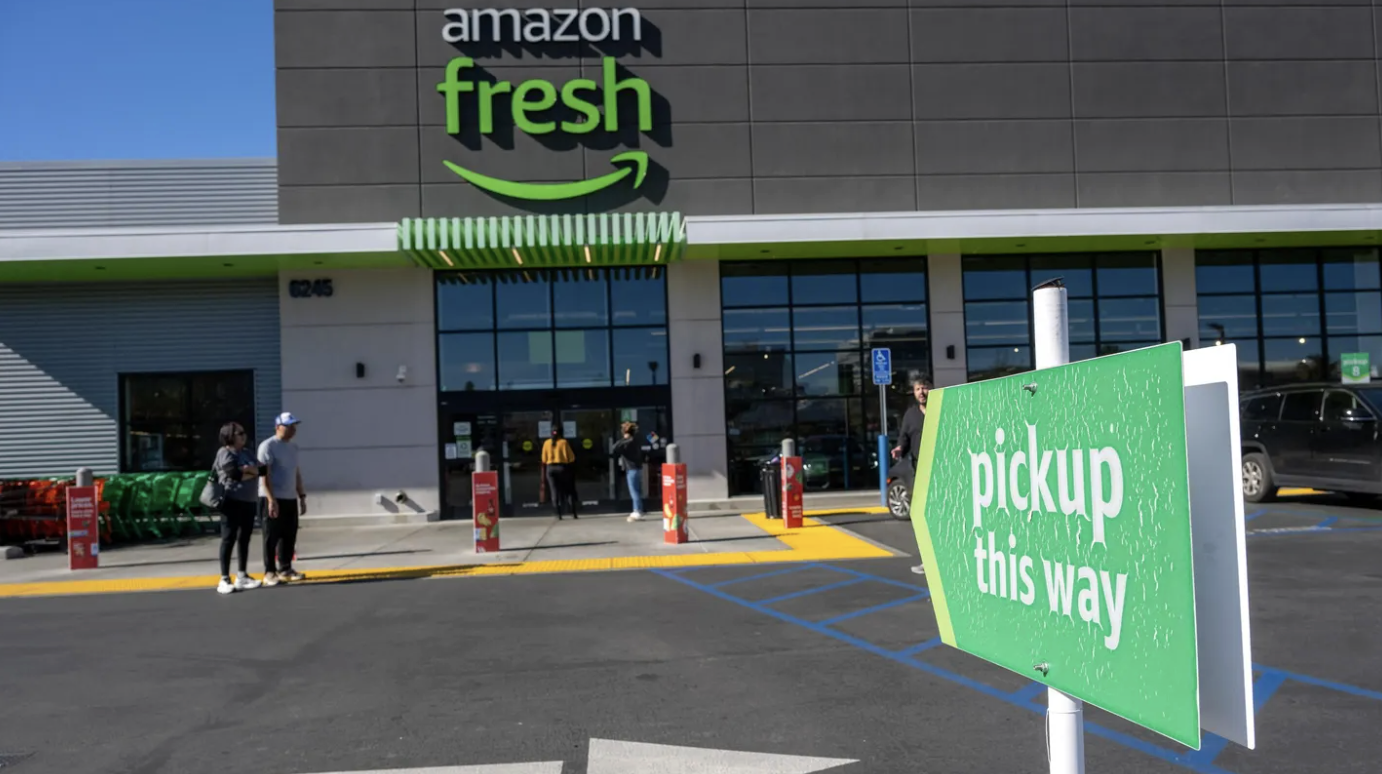
亚马逊表示,未来将把资源重点投入到在线生鲜和日用品的配送业务上,进一步扩展当日达和半小时达等快速配送服务。据悉,亚马逊已经为超过1.5亿食品杂货客户提供服务,创造了1500亿美元的销售总额,还在美国超过5000个城市和城镇推出了当日达配送服务。日常生活必需品的销售,在亚马逊上的销售额占比已经达到了1/3。

同时,亚马逊计划进一步推动全食超市的扩张。自2017年亚马逊以137亿美元收购全食超市以来,该品牌的销售额增幅超过40%,目前在美国已有超过550家门店。

亚马逊计划在未来数年内再增加超过100家全食超市门店,并推广Whole Foods Market Daily Shop这一较小规模的便利型门店形式,为消费者提供熟食、咖啡和日常必需品。预计到2026年年底之前,亚马逊将新开五家Whole Foods Market Daily Shop。

亚马逊还在测试其他新型零售概念,例如在芝加哥附近打造类似沃尔玛模式的大型商场式杂货店、在宾夕法尼亚全食超市中引入 “店中店” 体验等。

【版权提示】亿邦动力倡导尊重与保护知识产权。未经许可,任何人不得复制、转载、或以其他方式使用本网站的内容。如发现本站文章存在版权问题,烦请提供版权疑问、身份证明、版权证明、联系方式等发邮件至run@ebrun.com,我们将及时沟通与处理。

已点赞

+1

{{ praise_text }}

好文章,值得被更多人看到

FAQ回顾

亚马逊关闭了哪些实体门店?

亚马逊将关闭旗下所有57家Amazon Fresh生鲜超市和15家Amazon Go无人便利店的实体门店,部分门店将改造为全食超市。

亚马逊未来在生鲜零售领域的重点策略是什么?

亚马逊将重点发展在线生鲜配送业务,扩展当日达和半小时达服务,并计划在未来数年新增超过100家全食超市门店和5家Daily Shop便利型门店。

全食超市被亚马逊收购后的发展情况如何?

自2017年亚马逊以137亿美元收购全食超市以来,该品牌销售额增幅超过40%,目前在美国拥有超过550家门店,是亚马逊线下零售的重要支柱。

广告

下一篇

跨境电商资源对接

《全球跨境电商服务商资源手册》第二期手册现已发布,触达更多资源,了解跨境服务商信息,欢迎点击链接下载。

了解详情

MWC26全网首发前瞻:不止移动通信 AI落地进程才是核心!

还有不到40天,今年全球科技界第二场盛会MWC26就要开幕了。2026年 3月 2日到5 日,全球科技行业和通信业界领袖将重返西班牙巴塞罗那,共同谋划、讨论和构建连接技术的未来。

未来零售

2026-01-29 10:08:39