



• 亿邦公众号
    • APP下载

京东加速线下布局:12月17日折扣超市北京首店落户门头沟

作者:龚作仁 文章来源:Laborer

2025-12-11 17:40

作者:龚作仁 文章来源:Laborer

2025-12-11 17:40

邦小白快读

EN
全文速览

京东折扣超市北京首店将于12月17日在门头沟开业,提供丰富实惠的购物选择。

1. 开业信息包括时间地点:门店落户门头沟西山荟购物中心,恰逢冬至和“双12”旺季,是继河北等地之后的第九家店。

2. 特色商品涵盖京味小吃如红糖焙子、老北京排叉现场制作,以及招牌小笼包、黑椒柠檬烤鸡等新品,京东酒坊散装白酒以6.9元/斤低价供应。

3. 开业促销活动包括9.9元京东自有品牌商品,如七鲜糖炒板栗牛奶、京鲜舫馄饨、玉米汁和15L大桶纯净水,凸显供应链成本优势。

4. 创新销售方式为“袜子论斤卖”,定价26.9元/斤(每双不到2元),结合“双12干货节”专区供应年货如铁锅现炒花生、羌味后腿猪肉。

门店扩张展现高性价比模式的成功应用。

1. 自8月至今已在河北、江苏、安徽开出8家门店,覆盖华北和华东,其中宿迁四店同开单日客流超30万人次。

2. 首次进入一线城市北京,采用“大店型、多SKU”和本地化调整策略,有望为老城区注入新消费活力。

京东折扣超市的线下布局提供品牌营销和渠道建设启示。

1. 品牌营销体现在门店扩张策略上,通过北京首店延续“大店型、多SKU”模式,并结合本地化商品如京味小吃现场制作,吸引区域消费者。

2. 品牌渠道建设涉及全国稳步推进,已覆盖华北和华东地区,宿迁店客流超30万人次的数据显示其市场渗透力强。

产品研发和定价策略凸显竞争优势。

1. 产品研发包括引入黑椒柠檬烤鸡等新口味,以及京东自有品牌如七鲜糖炒板栗牛奶,满足消费趋势中的个性化需求。

2. 品牌定价采用亲民策略,如散装白酒6.9元/斤、自有品牌9.9元促销商品,展现价格竞争力,结合节日推出水饺和年货专区。

消费趋势观察基于用户行为。

1. 年末旺季消费趋势通过冬至和“双12”活动体现,推出近30款水饺和高性价比商品,用户行为显示客流高峰在宿迁等地已验证。

京东折扣超市的扩张提供增长市场和消费需求变化机会。

1. 增长市场包括北京首店进入一线城市,覆盖华北和华东,宿迁单日客流超30万人次的数据显示潜力,消费需求变化体现在本地特色商品和年货需求上。

2. 机会提示:门店结合冬至和“双12”推出促销活动如“双12干货节”专区,供应铁锅现炒花生等年货商品,可学习其利用旺季的策略。

事件应对措施和可学习点突出创新模式。

1. 事件应对涉及开业期间9.9元自有品牌商品和袜子论斤卖创新销售(26.9元/斤),直观展示源头直采优势,应对节日消费高峰。

2. 最新商业模式可学习点包括“高性价比+本地特色”模式,如现场制作京味小吃,宿迁等地验证成功,为其他卖家提供参考。

合作方式和扶持政策启示:虽无直接信息,但基于案例可推测区域合作机会,如供应链集约化降低成本。

京东折扣超市的商品需求带来生产机会。

1. 产品生产需求包括京味小吃如红糖焙子、老北京排叉现场制作,京东酒坊散装白酒,以及自有品牌如七鲜糖炒板栗牛奶,这些需工厂供应本地化原料。

2. 商业机会涉及为京东提供商品,如门店推出黑椒柠檬烤鸡等新品,结合促销活动9.9元定价,显示规模化采购潜力。

推进数字化和电商启示强化供应链管理。

1. 电商启示通过供应链集约化实现成本优势,如15L纯净水以9.9元销售,源头直采如袜子论斤卖方式,工厂可学习此模式降低库存。

2. 数字化应用体现在门店“大店型、多SKU”本地化运营,宿迁店客流数据高,显示线上线下结合的成功案例。

行业发展趋势显示线下零售的扩张动向。

1. 发展趋势包括京东折扣超市进入北京一线城市,全国第九家门店覆盖华北和华东,宿迁四店同开单日客流超30万人次,体现业态增长。

2. 客户痛点解决方案涉及本地化调整应对区域需求,如引入京味小吃缓解商品同质化,供应链集约化降低9.9元商品成本。

新技术应用虽未明确,但基于模式可提供相关服务。

1. 创新方式如袜子论斤卖展现源头直采痛点解决,服务商可开发物流或系统支持;门店模式成功案例(宿迁客流)显示运营效率机会。

京东折扣超市的运营做法提供平台管理洞察。

1. 平台最新做法包括“大店型、多SKU”门店模式,结合本地化商品如京味小吃现场制作,运营管理涉及开业促销9.9元商品和袜子论斤卖创新。

2. 平台招商和需求:虽无直接招商信息,但基于扩张(覆盖华北华东)和宿迁店客流,潜在合作机会如供应商品;风向规避可关注模式进入一线城市的挑战。

商业对平台需求启示强化集约化策略。

1. 需求涉及供应链管理,如源头直采降低袜子论斤卖成本,结合节日活动(冬至和“双12”)推出水饺专区,显示平台需高效响应市场变化。

产业新动向聚焦京东线下零售模式进入一线城市。

1. 新动向包括折扣超市首次落户北京,是第九家门店,覆盖华北和华东,宿迁单日客流超30万人次案例验证区域成功。

2. 商业模式分析为“高性价比+本地特色”,如商品本地化调整(京味小吃)、供应链集约化(9.9元纯净水),结合创新销售(袜子论斤卖)。

政策法规启示和问题:虽无直接政策解读,但基于扩展可研究城市商业影响。

1. 模式为老城区注入新活力,研究者可探讨其对中国零售业启示;数据如客流提供实证基础,但需进一步观察一线城市实施风险。

声明:快读内容全程由AI生成,请注意甄别信息。如您发现问题,请发送邮件至 run@ebrun.com 。

我是 品牌商 卖家 工厂 服务商 平台商 研究者 帮我再读一遍。

Quick Summary

JD.com's discount supermarket opens its first Beijing store in Mentougou on December 17, offering diverse and affordable shopping options.

1. Opening details: The store is located in the Xishan Hui Shopping Center, coinciding with the Winter Solstice and "Double 12" shopping season, marking the ninth outlet following stores in Hebei and other regions.

2. Featured products include local Beijing snacks like brown sugar baked cakes and old Beijing crispy twists made on-site, alongside new items such as signature soup dumplings and black pepper lemon roast chicken. JD's wine shop offers bulk baijiu at a low price of 6.9 yuan per jin.

3. Opening promotions include JD's private label products priced at 9.9 yuan, such as Qixian sugar-fried chestnut milk, Jingxianfang wontons, corn juice, and 15L purified water, highlighting supply chain cost advantages.

4. Innovative sales method: "Socks sold by weight" at 26.9 yuan per jin (less than 2 yuan per pair), combined with a "Double 12 Dry Goods Festival" section offering New Year goods like wok-fried peanuts and Qiang-style pork hind legs.

Store expansion demonstrates the successful application of a high-value model.

1. Since August, eight stores have opened in Hebei, Jiangsu, and Anhui, covering North and East China, with four stores in Suqian attracting over 300,000 daily visitors.

2. The first entry into a first-tier city like Beijing adopts a "large store format, high SKU count" strategy with localized adjustments, potentially injecting new consumer vitality into older urban areas.

JD.com's discount supermarket offline expansion offers insights for brand marketing and channel development.

1. Brand marketing is reflected in the store expansion strategy, continuing the "large store, high SKU" model in Beijing with localized products like on-site Beijing snacks to attract regional consumers.

2. Channel development involves steady national progress, covering North and East China, with Suqian store traffic exceeding 300,000 visitors demonstrating strong market penetration.

Product development and pricing strategies highlight competitive advantages.

1. Product innovation includes new flavors like black pepper lemon roast chicken and JD's private label items such as Qixian sugar-fried chestnut milk, catering to personalized consumption trends.

2. Pricing adopts a consumer-friendly approach, with bulk baijiu at 6.9 yuan/jin and 9.9 yuan promotional private label products, showcasing price competitiveness alongside holiday-themed sections for dumplings and New Year goods.

Consumer trend observations are based on user behavior.

1. Year-end peak season trends are evident through Winter Solstice and "Double 12" activities, featuring nearly 30 dumpling varieties and high-value products, with user behavior data confirming traffic peaks in locations like Suqian.

JD's discount supermarket expansion presents opportunities in growing markets and shifting consumer demands.

1. Growth markets include the Beijing debut in a first-tier city, covering North and East China, with Suqian's single-day traffic exceeding 300,000 indicating potential. Demand shifts are seen in local specialties and New Year goods.

2. Opportunity alert: Stores leverage peak seasons like Winter Solstice and "Double 12" with promotions such as the "Dry Goods Festival" section offering wok-fried peanuts, providing lessons in旺季 strategy utilization.

Event response measures and learnable points highlight innovative models.

1. Opening strategies include 9.9 yuan private label products and innovative "socks by weight" sales (26.9 yuan/jin), demonstrating direct sourcing advantages for holiday demand.

2. Learnable business models combine "high value + local characteristics," such as on-site Beijing snack production, validated in Suqian, offering references for other sellers.

Cooperation and support policy insights: While not explicitly stated, regional collaboration opportunities can be inferred, such as supply chain consolidation for cost reduction.

JD's discount supermarket product demand creates production opportunities.

1. Production needs include local Beijing snacks like brown sugar baked cakes and crispy twists made on-site, JD's bulk baijiu, and private label items such as Qixian chestnut milk, requiring localized raw material supply.

2. Business opportunities involve supplying JD with new products like black pepper lemon roast chicken, supported by promotional pricing at 9.9 yuan, indicating scale procurement potential.

Digital and e-commerce insights emphasize supply chain management.

1. E-commerce lessons show cost advantages through supply chain consolidation, e.g., 15L water sold at 9.9 yuan and direct sourcing methods like "socks by weight," which factories can adopt to reduce inventory.

2. Digital application is reflected in localized "large store, high SKU" operations, with high traffic data from Suqian demonstrating successful online-offline integration.

Industry trends indicate offline retail expansion momentum.

1. Development trends include JD's discount supermarket entering Beijing as a first-tier city, with nine stores nationwide covering North and East China, and Suqian's four stores attracting over 300,000 daily visitors, reflecting format growth.

2. Customer pain point solutions involve localized adjustments for regional needs, such as introducing Beijing snacks to combat product homogenization, and supply chain consolidation reducing costs for 9.9 yuan items.

New technology applications are not explicit but inferable from the model.

1. Innovations like "socks by weight" address direct sourcing challenges, where service providers can offer logistics or system support; successful store models (e.g., Suqian traffic) indicate operational efficiency opportunities.

JD's discount supermarket operations offer platform management insights.

1. Latest practices include the "large store, high SKU" model with localized products like on-site Beijing snacks, managed through opening promotions (9.9 yuan items) and innovative "socks by weight" sales.

2. Platform recruitment and demand: While no direct partnership information is given, expansion coverage (North/East China) and Suqian store traffic suggest supply collaboration opportunities; risk avoidance should consider challenges in first-tier city entry.

Business demands on platforms highlight consolidation strategies.

1. Needs involve supply chain management, such as direct sourcing to reduce costs for "socks by weight," coupled with holiday activations (Winter Solstice/Double 12) like dumpling sections, showing platforms must respond efficiently to market changes.

Industry developments focus on JD's offline retail model entering first-tier cities.

1. New trends include the discount supermarket's Beijing debut as the ninth store, covering North and East China, with Suqian's 300,000+ daily visitors validating regional success.

2. Business model analysis reveals a "high value + local characteristics" approach, featuring localized adjustments (Beijing snacks), supply chain consolidation (9.9 yuan water), and innovative sales (socks by weight).

Policy and regulatory implications: While not directly addressed, expansion invites study on urban commercial impact.

1. The model injects vitality into older urban areas, offering research avenues for China's retail sector; data like foot traffic provides empirical basis, but first-tier city implementation risks require further observation.

Disclaimer: The "Quick Summary" content is entirely generated by AI. Please exercise discretion when interpreting the information. For issues or corrections, please email run@ebrun.com .

I am a Brand Seller Factory Service Provider Marketplace Seller Researcher Read it again.

记者今日获悉,京东折扣超市北京首家门店即将落户门头沟西山荟购物中心,于12月17日正式亮相。这是继河北、江苏、安徽之后,该业态在全国范围稳步推进的第九家门店。
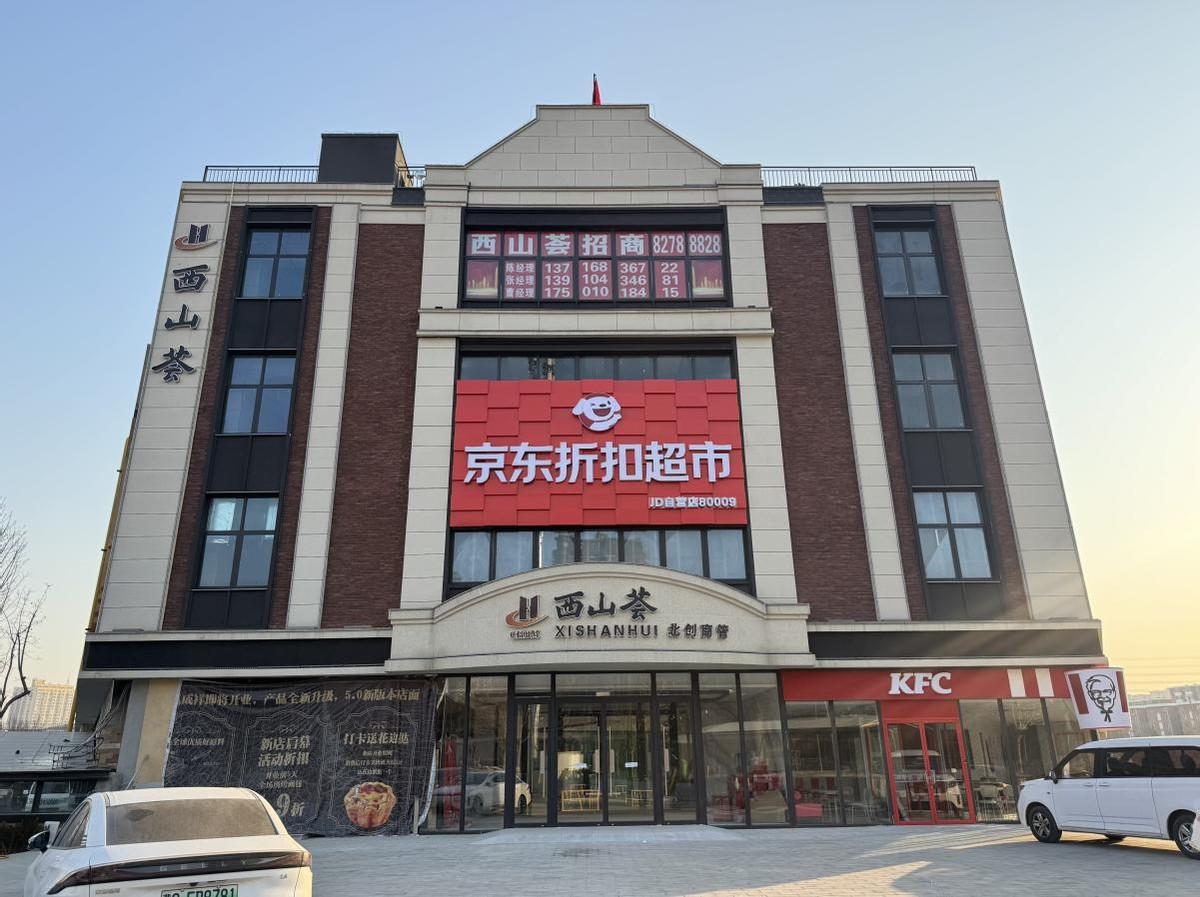
据知情人士透露,门头沟门店将延续京东折扣超市一贯的经营特色,采用“大店型、多SKU”模式,并在商品结构上进行深度本地化调整。除常规商品外,门店将引入红糖焙子、老北京排叉、驴打滚等京味小吃现场制作,并推出已在其他地区广受欢迎的招牌小笼包和全新黑椒柠檬口味烤鸡。此外,京东酒坊的散装纯粮白酒也将以6.9元/斤的亲民价格供应。

开业期间,还将推出多款9.9元京东自有品牌商品,包括七鲜糖炒板栗牛奶、京鲜舫510g馄饨、1L装玉米汁等,其中15L大桶纯净水亦将以9.9元销售,凸显供应链集约化带来的成本优势。

值得注意的是,门店开业恰逢冬至与“双12”年末消费旺季。店内将同步推出近30款高性价比水饺产品,并设置“双12干货节”专区,供应铁锅现炒花生、羌味后腿猪肉等具有年货属性的商品。此外,店内还将尝试“袜子论斤卖”的创新销售方式,以26.9元/斤(约合每双不到2元)的定价直观呈现源头直采的价格竞争力。

自8月至今,京东折扣超市已在河北、江苏、安徽接连开出8家门店,其中宿迁四店同开,单日客流超过30万人次,覆盖华北、华东等多个区域。此次入驻北京,是该业态首次进入一线城市,也是其拓展华北市场的重要一步,在多地验证成功的“高性价比+本地特色”模式,有望为北京门头沟区老城区商业注入新的消费活力。

注:文/龚作仁,文章来源:Laborer,本文为作者独立观点,不代表亿邦动力立场。

【版权提示】亿邦动力倡导尊重与保护知识产权。未经许可,任何人不得复制、转载、或以其他方式使用本网站的内容。如发现本站文章存在版权问题,烦请提供版权疑问、身份证明、版权证明、联系方式等发邮件至run@ebrun.com,我们将及时沟通与处理。

已点赞

+1

{{ praise_text }}

好文章,值得被更多人看到

FAQ回顾

京东折扣超市北京首店的具体开业时间和地点是什么?

京东折扣超市北京首家门店将于12月17日开业,位于门头沟区的西山荟购物中心。

京东折扣超市门头沟店有哪些本地化特色商品?

门店将引入红糖焙子、老北京排叉、驴打滚等京味小吃现场制作,并提供招牌小笼包、黑椒柠檬烤鸡及6.9元/斤的京东酒坊散装纯粮白酒。

京东折扣超市开业期间有哪些促销活动?

开业期间推出多款9.9元自有品牌商品,如七鲜糖炒板栗牛奶、京鲜舫馄饨、15L大桶纯净水,并设置“双12干货节”专区和26.9元/斤的袜子论斤卖活动。

广告

下一篇

跨境电商资源对接

《全球跨境电商服务商资源手册》第二期手册现已发布,触达更多资源,了解跨境服务商信息,欢迎点击链接下载。

了解详情

需提交一镜到底验真视频!淘宝闪购新增电商类型商家开店要求

零售电商类型、医药健康电商类型商家开店需要依照《淘宝闪购平台招商入驻标准》提交门店门脸照、大堂照等店内实景照片,并提供一段完整展示线下实体经营场所的一镜到底验真视频。

阿里巴巴 平台 外卖 未来零售

2025-12-11 17:37:08









