



• 亿邦公众号
    • APP下载

1688启动“寻源中国”供应链 在核心产地严选“黑珍珠”工厂

作者:龚作仁 文章来源:Laborer

2025-12-01 13:43

作者:龚作仁 文章来源:Laborer

2025-12-01 13:43

邦小白快读

EN
全文速览

1688启动“寻源中国”供应链项目,深入核心产业带挖掘优质工厂,提供高质价比商品去除溢价,实操性强。

1. 项目在重庆首站与聚慧食品合作,推出四款牛油火锅底料(过把瘾、佬油集1983、水火锅、茉莉火锅),用户在1688App搜索“寻源中国”即可购买,实操步骤简单易行。

2. 合作模式分“选品”和“开品”两种:前者由平台买手精选商品,后者联合工厂反向定义产品满足需求,可学习操作方式。

3. 选品原则坚持无用户价值不上架,依托AI数据洞察消费趋势,降低买家风险;工厂要求完整生产线和健全质控,确保商品可靠性。

4. 项目通过短视频、图文和工厂直播实现溯源,消费者可看到产品全过程,增强信任;长期目标是让用户直接受益于工厂实惠。

1688“寻源中国”项目提供品牌营销合作机会,基于消费趋势数据反推产品创新。

1. 品牌营销方面,采用联名方式(如聚慧餐调×1688源选),推出四款差异化火锅底料(如茉莉火锅创新融入真实茉莉花),强化品牌印象和渠道曝光。

2. 品牌渠道建设体现在深入产业带,挖掘“黑珍珠”工厂,构建从制造到消费者的直接链路,减少中间溢价;定价策略坚持低毛利运营,最大限度让利供需两端,解决价格竞争。

3. 产品研发基于AI整合线上线下全渠道数据,洞察目标消费者需求(如一二线城市年轻白领、宝妈和大学生),捕捉新趋势定制开发,实现功能性差异化设计。

4. 用户行为观察聚焦消费趋势变化,项目通过数据反推产品开发,为品牌提供趋势应对方案,增强市场适应性。

项目带来增长市场和机会提示,提供可学习商业模式和风险规避措施。

1. 增长市场面向核心产业带挖掘“隐形冠军”工厂,首站重庆火锅底料领域,展示消费需求层面机会;事件应对通过AI洞察趋势变化和用户需求变动,及时调整策略。

2. 机会提示包括合作模式:选品模式帮助卖家精选商品上线,开品模式支持柔性生产和定制开发;扶持政策体现为平台全程参与设计、包装策划和生产监督,货权归属平台,减少卖家操作风险。

3. 正面影响是去除溢价提升交易效率,风险规避通过严格的工厂筛选(要求完整设备和质控)杜绝“一锤子买卖”,确保履约可控;可学习点为借鉴Costco模式实现小单快反和低毛利运营。

4. 最新商业模式转向供应链共创,从传统撮合升级为价值共享,卖家可参与反向定义产品,开辟电商新途径。

项目提供商业机会和推进数字化的启示,强化生产设计需求。

1. 产品生产需求涉及严格标准:合作工厂需具备完整生产线、先进设备和健全质控流程,确保产品可靠性,为设计设定基本框架。

2. 设计需求在开品模式中体现,工厂与平台基于用户数据反向定义产品功能和配方优化(如火锅底料的差异化风味),推动创新定制;实操包括打样测试和包装策划,可优化流程。

3. 商业机会包括被挖掘为“黑珍珠”工厂,1688从100万家源头厂商筛选头部企业,提升企业可见度和认可度,打造长期销售渠道。

4. 推进数字化和电商的启示,项目依托AI数据洞察消费趋势,引导工厂融入线上生态;同时溯源机制(如直播)要求工厂展示全过程,加速数字化转型实战应用。

项目揭示行业发展趋势并解决客户痛点,提供技术解决方案。

1. 行业发展趋势指向供应链优化,1688转向C2M模式(从消费者到制造),实现小单快反和自有品牌运营,重塑线上零售生态,类似Costco高效逻辑。

2. 新技术应用突出AI整合全渠道数据,用于产品企划和需求洞察,技术平台赋能精准响应;工具包括短视频、图文和直播的溯源系统,提升交互体验。

3. 客户痛点如源头信任问题和商品溢价,通过项目打通产地到消费全链路,提供“溯源探厂”可视化方案;痛点包括履约不可控,由平台监督确保售后稳定。

4. 解决方案聚焦构建“源头可溯、品质可见”认知,服务商可参考数据洞察和反推定制机制,解决供需信任缺失问题,推动产业效率提升。

项目显示平台最新做法和运营管理创新,解决商业需求规避风险。

1. 商业对平台的需求是增强供需信任链路,项目通过深入产业带挖掘工厂,直接连接消费者,减少中间层溢价;问题如履约不可控,由平台全程参与开发并货权归属平台解决。

2. 平台最新做法包括启动“寻源中国”主导消费业务,招商筛选头部工厂,聚焦特定群体(年轻白领等);运营管理设计选品和开品双模式,确保商品价值导向,结合AI数据洞察优化决策。

3. 平台招商机制严控工厂资质(设备、质控齐全),并实现柔性生产响应市场需求;风向规避采用严格选品原则,无用户价值不上架,杜绝一锤子买卖风险。

4. 项目转变成价值共创者,管理风险同时最大化让利,通过“低毛利、精选商品”模式打造健康生态,提升平台可持续性。

项目展现产业新动向和商业模式创新,揭示供应链优化启示。

1. 产业新动向体现在1688从交易撮合者转向供应链价值共创者,整合AI和全渠道数据,挖掘“隐形冠军”工厂;新问题聚焦信任链路缺失,项目通过溯源机制打通工厂与消费者连接。

2. 新商业模式实践包括C2M反向定制和小单快反生产,借鉴Costco逻辑实现低毛利和自有品牌运营;变化点在于平台全程参与开发和货权管理,推动线上零售转型。

3. 政策法规建议间接启示需强化源头追溯和质控规范,项目标准要求工厂完整质控流程,可作为行业监管参考;启示包括数据驱动定制化如何优化供应链效率。

4. 整体趋势指向中国制造业数字化升级,研究者可分析模式对产业生态的影响,包括如何让优质制造企业被看见、被认可,实现普惠零售闭环。

声明:快读内容全程由AI生成,请注意甄别信息。如您发现问题,请发送邮件至 run@ebrun.com 。

我是 品牌商 卖家 工厂 服务商 平台商 研究者 帮我再读一遍。

Quick Summary

1688 launched its "Sourcing China" supply chain initiative, diving deep into core industrial clusters to identify high-quality factories and offer value-for-money products with minimized markups. The program emphasizes practical implementation.

1. The project kicked off in Chongqing with a partnership with Juhui Food, introducing four types of beef tallow hotpot bases (e.g., Over the Addiction, Lao Youji 1983). Users can purchase them by searching "Sourcing China" in the 1688 app, with straightforward purchasing steps.

2. Two collaboration models are offered: "Product Selection," where platform buyers curate items, and "Product Development," which involves co-creating products with factories based on demand data. Both models provide actionable insights for users.

3. Selection criteria prioritize user value—products without clear benefits are not listed. AI-driven data insights help identify consumer trends, reducing buyer risk. Factories must have full production lines and robust quality control to ensure reliability.

4. The program uses short videos, graphics, and live factory streams for traceability, allowing consumers to see the entire production process. The long-term goal is to enable users to benefit directly from factory pricing.

1688's "Sourcing China" project offers brand marketing collaboration opportunities, leveraging consumer trend data to drive product innovation.

1. For brand marketing, co-branded initiatives (e.g., Juhui Meal Seasoning × 1688 Source Selection) introduce differentiated products like jasmine-infused hotpot bases, enhancing brand visibility and channel exposure.

2. Channel development involves tapping into industrial clusters to uncover "hidden gem" factories, creating direct manufacturer-to-consumer links to reduce intermediary markups. Low-margin pricing benefits both supply and demand, easing price competition.

3. Product R&D utilizes AI to integrate omnichannel data, identifying needs of target consumers (e.g., young urban professionals) and enabling trend-driven customization for functional differentiation.

4. The project focuses on shifting consumer behaviors, using data to inform product development and provide brands with trend-responsive strategies for better market adaptability.

The project highlights growth markets and opportunities, offering learnable business models and risk mitigation tactics.

1. Growth markets focus on core industrial clusters with "hidden champion" factories, starting with Chongqing’s hotpot base sector. AI insights help sellers adapt to trend shifts and demand changes.

2. Opportunities include two collaboration models: "Product Selection" for curated listings and "Product Development" for flexible, customized production. Platform support covers design, packaging, and production oversight, with inventory ownership held by 1688 to reduce seller risk.

3. Benefits include minimized markups and improved transaction efficiency. Risk avoidance is achieved through strict factory vetting (requiring full equipment and QC), preventing one-off deals. The model draws from Costco’s approach for small-batch responsiveness and low-margin operations.

4. The business model shifts toward supply chain co-creation, upgrading from mere transaction facilitation to value sharing, allowing sellers to participate in product definition and explore new e-commerce pathways.

The project presents commercial opportunities and digitalization insights, emphasizing production and design requirements.

1. Production standards require partners to have complete production lines, advanced equipment, and quality control systems, ensuring reliability and setting a framework for design.

2. In the "Product Development" model, factories co-define products with the platform using user data, optimizing features like hotpot base flavors. Practical steps include sampling and packaging planning, offering process optimization insights.

3. Commercial opportunities include being identified as a "hidden gem" factory. 1688 selects top manufacturers from a pool of 1 million suppliers, boosting visibility and building long-term sales channels.

4. Digitalization push: AI-driven consumer trend insights help factories integrate into online ecosystems. Traceability mechanisms (e.g., live streams) require full process transparency, accelerating practical digital transformation.

The project reveals industry trends and addresses client pain points, offering technical solutions.

1. Trends point to supply chain optimization, with 1688 adopting C2M models for small-batch production and private-label operations, reshaping online retail similarly to Costco’s efficiency logic.

2. AI applications integrate omnichannel data for product planning and demand insights. Tools like traceable videos and live streams enhance interactive experiences.

3. Client pain points—such as trust gaps and product markups—are addressed via end-to-end traceability from origin to consumer. Platform oversight ensures stable post-sale fulfillment.

4. Solutions focus on building "traceable origins, visible quality" awareness. Service providers can leverage data insights and reverse customization mechanisms to bridge trust gaps and boost industry efficiency.

The project demonstrates platform innovations in operations and risk management, addressing commercial needs.

1. Market demands include strengthening trust between supply and demand. The project connects consumers directly with factories in industrial clusters, reducing intermediary markups. Platform-managed development and inventory ownership mitigate fulfillment risks.

2. Latest practices include launching "Sourcing China" to lead consumer business, recruiting top factories, and targeting specific groups (e.g., young professionals). Operations combine "Product Selection" and "Product Development" models, guided by AI data for value-driven decisions.

3. Recruitment requires strict factory qualifications (full equipment, QC) and flexible production capacity. Risk avoidance hinges on rigorous selection—only listing products with user value—to prevent unreliable transactions.

4. The platform evolves into a value co-creator, maximizing benefits for all parties through a "low-margin, curated goods" model to build a sustainable ecosystem.

The project reflects industrial shifts and business model innovations, highlighting supply chain optimization insights.

1. Industry trends show 1688 transitioning from a transaction facilitator to a supply chain co-creator, using AI and omnichannel data to identify "hidden champion" factories. Key challenges include trust deficits, addressed via traceability mechanisms linking factories and consumers.

2. New business models feature C2M reverse customization and small-batch production, adopting Costco-like low-margin strategies. Innovations include platform-led development and inventory management, driving online retail transformation.

3. Indirect policy implications stress the need for origin traceability and QC standards. The project’s factory requirements could inform industry regulations. Insights include how data-driven customization enhances supply chain efficiency.

4. Broader trends align with China’s manufacturing digital upgrade. Researchers can analyze the model’s impact on industrial ecosystems, including how it elevates visibility and recognition for quality manufacturers, enabling inclusive retail cycles.

Disclaimer: The "Quick Summary" content is entirely generated by AI. Please exercise discretion when interpreting the information. For issues or corrections, please email run@ebrun.com .

I am a Brand Seller Factory Service Provider Marketplace Seller Researcher Read it again.

12月1日,阿里巴巴旗下源头厂货平台1688启动“寻源中国”供应链项目。

1688将深入全国核心产业带,挖掘制造业的“隐形冠军”,为消费者“寻源”更高质价比的商品。通过去除溢价,让消费者享受中国供应链带来的普惠。

“寻源中国”首站落地重庆,携手当地火锅底料龙头企业聚慧食品科技(重庆)有限公司,通过AI整合线上线下全渠道数据,洞察目标消费者需求,捕捉新消费趋势。

双方以“聚慧餐调×1688源选”的联名方式,推出四款牛油火锅底料:“过把瘾”主打川渝重口味,“佬油集1983”延续经典牛油风味,“水火锅”倡导轻负担理念,“茉莉火锅”则创新融入真实茉莉花成分,探索风味差异化。用户在1688App搜索“寻源中国”即可进入相关商品专区。
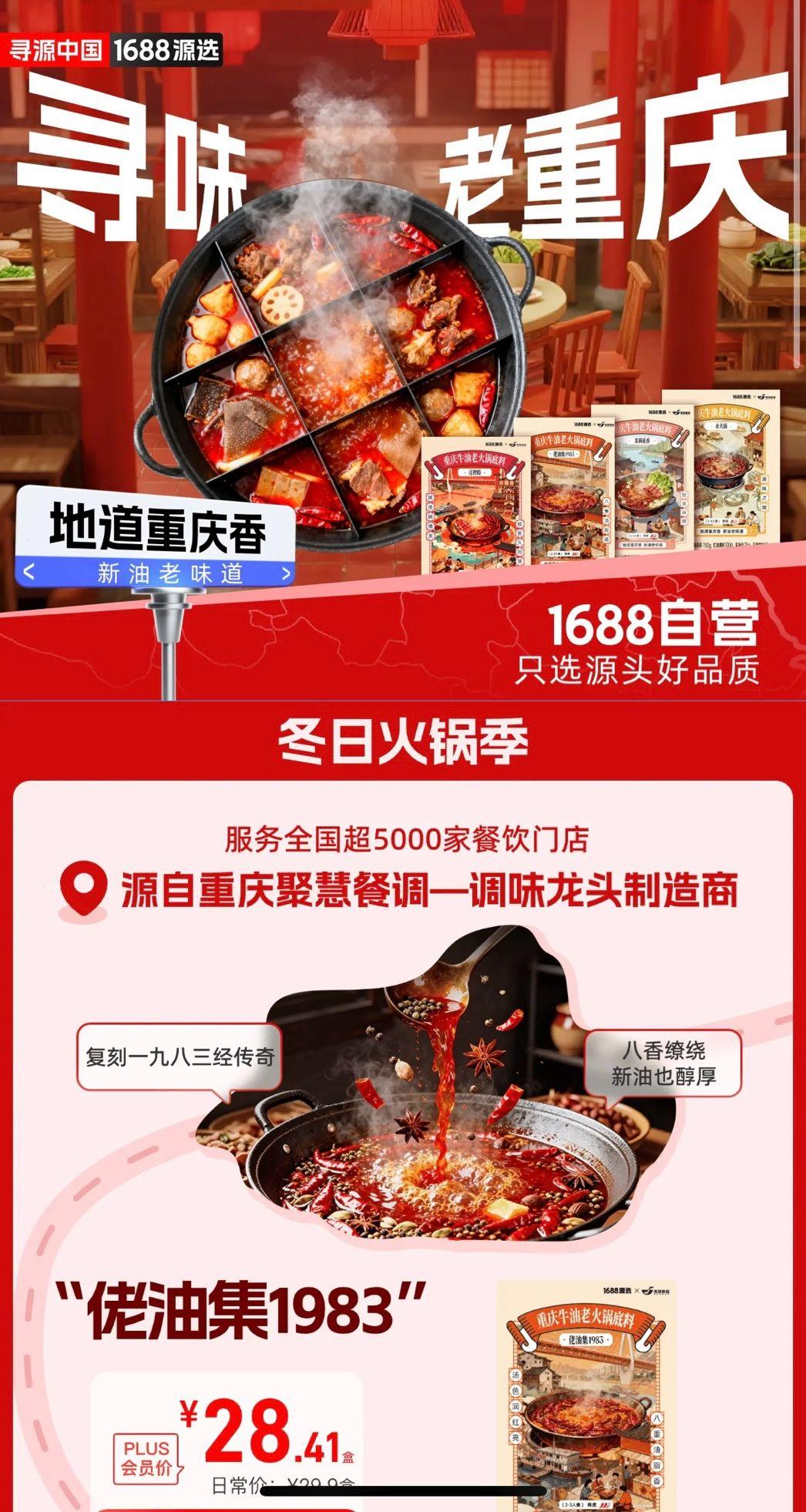
(1688寻源中国商品专区截图)

“寻源中国”项目由1688消费者业务主导,初期聚焦一二线城市年轻白领、宝妈及大学生等群体。据1688消费者业务负责人介绍,平台将从超100万家源头厂商中,筛选具备生产能力、品控体系和集群优势的头部工厂联合打造新品。

项目设两种合作模式:一是“选品”模式,由平台小二担任买手,精选优质商品上线;二是“开品”模式,联合工厂基于用户需求反向定义产品功能与设计,实现定制化开发和柔性生产。

在选品机制上,1688坚持“无用户价值,不上架销售”原则,依托集团对消费趋势的数据洞察和AI产品企划能力,精准响应真实需求。合作工厂须具备完整生产线、先进设备和健全质控流程,并实现履约与售后可控,杜绝“一锤子买卖”。

为强化“源头可溯、品质可见”的认知,项目打通产地、制造到消费的全链路,通过“溯源探厂”短视频、图文和工厂直播等形式,呈现产品研发到生产的全过程。

“寻源中国”以“精选商品、低毛利运营、自有品牌、小单快反”为核心模式,借鉴Costco等会员制零售商的高效逻辑,探索线上新型零售生态。平台承诺严控服务毛利,最大限度让利供需两端。所有商品由1688团队全程参与开发,涵盖设计、配方优化、打样测试、包装策划及生产监督,货权归属平台,标志着1688从传统交易撮合者向供应链价值共创者转变。

“寻源中国”负责人表示,项目的长期目标是帮助优质制造企业被看见、被认可、被选择,同时让消费者“看得见源头、信得过品质、摸得着实惠”,真正打通工厂与消费者的信任链路。
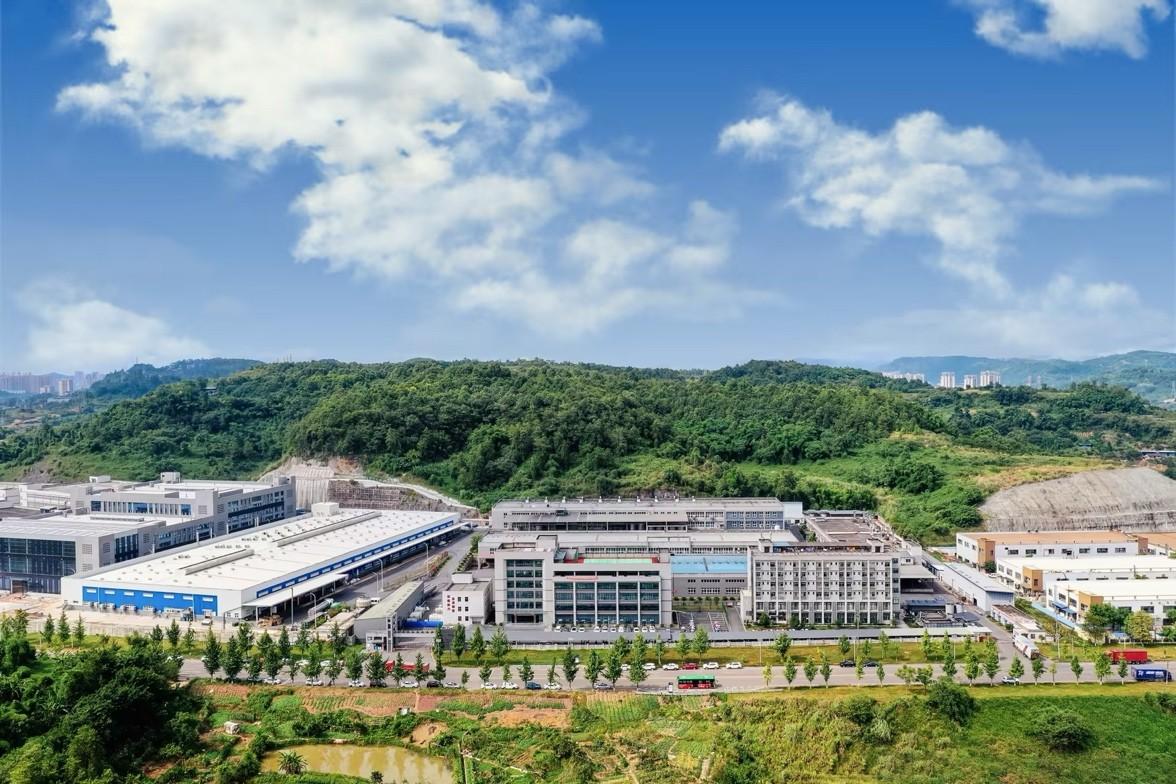
(聚慧餐调其中一家工厂的全景图)

注:文/龚作仁,文章来源:Laborer,本文为作者独立观点,不代表亿邦动力立场。

【版权提示】亿邦动力倡导尊重与保护知识产权。未经许可,任何人不得复制、转载、或以其他方式使用本网站的内容。如发现本站文章存在版权问题,烦请提供版权疑问、身份证明、版权证明、联系方式等发邮件至run@ebrun.com,我们将及时沟通与处理。

已点赞

+1

{{ praise_text }}

好文章,值得被更多人看到

FAQ回顾

1688寻源中国项目的核心模式是什么?

项目以精选商品、低毛利运营、自有品牌、小单快反为核心模式,借鉴Costco高效逻辑,严控服务毛利,平台全程参与产品开发并拥有货权。

1688如何筛选合作工厂?

从超100万家源头厂商中筛选具备生产能力、品控体系和集群优势的头部工厂,要求具备完整生产线、先进设备和健全质控流程,实现履约与售后可控。

寻源中国项目有哪些合作模式?

设选品和开品两种模式:选品由平台买手精选商品上线;开品则联合工厂基于用户需求反向定义产品,实现定制化开发和柔性生产。

广告

下一篇

跨境电商资源对接

《全球跨境电商服务商资源手册》第二期手册现已发布,触达更多资源,了解跨境服务商信息,欢迎点击链接下载。

了解详情

黑白调发布《2025职场久坐健康白皮书》 提出人体工学椅健康新解法

该白皮书由中国健康管理协会健康科普专业委员会秘书长郭弘葳、国家健康科普专家库成员张智海提供学术支持,在人民健康平台发布。

未来零售

2025-12-01 10:52:41










