• 亿邦公众号
    • APP下载

毛利润同比增长4.13% 逸仙电商公布2024全年业绩

作者:张从容 文章来源:亿邦动力

2025-02-28 11:14

作者:张从容 文章来源:亿邦动力

2025-02-28 11:14

邦小白快读

EN
全文速览

逸仙电商2024年业绩显示收入下降但毛利润增长和亏损收窄,提供关键数据和实操启示。

1.总收入33.93亿元同比下降0.63%,连续第四年下降,自2021年峰值58.4亿元后持续走低。

2.毛利润26.17亿元同比增长4.13%,表明成本控制有效,总成本同比缩窄13.89%至7.76亿元。

3.亏损大幅收窄,营业亏损8.25亿元同比收窄9.69%,净亏损7.1亿元同比收窄5.33%,归母净亏损7.08亿元同比收窄5.29%。

4.运营费用微增0.45%至34.42亿元,细分费用如履约费用收窄5.45%、一般及行政费用收窄11.29%、研发费用收窄2.16%,而销售与市场推广费用仅增1.7%。

5.2025年第一季度预计总净收入同比增长2%至12%,在7.888亿到8.662亿元之间,提示未来增长机会。

逸仙电商业绩反映品牌营销、产品研发和消费趋势变化,提供品牌建设启示。

1.销售与市场推广费用同比增长1.7%至22.69亿元,显示营销投入增加,可能影响品牌渠道建设和用户行为观察。

2.研发费用收窄2.16%至1.09亿元,提示产品研发策略调整,需关注创新以应对收入下降趋势。

3.毛利润同比增长4.13%至26.17亿元,表明品牌定价和价格竞争可能有效,成本控制如总成本缩窄13.89%支持利润提升。

4.消费趋势从收入连续四年下降中看出潜在变化,用户行为可能转向价值导向,品牌商可借鉴成本优化。

5.2025年Q1收入预测增长2%-12%,提供消费需求复苏信号,品牌商需调整营销策略抓住机会。

业绩提供增长市场、机会提示和可学习点,帮助应对事件和风险。

1.亏损收窄如营业亏损同比收窄9.69%,显示企业应对措施有效,可学习成本控制策略如履约费用收窄5.45%。

2.2025年Q1预计收入同比增长2%-12%,在7.888亿到8.662亿元之间,提示增长市场机会,卖家可提前布局。

3.收入连续下降带来风险提示,消费需求变化需关注,如总运营费用微增0.45%,可能影响商业模式调整。

4.正面影响包括毛利润增长4.13%和成本缩窄13.89%,提供可学习点如一般及行政费用收窄11.29%。

5.合作方式启示从销售与市场推广费用增长1.7%看出,卖家可探索新合作以规避收入下滑风险。

业绩揭示产品生产设计需求和商业机会,推进数字化电商的实践启示。

1.履约费用收窄5.45%至2.17亿元,反映供应链优化,提供产品生产和设计需求启示,如效率提升。

2.毛利润同比增长4.13%至26.17亿元,显示商业机会在价值创造,工厂可借鉴成本控制如总成本缩窄13.89%。

3.推进数字化电商启示从研发费用收窄2.16%和运营费用微增中看出,需平衡创新与效率。

4.商业机会在2025年Q1收入预测增长2%-12%,提示市场需求复苏,工厂可调整生产策略。

5.风险如收入连续下降,工厂需关注消费趋势变化,从一般及行政费用收窄11.29%学习管理优化。

行业发展趋势和客户痛点分析,提供解决方案参考。

1.行业趋势显示电商企业亏损收窄如净亏损同比收窄5.33%,趋势向成本效率,服务商可关注费用控制启示。

2.客户痛点可能在营销ROI,销售与市场推广费用仅增1.7%至22.69亿元,提示解决方案如优化推广策略。

3.新技术需求不直接提及,但从研发费用收窄2.16%看出创新不足痛点,服务商可提供研发支持方案。

4.发展趋势包括毛利润增长4.13%和2025年预测增长,显示行业复苏机会,解决方案需聚焦成本缩减如履约费用优化。

5.客户痛点如收入下降风险,服务商可基于运营费用微增0.45%数据,开发风控管理工具。

商业对平台需求和运营管理启示,关注平台招商和风险规避。

1.商业对平台需求如品牌合作机会,从销售与市场推广费用增长1.7%看出,平台商可加强招商策略吸引企业。

2.运营管理启示从成本控制中学习,如总成本缩窄13.89%、履约费用收窄5.45%,提示平台效率优化。

3.风向规避需关注收入连续下降风险,平台商可开发工具帮助企业应对消费需求变化。

4.平台最新做法未直接提及,但从毛利润增长4.13%推断,可能涉及定价策略,运营管理可借鉴费用数据。

5.风险提示如商誉减值同比增长13.85%至4.03亿元,平台商需规避类似财务风险,强化审核机制。

产业新动向和商业模式分析,提供政策法规建议启示。

1.产业新动向显示收入连续四年下降但亏损收窄,新问题在可持续增长挑战,需研究消费趋势变化。

2.商业模式调整有效,毛利润增长4.13%配合成本控制如研发费用收窄2.16%,提示效率优化模式。

3.政策法规建议启示从亏损收窄(如营业亏损收窄9.69%)中看出,需制定支持企业减负政策。

4.产业动向包括2025年Q1预测增长2%-12%,显示复苏信号,研究者可分析数据如总运营费用微增0.45%。

5.新问题如商誉减值大幅增长13.85%,需研究风险管理和会计准则改进建议。

声明:快读内容全程由AI生成,请注意甄别信息。如您发现问题,请发送邮件至 run@ebrun.com 。

我是 品牌商 卖家 工厂 服务商 平台商 研究者 帮我再读一遍。

Quick Summary

Yatsen's 2024 results show a decline in revenue alongside growth in gross profit and a narrowing loss, providing key data and practical insights.

1. Total revenue was RMB 3.393 billion, down 0.63% year-on-year (YoY), marking the fourth consecutive annual decline since the 2021 peak of RMB 5.84 billion.

2. Gross profit increased 4.13% YoY to RMB 2.617 billion, indicating effective cost control, with total costs narrowing 13.89% YoY to RMB 776 million.

3. Losses narrowed significantly: operating loss narrowed 9.69% YoY to RMB 825 million, net loss narrowed 5.33% YoY to RMB 710 million, and net loss attributable to ordinary shareholders narrowed 5.29% YoY to RMB 708 million.

4. Operating expenses increased slightly by 0.45% to RMB 3.442 billion, with specific costs like fulfillment expenses narrowing 5.45%, general and administrative expenses narrowing 11.29%, and R&D expenses narrowing 2.16%, while sales and marketing expenses grew only 1.7%.

5. For Q1 2025, total net revenue is forecast to grow 2% to 12% YoY, reaching between RMB 788.8 million and RMB 866.2 million, suggesting potential future growth opportunities.

Yatsen's performance reflects changes in brand marketing, product R&D, and consumer trends, offering insights for brand building.

1. Sales and marketing expenses grew 1.7% YoY to RMB 2.269 billion, indicating increased marketing investment, which may influence channel strategy and user behavior observation.

2. R&D expenses narrowed 2.16% YoY to RMB 109 million, suggesting a strategic adjustment in product development; brands should focus on innovation to counter the revenue decline.

3. Gross profit grew 4.13% YoY to RMB 2.617 billion, indicating potentially effective brand pricing and competition strategies, supported by cost control measures like the 13.89% reduction in total costs.

4. The four-year revenue decline signals shifting consumer trends, possibly towards value-oriented purchases, offering brands a model for cost optimization.

5. The Q1 2025 revenue forecast of 2%-12% growth provides a signal of recovering consumer demand, prompting brands to adjust marketing strategies to capture the opportunity.

The performance highlights growth markets, opportunities, and learnings to help manage events and risks.

1. The narrowing of losses, such as the 9.69% YoY reduction in operating loss, shows effective corporate countermeasures, offering lessons in cost control like the 5.45% reduction in fulfillment expenses.

2. The Q1 2025 revenue forecast of 2%-12% YoY growth, between RMB 788.8 million and RMB 866.2 million, indicates potential market growth, allowing sellers to plan early.

3. The consecutive revenue decline serves as a risk warning about changing consumer demand; the slight 0.45% increase in total operating expenses may necessitate business model adjustments.

4. Positive aspects include the 4.13% gross profit growth and 13.89% cost reduction, providing learnable strategies like the 11.29% reduction in general and administrative expenses.

5. The 1.7% growth in sales and marketing expenses suggests opportunities for new partnerships to mitigate revenue decline risks.

The results reveal product production/design demands and commercial opportunities, offering practical insights for advancing digital e-commerce.

1. Fulfillment expenses narrowed 5.45% to RMB 217 million, reflecting supply chain optimization and offering insights for production/design efficiency improvements.

2. Gross profit grew 4.13% YoY to RMB 2.617 billion, highlighting commercial opportunities in value creation; factories can learn from cost control measures like the 13.89% total cost reduction.

3. Insights for advancing digital e-commerce can be drawn from the 2.16% R&D expense reduction and slight operating expense increase, emphasizing the need to balance innovation with efficiency.

4. The Q1 2025 revenue forecast of 2%-12% growth indicates a potential market demand recovery, suggesting factories adjust production strategies.

5. Risks like the consecutive revenue decline require factories to monitor consumer trends, learning management optimization from the 11.29% reduction in general and administrative expenses.

Analysis of industry trends and client pain points, providing reference for solutions.

1. The industry trend shows e-commerce companies narrowing losses (e.g., net loss narrowed 5.33% YoY), moving towards cost efficiency; service providers can focus on cost control insights.

2. A key client pain point may be marketing ROI, as sales and marketing expenses grew only 1.7% to RMB 2.269 billion, suggesting solutions like optimizing promotion strategies.

3. While not directly stated, the 2.16% R&D expense reduction hints at innovation gaps as a pain point; service providers can offer R&D support solutions.

4. Development trends include the 4.13% gross profit growth and positive 2025 forecast, indicating industry recovery opportunities; solutions should focus on cost reduction, like optimizing fulfillment expenses.

5. For client pain points like revenue decline risk, service providers can develop risk management tools based on data such as the 0.45% operating expense increase.

Insights into merchant demands on platforms and operational management, focusing on merchant acquisition and risk avoidance.

1. Merchant demands for platforms include partnership opportunities, inferred from the 1.7% growth in sales and marketing expenses; platforms can enhance acquisition strategies to attract businesses.

2. Operational management lessons can be drawn from cost control, such as the 13.89% total cost reduction and 5.45% fulfillment expense reduction, suggesting platform efficiency optimizations.

3. Risk avoidance requires attention to the consecutive revenue decline; platforms can develop tools to help merchants adapt to changing consumer demand.

4. While not explicitly mentioned, the 4.13% gross profit growth implies potential pricing strategy adjustments; operational management can leverage expense data for insights.

5. Risk warnings include a 13.85% YoY increase in goodwill impairment to RMB 403 million; platforms should avoid similar financial risks by strengthening review mechanisms.

Analysis of industry movements and business models, providing insights for policy and regulatory recommendations.

1. Industry movements show a four-year revenue decline alongside narrowing losses, raising new questions about sustainable growth challenges and necessitating research into shifting consumer trends.

2. Business model adjustments appear effective, with 4.13% gross profit growth coupled with cost control like the 2.16% R&D expense reduction, highlighting efficiency-optimization models.

3. Policy recommendations can be inferred from the narrowing losses (e.g., 9.69% reduction in operating loss), suggesting a need for policies that support corporate burden reduction.

4. Industry movements include the Q1 2025 forecast of 2%-12% growth, indicating recovery signals; researchers can analyze data points like the 0.45% increase in total operating expenses.

5. New issues like the significant 13.85% increase in goodwill impairment require research into risk management and recommendations for accounting standard improvements.

Disclaimer: The "Quick Summary" content is entirely generated by AI. Please exercise discretion when interpreting the information. For issues or corrections, please email run@ebrun.com .

I am a Brand Seller Factory Service Provider Marketplace Seller Researcher Read it again.

【亿邦原创】2月25日,逸仙电商发布2024年全年业绩。2024年全年,逸仙电商总收入33.93亿元,同比下降0.63%;毛利润26.17亿元,同比增长4.13%;营业亏损8.25亿元,同比收窄9.69%;净亏损7.1亿元,同比收窄5.33%;归母净亏损7.08亿元,同比收窄5.29%。

这是逸仙电商总收入下降的第四年。自2021年达到58.4亿元的最高值后,逸仙电商的总收入便一路走低。同时,逸仙电商也降低了集团的成本和费用。
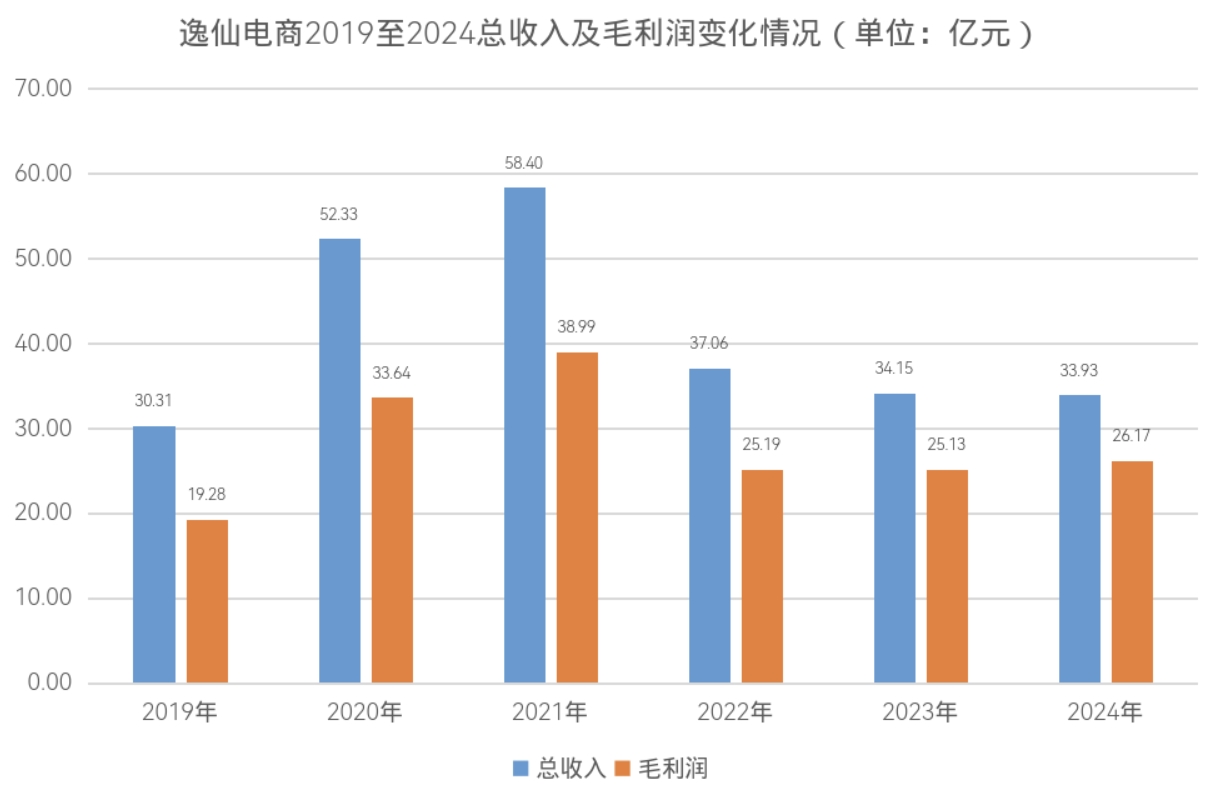
财报显示,逸仙电商2024年的总成本同比缩窄13.89%,由2023年同期的9.01亿元收窄至7.76亿元。同时,总运营费用仅同比微增0.45%至34.42亿元。

其中,除商誉减值和销售与市场推广费用外,其余费用均有所收窄:履约费用2.17亿元,同比收窄5.45%;一般及行政费用4.44亿元,同比收窄11.29%;研发费用1.09亿元,同比收窄2.16%。

相比于2019年至2022年的大起大落,商誉减值和销售与市场推广费用增长也相对有限:销售与市场推广费用22.69亿元,同比2023年同期的22.31亿元同比增长1.7%;商誉减值4.03亿元,同比2023年同期的3.54亿元同比增长13.85%。

对于2025年第一季度,逸仙电商预计其总净收入将在人民币7.888亿元到人民币8.662亿元之间,同比增长约2%至12%。

亿邦持续追踪报道该情报,如想了解更多与本文相关信息,请扫码关注作者微信。

【版权提示】亿邦动力倡导尊重与保护知识产权。未经许可,任何人不得复制、转载、或以其他方式使用本网站的内容。如发现本站文章存在版权问题,烦请提供版权疑问、身份证明、版权证明、联系方式等发邮件至run@ebrun.com,我们将及时沟通与处理。

已点赞

+1

{{ praise_text }}

好文章,值得被更多人看到

FAQ回顾

逸仙电商2024年全年业绩的主要财务数据是什么?

2024年逸仙电商总收入33.93亿元,同比下降0.63%;毛利润26.17亿元,同比增长4.13%;营业亏损8.25亿元,同比收窄9.69%;净亏损7.1亿元,同比收窄5.33%。

逸仙电商2024年的成本和费用控制情况如何?

2024年总成本同比缩窄13.89%至7.76亿元,总运营费用微增0.45%至34.42亿元。履约、一般及行政、研发费用均有所收窄,销售与市场推广费用同比增长1.7%至22.69亿元。

逸仙电商对2025年第一季度的收入预期是多少?

逸仙电商预计2025年第一季度总净收入在7.888亿元至8.662亿元之间,同比增长约2%至12%。

广告

下一篇

征集报名《品牌数字化服务商资源手册》

《品牌数字化服务商资源手册》展示数字化服务商风采,亿邦全年零售大会通发,触达更多资源,马上加入!

马上入驻

专访中国光伏行业协会执行秘书长刘译阳:“唯低价论”非常恶劣

“劣币驱逐良币”的市场现实,导致大家进入“囚徒困境”。“这次的光伏周期给大家上了一课。”中国光伏行业协会执行秘书长刘译阳说。

能源 未来零售

2025-02-28 11:01:44