



• 亿邦公众号
    • APP下载

USPS宣布暂停接受来自中国大陆和香港的包裹

作者:王昱 文章来源:亿邦动力

2025-02-05 13:06

作者:王昱 文章来源:亿邦动力

2025-02-05 13:06

邦小白快读

EN
全文速览

USPS宣布暂停接收来自中国大陆和香港的包裹,从2月4日生效,不影响普通信件和扁平货物。新关税政策取消800美元以下商品豁免,征10%额外税,预计影响廉价在线零售商。

1. 政策变化:特朗普签署的行政令生效,所有中国商品需缴税。

2. 物流风险:USPS暂停原因未明,FedEx和UPS未回应,联邦快递曾警告海关资源不足导致供应链积压。

3. 数据支撑:2024年九个月进口480亿美元商品通过免税政策,新策将带来重大影响。

实操干货包括:关注物流替代方案,调整采购策略以适应关税增加。

关税新政和物流中断将影响品牌定价、渠道建设和消费趋势。USPS暂停接收包裹可能扰乱品牌物流通道,FedEx和UPS尚未回应凸显不确定性。

1. 品牌定价:新关税增加10%,导致进口成本上升,影响产品定价和价格竞争策略。

2. 消费趋势变化:廉价商品受影响大,可能转向高价产品研发,用户行为转向在线渠道优化。

3. 渠道挑战:供应链积压风险(如联邦快递警告),要求品牌快速调整渠道建设,强化本地库存管理。

关税新政解读和物流事件带来风险与机会,需制定应对措施。新政策取消800美元以下豁免,增加10%关税,USPS暂停包裹接收。

1. 政策风险:供应链积压可能由海关资源不足引发,影响所有进口商;廉价零售商预计受重大冲击。

2. 增长机会:优化物流合作(如与FedEx或UPS),调整定价策略以维持竞争力;事件提示可学习联邦快递的预警机制。

3. 商业模式调整:寻求新合作伙伴或扶持政策,避免库存中断。

关税变化和物流问题带来商业机会和电商启示。新政策增加出口成本,可能降低需求;USPS暂停凸显物流瓶颈。

1. 产品生产设计:需求转向合规和低成本产品开发,适应关税增加。

2. 商业机会:探索其他市场或本地化生产,减少对中国依赖;数据表明480亿美元小包进口规模,可挖掘新渠道。

3. 电商推进:数字化启示:整合线上物流解决方案,提升清关效率。

行业趋势偏向政策驱动问题,客户痛点是海关瓶颈和物流中断。新关税政策实施,USPS暂停包裹接收,FedEx副总裁警告供应链积压。

1. 行业新动向:关税变化引发清关需求激增,揭示资源不足等痛点。

2. 解决方案开发:针对客户痛点(如资源短缺),设计高效清关服务或替代物流方案。

3. 机会点:数据(480亿美元进口量)提示服务扩展空间,推动新技术应用。

商业对平台需求聚焦物流稳定和风险规避,USPS暂停和关税新政带来问题。政策取消豁免,增加10%关税,导致平台运营挑战。

1. 平台需求:商家需可靠清关和物流支持(如FedEx或UPS替代方案);海关资源不足可能加剧中断。

2. 最新做法与风险规避:加强招商策略,整合多元承运商;提示规避供应链积压风险。

3. 运营管理:基于数据(2024年进口量),调整库存策略,确保合规。

产业新动向揭示政策法规问题,新问题如资源短缺和供应链风险。关税新政取消豁免,USPS物流暂停;联邦快递观点警告瓶颈。

1. 新动向与问题:政策变化暴露海关资源不足,影响所有进口商;廉价零售商冲击凸显商业模式漏洞。

2. 政策启示:高管建议确保资源充足,避免积压;法规调整需平衡贸易效率。

3. 商业模式分析:数据(480亿美元进口)提供研究基础,思考数字化解决方案。

声明:快读内容全程由AI生成,请注意甄别信息。如您发现问题,请发送邮件至 run@ebrun.com 。

我是 品牌商 卖家 工厂 服务商 平台商 研究者 帮我再读一遍。

Quick Summary

USPS has suspended parcel shipments from mainland China and Hong Kong effective February 4, though standard mail and flat items remain unaffected. A new tariff policy eliminates the de minimis exemption for goods under $800, imposing a 10% additional tax expected to impact low-cost online retailers.

1. Policy Changes: An executive order signed by Trump takes effect, requiring tariffs on all Chinese goods.

2. Logistics Risks: The reason for USPS's suspension remains unclear; FedEx and UPS have not commented, though FedEx previously warned of supply chain backups due to insufficient customs resources.

3. Data Insights: $48 billion in goods were imported tax-free over nine months in 2024, indicating the new policy will have significant consequences.

Practical takeaways include exploring alternative logistics options and adjusting procurement strategies to accommodate tariff increases.

New tariffs and logistics disruptions will impact brand pricing, channel development, and consumer trends. USPS's suspension may disrupt brand logistics, while non-responses from FedEx/UPS heighten uncertainty.

1. Brand Pricing: The 10% tariff hike raises import costs, affecting product pricing and competitive strategies.

2. Shifting Consumer Trends: Low-cost goods face greater pressure, potentially accelerating R&D for premium products and optimizing online channels.

3. Channel Challenges: Supply chain bottlenecks (e.g., FedEx’s warnings) demand rapid channel adjustments and strengthened local inventory management.

Tariff reforms and logistics disruptions present both risks and opportunities, necessitating proactive measures. The policy removes the $800 exemption and adds a 10% tariff, compounded by USPS's suspension.

1. Policy Risks: Customs resource shortages may cause supply chain delays, impacting all importers; budget retailers are particularly vulnerable.

2. Growth Opportunities: Optimize partnerships with carriers like FedEx/UPS, adjust pricing to maintain competitiveness, and adopt early-warning mechanisms akin to FedEx’s alerts.

3. Business Model Adjustments: Seek new partners or support policies to prevent inventory disruptions.

Tariff shifts and logistics hurdles create both challenges and e-commerce opportunities. Higher export costs may reduce demand, while USPS's suspension highlights infrastructure bottlenecks.

1. Product Design: Shift focus to compliant, cost-effective products adaptable to tariff increases.

2. Commercial Opportunities: Explore alternative markets or localized production to reduce China dependency; the $48 billion small-parcel import volume suggests untapped channels.

3. E-commerce Advancement: Integrate digital logistics solutions to enhance customs clearance efficiency.

Industry trends are increasingly policy-driven, with client pain points centering on customs bottlenecks and logistics halts. New tariffs and USPS's suspension coincide with FedEx executives warning of supply chain backups.

1. Industry Shifts: Tariff changes spur surging clearance demand, revealing resource gaps and other pain points.

2. Solution Development: Design efficient clearance services or alternative logistics options to address resource shortages.

3. Opportunities: The $48 billion import volume signals service expansion potential, driving adoption of new technologies.

Platform demands emphasize logistics stability and risk mitigation, challenged by USPS's halt and new tariffs. The exemption removal and 10% levy create operational hurdles.

1. Platform Needs: Sellers require reliable customs clearance and logistics support (e.g., FedEx/UPS alternatives); customs resource shortages may worsen disruptions.

2. Best Practices & Risk Mitigation: Strengthen merchant recruitment strategies, diversify carrier integrations, and preempt supply chain backups.

3. Operational Management: Leverage import data (e.g., 2024 volumes) to adjust inventory strategies and ensure compliance.

Industry developments highlight regulatory issues and emerging problems like resource shortages and supply chain risks. Tariff reforms eliminate exemptions, while USPS's suspension and FedEx's warnings underscore bottlenecks.

1. Trends & Problems: Policy shifts expose customs resource inadequacies, affecting all importers; budget retailers' vulnerability reveals business model flaws.

2. Policy Implications: Executives advise ensuring sufficient resources to avoid backups; regulatory adjustments must balance trade efficiency.

3. Business Model Analysis: The $48 billion import data provides a research foundation for exploring digital solutions.

Disclaimer: The "Quick Summary" content is entirely generated by AI. Please exercise discretion when interpreting the information. For issues or corrections, please email run@ebrun.com .

I am a Brand Seller Factory Service Provider Marketplace Seller Researcher Read it again.

【亿邦原创】2月5日,美国邮政服务(USPS)在其官方网站发布通知,宣布将暂停接收来自中国大陆及香港地区的入境包裹,具体恢复时间将另行通知。据该网站称,这一变化从2月4日起正是生效,但“暂停令”不会影响来自中国大陆和香港的普通信件和扁平货物(Flats)的流动。
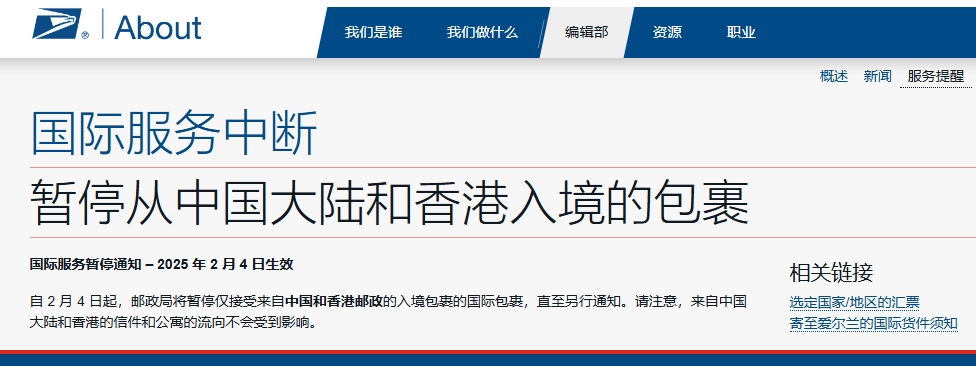
目前,USPS还未声明为何会暂停接收来自中国的包裹。而FedEx和UPS作为免税小包的另外两家最大承运商,也均尚未回应他们将如何处理关税新政所引发的各种问题。

此外,纽约时报的相关报道声称,早在此前的2024年10月的一次在线活动中,联邦快递法规事务副总裁拉尔夫·卡特就曾公开表示,“美国海关公职人员的人力资源已经非常紧张,而对最低价值规则的修改可能会导致托运人遭遇瓶颈”。

他指出:“如果我们将数百万件货物从免税小包转化为正式或非正式的清关货品,我们将面对严重的供应链积压,因为根本没有足够的资源进行管理,这不仅将影响依赖于小包平邮的部分电商企业,甚至还会影响到所有进口商”。

据悉,2025年2月4日,由特朗普所签署的“对华进口商品加征10%关税”的行政令正式生效,其取消了美国对价值低于800美元的小额货物的“最低限度”关税豁免政策,这意味着所有来自中国的商品,都需要缴纳10%的额外关税。

而美国海关和边境保护局的数据显示,仅在2024年初的九个月内,美国就通过“低值免税”政策从全球进口了约480亿美元的商品。取消800美元以下商品关税豁免的新政策预计将对美国廉价在线零售商产生重大影响。

亿邦持续追踪报道该情报,如想了解更多与本文相关信息,请扫码关注作者微信。

【版权提示】亿邦动力倡导尊重与保护知识产权。未经许可,任何人不得复制、转载、或以其他方式使用本网站的内容。如发现本站文章存在版权问题,烦请提供版权疑问、身份证明、版权证明、联系方式等发邮件至run@ebrun.com,我们将及时沟通与处理。

已点赞

+1

{{ praise_text }}

好文章,值得被更多人看到

FAQ回顾

USPS暂停接收哪些地区的包裹?

USPS暂停接收来自中国大陆和香港地区的入境包裹,但普通信件和扁平货物(Flats)不受影响。该措施自2025年2月4日起生效。

USPS暂停接收包裹的原因是什么?

直接原因尚未公布,但背景是2025年2月4日生效的关税新政,取消了美国对800美元以下中国商品的关税豁免,导致清关压力增大。

关税新政对美国进口商有哪些影响?

新政取消800美元以下商品关税豁免,所有中国商品需加征10%关税。2024年前九个月美国通过该政策进口约480亿美元商品,预计将严重影响廉价在线零售商。

广告

下一篇

跨境电商资源对接

《全球跨境电商服务商资源手册》第二期手册现已发布,触达更多资源,了解跨境服务商信息,欢迎点击链接下载。

了解详情

美国Dollar Tree:从一美元店到年营收283亿美元的零售巨头

Dollar Tree(美元树),财富500强企业,排名第137位,是一家以“一美元”定价策略闻名的零售巨头。

实体零售 跨境电商

2025-02-05 08:30:00










