• 亿邦公众号
    • APP下载

零售额同比下跌26.4%!11月化妆品真卖不动了?

作者:张从容 文章来源:亿邦动力

2024-12-19 14:20

作者:张从容 文章来源:亿邦动力

2024-12-19 14:20

邦小白快读

EN
全文速览

2024年11月化妆品零售额同比大幅下跌26.4%,创近五年新低,市场面临严峻挑战。

1. 关键数据:单月零售额433.7亿元,同比跌26.4%;1-11月累计零售额4014.6亿元,同比下跌1.3%。

2. 市场对比:11月跌幅是同期15类商品中最大;1-11月化妆品类累计下降,表明行业整体疲软。

3. 历史趋势:自2021年起,每年11月零售额逐年下滑,2024年11月达到最低点。

4. 促销表现:2024年单月下降月份包括4月、6月、7月、8月、9月和11月,其中6月(-14.6%)和11月(-26.4%)跌幅最大,提示大促活动效果不佳。

化妆品市场持续下滑,品牌需关注消费趋势和营销策略调整。

1. 消费趋势:2024年11月零售额跌26.4%,累计跌1.3%;2021年起11月逐年下滑,反映消费者需求减弱。

2. 品牌营销和定价:促销月(618和双11)跌幅最大(6月-14.6%,11月-26.4%),提示价格竞争加剧或促销无效,需优化定价策略。

3. 产品研发:累计零售额下降,表明需创新产品设计以刺激需求。

4. 用户行为观察:促销月购买减少,可能因消费者疲劳或转向其他品类,品牌应分析行为变化。

化妆品零售下滑带来风险与机会,卖家需应对需求变化。

1. 风险提示:11月零售额同比跌26.4%,累计跌1.3%;促销月跌幅最大,提示库存积压和销售策略失效风险。

2. 消费需求变化:2024年多个月份下降(如4月-2.7%、9月-4.5%),需求减弱需调整进货计划。

3. 机会提示:分析促销无效原因,可探索小规模活动或新渠道;累计数据下降提示转向高需求类目机会。

4. 可学习点:618和双11表现差,提示避免依赖大促,学习优化事件应对措施。

化妆品零售下降影响生产需求,工厂需寻找商业机会。

1. 产品生产需求:零售额下滑(11月-26.4%,累计-1.3%),可能减少订单量,需调整产能和设计。

2. 商业机会:市场疲软提示优化成本效率或开发新品;促销月跌幅大,可探索定制化生产。

3. 推进数字化和电商启示:电商促销无效(如6月-14.6%),提示工厂加强数据分析,提升供应链数字化。

行业面临下滑趋势,服务商可解决客户痛点。

1. 行业发展趋势:2024年11月零售额跌26.4%,创五年新低;2021年起逐年下滑,市场持续萎缩。

2. 客户痛点:零售商和品牌在促销月(618和双11)跌幅最大(-14.6%和-26.4%),面临销售困难。

3. 解决方案:提供数据分析服务,帮助客户优化促销策略和库存管理。

电商平台需应对化妆品类销售挑战,优化运营管理。

1. 商业对平台需求:促销月零售额大幅下跌(6月-14.6%,11月-26.4%),平台需解决商户销售问题。

2. 平台最新做法:分析跌幅原因,调整招商策略,如引入新品牌或优化促销机制。

3. 风险规避:监控市场趋势(如累计跌1.3%),避免依赖大促,加强运营管理。

化妆品零售数据揭示新动向和问题,提供研究启示。

1. 产业新动向:2024年11月零售额跌26.4%,创五年新低;2021年起逐年下滑,市场萎缩明显。

2. 新问题:促销月跌幅最大(如11月-26.4%),反映消费行为变化或市场饱和问题。

3. 政策法规建议:基于数据下降,建议研究行业扶持政策或监管措施。

4. 商业模式启示:累计零售额跌1.3%,提示需创新商业模式以刺激需求。

声明:快读内容全程由AI生成,请注意甄别信息。如您发现问题,请发送邮件至 run@ebrun.com 。

我是 品牌商 卖家 工厂 服务商 平台商 研究者 帮我再读一遍。

Quick Summary

Cosmetics retail sales plunged 26.4% year-on-year in November 2024, hitting a five-year low and signaling severe market challenges.

1. Key Data: Monthly retail sales reached 43.37 billion yuan, down 26.4% YoY; cumulative January-November sales totaled 401.46 billion yuan, declining 1.3%.

2. Market Comparison: The November drop was the steepest among 15 major product categories; the cumulative decline indicates overall sector weakness.

3. Historical Trend: November sales have decreased annually since 2021, with 2024 hitting the lowest point.

4. Promotion Performance: Monthly declines occurred in April, June, July, August, September, and November 2024, with the sharpest drops during major shopping events (June: -14.6%; November: -26.4%), suggesting promotional inefficacy.

The cosmetics market downturn necessitates brand focus on shifting consumption trends and marketing strategy adjustments.

1. Consumption Trends: November 2024 sales fell 26.4% YoY, with cumulative sales down 1.3%; consistent November declines since 2021 reflect weakening consumer demand.

2. Marketing and Pricing: Sharpest drops occurred during promotional months (June: -14.6%; November: -26.4%), indicating intensified price competition or ineffective promotions, requiring optimized pricing strategies.

3. Product R&D: Cumulative sales decline highlights the need for innovative product design to stimulate demand.

4. User Behavior: Reduced purchasing during promotional peaks may signal consumer fatigue or category switching, urging brands to analyze behavioral shifts.

Cosmetics retail decline presents both risks and opportunities, requiring sellers to adapt to demand changes.

1. Risk Alert: November sales dropped 26.4% YoY, with cumulative decline of 1.3%; steepest falls during promotions indicate inventory backlog and sales strategy failures.

2. Demand Shift: Multi-month declines (e.g., April: -2.7%; September: -4.5%) necessitate adjusted procurement plans.

3. Opportunities: Analyze promotional inefficiencies to explore smaller-scale activities or new channels; overall decline suggests pivoting to high-demand categories.

4. Key Takeaway: Poor 618 and Double 11 performance underscores the need to reduce reliance on major promotions and optimize event strategies.

Falling cosmetics retail sales impact production demand, urging factories to identify new opportunities.

1. Production Demand: Sales declines (November: -26.4%; cumulative: -1.3%) may reduce orders, requiring capacity and design adjustments.

2. Business Opportunities: Market weakness suggests optimizing cost efficiency or developing new products; sharp promotional drops indicate potential for customized production.

3. Digitalization Insight: Ineffective e-commerce promotions (e.g., June: -14.6%) highlight the need for enhanced data analysis and supply chain digitization.

Industry downturn creates opportunities for service providers to address client pain points.

1. Trend Analysis: November 2024 sales fell 26.4% to a five-year low; consistent declines since 2021 indicate sustained market contraction.

2. Client Challenges: Retailers and brands face steepest sales drops during promotional peaks (618 and Double 11), exacerbating sales difficulties.

3. Solutions: Offer data analytics services to optimize promotional strategies and inventory management for clients.

E-commerce platforms must address cosmetics sales challenges through operational optimization.

1. Merchant Needs: Sharp promotional month declines (June: -14.6%; November: -26.4%) require platforms to support merchant sales.

2. Platform Strategies: Analyze drop reasons to adjust merchant recruitment, such as introducing new brands or improving promotion mechanisms.

3. Risk Management: Monitor market trends (e.g., 1.3% cumulative decline) to reduce reliance on major promotions and strengthen operations.

Cosmetics retail data reveals new trends and problems, offering research implications.

1. Industry Trends: November 2024 sales plummeted 26.4% to a five-year low; consistent declines since 2021 confirm market contraction.

2. Emerging Issues: Sharpest drops during promotions (e.g., November: -26.4%) reflect changing consumer behavior or market saturation.

3. Policy Suggestions: Data decline supports research into industry support policies or regulatory measures.

4. Business Model Insights: 1.3% cumulative drop highlights the need for innovative models to stimulate demand.

Disclaimer: The "Quick Summary" content is entirely generated by AI. Please exercise discretion when interpreting the information. For issues or corrections, please email run@ebrun.com .

I am a Brand Seller Factory Service Provider Marketplace Seller Researcher Read it again.

【亿邦原创】日前,国家统计局发布了2024年11月化妆品类商品零售额的数据。数据显示,今年11月化妆品零售额为433.7亿元,同比下跌26.4%;累计零售额为4014.6亿元,同比下跌1.3%。

数据显示,2024年11月的社会消费品零售总额为43763亿元,同比增长3%。在对比同期其他15类商品零售额的变化时,化妆品类是11月单月零售额同比下降幅度最大的类目。
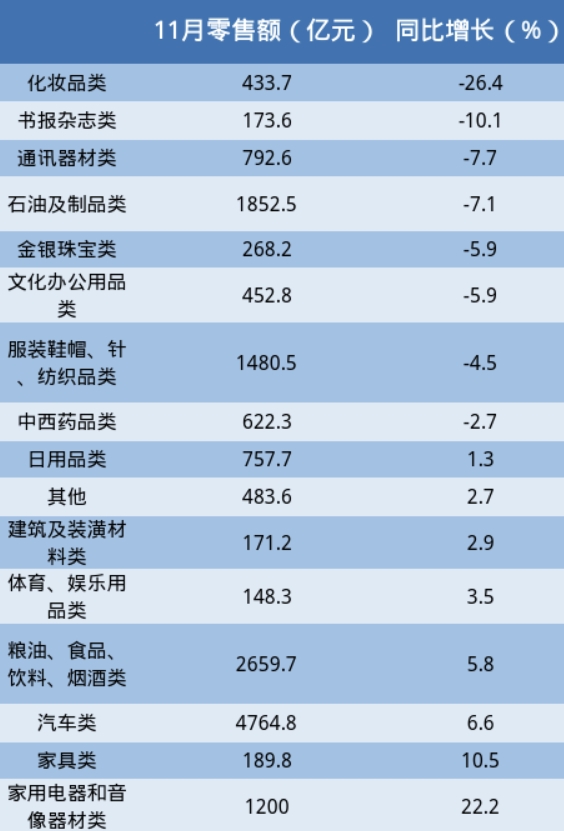
1月至11月,社会消费品零售总额442723.3亿元,同比增长3.5%。在16个类目中,有5个类目的累计零售额同比下降,化妆品类也位列其中,表明化妆品市场仍然面临挑战。

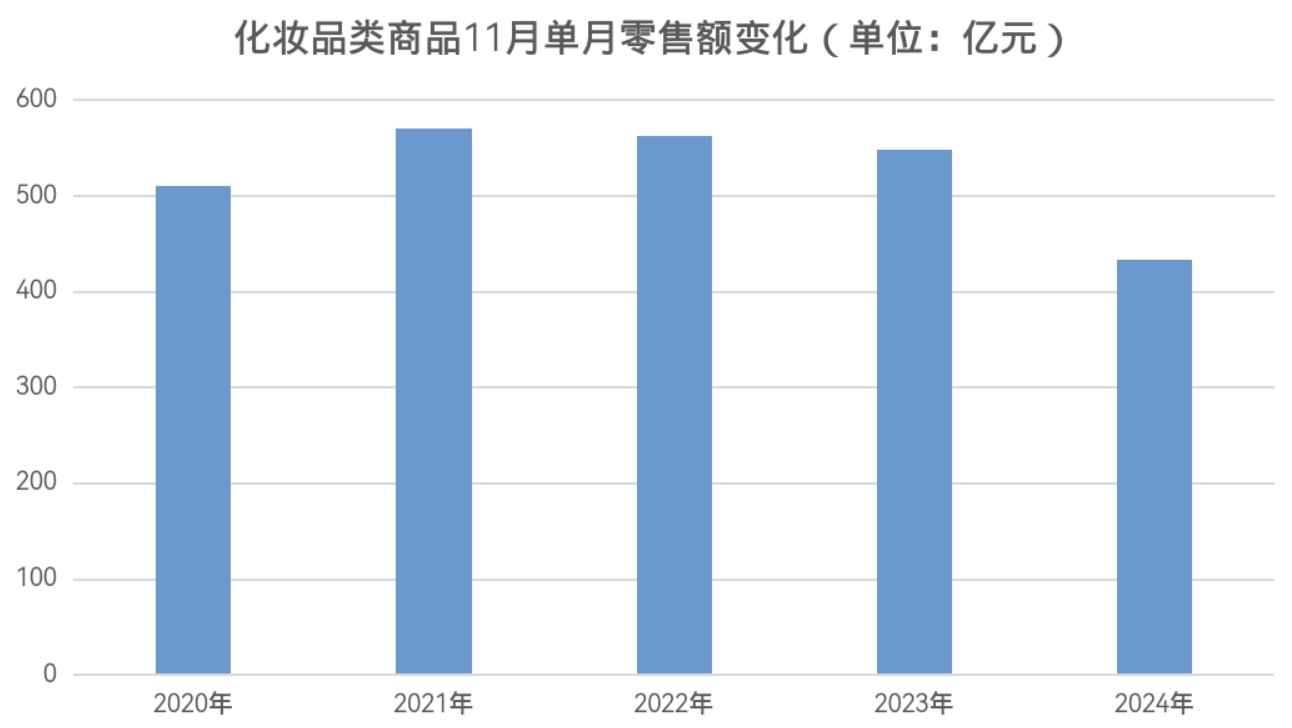
此外,对比2020年至2024年11月的化妆品零售额,自2021年起,每年11月的化妆品零售额呈现逐年下滑的趋势,2024年11月的单月零售额更是达到了这五年来的最低点。
2024年截至目前,单月零售额同比下降的月份有4月(-2.7%)、6月(-14.6%)、7月(-6.1%)、8月(-6.1%)、9月(-4.5%)、11月(-26.4%)。值得注意的是,6月和11月这两个月包含了618和双11两大促销活动,但单月零售额同比下降的幅度却是最大的。

亿邦持续追踪报道该情报,如想了解更多与本文相关信息,请扫码关注作者微信。

【版权提示】亿邦动力倡导尊重与保护知识产权。未经许可,任何人不得复制、转载、或以其他方式使用本网站的内容。如发现本站文章存在版权问题,烦请提供版权疑问、身份证明、版权证明、联系方式等发邮件至run@ebrun.com,我们将及时沟通与处理。

已点赞

+1

{{ praise_text }}

好文章,值得被更多人看到

FAQ回顾

2024年11月中国化妆品零售额数据是多少?

2024年11月中国化妆品零售额为433.7亿元,同比下跌26.4%,是2020年至2024年同期的最低点。1-11月累计零售额为4014.6亿元,同比下降1.3%。

化妆品零售在2024年哪些月份出现同比下降?

2024年化妆品单月零售额同比下降的月份包括4月(-2.7%)、6月(-14.6%)、7月(-6.1%)、8月(-6.1%)、9月(-4.5%)和11月(-26.4%),其中6月和11月降幅最大。

2024年11月化妆品零售额在社会消费品中的表现如何?

在16个社会消费品类目中,化妆品类是2024年11月单月零售额同比下降幅度最大的类目,而同期社会消费品零售总额同比增长3%。

广告

下一篇

征集报名《品牌数字化服务商资源手册》

《品牌数字化服务商资源手册》展示数字化服务商风采,亿邦全年零售大会通发,触达更多资源,马上加入!

马上入驻

继续投入即时零售 饿了么升级“青蓝计划”扶持仓店商家

此次升级,平台将在返佣、推广、流量、物流、商品等多维度加大投入力度。

阿里巴巴 平台 外卖 未来零售

2024-12-19 14:11:56