• 亿邦公众号
    • APP下载

商务部研究院:“跨境电商+产业带”,这六大趋势正重塑全球贸易

作者:中国跨境电商综合实验区 文章来源:全球跨境电商知识服务中心

2024-10-22 10:17

作者:中国跨境电商综合实验区 文章来源:全球跨境电商知识服务中心

2024-10-22 10:17

邦小白快读

EN
全文速览

本文核心介绍了我国“跨境电商+产业带”模式的发展现状、特征与未来前景,整理核心干货如下

本文明确当前我国跨境电商整体增速远超外贸整体水平,“跨境电商+产业带”已经进入红利发展期,呈现出集聚化、品牌化、高端化、全球化四大特点,国内多个东部沿海省份已经形成了成熟的特色产业带,比如广东顺德小家电、浙江诸暨袜子、山东青岛假睫毛等,在全球市场都有竞争力。

如果普通读者拥有产业带货源优势,可依托当前各大跨境平台推出的扶持计划入行,多数平台推出全托管模式,从业者只需要负责供货,运营销售、仓储售后都由平台处理,入行门槛较低,当前正处于品牌出海的风口期,机会较多。

本文梳理了“跨境电商+产业带”模式下品牌出海的行业趋势、渠道优势和发展机会,对品牌商布局出海的干货总结如下

当前消费端呈现出高端化的发展趋势,传统服饰、3C、家居等优势品类的技术含量持续提升,同时家用储能、3D打印机、无人机等高技术密度新品类成为全球热销品,品牌商可顺着这个方向调整产品研发方向。

渠道层面,跨境电商可以让品牌直接对接全球消费者,相比传统外贸大大缩短品牌建设周期,能更快积累全球消费者的认知和信任。当前多个头部跨境平台都推出了产业带品牌扶持计划,可借助平台资源快速落地,依托国内产业带的供应链优势,能获得品质和价格的双重竞争力,当前已经进入品牌出海的最佳阶段。

本文梳理了“跨境电商+产业带”出海的政策环境、市场增长空间和平台扶持政策,对各类跨境卖家的干货总结如下

政策层面,国务院印发专门文件明确鼓励发展“跨境电商+产业带”模式,支持各地结合自身优势建设特色跨境电商产业带,整体政策环境友好,各地也配套推出了相关支持措施。

市场层面,今年上半年我国跨境电商进出口同比增长10.5%,增速高于外贸整体4.4个百分点,头部平台2024年GMV目标增速最低为40%,最高达到233%,整体市场处于高速增长阶段,增量空间充足。

机会层面,四大头部出海平台都推出了专属产业带扶持计划,面向产业带卖家开放招募,并且提供全托管模式,卖家只需负责供货,平台承担运营物流售后等环节,大大降低了出海门槛,中小卖家可借助平台红利出海。

本文针对“跨境电商+产业带”出海模式,为国内生产工厂梳理了转型方向和商业机会,干货总结如下

产品生产设计需求层面,当前出口品类整体向着高端化升级,传统优势品类需要提升技术含量,同时家用储能、四足机器狗、无人机等高技术密度新品类成为全球热销品,工厂可顺着这个方向调整生产和设计方向,适配海外市场需求。

商业机会层面,我国拥有全球最完善的全门类工业体系,多个特色产业带已经跑出了成熟的出海赚钱模式,比如Shein+服装产业带、安克创新+消费电子产业带都已经成功。当前多个头部平台都深入全国产业带招募工厂卖家,推出全托管半托管模式,工厂只需要负责供货,不用承担运营售后环节,出海门槛很低。

转型层面,该模式能推动工厂数字化转型,打造高效数字化供应链,提升自身核心竞争力,是工厂转型升级的优质方向。

本文梳理了“跨境电商+产业带”模式的发展趋势、行业痛点和市场机会,对服务商的干货总结如下

行业发展趋势层面,当前“跨境电商+产业带”模式处于高速增长阶段,正从原来的OEM代工代工模式向自主品牌出海转型,大量产业带工厂和中小卖家缺出海相关服务能力,对数字化供应链建设、跨境物流、品牌运营、售后配套服务的需求在快速增长,市场空间大。

客户痛点层面,当前产业带工厂出海普遍缺海外渠道、缺运营能力,同时大件、非标类出口产品普遍存在备货时效慢、物流仓储难、售后返修不便的痛点,这些痛点都需要专业服务商提供解决方案。

市场机会层面,当前全国数百个特色产业带都在推进出海转型,各大平台也在推进产业带扶持计划,服务商可以对接平台和产业带资源,围绕海外仓运营、柔性供应链数字化、品牌运营等方向开发配套服务,挖掘增量市场。

本文梳理了“跨境电商+产业带”模式下商家的需求、成熟平台的玩法和未来发展方向,对平台商的干货总结如下

商家需求层面,产业带工厂卖家普遍缺出海运营、跨境物流、售后能力,对轻运营的合作模式需求强烈,当前全托管、半托管模式已经成为平台服务产业带卖家的主流模式,能很好匹配工厂卖家的需求,受到市场欢迎。

成熟做法参考层面,当前头部出海平台都已经推出了专属的产业带招商扶持计划,比如TikTok Shop的“产业带100计划”、Shein的“全国500城产业带出海计划”等,通过深入产业带本地招募、赋能打造爆品的方式拓展优质供给,已经验证了模式的可行性。

未来发展方向层面,当前产业带卖家有强烈的品牌化转型需求,平台可通过赋能帮助卖家打造自主品牌,同时可整合海外仓物流资源,解决大件非标产品的物流售后痛点,进一步挖掘产业带的供给潜力,推动自身业务增长。

本文梳理了我国“跨境电商+产业带”模式的发展历程、现状特征和未来趋势,是研究该领域的优质参考资料,干货总结如下

产业新动向方面,当前我国“跨境电商+产业带”已经进入规范发展的新阶段,呈现出集聚化、品牌化、高端化、全球化四大核心特征,行业正迈入高质量自主品牌出海的新阶段,该模式是数字经济与实体经济融合的典型场景,也是发展新质生产力的内在要求,未来将成为我国外贸增长的核心动力。

商业模式方面,经过二十多年的发展,该模式已经演化出全托管、半托管、B2B、B2C、独立站、直播电商等多种创新模式,形成了“平台赋能+产业带供应链支撑”的成熟模式,目前已经跑出多个成功案例,验证了模式的可行性。

政策与前景方面,国家已经出台明确的政策支持该模式发展,各地也在加快建设跨境电商综合试验区,未来该模式将会不断创新,产业带品牌出海和全行业爆发的时代正在加速到来。

声明:快读内容全程由AI生成,请注意甄别信息。如您发现问题,请发送邮件至 run@ebrun.com 。

我是 品牌商 卖家 工厂 服务商 平台商 研究者 帮我再读一遍。

Quick Summary

This article outlines the current development, key characteristics and future prospects of China's "cross-border e-commerce + industrial clusters" model, with key takeaways below.

It confirms that the overall growth rate of China's cross-border e-commerce far outpaces that of the country's general foreign trade sector. The "cross-border e-commerce + industrial clusters" model has entered a period of rapid growth and dividend opportunity, featuring four core trends: clustering, branding, high-end upgrading and globalization. Mature specialized industrial clusters have formed across multiple eastern coastal provinces in China, including small home appliances in Shunde (Guangdong), socks in Zhuji (Zhejiang), false eyelashes in Qingdao (Shandong), all of which are competitive in the global market.

For general readers with access to supply sources from these industrial clusters, you can enter the industry by leveraging the support programs launched by major cross-border platforms. Most platforms now offer full托管 (end-to-end operation) models, where sellers only need to handle product sourcing, while the platform takes charge of operations, sales, warehousing and after-sales service, resulting in a very low barrier to entry. The current period is a prime window of opportunity for brands to go global, with no shortage of opportunities for new entrants.

This article summarizes industry trends, channel advantages and growth opportunities for brand globalisation under the "cross-border e-commerce + industrial clusters" model, with key takeaways for brands below.

On the demand side, the global consumer market is shifting toward higher-end products. Technical specifications are steadily improving for traditional competitive categories such as apparel, 3C electronics and home goods, while high-tech new categories including residential energy storage, 3D printers and drones have become top-sellers globally. Brands can adjust their R&D direction to align with this trend.

In terms of channels, cross-border e-commerce allows brands to connect directly with global consumers, drastically shortening the brand building cycle compared to traditional foreign trade, and enabling brands to build recognition and trust among global consumers much faster. Today, all leading cross-border platforms have launched support programs for industrial cluster-based brands, allowing brands to leverage platform resources to quickly establish an overseas presence. Backed by the supply chain advantages of China's domestic industrial clusters, brands can achieve dual competitiveness in both quality and pricing. We are now in the optimal window for Chinese brands to go global.

This article sorts out the policy environment, market growth outlook and platform support policies for cross-border sellers operating under the "cross-border e-commerce + industrial clusters" model, with key takeaways below.

On the policy front, the State Council of China has released a dedicated document explicitly encouraging the development of the "cross-border e-commerce + industrial clusters" model, supporting local regions to build specialized cross-border e-commerce industrial clusters based on their own comparative advantages. The overall policy environment is supportive, with local governments rolling out matching supporting measures.

In terms of market performance, China's cross-border e-commerce imports and exports grew 10.5% year-on-year in the first half of this year, 4.4 percentage points higher than the overall growth rate of foreign trade. Leading cross-border platforms set 2024 GMV growth targets ranging from 40% to 233%, indicating the overall market is in a period of rapid expansion with abundant room for incremental growth.

For opportunities, the four major leading cross-border platforms have all launched dedicated support programs for industrial clusters, opening recruitment to sellers based in these clusters and offering full托管 operation models. Sellers only need to handle product sourcing, while the platform takes charge of operations, logistics and after-sales, significantly lowering the barrier to going global. Small and medium-sized sellers can capitalize on this platform dividend to expand overseas.

This article outlines transformation paths and business opportunities for Chinese manufacturing factories under the "cross-border e-commerce + industrial clusters" model, with key takeaways below.

In terms of product design and production demand, China's export categories are undergoing widespread high-end upgrading. Traditional competitive categories need to improve technical content, while high-tech new categories including residential energy storage, quadruped robot dogs and drones have become global bestsellers. Factories can adjust their production and design strategies to align with overseas market demand along these lines.

For business opportunities, China boasts the world's most complete, multi-category industrial system, and mature go-global business models have already been proven across multiple specialized industrial clusters, such as the Shein + apparel cluster and Anker Innovations + consumer electronics cluster models. Today, leading platforms have expanded recruitment drives across China's industrial clusters to attract factory sellers, offering both full and semi-托管 operation models. Factories only need to handle product sourcing and do not need to take on operations or after-sales responsibilities, resulting in a very low barrier to entering overseas markets.

For transformation, this model can push factories to complete digital transformation, build efficient digital supply chains and improve core competitiveness, making it an excellent path for factories seeking transformation and upgrading.

This article summarizes development trends, industry pain points and market opportunities for service providers under the "cross-border e-commerce + industrial clusters" model, with key takeaways below.

In terms of industry trends, the "cross-border e-commerce + industrial clusters" model is currently growing at a rapid pace, shifting from the original OEM model to independent brand globalisation. A large number of industrial cluster-based factories and small and medium-sized sellers lack core capabilities for overseas expansion, leading to rapidly growing demand for digital supply chain development, cross-border logistics, brand operation and after-sales supporting services, creating enormous market space.

On pain points, most industrial cluster factories looking to go global lack overseas channels and operational capabilities. Meanwhile, large and non-standard export products generally face pain points including slow lead times for stock preparation, logistics and warehousing challenges, and inconvenient after-sales and repair services. All these pain points require professional service providers to deliver customised solutions.

For market opportunities, hundreds of specialized industrial clusters across China are currently pushing forward transformation for overseas expansion, and major platforms are rolling out their own industrial cluster support programs. Service providers can connect platform and industrial cluster resources, develop supporting services focused on overseas warehouse operation, flexible digital supply chains and brand operation, and tap into this fast-growing incremental market.

This article sorts out merchant demand, proven practices and future development directions for platform operators under the "cross-border e-commerce + industrial clusters" model, with key takeaways below.

In terms of merchant demand, most factory sellers based in industrial clusters lack capabilities in overseas operation, cross-border logistics and after-sales service, and have strong demand for low-operation partnership models. Full and semi-托管 models have now become the mainstream approach for platforms serving industrial cluster sellers, as they align well with factory sellers' needs and have gained wide market acceptance.

For proven practices to reference, all leading global cross-border platforms have already launched dedicated industrial cluster recruitment and support programs, such as TikTok Shop's "100 Industrial Clusters Initiative" and Shein's "500 Cities Industrial Cluster Go Global Program". These programs have proven the model's viability by expanding high-quality supply through on-the-ground recruitment in industrial clusters and providing support to build hit products.

For future development directions, industrial cluster sellers currently have strong demand for brand transformation. Platforms can help sellers build their own independent brands through targeted enablement, while integrating overseas warehouse and logistics resources to solve logistics and after-sales pain points for large and non-standard products. This will allow platforms to further unlock the supply potential of industrial clusters and drive their own business growth.

This article sorts out the development history, current characteristics and future trends of China's "cross-border e-commerce + industrial clusters" model, serving as a high-quality reference for research in this field, with key takeaways below.

For new industry developments, China's "cross-border e-commerce + industrial clusters" model has now entered a new stage of standardized development, featuring four core characteristics: clustering, branding, high-end upgrading and globalization. The industry is moving toward a new phase of high-quality independent brand globalisation. This model is a typical example of the integration of digital and real economies, and an inherent requirement for developing new productive forces. It will become a core driving force for China's foreign trade growth going forward.

In terms of business models, after more than 20 years of development, the model has evolved into multiple innovative formats including full托管, semi-托管, B2B, B2C, independent sites and live-stream e-commerce, forming a mature "platform enablement + industrial cluster supply chain support" framework. Multiple successful cases have already validated the model's viability.

For policy outlook and prospects, the central government has issued clear policy support for the development of this model, and local governments are accelerating the construction of cross-border e-commerce comprehensive pilot zones. The model will continue to innovate going forward, and an era of widespread industrial cluster brand globalisation and industry-wide growth is accelerating.

Disclaimer: The "Quick Summary" content is entirely generated by AI. Please exercise discretion when interpreting the information. For issues or corrections, please email run@ebrun.com .

I am a Brand Seller Factory Service Provider Marketplace Seller Researcher Read it again.

产业带出海正当时!近年来,在政策支持下,“跨境电商+产业带”不仅助力产业带企业拓展全球商机,更依托数实融合打造数字化高效供应链,推动企业转型升级,加强自主品牌建设,提升核心竞争力。

“跨境电商+产业带”是跨境电商对各地优势产业带全面赋能、推动特色产品出口、实现产业转型升级、培育自主品牌的模式,是发展新质生产力的内在要求,是数字经济与实体经济融合的典型场景。


一、跨境电商加速产业全球化布局新进展

经历二十多年的发展,我国跨境电商出口规模持续扩大,已经进入了规范发展的新阶段。随着跨境电商出口带动效应的不断增强,我国“跨境电商+产业带”呈现出集聚化、品牌化、高端化和全球化等新特点。

1. 形成电商集聚化发展:中国跨境电商进出口总额排名前五的省份占跨境电商进出口总额比重从2021年的40.63%提升到2022年的69.7%。东部沿海地区成为中国跨境电商的集聚区,广东、山东、浙江、江苏等地的跨境电商综合试验区实现了地级市全覆盖,形成了明显的集聚效应。例如,广东顺德被誉为“中国小家电之都”,浙江诸暨成为全国最大的袜子生产基地,山东青岛则以假睫毛生产基地闻名,年产量占全球份额的70% 。

2. 促进品牌化转型:跨境电商助力传统工贸企业实时把握消费需求,推动产品直达全球消费者,促进产业带上的传统工贸企业快速打造全球品牌。通过跨境电商平台,企业可以直接与海外市场对接,强化品牌理念,积累消费者认知和信任。相比传统外贸渠道,跨境电商大大缩短了品牌建设的周期 。

3. 加快出口品类高端化:传统优势品类的技术含量快速提升,如服饰鞋履、3C电子和家居产品。同时,高技术密度的新出口品类不断涌现,如家用储能产品、3D打印机、四足机器狗、无人机等,成为全球热销品 。

4. 推动中小企业全球化:跨境电商平台推动产业带赋能计划,加速新业态与优质供应链的融合,提升中小企业的核心竞争力。例如,阿里国际站实施“全球产业带计划”,亚马逊全球开店通过“产业带启航十条”和企业购产业带加速器,促进跨境电商与产业带融合,目标是覆盖超过100条产业带 。


二、跨境电商迅猛发展,成为外贸增长新动能

据海关总署统计,今年上半年我国跨境电商进出口1.22万亿元,同比增长10.5%,增速高于我国同期外贸整体4.4个百分点。跨境电商成为拉动我国外贸增长与制造业出海的新动能。

与此同时,中国出口平台型电商公司TikTok、Shein、Temu、Aliexpress等经营数据持续超预期,Temu、TikTok Shop、阿里海外电商和Shein定下2024年交易额目标,同比增速分别为233%、150%、125%和40%。

TikTok预计2024年将其电商业务规模扩大到500亿美元,拼多多Temu2024年目标GMV达到600亿美元,阿里国际数字商业集团中的零售电商板块则定下850亿美元-900亿美元目标。


三、中国制造世界领先,产业带优势独一无二

中国拥有全球领先的极具规模优势和上下整合性的产业链网络。自2010年以来我国制造业已连续13年位居世界第一,2022年,我国制造业增加值达33.5万亿元,占GDP的比重为27.7%,占全球的比重接近30%。

同时我国也是全世界唯一拥有全部工业门类的国家,在500种主要工业产品中,有40%以上产品的产量世界第一。

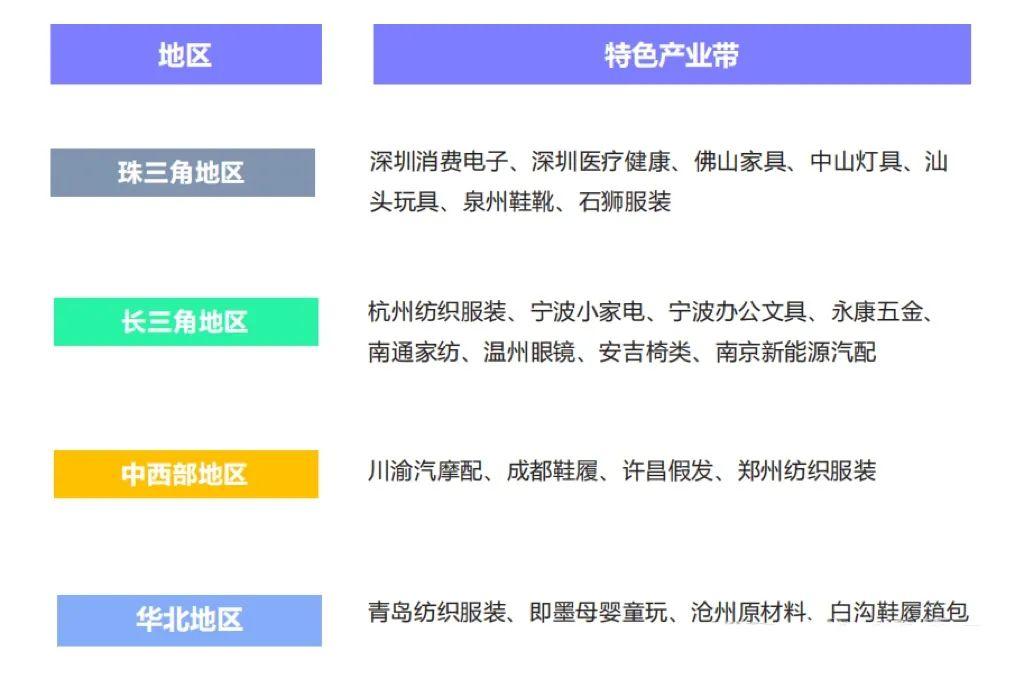
中国完善的工业化体系,推动产业链快速迭代,促使各地区形成了产业带。顺德的家电、深圳的数码、佛山的家具、温州的鞋服、义务的小商品等等。这些优质的产业带,造就了中国商品品质和价格的双重品牌化优势,并进一步支撑着中国品牌传遍全球。
图片

以Shein为代表的“跨境电商+服装产业带”、以安克创新为代表的“跨境电商+消费电子产业带”、以致欧家居为代表的“跨境电商+家居产业带”等已经跑出了成功模式与赚钱效应。


四、中国供应链体系完善,产业带出海高效便捷

基于我国产业集群的特征,以及国内工厂寻求外销渠道的需求,AliExpress、SHEIN、Temu等平台陆续推出全托管、半托管模式,工厂只需负责供货,而运营销售、仓储配送、退换售后等环节均由跨境电商平台负责。

同时,我国大力支持发展海外仓及跨境电商物流供应体系,2023年我国跨境电商海外仓数量超过2400个,面积超过2500万平方米,在海外仓备货模式下,无论是传统的低价、小件、标准件产品,还是近些年大件类、非标类产品面临的备货时效、物流仓储、售后返修等难点都可以有效破解。


五、政府与平台大力扶持“跨境电商+产业带”出海

2023年4月,国务院办公厅印发的《关于推动外贸稳规模优结构的意见》提出,鼓励各地方结合产业和禀赋优势,创新建设跨境电商综合试验区,积极发展“跨境电商+产业带”模式,带动跨境电商企业对企业出口。“跨境电商+产业带”是推动跨境电商创新发展的重要抓手,是产业带数字化转型升级的重要动力,也是发展新质生产力的内在要求。目前,各地积极打造跨境电商特色产业带,已经形成多种类型的“跨境电商+产业带”。

同时,中国“出海四小龙”纷纷推出产业带扶持计划:

TikTok Shop跨境电商启动“产业带100计划”,在2024年,计划走进超过100个产业带,携手商家共同打造超一万个全球爆品。

速卖通也曾推出产业带万商复苏计划,联合全国百余省市区县级政府,激活提振100+产业带,为百万中小企业顺利出海开辟新赛道。

Shein在2023年也推出了全国500城产业带出海计划,目标在三年内深入全国500城产业带,将产业带与数字化柔性供应链贯通起来,帮助产业带实现顺利出海。

Temu更是掀起了一股带动传统产业带工厂卖家进军跨境电商的热潮,2023年初就深入全国多个优质产业带开始招募工厂型卖家。


六、“跨境电商+产业带”出海迈入品牌发展新阶段

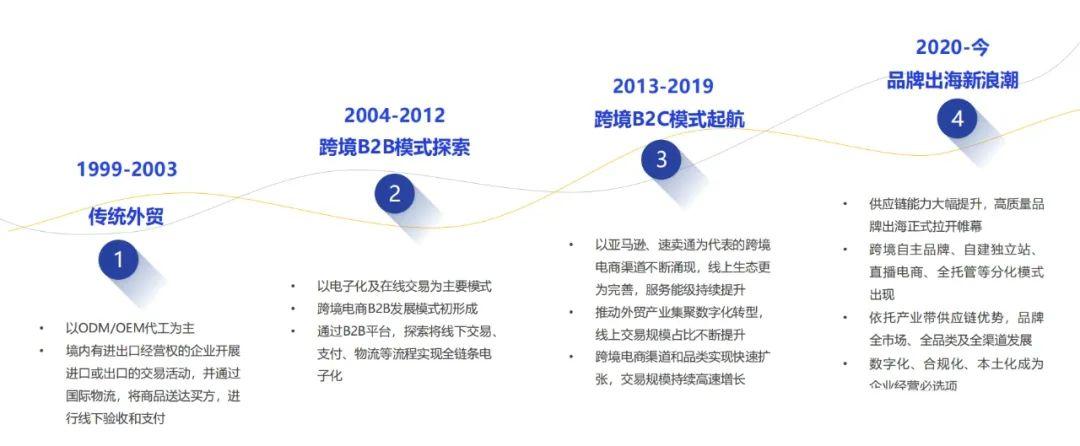
早期,我国产业带出海主要依托传统外贸方式,产业带企业以OEM/ODM代工为主,境内有进出口经营权的企业开展进口或出口的交易活动,并通过国际物流,将商品送达买方,进行线下验收和支付。

2004年左右,跨境电商B2B发展模式初步形成,早期B2B主要以信息展示和撮合为主,通过B2B平台,探索将线下交易、支付、物流等流程实现全链条电子化。

到了2012年,亚马逊全球开店兴起,B2C跨境电商快速发展;经过疫情时代,跨境电商进一步爆发式增长。

如今国际宏观政治、经济、科技、文化背景发生剧变,我国跨境电商的业态、内涵、形式不断创新,产业链不断延展,供应链能力大幅提升,跨境自主品牌、自建独立站、直播电商、全托管等分化模式不断创新涌现,依托产业带供应链优势,实现自主品牌全市场、全品类及全渠道发展的高质量品牌出海时代正式拉开帷幕。
图片

未来,“跨境电商+产业带”的模式将会不断创新,借由跨境电商的贸易方式,真正的产业带品牌出海将会逐渐实现。“跨境电商+产业带”的平台、卖家、工贸一体、品牌等全面大爆发的时代将会加速到来!

注:文/中国跨境电商综合实验区,文章来源:全球跨境电商知识服务中心,本文为作者独立观点,不代表亿邦动力立场。

【版权提示】亿邦动力倡导尊重与保护知识产权。未经许可,任何人不得复制、转载、或以其他方式使用本网站的内容。如发现本站文章存在版权问题,烦请提供版权疑问、身份证明、版权证明、联系方式等发邮件至run@ebrun.com,我们将及时沟通与处理。

已点赞

+1

{{ praise_text }}

好文章,值得被更多人看到

FAQ回顾

什么是跨境电商产业带模式?

跨境电商产业带是跨境电商对各地优势产业带全面赋能,推动特色产品出口、实现产业转型升级、培育自主品牌的模式。它是数字经济与实体经济融合的典型场景,也是发展新质生产力的内在要求。

跨境电商产业带发展有哪些主要趋势?

主要呈现六大趋势:集聚化(东部沿海形成明显集聚区)、品牌化(助力企业打造全球品牌)、高端化(技术密集型品类涌现)、全球化(平台推动中小企业出海)、供应链完善(全托管模式、海外仓超2400个)和政策大力扶持。

政府对跨境电商产业带提供了哪些政策支持?

2023年4月国务院办公厅印发《关于推动外贸稳规模优结构的意见》,鼓励各地创新建设跨境电商综合试验区,积极发展“跨境电商+产业带”模式。各大平台也推出产业带扶持计划,如TikTok Shop的“产业带100计划”。

广告

下一篇

跨境电商资源对接

《全球跨境电商服务商资源手册》第二期手册现已发布,触达更多资源,了解跨境服务商信息,欢迎点击链接下载。

了解详情

因为看见 | 2024抖音电商双11特别专题

2024年双11,抖音电商成为商家大促生意爆发的第一落点!让更多商家被看见,直击亿万消费者心田。

特别策划 专题 未来零售

2024-10-22 10:07:34