• 亿邦公众号
    • APP下载

华立集团汪力成:跨境电商与国际产能合作双向赋能发展

作者:王昱 文章来源:亿邦动力

2024-09-27 14:59

作者:王昱 文章来源:亿邦动力

2024-09-27 14:59

邦小白快读
EN
全文速览

本文是华立集团董事会主席汪力成在2024“丝路电商日”活动上的演讲整理,核心干货如下:

1. 当前全球供应链正在深度重构,这次重构的核心驱动力是供应链安全,而非以往的生产要素成本,要求缩短供应链半径,推动中国制造从“卖全球”转向“全球制造”的新模式。

2. 华立集团积累20年全球化经验,已经在全球布局“三大三小”境外工业园,大型园区面积10-15平方公里以上,小型3-5平方公里,可为中国企业出海提供低风险发展平台。

3. 跨境电商改变了全球消费模式,重构了供应链逻辑,未来大件商品和多样化物流需求会成为主流,线下仓储物流不可替代,成本、效率、柔性是中国企业出海的核心追求。

本文为出海品牌商梳理了当前产业趋势与发展机会,核心干货如下:

1. 消费与产业趋势:当前全球供应链重构核心逻辑转变为保障供应链安全,品牌需要贴近目标市场布局产能,缩短成品与市场的距离,降低供应链风险,整体行业从“中国制造卖全球”转向“全球制造”的新发展阶段。

2. 用户与市场变化:跨境电商改变了全球消费者的消费理念与模式,传统大订单批发的渠道模式已经不再适配新需求,要求品牌减少中间环节,直接触达消费者,覆盖从制造端到售后端的全供应链环节。

3. 可利用资源:华立布局的全球境外工业园可为出海品牌提供风险更低的境外发展平台,提前配套适配跨境电商需求的物流网络,契合品牌出海对成本、效率、柔性的追求。

本文为出海卖家分析了当前行业变革趋势,指明了可把握的机会与可利用资源,核心干货如下:

1. 行业变革方向:全球供应链重构的核心驱动力已经从生产要素成本转为供应链安全,中国制造向全球制造布局是必然趋势,靠近目标市场布局产能能有效降低各类潜在风险,是未来的主流方向。

2. 市场增长机会:跨境电商已经改变国内消费者生活方式,但在多数海外市场仍属于新兴领域,未来大件商品和多样化物流需求会逐步成为主流,线下仓储物流拥有长期不可替代的需求,存在大量市场机会。

3. 可对接资源:华立已经完成全球“三大三小”境外工业园的战略布局,可为中国出海卖家提供成熟便捷、风险更低的境外发展平台,配套规划了高效的物流对接网络,能帮助卖家降低出海门槛。

本文为出海制造工厂指明了产业变革方向,梳理了商业机会与数字化转型启示,核心干货如下:

1. 生产与设计需求变化:全球供应链重构要求工厂贴近目标市场布局产能,缩短成品到消费市场的距离,降低供应链风险,生产模式需要朝着柔性化方向调整,核心追求是控制成本、提升效率、增强柔性。

2. 出海商业机会:华立打造的全球“三大三小”境外工业园,已经形成成熟的境外产业平台,不仅服务自身产业,也面向中国制造业工厂开放,能帮助工厂降低出海布局的风险,园区提前规划了适配跨境电商需求的物流对接网络。

3. 电商转型启示:跨境电商重构了全球供应链底层逻辑,工厂需要直接对接消费端,要将消费者需求预测、产品设计融入全链路运营,抓住海外新兴电商市场的增长红利。

本文透露出跨境电商与国际产能合作领域的行业趋势、客户痛点与服务商发展方向,核心干货如下:

1. 行业发展趋势:全球供应链重构推动国际产能合作与跨境电商双向赋能,二者最终会走向融合,市场对跨境电商相关基础设施的需求会持续增长,线下仓储物流需求长期不可替代,未来大件商品物流需求会成为市场主流。

2. 核心客户痛点:大量中国制造业企业出海布局产能时,缺乏成熟、低风险的境外发展载体,同时需要覆盖从集货、跨境物流、清关、本地配送到支付结算、售后的全链路配套服务,现有市场供给还存在缺口。

3. 服务商发展方向:服务商可围绕跨境电商全供应链环节布局配套服务,结合企业国际产能布局的需求,搭建连接制造端与消费端的基础设施,匹配客户对成本、效率、柔性的核心要求。

本文梳理了出海产业对平台的新需求,指明了平台未来发展方向与风险规避方向,核心干货如下:

1. 市场对平台的核心需求:当前大量中国出海企业既需要靠近目标市场的境外产业布局平台,也需要配套跨境电商全链路服务的物流贸易平台,需要平台同时满足产能布局和跨境电商运营的双重需求,提供一站式的低风险出海支持。

2. 平台未来建设方向:平台在规划建设过程中,不能只关注制造基地的功能,还要提前规划适配跨境电商需求的高效物流对接网络,重视线下仓储物流这类不可替代的基础设施布局,适配未来大件商品物流成为主流的行业趋势。

3. 风险规避方向:当前全球供应链的核心风险来自过长的供应链半径带来的不确定性,平台布局要围绕缩短供应链半径的核心逻辑,帮助入驻企业降低出海风险,契合行业对成本、效率、柔性的追求。

本文提出了跨境电商与国际产能合作领域的新动向、新观点与新商业模式探索,核心干货如下:

1. 产业新动向:当前这一轮全球供应链重构和历史上的制造业梯度转移有本质不同,核心驱动力从追求更低生产要素成本转为保障供应链安全,这一变化推动中国制造业从传统的“中国制造卖全球”模式,转向“中国制造走向全球制造”的全新发展模式。

2. 核心新观点:汪力成提出跨境电商与国际产能合作看似是两个独立领域,实际相辅相成、双向赋能,最终会殊途同归融合发展,二者结合将会构建发挥各国资源优势、更好服务全球消费者的新型产业格局。

3. 新型商业模式探索:华立集团通过提前20年全球化布局,打造了开放型境外工业园模式,已经形成全球“三大三小”的园区布局,融合了国际产能合作与跨境电商基础设施建设,是中国企业出海服务领域的新型商业模式探索。

声明:快读内容全程由AI生成,请注意甄别信息。如您发现问题,请发送邮件至 run@ebrun.com 。

我是 品牌商 卖家 工厂 服务商 平台商 研究者 帮我再读一遍。

Quick Summary

This article is a compiled version of a speech delivered by Wang Licheng, Chairman of the Board of Directors of Holley Group, at the 2024 "Silk Road E-commerce Day" event. Key takeaways are as follows:

1. The global supply chain is currently undergoing deep restructuring. Unlike previous shifts driven by production factor costs, this round of restructuring is motivated primarily by supply chain security, which requires shortening supply chain distances and pushing Chinese manufacturing to shift its model from "made-in-China for the world" to "global manufacturing".

2. With 20 years of global expansion experience, Holley Group has built a network of "three large, three small" overseas industrial parks. Large parks cover 10 to 15+ square kilometers, while small parks cover 3 to 5 square kilometers, providing a low-risk development platform for Chinese companies expanding overseas.

3. Cross-border e-commerce has reshaped global consumption patterns and restructured supply chain logic. Large goods and diversified logistics demand will become the mainstream in the future, making offline warehousing and logistics irreplaceable. Cost control, operational efficiency and operational flexibility are the core priorities for Chinese companies expanding globally.

This article outlines current industry trends and development opportunities for cross-border brands. Key takeaways are as follows:

1. Consumption and industry trends: The core logic of current global supply chain restructuring has shifted to securing supply chain reliability. Brands need to locate production capacity close to target markets, shorten the distance between finished goods and end consumers, and reduce supply chain risk. The overall industry is moving from the "made-in-China for the world" model to a new "global manufacturing" development stage.

2. User and market changes: Cross-border e-commerce has reshaped global consumers' consumption concepts and patterns. The traditional bulk wholesale channel model no longer fits new market demands. Brands are required to cut intermediate links, reach consumers directly, and cover the entire supply chain from manufacturing to after-sales service.

3. Available resources: Holley Group's global network of overseas industrial parks provides overseas brands with a lower-risk development platform, with pre-built logistics networks adapted to cross-border e-commerce needs, perfectly matching brands' core requirements of cost, efficiency and flexibility for global expansion.

This article analyzes current industry transformation trends for cross-border sellers, and highlights available opportunities and resources. Key takeaways are as follows:

1. Industry transformation direction: The core driver of global supply chain restructuring has shifted from production factor costs to supply chain security. Layout of production capacity across the globe is an inevitable trend for Chinese manufacturing. Locating production close to target markets can effectively reduce various potential risks, and will become the mainstream direction going forward.

2. Market growth opportunities: While cross-border e-commerce has already reshaped domestic consumers' lifestyles, it remains an emerging sector in most overseas markets. Large goods and diversified logistics demand will gradually become the mainstream, and offline warehousing and logistics will remain irreplaceable in the long term, creating abundant market opportunities.

3. Accessible resources: Holley Group has completed its strategic layout of "three large, three small" overseas industrial parks worldwide, providing Chinese cross-border sellers with a mature, convenient and lower-risk overseas development platform, with pre-planned efficient logistics connection networks that help sellers lower the barrier to global expansion.

This article points out the direction of industrial transformation for manufacturing factories expanding overseas, and outlines business opportunities and insights for digital transformation. Key takeaways are as follows:

1. Changes in production and design demand: Global supply chain restructuring requires factories to locate production capacity close to target markets, shorten the distance between finished goods and consumer markets, and reduce supply chain risk. Production models need to adjust toward greater flexibility, with core priorities of cost control, efficiency improvement and enhanced flexibility.

2. Overseas business opportunities: Holley Group's "three large, three small" global network of overseas industrial parks has formed a mature overseas industrial platform. Open to Chinese manufacturing factories in addition to serving Holley's own businesses, the platform helps factories reduce the risk of overseas expansion, and features pre-planned logistics connection networks adapted to cross-border e-commerce needs.

3. Insights for e-commerce transformation: Cross-border e-commerce has restructured the underlying logic of the global supply chain. Factories need to connect directly to end consumers, integrate consumer demand forecasting and product design into end-to-end operations, and capture growth opportunities in emerging overseas e-commerce markets.

This article outlines industry trends, customer pain points and development directions for service providers in the cross-border e-commerce and international production capacity cooperation space. Key takeaways are as follows:

1. Industry development trends: Global supply chain restructuring is driving mutual empowerment between international production capacity cooperation and cross-border e-commerce, and the two sectors will eventually converge. Market demand for cross-border e-commerce-related infrastructure will continue to grow, offline warehousing and logistics will remain irreplaceable long term, and large goods logistics demand will become the market mainstream in the future.

2. Core customer pain points: Many Chinese manufacturing companies lack access to mature, low-risk overseas development carriers when expanding production capacity globally. They also require end-to-end supporting services covering cargo collection, cross-border logistics, customs clearance, last-mile delivery, payment settlement and after-sales service, and current market supply still falls short of demand.

3. Development directions for service providers: Service providers can build supporting services around the full cross-border e-commerce supply chain, align with enterprises' demand for international production capacity layout, build infrastructure connecting manufacturing and consumers, and match clients' core requirements for cost, efficiency and flexibility.

This article outlines new demands from global expansion-focused companies for platforms, and points out future development directions and risk mitigation strategies for platforms. Key takeaways are as follows:

1. Core market demand for platforms: Currently, many Chinese companies expanding overseas need both overseas industrial layout platforms close to target markets and logistics and trade platforms supporting full-link cross-border e-commerce services. They require platforms to meet the dual demands of production capacity layout and cross-border e-commerce operation, and provide one-stop, low-risk support for global expansion.

2. Future platform development directions: When planning and building infrastructure, platforms should not only focus on manufacturing base functions. They must also pre-plan efficient logistics connection networks adapted to cross-border e-commerce needs, prioritize the layout of irreplaceable infrastructure such as offline warehousing and logistics, and adapt to the industry trend that large goods logistics will become the mainstream in the future.

3. Risk mitigation directions: The core risk of the current global supply chain comes from uncertainty caused by excessively long supply chain distances. Platform layout should center on the core logic of shortening supply chain distances, help resident companies reduce overseas expansion risks, and align with the industry's pursuit of cost, efficiency and flexibility.

This article presents new trends, new perspectives and explorations of new business models in the field of cross-border e-commerce and international production capacity cooperation. Key takeaways are as follows:

1. New industry trends: This round of global supply chain restructuring is fundamentally different from historical manufacturing gradient transfers. Its core driver has shifted from pursuing lower production factor costs to ensuring supply chain security. This shift is pushing Chinese manufacturing to transform from the traditional "made-in-China for the world" model to an entirely new development model of "globalized Chinese manufacturing".

2. Core new perspective: Wang Licheng argues that while cross-border e-commerce and international production capacity cooperation appear to be two separate fields, they are actually complementary and mutually empowering. The two will eventually converge and integrate, and their combination will build a new industrial landscape that leverages each country's resource advantages to better serve global consumers.

3. Exploration of new business models: Through 20 years of early global expansion, Holley Group has developed an open overseas industrial park model, with a completed "three large, three small" global park network that integrates international production capacity cooperation and cross-border e-commerce infrastructure development. It represents an exploration of a new business model in the Chinese outbound enterprise services space.

Disclaimer: The "Quick Summary" content is entirely generated by AI. Please exercise discretion when interpreting the information. For issues or corrections, please email run@ebrun.com .

I am a Brand Seller Factory Service Provider Marketplace Seller Researcher Read it again.

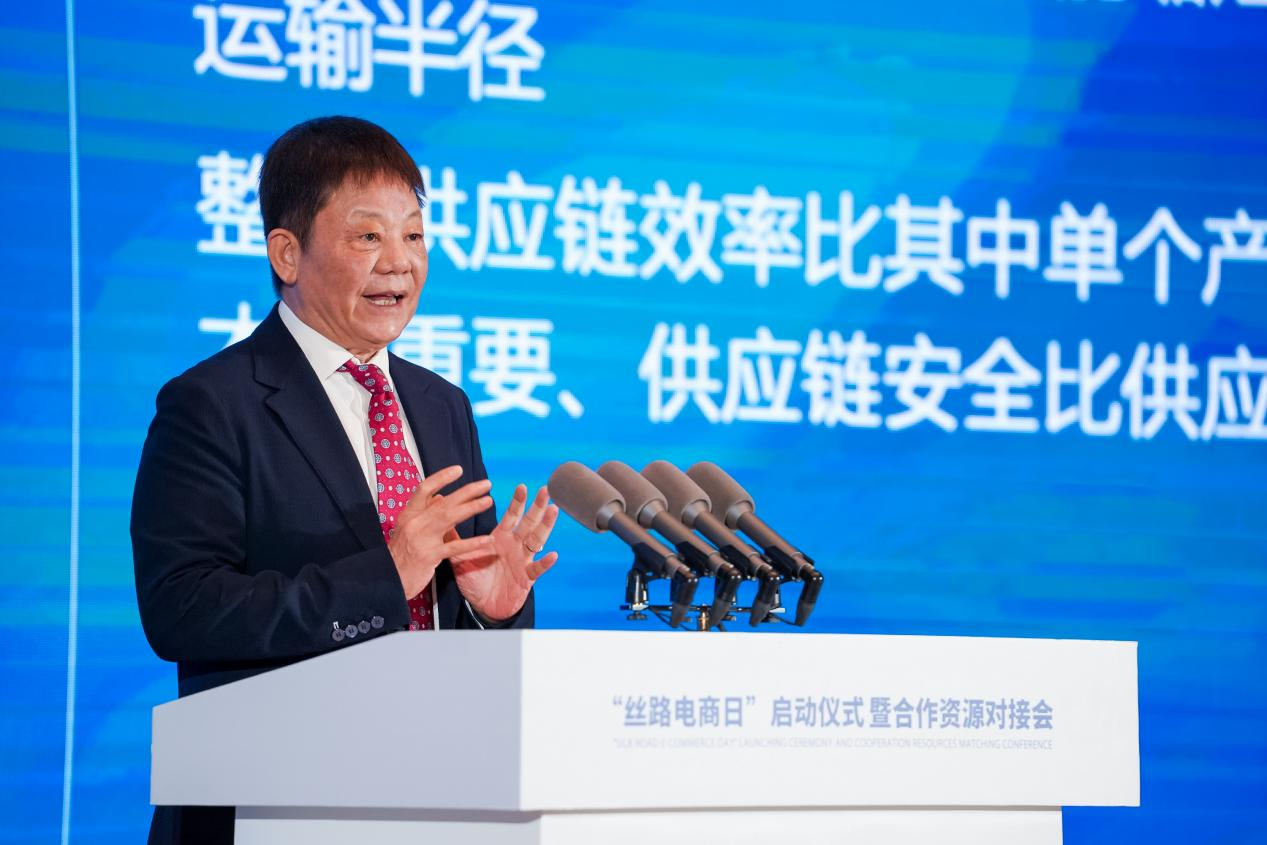
【亿邦原创】9月25日,2024“丝路电商日”启动仪式暨“丝路电商”合作资源对接会在杭州数贸会期间举行。会上,华立集团董事会主席汪力成发表了题为《夯实丝路电商发展基础设施》的演讲。他指出,伴随着全球供应链重塑,“中国制造卖全球”的传统行业格局,正在向“中国制造走向全球制造”的新模式进行转变。而在此过程中,跨境电商行业不仅改变了全球消费者的消费方式和理念,同时也与国际产能合作相辅相成、相互促进。

“国际产能合作与跨境电商终会殊途同归;成本、效率与柔性将是中国企业出海的共同追求。”汪力成指出。
温馨提示:本文为速记初审稿,在不影响原意的基础上,由亿邦动力编辑整理。

以下为演讲实录:


各位来宾,大家好。今天我在这里想与大家分享一下跨境电商贸易与国际产能合作之间的内在联系。

众所周知,全球供应链正在经历一场深刻的重构。这一变化促使中国,作为世界上最大的制造业国家,正在从过去单纯依靠“中国制造卖全球”走向“中国创造、全球制造”的新时代。这是一个与过去截然不同的显著转变。

尽管面临这样的变革,中国制造业仍然在全球制造业中保持着强大的优势和竞争力。

当前全球供应链的重构,其核心标志与历史上几次全球性的制造业梯度转移有所不同,这一次的驱动力主要是供应链安全,而非仅仅是生产要素成本。这意味着供应链的半径不宜过长,尤其是成品与目标市场的距离不能太远,以减少各种潜在因素的影响和供应链风险。也正是这种趋势,推动了“中国制造”向“全球制造”的转变。

然而,无论全球制造业如何发展,中国制造始终是其中不可或缺的重要组成部分。华立集团基于20年前开始的全球化布局,积累了丰富的经验和教训。我们不仅推动自身产业的发展,还积极在全球范围内开发大型和小型的境外工业园区,并形成了全球“三大三小”的战略布局。

所谓大型园区总占地面积都会在10-15平方公里以上,而小型园区的面积则在3-5平方公里左右。这些园区不仅服务于华立自身的产业,也为众多中国制造业企业提供了一个便捷、风险更低的境外发展平台。

在这一过程中,我们不仅关注制造业本身,还着眼于全球制造的更广泛含义——即根据不同产业的需求,建立一个能够快速响应全球市场需求的供应链机制。

跨境电商在这一供应链重构中扮演着至关重要的角色。它不仅改变了全球消费者的消费方式和理念,还促进了全球供应链形成新的模式。

过去,中国制造业习惯于接受大订单,并通过传统的批发渠道覆盖目标市场。而现在,我们需要的是减少中间环节,实现更直接的市场接触。电商在中国已经成为一种生活方式,而对于许多国家的消费者来说,这还是一个新兴领域。中国的跨境电商不仅改变了全球消费者的消费模式,也为全球供应链带来了新的变革、新的底层逻辑。

为了实现这一目标,我们不仅要关注电商这一入口端,还要关注从制造端到消费端的整个供应链。这包括供应链管理、集货、跨境物流、清关、保税仓、本地仓储、最后一公里配送、支付结算、售后服务,以及消费者需求预测和产品设计等环节。这些都是构成全球供应链新架构的关键要素。

尽管跨境电商最初是从处理小件包裹开始的,但我相信,最终,大件商品和多样化的物流需求将成为主流。

在华立集团的境外工业园规划和建设中,我们不仅考虑其作为制造平台的功能,还充分考虑了未来企业在全球多地设立制造基地的需求,以及如何构建一个高效的物流对接网络。

从这个角度来看,无论销售模式如何发展,线下的仓储物流需求都是不可替代的。成本、效率和柔性始终是大家追求的目标,而这也是跨境电商基础设施建设的基本要求。

因此,我相信,尽管国际产能合作和跨境电商听起来是两个不同的概念,但它们最终会殊途同归、融合在一起。

通过数字化的全球贸易、跨境电商以及中国企业的国际产能合作,我们终将构建一个能够更好地服务于全球消费者,并发挥各国资源最佳优势的新型制造、贸易和消费格局。

感谢大家的聆听。


关于会议:

2024“丝路电商日”保留了去年的“一展、两活动”,“一展”就是丝路电商展,“两活动”是丝路电商走进杭城、丝路云品推荐周。在此基础上,还将举办两场对接会,一个是“丝路电商”合作资源对接会,另一个是中亚国际创新数字贸易对接会。此外,还将首次在“丝路云品”推荐周设立主宾国产品专区和金砖国家专区,届时还将与泰国国际直播电商博览会云互动,共同推介“丝路云品”好物。


亿邦持续追踪报道该情报,如想了解更多与本文相关信息,请扫码关注作者微信。


【版权提示】亿邦动力倡导尊重与保护知识产权。未经许可,任何人不得复制、转载、或以其他方式使用本网站的内容。如发现本站文章存在版权问题,烦请提供版权疑问、身份证明、版权证明、联系方式等发邮件至run@ebrun.com,我们将及时沟通与处理。

已点赞

+1

{{ praise_text }}

好文章,值得被更多人看到

FAQ回顾

什么是国际产能合作与跨境电商的双向赋能?

国际产能合作指中国企业在境外建立制造基地,而跨境电商则直接连接制造端与消费端。两者相辅相成,共同推动全球供应链从‘中国制造卖全球’向‘全球制造’转变,提升成本、效率和柔性。

华立集团在全球化布局中有哪些具体实践?

华立集团基于20年全球化经验,形成了全球‘三大三小’境外工业园区战略布局。大型园区占地10-15平方公里,小型园区3-5平方公里,为中国制造业企业提供境外发展平台和物流对接网络。

跨境电商如何改变全球供应链的底层逻辑?

跨境电商减少了传统批发中间环节,实现直接市场接触。其关键要素包括供应链管理、跨境物流、清关、本地仓储、支付结算及需求预测,最终推动大件商品和多样化物流成为主流。

广告

下一篇

跨境电商资源对接

《全球跨境电商服务商资源手册》第二期手册现已发布,触达更多资源,了解跨境服务商信息,欢迎点击链接下载。

了解详情

抖音双11抢跑:10月8日开卖 主打官方立减和一件直降

正式期,抖音商城双11好物节,10月18日至11月11日。其中前三天(10.18-10.20)为开门红big day,后三天(11.9-11.11)为狂欢big day。