• 亿邦公众号
    • APP下载

阿里国际数字商业集团AIGC业务总经理顾伟:AI设计助力丝路电商跨境贸易

作者:王浩然 文章来源:亿邦动力

2024-09-27 10:04

作者:王浩然 文章来源:亿邦动力

2024-09-27 10:04

邦小白快读

EN
全文速览

本文核心分享了阿里国际数字商业在AI赋能丝路电商跨境贸易领域的最新实践,普通读者尤其是意向入行跨境生意的普通人可获得这些干货:

1. 当前做跨境生意普遍存在三类共性痛点:一是语言文化差异导致对本地市场理解不足、内容表达不符合用户习惯;二是海外获客、物流等经营成本高,市场竞争激烈;三是内容、财务、法务等专业人才短缺,这些都是入行前需要明确的核心问题。

2. 目前已经有成熟的AI工具可以解决这类痛点,阿里整合十年跨境设计领域的技术积累,推出了AI产品Pic Copilot,还搭建了包含百万设计师的设计生态,普通人做跨境可以借助这类工具降低入行门槛,压缩经营成本,还能提前完成市场测试降低试错风险。

布局出海业务的品牌商可获得这些和品牌发展相关的干货:

1. 品牌出海现阶段普遍存在三大核心痛点,需要针对性解决:语言文化差异导致品牌内容表达不符合本地市场习惯,海外经营成本高、专业人才短缺,制约品牌增长效率。

2. AI可以从产品研发到品牌营销全链路赋能品牌出海:产品研发端,可结合全球市场趋势,快速完成鞋履、箱包、珠宝等品类的产品创新和改款迭代,还能在生产前完成市场测试,拿到反馈后再生产,降低试错成本。

3. 品牌营销端,AI可以帮助品牌实现内容开发、表达、传播全流程本地化,针对不同国家用户偏好制作定制化营销物料,比如德国用户偏好精确参数,韩国用户关注设计感,可有效提升点击率和转化率,还能依托生态解决人才短缺问题。

跨境卖家可获得这些和经营机会、风险应对相关的干货:

1. 当前丝路电商是政策支持的核心增长方向,2024年丝路电商日新增了主宾国产品专区、金砖国家专区,新增中亚国际创新数字贸易对接会,为卖家开拓了新兴市场的增长空间,带来了新的流量机会。

2. 现阶段做跨境出海普遍面临三类核心经营痛点:语言文化差异导致本地化不足、经营成本高竞争压力大、专业人才短缺,卖家需要提前做好应对规划。

3. 卖家可以借助AI工具解决痛点,阿里推出的Pic Copilot覆盖40多个电商场景,从市场洞察、选品铺货到客服全链路赋能,可帮助卖家提高转化率、降低成本和试错风险,卖家可对接这类工具和生态提升经营效率。

做跨境供货或意向出海的工厂可获得这些干货:

1. 当前跨境电商对工厂的产品生产和设计提出了新要求,需要贴合全球不同市场的消费趋势快速做产品创新和改款,AI可以帮助工厂大幅提升设计研发效率,缩短新品上市周期。

2. 新的运作模式可以帮助工厂降低经营风险:借助AI能力,工厂可以在批量生产之前就完成市场测试和用户测试,拿到采购方明确的需求和市场反馈后再进入生产环节,能够有效降低库存积压风险,提升资金周转效率。

3. 工厂推进数字化和电商转型,可以借助现成的AI工具和设计生态,快速获取市场洞察、设计支持,对接全球市场需求,降低转型门槛,阿里的Pic Copilot和堆友设计生态可以提供全链路支持,工厂可对接利用这类资源。

跨境电商相关服务商可获得这些行业发展相关的干货:

1. 当前跨境商家的核心痛点已经明确,分别是语言文化差异带来的市场洞察和内容表达问题、海外经营成本上涨竞争压力加大、组织内部专业人才短缺,这三类痛点就是服务商未来核心的客户需求方向。

2. 行业发展的明确趋势是AI深度赋能跨境全链路,AI设计已经成为解决商家痛点的核心方案,覆盖市场洞察、选品、内容制作、营销、产品开发、测款等40多个电商场景,AI相关服务有较大的市场空间。

3. 单靠工具无法满足商家全部需求,生态联合的模式价值凸显,目前阿里已经搭建了包含185万名设计师的设计生态,服务商可参考这种模式,为商家提供更高性价比的交付,同时拓展人才培养相关业务。

跨境电商平台商可获得这些运营和发展相关的干货:

1. 当前平台出海商家普遍存在三大核心未被满足的需求:解决语言文化差异实现本地化经营、降低海外经营成本应对市场竞争、解决专业人才短缺问题,平台后续优化服务可围绕这些需求展开。

2. AI赋能已经成为跨境平台服务商家的核心方向,阿里国际的实践是整合多年技术积累,推出覆盖40多个电商全场景的AI解决方案,从市场洞察到客服全链路赋能,还推出了垂直的AI设计产品Pic Copilot,这种产品化服务模式值得参考。

3. 平台需要搭建生态完善服务,除了工具之外还需要对接设计、人才等资源,阿里通过堆友连接百万设计师的模式值得借鉴,同时平台可抓住丝路电商风口,拓展新兴市场招商,新增特色专区获取流量。

研究跨境电商产业的研究者可获得这些产业相关干货:

1. 当前跨境电商产业出现了AI深度赋能的新动向,AI已经从单一的设计工具升级为覆盖商家全经营链路的解决方案,针对性解决跨境电商长期存在的本地化痛点,头部企业阿里国际推出了整合十年能力的AI产品Pic Copilot,形成了AI工具加设计生态的新商业模式。

2. 当前跨境出海商家的核心痛点已经更新,分别是语言文化差异导致的本地化不足、经营成本上涨竞争加剧、专业人才短缺,这三个问题是产业现阶段需要解决的核心议题,具备研究价值。

3. 丝路电商也出现了新发展,2024年丝路电商日新增主宾国专区、金砖国家专区,拓展了合作范围,AI加丝路电商的组合为跨境贸易和品牌出海提供了新路径,具备较高的研究价值。

声明:快读内容全程由AI生成,请注意甄别信息。如您发现问题,请发送邮件至 run@ebrun.com 。

我是 品牌商 卖家 工厂 服务商 平台商 研究者 帮我再读一遍。

Quick Summary

This article shares Alibaba International Digital Commerce’s latest progress in AI-enabled cross-border trade along the Silk Road E-commerce initiative. For general readers, especially individuals looking to enter the cross-border business sector, it offers the following key takeaways:

1. Cross-border business currently faces three common core pain points that new entrants should clarify upfront: insufficient understanding of local markets and misaligned content expression caused by language and cultural gaps; high operating costs for customer acquisition, logistics and other links amid fierce market competition; and a shortage of professional talents in areas such as content creation, finance and legal affairs.

2. Mature AI tools have emerged to address these pain points. Drawing on 10 years of technical accumulation in cross-border design, Alibaba has launched the AI product Pic Copilot and built a design ecosystem with one million designers. Ordinary entrants can leverage such tools to lower entry barriers, cut operating costs, and complete pre-market testing to reduce trial-and-error risk.

For brands expanding overseas, this article delivers key insights for brand growth:

1. Brands going global currently share three core pain points that require targeted solutions: misaligned brand content expression for local markets caused by language and cultural differences, high overseas operating costs, and a shortage of professional talents, all of which constrain growth efficiency.

2. AI can empower the entire brand globalization journey from product R&D to brand marketing. On the R&D side, AI can draw on global market trends to speed up product innovation and design iteration for categories including footwear, bags and jewelry, and enable pre-production market testing. Producing only after collecting user feedback helps brands cut trial-and-error costs.

3. On the brand marketing side, AI enables full-process localization of content development, expression and dissemination, and produces customized marketing materials tailored to user preferences in different markets — for example, German users prioritize precise product specifications, while South Korean consumers value design aesthetics. This approach effectively improves click-through and conversion rates, and the supporting ecosystem also helps resolve talent shortages.

For cross-border sellers, this article outlines key business opportunities and risk mitigation strategies:

1. Silk Road E-commerce is currently a core growth direction supported by policy. The 2024 Silk Road E-Commerce Cooperation Forum added a product zone for guest countries, a BRICS countries zone, and a Central Asia international innovation digital trade matchmaking session, opening up growth opportunities in emerging markets and bringing new traffic for sellers.

2. Cross-border sellers currently face three core operational pain points: insufficient localization due to language and cultural gaps, high operating costs and fierce competition, and a shortage of professional talents. Sellers need to make contingency plans for these challenges in advance.

3. AI tools can help sellers address these pain points. Alibaba’s Pic Copilot covers more than 40 e-commerce scenarios and empowers the entire operational chain from market insight, product selection to customer service. It helps sellers improve conversion rates, cut costs and reduce trial-and-error risk. Sellers can integrate these tools and the supporting ecosystem to boost operational efficiency.

For factories engaged in cross-border supply or planning to expand overseas, this article shares the following key insights:

1. Cross-border e-commerce now raises new requirements for factories’ production and design: factories need to deliver rapid product innovation and design iteration aligned with consumption trends across different global markets, and AI can significantly improve design and R&D efficiency while shortening time-to-market for new products.

2. New operating models can help factories reduce operational risk: leveraging AI capabilities, factories can complete market and user testing before mass production, and only start production after receiving clear demand and market feedback from buyers. This effectively reduces the risk of excess inventory and improves capital turnover efficiency.

3. For factories pushing forward digital and e-commerce transformation, off-the-shelf AI tools and design ecosystems provide quick access to market insight, design support, and connections to global market demand, lowering the barrier to transformation. Alibaba’s Pic Copilot and Duiyou design ecosystem offer full-chain support that factories can leverage.

For cross-border e-commerce service providers, this article outlines key industry development trends:

1. The core pain points of cross-border merchants are clear: market insight and content expression challenges caused by language and cultural differences, growing competitive pressure from rising overseas operating costs, and a shortage of in-house professional talents. These three pain points define the core direction of future customer demand for service providers.

2. A clear industry trend is that AI is deeply empowering the entire cross-border value chain. AI-powered design has become a core solution to merchant pain points, covering more than 40 e-commerce scenarios including market insight, product selection, content creation, marketing, product development and testing. AI-related services hold significant market potential.

3. Standalone tools cannot meet all of merchants’ needs, so the value of ecosystem collaboration is becoming increasingly prominent. Alibaba has already built a design ecosystem with 1.85 million designers. Service providers can reference this model to deliver higher cost-effective solutions for merchants, while expanding talent development-related business.

For cross-border e-commerce platform operators, this article shares insights for operation and growth:

1. Currently, three core demands of sellers on cross-border platforms remain unmet: overcoming language and cultural barriers to achieve localized operation, cutting overseas operating costs to cope with market competition, and resolving the shortage of professional talents. Platforms can prioritize these demands when optimizing their services.

2. AI empowerment has become a core direction for cross-border platforms to serve merchants. Alibaba International’s practice integrates years of technical accumulation to launch an AI solution covering more than 40 full e-commerce scenarios, empowering the entire chain from market insight to customer service, and rolling out the vertical AI design product Pic Copilot. This productized service model is a valuable reference.

3. Platforms need to build ecosystems to complete their service offerings: beyond tools, they also need to connect resources including design and talent. Alibaba’s model of connecting one million designers via the Duiyou platform is worth learning from. Meanwhile, platforms can capitalize on the Silk Road E-commerce boom to source sellers from emerging markets and launch featured zones to capture new traffic.

For researchers studying the cross-border e-commerce industry, this article offers the following industry insights:

1. The cross-border e-commerce industry is now seeing a new trend of deep AI empowerment. AI has evolved from a single design tool to a full-chain solution covering merchants’ entire operation process, targeting the long-standing localization pain points in cross-border e-commerce. Leading player Alibaba International has launched Pic Copilot, an AI product integrating 10 years of industry capability, and formed a new business model combining AI tools and a design ecosystem.

2. The core pain points of cross-border merchants have evolved: insufficient localization caused by language and cultural differences, intensifying competition amid rising operating costs, and a shortage of professional talents. These three issues are the core problems the industry needs to address at this stage and hold high research value.

3. Silk Road E-commerce has also entered a new development phase. The 2024 Silk Road E-Commerce Cooperation Forum added guest country and BRICS country zones to expand cooperation scope. The combination of AI and Silk Road E-commerce opens up a new path for cross-border trade and brand globalization, which also carries high research value.

Disclaimer: The "Quick Summary" content is entirely generated by AI. Please exercise discretion when interpreting the information. For issues or corrections, please email run@ebrun.com .

I am a Brand Seller Factory Service Provider Marketplace Seller Researcher Read it again.

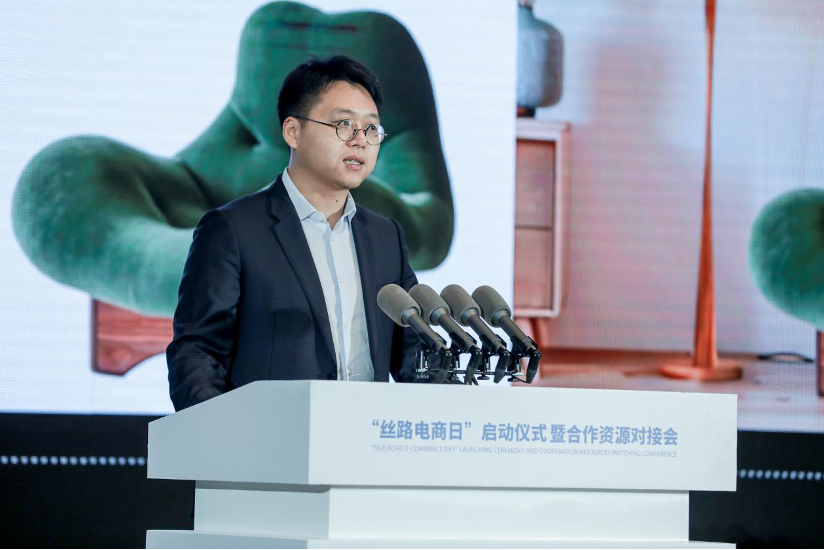
【亿邦原创】9月25日,2024“丝路电商日”启动仪式暨“丝路电商”合作资源对接会在杭州数贸会期间举行。会上,阿里国际数字商业集团AIGC业务总经理顾伟发表了题为《AI设计助力丝路电商跨境贸易与品牌出海》的演讲。他表示,目前商家面临三个痛点,包括语言文化差异、海外经营成本和竞争问题、组织人才短缺问题等,基于此,阿里国际设计出一套覆盖40多个电商场景的AI解决方案:从市场洞察需要做到更加及时,通过大数据获得市场的需求和反馈,到通过精准的选品和铺货,从而提高用户转化率和提供更及时的客户服务。

他指出,阿里国际已经把过去积累的广泛能力整合到新的产品“Pic Copilot”,除了解决成本效率这一核心问题之外,还将更多地支持商品开发的本地化、内容表达的本地化和营销传播的本地化。
温馨提示:本文为速记初审稿,在不影响原意的基础上,由亿邦动力编辑整理。

以下为演讲实录:

顾伟:

各位亲爱的嘉宾,各位朋友们,大家好!

我非常高兴能够代表阿里国际数字商业集团,向大家讲述我们近一年来在AI技术下对跨境电商领域所做的一些实践。

所有的创新和新产品都源于问题。只有真正解决商家和用户的问题,才能诞生更好的产品。在与大量的跨境商家、本地商家进行沟通后,我们把商家的痛点总结为三个:

第一,是语言及文化差异带来的问题,包括对本地用户洞察与理解,以及对本地内容的表达与理解;

第二,是海外经营的成本和竞争问题,包括获客成本、物流成本等;

第三,是我们作为一个组织所面临的人才短缺问题,包括内容、财务和法务问题等。

今天,阿里国际AI Business将选品、设计师、流量、广告、客服做成一套完整的AI解决方案:从市场洞察需要做到更加及时,通过大数据获得市场的需求和反馈,到通过精准的选品和铺货,从而提高用户转化率和提供更及时的客户服务。

今天的演讲主题围绕设计这个板块展开。

在电商场景构建优质的商品内容方面,我们一直在努力,从2015年首次推出鲁班智能设计开始,到2024年尝试做出更好的商品表达,在过去的十年里,我们在文案、视频、图片、动效方面做了大量表达工作。今天,我们把过往积累的所有能力整合到新的产品叫Pic Copilot,这个产品除了解决成本效率这一核心问题之外,还更多地支持商品开发的本地化、内容表达的本地化和营销传播的本地化。

首先,当前大量的跨境商品核心需解决内容表达问题。今天,在各大跨境电商平台仍存在大量中文商品图、中文详情页、中文商品短视频,海外客户完全无法理解。针对这一问题,我们开发了三个核心能力:第一是商品文案的翻译,不是简单的大模型翻译的逻辑,而是把当地用户的习惯、电商关键词和模型深度融合;第二是图片的翻译;第三是视频的翻译。在国内市场,很多商品不缺优质内容,第一步要做的仅仅就是把优质内容更好地、明确地、简单地传递给全球消费者。

第二部分核心是内容表达的垂直化。如何更好地体现产品是如今商品内容的核心,所以我们提供了如AI商拍、一键模特换肤等功能,更好体现服装的穿着特性,以及尝试这一核心功能,让平铺服装一键穿到数字模特上,让终端消费者明确看到商品的形态。

第三部分,我们重点做了整个营销传播的AI内容制作。营销传播内容的核心在于分平台、分地域的特性表达,这样才能获得更好的转化效果。我们做了大量测试发现,在不同的国家以不同的展现形态,点击率会有很大的变化。

拿德国和韩国举例来说,德国用户更偏向于精确的参数展示,而韩国用户更关注物流广告、营销广告本身的设计感和创意性等。因此,结合我们的沉淀和测试能力以及AI技术,我们能够为商家提供更好的物料内容制作。

在商品开发阶段,我们也做了大量的尝试,主要在三个品类的测试:鞋履、箱包和珠宝。我们把全球的趋势和AI能力结合,针对前沿的市场趋势,快速地做出符合今年趋势的产品创新。

同时,针对大量的改款迭代的品类,我们也做了配色方案的快速生成,包括局部改料的生成,还包括A底B面的垂直行业属性特征等。其中最重要的一点是,可以在未生产之前先行进行市场测试和用户测试,以及对上游的贸易商、采购商的对接,可以更具体地解决问题,在获得明确的指令和市场反馈后,再开始进入生产环节。

当然,除了工具层面,设计生态本身在图形图案、模型创作以及工业设计方面都起着非常重要的作用,需要充足的生态支持。因此,我们希望能够在设计生态和全球商业之间架起桥梁,共同服务跨境贸易和品牌出海。我们在去年推出的产品"堆友",已经拥有了185万名设计师,他们为模型训练和营销物料制作提供了大量支持。

今天,我们希望能够通过联合生态的方式,基于产品本身为全球商家提供更高性价比的交付,同时企业也将针对定向培养人才,找到适合自己公司的人才。

最后,用一句话来总结今天的演讲:Global Business Made Simple With AI。

关于会议:

2024“丝路电商日”保留了去年的“一展、两活动”,“一展”就是丝路电商展,“两活动”是丝路电商走进杭城、丝路云品推荐周。在此基础上,还将举办两场对接会,一个是“丝路电商”合作资源对接会,另一个是中亚国际创新数字贸易对接会。此外,还将首次在“丝路云品”推荐周设立主宾国产品专区和金砖国家专区,届时还将与泰国国际直播电商博览会云互动,共同推介“丝路云品”好物。

亿邦持续追踪报道该情报,如想了解更多与本文相关信息,请扫码关注作者微信。

【版权提示】亿邦动力倡导尊重与保护知识产权。未经许可,任何人不得复制、转载、或以其他方式使用本网站的内容。如发现本站文章存在版权问题,烦请提供版权疑问、身份证明、版权证明、联系方式等发邮件至run@ebrun.com,我们将及时沟通与处理。

已点赞

+1

{{ praise_text }}

好文章,值得被更多人看到

FAQ回顾

阿里国际的AI设计解决方案Pic Copilot主要解决哪些跨境电商痛点?

Pic Copilot主要解决三大痛点:语言文化差异导致的内容理解障碍、海外经营成本与竞争压力、组织人才短缺问题。该方案覆盖40多个电商场景,提供商品文案、图片、视频的本地化翻译及AI商拍等功能。

Pic Copilot在商品内容本地化方面具备哪些核心能力?

具备三大核心能力:深度融合当地用户习惯的文案翻译、图片翻译、视频翻译。通过AI商拍、一键模特换肤等功能实现内容垂直化,并支持分平台、分地域的营销内容制作,如针对德国用户偏好参数、韩国用户注重设计感。

阿里国际如何通过AI助力商品开发与测试?

在鞋履、箱包、珠宝等品类中,结合全球趋势与AI能力快速生成配色方案和局部改款设计。支持生产前进行市场测试,对接贸易商获取反馈,再进入生产环节,降低开发风险。

广告

下一篇

跨境电商资源对接

《全球跨境电商服务商资源手册》第二期手册现已发布,触达更多资源,了解跨境服务商信息,欢迎点击链接下载。

了解详情

具身智能 vs. 运动科技:一个让机器像人 一个把人变成机器?

运动,似乎是个人人都很熟悉的话题,但我们是否真的足够了解它?也许未必。在运动的过程中,我们的身体是如何运作的?运动科学的底层逻辑是什么?