



• 亿邦公众号
    • APP下载

火蝠电商10年深耕电商运营,新竞争力品牌拉动服务商再增长

作者:亿邦动力 文章来源:亿邦动力

2024-09-23 17:07

作者:亿邦动力 文章来源:亿邦动力

2024-09-23 17:07

邦小白快读

EN
全文速览

文章重点介绍了新竞争力品牌的发展理念和火蝠电商的服务案例,提供实操干货。

1.新竞争力品牌以用户主权、全域增长和数字基因为核心理念,通过产品与服务创新提升竞争力,驱动行业增长。

2.火蝠电商作为服务商代表,提供全链路解决方案,帮助品牌填补用户、平台和供应链间隙,实现数字化转型。

3.实操案例:火蝠电商助力两面针品牌研发“花系列”新品,采用货品升级、人群破圈、精准投放、全域联动和电商合围策略,成功提升年轻用户占比和业绩。

4.数据支持:2023双11期间,两面针品牌GMV同比增幅81.71%,新品GMV增幅164.87%,消费者资产增长161%,新品牙膏“花间笑”18-29岁人群占比达16.87%。

5.当前消费趋势:消费者文化自信崛起,消费趋向情绪价值,专业领域细分加速,品牌需适应变化以重塑竞争力。

文章聚焦品牌营销、产品研发和消费趋势,提供新竞争力品牌的发展启示。

1.品牌营销:新竞争力品牌强调用户主权和全域增长,通过数字化手段提升用户体验,如两面针案例中结合策略实现品牌年轻化和声量提升。

2.品牌渠道建设:全域联动策略整合线上线下,电商合围强化渠道覆盖,助力业绩增长。

3.产品研发:针对年轻用户需求,研发新品如“花系列”,切入多样化、个性化消费特征,提升市场竞争力。

4.消费趋势:消费者文化自信和情绪价值崛起,专业领域细分成为趋势,品牌需关注年轻群体包容化特征。

5.用户行为观察:数据表明年轻用户占比提升,如“花间笑”牙膏18-29岁人群占比增至16.87%,消费者资产增长161%,启示品牌优化产品定位。

文章解读市场变化和机会,提供增长策略和可学习点。

1.增长市场:新竞争力品牌崛起推动服务商需求增长,带来合作机会,如火蝠电商获得独立发展空间。

2.消费需求变化:消费转向情绪价值和文化自信,专业领域细分趋势明显,卖家需适应需求变化挖掘机会。

3.事件应对措施:面对品牌痛点如用户老龄化或流量单一,采用货品升级、人群破圈和精准投放策略,可复制两面针案例的成功。

4.机会提示:服务商提供全案服务,包括品类创新和AI应用,卖家可学习合作模式提升业绩。

5.可学习点:全域增长策略结合数据驱动,如GMV增幅81.71%,新品增长164.87%,启示卖家强化数字化基因。

文章揭示产品生产和数字化机会,提供电商启示。

1.产品生产设计需求:案例中两面针对年轻用户研发“花系列”新品,强调设计需满足多样化、个性化消费特征,提升产品竞争力。

2.商业机会:新竞争力品牌增长驱动服务商需求,工厂可合作提供产品支持,如供应链整合机会。

3.推进数字化启示:数字化转型是核心,火蝠电商助力品牌构建数智化基因,工厂可学习如何利用数据提升生产效率。

4.电商启示:从全域增长策略中,工厂可借鉴货品升级和供应链管理,适应消费趋势如文化自信崛起。

文章分析行业趋势和解决方案,聚焦客户痛点和新技术。

1.行业发展趋势:新竞争力品牌以数字基因为理念崛起,服务商需求增长,需提供全链路解决方案助力全域增长。

2.客户痛点:品牌面临用户老龄化、声量增速慢和流量单一等问题,如两面针案例所示。

3.解决方案:火蝠电商以货品、数据、短视频/直播、媒介、视觉、用户六大运营能力为基础,填补品牌间隙,实现业绩提升。

4.新技术:AI应用在服务中,结合数字化手段提升用户体验,服务商需持续升级能力巩固品牌新竞争力。

5.趋势规避:在营商环境变革中,服务商需根植数字化土壤,避免风险如市场变化带来的挑战。

文章探讨平台需求和运营管理,提供风向规避启示。

1.商业对平台需求:品牌和服务商依赖平台支持,如电商渠道投入巩固竞争优势,平台需满足全域增长需求。

2.平台的最新做法:新兴平台涌现,平台可强化招商吸引新竞争力品牌,如支持服务商合作模式。

3.平台招商和运营管理:从案例中全域联动策略,平台可优化运营以整合流量,提升品牌声量和GMV增长。

4.风向规避:需关注市场变革如数字化转向,避免风险如流量单一问题,通过数据驱动管理适应消费趋势。

文章揭示产业新动向和商业模式,提供政策启示。

1.产业新动向:新竞争力品牌以用户主权、全域增长和数字基因为发展理念,推动行业数字化转型,重塑生态关系。

2.新问题:品牌面临用户老龄化和流量挑战,服务商需解决间隙,如案例中痛点分析。

3.商业模式:火蝠电商提供全案服务,包括品类创新、AI应用和供应链管理,模型启示服务商角色在增长中的关键性。

4.政策法规建议:报告洞察可启示支持数字化政策,如数据驱动增长(GMV增幅81.71%),促进产业创新。

5.研究数据:案例提供实证,如两面针消费者资产增长161%,年轻用户占比提升,支持产业趋势分析。

声明:快读内容全程由AI生成,请注意甄别信息。如您发现问题,请发送邮件至 run@ebrun.com 。

我是 品牌商 卖家 工厂 服务商 平台商 研究者 帮我再读一遍。

Quick Summary

The article highlights the development philosophy of New Competitiveness brands and case studies from Huofu E-commerce, offering practical insights.

1. New Competitiveness brands prioritize user sovereignty, omni-channel growth, and digital DNA as core tenets, enhancing competitiveness through product and service innovation to drive industry expansion.

2. As a representative service provider, Huofu E-commerce offers end-to-end solutions to help brands bridge gaps between users, platforms, and supply chains, enabling digital transformation.

3. Case study: Huofu assisted Liangmianzhen in developing its "Floral Series" products, employing strategies like product upgrades, audience expansion, targeted marketing, cross-channel integration, and e-commerce saturation to boost youth user share and sales performance.

4. Data highlights: During 2023’s Double 11, Liangmianzhen’s GMV surged 81.71% year-over-year, new product GMV rose 164.87%, consumer assets grew 161%, and the "Floral Smile" toothpaste captured 16.87% of consumers aged 18–29.

5. Consumer trends: Rising cultural confidence, demand for emotional value, and accelerated niche specialization are reshaping consumption, requiring brands to adapt for renewed competitiveness.

The article focuses on brand marketing, product development, and consumer trends, offering strategic insights for New Competitiveness brands.

1. Brand marketing: Emphasizing user sovereignty and omni-channel growth, brands leverage digital tools to enhance user experience—exemplified by Liangmianzhen’s youth-focused revitalization and amplified brand presence.

2. Channel strategy: Integrated online-offline approaches and e-commerce saturation strengthen coverage, driving sales growth.

3. Product R&D: Developing lines like the "Floral Series" caters to young consumers’ preferences for diversity and personalization, boosting market competitiveness.

4. Consumer trends: Brands must address rising cultural pride, emotional value-seeking, and niche specialization while embracing inclusivity for younger demographics.

5. User insights: Data showing increased youth engagement (e.g., 16.87% of "Floral Smile" users aged 18–29) and 161% growth in consumer assets underscore the need for refined product positioning.

The article deciphers market shifts and opportunities, providing actionable growth strategies.

1. Growth markets: The rise of New Competitiveness brands fuels demand for service providers like Huofu E-commerce, creating partnership avenues.

2. Evolving demand: Sellers must adapt to trends like emotional value consumption and niche specialization to uncover opportunities.

3. Tactical responses: Replicating Liangmianzhen’s success—through product upgrades, audience diversification, and precision marketing—addresses pain points like aging users or fragmented traffic.

4. Collaboration opportunities: Service providers offer full-scope solutions including category innovation and AI integration, enabling sellers to enhance performance via partnerships.

5. Key takeaways: Data-driven omni-channel strategies (e.g., 81.71% GMV growth) highlight the imperative of strengthening digital capabilities.

The article reveals production and digitalization opportunities, offering e-commerce insights.

1. Product design: Cases like Liangmianzhen’s "Floral Series" demonstrate the need for designs that align with diverse, personalized consumption trends to boost competitiveness.

2. Business opportunities: Growing demand from New Competitiveness brands opens avenues for factories to provide product support and supply chain integration.

3. Digital transformation: Factories can learn from Huofu’s data-driven approaches to enhance production efficiency and embed digital DNA.

4. E-commerce insights: Strategies like product upgrades and supply chain optimization, coupled with trends like cultural confidence, offer adaptable models for factories.

The article analyzes industry trends and solutions, focusing on client pain points and emerging technologies.

1. Industry trends: The rise of New Competitiveness brands centered on digital DNA amplifies demand for end-to-end omni-channel solutions.

2. Client challenges: Brands face issues like aging user bases, slow brand growth, and fragmented traffic, as seen in the Liangmianzhen case.

3. Solutions: Huofu’s six operational pillars—product, data,短视频/livestreaming, media, visual design, and user engagement—bridge brand gaps to drive performance.

4. Technology integration: AI and digital tools enhance user experience, necessitating continuous capability upgrades to sustain client competitiveness.

5. Risk mitigation: Service providers must root strategies in digital adaptability to navigate market volatility.

The article examines platform demands and operational management, offering guidance for risk mitigation.

1. Platform needs: Brands and service providers rely on platform support (e.g., e-commerce channels) to solidify competitive edges, requiring alignment with omni-channel growth.

2. Platform strategies: Emerging platforms can attract New Competitiveness brands through enhanced merchant recruitment and support for service provider collaborations.

3. Operations management: Cross-channel integration strategies from case studies inform platform optimization to consolidate traffic and boost GMV.

4. Risk avoidance: Platforms must anticipate shifts like digital transformation, avoiding pitfalls like traffic fragmentation through data-driven adaptation to consumer trends.

The article uncovers industry shifts and business models, providing policy implications.

1. Industry dynamics: New Competitiveness brands, built on user sovereignty, omni-channel growth, and digital DNA, are accelerating digital transformation and reshaping ecosystem relations.

2. Emerging challenges: Brands grapple with aging users and traffic issues, highlighting service providers’ role in addressing gaps.

3. Business models: Huofu’s full-service approach—spanning category innovation, AI, and supply chain management—illustrates the criticality of service providers in growth ecosystems.

4. Policy insights: Data-driven growth (e.g., 81.71% GMV rise) supports policies fostering digitalization and industry innovation.

5. Research data: Empirical evidence, such as Liangmianzhen’s 161% consumer asset growth and rising youth engagement, validates industry trend analyses.

Disclaimer: The "Quick Summary" content is entirely generated by AI. Please exercise discretion when interpreting the information. For issues or corrections, please email run@ebrun.com .

I am a Brand Seller Factory Service Provider Marketplace Seller Researcher Read it again.

基于对当前品牌竞争已从传统市场争夺,转向更深层次数字化转型与全域增长策略这一行业风向的充分调研,9月中旬,国内知名电商产业研究咨询机构,亿邦智库全新发布了《2024新竞争力品牌洞察报告》。报告指出,新竞争力品牌以“用户主权、全域增长和数字基因”为发展理念,通过产品与服务创新、数字化手段提升用户体验,在市场中重塑竞争力,成为驱动行业增长的重要推手。
▲2024新竞争力品牌洞察报告

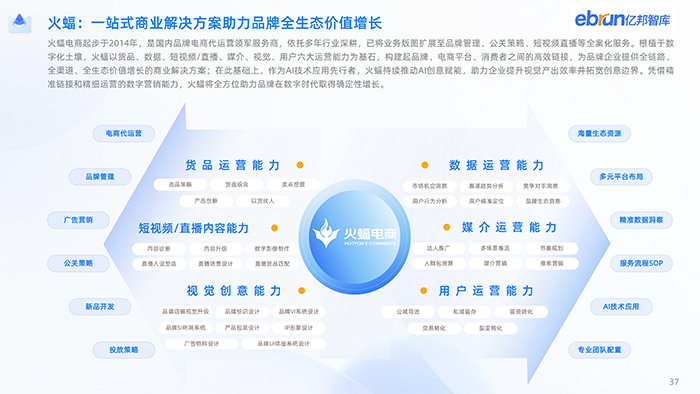
亿邦智库认为,随着传统电商平台加大对电商渠道的投入以巩固竞争优势,新兴平台不断涌现,群体规模持续扩大的新竞争力品牌,对能够提供全链路解决方案、助力品牌数字化转型的服务商需求日益增长。报告中,亿邦智库特别提到了在电商市场变革中成长起来的品牌电商服务商代表—火蝠电商。据悉,凭借在电商运营领域积累的专业能力,火蝠电商结合技术手段和运营策略为品牌填补了与用户、平台和供应链之间的间隙,赢得了众多新竞争力品牌的青睐,获得多元化独立发展的机会,在新竞争力重塑品牌生态关系的进程中,扮演着关键角色。

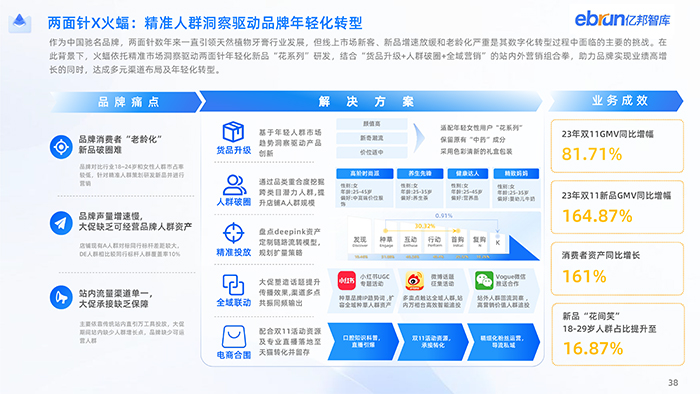
此外,《2024新竞争力品牌洞察报告》还提到,所谓新竞争力品牌,既包括崛起于互联网时代下的新品牌,也包括借助数字化技术与线上渠道发力构建新竞争力的传统老品牌。在阐述新竞争力品牌与服务商之间的创新融合时,亿邦智库专项介绍了火蝠电商如何深刻研究“新生代”年轻群体多样化、个性化、包容化的消费特征,助力传统民族品牌两面针进行品牌数字化、年轻化转型的服务案例。
▲2024新竞争力品牌洞察报告

据亿邦智库表述,面对两面针品牌用户“老龄化”、品牌声量增速慢、平台内流量渠道单一等经营痛点,火蝠电商推动两面针研发更为年轻化的“花系列”新品,切入年轻用户群体。结合“货品升级+人群破圈+精准投放+全域联动+电商合围”的策略,成功实现品牌业绩高增长与品牌年轻化转型,由此为两面针注入数智化基因,构建其多维品牌竞争力。报告数据显示,2023年双11期间,两面针品牌GMV同比增幅81.71%,新品GMV同比增幅164.87%,消费者资产同比增长161%,新品牙膏“花间笑”18-29岁人群占比提升至16.87%。

如今,消费者文化自信崛起,消费增长趋向情绪价值,专业领域细分成为趋势。例如两面针等一类的“新竞争力品牌”,围绕用户主权、全域增长和数字基因上的发展思路,也将反向牵引火蝠电商升级能力、产品和服务,提供包括品类创新、产品全生命周期咨询、全域零售、品牌全案、AI应用、盘货供应链等维度上的综合服务水平。在科技、数据、平台等多重元素逐渐重构“人—货—场”,营商环境发生巨大变革的生态下,对于火蝠电商等一众服务商而言,根植于数字化土壤,以货品、数据、短视频/直播、媒介、视觉、用户六大运营能力为基石,持续为新竞争力品牌提供精细化服务的同时,亦需不断巩固自身在电商服务行业内的“品牌新竞争力”。

【版权提示】亿邦动力倡导尊重与保护知识产权。未经许可,任何人不得复制、转载、或以其他方式使用本网站的内容。如发现本站文章存在版权问题,烦请提供版权疑问、身份证明、版权证明、联系方式等发邮件至run@ebrun.com,我们将及时沟通与处理。

已点赞

+1

{{ praise_text }}

好文章,值得被更多人看到

FAQ回顾

什么是新竞争力品牌?

新竞争力品牌是以用户主权、全域增长和数字基因为发展理念的品牌,包括互联网新品牌和数字化转型的传统品牌,通过产品服务创新和数字化手段提升市场竞争力。

火蝠电商如何助力品牌实现年轻化转型?

以两面针为例,火蝠电商通过研发年轻化新品、实施货品升级与人群破圈策略,助力其2023年双11 GMV增长81.71%,18-29岁用户占比提升至16.87%。

电商服务商需要具备哪些核心能力?

服务商需以货品、数据、短视频/直播、媒介、视觉、用户六大运营能力为基石,提供全链路解决方案,包括品类创新、全域零售和AI应用等服务。

广告

下一篇

跨境电商资源对接

《全球跨境电商服务商资源手册》第二期手册现已发布,触达更多资源,了解跨境服务商信息,欢迎点击链接下载。

了解详情

契胜:用AI打造极致“人货场”|2024千峰系列访谈

千峰竞立,追梦双千亿是产业互联网人的情结。2024千峰系列访谈将围绕“供应链变革与AI落地”主题展开。

产业互联网

2024-09-23 16:46:23










