• 亿邦公众号
    • APP下载

射频美容仪再获2年窗口期?国家药监局披露新规

作者:卜晚乔 文章来源:亿邦动力

2024-07-08 19:18

作者:卜晚乔 文章来源:亿邦动力

2024-07-08 19:18

邦小白快读

EN
全文速览

国家药监局新公告延长射频美容仪过渡期至2026年4月1日,明确管理要求及实操要点。

1. 新规生效时间:2026年4月1日起,射频治疗仪、射频皮肤治疗仪类产品必须依法取得医疗器械注册证,否则禁止生产、进口和销售。

2. 过渡安排:已获第二类医疗器械注册证的,注册证在有效期内继续有效;到期前可向原审批部门申请延期,最长延至2026年3月31日。

3. 企业责任:企业必须履行产品质量第一责任人义务,不得进行虚假宣传;非医疗器械产品名称和预期用途不得明示或暗示医疗用途,避免与医疗器械混淆。

4. 行业应对:美容仪品牌已全渠道下架射频产品,并推出非射频技术新产品,以响应政策变化。

5. 背景原因:2022年原公告将产品归为第三类医疗器械,原定2024年生效,但因手持式设备企业(多为家电企业)受疫情和标准影响,注册准备时间拉长,故延长过渡期。

新规影响品牌在研发和营销策略,需关注消费趋势调整方向。

1. 品牌营销:必须避免虚假宣传,确保产品宣传合规,非射频技术产品不得使用医疗用语或暗示医疗用途,防止混淆。

2. 产品研发:品牌已转向开发非射频技术新产品,以替代射频美容仪,把握创新机会。

3. 消费趋势:用户行为可能转向非射频美容仪,品牌可基于此推出新产品,满足市场需求变化。

4. 品牌渠道建设:政策导致射频产品下架,品牌需调整线上线下销售渠道,优化库存管理。

5. 用户行为观察:行业头部品牌表示正在消化政策,反映品牌需快速响应法规变化,维护用户信任。

政策解读及卖家应对策略,提供风险与机会提示。

1. 政策解读:射频美容仪管理过渡期延长至2026年4月1日,无注册证产品禁止销售;已获证产品可申请延期。

2. 事件应对措施:卖家应下架射频产品,推广非射频新产品,避免法律风险;头部品牌表示正吸收政策,卖家可学习其策略。

3. 风险提示:销售无证射频产品将面临处罚;虚假宣传或混淆医疗用途需规避。

4. 机会提示:非射频美容仪市场增长,卖家可把握新产品销售机会;扶持政策包括监管部门提供注册指导培训,卖家可协助企业合规。

5. 可学习点:行业已下架产品并推新品,卖家可借鉴此商业模式调整库存和合作方式。

新规要求工厂适应生产需求和挖掘商业机会。

1. 产品生产需求:射频美容仪生产必须取得医疗器械注册证,工厂需确保合规,特别是手持式设备企业受疫情影响注册时间拉长。

2. 商业机会:非射频美容仪生产需求增加,工厂可开发相关新产品,把握市场空白。

3. 推进数字化和电商启示:注册流程涉及产品检验和临床评价,工厂需准备充分资料,可能借助数字化管理优化申报;电商渠道下架射频产品,工厂可转向非射频产品线上销售。

行业趋势凸显客户痛点及解决方案。

1. 行业发展趋势:射频美容仪向第三类医疗器械管理过渡,规范化进程延长至2026年,反映产业升级。

2. 客户痛点:家电企业等注册申请人面临注册时间拉长问题,受疫情和标准实施影响,产品检验和临床试验周期延长。

3. 解决方案:监管部门将提供针对性指导和培训,包括产品性能验证、检验检测和临床评价;服务商可支持企业注册申报准备和资料补充。

平台需应对商业需求及运营管理挑战。

1. 商业对平台需求:产品必须合规,射频美容仪需有医疗器械注册证才能在平台销售;平台需确保招商产品合法。

2. 平台最新做法:已下架射频产品,推广非射频新产品,以响应政策;头部品牌反应显示平台需快速调整上架策略。

3. 运营管理:加强产品审核,防止虚假宣传或医疗混淆;风向规避包括避免销售无证产品风险。

4. 平台招商:优先合规企业,利用监管部门指导培训支持卖家;合作方式可基于非射频产品拓展新商户。

政策变化揭示产业新动向及启示。

1. 产业新动向:射频美容仪管理过渡期延长至2026年,反映政策调整以适应企业准备不足问题,特别是手持式设备家电企业。

2. 新问题:企业注册时间拉长受多重因素影响,如疫情和标准实施,暴露产业转型挑战。

3. 政策法规建议和启示:企业需承担产品质量责任,监管部门提供指导培训;政策建议统筹公众安全和产业发展。

4. 商业模式:品牌转向非射频技术新产品,创新商业模式以应对法规变化;代表企业如头部美容仪品牌已下架射频产品并推新品。

声明:快读内容全程由AI生成,请注意甄别信息。如您发现问题,请发送邮件至 run@ebrun.com 。

我是 品牌商 卖家 工厂 服务商 平台商 研究者 帮我再读一遍。

Quick Summary

China's National Medical Products Administration (NMPA) has extended the transition period for radiofrequency (RF) beauty devices to April 1, 2026, clarifying management requirements and operational details.

1. New Rule Effective Date: Starting April 1, 2026, RF therapy and skin treatment devices must obtain medical device registration certificates. Production, import, and sales of unregistered products will be prohibited.

2. Transition Arrangements: Existing Class II medical device registrations remain valid until expiration and can be extended by the original approval authority, with a maximum extension to March 31, 2026.

3. Corporate Responsibilities: Companies bear primary responsibility for product quality and must avoid false advertising. Non-medical devices cannot imply medical uses in names or intended purposes to prevent consumer confusion.

4. Industry Response: Beauty device brands have removed RF products from all sales channels and launched new non-RF technology products in response to the policy.

5. Background: A 2022 announcement originally classified these products as Class III medical devices with a 2024 effective date. The extension addresses challenges faced by handheld device manufacturers (mostly home appliance companies) due to pandemic disruptions and extended registration preparation timelines.

The new regulations impact brand R&D and marketing strategies, requiring adjustments based on shifting consumer trends.

1. Marketing Compliance: Brands must ensure promotional content is truthful and compliant. Non-RF products cannot use medical terminology or imply medical uses to avoid confusion.

2. Product Development: Brands are pivoting to develop non-RF technology products as replacements for RF beauty devices, creating innovation opportunities.

3. Consumer Trends: User behavior may shift toward non-RF devices. Brands can launch new products aligned with this demand change.

4. Channel Optimization: RF product removals necessitate adjustments to online/offline sales channels and inventory management.

5. Market Response: Leading brands indicate they are digesting policy implications, highlighting the need for rapid regulatory adaptation to maintain consumer trust.

Policy interpretation and strategic responses for sellers, with risk and opportunity analysis.

1. Policy Overview: The RF beauty device transition period extends to April 1, 2026. Sales of unregistered products are banned; certified products may apply for extensions.

2. Action Steps: Sellers should delist RF products and promote non-RF alternatives to mitigate legal risks. Observe leading brands' adaptation strategies.

3. Risk Management: Penalties apply for selling unregistered RF devices; avoid false advertising or medical use implications.

4. Opportunities: Growing non-RF beauty device market presents new sales prospects. Regulatory guidance and training support seller compliance efforts.

5. Best Practices: Industry-wide product delisting and new launches offer models for inventory and partnership restructuring.

New regulations require production adaptation and present commercial opportunities.

1. Production Compliance: RF beauty device manufacturing requires medical device registration. Factories, especially handheld device producers, face extended registration timelines due to pandemic impacts.

2. Market Opportunities: Rising demand for non-RF beauty devices creates openings for new product development.

3. Operational Optimization: Registration involves product testing and clinical evaluation. Digital management can streamline documentation. E-commerce shifts toward non-RF products create new online sales channels.

Industry trends highlight client pain points and solution opportunities.

1. Regulatory Evolution: RF beauty devices' transition to Class III medical device management reflects extended industry standardization through 2026.

2. Client Challenges: Home appliance manufacturers face prolonged registration processes due to pandemic disruptions and extended testing/clinical trial requirements.

3. Support Services: Regulatory authorities will provide targeted guidance on performance verification, testing, and clinical evaluation. Service providers can assist with registration preparation and documentation.

Platforms must address commercial demands and operational management challenges.

1. Compliance Requirements: RF beauty devices require medical device registration for platform sales. Platforms must ensure merchant product legality.

2. Current Actions: Platforms have delisted RF products and promoted non-RF alternatives in policy response. Leading brands' reactions indicate need for rapid listing strategy adjustments.

3. Risk Management: Strengthen product reviews to prevent false advertising or medical implications. Avoid penalties for unregistered product sales.

4. Merchant Recruitment: Prioritize compliant sellers utilizing regulatory guidance. Expand partnerships based on non-RF product offerings.

Policy changes reveal industry shifts and research implications.

1. Regulatory Adaptation: Extended transition period to 2026 reflects policy adjustments accommodating enterprise preparedness gaps, particularly among handheld device manufacturers.

2. Implementation Challenges: Prolonged registration timelines due to pandemic and standardization factors expose industry transformation difficulties.

3. Policy Implications: Enterprises bear product quality responsibility while regulators provide guidance. Policies balance public safety with industrial development.

4. Business Model Innovation: Brands shifting to non-RF products demonstrate regulatory adaptation through business model innovation, as seen in leading brands' product replacements.

Disclaimer: The "Quick Summary" content is entirely generated by AI. Please exercise discretion when interpreting the information. For issues or corrections, please email run@ebrun.com .

I am a Brand Seller Factory Service Provider Marketplace Seller Researcher Read it again.

【亿邦原创】今日,国家药监局发布了《关于进一步明确射频治疗仪类产品有关要求的公告》(2024年第84号,以下简称84号公告)及对应的解读文件,为射频美容仪再争得2年的过渡宽限窗口。

84号公告主要有两点内容:

1.自2026年4月1日起,《关于调整〈医疗器械分类目录〉部分内容的公告》(2022年第30号)附件中09-07-02射频治疗(非消融)设备中射频治疗仪、射频皮肤治疗仪类产品,未依法取得医疗器械注册证的,不得生产、进口和销售。

2.已取得第二类医疗器械注册证的,原注册证在有效期内继续有效。原注册证在2026年4月1日前到期的,注册人可向原审批部门提出原注册证延期申请,延长期限最长不得超过2026年3月31日。
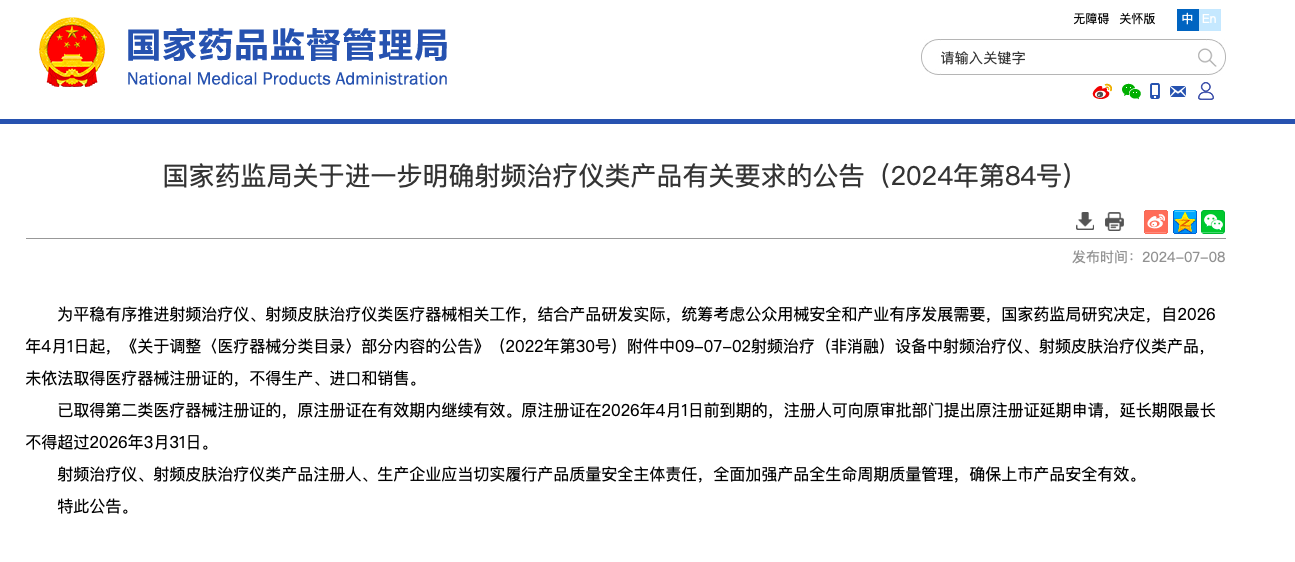
在最新文件中,国家药监局围绕84号公告出台背景、相关政策说明及企业主体如何责任落实,三方面进行了说明。

2022年3月,国家药监局发布《关于调整〈医疗器械分类目录〉部分内容的公告》(2022年第30号,以下简称30号公告)将射频治疗仪、射频皮肤治疗仪类产品作为第三类医疗器械管理,自2024年4月1日起,射频治疗仪、射频皮肤治疗仪类产品按照第三类医疗器械管理,该类产品未依法取得医疗器械注册证不得生产、进口和销售。

国家药监局表示,截至目前,已有多个台式/立式射频治疗仪、射频皮肤治疗仪批准上市。

但现阶段,手持式射频治疗仪、射频皮肤治疗仪的注册申请人多为家电企业,受疫情、有关标准实施等多重因素影响,产品检验、临床试验时间拉长,产品注册申报准备和资料补充还需一定的时间。

“在充分听取行业组织及企业意见基础上,结合产品研发实际,统筹考虑公众用械安全和产业有序发展需要,国家药监局发布84号公告,明确30号公告附件中09-07-02射频治疗(非消融)设备中的射频治疗仪、射频皮肤治疗仪类产品,自2026年4月1日起,未依法取得医疗器械注册证的,不得生产、进口和销售。”

此外,监管部门将对企业研发申报给予指导培训。对申报第三类医疗器械注册的,药品监督管理部门将进一步加强产品性能验证、检验检测、临床评价等方面的针对性指导和培训。

在解读的最后,国家药监局表示企业应当依法履行产品质量第一责任人的责任、不得进行虚假宣传。对于不按照医疗器械管理的射频类产品,产品名称不得明示或暗示医疗用途,产品预期用途宣称不得使用医疗用语或者易使产品与医疗器械相混淆的用语。

据亿邦了解,针对此前的30号公告,各美容仪品牌已在2024年4月1日之前在全渠道下架射频美容仪产品,并相继推出非射频技术的新产品。

针对此消息,亿邦联系到一位头部美容仪品牌,询问其针对新规的计划。其表示:“今天上午的公告,比较突然。目前各家应该都在吸收消化政策。”


亿邦持续追踪报道该情报,如想了解更多与本文相关信息,请扫码关注作者微信。

【版权提示】亿邦动力倡导尊重与保护知识产权。未经许可,任何人不得复制、转载、或以其他方式使用本网站的内容。如发现本站文章存在版权问题,烦请提供版权疑问、身份证明、版权证明、联系方式等发邮件至run@ebrun.com,我们将及时沟通与处理。

已点赞

+1

{{ praise_text }}

好文章,值得被更多人看到

FAQ回顾

射频美容仪新规规定的最终执行日期是什么时候?

根据国家药监局2024年第84号公告,射频美容仪类产品需依法取得医疗器械注册证的最后期限是2026年4月1日,此后未获证的产品不得生产、进口和销售。

射频美容仪为何获得2年过渡期?

因手持式射频美容仪的注册申请人多为家电企业,受疫情及相关标准实施影响,产品检验和临床试验时间拉长,国家药监局为统筹安全与发展,设定了过渡期。

已取得第二类医疗器械注册证的射频美容仪如何处理?

已取得的第二类医疗器械注册证在有效期内继续有效。若注册证在2026年4月1日前到期,可向原审批部门申请延期,最长可延至2026年3月31日。

广告

下一篇

征集报名《品牌数字化服务商资源手册》

《品牌数字化服务商资源手册》展示数字化服务商风采,亿邦全年零售大会通发,触达更多资源,马上加入!

马上入驻

Temu美国下载量保持强劲增长 霸榜时长为免费应用之最

Sensor Tower称,2024年迄今为止,Temu在美国市场的应用下载量继续保持强劲增长。无论是在苹果生态还是在安卓生态下,其始终占据美国移动端应用商店的主导地位,霸榜时长为各大免费应用之最。


电商平台 Temu 跨境电商

2024-07-08 18:38:42