



• 亿邦公众号
    • APP下载

培养新时代的跨境电商人才,浙江这所高校实践教学与理论并举

作者:亿邦动力 文章来源:亿邦动力

2024-05-21 17:33

作者:亿邦动力 文章来源:亿邦动力

2024-05-21 17:33

邦小白快读

EN
全文速览

本文主要分享了浙江工业大学在跨境电商人才培养方面的先进经验,核心干货如下:

1. 浙工大国际经济与贸易专业以培养复合型、创新型、国际化跨境电商相关人才为目标,形成了产教融合的完整培养体系。其中2+2方向采用小班双语授课,配备优秀骨干教师管理,满足跨境电商新业态和学生个性化发展需求。

2. 课程教材建设体系完善,覆盖本科生、研究生、留学生以及全校跨专业学生,打造了多门省级一流课程,编写了多本浙江省十四五重点教材,还配套开发了虚拟仿真等实践课程。

3. 已经和多家浙江本土头部跨境电商企业共建实践基地,通过参观、实习、调研等多种形式组织学生参与真实产业实践,学生多次获得学科竞赛荣誉,不少学生进入跨境行业实习创业。

本文介绍了浙江工业大学成熟的跨境电商人才培养体系,能为布局跨境出海的品牌商提供多方面参考,核心内容如下:

1. 浙工大培养的跨境电商人才具备数字营销、数据分析、跨境运营的复合能力,适配品牌出海对专业人才的需求,品牌商可以通过校招、实习对接获取优质的人才储备。

2. 浙工大开放校企合作,已经和多家本土电商企业共建实践基地,品牌商可以申请加入合作,依托高校的培养体系定向培养适配自身品牌需求的跨境人才,同时可以提前锁定优秀毕业生。

3. 依托和高校的合作,品牌商可以及时从人才端获取行业最新的消费趋势、用户行为变化信息,为自身的品牌营销、产品研发提供方向参考。

本文分享了浙工大跨境电商人才培养的产教融合模式,能给跨境卖家带来诸多机会和参考,核心干货如下:

1. 当前跨境电商是高速增长的新业态,专业人才缺口明显,浙工大已经输出了一批掌握跨境运营、数字营销能力的复合型人才,卖家可以通过校招、实习对接获取适配的人才,解决自身发展的人才痛点。

2. 浙工大开放校企合作共建实践基地,卖家可以参与合作,和高校联合开展定向人才培养,获得稳定的人才输送渠道,同时还可以通过校企互动及时获取消费需求变化的最新信息,挖掘新的市场机会。

3. 卖家可以参考浙工大对跨境人才的能力要求,梳理自身岗位的能力标准,完善内部人才培养体系,提升团队的整体专业能力。

本文介绍了浙工大跨境电商人才培养的经验,能给布局跨境电商转型的工厂带来诸多启示和商业机会,核心内容如下:

1. 当前跨境电商新业态对人才的要求偏向数字化、复合型,工厂推进数字化转型和跨境电商布局,十分需要这类具备数字素养、跨境运营能力的专业人才,可以通过校招、校企合作从高校获取适配人才。

2. 浙工大开放校企合作共建实践基地,工厂可以和高校开展合作,定向培养适配工厂跨境转型需求的人才,还可以依托高校的课题研究能力,获取适配跨境消费需求的产品生产、设计相关的研究支持,优化产品供给。

3. 工厂可以参考高校的人才培养方向,明确自身数字化和电商化转型需要的能力配置,梳理转型路径,加快推进转型步伐。

本文透露出当前跨境电商行业的人才痛点,以及产教融合解决人才缺口的方向,能给跨境电商相关服务商带来诸多参考,核心干货如下:

1. 当前跨境电商行业高速发展,复合型、国际化专业人才缺口大,这是行业的普遍痛点,不管是人才培训服务商还是运营服务商,都可以围绕这个痛点开发对应服务产品,拓展市场空间。

2. 高校正在构建产教融合的人才培养体系,需要企业提供实践资源、真实产业案例,服务商可以对接高校需求,开展合作,参与实践课程开发、实践基地建设,既拓展自身客户群体,也完善自身的服务解决方案。

3. 行业趋势显示,跨境电商人才要求越来越偏向数字化、复合化、国际化,服务商可以顺着这个方向优化自身的人才培训、产业服务产品,更好贴合市场需求。

本文介绍了浙工大跨境电商人才培养的产教融合模式,能给布局跨境电商业务的平台商带来诸多参考,核心内容如下:

1. 当前跨境电商行业普遍存在专业人才缺口,平台入驻商家也面临人才不足的发展痛点,平台可以参考这种产教融合模式,和高校开展合作,为平台商家定向培养输送人才,提升商家的运营能力和留存率,同时吸引更多商家入驻。

2. 浙工大的课程覆盖全层级学生,平台可以参与课程开发,把平台的规则、运营实操融入高校教学,既输出平台标准,也提前培养熟悉平台操作的运营人才和潜在商家,为平台储备生态资源。

3. 平台可以学习这种开放合作的模式,完善平台的商家服务体系,规避因人才不足导致的商家运营失败风险,提升平台整体生态质量。

本文分享了浙江工业大学跨境电商人才培养的典型经验,对研究跨境电商产业生态、产教融合模式的研究者有较高的参考价值,核心内容如下:

1. 产业新动向上,跨境电商高速发展下,专业人才缺口已经成为制约行业发展的核心问题,国内高校尤其是产业先发地区的地方高校,正在探索适配产业需求的人才培养新模式,这是跨境电商产业生态发展的重要新动向。

2. 浙工大构建了从教材编写、课程开发到实践教学的完整产教融合培养体系,形成了理论加实践并举的复合人才培养模式,为研究产教融合在跨境电商领域的应用提供了典型的实地案例。

3. 浙工大的探索也反映了地方高校服务地方产业发展的路径,能给研究产业人才培养政策、产教融合机制提供启示,也为其他相关研究提供了可参考的样本。

声明:快读内容全程由AI生成,请注意甄别信息。如您发现问题,请发送邮件至 run@ebrun.com 。

我是 品牌商 卖家 工厂 服务商 平台商 研究者 帮我再读一遍。

Quick Summary

This article shares best practices from Zhejiang University of Technology (ZJUT) in cultivating cross-border e-commerce talent. Key insights include:

1. ZJUT’s International Economics and Trade program aims to develop versatile, innovative, and globally oriented cross-border e-commerce professionals, with a complete industry-education integrated training system. Its 2+2 track uses small-size bilingual classes taught and managed by leading faculty, to meet the needs of the emerging cross-border e-commerce sector and students’ personalized development.

2. It has built a comprehensive curriculum and textbook system covering undergraduate, graduate, international students and cross-disciplinary students across the university. The program has developed multiple provincial-level first-class courses, authored several key textbooks for Zhejiang’s 14th Five-Year Plan, and supplementary practical courses such as virtual simulation training.

3. ZJUT has co-built practical training bases with multiple leading local cross-border e-commerce enterprises in Zhejiang. It organizes students to participate in real industry practice through site visits, internships and research projects. Its students have won multiple awards in academic competitions, and many have joined the cross-border industry for internships or entrepreneurship.

This article introduces ZJUT’s mature cross-border e-commerce talent development system, which offers multiple takeaways for brands expanding globally. Key takeaways are as follows:

1. Cross-border e-commerce talent trained by ZJUT have composite skills in digital marketing, data analysis and cross-border operations, matching the talent needs of brands going global. Brands can source high-quality talent reserves via campus recruitment and internship partnerships.

2. ZJUT welcomes industry-university cooperation and has co-built practical bases with multiple local e-commerce companies. Brands can apply to join the partnership to develop custom-tailored cross-border talent aligned with their brand needs via the university’s training system, and lock in outstanding graduates early.

3. Through partnerships with the university, brands can access the latest information on industry consumption trends and changing user behavior from the talent side, to inform direction for their brand marketing and product development.

This article shares ZJUT’s industry-education integrated model for cross-border e-commerce talent cultivation, which brings multiple opportunities and insights for cross-border sellers. Key insights are as follows:

1. Cross-border e-commerce is a fast-growing new sector facing a notable shortage of professional talent. ZJUT has already produced a pool of versatile professionals skilled in cross-border operations and digital marketing. Sellers can source suitable talent via campus recruitment and internship partnerships to resolve talent bottlenecks for growth.

2. ZJUT opens industry-university cooperation for co-building practical training bases. Sellers can participate in the partnership to run custom talent development programs with the university, securing a stable talent pipeline. They can also access the latest updates on shifting consumer demand through industry-university interaction to uncover new market opportunities.

3. Sellers can reference ZJUT’s competency requirements for cross-border talent to refine competency standards for their own roles, improve internal talent development systems, and lift the overall professional capability of their teams.

This article introduces ZJUT’s experience in cross-border e-commerce talent cultivation, which offers multiple insights and business opportunities for factories pursuing cross-border e-commerce transformation. Key points are as follows:

1. The emerging cross-border e-commerce sector prioritizes digital and versatile talent. Factories advancing digital transformation and cross-border expansion are in great need of such professionals with digital literacy and cross-border operational capabilities, and can source suitable talent from the university via campus recruitment and industry-university cooperation.

2. ZJUT welcomes industry-university cooperation to co-build practical training bases. Factories can partner with the university to cultivate custom talent matching their cross-border transformation needs, and can leverage the university’s research capacity to gain research support for cross-border consumer-aligned product development and design, to optimize product offerings.

3. Factories can reference the university’s talent development orientation to clarify the competency configuration required for their digital and e-commerce transformation, refine their transformation roadmaps, and speed up transformation progress.

This article outlines the prevailing talent pain point in the cross-border e-commerce industry, and the industry-education integration approach to addressing talent gaps, which offers multiple insights for cross-border e-commerce service providers. Key insights are as follows:

1. Amid the rapid growth of the cross-border e-commerce industry, there is a widespread shortage of versatile, international professional talent, a common pain point across the sector. Both talent training service providers and operational service providers can develop targeted service products around this pain point to expand their market footprint.

2. Universities are building industry-education integrated talent development systems that require practical resources and real industry cases from enterprises. Service providers can partner with universities to meet their needs, participate in practical course development and training base construction—this expands their customer base and improves their service solutions.

3. Industry trends show that cross-border e-commerce talent requirements are increasingly tilted toward digital, versatile and global competencies. Service providers can optimize their talent training and industry service products along this direction to better align with market demand.

This article introduces ZJUT’s industry-education integration model for cross-border e-commerce talent cultivation, which offers multiple insights for cross-border e-commerce platforms. Key insights are as follows:

1. The cross-border e-commerce industry currently faces a widespread shortage of professional talent, and platform merchants also struggle with talent gaps that hold back growth. Platforms can reference this industry-education integration model, partner with universities to cultivate and deliver custom talent for on-platform merchants, improve merchants’ operational capability and retention, and attract more merchants to join the platform.

2. ZJUT’s curriculum covers students of all education levels. Platforms can participate in curriculum development to integrate platform rules and operational practice into university teaching. This allows platforms to disseminate their operational standards, cultivate future operational talent and potential merchants already familiar with platform operations, and build reserves of ecosystem resources.

3. Platforms can learn from this open cooperation model to improve their merchant service system, reduce the risk of merchant operational failure caused by talent shortages, and lift the overall quality of the platform ecosystem.

This article shares ZJUT’s typical experience in cross-border e-commerce talent cultivation, which offers high reference value for researchers studying cross-border e-commerce industrial ecosystems and industry-education integration models. Key insights are as follows:

1. In terms of new industry trends: amid the rapid growth of cross-border e-commerce, the shortage of professional talent has become a core constraint on industry development. Domestic universities, especially local universities in industry-advanced regions, are exploring new talent development models aligned with industrial demand, which represents an important new trend in the development of the cross-border e-commerce industrial ecosystem.

2. ZJUT has built a complete industry-education integrated cultivation system ranging from textbook authoring and curriculum development to practical teaching, forming a composite talent development model that balances theoretical and practical training. This provides a typical on-the-ground case for research on the application of industry-education integration in the cross-border e-commerce sector.

3. ZJUT’s exploration also reflects the path of local universities serving local industrial development, which offers insights for research on industrial talent development policy and industry-education integration mechanisms, and provides a reference sample for other related research.

Disclaimer: The "Quick Summary" content is entirely generated by AI. Please exercise discretion when interpreting the information. For issues or corrections, please email run@ebrun.com .

I am a Brand Seller Factory Service Provider Marketplace Seller Researcher Read it again.

开放发展激荡起蓬勃春潮,跨境电商已在高潮浪尖跳动。跨境精英指点山河、创造想象,在不同时空交汇下产生无限可能的力量,用跨境电商的速度丈量时代的脚步。

后继之道,惟在得人,济济多士,人才蔚起。

高校是人才培育的主力军,是未来精英的摇篮,代代相承,薪火以续。在此,我们将对浙江高校跨境电商人才培养的先进经验和典型模式作连载分享,敬请期待。

YIXIAOYIPIN

浙江工业大学

此外,国际经济与贸易专业还开发了包括《数字营销学》、《互联网思维》、《数据、模型与决策》等课程,以提升学生的数字经济素养,培养学生的数据分析能力。

浙江工业大学国际经济与贸易专业以“开放办学、厚德育人、复合成才”为办学理念,在学生培养目标中强化复合型知识结构,重视国际化思维和创新能力的培养,以满足开放经济发展对“复合型、创新型和国际化”高素质国际经贸专业人才的需求。

近年来,浙江工业大学国际经济与贸易专业积极参与跨境电子商务课题研究,建设多个学生校企合作实践基地,开发了诸多精品课程,着力构建产教融合高质量人才培养体系,在国际化办学、复合人才培养、拔尖人才培养等方面都形成了独特的优势。

01

学生培养

XUESHENGPEIYANG

国际经济与贸易(2+2)专业采用复合型人才培养模式,致力于培养国际贸易、国际金融、跨境电商等领域的高端国际化、复合型、创新型人才。制定单独的培养计划,实行特色课程小班授课,并以双语授课为主,选取优秀骨干教师担任班主任,小班化管理,以满足中国对外贸易快速发展,跨境电商新业态,“一带一路”高质量发展对国际贸易人才需求,满足学生个性化发展需求。
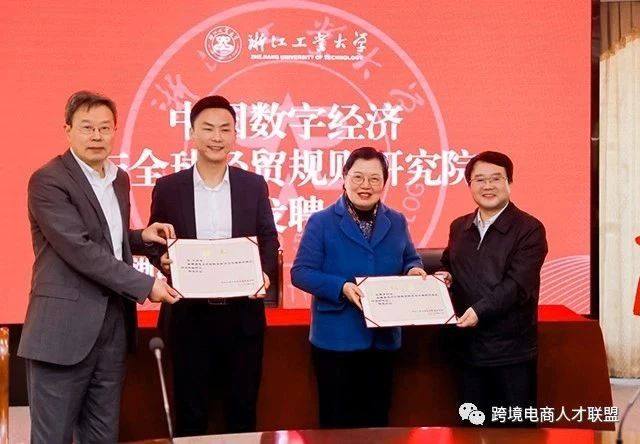
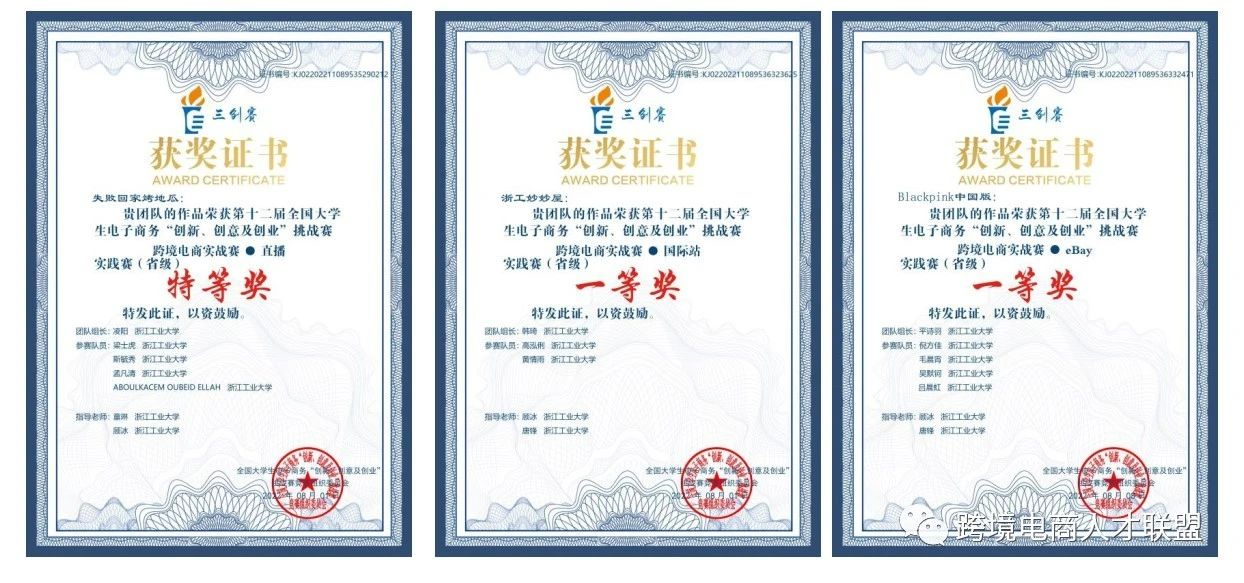
四年来,国际经济与贸易专业组织学生积参加多项相关学科竞赛,并获得诸多荣誉。
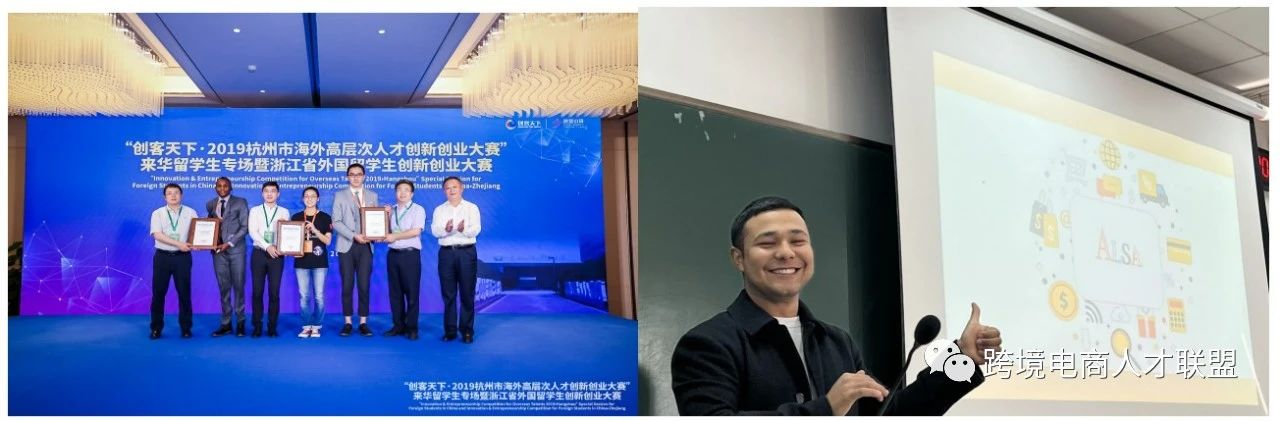
浙江工业大学国际经济与贸易专业留学生积极进入跨境电子商务企业实习,并组织跨境电商直播等相关实践活动,也有部分学生进入跨境电子商务相关行业进行创业。
02

教材建设

JIAOCAIJIANSHE

国际经济与贸易专业多位老师主编和参与跨境电子商务相关教材的编写工作,组织编写《跨境电子商务》、《数字经济学》等浙江省普通本科高校“十四五”重点教材建设项目教材。

03

课程建设

KECHENGJIANSHE

「校内课程」

浙江工业大学国际经济与贸易专业在近年来积极、深入参与多项跨境电子商务的课题研究,并且投入力量进行跨境电子商务课程开发。
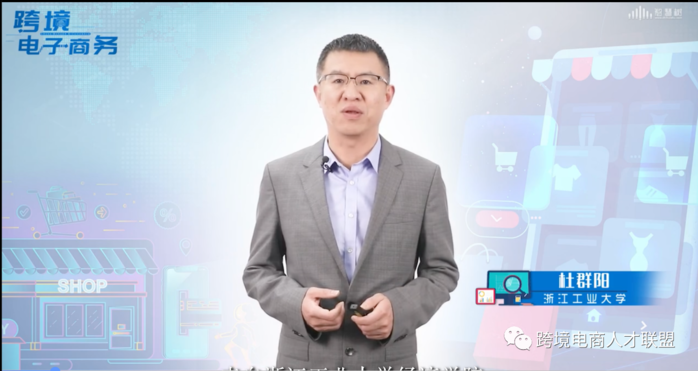
2017年,面向研究生开设《跨境电子商务专题》课程。2018年,面向本科生开设《跨境电子商务》和《跨境电子商务实验》课程,《跨境电子商务》获评省一流线上线下混合式课程和省一流线上课程。2021年,面向留学研究生开设全英文授课课程《跨境电子商务专题(英)》。2021年,面向全校学生开设跨专业选修课程《数字经济与跨境电子商务》。
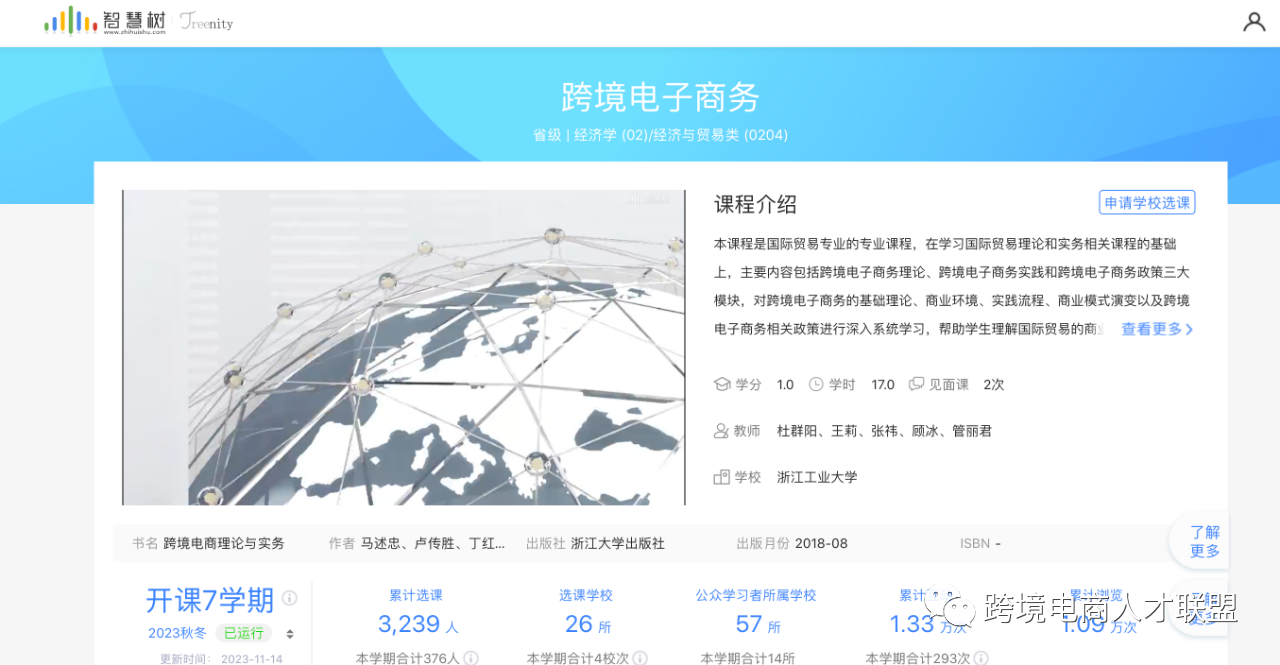
「实践课程」

浙江工业大学国际经济与贸易专业致力于实践课程的建设和打造,以实践驱动的跨境电子商务课程项目化教学改革,开发《跨境电子商务虚拟仿真实验》《数字经济与跨境电子商务》等实践课程。

04

实践教学

SHIJIANJIAOXUE

浙江工业大学国际经济与贸易专业长期重视实践教学和实习基地建设。2016年,与浙江聚贸电子商务有限公司建设实习实践基地;2018年,与浙江国贸云商控股有限公司合作建设实践基地;2019年,与浙江国贸数字科技有限公司建设实践基地。

此外,浙江工业大学还以参观、暑期实习、企业调研等多种形式组织学生参与社会实践,了解产业发展的真实场景和人才需求,提高实践能力。


【版权提示】亿邦动力倡导尊重与保护知识产权。未经许可,任何人不得复制、转载、或以其他方式使用本网站的内容。如发现本站文章存在版权问题,烦请提供版权疑问、身份证明、版权证明、联系方式等发邮件至run@ebrun.com,我们将及时沟通与处理。

已点赞

+1

{{ praise_text }}

好文章,值得被更多人看到

FAQ回顾

浙江工业大学跨境电商人才培养有哪些核心课程?

核心课程包括《跨境电子商务》、《数字营销学》、《互联网思维》、《数据、模型与决策》以及《跨境电子商务虚拟仿真实验》等,涵盖理论、实验和跨专业选修课程。

浙江工业大学如何开展跨境电商实践教学?

学校与浙江聚贸电子商务、国贸云商、国贸数字科技等企业共建实习基地,并通过校企合作、暑期实习、企业调研和跨境电商直播实践等形式组织学生参与社会实践。

浙江工业大学在跨境电商教材建设方面有哪些成果?

专业教师主编或参编了《跨境电子商务》、《数字经济学》等浙江省“十四五”重点教材建设项目教材,为课程体系提供了标准化教学资源。

广告

下一篇

跨境电商资源对接

《全球跨境电商服务商资源手册》第二期手册现已发布,触达更多资源,了解跨境服务商信息,欢迎点击链接下载。

了解详情

天猫618首日直播战报:67个品牌直播间成交破千万

有15个直播间成交有显著增幅,同比去年天猫618开卖首日成交增幅超100%。

阿里巴巴 平台 未来零售 天猫

2024-05-21 17:31:50









