• 亿邦公众号
    • APP下载

存量时代的手游增长新法则:如何从“抢流量”走向“读懂玩家”?

作者:龚作仁 文章来源:Laborer

2026-11-10 13:33

作者:龚作仁 文章来源:Laborer

2026-11-10 13:33

邦小白快读

EN
全文速览

总1:存量市场的重点变化

1. 下载226亿次同比降11.8%,内购277亿美元降2.0%,总使用时长增0.3%,RPD1.23美元增11.0%,说明玩家未离开、新玩家流入放缓。

2. 区域分化明显:印度、巴西、印尼下载下滑,土耳其收入增18.9%,意英澳法正增长,美日韩合计收入降超8%;品类上益智解谜与混合休闲内购增长。

总2:可照着用的实操干货

1. 出海先小规模测试、按表现调投;扩量综合累计净收入与CPI,并结合ROAS、LTV、回收周期判断。

2. 出价=预测收入/ROAS目标,目标过高会失去竞价,跑不出量应下调ROAS,预算花不满每3至5天下调10%,MMP回传不低于180天。

3. 98%用户不付费,可用Offerwall积分墙:入口前置第一屏、节假日促销加M2E通知,买量用CPE加tROAS并按D3/D7筛高价值用户;案例有Township、Klondike。

总1:消费趋势与用户行为观察

1. 存量时代新增玩家稀缺,下载降11.8%、内购降2.0%、RPD增11.0%,玩家仍在但新流入放缓;区域和品类分化,益智解谜与混合休闲内购增长,呈收入增长与下载收缩并存。

2. 约98%用户不直接付费,完成积分墙任务后留存率提升3至4倍,说明用任务换虚拟货币可激活沉默用户,品牌应重视长线用户经营而非只抢点击。

总2:渠道建设与营销打法

1. 渠道组合没有通用模板,要按品类和变现模式衡量高价值用户;买量从买点击转向买价值,Unity Vector整合七层数据,美区D7广告ARPU增78%、D28内购ARPU增68%。

2. 积分墙可做前置入口和节日促销,M2E弹窗横幅提转化;Offerwall可升级为获客渠道,以CPE按任务结算。产品研发可关注混合休闲和游戏内任务机制。出价=预测收入/ROAS目标,目标过高会影响eCPM和竞价,属于价格竞争中的投放定价逻辑。

总1:市场与平台机制解读

1. 大盘下载226亿次降11.8%、内购277亿美元降2.0%、RPD增11.0%;土耳其收入增18.9%,意英澳法正增长,美日韩合计降超8%,印度巴西印尼下载下滑,增长市场与承压市场分化。

2. 平台机制上,MMP回传窗口不低于180天;出价=预测收入/ROAS目标;买量可用CPE结算和tROAS动态阶梯出价,按IAP/IAA/Hybrid收入模型筛选高价值用户。

总2:机会、风险与可学习点

1. 风险是粗放买量成本高、LTV天花板低,ROAS目标过高会失竞价,美日韩收入下滑需警惕。

2. 机会是益智解谜与混合休闲内购增长,98%非付费人群可用Offerwall激活;美国iOS积分墙eCPM约激励视频8倍、安卓约6倍,完成用户留存提升3至4倍。

3. 可学习点是入口前置、节假日促销加M2E;预算花不满每3至5天降10%目标。案例Township美国iOS投放扩4.5倍且ROAS达标,Klondike三个月美安卓投放增380%;合作方式包括Unity Ads、Vector、Offerwall、CPE加tROAS。

总1:产品设计与生产需求启示

1. 品类机会在益智解谜与混合休闲,内购收入大幅增长;产品设计可关注轻量玩法、混合休闲和长线留存机制。

2. 98%用户不付费,需设计积分墙任务换虚拟货币、入口放第一屏、节假日促销配合M2E弹窗横幅,以提升广告变现和用户活跃。

总2:商业机会与数字化启示

1. 出海可按区域小规模测试再调投,关注土耳其、意大利、英国、澳大利亚、法国正增长市场,规避美日韩收入下滑及印度巴西印尼下载下滑。

2. 数字化上,Unity Vector整合开发、购买、运行、玩家属性、游戏内表现、竞价、归因七层数据;tROAS依托IAP/IAA/Hybrid收入模型动态阶梯出价,按D3/D7收益筛高价值用户,CPE按任务结算。

3. 案例Township扩量4.5倍且ROAS达标、Klondike三个月美安卓投放增380%,说明产品商业化可与数据驱动投放结合,工厂可据此理解产品设计、变现和电商化运营机会。

总1:行业发展趋势

1. 存量时代新增玩家稀缺,下载降11.8%、内购降2.0%、RPD增11.0%、总时长增0.3%;区域和品类分化,益智解谜与混合休闲内购增长。

2. 竞争从抢流量转向读懂玩家,增量竞争本质是效率竞争,预算要投向长期留存和深层价值用户。

总2:客户痛点与解决方案

1. 痛点是粗放买量成本高、LTV天花板低,98%用户不付费,ROAS目标难设、预算花不满,渠道组合无通用模板。

2. 方案是用Unity Vector七层数据精准买高价值用户;出价=预测收入/ROAS目标,跑不出量下调ROAS而非上调,预算花不满每3至5天降10%,MMP回传不低于180天。

3. 用Offerwall前置入口加节日促销和M2E通知,买量用CPE加tROAS并按D3/D7筛选;美国iOS积分墙eCPM约激励视频8倍、安卓6倍,完成用户留存提升3至4倍。案例Township、Klondike。新技术包括M2E通知、动态阶梯出价和七层数据整合。

总1:商业对平台的需求和问题

1. 广告主需要精准买到高价值用户,开发者需要变现约98%非付费人群;渠道组合没有通用模板,高价值用户衡量因品类和变现模式而异。

2. 问题是ROAS目标过高会导致出价与eCPM偏低、失去竞价,预算花不满;美日韩合计收入降超8%,区域分化带来投放风向压力。

总2:平台做法与运营管理

1. Unity Ads以Vector整合七层数据,2026年一季度投放规模同比增95%,美区D7广告ARPU增78%、D28内购ARPU增68%;Offerwall积分墙兼作变现和获客渠道,美国iOS的eCPM约激励视频8倍、安卓约6倍。

2. 运营上前置入口第一屏、节假日促销、M2E通知,买量用CPE加tROAS动态阶梯出价,按D3/D7筛高价值用户,MMP回传不低于180天。

3. 招商可强调按产品类型和点位选择Offer类型;案例Township、Klondike显示扩量与ROAS可兼顾。风向规避是避免盲目上调ROAS和粗放买量,预算花不满每3至5天降10%目标。

总1:产业新动向与新问题

1. 存量市场特征明显:下载226亿次降11.8%、内购277亿美元降2.0%、RPD1.23美元增11.0%、总时长增0.3%,新增玩家稀缺。

2. 区域分化:土耳其收入增18.9%,意英澳法正增长,美日韩合计降超8%,印度巴西印尼下载下滑;品类上益智解谜与混合休闲内购增长,收入增长与下载收缩并存。

3. 新问题是渠道组合无通用模板,高价值用户衡量因品类和变现模式而异,粗放买量成本高、LTV天花板低。

总2:商业模式与启示

1. Unity Vector整合七层数据,买量从买点击转向买价值;出价=预测收入/ROAS目标,预算花不满每3至5天降10%,MMP回传180天。

2. Offerwall以时间换资源激活98%非付费人群,CPE加tROAS、M2E和动态阶梯出价形成组合,完成用户留存提升3至4倍;案例Township、Klondike。

3. 启示是增量竞争本质为效率竞争,手游商业化要从粗放抢流量转向深度读懂玩家,把预算投向长期留存和深层价值用户,建立抗周期、高回报增长曲线。文章未直接展开政策法规建议,重点在商业机制与平台工具。

声明:快读内容全程由AI生成,请注意甄别信息。如您发现问题,请发送邮件至 run@ebrun.com 。

我是 品牌商 卖家 工厂 服务商 平台商 研究者 帮我再读一遍。

Quick Summary

Summary 1: Key shifts in a mature market

1. Downloads reached 22.6 billion, down 11.8% YoY; in-app purchases totaled $27.7 billion, down 2.0%; total usage time rose 0.3%; and RPD was $1.23, up 11.0%. This indicates players have not left, while new player inflow is slowing.

2. Regional divergence is pronounced: downloads declined in India, Brazil, and Indonesia; revenue in Turkey grew 18.9%; Italy, the UK, Australia, and France posted positive growth; combined revenue in the US, Japan, and South Korea fell more than 8%. By category, in-app purchase revenue grew in puzzle and hybrid casual games.

Summary 2: Actionable operational insights

1. For overseas expansion, start with small-scale tests and adjust spend based on performance; when scaling, consider cumulative net revenue and CPI together, and assess ROAS, LTV, and payback period.

2. Bid = predicted revenue / target ROAS. If the target is too high, you lose the auction; if volume does not scale, lower ROAS rather than raise it. If budget is underdelivering, cut the target by 10% every 3 to 5 days. MMP postbacks should cover at least 180 days.

3. About 98% of users do not pay. Offerwall can be used as a rewarded task wall: place the entry on the first screen, add holiday promotions and M2E notifications, and use CPE plus tROAS for user acquisition while screening high-value users by D3/D7. Case studies include Township and Klondike.

Summary 1: Consumer trends and user behavior

1. In the mature-market era, new players are scarce: downloads fell 11.8%, in-app purchases fell 2.0%, and RPD rose 11.0%. Players remain, but new inflow is slowing. Regional and category divergence is evident, with in-app purchase growth in puzzle and hybrid casual games, alongside revenue growth and download contraction.

2. About 98% of users do not pay directly. After completing Offerwall tasks, retention rises 3–4x, showing that trading tasks for virtual currency can activate dormant users. Brands should focus on long-term user management rather than merely chasing clicks.

Summary 2: Channel building and marketing tactics

1. There is no universal template for channel mix; high-value users must be measured by category and monetization model. User acquisition is shifting from buying clicks to buying value. Unity Vector integrates seven data layers, with U.S. D7 ad ARPU up 78% and D28 IAP ARPU up 68%.

2. Offerwall can serve as a front-screen entry and holiday promotion, while M2E pop-up and banner placements improve conversion. Offerwall can be upgraded into an acquisition channel settled by CPE per task. Product R&D can focus on hybrid casual and in-game task mechanics. Bid = predicted revenue / target ROAS. A target that is too high affects eCPM and auction competitiveness, reflecting pricing logic in performance-based buying.

Summary 1: Market and platform mechanics

1. Total downloads were 22.6 billion, down 11.8%; in-app purchases were $27.7 billion, down 2.0%; RPD rose 11.0%. Turkey revenue grew 18.9%; Italy, the UK, Australia, and France posted positive growth; combined revenue in the US, Japan, and South Korea fell more than 8%; downloads declined in India, Brazil, and Indonesia. Growth markets and pressured markets are diverging.

2. On platform mechanics: MMP postback windows should be at least 180 days; bid = predicted revenue / target ROAS; user acquisition can use CPE settlement and tROAS dynamic tiered bidding, screening high-value users by IAP/IAA/Hybrid revenue models.

Summary 2: Opportunities, risks, and lessons

1. Risks include high costs from broad-brush user acquisition, a low LTV ceiling, losing auctions when ROAS targets are too high, and revenue declines in the US, Japan, and South Korea.

2. Opportunities include in-app purchase growth in puzzle and hybrid casual games, and Offerwall can activate the 98% non-paying audience. U.S. iOS Offerwall eCPM is about 8x that of rewarded video, and Android about 6x; users who complete tasks show retention 3–4x higher.

3. Lessons include front-screen entry placement, holiday promotions plus M2E, and cutting the target by 10% every 3–5 days when budgets are underdelivering. Township scaled U.S. iOS spend 4.5x while meeting ROAS targets, and Klondike increased U.S. Android spend by 380% in three months. Cooperation options include Unity Ads, Vector, Offerwall, and CPE plus tROAS.

Summary 1: Implications for product design and production demand

1. Category opportunities lie in puzzle and hybrid casual games, where in-app purchase revenue is growing significantly. Product design can focus on lightweight gameplay, hybrid casual formats, and long-term retention mechanics.

2. Since 98% of users do not pay, designers should create Offerwall tasks that exchange virtual currency, place entry points on the first screen, and pair holiday promotions with M2E pop-up and banner placements to improve ad monetization and user activity.

Summary 2: Business opportunities and digitalization implications

1. For overseas expansion, run small-scale tests by region before adjusting spend. Focus on growth markets such as Turkey, Italy, the UK, Australia, and France, while avoiding revenue declines in the US, Japan, and South Korea and download declines in India, Brazil, and Indonesia.

2. On digitalization, Unity Vector integrates seven data layers: development, purchasing, operations, player attributes, in-game performance, bidding, and attribution. tROAS relies on IAP/IAA/Hybrid revenue models for dynamic tiered bidding, screens high-value users by D3/D7 revenue, and settles by CPE per task.

3. Township scaled spend 4.5x while meeting ROAS targets, and Klondike increased U.S. Android spend by 380% in three months. This shows that product commercialization can be combined with data-driven user acquisition, helping factories understand product design, monetization, and e-commerce-style operating opportunities.

Summary 1: Industry trends

1. In the mature-market era, new players are scarce: downloads fell 11.8%, in-app purchases fell 2.0%, RPD rose 11.0%, and total usage time rose 0.3%. Regional and category divergence is evident, with in-app purchase growth in puzzle and hybrid casual games.

2. Competition is shifting from grabbing traffic to understanding players. Incremental competition is essentially efficiency competition, and budgets should be directed toward long-term retention and high-value users with deeper value.

Summary 2: Client pain points and solutions

1. Pain points include high costs from broad-brush user acquisition, a low LTV ceiling, 98% of users not paying, difficulty setting ROAS targets, budgets underdelivering, and no universal template for channel mix.

2. Solutions include using Unity Vector's seven data layers to precisely acquire high-value users; bid = predicted revenue / target ROAS; if volume does not scale, lower ROAS rather than raise it; if budgets are underdelivering, cut the target by 10% every 3–5 days; and ensure MMP postbacks cover at least 180 days.

3. Use Offerwall front-screen entry plus holiday promotions and M2E notifications; for user acquisition, use CPE plus tROAS and screen by D3/D7. U.S. iOS Offerwall eCPM is about 8x that of rewarded video, and Android about 6x; users who complete tasks show retention 3–4x higher. Case studies include Township and Klondike. New technologies include M2E notifications, dynamic tiered bidding, and seven-layer data integration.

Summary 1: Business needs and challenges for platforms

1. Advertisers need to efficiently acquire high-value users, while developers need to monetize the roughly 98% of non-paying users. There is no universal template for channel mix; high-value users are measured differently by category and monetization model.

2. The problem is that overly high ROAS targets lead to lower bids and eCPM, causing loss of auctions and underdelivering budgets. Combined revenue in the US, Japan, and South Korea fell more than 8%, and regional divergence creates pressure on user acquisition direction.

Summary 2: Platform practices and operations management

1. Unity Ads uses Vector to integrate seven data layers; in Q1 2026, spend scale grew 95% YoY, U.S. D7 ad ARPU rose 78%, and D28 IAP ARPU rose 68%. Offerwall serves both as a monetization and acquisition channel; U.S. iOS eCPM is about 8x that of rewarded video, and Android about 6x.

2. Operationally: place the entry on the first screen, run holiday promotions, use M2E notifications, use CPE plus tROAS dynamic tiered bidding for user acquisition, screen high-value users by D3/D7, and ensure MMP postbacks cover at least 180 days.

3. For partner recruitment, emphasize selecting Offer types by product type and placement. Case studies Township and Klondike show that scaling and ROAS can be balanced. To avoid headwinds, do not blindly raise ROAS or rely on broad-brush user acquisition; if budgets are underdelivering, cut the target by 10% every 3–5 days.

Summary 1: New industry dynamics and emerging issues

1. Mature-market characteristics are clear: downloads were 22.6 billion, down 11.8%; in-app purchases were $27.7 billion, down 2.0%; RPD was $1.23, up 11.0%; and total usage time rose 0.3%. New players are scarce.

2. Regional divergence: Turkey revenue grew 18.9%; Italy, the UK, Australia, and France posted positive growth; combined revenue in the US, Japan, and South Korea fell more than 8%; downloads declined in India, Brazil, and Indonesia. By category, in-app purchase revenue grew in puzzle and hybrid casual games, with revenue growth and download contraction coexisting.

3. Emerging issues include the lack of a universal channel-mix template, high-value users being measured differently by category and monetization model, high costs from broad-brush user acquisition, and a low LTV ceiling.

Summary 2: Business models and implications

1. Unity Vector integrates seven data layers, shifting user acquisition from buying clicks to buying value. Bid = predicted revenue / target ROAS; if budgets are underdelivering, cut the target by 10% every 3–5 days; MMP postbacks cover 180 days.

2. Offerwall uses time-for-resources to activate the 98% non-paying audience. CPE plus tROAS, M2E, and dynamic tiered bidding form a combined approach, and users who complete tasks show retention 3–4x higher. Case studies include Township and Klondike.

3. The implication is that incremental competition is essentially efficiency competition. Mobile game commercialization must move from broad-brush traffic grabbing to deeply understanding players, directing budgets toward long-term retention and high-value deep-value users, and building growth curves that are more resilient and higher-return. The article does not directly discuss policy or regulatory recommendations; its focus is on business mechanisms and platform tools.

Disclaimer: The "Quick Summary" content is entirely generated by AI. Please exercise discretion when interpreting the information. For issues or corrections, please email run@ebrun.com .

I am a Brand Seller Factory Service Provider Marketplace Seller Researcher Read it again.

10月28日下午,Unity U:LIVE首期线上直播圆满落幕。在持续两个多小时的分享中,Unity广告业务中国区高级商务经理Kenny Jing、Unity广告业务中国区客户经理Vesper Chang与 Sensor Tower游戏行业销售总监Xiang Tian齐聚线上。

面对大盘承压与大环境变化,三位嘉宾从市场趋势、智能投放与深度变现等角度展开拆解。尽管讨论视角各异,但指向了同一个行业核心议题:在新增玩家日益稀缺的存量时代,如何更早辨识并留住真正具备高价值的用户?

下载大国不再等同于增长市场

Sensor Tower游戏行业销售总监Xiang Tian指出,2026年上半年,手游市场呈现出下载量收缩、内购收入小幅回落、每次下载内购收入上升的趋势。同期,手游下载量为226亿次,同比下降11.8%;内购收入为277亿美元,同比下降2.0%;总使用时长同比增长0.3%。每次下载内购收入(RPD)达到1.23美元,同比增长11.0%。市场表现的分化,让区域、品类与变现模式的选择变得更加重要。

数据表明:“玩家并未离开游戏,只是新玩家流入放缓。”市场增量呈现出三大结构性特征:

● 不同区域市场的增长节奏正在分化:印度、巴西、印尼等主要下载市场的下载量出现下滑。收入方面,土耳其同比增长18.9%,意大利、英国、澳大利亚、法国也实现正增长;美国、日本、韩国合计收入同比下滑超过8%。出海团队需采取“小规模测试-按表现调投”策略。

● 品类结构分化:益智解谜与混合休闲品类内购收入大幅增长,呈现“收入增长与下载收缩并存”的特点。

● 评估逻辑转向:渠道组合并无通用模板,不同品类与变现模式,对高价值用户的衡量重点有所不同。团队在扩量时需综合目标回收周期内的用户累计净收入与获客成本(CPI),并结合广告支出回报率(ROAS)、预计用户生命周期价值(LTV)和回收周期,判断是否扩大投放。

买量转型:从“买点击”走向“买价值”

“过去拼出价、拼流量的粗放买量,把用户看作可替换的点击,结果必然是成本越来越高,LTV天花板越来越低。”Unity广告业务中国区高级商务经理Kenny Jing表示。

针对这一困局,Unity带来了背后的深度解法——Vector模型。作为Unity Ads驱动核心,Vector可整合开发、购买、运行、玩家属性、游戏内表现、竞价及归因等七层数据。目前全球Top 1000手游中70% 基于Unity引擎开发,月触达活跃设备达30亿台。2026年一季度数据显示,Unity Ads投放规模同比增长95%,美区D7广告ARPU上涨78%,D28内购ARPU上涨68%。

针对具体的投放操作,他拆解了出价机制:出价 = 预测收入 /ROAS目标。目标设定过高会导致出价与eCPM偏低,进而失去竞价优势;而对于跑不出量的项目,“正确的做法是下调ROAS预期,而非盲目上调。”若预算花不满,建议每3至5天下调10% 目标;同时在上线前,确保MMP回传窗口设定不低于180天。

运营盘活:激活被忽略的98% 非付费人群

除了前端获取,后端的深度运营同样决定增长上限。Unity广告业务中国区客户经理Vesper Chang分享了一组行业常态数据:手游行业中约98% 的用户不会在游戏内直接付费。如何留住这部分用户并实现商业化转化?答案在于“用时间换资源”的机制创新。

Offerwall(积分墙) 允许玩家通过完成其他应用内的指定任务,换取当前游戏的虚拟货币。Unity统计显示,美国市场积分墙在iOS端的eCPM约为激励视频的8 倍,安卓端约为6 倍;完成过任务的用户,其后续留存率提升3 至4 倍。
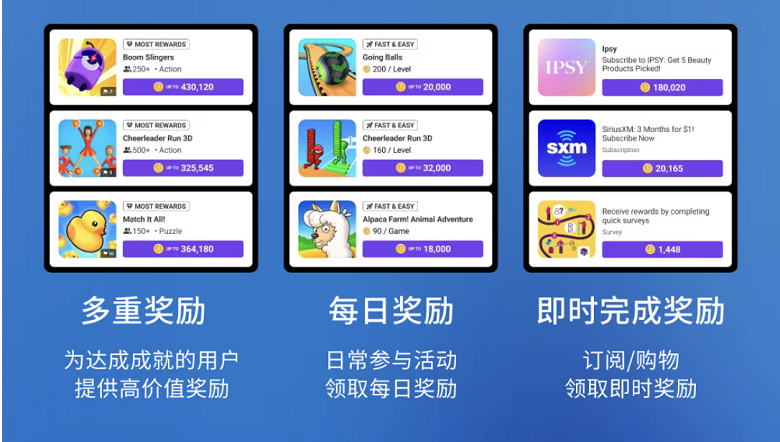
Vesper补充道,运营积分墙的关键在于双向联动,变现靠“前置入口+节日促销”提效率,买量靠“CPE+tROAS”攻质量。

变现优化策略:

1. 显眼入口:将入口尽可能前置并放在第一屏;

2. 节点促销与通知:在节假日开启虚拟货币促销,并搭配M2E(Message-to-Earn)弹窗与横幅通知。例如,游戏《Rival Stars Horse Racing》在劳动节叠加M2E通知后,积分墙广告收入实现了近乎翻倍的增长。

买量优化策略:

1. 丰富获客渠道:将Offerwall升级为获客渠道,广告主可根据产品类型、点位设置情况选择合适的Offer类型,并以CPE结算模式为用户完成任务付费,获取高价值用户。

2.tROAS驱动买量:每日奖励任务可开启tROAS,算法依托IAP/IAA/Hybrid收入模型进行动态阶梯出价,基于D3/D7收益筛选高价值用户,提升投放效率。

Playrix旗下的《Township》在美国iOS的投放规模扩大至4.5倍且ROAS持续达标;Vizor旗下的《Klondike Adventures》在三个月内将美国安卓端的投放规模提升了380%。

存量时代的手游增长新法则

回顾整场直播,从Sensor Tower对大盘趋势与高留存模式的剖析,到Unity Vector解决“精确买到谁”、再到Offerwall解决“剩下98% 非付费用户的长线运营”,三位嘉宾给出的方案逻辑环环相扣。

这也揭示了存量时代下手游出海与本土增长的真正法则:增量竞争的本质是效率竞争,手游商业化必须从“粗放式抢夺流量”转向“深度读懂玩家”。唯有将预算与资源精准投向会长期留存、产生深层价值的用户,才能在存量市场中建立起抗周期、高回报的长期增长曲线。

关于Unity

Unity(纽约证券交易所:U) 是全球领先的创作者工具平台,赋能创作者进行实时游戏、广应用和体验的跨平台开发和增长,支持平台包括手机、PC、游戏主机和空间计算。

注:文/龚作仁,文章来源:Laborer,本文为作者独立观点,不代表亿邦动力立场。

【版权提示】亿邦动力倡导尊重与保护知识产权。未经许可,任何人不得复制、转载、或以其他方式使用本网站的内容。如发现本站文章存在版权问题,烦请提供版权疑问、身份证明、版权证明、联系方式等发邮件至run@ebrun.com,我们将及时沟通与处理。

已点赞

+1

{{ praise_text }}

好文章,值得被更多人看到

FAQ回顾

存量时代,手游市场有哪些值得关注的增长趋势?

2026年上半年手游下载量226亿次、同比下降11.8%,内购收入277亿美元、同比下降2.0%,总使用时长增长0.3%,每次下载内购收入升至1.23美元、同比增长11.0%。市场增量更依赖区域分化、品类分化与高价值用户运营,而非单纯下载增长。

手游厂商如何从“买点击”转向“买价值”,提升投放效率?

核心是把用户视为长期价值而非可替换点击。可借助Unity Vector整合开发、购买、运行、玩家属性、游戏内表现、竞价及归因七层数据,按“出价=预测收入/ROAS目标”投放;跑量不足时每3至5天下调10%目标,并将MMP回传窗口设为不低于180天。

Unity Vector是什么,能为手游广告投放带来什么?

Unity Vector是Unity Ads的驱动核心,整合开发、购买、运行、玩家属性、游戏内表现、竞价及归因七层数据。全球Top1000手游中70%基于Unity引擎开发,月触达活跃设备30亿台;2026年一季度Unity Ads投放规模同比增长95%,美区D7广告ARPU上涨78%、D28内购ARPU上涨68%。

手游中约98%非付费用户如何提升留存和变现?

可用Offerwall积分墙让玩家完成其他应用任务换取虚拟货币,以时间换资源。Unity统计显示,美国市场积分墙eCPM在iOS端约为激励视频8倍、安卓端约6倍,完成任务用户后续留存率提升3至4倍。运营上应前置入口、节假日促销,并用M2E通知和CPE tROAS联动买量。

手游出海应如何选择区域、品类和投放策略?

印度、巴西、印尼等主要下载市场下载量下滑;土耳其收入同比增长18.9%,意大利、英国、澳大利亚、法国正增长,美国、日本、韩国合计收入同比下滑超8%。益智解谜与混合休闲品类内购收入增长明显。团队宜小规模测试、按表现调投,并结合CPI、ROAS、LTV和回收周期评估扩量。

广告

下一篇

跨境电商资源对接

《全球跨境电商服务商资源手册》第二期手册现已发布,触达更多资源,了解跨境服务商信息,欢迎点击链接下载。

了解详情

双11运动户外榜变天 一批专业品牌悄悄在天猫上位

近两年,越野跑、滑雪和徒步逐渐成为了新的“中产运动三宝”,而在此之前,中产三宝曾被认为是露营、飞盘和桨板,消费者对户外运动的喜好一直在变化。在持续的变局中,户外运动品牌想要增长并非易事。

未来零售 平台 天猫 运动户外

2026-11-10 13:16:34