• 亿邦公众号
    • APP下载

这届“多多农研” 跟草莓较个什么劲?

作者:田雨 文章来源:亿邦动力

2026-11-06 16:43

作者:田雨 文章来源:亿邦动力

2026-11-06 16:43

邦小白快读
EN
全文速览

总1:大赛给出植物工厂种草莓的关键实操。

1. 赛博农人在50平方米工厂种3146株,主动推迟花期、单株控果约3颗,累计采收约284.45公斤,最大单果73.7克,以最高产量、最低畸形率和零病害获一等奖。

2. 拟生态团队采用浅液流栽培,种植植株数量第一,用成熟期较短、口感甜的越王品种,约40天收头茬。

总2:降本要关注水耗和能耗。

1. 赛博农人回收冷凝水,165天实际用水7.8立方米,回收超2.45万升,回收率75.7%。

2. 莓立方让风机、空调、除湿机独立开关,提前15分钟预测温湿度、提前5分钟决策,空调能耗占比不足20%;欧普智莓用直流供电智能集电集控和提升照光率灯具,实现四队最低总能耗。

总1:赛事显示品牌可借农业科技赛事做产学研合作和科技形象。

1. 拼多多发起并牵头五届“多多农研科技大赛”,本届由拼多多、上海市农业科学院、上海农业科创谷主办,中国农业大学、浙江大学联合主办,吸引46支团队、超300人。

2. 参赛和获奖主体多元,中国农大赛博农人蝉联一等奖,浙江企业塔金麦牵头拟生态团队获二等奖,上海交大莓立方获三等奖,上海企业欧普照明主导欧普智莓获优胜奖。

总2:产品与消费机会围绕国产草莓和全年供应。

1. 文章指出草莓夏秋供应几乎断档,植物工厂可控制温光水营养、摆脱季节限制。

2. 商业化要看成本能耗,赛博农人冷凝水回收率75.7%,莓立方空调能耗占比不足20%,都是品牌讲科技农业故事的依据;莓立方还计划把工厂移入校园做教学示范,并让成果直面消费者和市场。

总1:政策与市场机会明确。

1. 近期《关于发展新质生产力的意见》提出推动科技创新与产业创新融合,实施设施农业现代化提升行动和农业科技创新条件建设工程,发展农业工厂等新形态。

2. 草莓夏秋供应断档,植物工厂可全年供应,本届聚焦国产草莓;拼多多依托“千亿扶持”计划牵头五届大赛,搭建科研与农业实践平台,技术成果正向田间地头和生产线推广。

总2:可学习点与风险提示并存。

1. 赛博农人以少而精管控实现后期反超,165天用水7.8立方米、冷凝水回收率75.7%;拟生态用浅液流约40天收头茬;莓立方用设备精准启停和温湿度预测降低空调能耗。

2. 风险是植物工厂全人工环境设备投入和能源消耗高,只有持续优化水电资源效率才有商业化可能,且技术能否走远仍要回到土地和生产本身。合作上高校、科研院所、企业多方参与,形成产学研协同。

总1:生产设计需求集中在可控环境和节能设备。

1. 大赛要求团队自建50平方米植物工厂,并用6个月种国产草莓;草莓对温度、光照、水分和营养要求苛刻,温度高会影响花芽分化,光照不足影响果实生长和品质。

2. 设计需融合视觉识别、物联网、自动化控制;拟生态用自主研发浅液流栽培专用槽和种植设备提升空间利用率;欧普智莓用直流供电智能集电集控系统和提升照光率灯具。

总2:商业机会与数字化启示。

1. 植物工厂被视作草莓终年优质稳产保障,部分方案展现可复制、可推广潜力,且设施农业政策提出发展农业工厂等新形态。

2. 数字化上,莓立方为风机、空调、除湿机设独立开关,提前15分钟预测温湿度、提前5分钟决策;赛博农人回收冷凝水,165天用水7.8立方米、回收率75.7%,说明工厂应把种植数据、设备控制和能耗管理打通。

总1:行业痛点清晰,主攻环境调控、种植精度和生产能耗。

1. 草莓对温度、光照、水分和营养要求苛刻,传统种植集中在秋季定植、冬春季采收,夏秋供应断档;植物工厂全人工环境又带来高设备投入和高能源消耗。

2. 客户还面临跨学科协作难题,农学、算法、装备、能源缺一不可,技术不能简单替代传统农人,而要让懂植物的工程师和懂技术的农民协同。

总2:新技术与解决方案已有案例。

1. 赛博农人用冷凝水回收,165天用水7.8立方米,回收超2.45万升、回收率75.7%,并以推迟花期、单株控果约3颗提升品质和持续坐果。

2. 莓立方通过设备独立开关、提前15分钟预测温湿度、提前5分钟决策,使空调能耗占比不足20%;欧普智莓用直流供电智能集电集控和提升照光率灯具实现四队最低总能耗;拟生态用浅液流栽培约40天收头茬。

总1:平台参与农业科技的做法是办赛搭台、连接科研与生产。

1. 拼多多发起“多多农研科技大赛”并已办五届,本届由拼多多、上海市农业科学院、上海农业科创谷主办,中国农业大学、浙江大学联合主办,吸引全球46支团队、超300人,人数创历届之最。

2. 赛事要求团队自建50平方米植物工厂并种6个月国产草莓,按工厂设计建造、种植成果、成本与能耗评分;项目负责人称收官是成果推广起点,技术成果正从赛场走向田间地头和生产线。

总2:平台需关注商业化门槛和合作生态。

1. 商业对平台的需求在于把技术落地到真实生产,植物工厂设备投入和能耗高,只有优化水电资源效率才有商业化可能,技术能否走远仍要回到土地和生产本身。

2. 平台运营上,赛事聚集高校、科研院所和企业,既看产量也看成本能耗;莓立方计划将工厂移至校园作教学示范基地并直面市场,显示平台可推动产学研和成果转化,同时要避免只展示机器、不解决真实生产问题。

总1:产业新动向是植物工厂国产草莓和设施农业政策升温。

1. 第五届“多多农研科技大赛”吸引46支团队、超300人,四队获奖;方案融合视觉识别、物联网、自动化控制,在50平方米植物工厂进行170天种植比拼,部分方案显示可复制、可推广潜力。

2. 近期《关于发展新质生产力的意见》提出实施设施农业现代化提升行动和农业科技创新条件建设工程,发展农业工厂等新形态;上海农业农村委称赛事对接产业需求、集聚青年科创力量。

总2:新问题与商业模式值得研究。

1. 行业痛点包括环境调控、种植精度、生产能耗;植物工厂高投入高能耗,商业化取决于水、电等资源利用效率,且跨学科协作不可缺,技术并非替代农人。

2. 商业模式上,植物工厂被视作草莓终年优质稳产保障,赛博农人以少而精和冷凝水回收降本,莓立方以设备精准启停和温湿度预测降耗;成果还可转教学示范、直面市场,形成从科研比赛到生产应用的闭环探索。

声明:快读内容全程由AI生成,请注意甄别信息。如您发现问题,请发送邮件至 run@ebrun.com 。

我是 品牌商 卖家 工厂 服务商 平台商 研究者 帮我再读一遍。

Quick Summary

Overall 1: The competition offers key practical know-how for growing strawberries in plant factories.

1. Cyber Farmer cultivated 3,146 plants in a 50-square-meter factory, deliberately delaying flowering, limiting fruit to about three per plant, and harvesting about 284.45 kg in total, with the largest single fruit at 73.7 g; it won first prize for highest yield, lowest deformity rate, and zero disease.

2. The Eco-mimetic team used shallow-flow cultivation and had the largest number of plants, using the shorter-maturing, sweeter Yuewang variety and harvesting the first crop in about 40 days.

Overall 2: Cost reduction must focus on water and energy consumption.

1. Cyber Farmer recycled condensate water; over 165 days it used 7.8 cubic meters of water and recovered more than 24,500 liters, a recovery rate of 75.7%.

2. Berry Cube enabled independent switching of fans, air conditioners, and dehumidifiers; predicted temperature and humidity 15 minutes ahead and made decisions 5 minutes ahead; air-conditioning accounted for less than 20% of energy use. Oupu Smart Berry used DC power supply, intelligent power collection and centralized control, and lamps with improved light coverage to achieve the lowest total energy consumption among the four teams.

Overall 1: The event shows brands can use agricultural technology competitions for industry-academia-research collaboration and a technology image.

1. Pinduoduo initiated and led five editions of the Duoduo Agricultural Research Technology Competition; this edition was hosted by Pinduoduo, Shanghai Academy of Agricultural Sciences, and Shanghai Agricultural Science and Technology Innovation Valley, with China Agricultural University and Zhejiang University as co-hosts, attracting 46 teams and more than 300 people.

2. Participants and winners were diverse: China Agricultural University's Cyber Farmer won first prize for the second consecutive time; Zhejiang company Tajinmai led the Eco-mimetic team to second prize; Shanghai Jiao Tong University's Berry Cube won third prize; and Shanghai company Oupu Lighting led Oupu Smart Berry to an excellence award.

Overall 2: Product and consumer opportunities center on domestic strawberries and year-round supply.

1. The article notes that strawberry supply almost breaks off in summer and autumn; plant factories can control temperature, light, water, and nutrients and escape seasonal constraints.

2. Commercialization depends on cost and energy consumption. Cyber Farmer's condensate recovery rate was 75.7%, and Berry Cube's air-conditioning energy share was below 20%; these are bases for brands to tell technology-agriculture stories. Berry Cube also plans to move its factory onto a campus for teaching demonstrations and to expose the results directly to consumers and the market.

Overall 1: Policy and market opportunities are clear.

1. The recent Opinions on Developing New Quality Productive Forces proposed promoting the integration of technological innovation and industrial innovation, implementing the facility agriculture modernization improvement action and the agricultural science and technology innovation conditions construction project, and developing new forms such as agricultural factories.

2. Strawberry supply breaks off in summer and autumn; plant factories can supply year-round, and this edition focused on domestic strawberries. Pinduoduo, relying on its hundred-billion support plan, led five editions of the competition to build a platform for research and agricultural practice; technical results are being extended to fields and production lines.

Overall 2: Learnable points and risk warnings coexist.

1. Cyber Farmer achieved a late-stage overtake through lean, precise control: over 165 days it used 7.8 cubic meters of water, with a condensate recovery rate of 75.7%; the Eco-mimetic team harvested the first crop in about 40 days using shallow-flow cultivation; Berry Cube reduced air-conditioning energy consumption through precise equipment start-stop and temperature-humidity prediction.

2. The risk is that plant factories require high equipment investment and energy consumption in fully artificial environments; commercialization is possible only with continuous optimization of water and electricity efficiency, and whether the technology can go far still depends on land and production itself. In cooperation, universities, research institutes, and enterprises participate together, forming industry-academia-research synergy.

Overall 1: Production design demand centers on controllable environments and energy-saving equipment.

1. The competition required teams to build their own 50-square-meter plant factories and grow domestic strawberries for six months; strawberries are demanding in temperature, light, water, and nutrients. High temperatures can affect flower bud differentiation, and insufficient light affects fruit growth and quality.

2. The design needed to integrate visual recognition, IoT, and automated control; the Eco-mimetic team used self-developed shallow-flow cultivation troughs and growing equipment to improve space utilization; Oupu Smart Berry used a DC-powered intelligent power collection and centralized control system and lamps with improved light coverage.

Overall 2: Business opportunities and digitalization lessons.

1. Plant factories are seen as a guarantee for high-quality, stable year-round strawberry production; some solutions show potential to be replicated and scaled, and facility agriculture policy proposes developing new forms such as agricultural factories.

2. On digitalization, Berry Cube set independent switches for fans, air conditioners, and dehumidifiers, predicted temperature and humidity 15 minutes ahead, and made decisions 5 minutes ahead; Cyber Farmer recycled condensate, using 7.8 cubic meters of water over 165 days with a recovery rate of 75.7%. This shows factories should connect cultivation data, equipment control, and energy management.

Overall 1: Industry pain points are clear; focus on environmental control, cultivation precision, and production energy consumption.

1. Strawberries are demanding in temperature, light, water, and nutrients. Traditional cultivation is concentrated in autumn planting and winter-spring harvesting, leaving summer-autumn supply gaps; fully artificial plant-factory environments also bring high equipment investment and high energy consumption.

2. Clients also face interdisciplinary collaboration challenges; agronomy, algorithms, equipment, and energy are all indispensable. Technology cannot simply replace traditional farmers; instead, engineers who understand plants and farmers who understand technology must work together.

Overall 2: New technologies and solutions already have cases.

1. Cyber Farmer used condensate recovery: over 165 days it used 7.8 cubic meters of water, recovered more than 24,500 liters, a recovery rate of 75.7%, and improved quality and continuous fruiting by delaying flowering and limiting fruit to about three per plant.

2. Berry Cube used independent equipment switches, temperature-humidity prediction 15 minutes ahead, and decisions 5 minutes ahead to keep air-conditioning energy share below 20%; Oupu Smart Berry used DC-powered intelligent power collection and centralized control and lamps with improved light coverage to achieve the lowest total energy consumption among the four teams; the Eco-mimetic team used shallow-flow cultivation to harvest the first crop in about 40 days.

Overall 1: The platform's approach to agricultural technology is to run competitions, build a stage, and connect research with production.

1. Pinduoduo initiated the Duoduo Agricultural Research Technology Competition and has held it five times. This edition was hosted by Pinduoduo, Shanghai Academy of Agricultural Sciences, and Shanghai Agricultural Science and Technology Innovation Valley, co-hosted by China Agricultural University and Zhejiang University, and attracted 46 global teams and more than 300 people, the largest number in any edition.

2. The competition required teams to build their own 50-square-meter plant factories and grow domestic strawberries for six months, scoring factory design and construction, cultivation results, cost, and energy consumption. The project leader said the conclusion is the starting point for promoting results; technical results are moving from the competition venue to fields and production lines.

Overall 2: Platforms need to watch commercialization thresholds and the cooperation ecosystem.

1. The commercial demand on platforms is to bring technology into real production. Plant factories have high equipment investment and energy consumption; commercialization is possible only by optimizing water and electricity efficiency, and whether technology can go far still depends on land and production itself.

2. In platform operation, the competition brings together universities, research institutes, and enterprises, evaluating both yield and cost and energy consumption. Berry Cube plans to move its factory to a campus as a teaching demonstration base and face the market directly, showing that platforms can promote industry-academia-research and results transformation while avoiding merely displaying machines without solving real production problems.

Overall 1: New industry trends are the rise of domestic strawberries in plant factories and facility agriculture policy.

1. The fifth Duoduo Agricultural Research Technology Competition attracted 46 teams and more than 300 people, with four teams winning awards; solutions integrated visual recognition, IoT, and automated control and competed over 170 days of cultivation in 50-square-meter plant factories. Some solutions show potential to be replicated and scaled.

2. The recent Opinions on Developing New Quality Productive Forces proposed implementing the facility agriculture modernization improvement action and the agricultural science and technology innovation conditions construction project, and developing new forms such as agricultural factories. The Shanghai Municipal Agriculture and Rural Affairs Commission said the competition aligns with industry needs and gathers young science and technology innovation forces.

Overall 2: New issues and business models deserve study.

1. Industry pain points include environmental control, cultivation precision, and production energy consumption; plant factories are high-investment and high-energy-consumption, and commercialization depends on resource-use efficiency such as water and electricity. Interdisciplinary collaboration is indispensable, and technology is not a replacement for farmers.

2. In business models, plant factories are seen as a guarantee for high-quality, stable year-round strawberry production. Cyber Farmer reduced costs through lean control and condensate recovery; Berry Cube reduced consumption through precise equipment start-stop and temperature-humidity prediction. Results can also be converted into teaching demonstrations and directly face the market, forming a closed-loop exploration from research competition to production application.

Disclaimer: The "Quick Summary" content is entirely generated by AI. Please exercise discretion when interpreting the information. For issues or corrections, please email run@ebrun.com .

I am a Brand Seller Factory Service Provider Marketplace Seller Researcher Read it again.

【亿邦原创】一颗草莓的生长,对环境有着近乎苛刻的要求。

温度高了,花芽分化可能受到影响;光照不足,果实的生长和品质也会打折扣。传统种植中,草莓通常要经历秋季定植、冬春季采收的周期。到了夏秋两季,市场上的草莓供应几乎“断档”。

如果把温度、光照、水分和营养都交给一套智能系统控制,草莓供应能否摆脱季节的限制?

在第五届“多多农研科技大赛”上,四支获奖的参赛队伍给出了肯定的答案。“多多农研科技大赛”是由拼多多发起的一项农业科技创新竞赛,自2020年起已成功举办四届,这一届要求参赛团队自行设计并建设50平方米的植物工厂,并依托该设施开展为期6个月的国产草莓种植实践。

本届赛事由拼多多、上海市农业科学院、上海农业科创谷主办,中国农业大学、浙江大学联合主办,共吸引了全球46支团队、超300人报名,人数创历届赛事之最。

综合植物工厂设计与建造、种植成果、成本与能耗等表现,中国农业大学组建的赛博农人团队蝉联赛事一等奖,浙江企业塔金麦牵头的拟生态团队斩获二等奖,上海交通大学领衔的莓立方团队摘得三等奖,上海企业欧普照明主导的欧普智莓团队收获优胜奖。
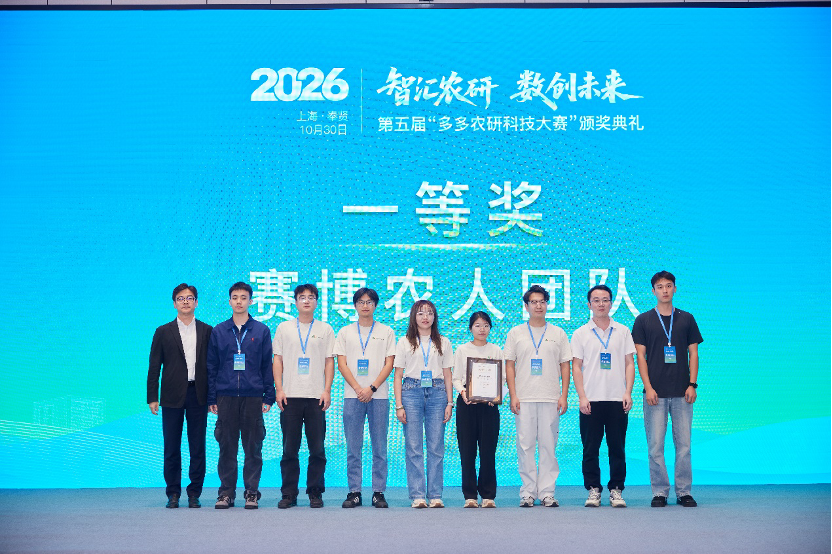
中国农业大学组建的赛博农人团队,蝉联“多多农研科技大赛”一等奖。张杭|摄

面对设施农业在环境调控、种植精度、生产能耗等方面的行业痛点,上述获奖队伍跳出传统科研思维,融合视觉识别、物联网、自动化控制等前沿技术,设计、建造各具特色的植物工厂(能够控制植物生长环境的农业工厂),并进行国产草莓栽培攻关。经过170天种植比拼,方案落地性得到验证,部分团队的方案还展现出可复制、可推广的应用潜力。

“赛事收官不是句号,而是成果推广的起点。比赛结束后,赛事技术成果正在从赛场走向真实的田间地头与生产产线。”“多多农研科技大赛”项目负责人邓新波说道。

01

同题竞赛 各有解法

在4支参赛队伍中,赛博农人团队的草莓并不是最早成熟的。

定植后第113天,团队才迎来首次采收,比最早采收的队伍晚了近两个月。但到了比赛结束时,赛博农人团队却交出了最高的累计产量:累计采收草莓约284.45公斤,居4支队伍之首,最大单果重达73.7克。

这一结果,与团队在种植初期做出的选择有关。

作为连续参加五届赛事的“老选手”,赛博农人团队并没有一味追求草莓尽早成熟或单株多结果。在决赛阶段,团队在占地50平方米的植物工厂里种下3146株草莓苗,种植规模位列4支队伍第三。为了保障果实品质与果个均匀度,团队主动调控环境条件、推迟花期,将单株结果量控制在3颗左右。

少结一些果,换取更好的品质和持续坐果能力。这套“少而精”的管控策略,最终帮助团队在采收后期实现了产量上的反超。凭借最高产量、最低畸形率和零病害的表现,赛博农人团队蝉联赛事一等奖,并获得“硕果先锋奖”单项奖。

“植物工厂是草莓终年优质稳产的重要保障。”赛博农人团队队长陈民慧希望,在人工智能加持下打破技术壁垒,提高生产效率,让行业小白也能在植物工厂种出高品质果实。

不过,在植物工厂里,草莓的种植并没有一套统一的解法。

拟生态团队选择从栽培方式入手,走出了一条差异化路径。作为本届赛事中唯一放弃基质栽培、采用浅液流栽培的队伍,团队引入自主研发的浅液流栽培专用槽和种植设备,大幅提升植物工厂空间利用率,种植植株数量位列4支队伍第一。

在品种选择上,团队采用栽培成熟期较短、口感甜的“越王”草莓,仅用约40天便收获头茬莓果,成为最早采收的队伍。
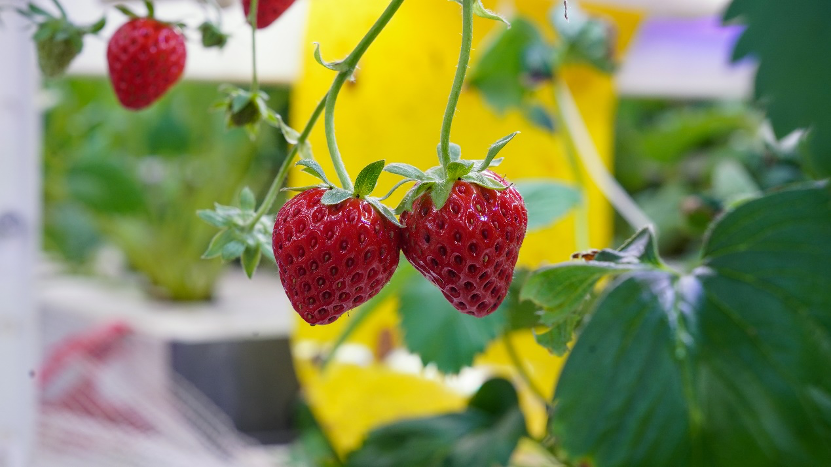
拟生态团队采用浅液流栽培方案,仅用约40天就收获头茬草莓。李建|摄

拟生态团队的方案不仅验证了在植物工厂中利用浅液流方式栽培国产草莓的可行性,也为设施草莓种植提供了新的技术思路。最终,团队获得赛事二等奖和“创意创新奖”。
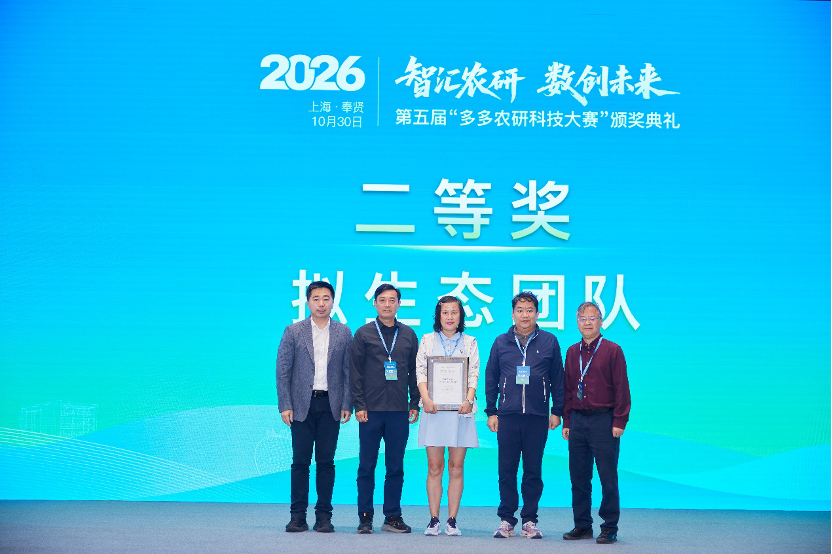
唯一采用浅液流栽培的拟生态团队,斩获“多多农研科技大赛”二等奖和“创意创新奖”。张杭|摄

“我们参加比赛,不只是展示一台机器,而是希望用真实生产发现问题、纠正模型,为都市农业和资源受限地区提供一种值得继续验证的路径。”拟生态团队队员何朝辉说道。

除了种植方式和产量,如何降低植物工厂的运行成本和能耗,也是本届赛事评分的重要维度。

植物工厂的全人工环境意味着更高的设备投入和能源消耗,只有在水、电等资源利用效率上持续优化,草莓植物工厂才有进一步商业化的可能。

赛博农人团队继续沿用了此前比赛中使用过的冷凝水回收技术,将植物因蒸腾作用产生的水汽通过空调除湿收集起来,循环利用。统计显示,团队在最终种植的165天里,实际用水量为7.8立方米,远低于其他队伍;冷凝水回收量超2.45万升,回收率高达75.7%,大大降低了植物工厂运营成本。

莓立方团队则从设备控制和能源管理入手。团队为风机、空调、除湿机等设备设置独立开关,实现精准启停,减少不必要的能源消耗。同时,系统能够根据植物工厂内的实时温湿度,提前15分钟预测未来温湿度走势,并提前5分钟作出设备调节决策。得益于这套制冷方案,团队空调能耗占总能耗的比重不足20%,而其他队伍均在30%左右。

以照明技术见长的欧普智莓团队同样在能耗上交出不错成绩。凭借直流供电的智能集电集控系统和提升作物照光率的灯具设计,团队在决赛最终种植期间实现了4支队伍中最低的总能耗。

“本次比赛从草莓植物工厂科技创新到商业化实践,我们认为它可以画一个完美的闭环了。”中国农业大学水利与土木工程学院教授、博士生导师贺冬仙在赛后总结道。

02

一颗草莓背后的多方协作

在植物工厂里,温度、光照和湿度都可以交由算法和设备控制,但如贺冬仙所说:“好不好植物说了算。”

植物的生长是一个复杂的过程,环境调控、营养供给等环节彼此关联。要让一座植物工厂持续稳定运转,农学、算法、装备、能源等不同领域的专业力量缺一不可。

莓立方团队,正是这样一支拥有跨学科背景的队伍。起初,团队成员吕兆晨只把植物工厂简单理解为一种“替代”——替代土地、替代季节、替代人。

随着比赛推进,当数字技术仍在调集植株叶片图像、识别生长状态、设计水肥灌溉模型时,团队里的种植专家只消看一眼就能快速给出应对方案。吕兆晨这才意识到,未来农业不是要用技术替代传统农人,而是需要懂植物的工程师和懂技术的农民站在一起,需要农业与商业、技术合作共赢。
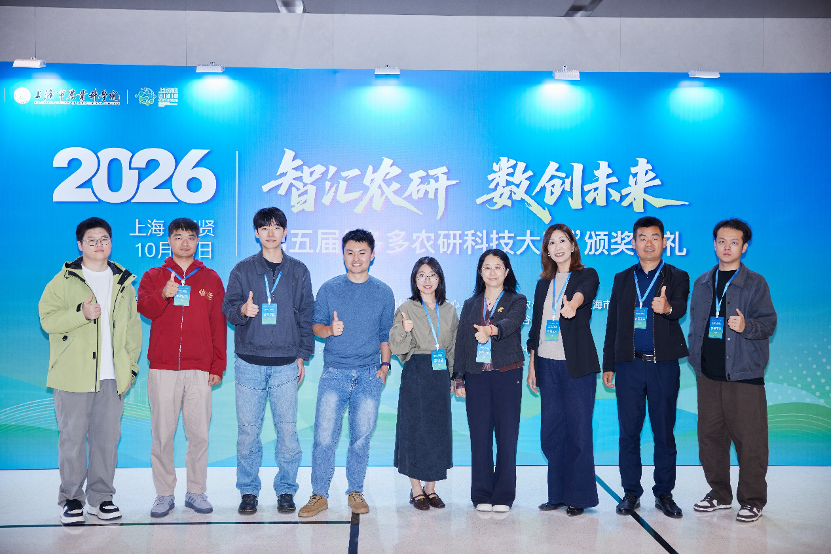
上海交通大学领衔的莓立方团队,摘得“多多农研科技大赛”三等奖。张杭|摄

“拼多多为我们提供了从零搭建植物工厂的机会,整个过程享有极高自由度,让我们能尽情发挥创意,把实验室里的理论知识运用到实际生产中。”吕兆晨表示,团队将把自建的植物工厂移至大学校园内用作教学示范基地,培养更多智慧农业人才和专家,“我们希望能优化种植方案、聚拢行业资源,让成果直面消费者、直面市场,让种植从‘实验室里的好’走向‘市场认可的好’”。

莓立方团队的探索,也是本届大赛多元参与者共同实践的缩影。本届赛事吸引了高校、科研院所和企业等多方参与,既有深耕草莓育种领域的资深专家,也有活跃在设施农业上下游的产业代表,还有心怀强农梦想的“00后”新农人。不同背景的参与者围绕真实生产场景展开交流,为农业技术的研发与应用提供了更多可能。

中国工程院院士、国家农业信息化工程技术研究中心主任、首席专家赵春江认为,这样的赛事创造了公平展示团队技术潜力的舞台,“希望更多参赛者将学习掌握的科学知识,赋予现代农业生产实践,服务社会,推动经济发展”。

“农业科技创新是培育农业新质生产力、推进乡村全面振兴的核心动力。”在颁奖典礼现场,上海市农业农村委员会副主任夏明林表示,“‘多多农研科技大赛’,是对接产业需求、集聚青年科创力量的重要载体。自扎根上海以来,赛事紧盯行业痛点、立足生产场景,逐步成长为本市农业领域颇具影响力的科创品牌,为广大青年人才搭建起施展才华、比拼创新的平台。”

从政策层面看,设施农业也正迎来新的发展机遇。近期,中共中央、国务院印发的《关于发展新质生产力的意见》提出,要推动科技创新与产业创新融合,深入实施设施农业现代化提升行动和农业科技创新条件建设工程,发展农业工厂等新形态。

在这一背景下,作为“腿上有泥”的新电商平台,拼多多也在探索平台参与农业科技创新的路径。依托“千亿扶持”计划,拼多多牵头举办五届“多多农研科技大赛”,所搭建的正是一个连接科研与农业实践的平台。但技术能否走得更远,仍要回到土地和生产本身寻找答案。

亿邦持续追踪报道该情报,如想了解更多与本文相关信息,请扫码关注作者微信。

本文首发于 亿邦动力 官方网站

【版权提示】亿邦动力倡导尊重与保护知识产权。未经许可,任何人不得复制、转载、或以其他方式使用本网站的内容。如发现本站文章存在版权问题,烦请提供版权疑问、身份证明、版权证明、联系方式等发邮件至run@ebrun.com,我们将及时沟通与处理。

已点赞

+1

{{ praise_text }}

好文章,值得被更多人看到

FAQ回顾

多多农研科技大赛是什么?

多多农研科技大赛是拼多多发起的农业科技创新竞赛,自2020年起已举办四届。第五届要求参赛团队自建50平方米植物工厂,开展为期6个月的国产草莓种植实践;由拼多多、上海市农业科学院、上海农业科创谷主办,中国农业大学、浙江大学联合主办,吸引全球46支团队、超300人报名。

植物工厂如何降低草莓种植的能耗和用水成本?

植物工厂可通过冷凝水回收、设备精准启停、温湿度预测调控和照明节能等方式降低能耗与水耗。赛博农人团队在165天种植中实际用水7.8立方米,冷凝水回收超2.45万升、回收率75.7%;莓立方团队通过提前预测温湿度使空调能耗占比不足20%;欧普智莓团队凭直流供电集电集控系统和灯具设计实现最低总能耗。

植物工厂能否让草莓供应摆脱季节限制?

可以。将温度、光照、水分和营养交给智能系统控制,草莓供应有望摆脱季节限制,四支获奖队伍给出肯定答案。赛博农人团队队长陈民慧称植物工厂是草莓终年优质稳产的重要保障;赛事经170天种植比拼,验证了方案落地性,部分方案具备可复制、可推广潜力。

植物工厂种植草莓有哪些技术路线?

赛博农人采用“少而精”策略,主动调控环境、推迟花期,将单株结果控制在3颗左右,并用冷凝水回收降耗;拟生态放弃基质栽培,采用浅液流专用槽和设备提升空间利用率;莓立方为设备设独立开关,并提前预测温湿度;欧普智莓以直流供电集电集控系统和灯具设计降低总能耗。

多多农研科技大赛对设施农业和农业科技创新有什么影响?

多多农研科技大赛围绕设施农业环境调控、种植精度和生产能耗等痛点,推动视觉识别、物联网、自动化控制等技术在植物工厂落地。赛事技术成果正从赛场走向田间地头与生产产线;政策上,《关于发展新质生产力的意见》提出实施设施农业现代化提升行动、发展农业工厂。上海市农业农村委员会副主任夏明林称其是对接产业需求、集聚青年科创力量的重要载体。

广告

下一篇

征集报名《品牌数字化服务商资源手册》

《品牌数字化服务商资源手册》展示数字化服务商风采,亿邦全年零售大会通发,触达更多资源,马上加入!

马上入驻

千元国货美妆大卖:高端化是风口还是幻觉?

结构性增长是确定的。但“国货美妆崛起”,市场上已经出现多次,风口过后,还能否持续繁荣?

新消费 未来零售 个护 护肤品

2026-11-06 16:26:41