• 亿邦公众号
    • APP下载

从新流量到新增长 SHOPLINE Q2 跨境业务同比增长 73.5%

作者:龚作仁 文章来源:Laborer

2026-08-27 11:40

作者:龚作仁 文章来源:Laborer

2026-08-27 11:40

邦小白快读

EN
全文速览

本文披露了欢聚集团旗下跨境独立站SaaS平台SHOPLINE的最新业务数据和跨境电商行业新变化,核心干货整理如下

1. 核心行业信息:SHOPLINE2026年第二季度跨境业务同比增长73.5%,平台累计服务超60万商家,触达15亿以上全球消费者;今年上半年平台商家AI渠道流量同比涨约15倍,订单同比涨超35倍,说明AI已经从流量端正式走入交易环节,成为新的稳定增长入口。

2. 实操参考:当前生成式AI改变了消费者购物路径,带来新流量的同时也增加了商户经营复杂度,想要做跨境经营的普通创业者,可优先选择能承接多渠道流量、统一管理客户和经营数据、支持对接各类AI工具的基建平台,降低经营难度,把握新流量带来的增长机会。

本文透露出当前跨境出海行业的最新消费和经营趋势,对出海品牌布局增长有较高参考价值,核心干货如下

1. 消费与渠道新趋势:生成式AI已经成为新的购物流量和交易入口,AI渠道订单增速远超流量增速,越来越多消费者开始通过AI发现商品、完成购买,品牌需要提前布局AI新入口,抢占新增量。

2. 品牌经营新需求:品牌出海进入不同市场需要适配本地消费习惯和交易规则,多渠道布局后,需要支付、物流、广告、客户管理连贯运转,还需要统一管理分散在不同渠道的订单、客户、广告数据,才能沉淀自有用户资产提升复购。

3. 落地参考:已有多个服饰、家居品类的品牌迁移至SHOPLINE的统一经营系统后,客单价提升超10%,转化率提升超两成,复购也明显改善,说明适配新趋势的基础设施能切实帮助品牌提升经营效果。

本文为跨境出海卖家梳理了当前行业的新增量机会和痛点解决方案,核心干货如下

1. 新增量机会:AI已经成为新的流量和交易入口,今年上半年SHOPLINE商家AI渠道订单同比增长超35倍,增速远高于流量增速,说明AI入口的交易转化潜力正在释放,卖家提前布局可获得可观的新增量。

2. 痛点解决方案:多渠道经营普遍存在数据分散、客户资产割裂、中国主体卖家收款不合规等问题,选择具备全渠道统一经营能力的SaaS平台可以有效解决这些问题,还能帮助卖家稳定完成站点迁移,延续原有广告和客户资产,降低迁移风险。

3. 可利用的资源支持:当前SHOPLINE已经打通了各大主流AI Agent入口,提供支付物流闭环、7x24小时服务和本地化运营支持,还推出了AI后台管理工具,能帮助卖家缩短运营时间,降低运营成本,提升经营效率。

本文给布局跨境自有品牌的工厂带来了数字化转型的启示和商业机会参考,核心干货如下

1. 出海商业机会:当前跨境独立站赛道仍保持高速增长,SHOPLINE第二季度跨境业务同比增长达到73.5%,同时AI带来了全新的流量增量,AI渠道订单增长超35倍,说明工厂做自有品牌出海仍有充足的增长空间,新流量还在持续释放。

2. 数字化转型启示:工厂做跨境电商,不能只停留在搭建站点的初始阶段,随着多渠道布局推进,需要适配不同市场的经营要求,还要能统一管理分散在不同渠道的订单、客户、广告数据,沉淀自有用户资产,才能实现长期可持续增长。

3. 落地参考建议:工厂拓展跨境业务时,要优先选择具备稳定站点迁移能力、本地化运营服务、本土官方支付解决方案的平台,解决中国工厂出海收款合规、履约交付的核心痛点,还可以借助开放的AI生态对接各类工具,加快业务上线速度,降低运营门槛。

本文明确了当前跨境电商服务行业的发展趋势、客户核心痛点,对服务商调整业务方向有较高参考价值,核心干货如下

1. 行业发展新趋势:AI电商增长正在提速而非放缓,独立站基础设施的竞争焦点已经从“能不能建站”转向“能不能提供全链路统一经营能力、实现AI应用普惠”,未来行业竞争将围绕入口连接速度、统一经营深度、AI应用普惠程度三个维度展开,开放生态会成为核心竞争壁垒,单纯的工具优势会被逐步削弱。

2. 客户核心痛点:当前跨境商户最核心的痛点是多渠道经营带来的经营数据分散、客户资产割裂,站点迁移过程中难以延续原有广告和客户资产,同时中国出海卖家存在收款合规的行业级痛点,商户普遍有对接新AI流量入口、借助AI提升后台运营效率的需求。

3. 解决方案参考:服务商可参考SHOPLINE的升级路径,从单一建站工具升级为全链路统一经营系统,强化底层技术性能,搭建开放生态对接各类AI工具,配套本地化服务和支付物流闭环,切实解决商户核心痛点。

本文披露了跨境独立站平台的最新发展方向,对平台优化运营、规避风险有参考价值,核心干货如下

1. 商家核心需求变化:当前商家对平台的需求已经从基础建站,升级为能连接包括AI在内的多类新入口、统一管理全渠道经营数据、顺畅对接各类AI工具,同时商家迫切需要解决站点稳定迁移、客户资产延续、中国主体收款合规的痛点问题。

2. 可参考的平台运营升级做法:技术层面需要升级底层架构,提升页面渲染速度、并发处理能力,开放对接各类主流AI入口,开发AI工具帮助商家提升后台管理效率;服务层面需要搭建支付物流闭环,提供本地化客服和定制化解决方案,解决行业核心痛点;商业模式可采用“订阅+交易”双轮模型,兼顾收入稳定性和增长弹性,提升抗周期能力。

3. 需要规避的发展风险:单纯依靠建站工具的优势已经不再成立,平台如果不进行全链路能力升级,不布局开放生态和AI普惠能力,会逐步丧失市场竞争力,需要提前完成能力升级。

本文披露了跨境电商独立站赛道的最新产业动向,提供了丰富的数据和案例,对行业研究有较高价值,核心干货整理如下

1. 产业最新动向:当前AI对电商的渗透已经从流量端进入交易端,AI渠道订单量同比增长超35倍,数据证明AI电商的增长正在提速而非减速;独立站基础设施已经进入升级周期,竞争焦点从基础建站能力转向全链路统一经营能力和AI应用普惠能力,未来行业竞争将围绕入口连接速度、统一经营深度、AI普惠程度三个维度展开。

2. 行业新出现的问题:多渠道流量布局带来了经营数据分散、客户资产割裂的新问题,中国出海卖家长期存在收款合规的行业级痛点,新流量入口的出现也对平台的底层开放能力提出了更高要求。

3. 商业模式创新验证:SHOPLINE的“订阅+交易”双轮商业模式,兼顾了订阅收入的稳定性和增值服务的增长弹性,实现了平台与商家的共赢,抗周期能力更强,在宏观环境不确定的背景下,依然实现了增速环比提升,商业模式已经得到市场验证。

声明:快读内容全程由AI生成,请注意甄别信息。如您发现问题,请发送邮件至 run@ebrun.com 。

我是 品牌商 卖家 工厂 服务商 平台商 研究者 帮我再读一遍。

Quick Summary

This article reveals the latest business data of SHOPLINE, the cross-border independent site SaaS platform owned by JOYY Group, and new shifts in the cross-border e-commerce industry. Key takeaways are as follows:

1. Core industry updates: SHOPLINE’s cross-border business grew 73.5% year-over-year in Q2 2026, and the platform has cumulatively served over 600,000 merchants, reaching more than 1.5 billion global consumers. In the first half of this year, AI-driven traffic to SHOPLINE merchants jumped roughly 15-fold year-over-year, while AI channel orders surged over 35-fold. This confirms that AI has officially moved from the traffic generation stage to the transaction环节, becoming a new stable growth entry point.

2. Practical guidance: Generative AI has reshaped consumers’ shopping journeys, bringing new traffic but also increasing operational complexity for merchants. For ordinary entrepreneurs looking to enter cross-border e-commerce, it is recommended to prioritize infrastructure platforms that can aggregate multi-channel traffic, unify customer and operational data management, and support integration with various AI tools. This will lower operational barriers and help brands capitalize on growth opportunities from new traffic sources.

This article outlines the latest consumer and operational trends in cross-border branding, offering high-value insights for global brands planning their growth strategies. Key takeaways are as follows:

1. New trends in consumption and channels: Generative AI has emerged as a new traffic and transaction entry point for shopping, with order growth from AI channels far outpacing traffic growth. A growing number of consumers now discover and purchase products directly via AI, so brands need to布局 this new entry point early to capture new growth.

2. New operational requirements for brands: When expanding into different markets, cross-border brands must adapt to local consumer habits and transaction rules. After rolling out a multi-channel presence, brands need seamless integration of payments, logistics, advertising, and customer relationship management, as well as unified management of orders, customers, and advertising data scattered across channels. Only by doing this can brands build their own first-party user assets and improve repeat purchase rates.

3. Implementation reference: After multiple apparel and home goods brands migrated to SHOPLINE’s unified operational system, their average order value increased by over 10%, conversion rates rose by more than 20%, and repeat purchases also improved significantly. This confirms that infrastructure tailored to new industry trends can tangibly improve brands’ operational performance.

This article sorts out new growth opportunities and pain point solutions for cross-border sellers. Key takeaways are as follows:

1. New growth opportunities: AI has become a new traffic and transaction entry point. In the first half of this year, SHOPLINE sellers saw AI channel orders grow more than 35-fold year-over-year, with growth far outpacing traffic growth. This indicates that the transaction conversion potential of AI entry points is being released, and sellers that布局 early can capture substantial new growth.

2. Solutions to core pain points: Common pain points in multi-channel operations include scattered data, fragmented customer assets, and non-compliant payment processing for China-based sellers. Choosing a SaaS platform with full-channel unified operation capabilities can effectively solve these problems. It can also help sellers complete stable site migration while retaining their original advertising and customer assets, reducing migration risk.

3. Available resource support: SHOPLINE has already integrated with all major mainstream AI Agent entry points, offers end-to-end payment and logistics solutions, 7/24 support, and local operational assistance. It has also launched AI-powered backend management tools that help sellers cut operational time, reduce costs, and improve efficiency.

This article provides insights on digital transformation and business opportunities for factories building their own cross-border brands. Key takeaways are as follows:

1. Cross-border business opportunities: The independent cross-border site track is still growing at a high speed, with SHOPLINE recording 73.5% year-over-year cross-border business growth in Q2 2026. Meanwhile, AI has brought entirely new traffic增量, with AI channel orders growing over 35-fold. This shows that factories still have ample room for growth when building their own brands for global markets, and new traffic sources are still being continuously released.

2. Insights on digital transformation: For factories entering cross-border e-commerce, it is not enough to stop at the initial stage of just building a website. As they expand their multi-channel presence, they need to meet the operational requirements of different markets, and unify management of orders, customers, and advertising data scattered across channels to build their own first-party user assets. This is the only way to achieve long-term, sustainable growth.

3. Implementation recommendations: When expanding cross-border business, factories should prioritize platforms with stable site migration capabilities, local operational services, and official local payment solutions. These platforms can solve the core pain points for Chinese factories going global: payment compliance and order fulfillment. Factories can also leverage the open AI ecosystem to connect to various tools, speed up business launch, and lower operational barriers.

This article clarifies current development trends and core customer pain points in the cross-border e-commerce service industry, offering high-value guidance for service providers adjusting their business direction. Key takeaways are as follows:

1. New industry development trends: AI-powered e-commerce growth is accelerating rather than slowing. The competitive focus of independent site infrastructure has shifted from "can you build a site" to "can you provide end-to-end unified operation capabilities and democratize AI applications". Future industry competition will revolve around three dimensions: entry connection speed, depth of unified operations, and accessibility of AI applications. Open ecosystems will become core competitive moats, and pure tool advantages will gradually erode.

2. Core customer pain points: The most pressing pain point for cross-border merchants today is scattered operational data and fragmented customer assets caused by multi-channel operations. Merchants also struggle to retain original advertising and customer assets during site migration, and China-based cross-border sellers face the industry-wide pain point of payment compliance. Merchants widely demand access to new AI traffic entry points and AI tools to improve backend operational efficiency.

3. Solution reference: Service providers can reference SHOPLINE’s upgrade path: transform from a single site-building tool to an end-to-end unified operation system, strengthen underlying technical performance, build an open ecosystem to integrate with various AI tools, and complement this with localized services and end-to-end payment and logistics solutions to effectively solve merchants’ core pain points.

This article reveals the latest development direction for cross-border independent site platforms, offering insights for platforms to optimize operations and avoid risks. Key takeaways are as follows:

1. Shifts in merchants’ core demand: Merchants’ demand for platforms has evolved from basic site-building to the ability to connect to various new entry points including AI, unify management of full-channel operational data, seamlessly integrate with various AI tools. At the same time, merchants urgently need solutions to core pain points: stable site migration, retention of customer assets, and payment compliance for China-based entities.

2. Reference for platform operation upgrades: On the technical side, platforms need to upgrade their underlying architecture to improve page rendering speed and concurrent processing capacity, open up integration with all major mainstream AI entry points, and develop AI tools to help merchants improve backend management efficiency. On the service side, platforms need to build end-to-end payment and logistics systems, provide localized customer service and customized solutions to solve core industry pain points. For business models, the "subscription + transaction" two-wheel model can balance stable revenue and growth elasticity to improve counter-cyclical resilience.

3. Development risks to avoid: Pure site-building tool advantages are no longer sufficient. If platforms do not upgrade their end-to-end capabilities and布局 open ecosystems and democratized AI capabilities, they will gradually lose market competitiveness, so capability upgrades need to be completed in advance.

This article reveals the latest industry developments in the cross-border e-commerce independent site track, providing rich data and cases of high value for industry research. Key takeaways are as follows:

1. Latest industry developments: AI penetration into e-commerce has moved from the traffic end to the transaction end, with AI channel orders growing more than 35-fold year-over-year. Data confirms that AI-powered e-commerce growth is accelerating rather than slowing. Independent site infrastructure has entered an upgrade cycle, with competitive focus shifting from basic site-building capabilities to end-to-end unified operation capabilities and democratized AI applications. Future industry competition will revolve around three dimensions: entry connection speed, depth of unified operations, and accessibility of AI applications.

2. New emerging industry problems: Multi-channel traffic布局 has created new problems including scattered operational data and fragmented customer assets. China-based cross-border sellers have long faced the industry-wide pain point of payment compliance, and the emergence of new traffic entry points has also placed higher requirements on the underlying open capabilities of platforms.

3. Validation of business model innovation: SHOPLINE’s "subscription + transaction" two-wheel business model balances the stability of subscription revenue and the growth elasticity of value-added services, creating a win-win outcome for the platform and its merchants with stronger counter-cyclical resilience. Against a backdrop of macroeconomic uncertainty, the platform still achieved a sequential acceleration in growth, proving that the business model has been validated by the market.

Disclaimer: The "Quick Summary" content is entirely generated by AI. Please exercise discretion when interpreting the information. For issues or corrections, please email run@ebrun.com .

I am a Brand Seller Factory Service Provider Marketplace Seller Researcher Read it again.

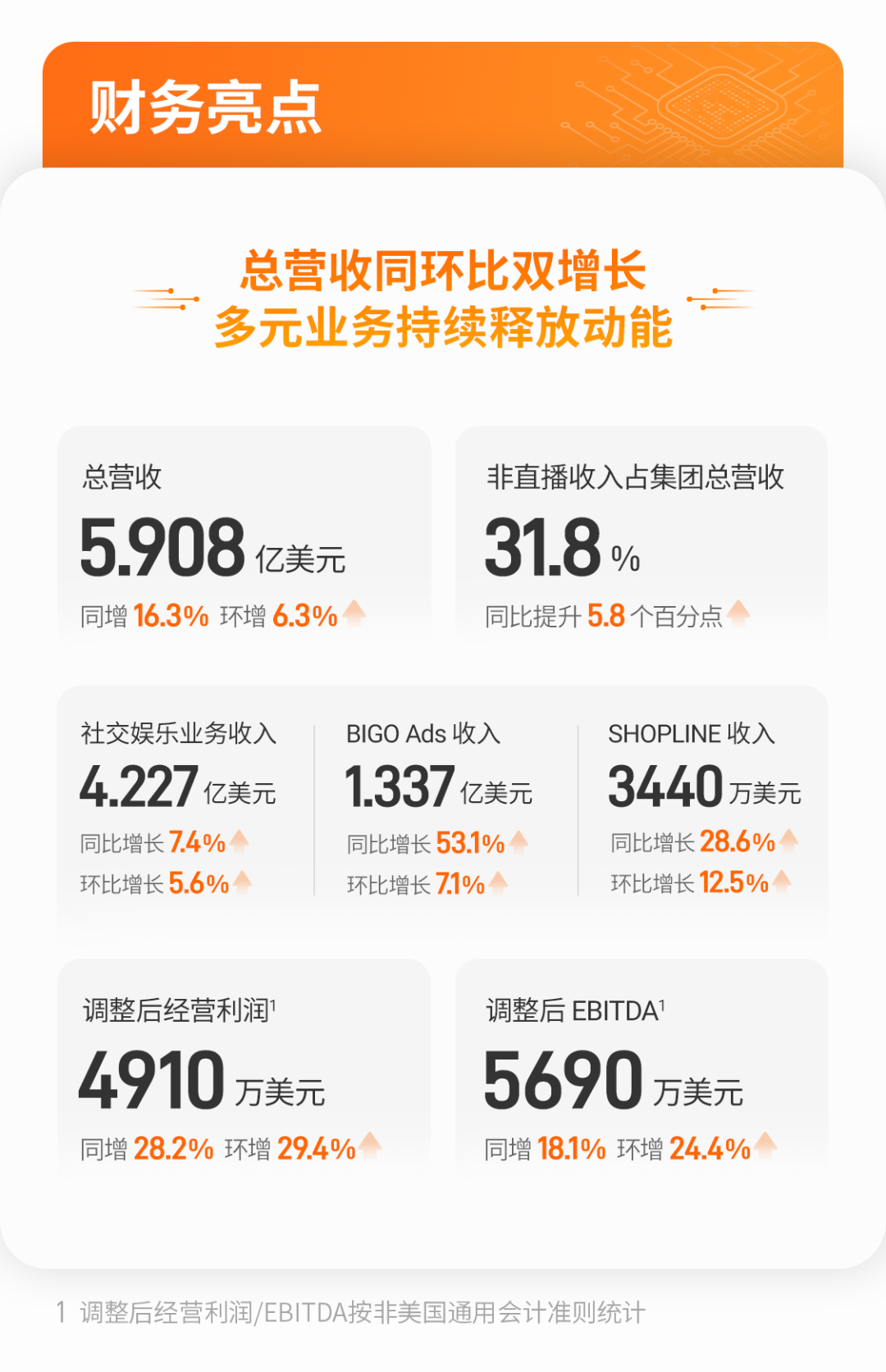
8月26日,欢聚集团发布2026年第二季度财报。报告期内,集团总收入达到5.908亿美元,同比增长16.3%,环比增长6.3%。随着多元业务持续发展,非直播收入占比进一步提升至31.8%。

作为欢聚集团三大业务板块之一,SHOPLINE在本季度延续增长势头。第二季度,SHOPLINE收入达到3440万美元,同比增长28.6%,环比增长12.5%,同比增速较第一季度进一步提高。其中,以跨境商户为代表的业务同比增长73.5%,成为推动电商业务收入加快增长的重要力量。

这组数字出现于电商入口快速变化的阶段。生成式AI和各类Agent开始参与商品发现、信息比较和购买决策,消费者接触商品并完成交易的路径不断增加。新的流量由此产生,订单、客户关系和经营数据也可能进一步分散在不同渠道。

对商户而言,新的入口带来增长机会,也提高了经营复杂度。SHOPLINE正在做的,是帮助商户连接这些入口、承接后续交易,并继续掌握自己的客户关系与经营数据。
73.5%的增长,来自更具体的跨境经营需求

跨境商户相关业务同比增长73.5%,是SHOPLINE本季度最突出的业务表现之一。这一增长背后,是跨境经营需求正在快速迭代。

进入不同市场,商户需要适配当地的消费习惯和交易要求。销售渠道增加之后,支付、物流、广告投放与客户管理也需要连贯运转。站点建设只是起点,商户还要保证商品信息准确、广告目录稳定、会员资产得以延续,并让新的交易尽快进入日常经营体系。

今年夏季,一家高客单价服装商户在充分评估了SHOPLINE的产品矩阵、AI布局以及本地化服务团队之后,选择将站点迁移至SHOPLINE。上线后,商品目录顺利完成迁移,广告表现保持稳定并呈现改善趋势。同时借助SHOPLINE的 AI Agent对接通道,商家使用了包括Codex在内的第三方AI开发工具,加快主题定制和应用能力整合,缩短了新站恢复运营所需的时间。

另一家服装商户则希望通过迁移解决商品目录更新和经营数据分散的问题。迁移后,商户利用SHOPLINE相关工具自动同步多个广告渠道的商品信息,并结合数据追踪和可视化报表观察经营表现。阶段性数据显示,其月均客单价提升超过一成,转化率提升超过两成,复购表现也显著提升。

这些项目呈现出跨境商户当前关注的重点:迁移需要稳定完成,广告和客户资产要尽可能延续,新系统还要能够支持商户后续扩大经营。SHOPLINE持续建设开放、可连接、可扩展的全渠道电商基础设施,正是为了回应越来越广泛的市场需求。

历经13年发展,SHOPLINE穿越了完整的跨境电商产业周期,从"创业公司"成长为服务60万+商家、触达15亿+全球消费者的跨境电商独立站SaaS平台。

截止目前,SHOPLINE累计服务商家600000+,触达15亿 + 全球消费者,业务覆盖11+ 核心出海市场。其服务的客户包括Zgallerie、IFLYTEK、Caguuu、Soufeel、Bricks World等全球知名品牌。

AI渠道订单量增长超35倍,新的入口开始进入交易环节

今年上半年,SHOPLINE商家来自AI渠道的流量PV同比增长约15倍,订单量同比增长超过35倍。订单增速明显高于流量增速,意味着AI渠道对商户经营的影响,正在由访问端进一步进入交易端。

SHOPLINE第二季度的增长,既来自跨境商户业务的加快发展,也发生在AI流量入口不断增加的行业环境中。73.5%的跨境业务增速,表明商户仍在持续寻找能够支持多市场、多渠道经营的电商基础设施。约15倍的AI渠道流量增长和超过35倍的订单增长,则让新的市场变化有了更具体的业务指标。

一位长期跟踪SaaS行业的分析师认为,这份财报传递了一个明确信号:AI电商的增长不是在减速,而是在提速。对独立站基础设施而言,竞争焦点正在从"谁能建站"转向"谁能通过平台化能力,让不同规模和行业的商家都能享受到科技普惠和AI平权"。

独立站基础设施的下一个十年,竞争将围绕三个维度展开:入口连接的速度、统一经营的深度、AI应用的普惠程度。当AI原生架构要求底层重构,当AI工具的"普惠"必须配套本地化服务能力,当开放生态成为竞争壁垒,"工具差优势"就会被根本性削弱。

目前,SHOPLINE已经作为首批官方合作的建站插件与阿里旗下电商Agent平台Accio Work实现了对接,同时也打通了包括ChatGPT和 Claude在内的各大主流AI Agent入口,帮助商户承接新增流量。新的订单进入系统后,商户可以继续管理相关客户关系和经营数据,让一次渠道访问进入后续运营。

与此同时,AI也在进入商户后台。SHOPLINE Copilot正分期上线并开启内测,商户可以通过自然语言完成店铺管理中的相关操作,减少理解复杂功能以及在多个页面之间切换所需的时间。具体功能和开放范围,以实际版本及适用地区为准。

前端连接新入口,后台提高管理效率,两个方向共同服务于商户的真实经营。AI的价值由此落在更明确的业务过程中:从消费者发现商品开始,继续走向交易承接和店铺管理。
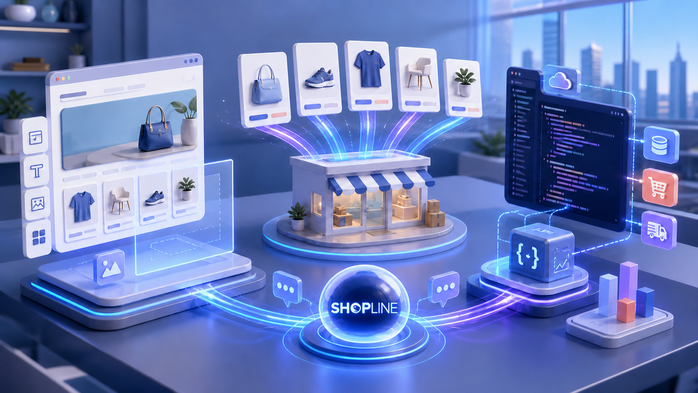
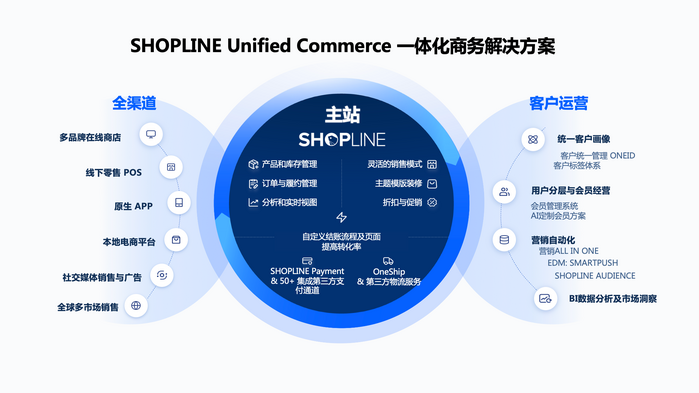
SHOPLINE领跑独立站基建升级:从“建站工具”到“统一经营系统”

渠道增加能够扩大消费者触达范围,也可能让商户的经营信息更加分散。如果订单来自不同平台,客户信息保存在不同系统,广告与会员数据分别由不同工具管理,则很难及时看清完整的业务情况。对于商家来说,商品信息要在多个渠道保持一致,订单与客户关系也要回到同一套经营体系进行管理。随着AI逐渐进入日常经营场景,商家关注的范围也已经从建成一个站,扩展到如何让这个系统持续承接流量并留下经营数据。这不仅关乎与这套系统能不能与AI工具进行无缝对接,更对独立站基础设施的全链路能力提出了新的要求。

AI电商的下半场,SHOPLINE率先开启了独立站基础建设的能力升级。

在技术层面,SHOPLINE自主研发Sline渲染引擎,页面渲染速度较上一代提升近4倍,高并发处理能力超传统架构10倍以上,搜索响应速度提升1.8倍。这意味着跨境商家可以获得更快的页面加载速度和更稳定的系统性能,每一秒的加载延迟降低,都意味着潜在的弃单损失减少。

在服务能力层面,SHOPLINE提供7x24中文客服、1V1跨境解决方案专家,以及覆盖10+地区的本地化运营团队。Shopline Payments和OneShip共同构成支付与物流闭环,为中国出海商家提供从收款到履约的基础设施级支持。SHOPLINE是中国出海商家唯一可用的本土平台官方支付解决方案的提供者,解决"中国主体卖家收款合规"这一行业级痛点。

全方面的基建升级也在近期的商家迁移成果中得到了具现。近期,一家跨境家居品牌在迁移至SHOPLINE时,需要同时升级站点主题、页面性能和会员体系。项目完成后,站点核心网页性能明显改善,原有会员等级与积分机制得以延续;另一家家居品牌则通过商品组合和场景化推荐,推动消费者从单件购买转向组合购买。阶段性项目数据中,其客单价、结账完成率和转化率均提升超过10%。这些案例充分说明,统一经营系统的价值最终仍要由商户的销售过程共同检验。
与商户一起增长,形成更长期的业务关系

订阅服务为业务提供相对稳定的收入,支付、物流和营销等增值服务则与商户交易活动联系得更加紧密。SHOPLINE的“订阅+交易”双轮模型,兼顾了前者的稳定性和后者的增长弹性。这种“与商家共成长”的收入结构,让SHOPLINE能更深入地参与商户GMV增长,实现商家与平台的长期共赢。

这种业务结构的抗周期性,在财报数字中得到了初步验证:即便在宏观环境充满不确定性的背景下,收入增速仍在环比加快。放在欢聚集团整体业务中观察,SHOPLINE也在成为多元业务增长的重要组成部分。在这一多元业务布局中,SHOPLINE将继续围绕开放连接、统一经营和AI应用完善产品与服务。

新的流量与交易入口还会继续出现。无论消费者从哪里出发,商户都需要承接交易、管理客户,并持续掌握自己的经营数据。SHOPLINE希望帮助商户将这些变化转化为可经营、可持续的业务增长,并在商户成长的过程中实现长期发展。

注:文/龚作仁,文章来源:Laborer,本文为作者独立观点,不代表亿邦动力立场。

【版权提示】亿邦动力倡导尊重与保护知识产权。未经许可,任何人不得复制、转载、或以其他方式使用本网站的内容。如发现本站文章存在版权问题,烦请提供版权疑问、身份证明、版权证明、联系方式等发邮件至run@ebrun.com,我们将及时沟通与处理。

已点赞

+1

{{ praise_text }}

好文章,值得被更多人看到

FAQ回顾

SHOPLINE是什么平台?

SHOPLINE是欢聚集团旗下跨境电商独立站SaaS平台,历经13年发展,累计服务超60万商家,触达15亿全球消费者,业务覆盖11个核心出海市场,服务客户包含Zgallerie、科大讯飞等全球知名品牌。

2026年上半年SHOPLINE商家AI渠道经营情况如何?

2026年上半年SHOPLINE商家来自AI渠道的流量PV同比增长约15倍,订单量同比增长超35倍,订单增速明显高于流量增速,AI渠道对商户经营的影响已从访问端深入到交易端。

跨境独立站基础设施未来的竞争方向是什么?

跨境独立站基础设施未来竞争将围绕三大维度展开,分别是入口连接的速度、统一经营的深度、AI应用的普惠程度,竞争焦点也从建站能力转向平台化服务能力。

SHOPLINE可以为跨境出海商家提供哪些支持?

SHOPLINE可帮助商家对接多元流量及AI入口、承接交易,实现多渠道商品信息同步、经营数据统一管理,还提供合规本土支付解决方案、7x24中文客服及本地化运营服务,降低跨境经营复杂度。

广告

下一篇

跨境电商资源对接

《全球跨境电商服务商资源手册》第二期手册现已发布,触达更多资源,了解跨境服务商信息,欢迎点击链接下载。

了解详情

Temu加码海外本地仓配基建 适配欧盟监管及关税政策调整

为适配欧盟监管及关税政策调整,Temu加码供应链布局,通过扶持本地商家、搭建本地仓配、完善平台治理,强化长期内生增长能力。