• 亿邦公众号
    • APP下载

锁定“早鸟位”!蜜雪 瑞幸等商家入驻支付宝AI开放平台

作者:李金津 文章来源:亿邦动力

2026-07-08 14:22

作者:李金津 文章来源:亿邦动力

2026-07-08 14:22

邦小白快读
EN
全文速览

本文核心信息是支付宝7月上线AI开放平台开启邀测,蜜雪冰城、瑞幸、肯德基等多家品牌已首批接入,标志着Agent商业从演示进入可经营阶段,核心干货整理如下

1. 用户端体验变化:未来消费会从搜索下单转变为AI意图消费,比如开车时语音说要订咖啡就能自动完成下单支付,刷视频问电影就能直接选座,省去多步操作,体验更便捷。

2. 对想要布局新玩法的中小商家实操提示:目前平台处于邀测阶段,需要申请白名单分批开放操作台,大品牌可申请联合适配,中小商家可关注后续开放的行业解决方案,尽早布局有机会吃到早期流量红利,避免在下一轮入口迁移中掉队。

本文梳理了AI时代品牌运营的新变化与新机会,核心干货整理如下

1. 消费与获客趋势变化:当前已经进入意图消费时代,用户习惯从人找服务转变为向AI表达需求,品牌获客逻辑从买关键词抢曝光转变为抢AI调用权,未被AI选中的品牌会直接“隐形”,竞争比此前更加残酷。

2. 品牌渠道建设新机会:接入支付宝AI开放平台后,品牌只需一次完成服务AI封装,就能实现多终端分发,覆盖手机、车机、AI眼镜等多个终端,省去重复开发成本,还能通过AI串接服务获得新的转化机会。

3. 品牌布局建议:尽早占位参与规则制定,提前梳理服务信息完成结构化改造,布局AEO,类似早年做SEO,越早布局成本越低,最终能否被AI推荐核心还是要看服务质量、履约能力等硬指标。

支付宝AI开放平台上线,给各类卖家带来了新的增长机会,同时提示了相应风险,核心干货整理如下

1. 新增长机会:Agent商业时代已经到来,流量分发逻辑发生改变,早入场卖家有机会吃到类似早年小程序、SEO的早期流量红利。接入支付宝AI开放平台后,一次接入即可实现多终端全域分发,打破单一平台流量壁垒,大幅降低多端开发适配成本,还能通过AI协作获得新转化。

2. 风险提示:AI推荐只会展示少数匹配用户需求的商家,未被调用的卖家会直接隐形,竞争比此前更残酷,如果服务信息不清晰、不结构化,会被AI直接跳过,错失订单。

3. 应对措施:尽早关注布局,提前梳理服务数据结构,培养AEO优化思维,符合条件的卖家可当前申请白名单入局,中小卖家可等待后续行业解决方案开放。

AI时代的商业变革,给工厂带来了新的商业机会与数字化转型启示,核心干货整理如下

1. 新商业机会:意图消费时代要求商家将服务改造成AI可调用的形式,对工厂的产品信息标准化、数字化提出了新要求,工厂如果提前完成产品信息的结构化整理,就能更好地适配品牌商家的AI升级需求,获得更多合作机会,也可直接开拓新的AI服务销路。

2. 数字化转型启示:AI带来商业入口迁移已经明确,越早完成生产、产品端的数字化结构化改造,越容易适应新的商业规则,避免在下一轮行业变革中掉队,和早年工厂布局电商渠道类似,早转型就能吃到早期红利。

3. 降本启示:借助支付宝AI开放平台的中间层能力,工厂不需要单独对接各个终端做定制开发,一次适配即可多端分发,大幅降低了布局全域渠道的成本,更适合工厂试水新渠道。

本文梳理了Agent商业时代的行业发展趋势、商家痛点和机会,给服务商的核心干货整理如下

1. 行业发展趋势:商业已经从人找服务进入服务找人的意图消费时代,Agent商业正式从演示阶段进入可经营阶段,商业入口正在发生迁移,AI调用服务的权重不断提升,整个行业对AI相关服务的需求会快速增长,服务商迎来新的蓝海市场。

2. 当前商家的核心痛点:商家想要布局多终端AI服务,需要单独对接每个终端厂商,每新增一类终端就要重新做开发适配,开发和沟通成本居高不下,多数中小商家难以独立完成AI化升级。

3. 服务商新业务机会:服务商可依托支付宝AI开放平台,为商家提供AI封装、AEO优化等服务,帮助商家完成服务的AI化升级,抓住早期规则窗口期商家的服务需求,开辟新的业务增长曲线。

支付宝AI开放平台的落地实践,给各类平台商提供了行业参考,核心干货整理如下

1. 当前商家对AI平台的核心需求:商家布局AI多终端服务,核心需求是降低多端适配的开发成本,获得稳定的分发通路,以及可闭环的收益结算能力,同时需要安全可信的商业协作基础保障。

2. 平台运营的参考做法:支付宝上线AI开放平台,提供全套工具支持商家存量服务一键完成AI转换,通过一次接入实现多端分发,内置计费结算和安全能力,搭建可信安全底座,推出三大标准化协议支撑全链路协作,依托现有生态做大供需底盘。

3. 平台布局的风向提示:当前AI商业的规则尚未定型,尽早开放能力吸引商家早期入驻,共同摸索AEO规则,可以搭建自身生态壁垒,同时需要明确,最终生态竞争力核心还是商家服务质量,要引导商家做好服务,保障用户体验。

本文披露了Agent商业领域的最新产业动向,对相关研究有较高参考价值,核心干货整理如下

1. 最新产业动向:支付宝已经完成面向Agent商业的完整基建搭建,AI开放平台上线邀测,已有蜜雪冰城、瑞幸等多个知名品牌首批接入,不到一天就有超200商家报名申请,标志着Agent商业正式从演示阶段进入可经营阶段,商业交互正式从人找服务向服务找人的意图消费时代全面推进。

2. 新产业变化与研究课题:商业竞争逻辑从原来的抢流量抢心智转变为抢AI调用权,未被AI选中的商家会直接隐形,由此衍生出AEO(智能体引擎优化)这一全新研究课题,平台的角色也从原来的流量分发器转变为决策与执行的商业基础设施。

3. 全新商业模式:形成了商家一次接入、平台做中间层适配分发、多终端AI调用、平台完成收益闭环的全新商业模式,早期商家参与规则定义,后续依靠AEO优化获得流量,最终形成AI调度的全域服务网络,重构了传统的流量分发逻辑。

声明:快读内容全程由AI生成,请注意甄别信息。如您发现问题,请发送邮件至 run@ebrun.com 。

我是 品牌商 卖家 工厂 服务商 平台商 研究者 帮我再读一遍。

Quick Summary

This article covers Alipay's launch of an AI open platform that entered invitation-only testing in July, with a number of leading brands including Mixue Ice City, Luckin Coffee, and KFC already accessing the platform as first batch participants. This milestone marks the transition of Agent Commerce from proof-of-concept demonstrations to commercially viable operations. Key takeaways are as follows:

1. Changes in end-user experience: Future consumer behavior will shift from search-based ordering to AI intent-driven consumption. For example, users can simply place a voice order for coffee while driving to complete the entire ordering and payment process automatically, or book movie tickets directly by asking while browsing short videos. This eliminates multiple cumbersome steps and delivers a far more convenient experience.

2. Practical tips for small and medium-sized merchants looking to explore new opportunities: The platform is currently in invitation-only testing, with operation access open to batches of approved applicants via a whitelist. Large brands can apply for joint adaptation, while small and medium-sized merchants should monitor upcoming industry-specific solutions. Early positioning will help merchants capture early traffic dividends and avoid falling behind amid the next round of search entry migration.

This article summarizes new changes and opportunities for brand operation in the AI era. Key takeaways are as follows:

1. Shifts in consumption and customer acquisition trends: We have now entered the era of intent-driven consumption, where users are shifting from proactively searching for services to stating their needs directly to AI. Brand customer acquisition logic is transforming from buying keywords to compete for exposure to competing for AI invocation rights. Brands not selected by AI will effectively become "invisible", making competition much fiercer than before.

2. New opportunities for brand channel development: After accessing Alipay's AI open platform, brands only need to encapsulate their services for AI once to enable distribution across multiple terminals, including smartphones, in-vehicle systems, AI glasses and more. This eliminates redundant development costs and unlocks new conversion opportunities via AI-connected end-to-end services.

3. Recommendations for brand positioning: Brands should secure an early position to participate in rule-setting, and proactively organize and restructure service information to complete structural transformation and build out AEO (Agent Engine Optimization), similar to early adoption of SEO years ago. Early positioning comes with lower costs, and ultimately, whether a brand is recommended by AI depends on core metrics including service quality and fulfillment capability.

The launch of Alipay's AI open platform brings new growth opportunities for all types of sellers, along with key risk warnings. Key takeaways are as follows:

1. New growth opportunities: The era of Agent Commerce has arrived, bringing fundamental changes to traffic distribution logic. Early entrants can capture early traffic dividends similar to those seen in the early days of mini-programs and SEO. After accessing Alipay's AI open platform, a single integration enables full-domain distribution across multiple terminals, breaking down single-platform traffic barriers, drastically reducing multi-terminal adaptation and development costs, and unlocking new conversions via AI collaboration.

2. Risk warnings: AI recommendation only surfaces a small number of merchants that match user demand; sellers not selected for invocation will become directly invisible, leading to far more intense competition than before. Sellers with unclear, unstructured service information will be skipped by AI entirely, losing out on orders.

3. Action steps: Sellers should monitor and prepare for this shift early, organize and structure service data proactively, and develop AEO optimization capabilities. Eligible sellers can apply for the whitelist to enter now, while small and medium-sized sellers can wait for the opening of subsequent industry solutions.

The commercial transformation of the AI age brings new business opportunities and digital transformation insights for factories. Key takeaways are as follows:

1. New business opportunities: The era of intent-driven consumption requires merchants to restructure services into AI-invokable formats, which raises new requirements for standardized, digital product information from factories. Factories that complete structured organization of product information early will be better positioned to meet the AI upgrade needs of brand partners, secure more cooperation opportunities, and even open up new AI-driven service sales channels directly.

2. Digital transformation insights: The AI-driven migration of commercial entry points is already clearly underway. The earlier factories complete digital and structural transformation of production and product lines, the better they will adapt to new commercial rules and avoid falling behind in the next round of industry transformation. Similar to factories adopting e-commerce channels in earlier years, early transformation means capturing early dividends.

3. Cost reduction insights: Leveraging the middle-layer capabilities of Alipay's AI open platform, factories do not need to conduct custom development for individual terminals; one-time adaptation enables multi-terminal distribution, drastically cutting the cost of building full-domain channels, making it much easier for factories to test new channels.

This article summarizes industry development trends, merchant pain points, and opportunities in the Agent Commerce era. Key takeaways for service providers are as follows:

1. Industry development trend: Commerce has shifted from "people search for services" to "services find people" in the intent consumption era. Agent Commerce has officially moved from demonstration to commercially viable operations, with commercial entry points undergoing migration and the weight of AI invocation of services rising steadily. Industry-wide demand for AI-related services will grow rapidly, opening up a vast new blue ocean market for service providers.

2. Core current merchant pain points: To build AI-powered services across multiple terminals, merchants have to integrate with each terminal manufacturer separately, and conduct new development and adaptation for every additional terminal type, keeping development and coordination costs very high. Most small and medium-sized merchants cannot complete an AI transformation independently.

3. New business opportunities for service providers: Service providers can leverage Alipay's AI open platform to offer AI encapsulation, AEO optimization and other services to help merchants complete AI-driven transformation, capture the demand from merchants during the early rule-setting window, and open up new business growth curves.

The implementation of Alipay's AI open platform provides industry reference for all types of platform operators. Key takeaways are as follows:

1. Core merchant demand for AI platforms: For merchants building multi-terminal AI services, core demands include reducing multi-terminal adaptation development costs, accessing stable distribution channels, achieving closed-loop revenue settlement, and having a secure, trusted foundation for business collaboration.

2. Reference operational practices for platforms: Alipay launched its AI open platform with a full set of tools that support one-click AI conversion of merchants' existing services, enabling multi-terminal distribution via single integration. It has built-in billing, settlement and security capabilities to form a trusted security base, launched three standardized protocols to support full-link collaboration, and leverages its existing ecosystem to expand the supply and demand base.

3. Guidance for platform positioning: The rules of AI commerce have not yet been finalized. Opening up platform capabilities early to attract early merchant onboarding and co-develop AEO rules allows platforms to build their own ecological barriers. It is important to note that core ecological competitiveness ultimately depends on merchant service quality, so platforms need to guide merchants to deliver high-quality service and protect user experience.

This article discloses the latest industry developments in the Agent Commerce space, with high reference value for relevant research. Key takeaways are as follows:

1. Latest industry developments: Alipay has completed full infrastructure construction for Agent Commerce, and its AI open platform has entered invitation-only testing, with several well-known brands including Mixue Ice City and Luckin Coffee already accessing the platform as first-batch participants. More than 200 merchants signed up to apply within just one day of launch. This milestone marks that Agent Commerce has officially transitioned from the demonstration phase to the commercially operable phase, and commercial interaction is fully advancing from the "people search for services" model to the "services find people" intent consumption era.

2. New industrial changes and research topics: Commercial competition logic has shifted from competing for traffic and mindshare to competing for AI invocation rights; merchants not selected by AI become directly invisible. This has spawned AEO (Agent Engine Optimization), an entirely new research topic. The role of platforms has also shifted from traditional traffic distributors to commercial infrastructure supporting decision-making and execution.

3. Brand-new business model: A new business model has taken shape, where merchants integrate once, the platform acts as a middle layer for adaptation and distribution across terminals, AI invokes services on multiple ends, and the platform completes closed-loop revenue realization. Early participants get to help define rules, and later gain traffic via AEO optimization, ultimately forming a full-domain service network orchestrated by AI that completely reconstructs traditional traffic distribution logic.

Disclaimer: The "Quick Summary" content is entirely generated by AI. Please exercise discretion when interpreting the information. For issues or corrections, please email run@ebrun.com .

I am a Brand Seller Factory Service Provider Marketplace Seller Researcher Read it again.

拐点已至,商家加速卡位Agent商业新入口

【亿邦原创】开车时,对车机说“帮我订杯冰美式”,系统推荐门店,确认后直接下单支付;

刷到电影片段问AI“附近哪有票”,瞬间完成选座;

想约保洁,告诉语音助手时间和地址,自动匹配敲定上门时段。

这些场景背后,用户获取服务的方式正在起变化:从搜索下单,转变为对AI表达需求,由AI理解匹配并执行支付。商家获客逻辑随之改变,以前是买关键词、抢曝光位;以后更重要的是,让自己的服务被AI“选中并调用”。这意味着商业交互正在从“人找服务”向“服务找人”的意图消费时代全面推进。

而要让这种调用规模化发生,需要打通商家与多元终端的中间层基建。

7月7日,支付宝上线AI开放平台并开放邀测,商家可将服务封装为MCP插件、Skill或Agent,只需一次接入,就能授权通过支付宝“阿宝”接入手机、车机、智能眼镜等多终端分发,服务有机会在不同终端之间被推荐或调用。
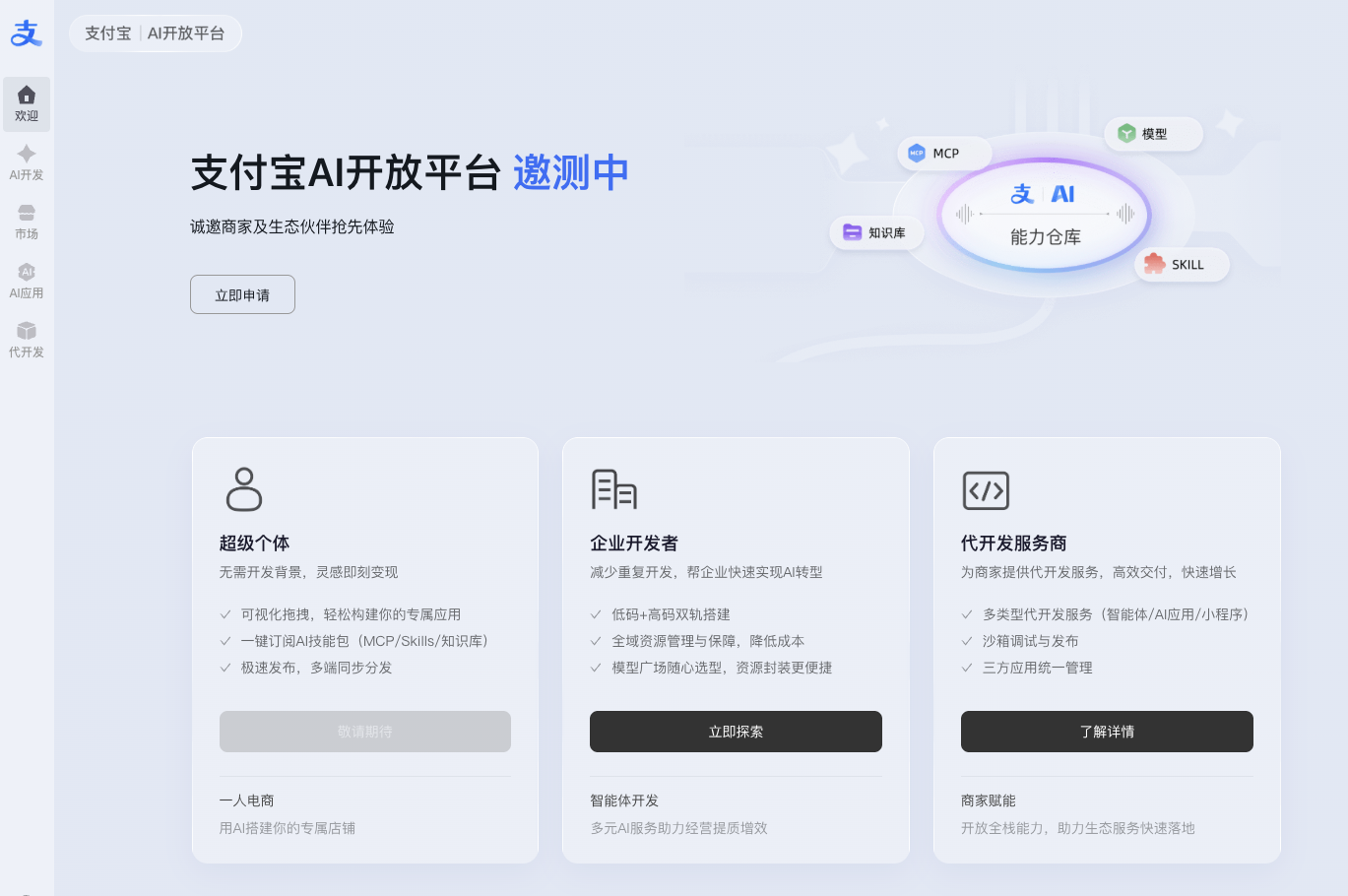
亿邦动力获悉,肯德基、蜜雪冰城、瑞幸、高德打车、滴滴、万岁山武侠城等品牌、机构已首批接入,覆盖餐饮、出行、景区等高频场景。叠加此前推出的AI支付产品与已公测的AI版支付宝“阿宝”,支付宝面向Agent商业的完整基建体系成型。

用户开始习惯用AI办事找服务,平台面向Agent商业的基建搭建成型。两端同时就位,标志着Agent商业拐点已至,从演示进入可经营阶段。

01

小程序之后,Agent商业的“新窗口”来了

在“意图消费”的AI时代,用户描述需求,Agent直接推荐并完成交易。商家的竞争单位,从“抢流量、抢心智”变成了“抢调用权”,谁能成为AI首选调用的对象,就能有机会先拿到订单。

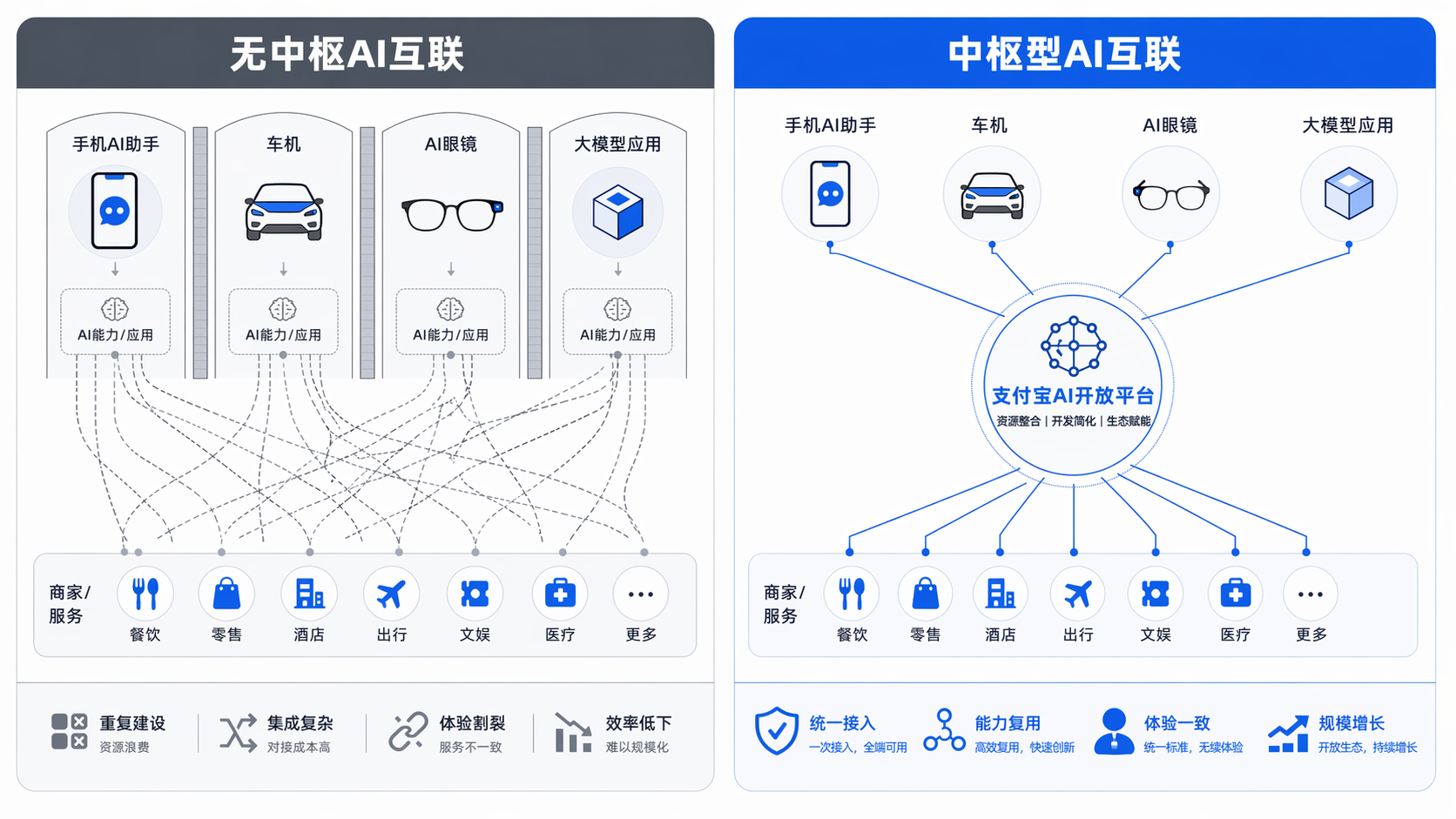
商家服务如何被AI调用?支付宝AI开放平台给商家的,是一套让服务适配AI时代的简易“工具箱”,让商家服务进入多端分发网络。

该平台面向商家有四大核心价值:

· 按需AI化升级:配套全套工具,支持存量资源一键转换,快速完成服务AI封装;

· 多端获客:打通统一分发通道,一次开发全域曝光,实时查看调用数据;

· 商用收益闭环:内置计费、结算、安全托管能力,服务被调用即可直接增收;

· 降本增效:一次搭建同步适配“阿宝”、硬件、大模型、小程序等全渠道,省去重复开发成本。

此外,平台还有三层核心优势。一是搭建全链路可信安全底座,实现关键内容存档、行为全程可追溯;二是拥有MCP、ACT、AHA三大标准化协议,支撑智能体接入、安全支付、跨端协同;三是依托支付宝22年积淀的8000余种服务、10亿用户与百万小程序,筑牢智能体服务生态供需底盘。
大厂开放新商家能力,伴随新流量和分发逻辑出现。这种变化类似2016年的小程序,早入场的商家吃到了流量红利。而在AI时代,竞争则更加残酷,例如,用户询问“15人团建,预算500,要有包厢的火锅店”,AI会根据AEO(Agent Engine Optimization,智能体引擎优化)逻辑推荐它认为最合适的几个商家,没被调用的商家在交互中可能直接“隐形”。

支付宝AI开放平台,也让商家在Agent商业时代有了“被看见”的机会。基于智能体网络,对于用户需求,大模型可根据执行方案调用不同服务完成串连协作,共同为用户构建服务上下流程,每个商家服务都有机会参与到同一个任务中,带来新转化。

02

一次接入,多端可用:AI经营的通路变了

商家入局AI,往往从布局智能终端接入,但多端设备并起,重复开发适配的成本始终是绕不开的门槛。想打通车机服务,要单独对接车企开发接口;布局AI眼镜、第三方大模型等新渠道,又要分别和硬件厂商、技术服务商沟通定制开发。

每新增一类智能终端,商家就要重新适配整套经营体系,人力物力、沟通时间成本居高不下。

支付宝AI开放平台的解法是:一次接入,多端分发。

简单来说,商家把现有服务封装成AI可调用的形式(MCP插件、Skill或Agent),在平台完成一次接入,服务就能同步推送到AI版支付宝“阿宝”、手机AI助手、智能车机、AI眼镜、第三方大模型及线下IoT设备。

平台作为中间层,统一做协议转换和供需匹配。商家不需要挨个找终端厂商谈合作、改代码,以“一次接入、多端分发”的模式,打破了单一平台的流量瓶颈和壁垒,也让商家以更低的边际成本去实现跨越终端的全域触达。

03

一个值得留意的长期变量

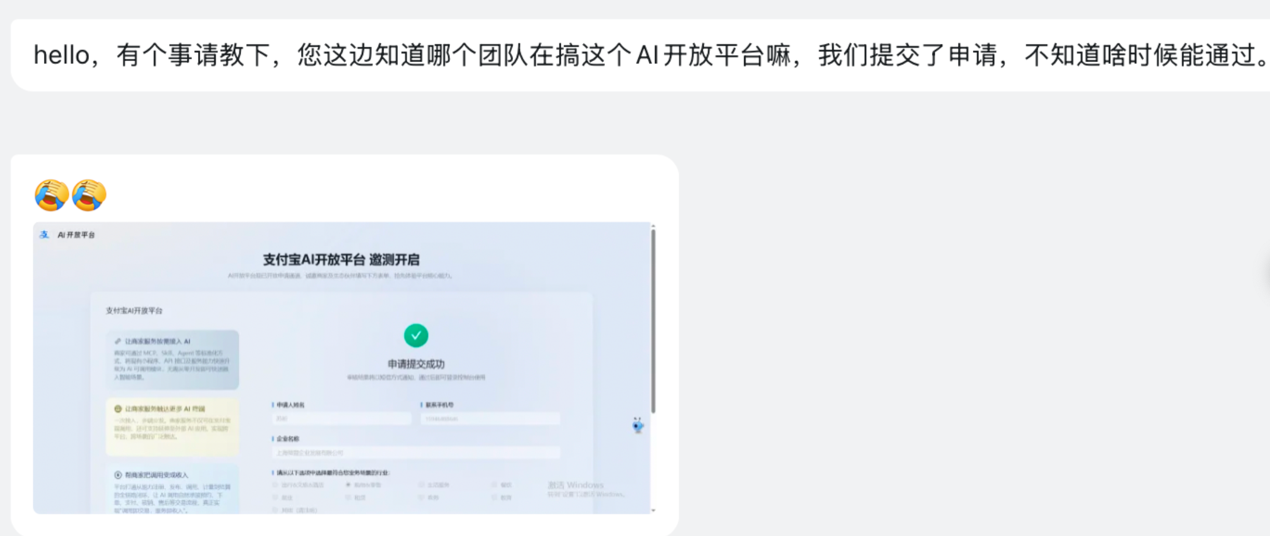
当前,支付宝AI开放平台处于邀测阶段。品牌企业和服务商需要申请白名单,分批开放操作台;有定制需求的大品牌可与平台做联合适配,中小商家可关注后续开放的行业解决方案。

亿邦动力从支付宝内部获悉,不到一天时间,已有超200商家报名申请白名单。
亿邦动力认为,从短期来看,这未必是一个“马上要冲”的风口,但它更像一个长期变量。原因在于用户行为、平台基建能力、分发机制,正在同时发生变化。越早理解规则,越不容易在下一轮入口迁移中掉队。

首先是占位和规则窗口期。早期入场和关注的商家,有机会参与定义一些基础东西:比如服务该怎么打标签,哪些字段(价格、库存、适用人群、服务范围)是AI判断"是否匹配用户意图"的关键,交互流程该怎么设计才利于Agent抓取。

这些现在还没有固定标准,等生态饱和、AEO评分模型趋于稳定,成本会比现在高。这和早年做SEO类似——最早一批把网页结构做得清晰、让搜索引擎容易抓取的网站,享受了很长时间的自然流量红利。

其次是AEO出现并成为新课题。本质上就是:让AI更容易理解你、选择你。就像当年电商商家要研究平台搜索排序、内容商家要研究推荐算法,接下来做线上生意可能需要多问自己几个问题:你的服务描述是否清晰?信息是否结构化?AI能不能快速判断“你是不是最优解”?

实际上,以前优化的是搜索引擎,现在优化的是AI判断。

平台方也在和早期商家一起摸索。但提出这些问题、并开始梳理自己服务的数据结构,本身就是向“AEO思维”靠近。早些关注,至少不会在AI开始大规模分发流量时,因为“AI看不懂你”而被跳过。

可以确定的是,商业入口正在发生迁移,“AI调用服务”的权重在增加。在这个过程中,平台不再只是流量分发器,而逐渐成为决策与执行的商业基础设施。

而支付宝AI开放平台要做的,就是成为商家和智能终端之间的AI链接中枢,让人、服务和智能体之间,形成一套可信的商业协作网络;最终目标不是多一个入口,而是让“人人能找到所有服务,所有服务能找到所有人”。

以前,商家上线小程序,是为了让人看懂;以后,商家改造小程序,是为了让AI看懂。店不只是开在街边、开在页面里,而是开进一张由AI调度的服务网络里。

接入只是入场券,真正决定商家是否被推荐的,仍然是服务质量、价格、距离、履约稳定性、评价和用户偏好匹配。AI时代不是把经营变虚了,而是把经营变得更具体。

亿邦持续追踪报道该情报,如想了解更多与本文相关信息,请扫码关注作者微信。

【版权提示】亿邦动力倡导尊重与保护知识产权。未经许可,任何人不得复制、转载、或以其他方式使用本网站的内容。如发现本站文章存在版权问题,烦请提供版权疑问、身份证明、版权证明、联系方式等发邮件至run@ebrun.com,我们将及时沟通与处理。

已点赞

+1

{{ praise_text }}

好文章,值得被更多人看到

FAQ回顾

支付宝AI开放平台是什么?

支付宝AI开放平台是支付宝推出的AI经营基建,支持商家将服务封装为MCP插件、Skill或Agent,一次接入即可同步分发至多终端,具备服务AI化升级、多端获客、收益闭环、降本增效四大核心价值。

Agent商业时代商家的获客逻辑有什么变化?

Agent商业时代商家获客逻辑从此前购买关键词、抢占曝光位,转变为优化服务让AI识别并调用,需围绕AEO(智能体引擎优化)调整经营,提升AI匹配用户需求的优先级,才能获得更多订单。

支付宝AI开放平台目前的接入规则是什么?

目前支付宝AI开放平台处于邀测阶段,品牌企业和服务商需申请白名单分批获得操作台权限,有定制需求的大品牌可申请联合适配,中小商家可后续关注官方发布的行业解决方案。

商家入驻支付宝AI开放平台能获得哪些优势?

商家入驻后可实现一次开发多端曝光,无需单独对接不同智能终端重复开发,还可依托平台的可信安全底座、标准化协议、成熟服务生态,降低经营成本,获得更多AI分发的转化机会。

广告

下一篇

征集报名《品牌数字化服务商资源手册》

《品牌数字化服务商资源手册》展示数字化服务商风采,亿邦全年零售大会通发,触达更多资源,马上加入!

马上入驻

李开复:如何把AI投入变成营收增长?

过去两年,大模型在企业端快速铺开,智能客服、知识库问答、会议纪要、办公助手——效率工具堆了一堆,标准动作基本做完。

AI

2026-07-08 14:02:23